홈MCP워크벤치Skills
홈워크벤치알림마이페이지
llms.txt · MCP 가이드개인정보처리방침 · 이용약관 · 지원v1.8.0
  1. 홈
  2. /화합물

Methacrolein

HCID 6562
새 노트새 반응견적 요청하기
인쇄 미리보기
기본 정보개요이름 및 식별자물성안전 및 규제화학 및 산업관련 반응화합물 노트
부분 구조 검색유사 구조 찾기

기본 정보

CAS
78-85-3
표준 SMILES
C=C(C)C=O
InChIKey
STNJBCKSHOAVAJ-UHFFFAOYSA-N
분자식
C4H6O
평균 분자량
70.09 g/mol
단동위원소 질량
70.04186481

개요

Methacrylaldehyde appears as a colorless liquid. Less dense than water. May be toxic by ingestion, inhalation and skin absorption. Severely irritating to skin and eyes. Used to make plastics.

이름 및 식별자

우선 이름
Methacrolein
IUPAC
2-methylprop-2-enal
영어명
2-Methylacrolein
분자식
C4H6O
분자량
70.08984

이름 및 동의어

METHACROLEINMethacrylaldehyde78-85-32-Methyl-2-propenal2-Methylacrolein2-Methylprop-2-enalIsobutenal2-Propenal, 2-methyl-2-Methylpropenal2-MethylenepropanalMethylacrylaldehydeAcrolein, 2-methyl-
이름 더 보기
Methacrylic aldehydealpha-MethylacroleinMethakrylaldehydDTXSID00525409HRB24892HNSC-82602-FORMYL-1-PROPENEmethylacrolein

데이터베이스 식별자

CAS
78-85-3
PubChem CID
6562
DTXSID
DTXSID0052540
ChEMBL
CHEMBL4063095
ChEBI
CHEBI:88384
UNII
9HRB24892H
EC Number
201-150-1
Nikkaji
J1.484B

물성

구조 계산 물성

XLogP
0.7
극성 표면적
17.1 Ų
수소 결합 공여자 수
0
수소 결합 수용자 수
1
회전 가능 결합 수
1
무거운 원자 수
5
형식 전하
0
복잡도
54.7

실험 및 물리화학적 성질

Chemical Classes · 2건

Other Classes -> Aldehydes

Flammable agents - 3rd degree

SpringerMaterials PropertiesCoriolis coupling
Density · 3건

0.849 @ 25 °C/4 °C

Relative density (water = 1): 0.8

0.830 @ 20°C

Viscosity · 2건

0.49 mPa.s @ 20 °C

0.59 mm²/s at 20 °C

Color/FormCOLORLESS LIQUID
Solubility · 3건

MISCIBLE WITH WATER, ETHANOL, ETHER

Water solubility = 5.9% (59,000 mg/L) at 20 °C

Solubility in water, g/100ml at 20 °C: 6 (soluble)

Flash Point · 3건

35 °F (NFPA, 2010)

35 °F (2 °C) (OPEN CUP)

-15 °C

Boiling Point · 2건

68.4 °C

68 °C

DecompositionDANGEROUS; ON DECOMPOSITION, EMITS TOXIC FUMES...
Melting Point · 3건

안전 및 규제

안전 정보는 참고용이며, 공급업체의 물질안전보건자료(SDS), 관련 법규 및 전문가 평가를 대체하지 않습니다.

GHS 분류

GHS Classification · 6건

Danger

H225 (93.5%): Highly Flammable liquid and vapor [Danger Flammable liquids]

P203, P210, P233, P240, P241, P242, P243, P260, P262, P264, P264+P265, P270, P271, P273, P280, P284, P301+P316, P301+P330+P331, P302+P352, P302+P361+P354, P303+P361+P353, P304+P340, P305+P354+P338, P316, P317, P318, P320, P321, P330, P361+P364, P363, P370+P378, P391, P403+P233, P403+P235, P405, and P501 (click each P-code to see the statement)

Aggregated GHS information provided per 170 reports by companies from 11 notifications to the ECHA C&L Inventory. Each notification may be associated with multiple companies.

Danger

H225: Highly Flammable liquid and vapor [Danger Flammable liquids]

유해성 정보

Regulatory Information · 3건

Chemical: 2-Propenal, 2-methyl-

REACH registered substance: Methacrylaldehyde (EC: 201-150-1)

The New Jersey Worker and Community Right to Know Act requires public and private employers to provide information about hazardous substances at their workplaces. (N.J.S.A. 34:5A-1 et. seq.)

DOT LabelFlammable Liquid Poison
Fire Hazards · 3건

Excerpt from ERG Guide 131 [Flammable Liquids - Toxic; polymerization hazard]:

· HIGHLY FLAMMABLE: Will be easily ignited by heat, sparks or flames.

Highly flammable. Vapour/air mixtures are explosive.

Fire PotentialFIRE HAZARD: DANGEROUS, WHEN EXPOSED TO HEAT, FLAME OR OXIDIZERS. ...CAN REACT VIGOROUSLY WITH OXIDIZING MATERIALS.
Health Hazards · 2건

Excerpt from ERG Guide 131 [Flammable Liquids - Toxic; polymerization hazard]:

· TOXIC; may be fatal if inhaled, ingested or absorbed through skin.

Hazards Summary

화학 및 산업

약리 정보

Metabolism/Metabolites · 2건

Aldehydes are readily oxidized to organic acids, which, in turn, can serve as substrates for fatty acid oxidation pathways and the Krebs cycle. ... Oxidation of aldehydes is catalyzed by aldehyde dehydrogenase, which has been found in the brain, erythrocytes, liver, kidney, heart, and placenta. /Aldehydes/

... The detoxification of aldehydes can be seen to proceed basically via two routes: (1) an oxidation to yield readily metabolized acids; (2) inactivation by reaction with sulfhydryl groups, particularly glutathione. Under conditions that either deplete glutathione levels, or that result in an inhibition of aldehyde dehydrogenase (for example, Antabuse treatment), the acute and chronic effects of aldehyde toxicity might be more fully expressed. /Aldehydes/

용도 및 제조

Uses · 4건

Used as a chemical intermediate and a monomer to produce resins; [HSDB]

CHEMICAL INTERMEDIATE; COMONOMER IN RESIN PRODN

Copolymers, resins.

As an intermediate in the production of methacrylonitrile or methacrylic acid.

Methods of Manufacturing · 2건

CATALYTIC OXIDATION OF ISOBUTYLENE

Cross-condensation of propionaldehyde and formaldehyde or the dehydrogenation of isobutyraldehyde.

Formulations/PreparationsShipped with 0.1% hydroquinone, as polymerization inhibitor
General Manufacturing Information · 2건

2-Propenal, 2-methyl-: ACTIVE

Development of more productive catalysts for propylene oxidation, which were not advantages for isobutylene oxidation, and failure of growth in the commercial use of methacrolein contributed to the discontinuance of the manufacture of methacrolein.

관련 반응

103건
반응 기록 만들기
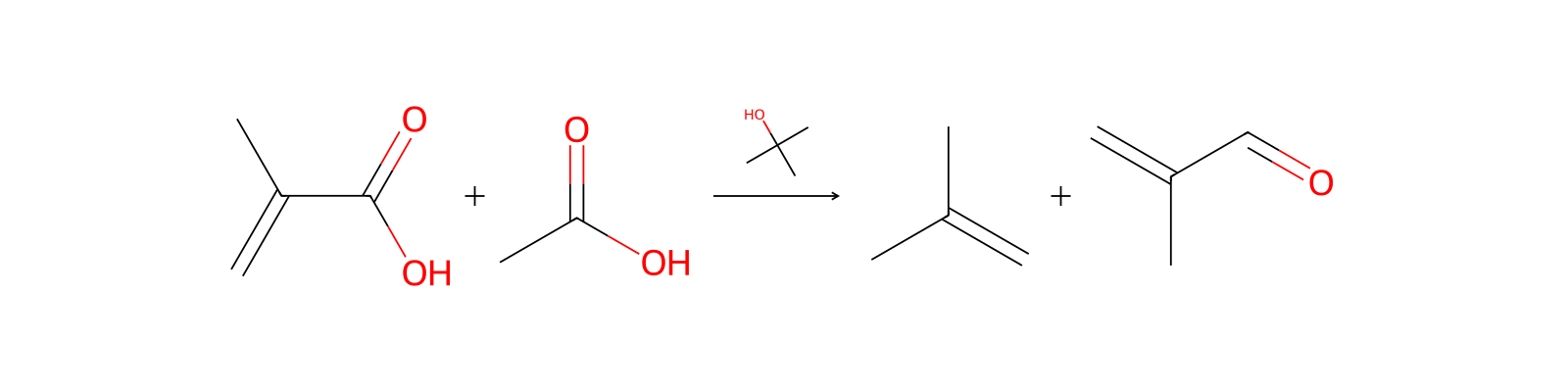
HRID 25929 반응식
HRID 25929생성물로uspto-grants-1979_04
HRID 26791 반응식
HRID 26791반응물로uspto-grants-1979_04
HRID 226278 반응식
HRID 226278생성물로uspto-grants-2009_07
HRID 351430 반응식
HRID 351430반응물로uspto-grants-2007_02
HRID 351435 반응식
HRID 351435반응물로uspto-grants-2007_02
HRID 374003 반응식
HRID 374003반응물로uspto-grants-1992_11
HRID 378527 반응식
HRID 378527생성물로uspto-grants-2000_02
HRID 396762 반응식
HRID 396762반응물로uspto-grants-2003_08
1 / 13 페이지

화합물 노트

불러오는 중…

이 페이지에서기본 정보개요이름 및 식별자물성안전 및 규제화학 및 산업관련 반응화합물 노트
더보기
새 노트새 반응견적 요청하기

-81 °C

-81 °C

-81 °C

Vapor Density · 2건

2.4 (AIR= 1)

Relative vapor density (air = 1): 2.42

Vapor Pressure · 4건

155.0 [mmHg]

155 mm Hg @ 25 °C

Vapor pressure, kPa at 20 °C: 16

120 [mm Hg] @20 °C

물리화학적 성질

녹는점
-81 °C · -81 °C
끓는 점
68.4 °C · 68.4 °C
밀도
0.849 g/cm3 · 0.849 g/cm3(Temp: 25 °C)
· 1건

Like acrolein (VP= 274; LC50 (mouse) = 66 ppm; LCLo (human) = 5.5 ppm), methacrolein (VP = 154; LCLo (mouse) = 125 ppm) is a skin and respiratory tract irritant with the potential to cause acute lung injury; [HSDB] Methacrylaldehyde, stabilized (UN2396) has warning of explosive polymerization; [ERG 2016]

DOT ID and Guide2396 131P
Reactive GroupAldehydes
UN ClassificationUN Hazard Class: 3; UN Subsidiary Risks: 6.1; UN Pack Group: II
TSCA Requirements · 2건

Section 8(a) of TSCA requires manufacturers of this chemical substance to report preliminary assessment information concerned with production, use, and exposure to EPA as cited in the preamble in 51 FR 41329.

Pursuant to section 8(d) of TSCA, EPA promulgated a model Health and Safety Data Reporting Rule. The section 8(d) model rule requires manufacturers, importers, and processors of listed chemical substances and mixtures to submit to EPA copies and lists of unpublished health and safety studies. 2-methyl-2-propenal is included on this list.

FIFRA Requirements//fifr-a//
Reactivity AlertsHighly Flammable

안전 및 보호

Fire Fighting · 2건

Excerpt from ERG Guide 131 [Flammable Liquids - Toxic; polymerization hazard]:

Use water spray, powder, alcohol-resistant foam, carbon dioxide. In case of fire: keep drums, etc., cool by spraying with water.

First Aid Measures · 4건

Fresh air, rest.

Remove contaminated clothes. Rinse skin with plenty of water or shower. Refer for medical attention .

First rinse with plenty of water for several minutes (remove contact lenses if easily possible), then refer for medical attention.

Rinse mouth. Refer for medical attention .

Accidental Release Measures · 2건

· CALL 911. Then call emergency response telephone number on shipping paper. If shipping paper not available or no answer, refer to appropriate telephone number listed on the inside back cover.

· ELIMINATE all ignition sources (no smoking, flares, sparks or flames) from immediate area.

First Aid · 2건

Excerpt from ERG Guide 131 [Flammable Liquids - Toxic; polymerization hazard]:

General First Aid:

Safe StorageFireproof. Separated from strong oxidants, acids, bases and food and feedstuffs. Cooled. Keep in the dark. Well closed. Keep under inert gas. Store only if stabilized. Provision to contain effluent from fire extinguishing.
Exposure Control and Personal Protection· Wear positive pressure self-contained breathing apparatus (SCBA).
Fire Fighting ProceduresCARBON DIOXIDE, ALC FOAM, FOAM, DRY CHEMICAL.
Nonfire Spill ResponseExcerpt from ERG Guide 131 [Flammable Liquids - Toxic; polymerization hazard]:
Disposal Methods · 1건

SRP: At the time of review, criteria for land treatment or burial (sanitary landfill) disposal practices are subject to significant revision. Prior to implementing land disposal of waste residue (including waste sludge), consult with environmental regulatory agencies for guidance on acceptable disposal practices.

Spillage Disposal · 1건

Consult an expert! Remove all ignition sources. Ventilation. Personal protection: complete protective clothing including self-contained breathing apparatus. Do NOT let this chemical enter the environment. Do NOT wash away into sewer. Collect leaking and spilled liquid in sealable containers as far as possible. Absorb remaining liquid in sand or inert absorbent. Wash away remainder with plenty of water. Then store and dispose of according to local regulations.

Preventive MeasuresPRECAUTIONS FOR HANDLING REACTIVE UNSATURATED ALDEHYDES SUCH AS...METHACROLEIN...SHOULD BE SAME AS THOSE FOR OTHER HIGHLY ACTIVE EYE & PULMONARY IRRITANTS...
Isolation and Evacuation · 2건

Excerpt from ERG Guide 131 [Flammable Liquids - Toxic; polymerization hazard]:

Immediate precautionary measure

독성 정보

Body BurdenMethacrolein has been qualitatively detected in one out of 12 samples of human adipose tissue from a 0-14 age group in the Southern Region(1).
Environmental Fate · 3건

TERRESTRIAL FATE: Based on a recommended classification scheme(1), an estimated Koc value of 11.3(SRC), determined from an experimental water solubility(2) and a recommended regression-derived equation(3), indicates that methacrolein will have very high mobility in soil(SRC). Volatilization of methacrolein may be important from moist soil surfaces(SRC) given an estimated Henry's Law constant of 2.86X10⁻⁴ atm-cu m/mole, calculated from experimental values of vapor pressure(4) and water solubility(2), and from dry soil surfaces(SRC) based on an experimental vapor pressure of 155 mm Hg(4). Insufficient data are available to determine the rate or importance of biodegradation of methacrolein in soil(SRC).

AQUATIC FATE: Based on a recommended classification scheme(1), an estimated Koc value of 11.3(SRC), determined from an experimental water solubility(2) and a recommended regression-derived equation(3), indicates that methacrolein may not adsorb to suspended solids and sediment(SRC) in the water. Methacrolein may volatilize from water surfaces based on an estimated Henry's Law constant of 2.86X10⁻⁴ atm-cu m/mole(SRC), calculated from experimental values of vapor pressure(4) and water solubility(2). Estimated half-lives for a model river and model lake are 5 hours and 4 days, respectively(3,SRC). An estimated BCF value of 1.4(3,SRC), from an experimental water solubility(2), suggests that methacrolein will not bioconcentrate in aquatic organisms(SRC) according to a recommended classification scheme(5). Insufficient data are available to determine the rate or importance of biodegradation of methacrolein in water(SRC).

ATMOSPHERIC FATE: According to a suggested classification scheme(1), an experimental vapor pressure of 155 mm Hg at 25 °C(2) indicates that methacrolein will exist in the vapor phase in the ambient atmosphere. Vapor-phase methacrolein is degraded in the atmosphere by reaction with photochemically produced hydroxyl radicals(SRC); the half-life for this reaction in air is estimated to be about 11.5 hours(3,SRC). Vapor-phase methacrolein is also degraded in the atmosphere by reaction with ozone(SRC); the half-life for this reaction in air is estimated to be about 10.5 days(4,SRC). Methacrolein reacts very quickly in air with oxygen forming peroxides and acids(5). Methacrolein is formed from the gas-phase reaction of ozone with isoprene with a formation yield of 0.387(6).

Food Survey ValuesMethacrolein has been qualitatively detected as a volatile component of Chickpea (Cicer arietinum L) seed(1).
Adverse EffectsToxic Pneumonitis - Inflammation of the lungs induced by inhalation of metal fumes or toxic gases and vapors.
Exposure RoutesThe substance can be absorbed into the body by inhalation of its vapour, through the skin and by ingestion.
Plant ConcentrationsMethacrolein is emitted from Bay-leaved Willow, Aspen, Balsam poplar, European oak, Scots pine, and European larch(1).
Signs and Symptoms · 3건

Cough. Sore throat. Burning sensation.

Redness. Pain.

Redness. Pain. Burns. Watering of the eyes.

Effluent Concentrations · 1건

Methacrolein has been reported to be released from gasoline exhaust(1). Methacrolein is formed from burning polyethylene which may occur in fire situations(2). Methacrolein emissions from a single-cylinder, production-type engine using isooctane fuel were 21 and less than 1 mole fraction with a 0.9 and 1.15 fuel-air equivalence ratio, respectively(3). Methacrolein has been detected as an emission from liquid floor wax(4). Methacrolein made up 1.6% of the total hydrocarbons released from a pulse flame combustor using methyl-t-butyl ether as fuel(5).

ICSC Environmental DataThe substance is very toxic to aquatic organisms. It is strongly advised not to let the chemical enter into the environment.
Soil Adsorption/Mobility · 1건

The Koc of methacrolein is estimated as approximately 11.3(SRC), using an experimental water solubility of 50,000 mg/L(1) and a regression-derived equation(2,SRC). According to a recommended classification scheme(3), this estimated Koc value suggests that methacrolein has very high mobility in soil(SRC).

Atmospheric Concentrations · 2건

URBAN/SUBURBAN: Air samples from four urban sites in Stockholm contained methacrolein at the following average concentrations: 0.71, 0.19, 0.11, and 0.13 ppb(1).

RURAL/REMOTE: In a rural site, 12 km outside of Stockholm, the average methacrolein concentration was 0.06 ppb(1).

Human Toxicity Excerpts · 3건

METHACROLEIN WAS LESS CILIOSTATIC (IRRITATING TO TRACHEAL MUCOSA) THAN ACROLEIN.

The low molecular weight aldehydes, the halogenated aliphatic aldehydes, and the unsaturated aldehydes are particularly irritating. The mucus membranes of the nasal and oral passages and the upper respiratory tract are affected, producing a burning sensation, an increased ventilation rate, bronchial constriction, choking, and coughing. The eyes tear, and a burning sensation is noted on the skin of the face. During low exposures, the initial discomfort may abate after 5 to 10 minutes but will recur if exposure is resumed after an interruption. /Aldehydes/

...STRONG IRRITANT.

규제 정보

TSCA Requirements · 2건

Section 8(a) of TSCA requires manufacturers of this chemical substance to report preliminary assessment information concerned with production, use, and exposure to EPA as cited in the preamble in 51 FR 41329.

Pursuant to section 8(d) of TSCA, EPA promulgated a model Health and Safety Data Reporting Rule. The section 8(d) model rule requires manufacturers, importers, and processors of listed chemical substances and mixtures to submit to EPA copies and lists of unpublished health and safety studies. 2-methyl-2-propenal is included on this list.

FIFRA Requirements//fifr-a//

안전 데이터

ridadr
UN 2396
포장분류
II
위험 등급
3