

기본 정보
- 표준 SMILES
NC(=O)CCl- InChIKey
VXIVSQZSERGHQP-UHFFFAOYSA-N- 분자식
- C2H4ClNO
- 평균 분자량
- 93.51 g/mol
- 단동위원소 질량
- 92.99814143
개요
2-chloroacetamide is a monocarboxylic acid amide that is acetamide substituted by a chloro group at position 2. It has a role as an antimicrobial cosmetic preservative, a fungicide, a herbicide and an antimicrobial agent. It is a primary carboxamide, a monocarboxylic acid amide, an organochlorine compound and a N-acylammonia.
이름 및 식별자
- 우선 이름
- Chloroacetamide
- IUPAC
- 2-chloroacetamide
- 현지명
- 2-클로로아세트아마이드
- 영어명
- Chloroacetamide
- 분자식
- C2H4ClNO
- 분자량
- 93.51
이름 및 동의어
2-ChloroacetamideChloroacetamide79-07-2Acetamide, 2-chloro-CHLORACETAMIDEMicrocide2-ChloroethanamideMergal AFChloracetamidalpha-Chloroacetamide2-ChloracetamideUSAF DO-29
이름 더 보기
2-클로로아세트아마이드클로로아세타마이드클로로아세트아마이드KM 1010/2/79NSC 8408mergalafNSC 54286
DTXSID9041570NSC-542862R97846T1LDTXCID7021570RefChem:125357201-174-22-Chloro-acetamide.alpha.-Chloroacetamide
데이터베이스 식별자
- CAS
79-07-2- PubChem CID
- 6580
- DTXSID
DTXSID9041570- ChEMBL
CHEMBL346368- ChEBI
CHEBI:234507- UNII
- 2R97846T1L
- EC Number
- 201-174-2
- Nikkaji
- J1.491E
물성
구조 계산 물성
- XLogP
- -0.5
- 극성 표면적
- 43.1 Ų
- 수소 결합 공여자 수
- 1
- 수소 결합 수용자 수
- 1
- 회전 가능 결합 수
- 1
- 무거운 원자 수
- 5
- 형식 전하
- 0
- 복잡도
- 44.9
실험 및 물리화학적 성질
Chemical ClassesOther Uses -> Biocides/Disinfectants
Cosmetics
Cosmetic ingredients (Chloroacetamide) -> CIR (Cosmetic Ingredient Review)
Preservative
SpringerMaterials PropertiesMoessbauer quadrupole effect
LogP
log Kow = -0.53
-0.53
-0.53
OdorCharacteristic odor
DensityRelative density of the vapour/air-mixture at 20 °C (air = 1): 1.00
Color/Form
Crystals from water
Colorless to pale yellow crystals
Solubility
In water, 90,000 mg/L at 25 °C
Solubility in water: 98 g/mL at 20 °C
Soluble in alcohol; insoluble in ether
Solubility in water, g/100ml at 20 °C: 98
CorrosivityStrong irritant to skin and tissue
Flash Point
170 °C
170 °C
Boiling PointApproximately 225 °C (decomposes)
Decomposition
Decomposes on heating. This produces toxic fumes including nitrogen oxides and chlorine.
When heated to decomposition it emits very toxic fumes of /hydrogen chloride and nitrogen oxides/.
225 °C
물리화학적 성질
- 녹는점
- 116 · 116-118 °C(lit.)
- 끓는 점
- 224.5 °C · 224.5 °C
- 밀도
- 0.84 · 0.84
- 증기압
- 0.05 mm · 0.05 mm Hg ( 20 °C)
- 굴절률
- 1.448 · 1.4480 (estimate)
- 인화점
- 170 °C · 170 °C
- 저장 조건
- 30 °C · Store below +30°C.
- 용해도
- 1 g/10mL · 메탄올: 용해성1g/10mL
- 산도 계수 (pKa)
- 14.69 · 14.69±0.40(Predicted)
- 물리적 상태
- 결정성 분말
- 색상
- 하얀색
- 수소이온지수(pH)
- 3.8 · 3.8-4.1 (40g/l, H2O, 20℃)
- 수용성
- 물(90g/L)에 용해됩니다.
- Merck
- 14 · 14,2110
- BRN
- 878191 · 878191
- Henry's Law Constant
- 2.5 · 2.5×103 mol/(m3Pa) at 25℃, HSDB (2015)
- 화장품 원료 기능
- 항균 방부제
- InChI
- 1S/C2H4ClNO/c3-1-2(4)5/h1H2,(H2,4,5)
- InChIKey
- VXIVSQZSERGHQP-UHFFFAOYSA-N
- SMILES
- NC(=O)CCl
- LogP
- -0.53 · -0.530
- NIST
- 2 · Acetamide, 2-chloro-(79-07-2)
- EPA
- 2 · Acetamide, 2-chloro- (79-07-2)
화학적 성질
white crystalline powder
안전 및 규제
GHS 분류
GHS Classification
Danger
H301: Toxic if swallowed [Danger Acute toxicity, oral]
P203, P261, P264, P270, P272, P280, P301+P316, P302+P352, P318, P321, P330, P333+P317, P362+P364, P405, and P501 (click each P-code to see the statement)
Danger
H301 (92.5%): Toxic if swallowed [Danger Acute toxicity, oral]
P203, P261, P264, P264+P265, P270, P272, P280, P301+P316, P302+P352, P305+P351+P338, P318, P321, P330, P333+P317, P337+P317, P362+P364, P405, and P501 (click each P-code to see the statement)
유해성 정보
Regulatory Information
Chemical: Acetamide, 2-chloro-
Status: Active Update: 15-05-2018 https://echa.europa.eu/registration-dossier/-/registered-dossier/11045
2-Chloroacetamide: Does not have an individual approval but may be used under an appropriate group standard
Other Safety InformationIMAP assessments - Acetamide, 2-chloro-: Human health tier II assessment
Fire HazardsNot combustible. Gives off irritating or toxic fumes (or gases) in a fire.
Fire PotentialNot combustible.
Hazards Summary
Allergic contact dermatitis reported in hairdressers and shoemakers; [Kanerva, 1769] A skin and eye irritant; May cause skin sensitization; Animal tests show that this substance possibly causes toxicity to human reproduction or development. [ICSC] Danger of skin sensitization; [MAK]
FDA RequirementsChloracetamide is an indirect food additive for use only as a component of adhesives.
EC ClassificationSymbol: T; R: 25-43-62; S: (1/2)-22-36/37-45
UN ClassificationUN Hazard Class: 6.1; UN Pack Group: III
Chemical DangersDecomposes on heating. This produces toxic fumes including nitrogen oxides and chlorine. Reacts with strong oxidants, strong reducing agents, strong acids and strong bases.
Packaging and LabellingDo not transport with food and feedstuffs.
Toxic Combustion ProductsGives off irritating or toxic fumes (or gases) in a fire.
Hazard Classes and Categories
Acute Tox. 3 (92.5%)
Acute toxicity - category 3
Acute toxicity (Oral) - Category 3
Repr. 2
안전 및 보호
Fire FightingIn case of fire in the surroundings, use appropriate extinguishing media.
First Aid Measures
Fresh air, rest.
Remove contaminated clothes. Rinse and then wash skin with water and soap.
Rinse with plenty of water for several minutes (remove contact lenses if easily possible).
Rinse mouth. Give a slurry of activated charcoal in water to drink. Refer for medical attention .
Safe StorageSeparated from strong oxidants, strong bases, strong acids and food and feedstuffs. Ventilation along the floor. Store in an area without drain or sewer access.
Fire Fighting ProceduresIn case of fire in the surroundings, use appropriate extinguishing media.
Storage ConditionsSeparated from strong oxidants, strong bases, strong acids and food and feedstuffs. Ventilation along the floor. Store in an area without drain or sewer access.
Cleanup Methods
Spillage Disposal. Personal protection: particulate filter respirator adapted to the airborne concentration of the substance. Do NOT let this chemical enter the environment. Sweep spilled substance into covered sealable containers. If appropriate, moisten first to prevent dusting. Carefully collect remainder. Then store and dispose of according to local regulations.
Disposal Methods
SRP: The most favorable course of action is to use an alternative chemical product with less inherent propensity for occupational exposure or environmental contamination. Recycle any unused portion of the material for its approved use or return it to the manufacturer or supplier. Ultimate disposal of the chemical must consider: the material's impact on air quality; potential migration in soil or water; effects on animal, aquatic, and plant life; and conformance with environmental and public health regulations.
Spillage Disposal
Personal protection: particulate filter respirator adapted to the airborne concentration of the substance. Do NOT let this chemical enter the environment. Sweep spilled substance into covered sealable containers. If appropriate, moisten first to prevent dusting. Carefully collect remainder. Then store and dispose of according to local regulations.
Preventive Measures
SRP: The scientific literature for the use of contact lenses in industry is conflicting. The benefit or detrimental effects of wearing contact lenses depend not only upon the substance, but also on factors including the form of the substance, characteristics and duration of the exposure, the uses of other eye protection equipment, and the hygiene of the lenses. However, there may be individual substances whose irritating or corrosive properties are such that the wearing of contact lenses would be harmful to the eye. In those specific cases, contact lenses should not be worn. In any event, the usual eye protection equipment should be worn even when contact lenses are in place.
SRP: Local exhaust ventilation should be applied wherever there is an incidence of point source emissions or dispersion of regulated contaminants in the work area. Ventilation control of the contaminant as close to its point of generation is both the most economical and safest method to minimize personnel exposure to airborne contaminants.
Do NOT take working clothes home.
Prevent dispersion of dust! Avoid all contact! Use local exhaust or breathing protection.
Do not eat, drink, or smoke during work. Wash hands before eating.
Eye PreventionWear safety spectacles, face shield or eye protection in combination with breathing protection if powder.
Inhalation RiskA harmful concentration of airborne particles can be reached quickly when dispersed, especially if powdered.
Skin PreventionProtective gloves. Protective clothing.
독성 정보
Ecotoxicity Values
EC50; Species: Eisenia andrei (Earthworm) adult; topical >25 mg/kg dry soil for 28 days; Effect: decreased growth
LC50; Species: Eisenia andrei (Earthworm) adult; topical 23.3 mg/kg dry soil for 28 days
EC50; Species: Eisenia andrei (Earthworm) adult; topical 18.5 mg/kg dry soil for 56 days; Effect: decreased progeny counts
LC50; Species: Eisenia fetida (Earthworm) topical using filter paper 2.7 ug/sq cm for 48 hr
LC50; Species: Eisenia fetida (Earthworm) topical 38.5 mg/kg artificial soil for 14 days
Environmental Fate
TERRESTRIAL FATE: Based on a classification scheme(1), an estimated Koc value of 4.2(SRC), determined from a log Kow of -0.53(2) and a regression-derived equation(3), indicates that chloroacetamide is expected to have very mobility in soil(SRC). Volatilization of chloroacetamide from moist soil surfaces is not expected to be an important fate process(SRC) given an estimated Henry's Law constant of 3.9X10⁻⁹ atm-cu m/mole(SRC), using a fragment constant estimation method(4). Chloroacetamide is not expected to volatilize from dry soil surfaces(SRC) based upon an estimated vapor pressure of 1.1X10⁻² mm Hg mm Hg at 25 deg (SRC), determined from a fragment constant method(2). Utilizing the Zahn-Wellens test, 90% biodegradation was reached in 6 days(5) indicating that biodegradation may be an important environmental fate process in soil(SRC).
AQUATIC FATE: Based on a classification scheme(1), an estimated Koc value of 4.2(SRC), determined from a log Kow of -0.53(2) and a regression-derived equation(3), indicates that chloroacetamide is not expected to adsorb to suspended solids and sediment(SRC). Volatilization from water surfaces is not expected(4) based upon an estimated Henry's Law constant of 3.9X10⁻⁹ atm-cu m/mole(SRC), developed using a fragment constant estimation method(5). According to a classification scheme(6), an estimated BCF of 3(SRC), from its log Kow(3) and a regression-derived equation(3), suggests the potential for bioconcentration in aquatic organisms is low(SRC). A hydrolysis half-life of 53 days at pH 8(7) suggests that hydrolysis may be an important environmental fate process for chloroacetamide in alkaline waters(SRC). Utilizing the Zahn-Wellens test, 90% biodegradation was reached in 6 days(8) indicating that biodegradation may be an important environmental fate process in water(SRC).
ATMOSPHERIC FATE: According to a model of gas/particle partitioning of semivolatile organic compounds in the atmosphere(1), chloroacetamide, which has an estimated vapor pressure of 1.1X10⁻² mm Hg at 25 °C(SRC), determined from a fragment constant method(2), is expected to exist solely as a vapor in the ambient atmosphere. Vapor-phase chloroacetamide is degraded in the atmosphere by reaction with photochemically-produced hydroxyl radicals(SRC); the half-life for this reaction in air is estimated to be 5 days(SRC), calculated from its rate constant of 2.3X10⁻¹² cu cm/molecule-sec at 25 °C(SRC) that was derived using a structure estimation method(3). Chloroacetamide does not contain chromophores that absorb at wavelengths >290 nm(4) and, therefore, is not expected to be susceptible to direct photolysis by sunlight(SRC).
Adverse Effects
Reproductive Toxin - A chemical that is toxic to the reproductive system, including defects in the progeny and injury to male or female reproductive function. Reproductive toxicity includes developmental effects. See Guidelines for Reproductive Toxicity Risk Assessment.
Exposure RoutesThe substance can be absorbed into the body in hazardous amounts by ingestion. The substance can be absorbed into the body through the skin.
Toxicity Summary
Based on the data included in this report and the reconfirmation that Chloroacetamide is a potential human sensitizer at use concentrations, the Expert Panel concludes that Chloroacetamide is unsafe for use as a cosmetic ingredient.
The ingredient is unsafe for use in cosmetics
Signs and Symptoms
Cough.
Redness. Pain.
Redness. Pain.
Sore throat.
ICSC Environmental DataThe substance is harmful to aquatic organisms.
Soil Adsorption/Mobility
The Koc of chloroacetamide is estimated as 4.2(SRC), using a log Kow of -0.53(1) and a regression-derived equation(2). According to a classification scheme(3), this estimated Koc value suggests that chloroacetamide is expected to have very high mobility in soil.
Human Toxicity Excerpts
/HUMAN EXPOSURE STUDIES/ Six subjects were used in a study of the effect of elicitation concentration in contact dermatitis testing. All of the subjects had positive reactions to a 1% solution of chloroacetamide in a Draize test conducted 6 months before the study reported here. Chloroacetamide at four concentrations in petrolatum (0.5, 0.1, 0.05, and 2%) was applied to the upper back of the subjects, and the reactions were scored. Four of the six subjects had positive reactions to the 2% concentration, and 1 subject had a positive reaction to the 0.5% concentration. None of the subjects had reactions to the 0.1 and 0.05% concentrations.
/HUMAN EXPOSURE STUDIES/ Chloroacetamide was patch tested on 465 dermatological patients ranging in age from 2 to 80 years, with an average age of 37 years. Chloroacetamide, 0.1% in petrolatum, was applied using the ICDRG procedure and scored at 24, 48, and 72 hr. Seven of the 465 subjects had a positive reaction to chloroacetamide. Of the 7 subjects who had positive reactions, 5 were younger women who had mainly facial lesions.
/HUMAN EXPOSURE STUDIES/ A mixture of 70% chloroacetamide and 30% sodium benzoate was tested for ocular irritation in humans. A 5% solution of this mixture was instilled without rinse into the human eye and caused slight discomfort, lacrimation, and blurred vision lasting 15 to 30 minutes.
/HUMAN EXPOSURE STUDIES/ From February 1989 to January 1990, the Swiss Contact Dermatitis Research Group conducted a 1-year study to examine the frequency of sensitization to a series of 13 common preservatives. A group of 2295 consecutive outpatients with suspected allergic contact dermatitis (age range 7-90 years, with a mean age of 42; 911 males, 1384 females) was tested. The %s of positive reactions to the preservatives studied are as follows, in descending order: formaldehyde 5.7%, benzalkonium chloride 5.5%, Kathon CG 5.5%, thimerosal 4.2%, chlorhexidine digluconate 2.0%, DMDM hydantoin 1.7%, paraben mix 1.7%, chloroacetamide 1.5%, Bronopol 1.2%, imidazolidinyl urea 1.0%, quaternium 15 1.0%, triclosan 0.8%, 2,4-dichlorobenzyl alcohol 0.4%. These relatively high values suggest a heavy exposure of the Swiss population to topical preservatives.
For more Human Toxicity Excerpts (Complete) data for CHLOROACETAMIDE (16 total), please visit the HSDB record page.
Artificial Pollution Sources
Chloroacetamide's production and use as a chemical intermediate for the production of herbicides and insecticides(1) may result in its release to the environment through various waste streams(SRC). The compound was formerly used as a preservative in various cosmetics(2).
Environmental BiodegradationAEROBIC: Chloroacetamide underwent greater than 90% biodegradation in 6 days using an activated sludge inoculum and the Zahn-Wellens test(1).
Environmental Bioconcentration
An estimated BCF of 3 was calculated in fish for chloroacetamide(SRC), using a log Kow of 0.53(1) and a regression-derived equation(2). According to a classification scheme(3), this BCF suggests the potential for bioconcentration in aquatic organisms is low(SRC).
규제 정보
FDA RequirementsChloracetamide is an indirect food additive for use only as a component of adhesives.
안전 데이터
- wgk
- 2
- tsca
- TSCA listed
- rtecs
- AB5075000
- ridadr
- UN 2811 6.1/PG 3
- 독성
- LD50 orally in Rabbit: 138 mg/kg LD50 dermal Rat > 2000 mg/kg
- HS 번호
- 29241900
- risk_code
- 25-43-62
- hazard_code
- T
- safety_code
- 22-36/37-45
- 포장분류
- III
- 위험 등급
- 6.1
- 기존화학 물질
- KE-05491
- Hazard Classifications
- Acute Tox. 3 OralRepr. 2Skin Sens. 1
- 스토리지 클래스
- 6.1C - Combustible acute toxic Cat.3toxic compounds or compounds which causing chronic effects
- 유해 물질 데이터
- 79-07-2(Hazardous Substances Data)
화학 및 산업
약리 정보
Absorption, Distribution and ExcretionThe substance can be absorbed into the body by inhalation of its aerosol, through the skin and by ingestion.
용도 및 제조
Uses
CIR ingredient: Chloroacetamide
Used as a preservative in paints, glues, metalworking fluids, and leather; [Kanerva, p. 1769]
Metal Machining [Category: Heat or Machine]
Intermediate
Chloroacetamide is a versatile intermediate. In addition, it has biocidal properties and, therefore, is used as an industrial preservative. Because of its good solubility in water, chloroacetamide is a particularly suitable biocide for protection of the aqueous phase, ... in water-containing paints, and as a wood preservative. Its insecticidal action on aphids and its use as a hardener for urea and melamine resins have also been described.
FORMER USE: Chloroacetamide is used as a preservative and antiseptic in cosmetics. Its function is to retard the deterioration of cosmetic products by slowing the growth of bacteria or fungi.
U.S. Production
(1986) 10 thousand-500 thousand pounds
(1990) 10 thousand-500 thousand pounds
(1998) 10 thousand-500 thousand pounds
Production volumes for non-confidential chemicals reported under the Inventory Update Rule.[Table#7102]
Methods of Manufacturing
Prepared from ethyl chloroacetate and ammonia; ... from chloroacetyl chloride and ammonium acetate ... .
... Obtained on an industrial scale by reaction of methylchloroacetate with ammonia at low temperature. Manufacture from chloroacetic acid and cyanamide at 150 to 200 °C also has been described.
Use ClassificationCosmetics -> Preservative
General Manufacturing InformationAcetamide, 2-chloro-: ACTIVE
응용 분야
개요Chloroacetamide is a preservative used in several applications such as in cutting metalwork fluids, in paints or in glues. It can induce contact dermatitis in hairdressers, or in shoemakers when used as a leather preservative.
용도2-Chloroacetamide is used as surface-active agent in home laundry, cleaning products & household formulated cleaners, other industrial uses, petroleum production, polymer processing.
상·하류 제품 정보
상류 원료
하류 제품
공급사50 곳
国药集团化学试剂有限公司86-21-63210123 · [email protected]
北京华美互利生物化工010-56205725 · [email protected]
梯希爱(上海)化成工业发展有限公司021-67121386 · [email protected]
上海阿拉丁生化科技股份有限公司400-6206333 13167063860 · [email protected]
山东艾利特生物科技有限公司0539-18853986-090 13053958157 · [email protected]
邹平铭远进出口贸易有限公司18364991597
上海如吉生物科技发展有限公司+86-21-65211385-8001 36031160 · [email protected]
南通如通化工有限公司18962933129 18962933129 · [email protected]
科瑞迪化学400-821-5857 021-64326257 · [email protected]
Syntechem Co.,Ltd[email protected]
上海迈瑞尔生化科技有限公司4006356688 18621169109 · [email protected]
阿法埃莎(中国)化学有限公司400-6106006 · [email protected]
太原市瑞和丰科贸有限公司+86 351 7031519 · [email protected]
安耐吉化学&3A(安徽泽升科技股份有限公司)400-0056266 · [email protected]
上海瀚鸿科技股份有限公司021-54306202 13764082696 · [email protected]
上海柯维化学技术有限公司021-64609169 18901607656 · [email protected]
上海景颜化工科技有限公司13817811078 · [email protected]
Pure Chemistry Scientific Inc.001-857-928-2050 or 1-888-588-9418 · [email protected]
凯试(上海)科技有限公司021-50135380 · [email protected]
合肥天健化工有限公司551-65418679 15856988503;15837135945 · [email protected]
孝感深远化工有限公司15527621225; 15527621225 · [email protected]
山东省立帆化工有限公司17864861555 · [email protected]
苏州施亚生物科技有限公司86(512)5235 8471 17715136450 · [email protected]
山东西亚化学有限公司13355009207 13355009207 · [email protected]
玛雅试剂+86 (573) 82222445 (0)18006601000 452520369 · [email protected]
四川库利南科技有限公司400-1166-196 18981987031 · [email protected]
天津希恩思生化科技有限公司400 638 7771 · [email protected]
河南多贝化工有限公司0370-2785118 17550508557 · [email protected]
斯百全化学(上海)有限公司021-021-021-67601398-809-809-809 15221380277 · [email protected]
北京泰亚杰科技有限公司021-33690831-8001 13552411790;18616022633 · [email protected]
艾科试剂4008-755-333 18080918076 · [email protected]
深圳菲斯生物科技有限公司0755-83725681-603
上海思域化工科技有限公司86-21-34053660 · [email protected]
赛默飞世尔科技(中国)有限公司800-810-5118 · [email protected]
北京伊诺凯科技有限公司400-810-7969 010-59572699 · [email protected]
上海健超生物科技有限公司150-2103-5486 18017383231 · [email protected]
TCI AMERICA800-4238616 · [email protected]
TOKYO CHEMICAL INDUSTRY CO., LTD.03-36680489 · [email protected]
TCI Europe320-37350700 · [email protected]
上海贤鼎生物科技有限公司4009209199 · [email protected]
深圳振强药物研发有限公司0755-66853366 13670046396 · [email protected]
上海伯韵医药科技有限公司13817873692 · [email protected]
上海倍卓生物科技有限公司021-61119791,13386096464 · [email protected]
上海将来实业股份有限公司400-0066400 13621662912 · [email protected]
上海将来实业股份有限公司021-61552785 · [email protected]
HBCChem, Inc.+1-510-219-6317 · [email protected]
日照力德士化工有限公司010-51268198 · [email protected]
上海爱蝶实业有限公司021-58957966 18930537195 · [email protected]
成都零六生物科技有限公司400-1166-196 13458535857 · [email protected]
广拓化学(上海)有限公司021-60899189-8001 18918189673 · [email protected]
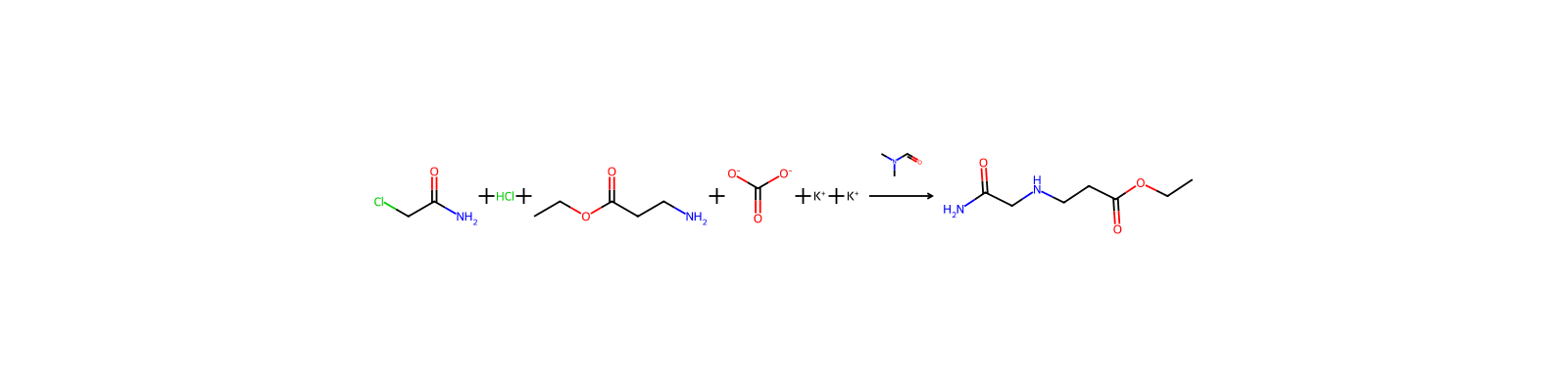
관련 반응
260건



연결된 노트
불러오는 중…