Isobutyric Acid
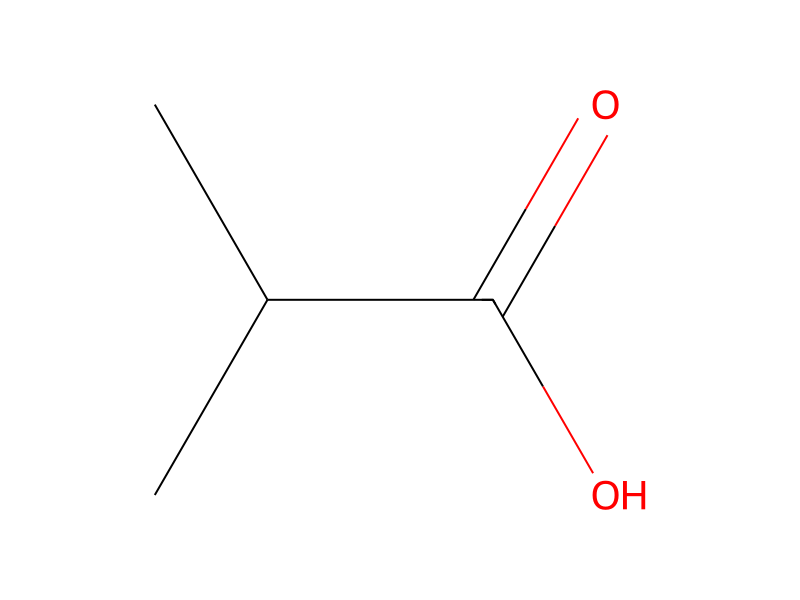
79-31-2CC(C)C(=O)OKQNPFQTWMSNSAP-UHFFFAOYSA-NIsobutyric acid appears as a colorless liquid with a light odor of rancid butter. Corrosive to metals and tissue.
79-31-2DTXSID4021636CHEMBL108778CHEBI:16135Other Classes -> Organic Acids
Flammable agents - 2nd degree
log Kow = 0.94
0.94
0.88
0.88
Pungent odor like that of butyric acid, but not as unpleasant
SHARP, BUTTER-FAT-LIKE ODOR
0.949 at 68 °F (USCG, 1999) - Less dense than water; will float
안전 정보는 참고용이며, 공급업체의 물질안전보건자료(SDS), 관련 법규 및 전문가 평가를 대체하지 않습니다.
Warning
H302: Harmful if swallowed [Warning Acute toxicity, oral]
P264, P270, P280, P301+P317, P302+P352, P317, P321, P330, P362+P364, and P501 (click each P-code to see the statement)
Danger
H226 (11.9%): Flammable liquid and vapor [Warning Flammable liquids]
P210, P233, P240, P241, P242, P243, P260, P262, P264, P264+P265, P270, P280, P301+P317, P301+P330+P331, P302+P352, P302+P361+P354, P303+P361+P353, P304+P340, P305+P354+P338, P316, P317, P321, P330, P361+P364, P362+P364, P363, P370+P378, P403+P235, P405, and P501 (click each P-code to see the statement)
Chemical: Propanoic acid, 2-methyl-
Regulation (EC) No 1831/2003 (amended)
Propanoic acid, 2-methyl- is listed on the EPA's Chemical Data Reporting (CDR) system. Manufacturers and importers of Propanoic acid, 2-methyl- are required to report information about their production and use of this chemical to the EPA under the Toxic Substances Control Act (TSCA). (40 eCFR Part 711)
TP - indicates a substance that is the subject of a proposed TSCA section 4 test rule.
REACH registered substance: Isobutyric acid (EC: 201-195-7)
Propanoic acid, 2-methyl-: HSNO Approval: HSR001174 Approved with controls
Excerpt from ERG Guide 132 [Flammable Liquids - Corrosive]:
· Flammable/combustible material.
Flammable. Gives off irritating or toxic fumes (or gases) in a fire. Above 56 °C explosive vapour/air mixtures may be formed.
/2-Methylpropanoic acid/ is combustible.
Moderate fire hazard when exposed to heat or flame.
... The effect of butyrate and other short-chain carboxylic acids /were compared/ in transient expression studies with K562 cells using an expression plasmid bearing a luciferase reporter gene driven by the normal human A gamma-globin gene promoter. Butyrate (4 carbons) increased the activity of the human A gamma-globin gene promoter up to 123 times. Marked augmentation of the normal gamma-promoter activity was also noted with 5-carbon valeric acid (up to 394 times) and 3-carbon propionic acid (up to 129 times). The branched isobutyric acid as well as phenylacetate showed less ability to increase promoter activity. Addition of the tandemly repeated AP-1/NF-E2 (AP) enhancer sequences from hypersensitive site 2 (HS2) of the locus control region (LCR) increased gamma-promoter activity up to 24 times. Addition of a nearby 16-bp conserved motif (CM) in HS2 ... to the AP-containing plasmid construct further increased gamma-promoter activity. In the presence of butyrate, the plasmid bearing both the AP and CM sequences showed gene expression up to 477 times greater than that of the basal gamma-promoter-driven luciferase plasmid in the absence of inducer. A plasmid bearing the herpes simplex thymidine kinase promoter was also tested and gene expression was markedly increased by the same organic acids. MEL cells responded to butyrate, valerate, and propionate with induction of hemoglobin synthesis. Responses to isobutyrate and 6-carbon caproate required higher concentrations of the compounds. Thus, other short-chain organic acids as well as butyrate increase gamma-promoter activity in the transient expression system, and this activity can be further augmented by incorporating LCR elements into the expression vector. Nonglobin promoters also respond to the same carboxylic acids.
The inhibitory effects of isobutyric acid on activity of pepsin on synthetic dipeptide, n-carbobenzoxy-L-glutamyl-L-tyrosine, were studied to obtain evidence for the hypothesis which suggests that pepsin forms a hydrophobic bond with the nonpolar side chain or its substrates. Kinetic study showed that the inhibition by carboxylic acids was competitive, the inhibitor constant (Ki) decreasing with an increase in the size of inhibitor molecule. The free energy change of formation of complex between pepsin and the hydrocarbon chain of carboxylic acid increased linearly with the increase in the number of C atoms in the hydrocarbon chain of the inhibitor. The hydrophobic interaction between the side chain of amino acid residues in the binding region of the active center of pepsin and the hydrocarbon side chain of the inhibitor may be the probable cause of the inhibition.
불러오는 중…
0.950 at 20 °C/4 °C
Relative density (water = 1): 0.95
0.944-0.948
0.949 @ 20°C
Isobutyric acid is a clear colorless oily liquid with an odor and flavor similar to n-butyric acid. Miscible with water, soluble in ethanol and ether. Prepared via oxidation of isobutyl alcohol.
Inhalation causes irritation of nose and throat. Ingestion causes irritation of mouth and stomach. Contact with eyes or skin causes irritation. (USCG, 1999)
· May cause toxic effects if inhaled or ingested.
A strong skin and eye irritant; Emergency treatment: irritants; [HSDB] A corrosive substance that can cause injury to the skin, eyes, and respiratory tract; [ICSC] A corrosive substance; Inhalation may cause chemical pneumonitis; Can be absorbed through skin; [MSDSonline]
Isobutyric acid is a food additive permitted for direct addition to food for human consumption as a synthetic flavoring substance and adjuvant in accordance with the following conditions: a) they are used in the minimum quantity required to produce their intended effect, and otherwise in accordance with all the principles of good manufacturing practice, and 2) they consist of one or more of the following, used alone or in combination with flavoring substances and adjuvants generally recognized as safe in food, prior-sanctioned for such use, or regulated by an appropriate section in this part.
Since 1994, dietary supplements have been regulated under the Dietary Supplement Health and Education Act (DSHEA). The DSHEA requires no proof of safety for dietary supplements on the market prior to October 15, 1994. Labeling requirements for such supplements allow warnings and dosage recommendations as well as substantiated "structure or function" claims. All claims must prominently note that they have not been evaluated by the FDA, and they must bear the statement "This product is not intended to diagnose, treat, cure, or prevent any disease".
Excerpt from ERG Guide 132 [Flammable Liquids - Corrosive]:
Use alcohol-resistant foam, powder, carbon dioxide. In case of fire: keep drums, etc., cool by spraying with water.
Fresh air, rest. Refer for medical attention.
Remove contaminated clothes. Rinse skin with plenty of water or shower.
First rinse with plenty of water for several minutes (remove contact lenses if easily possible), then refer for medical attention.
Give one or two glasses of water to drink. Do NOT induce vomiting. Refer for medical attention .
· CALL 911. Then call emergency response telephone number on shipping paper. If shipping paper not available or no answer, refer to appropriate telephone number listed on the inside back cover.
· ELIMINATE all ignition sources (no smoking, flares, sparks or flames) from immediate area.
INHALATION: move to fresh air.
General First Aid:
Extinguish with dry chemical, alcohol foam, or carbon dioxide.
If material on fire or involved in fire: Use water in flooding quantities as fog. Solid streams of water may be ineffective. Cool all affected containers with flooding quantities of water. Apply water from as far a distance as possible. Use "alcohol" foam, dry chemical or carbon dioxide. Use water spray to knock-down vapors.
Environmental considerations: Land spill: Dig a pit, pond, lagoon, holding area to contain liquid or solid material. Dike surface flow using soil, sand bags, foamed polyurethane, or foamed concrete. Absorb bulk liquid with fly ash or cement powder. Neutralize with agricultural lime (CaO), crushedd limestone (CaCO3) or sodium bicarbonate (NaHCO3). /SRP: If time permits, pits, ponds, lagoons, soak holes, or holding areas should be contained with a flexible impermeable membrane liner./
Environmental considerations: Water spill: Neutralize with agricultural lime (CaO), crushed limestone (CaCO3), or sodium bicarbonate (NaHCO3). If dissolved, in region of 10 ppm or greater concentration, apply activated carbon at ten times the spilled amount. Use mechanical dredges or lifts to remove immobilized masses of pollutants and precipitates.
Environmental considerations: Air spill: Apply water spray or mist to knock down vapors. Vapor knockdown water is corrosive or toxic and should be diked for containment.
SRP: The most favorable course of action is to use an alternative chemical product with less inherent propensity for occupational exposure or environmental contamination. Recycle any unused portion of the material for its approved use or return it to the manufacturer or supplier. Ultimate disposal of the chemical must consider: the material's impact on air quality; potential migration in soil or water; effects on animal, aquatic, and plant life; and conformance with environmental and public health regulations.
Keep sparks, flames, and other sources of ignition away. Keep material out of water sources and sewers. Build dikes to contain flow as necessary. Use water spray to knock-down vapors. ... Avoid breathing vapors. Keep upwind. Avoid bodily contact with the material. Do not handle broken packages without protective equipment. Wash away any material which may have contacted the body with copious amounts of water or soap and water. If contact with the material anticipated, wear full protective clothing.
If material not on fire and not involved in fire: Keep sparks, flames, and other sources of ignition away. Keep material out of water sources and sewers. Build dikes to contain flow as necessary. Use water spray to to knock-down vapors. Neutralize spilled material with crushed limestone, soda ash, or lime.
Personnel protection: Avoid breathing vapors. Keep upwind. Avoid bodily contact with the material. ... Do not handle broken packages unless wearing appropriate personal protective equipment. Wash away any material which may have contacted the body with copious amounts of water or soap and water. If contact with the material anticipated, wear appropriate chemical protective clothing.
SRP: The scientific literature for the use of contact lenses in industry is conflicting. The benefit or detrimental effects of wearing contact lenses depend not only upon the substance, but also on factors including the form of the substance, characteristics and duration of the exposure, the uses of other eye protection equipment, and the hygiene of the lenses. However, there may be individual substances whose irritating or corrosive properties are such that the wearing of contact lenses would be harmful to the eye. In those specific cases, contact lenses should not be worn. In any event, the usual eye protection equipment should be worn even when contact lenses are in place.
SRP: Contaminated protective clothing should be segregated in such a manner so that there is no direct personal contact by personnel who handle, dispose, or clean the clothing. Quality assurance to ascertain the completeness of the cleaning procedures should be implemented before the decontaminated protective clothing is returned for reuse by the workers. Contaminated clothing should not be taken home at end of shift, but should remain at employee's place of work for cleaning.
EC50; Species: Xenopus laevis (African clawed frog, embryo); Conditions: freshwater, renewal, pH 7.0-7.8; Concentration: 2567400 ug/L for 96 hr (2092000-3041000 ug/L); Effect: increased developmental changes, general (craniofacial defects, abnormal gut coiling) /> or =98% purity/
LC50; Species: Xenopus laevis (African clawed frog, embryo); Conditions: freshwater, renewal, pH 7.0-7.8; Concentration: 7925000 ug/L for 96 hr (7392000-8351000 ug/L) /> or =98% purity/
EC50; Species: Daphnia magna (Water flea); Conditions: freshwater, pH 8; Concentration: 1000 mg/L for 24 hr; Effect: behavior, equilibrium /Conditions of bioassay not specified in source examined/
LC50; Species: Leuciscus idus melanotus (Carp); Conditions: freshwater; Concentration: 175 mg/L for 48 hr /Conditions of bioassay not specified in source examined/
For more Ecotoxicity Values (Complete) data for ISOBUTYRIC ACID (8 total), please visit the HSDB record page.
TERRESTRIAL FATE: Based on a classification scheme(1), an estimated Koc value of 77(SRC), determined from a log Kow of 0.94(2) and a regression-derived equation(3), indicates that isobutyric acid is expected to have high mobility in soil(SRC). The pKa of isobutyric acid is 4.84(4), indicating that this compound will exist almost entirely in anion form in the environment and anions generally do not adsorb more strongly to soils containing organic carbon and clay than their neutral counterparts(5). Volatilization from moist soil surfaces is not expected to be an important fate process because anions do not volatilize. Isobutyric acid is expected to volatilize from dry soil surfaces(SRC) based upon a vapor pressure of 1.81 mm Hg(6). Aerobic biodegradation data were not available(SRC, 2008); however, under anaerobic conditions, isobutyric acid was metabolized by an enriched acetate culture cross acclimated with isobutyric acid at a rate of 250 mg/L following a 3 day lag period(7).
AQUATIC FATE: Based on a classification scheme(1), an estimated Koc value of 77(SRC), determined from a log Kow of 0.94(2) and a regression-derived equation(3), indicates that isobutyric acid is expected to adsorb to suspended solids and sediment(SRC). A pKa of 4.84(4) indicates isobutyric acid will exist almost entirely in the anion form at pH values of 5 to 9 and therefore volatilization from water surfaces is not expected to be an important fate process(5). The half-life for isobutyric acid reacting with photochemically generated hydroxyl radicals in water has been calculated to be 1.7 years based on a reaction rate constant of 1.26X10+9 L/mol-sec(6) and a hydroxyl radical concn of 1X10-17 mol/L(7). According to a classification scheme(8), an estimated BCF of 3(SRC), from its log Kow(2) and a regression-derived equation(9), suggests the potential for bioconcentration in aquatic organisms is low(SRC). Aerobic biodegradation data were not available(SRC, 2008); however, under anaerobic conditions, isobutyric acid was metabolized by an enriched acetate culture cross acclimated with isobutyric acid at a rate of 250 mg/L following a 3 day lag period(10).
ATMOSPHERIC FATE: According to a model of gas/particle partitioning of semivolatile organic compounds in the atmosphere(1), isobutyric acid, which has a vapor pressure of 1.81 mm Hg at 25 °C(2), is expected to exist solely as a vapor in the ambient atmosphere. Vapor-phase isobutyric acid is degraded in the atmosphere by reaction with photochemically-produced hydroxyl radicals(SRC); the half-life for this reaction in air is estimated to be 8 days(SRC), calculated from its rate constant of 2.0X10⁻¹² cu cm/molecule-sec at 25 °C(3).
Isobutyric acid has been identified as a volatile flavor component of Idaho Russet Burbank baked potatoes(1). Isobutyric acid was identified as a volatile component of raw and roasted earth almonds (Cyperus esculentus L.)(2), in Korean red pine (Pinus densiflora) sprout tea(3), in strawberry jam(4) and in Italian-type dry-cured ham(5). Isobutyric acid was detected in Dalieb (Borassus aethiopum L.) fruit at 25 mg/kg of pulp(6).
Burning sensation. Cough. Sore throat.
Redness. Skin burns. Pain.
Pain. Redness. Severe deep burns.
Abdominal pain. Burning sensation. Shock or collapse.
During 1974, isobutyric acid was tentatively identified in water at an advanced waste treatment plant in Pomona, CA(1). Isobutyric acid was detected in retort water from Australian oil shales at a concn of 31 ppm(2). Oil retort water from Occidental Oil Shale Inc. contained 119 mg/L of isobutyric acid(3). Isobutyric acid has been qualitatively identified in effluents from the following industries: paint and ink, textile mills, auto and other laundries and organic chemicals(4). Isobutyric acid was found at a concn of 16.5 g/L in one year old leachate(5). Isobutyric acid was found in leachate from landfill for municipal wastes in Japan at a concn of 5280 ug/L(6). Taichung (Taiwan) sanitary landfill leachates contained isobutyric acid at concns of 153 ug/ml(7). Isobutyric acid was found in trench leachate samples taken from low level radioactive waste disposal sites in Maxey Flats, KY and West Valley, NY at a concn ranging from 0.40 to 3.6 ppm and 12 to 21 ppm, respectively(8). Isobutyric acid was detected in Norman, OK landfill well water at a concn of 48.6ug/L(9). Isobutyric acid was detected in the goundwater at the site of a wood treatment facility in Pensacola, FL at a maximum concn of 2.49 ppm(10). Isobutyric acid was found in groundwater below a municipal landfill in Norman, OK at an estimated concn of 48.7 ppb(11). Isobutyric acid was found in kitchen waste exudate and building materials with microbial growth(12). Exhaust from gasoline and diesel powered automobiles had total isobutyric acid concns of 0.165-0.54 ppbv(13). Isobutyric acid was detected in used automobile motor oil at a concn of 88 ppb and automobile gas exhaust at a concn of 0.056 ppb(14).
The Koc of isobutyric acid is estimated as 77(SRC), using a log Kow of 0.94(1) and a regression-derived equation(2). According to a classification scheme(3), this estimated Koc value suggests that isobutyric acid is expected to have high mobility in soil. The pKa of isobutyric acid is 4.84(4), indicating that this compound will exist almost entirely in anion form in the environment and anions generally do not adsorb more strongly to soils containing organic carbon and clay than their neutral counterparts(5).
REPORTED FOUND IN SEVERAL ESSENTIAL OILS: ARNICA MONTANA, ROMAN CAMOMILE, LAURUS NOBILIS, IMPERATORIA, & IN CAROB FRUITS (SILIQUA DULCIS); ALSO IDENTIFIED IN ESSENCE OF SESELI TORTUOSUM, ARTEMISIA TRANSILIENSIS, & IN STRAWBERRY AROMA.
Isobutyric acid is a naturally occurring component of food (cheese, butter, milk protein, vinegar, and beer) and feedstuffs, and is produced during the intermediary hepatic and microbial metabolism of valine. Isobutyric acid ... is present in human feces, presumably due to action of intestinal microflora.
20 Fatty acids were identified and quantified in 9 hop varieties. Major components included /isobutyric acid/ ... responsible for the cheesy off-flavor of stored hops. ... Mycrene-rich varieties contained high amounts of /isobutyric acid/.
Isobutyric acid was detected in Dalieb (Borassus aethiopum L.) fruit at 25 mg/kg of pulp(1). Isobutyric acid was identified as a volatile component of earth almonds (Cyperus esculentus L.)(2).
For more Natural Pollution Sources (Complete) data for ISOBUTYRIC ACID (6 total), please visit the HSDB record page.
Isobutyric acid is a food additive permitted for direct addition to food for human consumption as a synthetic flavoring substance and adjuvant in accordance with the following conditions: a) they are used in the minimum quantity required to produce their intended effect, and otherwise in accordance with all the principles of good manufacturing practice, and 2) they consist of one or more of the following, used alone or in combination with flavoring substances and adjuvants generally recognized as safe in food, prior-sanctioned for such use, or regulated by an appropriate section in this part.
Since 1994, dietary supplements have been regulated under the Dietary Supplement Health and Education Act (DSHEA). The DSHEA requires no proof of safety for dietary supplements on the market prior to October 15, 1994. Labeling requirements for such supplements allow warnings and dosage recommendations as well as substantiated "structure or function" claims. All claims must prominently note that they have not been evaluated by the FDA, and they must bear the statement "This product is not intended to diagnose, treat, cure, or prevent any disease".
Under section 3(c)(2)(b) of FIFRA, the Data Call-In Program, existing registrants are required to provide EPA with needed studies. A decision was reached to cancel registration relating to isobutyric acid.
The data generation schedule reported as of March 31, 1986 for isobutyric acid, a chemical being processed through the Data Call-In Program, is as follows: Based on Chronic feeding 2 sp, Oncogenicity 2 sp, Reproduction 1 sp, and Teratogenicity 2 sp the product has been cancelled.
This action promulgates standards of performance for equipment leaks of Volatile Organic Compounds (VOC) in the Synthetic Organic Chemical Manufacturing Industry (SOCMI). The intended effect of these standards is to require all newly constructed, modified, and reconstructed SOCMI process units to use the best demonstrated system of continuous emission reduction for equipment leaks of VOC, considering costs, non air quality health and environmental impact and energy requirements. Isobutyric acid is produced, as an intermediate or a final product, by process units covered under this subpart.
Persons in charge of vessels or facilities are required to notify the National Response Center (NRC) immediately, when there is a release of this designated hazardous substance, in an amount equal to or greater than its reportable quantity of 5000 lb or 2270 kg. The toll free number of the NRC is (800) 424-8802. The rule for determining when notification is required is stated in 40 CFR 302.4 (section IV. D.3.b).
iso-Butyric acid is designated as a hazardous substance under section 311(b)(2)(A) of the Federal Water Pollution Control Act and further regulated by the Clean Water Act Amendments of 1977 and 1978. These regulations apply to discharges of this substance. This designation includes any isomers and hydrates, as well as any solutions and mixtures containing this substance.
Isobutyric acid was rapidly metabolized to carbon dioxide in Charles River CD rats after gavage admin. At 4 hours, 75.4, 83.3 and 66.7% of the dose had been exhaled by male rats dosed with 4, 40 or 400 mg/kg, respectively. At 48 hours, 85-90% of the dose /had been exhaled/.
Isobutyric acid is metabolized to propionic acid which, in turn, is converted to succinic acid and ultimately to glucose and glycogen.
Male and female rats administered isobutyric acid by oral gavage (4 to 400 mg/kg) rapidly eliminated 70 to 80% of the dose as 14CO2 in the expired air within 4 hr and 90 to 96% in 48 hr; approximately 3 to 4% of the dose was present in the urine as [14C]urea, also formed from 14CO2.
Metabolism in dairy cattle is apparently rapid; there was no carryover of isobutyric acid into the milk of animals fed 170 mg/kg/day for 10 days, and no increases in the peripheral blood concentrations of isobutyric acid were found.
(11)C-isobutyrate showed initial accum of activity in liver & diffusely throughout abdomen & variable retention in heart-blood pool. This distribution pattern may reflect equilibration of carboxylates with fatty tissue having high perfusion rates where metab can occur.
(1-14)C-isobutyric acid was admin by gavage to male rats at doses of 4, 40 & 400 mg/kg body wt & to females at 400 mg/kg. It was rapidly eliminated in breath as (14)co2. Urine avg 3.5% of dose. Fecal excretion was less than 1% of dose. Plasma clearance was rapid.
/Isobutyric acid/ has been detected in human blood and saliva.
Isobutyric acid used as feed fungistat is unlikely to contribute to endogenous levels of isobutyric acid in flesh, eggs, or milk of grain-consuming animals.
Rats fed high doses of isobutyric acid excrete increased amounts of 2-methylmalonic acid in the urine (an intermediate in the conversion of propionic acid to succinic acid).
Used to manufacture esters for flavors and perfumes; as a disinfecting agent; in varnish; for deliming hides; as a tanning agent; as starting material for diisopropyl ketone; as an herbicide; in the manufacture of salts used as textile chemicals, tanning compounds, stabilizers, catalysts, and preservatives; [HSDB] Occurs naturally in food (cheese, milk protein, vinegar, and beer) and in the body as a metabolic product; [CHEMINFO] Has been used as a lactation stimulant in dairy cattle; [REPROTOX]
Painting (Pigments, Binders, and Biocides) [Category: Paint]
For Isobutyric Acid (USEPA/OPP Pesticide Code: 101502) there are 0 labels match. /SRP: Not registered for current use in the U.S., but approved pesticide uses may change periodically and so federal, state and local authorities must be consulted for currently approved uses./
Mfr of esters for solvents, flavors and perfume bases; disinfecting agent; varnish; deliming hides; tanning agent
Food and animal feed fungistat /Former use/
Reported uses (ppm): (Flavor and Extract Manufacturers' Association, 1994)
2023: 100,000,000 - <250,000,000 lb
Propanoic acid, 2-methyl- is listed as a High Production Volume (HPV) chemical (65FR81686). Chemicals listed as HPV were produced in or imported into the U.S. in >1 million pounds in 1990 and/or 1994. The HPV list is based on the 1990 Inventory Update Rule. (IUR) (40 CFR part 710 subpart B; 51FR21438).
Production volumes for non-confidential chemicals reported under the Inventory Update Rule. [Table#5290]
... from 1-nitrosoisobutane: Lippincott, Hass, Ind Eng Chem 31, 118 (1939); from methallyl chloride: Towle, Hall, US patent 2,667,508 (1954 to Standard Oil Co of Indiana); from propylene: Alderson, US patent 3,020,314 (1962 to Du Pont); from 2-methylpropane + CO with HF catalyst ... Friedman, Cotton, J Org Chem 27, 481 (1962).
... Can be prepared by oxidation of isobutyraldenyde produced by Oxo Process.
By oxidation of isobutyl alcohol.
High-pressure hydrocarboxylation can be used for the conversion of propylene into isobutyric acid (main product) and n-butyric acid in the presence of a palladium catalyst.
The following conditions are optimal for the oxidation of isobutyraldehyde to isobutyric acid: (1) temperature 50 °C, residence time about 3 hr, and 0.02 g catalyst per mole of isobutyraldehyde; (2) temperature 60 °C, residence time 50 min, and 0.06 g catalyst per mole of isobutyraldehyde. The catalyst in each case is a mixture of cobalt, manganese, and copper acetates (1:1:1); oxygen is passed through in slight excess. Conversion is 100%, selectivity 90%. A low pressure gives isobutyric acid with more desirable properties.
Fragrance Ingredients
Flavouring Agent -> FLAVOURING_AGENT -> JECFA Functional Classes
Flavoring Agents -> JECFA Flavorings Index
Cosmetics -> Buffering
Agriculture, Forestry, Fishing and Hunting
Propanoic acid, 2-methyl-: ACTIVE
출처Isobutyric acid occurs naturally in Ceratonia siliqua L. The gum obtained from the kernels of this species is used as a thickener in the food industry. Reported found in several essential oils: Arnica montana, Roman chamomile, Laurus nobilis, imperatoria, and in carob fruits (Siliqua dulcis); also identified in the essence of Seseli tortuosum, Artemisia transiliensis.
일반 설명Isobutyric acid appears as a colorless liquid with a light odor of rancid butter. Flash point 132°F. Density 7.9 lb / gal. Corrosive to metals and tissue.
Isobutyric acid is prepared in a similar way to butyric acid, mainly by direct oxidation of isobutanol and isobutyraldehyde, which is obtained by a direct oxidation reaction with air or oxygen.
정의ChEBI: Isobutyric acid is a branched fatty acid comprising propanoic acid carrying a methyl branch at C-2. It has a role as a volatile oil component, a plant metabolite and a Daphnia magna metabolite. It is a branched-chain saturated fatty acid, a methyl-branched fatty acid and a fatty acid 4:0. It is a conjugate acid of an isobutyrate.