Trimethylsilylacetylene
데이터를 보충하는 중입니다. 잠시 후 페이지를 새로 고치면 최신 내용을 볼 수 있습니다

기본 정보
- CAS
1066-54-2- 표준 SMILES
C#C[Si](C)(C)C- InChIKey
CWMFRHBXRUITQE-UHFFFAOYSA-N- 분자식
- C5H10Si
- 평균 분자량
- 98.22 g/mol
- 단동위원소 질량
- 98.05517685
이름 및 식별자
- 우선 이름
- Trimethylsilylacetylene
- IUPAC
- ethynyl(trimethyl)silane
- 영어명
- Trimethylsilylacetylene
- 분자식
- C5H10Si
- 분자량
- 98.22
이름 및 동의어
EthynyltrimethylsilaneTrimethylsilylacetylene1066-54-2(Trimethylsilyl)acetyleneethynyl(trimethyl)silaneethynyl-trimethyl-silaneSilane, ethynyltrimethyl-trimethylsilyl acetylenetrimethylsilylethyne(Trimethylsilyl)ethyneTMS acetyleneTMS-acetylene
이름 더 보기
TMSAETHINYLTRIMETHYLSILANE1-TrimethylsilylethyneThimethylsilylacetylene(Thrimethylsilyl)acetylene
C5H10SiMFCD00008569(Trimethylsilyl)acetylene-dTrimethylethynylsilaneethynyltrimethyl silanetrimethylsilyl-acetylene1-(Trimethylsilyl)acetylenetms-acetylide
데이터베이스 식별자
- CAS
1066-54-2、7299-46-9- PubChem CID
- 66111
- DTXSID
DTXSID7061435- EC Number
- 213-919-9、685-813-4
- Nikkaji
- J209.060K
물성
구조 계산 물성보충 중
- 극성 표면적
- 0 Ų
- 수소 결합 공여자 수
- 0
- 수소 결합 수용자 수
- 0
- 회전 가능 결합 수
- 1
- 무거운 원자 수
- 6
- 형식 전하
- 0
- 복잡도
- 77.8
실험 및 물리화학적 성질
Chemical ClassesMetals -> Metalloid Compounds (Silicon)
SpringerMaterials Properties29Si nuclear magnetic resonance spectrum
Vapor Pressure224.0 [mmHg]
Physical DescriptionColorless liquid; [Alfa Aesar MSDS]
물리화학적 성질
- 녹는점
- 0 °C · >0°C
- 끓는 점
- 53 °C · 53 °C(lit.)
- 밀도
- 0.695 g/mL · 0.695 g/mL at 25 °C(lit.)
- 증기압
- 4.18 psi · 4.18 psi ( 20 °C)
- 굴절률
- 20 · n20/D 1.388(lit.)
- 인화점
- 30 °F · <−30 °F
- 저장 조건
- 30 °C · Store below +30°C.
- 용해도
- 유기용매와 섞일 수 있음.
- 물리적 상태
- 액체
- 색상
- 무색의
- Specific Gravity
- 0.695 · 0.695
- 수용성
- 물과 반응
- BRN
- 906752 · 906752
안전 및 규제
안전 정보는 참고용이며, 공급업체의 물질안전보건자료(SDS), 관련 법규 및 전문가 평가를 대체하지 않습니다.
GHS 분류
GHS Classification
Danger
H225 (72.1%): Highly Flammable liquid and vapor [Danger Flammable liquids]
P210, P233, P240, P241, P242, P243, P261, P264, P264+P265, P271, P280, P302+P352, P303+P361+P353, P304+P340, P305+P351+P338, P305+P354+P338, P317, P319, P321, P332+P317, P337+P317, P362+P364, P370+P378, P403+P233, P403+P235, P405, and P501 (click each P-code to see the statement)
Aggregated GHS information provided per 86 reports by companies from 12 notifications to the ECHA C&L Inventory. Each notification may be associated with multiple companies.
Danger
H225 (100%): Highly Flammable liquid and vapor [Danger Flammable liquids]
유해성 정보
Regulatory Information
Status: Active Update: 02-06-2022 https://echa.europa.eu/registration-dossier/-/registered-dossier/33552
Trimethylsilylacetylene: HSNO Approval: HSR006727 Approved with controls
Hazards SummaryMay cause irritation; [Alfa Aesar MSDS] See 1-Phenyl-2-(trimethylsilyl)acetylene and Phenylacetylene.
Hazard Classes and Categories
Flam. Liq. 2 (72.1%)
Flam. Liq. 2 (100%)
CSL Reaction Information
CSL00196
(Trimethylsilyl)acetylene + Acetone + Oxygen
"We would like to report an explosion that occurred in our laboratory last year while performing an oxidative coupling of trimethylsilylacetylene (TMSA) in a Glaser-Hay reaction. The explosion ruptured the 2-L reaction flask and seriously injured a researcher. This reaction has been routinely used in our and many other laboratories to prepare 1,4-bis(trimethylsilyl)butadiyne-1,3 on a large scale (>100 g), and no dangerous or unusual behavior was previously noted. The procedure involves purging oxygen through a solution of TMSA in acetone in the presence of a copper(I) chloride:tetramethylethylenediamine complex catalyst at room temperature as described by Andrew B. Holmes et al. (Org. Syntheses 1993, Coll. Vol. 8, 63). The authors of the procedure recommend a safety shield as a general precaution while working with flammable materials in the atmosphere of oxygen, although no hazard was ever encountered. In this incident, the explosion occurred as soon as we started adding the solution of catalyst in acetone to the reaction. We have consulted with the pioneer of this reaction (Allan S. Hay) and the submitting author of the procedure (Holmes) and considered various scenarios to explain the explosion. Ignition of acetone/TMSA vapor by the external sources was hardly possible as the flask was well sealed and the outgoing gases were passed through a dry-ice condenser (lowering the vapor pressure below the explosive concentration) and brought to the back side of the fume hood through a 1-meter hose. The reaction temperature (5 ºC) was noted by the researcher a few seconds before the explosion, thus ruling out unexpected reaction exothermy. The autoignition of the vapor on a hot stirring adapter (possibly heated by rotation-induced friction) was refuted, because joint lubrication was checked before setting up the experiment, and it would have required achieving an unrealistic temperature of greater than 300 ºC. Also, the explosion occurred upon adding the first few drops of copper catalyst, which makes crystallization of the explosive intermediate—copper bis(trimethylsilylacetylide)—highly improbable. We speculate that a discharge of static electricity between the syringe needle and the digital thermometer inside the flask is the most likely cause of this explosion. A digital thermometer connected to a stirring hot plate (IKA) was used in the reaction, and a plastic syringe with a long metal needle was introduced through the same neck. An induced static voltage on the syringe through friction from handling (often observed in Montreal winter indoors while walking or even simply sitting) could then cause a sufficient differential potential on the needle for a discharge spark to occur close to the metallic body of the digital thermometer. The oxygen-rich atmosphere lowers the ignition energy and makes even a weak spark sufficient to cause a fire. The incident emphasizes once more the potential danger of mixing oxygen gas with flammable solvents or reagents. More important, introducing two conductors into a flask brings a risk of static electricity discharge between the conductors, which is dangerous whenever a flammable solvent is used without inert gas. As wired metal-gauge digital thermometers are used more often in synthetic practice, precautions must be taken to avoid their contact with other metallic (conducting) parts inside the reaction flasks." (reprint of the full-text)
화학 및 산업
용도 및 제조
General Manufacturing InformationSilane, ethynyltrimethyl-: ACTIVE
응용 분야
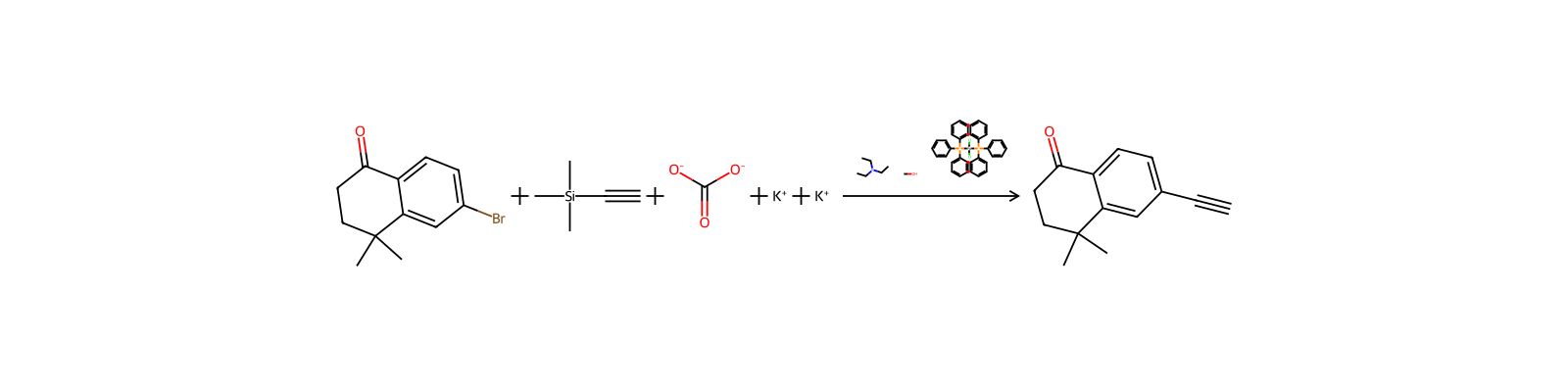
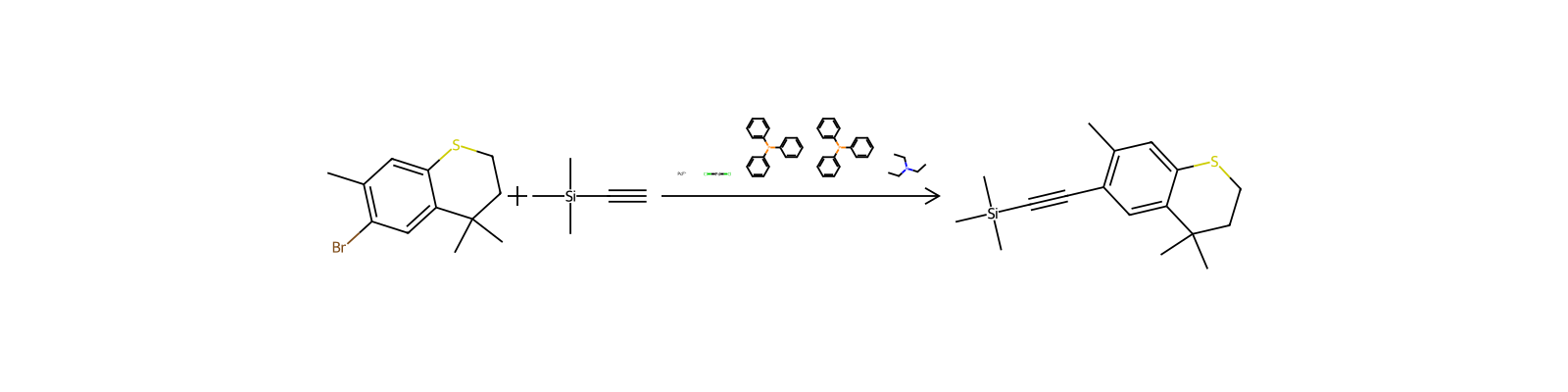
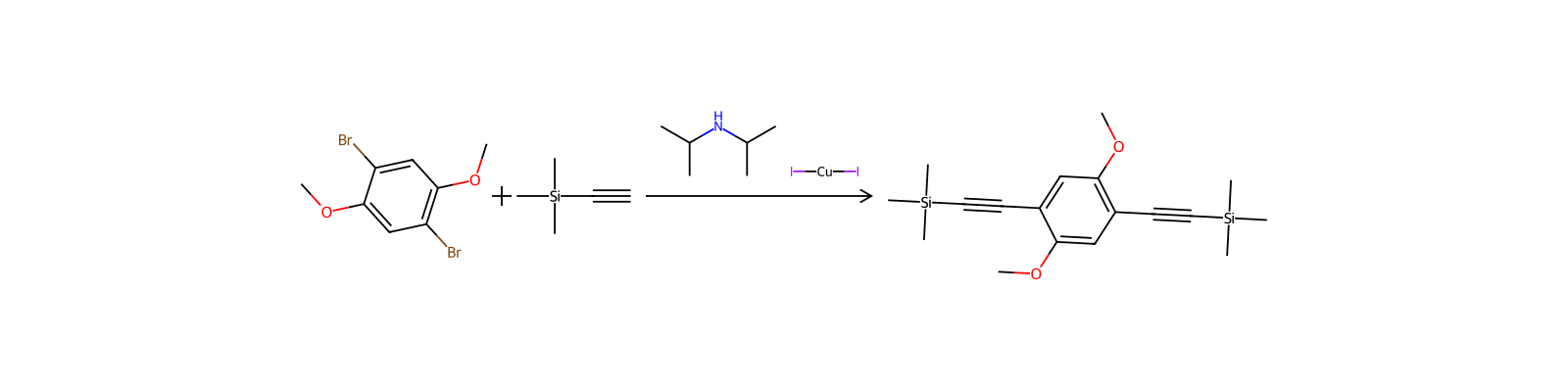
용도Trimethylsilylacetylene is a valuable reagent used in ethynylation by palladium(0)-catalyzed coupling/condensation with aryl and vinyl halides and triflates, or by nucleophilic attack of the corresponding acetylide on electrophilic centers; reacts with alkyl iodides, tin hydrides,6 and dichloroketene in a regioselective and stereoselective manner, participating in the following synthesis reactions: Ethynylations, Palladium(0)-Catalyzed Coupling Reactions,Reaction of Trimethylsilylacetylides with Electrophiles, Radical-Initiated and Transition Metal-Catalyzed Additions, Cycloaddition Reactions, Ethynylations, Cycloaddition Reactions, Further Transformations etc.
일반 설명Laser-induced polymerization of gaseous ethynyltrimethylsilane was used for efficient chemical vapour deposition of polycarbosilane films. Ethynyltrimethylsilane acts as substrate for nickel-catalyzed cross-coupling with benzonitriles.
상·하류 제품 정보
상류 원료
하류 제품
관련 반응
3,402건





화합물 노트
불러오는 중…