홈MCP워크벤치Skills
홈워크벤치알림마이페이지
llms.txt · MCP 가이드개인정보처리방침 · 이용약관 · 지원v1.8.0
  1. 홈
  2. /화합물

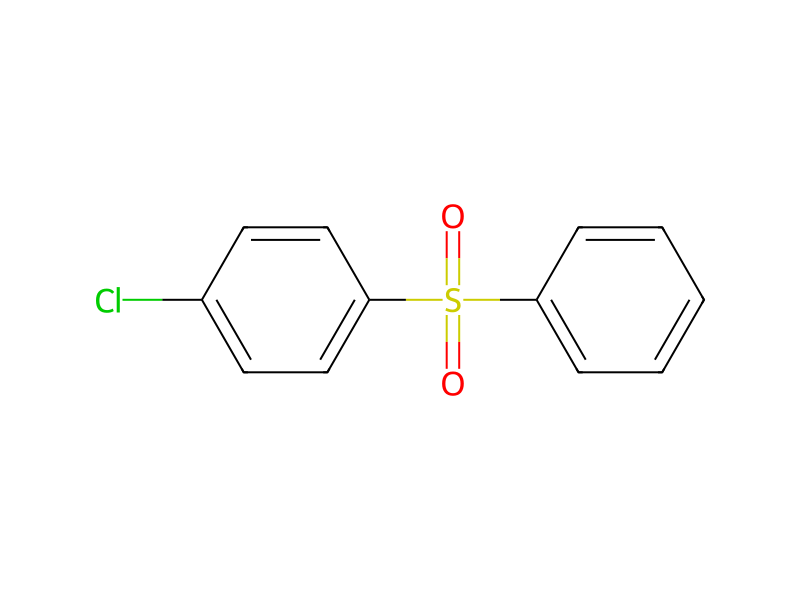
Sulphenone

HCID 6621
새 노트새 반응견적 요청하기
인쇄 미리보기
기본 정보이름 및 식별자물성안전 및 규제화학 및 산업관련 반응화합물 노트
부분 구조 검색유사 구조 찾기

기본 정보

CAS
80-00-2
표준 SMILES
O=S(=O)(c1ccccc1)c1ccc(Cl)cc1
InChIKey
OFCFYWOKHPOXKF-UHFFFAOYSA-N
분자식
C12H9ClO2S
평균 분자량
252.72 g/mol
단동위원소 질량
252.0011784

이름 및 식별자

우선 이름
Sulphenone
IUPAC
1-(benzenesulfonyl)-4-chlorobenzene
영어명
Sulfenone
분자식
C12H9ClO2S
분자량
252.72

이름 및 동의어

4-Chlorophenyl phenyl sulfone80-00-2SULPHENONESulfenone1-Chloro-4-(phenylsulfonyl)benzene4-Chlorodiphenyl sulfoneTrifensonSulfenonBenzene, 1-chloro-4-(phenylsulfonyl)-p-Chlorophenyl phenyl sulfoneCompound R-242p-Chlorophenyl phenyl sulphone
이름 더 보기
r242r-242SULFERONEent17,941SulphenoneRr-242-b[qr]
Sulfone, p-chlorophenyl phenylp-Monochlorophenyl phenyl sulfoneR-242-B4-Chlorodiphenyl sulphone4-ChlordifenylsulfonENT 17,941Caswell No. 211DDTXSID9042259

데이터베이스 식별자

CAS
80-00-2
PubChem CID
6621
DTXSID
DTXSID9042259
ChEMBL
CHEMBL3188889
UNII
7NVM546U2M
EC Number
201-242-1
Nikkaji
J3.850D

물성

구조 계산 물성

XLogP
3.1
극성 표면적
42.5 Ų
수소 결합 공여자 수
0
수소 결합 수용자 수
2
회전 가능 결합 수
2
무거운 원자 수
16
형식 전하
0
복잡도
306

실험 및 물리화학적 성질

SpringerMaterials Properties13C nuclear magnetic resonance spectrum
PesticidesPesticides -> Organochlorine Pesticides
LogPlog Kow = 3.25 /Estimated/
OdorSlight aromatic odor
TasteTasteless
Color/Form · 3건

Dimorphic crystals

Colorless crystals

White solid

Solubility · 3건

At 20 °C acetone (74.4 g/100mL), toluene (44.4 g/100mL), dioxane (65.6 g/100mL), isopropanol (21 g/100mL), hexane 0.4 g/100mL), xylene (18.2 g/100mL), carbon tetrachloride (4.9 g/100mL); slightly soluble in pet ether.

Readily sol in polar and aromatic org solvents

Insoluble in water

DecompositionWhen heated to decomposition it emits very toxic fumes of /hydrogen chloride and sulfur oxides/.
Melting Point98 °C
Vapor Pressure · 2건

0.0000039 [mmHg]

8.7X10⁻⁶ mm Hg at 25 °C /Estimated/

안전 및 규제

안전 정보는 참고용이며, 공급업체의 물질안전보건자료(SDS), 관련 법규 및 전문가 평가를 대체하지 않습니다.

GHS 분류

GHS Classification · 4건

Warning

H302 (100%): Harmful if swallowed [Warning Acute toxicity, oral]

P261, P264, P270, P271, P280, P301+P317, P302+P352, P304+P340, P317, P321, P330, P362+P364, and P501 (click each P-code to see the statement)

Aggregated GHS information provided per 45 reports by companies from 4 notifications to the ECHA C&L Inventory. Each notification may be associated with multiple companies.

유해성 정보

Regulatory InformationBenzene, 1-chloro-4-(phenylsulfonyl)-: Does not have an individual approval but may be used as a component in a product covered by a group standard. It is not approved for use as a chemical in its own right.
Hazards SummaryEffects include weakness and weight loss in high-dose oral studies in dogs; [RTECS] An irritant; [MSDSonline]
Hazard Classes and CategoriesAcute Tox. 4 (100%)

안전 및 보호

Disposal Methods · 1건

SRP: The most favorable course of action is to use an alternative chemical product with less inherent propensity for occupational exposure or environmental contamination. Recycle any unused portion of the material for its approved use or return it to the manufacturer or supplier. Ultimate disposal of the chemical must consider: the material's impact on air quality; potential migration in soil or water; effects on animal, aquatic, and plant life; and conformance with environmental and public health regulations.

독성 정보

Ecotoxicity Values · 4건

화학 및 산업

약리 정보

Absorption, Distribution and ExcretionNo significant tissue storage in chronic feeding tests /in lab mammals/.

용도 및 제조

Uses · 5건

Used as acaricide; Not currently registered with the EPA for use in the US; [HSDB]

Farming (Pesticides) [Category: Industry]

For sulphenone (USEPA/OPP Pesticide Code: 060510) there are 0 labels match. /SRP: Not registered for current use in the U.S., but approved pesticide uses may change periodically and so federal, state and local authorities must be consulted for currently approved uses./

Acaricide

A miticide

Methods of Manufacturing · 2건

Preparation: Bender, Pitt, US 2593001 (1952 to Stauffer Chem)

...By reaction of benzenesulfonic acid & chlorobenzene @ 250 °C...

Formulations/Preparations · 3건

Emulsifiable concn 4 lb/US gal; 50% wettable powder; field concn (wp) of order of 2-3 lb/100 US gal

Commercial product contains 80% sulfenone and 20% related diaryl sulfones.

Technical material consists of about 80% of this compound, with small amount of o- & m-isomers, bis-(p-chlorophenyl) sulfone, & diphenyl sulfone.

General Manufacturing Information · 3건

Benzene, 1-chloro-4-(phenylsulfonyl)-: ACTIVE

Insecticidal property of bis(p-chlorophenyl)sulfone: Unsymmetrical Deriv was developed for Insecticidal purposes by Stauffer chem. ...Compatible with all commonly-used spray materials. An acaricide with limited insecticidal properties, good residual & ovicidal activity on 2 spotted spider mite. Ovicide on apples & pears. No ...evidence of phytotoxicity except ...on sensitive greenhouse plants & certain sensitive varieties of apples or pears.

Discontinued by Stauffer Chemical Co.

응용 분야

관련 반응

8건
반응 기록 만들기
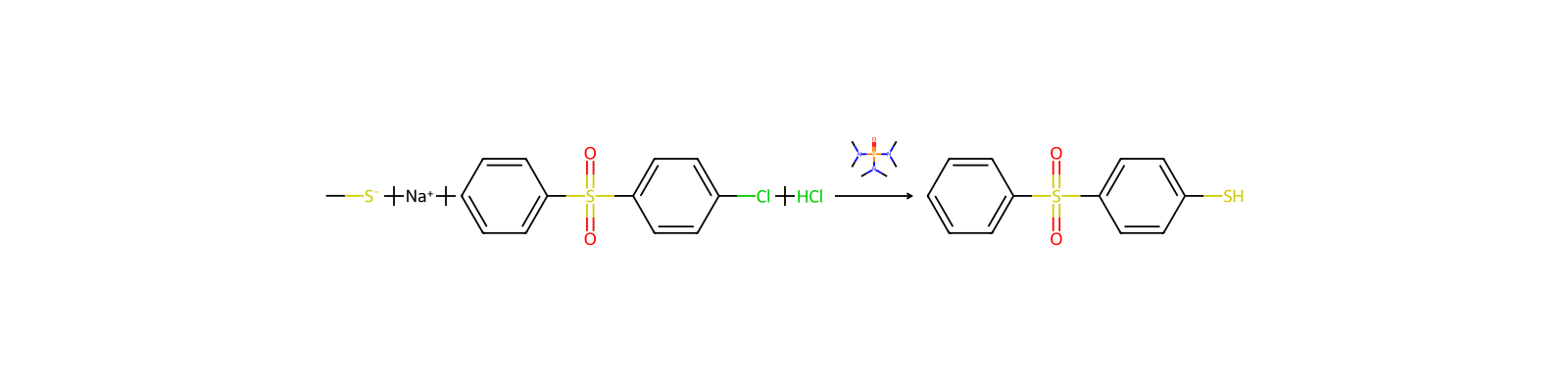
HRID 391612 반응식
HRID 391612반응물로uspto-grants-2013_02
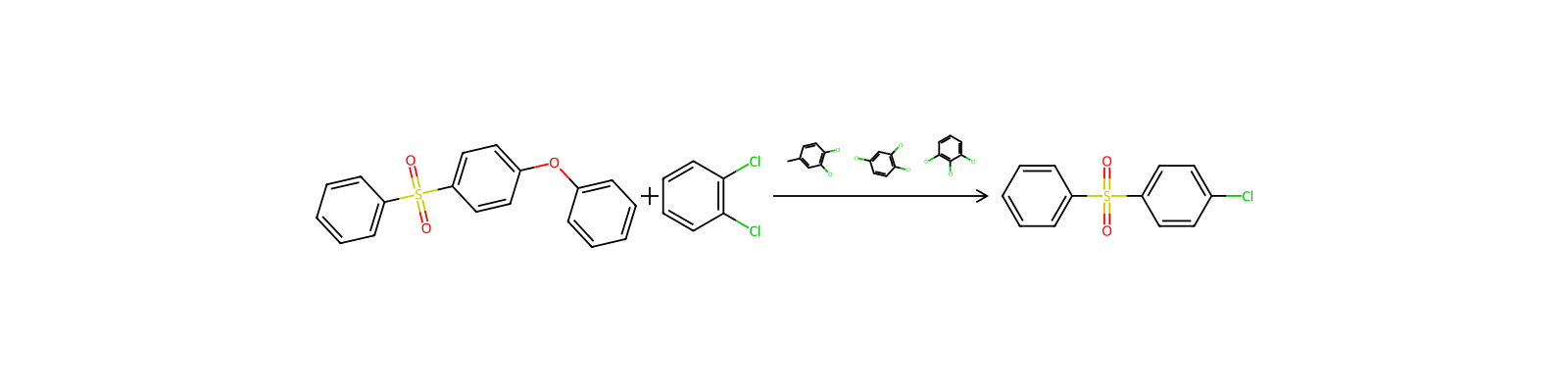
HRID 646659 반응식
HRID 646659생성물로uspto-grants-2010_04
HRID 897152 반응식
HRID 897152반응물로uspto-grants-2005_07
HRID 944354 반응식
HRID 944354반응물로Validation data from https://doi.org/10.1039/C8SC04228D
HRID 992251 반응식
HRID 992251반응물로uspto-grants-2002_10
HRID 1795783 반응식
HRID 1795783반응물로uspto-grants-2006_04
HRID 1815613 반응식
HRID 1815613반응물로uspto-grants-2005_04
HRID 2372812 반응식
HRID 2372812반응물로uspto-grants-1992_03

화합물 노트

불러오는 중…

이 페이지에서기본 정보이름 및 식별자물성안전 및 규제화학 및 산업관련 반응화합물 노트
더보기
새 노트새 반응견적 요청하기
Henry's Law ConstantHenry's Law constant = 1.9X10⁻⁷ atm-cu/mole at 25 °C /Estimated/
Physical DescriptionColorless or white solid; [HSDB] White powder; [MSDSonline]

물리화학적 성질

녹는점
90 · 90-94 °C(lit.)
끓는 점
389 °C · 389 °C / 719mmHg
밀도
1.3319 · 1.3319 (estimate)
저장 조건
-20 °C · -20°C Freezer, Under inert atmosphere
용해도
74.4 g/100ml · 아세톤: 용해성74.4 g/100ml @ 20°C(lit.)
물리적 상태
고체
색상
흰색에서 황백색까지
Merck
14 · 14,8988
Henry's Law Constant
5.2 · 5.2×101 mol/(m3Pa) at 25℃, HSDB (2015)
안정성
안정적인. 강한 산화제와 호환되지 않습니다.
InChI
1S/C12H9ClO2S/c13-10-6-8-12(9-7-10)16(14,15)11-4-2-1-3-5-11/h1-9H
InChIKey
OFCFYWOKHPOXKF-UHFFFAOYSA-N
SMILES
Clc1ccc(cc1)S(=O)(=O)c2ccccc2
NIST
1 · Benzene, 1-chloro-4-(phenylsulfonyl)-(80-00-2)
EPA
p-Chlorophenyl phenyl sulfone (80-00-2)

화학적 성질

Sulfenone is White solid. Insoluble inwater; soluble in hexane, xylene, carbon tetrachloride, and acetone.

LD50 House sparrows oral >100 mg/kg

LD50 Redwinged blackbirds oral >100 mg/kg

LC50 Fundulus similis (Longnose killifish) 7500 ug/L/24 hr; 6000 ug/L/48 hr; static /Formulated product/

LC50 Mugil curema (White mullet) 11900 ug/L/48 hr; static /Formulated product/

Environmental Fate · 3건

TERRESTRIAL FATE: Based on a classification scheme(1), an estimated Koc value of 4,700(SRC), determined from a structure estimation method(2), indicates that sulphenone is expected to have slight mobility in soil(SRC). Volatilization of sulphenone from moist soil surfaces is not expected to be an important fate process(SRC) given an estimated Henry's Law constant of 1.9X10⁻⁷ atm-cu m/mole(SRC), using a fragment constant estimation method(3). Sulphenone is not expected to volatilize from dry soil surfaces(SRC) based upon an estimated vapor pressure of 8.7X10⁻⁶ mm Hg(SRC), determined from a fragment constant method(4). Biodegradation data were not available(SRC, 2005).

AQUATIC FATE: Based on a classification scheme(1), an estimated Koc value of 4,700(SRC), determined from a structure estimation method(2), indicates that sulphenone is expected to adsorb to suspended solids and sediment(SRC). Volatilization from water surfaces is not expected(3) based upon an estimated Henry's Law constant of 1.9X10⁻⁷ atm-cu m/mole(SRC), developed using a fragment constant estimation method(4). According to a classification scheme(5), an estimated BCF of 64(SRC), from an estimated log Kow of 3.2(6) and a regression-derived equation(7), suggests the potential for bioconcentration in aquatic organisms is moderate(SRC). Biodegradation data were not available(SRC, 2005).

ATMOSPHERIC FATE: According to a model of gas/particle partitioning of semivolatile organic compounds in the atmosphere(1), sulphenone, which has an estimated vapor pressure of 8.69X10⁻⁶ mm Hg at 25 °C(SRC), determined from a fragment constant method(2), will exist in both the vapor and particulate phases in the ambient atmosphere. Vapor-phase sulphenone is degraded in the atmosphere by reaction with photochemically-produced hydroxyl radicals(SRC); the half-life for this reaction in air is estimated to be 23 days(SRC), calculated from its rate constant of 7.1X10⁻¹³ cu cm/molecule-sec at 25 °C(SRC) that was derived using a structure estimation method(3). Particulate-phase sulphenone may be removed from the air by wet and dry deposition(SRC). Sulphenone does not absorb light at wavelengths >290(4) and therefore, is not expected to be susceptible to direct photolysis by sunlight.

Ecotoxicity Excerpts · 1건

/BIRDS and MAMMALS/ The acute oral toxicity, repellency and hazard potential of sulphenone to one or more of 68 species of wild and domestic birds was determined by standardized testing procedures. Redwinged blackbirds were the most sensitive of the bird species tested.

Soil Adsorption/Mobility · 1건

Using a structure estimation method based on molecular connectivity indices(1), the Koc for sulphenone can be estimated to be 4,700(SRC). According to a classification scheme(2), this estimated Koc value suggests that sulphenone is expected to have slight mobility in soil.

Artificial Pollution SourcesSulphenone's former production and use as an acaricide(1) and miticide(2) resulted in its direct release to the environment through various waste streams(SRC).
Environmental Bioconcentration · 1건

An estimated BCF of 64 was calculated for sulphenone(SRC), using an estimated log Kow of 3.2(1) and a regression-derived equation(2). According to a classification scheme(3), this BCF suggests the potential for bioconcentration in aquatic organisms is moderate(SRC).

Volatilization from Water/Soil · 1건

The Henry's Law constant for sulphenone is estimated as 1.9X10⁻⁷ atm-cu m/mole(SRC) using a fragment constant estimation method(1). This Henry's Law constant indicates that sulphenone is expected to be essentially nonvolatile from water surfaces(2). Sulphenone's Henry's Law constant indicates that volatilization from moist soil surfaces is not expected to occur(SRC). Sulphenone is not expected to volatilize from dry soil surfaces(SRC) based upon an estimated vapor pressure of 8.7X10⁻⁶ mm Hg(SRC), determined from a fragment constant method(3).

Non-Human Toxicity Excerpts/LABORATORY ANIMALS: Acute Exposure/ ...Moderately low oral toxicity to lab mammals. No skin irritation.
Environmental Abiotic Degradation · 1건

The rate constant for the vapor-phase reaction of sulphenone with photochemically-produced hydroxyl radicals has been estimated as 7.1X10⁻¹³ cu cm/molecule-sec at 25 °C(SRC) using a structure estimation method(1). This corresponds to an atmospheric half-life of about 23 days at an atmospheric concentration of 5X10+5 hydroxyl radicals per cu cm(1). Sulphenone is not expected to undergo hydrolysis in the environment due to the lack of hydrolyzable functional groups(3). Sulphenone does not absorb light at wavelengths >290(4) and therefore, is not expected to be susceptible to direct photolysis by sunlight.

Probable Routes of Human Exposure · 1건

Current occupational exposure and general population exposure should be low or non-existent since sulphenone is no longer produced or used in the US (May,2005). In the past, sulphenone was applied directly to apple and pears trees and green house plants as an acaricide and insecticide and exposure to this compound was primarily by inhalation and dermal contact. (SRC)

Environmental Fate/Exposure Summary · 1건

Sulphenone's former production and use as an acaricide and miticide resulted in its direct release to the environment through various wastes streams. If released to air, an estimated vapor pressure of 8.7X10⁻⁶ mm Hg at 25 °C indicates sulphenone will exist in both the vapor and particulate phases in the ambient atmosphere. Vapor-phase sulphenone will be degraded in the atmosphere by reaction with photochemically-produced hydroxyl radicals; the half-life for this reaction in air is estimated to be 23 days. Particulate-phase sulphenone will be removed from the atmosphere by wet and dry deposition. Sulphenone does not absorb light at wavelengths >290nm and therefore, is not expected to be susceptible to direct photolysis by sunlight. If released to soil, sulphenone is expected to have slight mobility based upon an estimated Koc of 4700. Volatilization from moist soil surfaces is not expected to be an important fate process based upon an estimated Henry's Law constant of 1.9X10⁻⁷ atm-cu m/mole. Sulphenone is not expected to volatilize from dry soil surfaces based upon its vapor pressure. If released into water, sulphenone is expected to adsorb to suspended solids and sediment based upon the estimated Koc. Volatilization from water surfaces is not expected to be an important fate process based upon this compound's estimated Henry's Law constant. An estimated BCF of 64 suggests the potential for bioconcentration in aquatic organisms is moderate. Hydrolysis is not expected to be an important environmental fate process since this compound lacks functional groups that hydrolyze under environmental conditions. Current occupational exposure and general population exposure should be low or non-existent since sulphenone is no longer produced or used in the US(5,2005). In the past, sulphenone was applied directly to apple and pears trees and green house plants as an acaricide and insecticide and exposure to this compound was primarily by inhalation and dermal contact. (SRC)

Antidote and Emergency Treatment · 2건

Basic treatment: Establish a patent airway. Suction if necessary. Watch for signs of respiratory insufficiency and assist ventilations if needed. Administer oxygen by nonrebreather mask at 10 to 15 L/min. Monitor for pulmonary edema and treat if necessary ... . Monitor for shock and treat if necessary ... . Anticipate seizures and treat if necessary ... . For eye contamination, flush eyes immediately with water. Irrigate each eye continuously with normal saline during transport ... . Do not use emetics. For ingestion, rinse mouth and administer 5 ml/kg up to 200 ml of water for dilution if the patient can swallow, has a strong gag reflex, and does not drool ... . Cover skin burns with dry sterile dressings after decontamination ... . /Poison A and B/

Advanced treatment: Consider orotracheal or nasotracheal intubation for airway control in the patient who is unconscious, has severe pulmonary edema, or is in respiratory arrest. Positive pressure ventilation techniques with a bag valve mask device may be beneficial. Monitor cardiac rhythm and treat arrhythmias as necessary ... . Start an IV with D5W /SRP: "To keep open", minimal flow rate/. Use lactated Ringer's if signs of hypovolemia are present. Watch for signs of fluid overload. Consider drug therapy for pulmonary edema ... . For hypotension with signs of hypovolemia, administer fluid cautiously. Watch for signs of fluid overload ... . Treat seizures with diazepam (Valium) ... . Use proparacaine hydrochloride to assist eye irrigation ... . /Poison A and B/

안전 데이터

wgk
3
tsca
TSCA listed
rtecs
WR5775000
독성
LD50 orally in mice: 2.7 g/kg (Hazleton)
HS 번호
2930909899
risk_code
20/21/22
hazard_code
Xn
safety_code
36
Hazard Classifications
Acute Tox. 4 DermalAcute Tox. 4 InhalationAcute Tox. 4 Oral
스토리지 클래스
11 - Combustible Solids
유해 물질 데이터
80-00-2(Hazardous Substances Data)

용도Sulfenone is an impurity of Dapson (D193250), an antibacterial used in the treatment of dermatitis herpetiformis.

일반 설명4-Chlorophenyl phenyl sulfone is also referred to as sulphenone. It participates in palladium-catalyzed amidation reaction in the presence of low CO pressures and an iodide salt.

상·하류 제품 정보

상류 원료

클로로술폰산4-클로로벤젠설포닐 염화물Benzene, 1-chloro-2-(phenylsulfonyl)-2-클로로페닐4-클로로페닐설폰Benzene, 1-chloro-3-[(4-chlorophenyl)sulfonyl]-Benzenesulfonic acid,4-chloro-, hydrazide4,4'-디클로로디페닐 술폰N-플루오로벤젠설폰아마이드벤젠술핀산Sodium 4-chlorobenzene sulfinate4-클로로디페닐설파이드디페닐요오도늄트리플루오로메탄설포네이트페닐붕산아이오도벤젠4-Chlorophenylboronic acid