
4,4'-디아미노스틸벤-2-,2'디술폰산
Diaminostilbenedisulfonic acid
데이터를 보충하는 중입니다. 잠시 후 페이지를 새로 고치면 최신 내용을 볼 수 있습니다
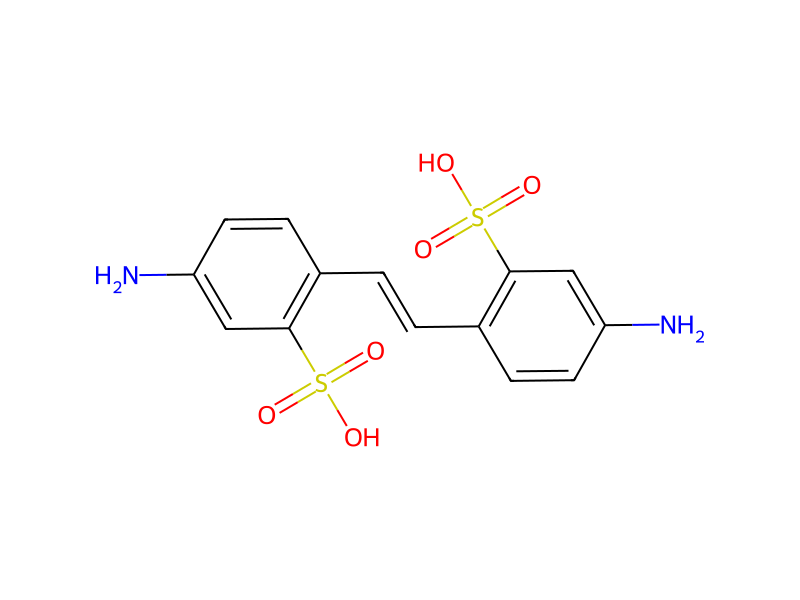
기본 정보
- CAS
81-11-8- 표준 SMILES
Nc1ccc(C=Cc2ccc(N)cc2S(=O)(=O)O)c(S(=O)(=O)O)c1- InChIKey
REJHVSOVQBJEBF-UHFFFAOYSA-N- 분자식
- C14H14N2O6S2
- 평균 분자량
- 370.4 g/mol
- 단동위원소 질량
- 370.02932817
개요
4,4'-diamino-2,2'-stilbenedisulfonic acid appears as odorless yellowish microscopic needles or cream-colored powder. pH approximately 4.3 at 30 g/L water (suspension). (NTP, 1992)
이름 및 식별자
- 우선 이름
- Diaminostilbenedisulfonic acid
- IUPAC
- 5-amino-2-[2-(4-amino-2-sulfophenyl)ethenyl]benzenesulfonic acid
- 현지명
- 4,4'-디아미노스틸벤-2-,2'디술폰산
- 영어명
- 4,4'-Diamino-2,2'-stilbenedisulfonic acid
- 분자식
- C14H14N2O6S2
- 분자량
- 370.4
이름 및 동의어
4,4'-DIAMINO-2,2'-STILBENEDISULFONIC ACIDAmsonic acidDTXSID5024926AmsonsaeureDiaminostilbenedisulfonic acidBenzenesulfonic acid, 2,2'-(1,2-ethenediyl)bis[5-amino-NCI-C60162DTXCID2049262,2'-(1,2-Ethylenediyl)bis(5-aminobenzenesulfonic acid)Benzenesulfonic acid, 2,2'-(1,2-ethenediyl)bis(5-amino-NSC-163899GJ5MP05
이름 더 보기
2,2'-(1,2-에테네빌)비스[5-아니노벤젠술폰산]4,4'-다이아미노스틸벤-2,2'-다이설폰산4,4'-디아미노스틸벤-2-,2'디술폰산4,4'-디아미노스틸벤-2,2'-디술폰산2,2‘-다이아미노-4,4’-스틸벤다이설폰산2,2'-(1,2-에텐디일)비스(5-아미노벤젠설폰산)2,2‘-다이아미노-4,4’-스틸벤다이설폰 산2,2'스틸벤디설폰산, 4,4'-디아미노4,4'-디아미노-2,2'-스틸벤디설폰산디아미노스틸벤디설폰산벤젠설폰산, 2,2'-(1,2-에텐디일)비스(5-아미노-암손산플라본 산DASDSD ACIDDASDA4,4'-Diaminostilbene-2,2'-disulfonic AcidDASD1,2-bis(4-amino-2-sulfophenyl)ethene4',4" Diamino stillbene 2'2" disulphonic acid
물성
구조 계산 물성보충 중
- XLogP
- 0.3
- 극성 표면적
- 178 Ų
- 수소 결합 공여자 수
- 4
- 수소 결합 수용자 수
- 8
- 회전 가능 결합 수
- 4
- 무거운 원자 수
- 24
- 형식 전하
- 0
- 복잡도
- 606
실험 및 물리화학적 성질
Chemical ClassesNitrogen Compounds -> Aminobenzoic Acids
LogP-1.7
Color/FormYELLOW NEEDLES
Solubility
less than 1 mg/mL at 73 °F (NTP, 1992)
VERY SLIGHTLY SOL IN WATER
SOL IN ALCOHOL & ETHER
Endocrine DisruptorsPotential endocrine disrupting compound
Melting Pointgreater than 617 °F (NTP, 1992)
Physical Description
4,4'-diamino-2,2'-stilbenedisulfonic acid appears as odorless yellowish microscopic needles or cream-colored powder. pH approximately 4.3 at 30 g/L water (suspension). (NTP, 1992)
Dry Powder; Large Crystals; Liquid
Yellow solid; [Merck Index]
Other Experimental PropertiesFORMS SPARINGLY WATER SOL CRYSTALLINE SALTS WITH MANY BISQUATERNARY AMMONIUM BASES
물리화학적 성질
안전 및 규제
안전 정보는 참고용이며, 공급업체의 물질안전보건자료(SDS), 관련 법규 및 전문가 평가를 대체하지 않습니다.
GHS 분류
GHS Classification
This chemical does not meet GHS hazard criteria for 1% (2 of 210) of reports.
Warning
H302 (18.6%): Harmful if swallowed [Warning Acute toxicity, oral]
P264, P270, P273, P301+P317, P330, and P501 (click each P-code to see the statement)
Aggregated GHS information provided per 210 reports by companies from 10 notifications to the ECHA C&L Inventory. Each notification may be associated with multiple companies.
유해성 정보
Regulatory Information
Chemical: Benzenesulfonic acid, 2,2'-(1,2-ethenediyl)bis[5-amino-
Benzenesulfonic acid, 2,2'-(1,2-ethenediyl)bis[5-amino- is listed on the EPA's Chemical Data Reporting (CDR) system. Manufacturers and importers of Benzenesulfonic acid, 2,2'-(1,2-ethenediyl)bis[5-amino- are required to report information about their production and use of this chemical to the EPA under the Toxic Substances Control Act (TSCA). (40 eCFR Part 711)
Status: Cease Manufacture Update: 15-02-2020 https://echa.europa.eu/registration-dossier/-/registered-dossier/30493
Fire HazardsFlash point data for this chemical are not available; however, it is probably combustible. (NTP, 1992)
Health Hazards
SYMPTOMS: Symptoms of exposure to this compound include irritation, burning, reddening, tearing and possible swelling of the eyes, irritation of the respiratory tract, runny nose, sore throat, coughing, chest discomfort and shortness of breath. Persons with impaired pulmonary function or with preexisting eye conditions may be more susceptible to the effects of this compound.
Hazards Summary
An eye and respiratory tract irritant; [CAMEO] There have been reports of decreased libido in male workers handling this chemical; [REPROTOX] An irritant; Effects in high-dose animal studies include abnormal liver and kidney function tests; [MSDSonline]
화학 및 산업
용도 및 제조
Uses
Used as a chemical intermediate for dyes, bleaching agents, and fluorescent brighteners; [HSDB]
IN MFR OF DYES, BLEACHING AGENTS
CHEM INT FOR DYES (EG, CI DIRECT YELLOW 12) & FLUORESCENT BRIGHTENERS
U.S. Exports
(1977) No Data
(1979) No Data
U.S. Imports
(1977) 4.74X10+8 GRAMS (PRINCPL CUSTMS DISTS)
(1979) 4.42X10+8 GRAMS (PRINCPL CUSTMS DISTS)
U.S. Production
2023: 1,000,000 - <5,000,000 lb
(1977) PROBABLY GREATER THAN 9.08X10+6 GRAMS
(1979) PROBABLY GREATER THAN 6.81X10+6 GRAMS
Consumption PatternsESSENTIALLY 100% AS A CHEM INT
Industry UsesIntermediate
Methods of Manufacturing
CATALYTIC REDUCTION OF 4,4'-DINITRO-2,2'-STILBENEDISULFONIC ACID
BENDER, SCHULTZ, BER 19, 3234 (1886); HE FIERZ-DAVID, L BLANGEY, GRUNDLEGENDE OPERATONEN DER FARBENCHEMIE (SPRINGER-VERLAG, VIENNA, 7TH ED, 1947) P 161; SPIEGLER, US PATENT 2,784,220 (1957 TO DUPONT).
BOILING SODIUM SALT OF PARA-NITROTOLUENE-ORTHO-SULFONATE IN WATER WITH CAUSTIC SODA & REDN WITH ZINC DUST.
Household ProductsInformation on 13 consumer products that contain Diaminostilbenedisulfonic acid in the following categories is provided:
General Manufacturing Information
Paper Manufacturing
Benzenesulfonic acid, 2,2'-(1,2-ethenediyl)bis[5-amino-: ACTIVE
응용 분야
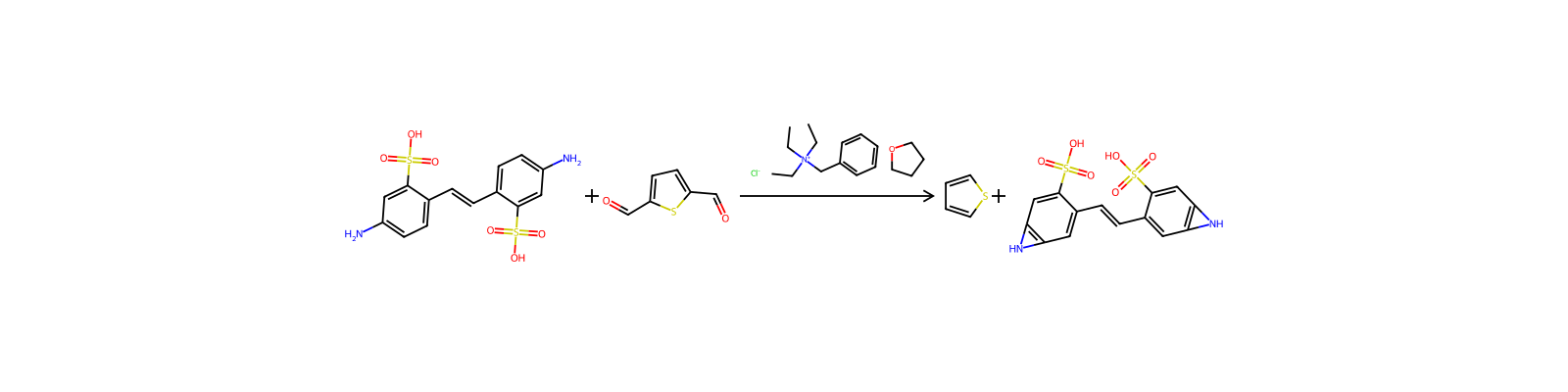
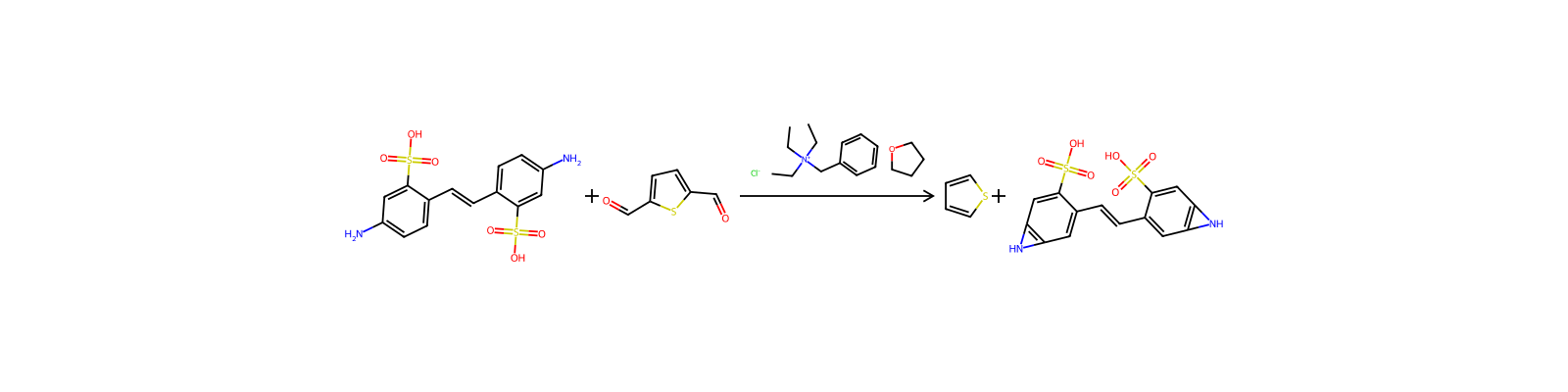
관련 반응
7건




화합물 노트
불러오는 중…