홈MCP워크벤치Skills
홈워크벤치알림마이페이지
llms.txt · MCP 가이드개인정보처리방침 · 이용약관 · 지원v1.8.0
  1. 홈
  2. /화합물

N-브로모숙신산이미드

N-bromobutanimide

HCID 67184
새 노트새 반응견적 요청하기
인쇄 미리보기

데이터를 보충하는 중입니다. 잠시 후 페이지를 새로 고치면 최신 내용을 볼 수 있습니다

기본 정보이름 및 식별자물성안전 및 규제화학 및 산업관련 반응화합물 노트
부분 구조 검색유사 구조 찾기

기본 정보

CAS
128-08-5
표준 SMILES
O=C1CCC(=O)N1Br
InChIKey
PCLIMKBDDGJMGD-UHFFFAOYSA-N
분자식
C4H4BrNO2
평균 분자량
177.98 g/mol
단동위원소 질량
176.94254

이름 및 식별자

우선 이름
N-bromobutanimide
IUPAC
1-bromopyrrolidine-2,5-dione
현지명
N-브로모숙신산이미드
영어명
N-Bromosuccinimide
분자식
C4H4BrNO2
분자량
177.98

이름 및 동의어

n-bromobutanimideRefChem:6049N-Bromosuccinimide128-08-51-Bromopyrrolidine-2,5-dioneSuccinbromimide2,5-Pyrrolidinedione, 1-bromo-Succinbromide1-Bromo-2,5-pyrrolidinedioneSuccinibromimideN-BromosuccimideNBS
이름 더 보기
N-브로모석신이미드N-브로모숙신산이미드N-브롬숙신이미드bromosuccinimideN-BromsuccinimidN-BROMOSUCINIMIDEN-Brom-succinimidN-Bromosucciminide1-Bromo-2,5-phrrolidinedione
Succinimide, N-bromo-N-BromsuccinimideN-bromo-succinimideMFCD00005510NSC 161-Bromo-2,5-pyrrolidine-dioneK8G1F2UCJF1-Bromodihydro-1H-pyrrole-2,5-dione

데이터베이스 식별자

CAS
128-08-5
PubChem CID
67184
DTXSID
DTXSID2038738
ChEBI
CHEBI:53174
UNII
K8G1F2UCJF
EC Number
204-877-2
Nikkaji
J5.405D

물성

구조 계산 물성보충 중

XLogP
-0.1
극성 표면적
37.4 Ų
수소 결합 공여자 수
0
수소 결합 수용자 수
2
회전 가능 결합 수
0
무거운 원자 수
8
형식 전하
0
복잡도
129

실험 및 물리화학적 성질

OdorFaint odor of bromine
Density · 2건

2.098 g/cu cm at 25 °C

2.098 @25 °C

Color/Form · 3건

Orthorhombic bisphenoidal crystals

Crystals from benzene

Solid at 20 °C and 1031 hPa; powder

Solubility · 4건

In water, 1.47 g/100 g water at 25 °C

Slightly soluble in water

Slightly soluble in ethyl acetate, diethyl ether; very soluble in acetone; insoluble in hexane

In tert-butanol 0.73; acetone 14.40; carbon tetrachloride 0.02; hexane 0.006; glacial acetic acid 3.10 (all in g/100 g of solvent, 25 °C)

Boiling Point338.9 °C at 101.325 kPa
Decomposition · 2건

Melting range 172-178 °C (decomposes).

When heated to decomposition it emits toxic fumes of Br- and NOx.

Melting Point · 2건

173-175 °C (slight decomposition)

MP: 174 °C

Vapor Pressure · 2건

11.0 [mmHg]

VP: 0.001 Pa at 25 °C

안전 및 규제

안전 정보는 참고용이며, 공급업체의 물질안전보건자료(SDS), 관련 법규 및 전문가 평가를 대체하지 않습니다.

GHS 분류

GHS Classification · 6건

Danger

H272 (38.7%): May intensify fire; oxidizer [Danger Oxidizing liquids; Oxidizing solids];H290 (38.7%): May be corrosive to metals [Warning Corrosive to Metals];H302 (55.8%): Harmful if swallowed [Warning Acute toxicity, oral];H314 (35.2%): Causes severe skin burns and eye damage [Danger Skin corrosion/irritation];H315 (46.2%): Causes skin irritation [Warning Skin corrosion/irritation];H317 (21.6%): May cause an allergic skin reaction [Warning Sensitization, Skin];H319 (65.3%): Causes serious eye irritation [Warning Serious eye damage/eye irritation];H335 (26.6%): May cause respiratory irritation [Warning Specific target organ toxicity, single exposure; Respiratory tract irritation];H341 (15.1%): Suspected of causing genetic defects [Warning Germ cell mutagenicity];H400 (43.2%): Very toxic to aquatic life [Warning Hazardous to the aquatic environment, acute hazard]

P203, P210, P220, P234, P260, P261, P264, P264+P265, P270, P271, P272, P273, P280, P301+P317, P301+P330+P331, P302+P352, P302+P361+P354, P304+P340, P305+P351+P338, P305+P354+P338, P316, P318, P319, P321, P330, P332+P317, P333+P317, P337+P317, P362+P364, P363, P370+P378, P390, P391, P403+P233, P405, P406, and P501 (click each P-code to see the statement)

Aggregated GHS information provided per 199 reports by companies from 25 notifications to the ECHA C&L Inventory. Each notification may be associated with multiple companies.;Information may vary between notifications depending on impurities, additives, and other factors. The percentage value in parenthesis indicates the notified classification ratio from companies that provide hazard codes. Only hazard codes with percentage values above 10% are shown. For more detailed information, please visit ECHA C&L website.

유해성 정보

Regulatory Information · 3건

Chemical: 2,5-Pyrrolidinedione, 1-bromo-

Status: Active Update: 02-04-2019 https://echa.europa.eu/registration-dossier/-/registered-dossier/5434;Status: Active Update: 20-12-2022 https://echa.europa.eu/registration-dossier/-/registered-dossier/20333

Succinibromimide: Does not have an individual approval but may be used under an appropriate group standard

화학 및 산업

약리 정보

Metabolism/Metabolites · 1건

Bromine is mainly absorbed via inhalation, but may also enter the body through dermal contact. Bromine salts can be ingested. Due to its reactivity, bromine quickly forms bromide and may be deposited in the tissues, displacing other halogens. (L626)

용도 및 제조

Uses · 6건

Used in chemical synthesis (bromination of olefins and oxidation of alcohols and aldehydes); [Merck Index]

Controlled, low-energy bromination.

... Useful in organic synthesis for allylic bromination (Wohl-Ziegler reaction), aromatic ring and side-chain bromination, for oxidation, e.g., alcohols to carbonyl compounds, for dehydrohalogenation, and is used in the commercial production of cortisone and vitamin D3.

In bromination of olefins; in oxidation of alcohols to aldehydes and ketones and of aldehydes to acid bromides.

Manufacture of fine chemicals

For more Uses (Complete) data for N-Bromosuccinimide (9 total), please visit the HSDB record page.

Methods of Manufacturing... prepared by addition of bromine to a cold aqueous solution of succinimide or by reaction of succinimide with NaBrO2 in the presence of HBr.
General Manufacturing Information2,5-Pyrrolidinedione, 1-bromo-: ACTIVE
응용 분야 · 1건

용도N-Bromosuccinimide is a brominated succinimide used as a chemical reagent in radical substitution and electrophilic addition reactions in organic synthesis. In bromination of olefins; in oxidation of alcohols to aldehydes and ketones and of aldehydes to acid bromides.

제조 방법 · 1건

N-Bromosuccinimide is prepared by addition of bromine to a cold aqueous solution of succinimide or by reaction of succinimide with NaBrO2 in the presence of HBr.1.62mol (160g) succinimide is dissolved in a mixture of 1.60mol (64g) NaOH, 300g crushed ice and 400ml water. Cool the mixture in an ice bath, and add 85ml (1.65 mol, 264g) Br2 at once while stirring violently. Stir for two more minutes, then filter the precipitated product and wash with ice water. Dry in a desiccator. Yield 75-81%.Don't clean up NBS too much, the stinky yellow stuff still containing a bit of Br2 works best. N-Bromosuccinimide is a brominating agent that replaces hydrogen atoms in benzylic or allylic positions. It is used in the oxidation of secondary alcohols to ketones and in controlled low-energy brominations.

관련 반응

16,063건
반응 기록 만들기
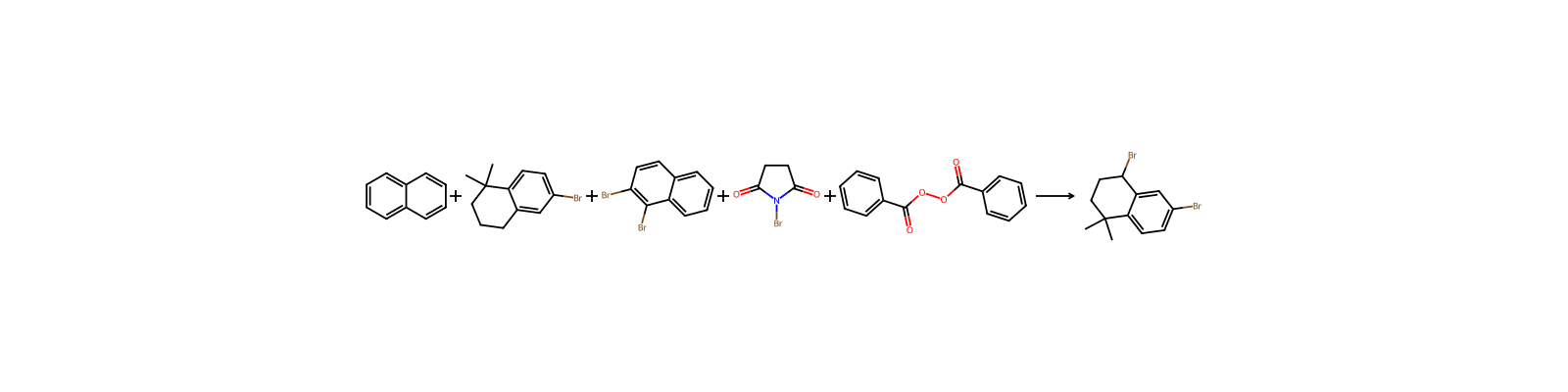
HRID 909 반응식
HRID 909반응물로uspto-grants-1998_03
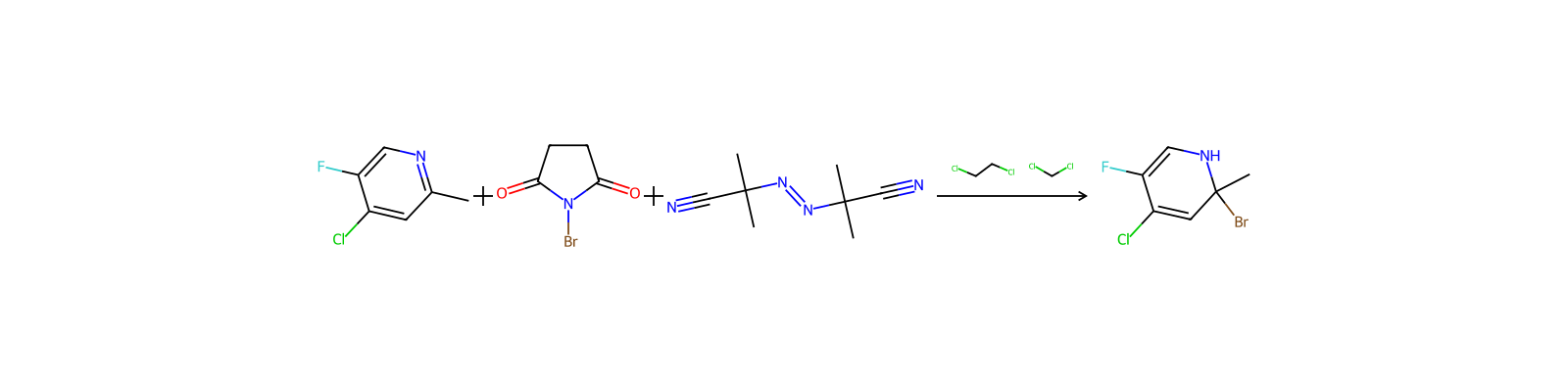
HRID 1214 반응식
HRID 1214반응물로uspto-grants-1998_03
HRID 1220 반응식
HRID 1220반응물로uspto-grants-1998_03
HRID 1242 반응식
HRID 1242반응물로uspto-grants-1998_03
HRID 1421 반응식
HRID 1421반응물로uspto-grants-1998_03
HRID 1446 반응식
HRID 1446반응물로uspto-grants-1998_03
HRID 1447 반응식
HRID 1447반응물로uspto-grants-1998_03
HRID 1865 반응식
HRID 1865반응물로uspto-grants-1998_03
1 / 500 페이지

화합물 노트

불러오는 중…

이 페이지에서기본 정보이름 및 식별자물성안전 및 규제화학 및 산업관련 반응화합물 노트
더보기
새 노트새 반응견적 요청하기
Physical Description
Solid with a mild odor of bromine; [Merck Index] White, pale yellow, or cream-colored powder; [Alfa Aesar MSDS]
Stability/Shelf LifeStable under recommended storage conditions.

물리화학적 성질

녹는점
175 · 175-180 °C (dec.)(lit.)
끓는 점
221.4 °C · 221.4°C (rough estimate)
밀도
2.098 · 2.098
증기압
14.8 hPa · 14.8 hPa (20 °C)
굴절률
1.606 · 1.6060 (estimate)
저장 조건
2 °C · Store at +2°C to +8°C.
용해도
14.8 g/l · 14.8g/l(분해)
물리적 상태
결정성 분말
산도 계수 (pKa)
-2.78 · -2.78±0.20(Predicted)
색상
흰색에서 밝은 노란색
냄새
브롬 특유의 냄새
생물학적 소스
rabbit
수용성
아세톤, 테트라히드로푸란, 디메틸 포름아미드, 디메틸 설폭사이드 및 아세토니트릴에 용해됩니다. 물과 아세트산에 약간 용해됩니다. 에테르, 헥산 및 사염화탄소에 불용성.
Merck
14 · 14,1438
BRN
113916 · 113916
안정성
안정적인. 강한 산화제, 할로겐화 탄화수소와 호환되지 않습니다.
주요 응용
펩타이드 합성
InChI
1S/C4H4BrNO2/c5-6-3(7)1-2-4(6)8/h1-2H2
InChIKey
PCLIMKBDDGJMGD-UHFFFAOYSA-N
SMILES
BrN1C(=O)CCC1=O
LogP
-1.19 · -1.19
NIST
2 · 2,5-Pyrrolidinedione, 1-bromo-(128-08-5)
EPA
N-Bromosuccinimide (128-08-5)

화학적 성질

white to light yellow crystalline powder

Hazards SummaryA strong skin, eye, and mucous membrane irritant; [Merck Index] Causes burns; Inhalation may cause corrosive injuries to upper respiratory tract and lungs; Harmful by ingestion; [Alfa Aesar MSDS] See N-Chlorosuccinimide.
Other Hazardous ReactionsConditions to avoid: Exposure to light. Exposure to moisture.
Hazard Classes and CategoriesOx. Sol. 3 (38.7%);Met. Corr. 1 (38.7%);Acute Tox. 4 (55.8%);Skin Corr. 1B (35.2%);Skin Irrit. 2 (46.2%);Skin Sens. 1 (21.6%);Eye Irrit. 2 (65.3%);STOT SE 3 (26.6%);Muta. 2 (15.1%);Aquatic Acute 1 (43.2%)
Skin, Eye, and Respiratory Irritations · 4건

N-bromosuccinimide is classified as irritating to skin: Causes skin irritation. Red skin on arms.

Highly irritating to eyes, skin, mucous membranes.

Strong irritant to eyes and skin.

An irritating poison to skin, eyes and mucous membranes.

Hazardous Reactivities and Incompatibilities · 4건

Violent reaction with dibenzoyl peroxide + 4-toluic acid.

Explosive reaction with propiononitrile after heating to 105 °C for 24 hr.

Reacts explosively with aniline, diallyl sulfide, and hydrazine hydrate.

Incompatible materials: Strong oxidizing agents, Strong acids, Strong bases, Iron and iron salts.

CSL Reaction Information · 6건

CSL00039

N-BROMOSUCCINIMIDE + 1-METHYL-2-PYRROLIDINONE + 1-METHYLPYRROLIDINE

Thermal runaway from ambient to >100°C

Explosive

Bromination

User-Reported

안전 및 보호

Firefighting HazardsCarbon oxides, nitrogen oxides (NOx), Hydrogen bromide gas
Fire Fighting Procedures · 2건

Wear self contained breathing apparatus for fire fighting if necessary.

Use water spray, alcohol-resistant foam, dry chemical or carbon dioxide.

Storage ConditionsKeep container tightly closed in a dry and well-ventilated place. Recommended storage temperature: 2 - 8 °C. Light sensitive. Moisture sensitive. Store under inert gas.
Cleanup Methods · 1건

ACCIDENTAL RELEASE MEASURES; Personal precautions, protective equipment and emergency procedures: Use personal protective equipment. Avoid dust formation. Avoid breathing vapours, mist or gas. Ensure adequate ventilation. Evacuate personnel to safe areas. Avoid breathing dust. Do not let product enter drains. Pick up and arrange disposal without creating dust. Sweep up and shovel. Keep in suitable, closed containers for disposal.

Disposal Methods · 2건

SRP: Recycle any unused portion of the material for its approved use or return it to the manufacturer or supplier. Ultimate disposal of the chemical must consider: the material's impact on air quality; potential migration in air, soil or water; effects on animal, aquatic and plant life; and conformance with environmental and public health regulations. If it is possible or reasonable use an alternative chemical product with less inherent propensity for occupational harm/injury/toxicity or environmental contamination.

Product: Offer surplus and non-recyclable solutions to a licensed disposal company. Contact a licensed professional waste disposal service to dispose of this material. Dissolve or mix the material with a combustible solvent and burn in a chemical incinerator equipped with an afterburner and scrubber. Contaminated packaging: Dispose of as unused product.

Preventive Measures · 5건

ACCIDENTAL RELEASE MEASURES; Personal precautions, protective equipment and emergency procedures: Use personal protective equipment. Avoid dust formation. Avoid breathing vapours, mist or gas. Ensure adequate ventilation. Evacuate personnel to safe areas. Avoid breathing dust. Do not let product enter drains.

Avoid contact with skin and eyes. Avoid formation of dust and aerosols. Provide appropriate exhaust ventilation at places where dust is formed.

Handle in accordance with good industrial hygiene and safety practice. Wash hands before breaks and at the end of workday.

Gloves must be inspected prior to use. Use proper glove removal technique (without touching glove's outer surface) to avoid skin contact with this product. Dispose of contaminated gloves after use in accordance with applicable laws and good laboratory practices. Wash and dry hands.

For more Preventive Measures (Complete) data for N-Bromosuccinimide (6 total), please visit the HSDB record page.

Protective Action Criteria (PAC) · 3건

6.0 [mg/m3]

66 [mg/m3]

400 [mg/m3]

Personal Protective Equipment (PPE) · 5건

Eye/face protection: Face shield and safety glasses. Use equipment for eye protection tested and approved under appropriate government standards such as NIOSH (US) or EN 166(EU).

Skin protection: Handle with gloves.

Body Protection: Complete suit protecting against chemicals. The type of protective equipment must be selected according to the concentration and amount of the dangerous substance at the specific workplace.

Respiratory protection Where risk assessment shows air-purifying respirators are appropriate use a full-face particle respirator type N100 (US) or type P3 (EN 143) respirator cartridges as a backup to engineering controls. If the respirator is the sole means of protection, use a full-face supplied air respirator. Use respirators and components tested and approved under appropriate government standards such as NIOSH (US) or CEN (EU).

Use a repirator when handling dry material, which evolves toxic fumes of bromine.

독성 정보

Treatment · 1건

EYES: irrigate opened eyes for several minutes under running water. INGESTION: do not induce vomiting. Rinse mouth with water (never give anything by mouth to an unconscious person). Seek immediate medical advice. SKIN: should be treated immediately by rinsing the affected parts in cold running water for at least 15 minutes, followed by thorough washing with soap and water. If necessary, the person should shower and change contaminated clothing and shoes, and then must seek medical attention. INHALATION: supply fresh air. If required provide artificial respiration.

Interactions · 1건

N-Bromosuccinimide (NBS) is a known protein reagent able to modify amino acids and proteins, resulting in oxidation of tryptophan, tyrosine and histidine residues, as well as sulfhydryl, alcohol and phenol groups. These properties make NBS a suitable reagent to selectively block certain amino acid residues in biochemistry, and also permit the histochemical detection of proteins by oxidative deamination followed by the Schiff reaction. In this paper we show that, under ultraviolet excitation, NBS selectively reveals the cytoplasmic granules of mammalian eosinophils and chicken heterophils, rendering considerable white--blue fluorescence, in a remarkable fluorogenic reaction which rapidly increases at the beginning of the observation. This emission slightly decays afterwards and then remains almost stable still yielding a high level of emission after 10 min of continuous excitation. Possible mechanisms underlying these results are discussed and we propose NBS as a very suitable fluorogenic reagent for the microscopical detection and analysis of proteins.

Health EffectsStrong lachrymator. Strong irritant to eyes, skin and soft tissues. Toxic if inhaled, swallowed or absorbed through skin. It is extremely destructive to the tissue of the mucous membranes and upper respiratory tract.
Environmental Fate · 3건

TERRESTRIAL FATE: Based on a classification scheme(1), an estimated Koc value of 3(SRC), determined from a structure estimation method(2), indicates that N-bromosuccinimide is expected to have very high mobility in soil(SRC). Volatilization of N-bromosuccinimide from moist soil surfaces is not expected to be an important fate process(SRC) given an estimated Henry's Law constant of 3.9X10⁻⁷ atm-cu m/mole(SRC), using a fragment constant estimation method(3). N-bromosuccinimide is not expected to volatilize from dry soil surfaces(SRC) based upon an estimated vapor pressure of 6.9X10⁻⁶ mm Hg at 25 °C(SRC), determined from a fragment constant method(2). A 93% biodegradation using activated sludge in the OECD Die Away Test(4) suggests that biodegradation is an important environmental fate process in soil(SRC).

AQUATIC FATE: Based on a classification scheme(1), an estimated Koc value of 3(SRC), determined from a structure estimation method(2), indicates that N-bromosuccinimide is not expected to adsorb to suspended solids and sediment(SRC). Volatilization from water surfaces is not expected(3) based upon an estimated Henry's Law constant of 3.9X10⁻⁷ atm-cu m/mole(SRC), developed using a fragment constant estimation method(4). According to a classification scheme(5), an estimated BCF of 3(SRC), from an estimated log Kow of -1.19(2) and a regression-derived equation(2), suggests the potential for bioconcentration in aquatic organisms is low(SRC). A 93% biodegradation using activated sludge in the OECD Die Away Test(6) suggests that biodegradation is an important environmental fate process in water(SRC).

ATMOSPHERIC FATE: According to a model of gas/particle partitioning of semivolatile organic compounds in the atmosphere(1), N-bromosuccinimide, which has an estimated vapor pressure of 6.9X10⁻⁶ mm Hg at 25 °C(SRC), determined from a fragment constant method(2), will exist in both the vapor and particulate phases in the ambient atmosphere. Vapor-phase N-bromosuccinimide is degraded in the atmosphere by reaction with photochemically-produced hydroxyl radicals(SRC); the half-life for this reaction in air is estimated to be 0.9 days(SRC), calculated from its rate constant of 1.9X10⁻¹¹ cu cm/molecule-sec at 25 °C(SRC) that was derived using a structure estimation method(3). Particulate-phase N-bromosuccinimide may be removed from the air by wet and dry deposition(SRC). N-Bromosuccinimide contains chromophores that absorb at wavelengths >290 nm(4) and, therefore, may be susceptible to direct photolysis by sunlight(SRC).

Adverse EffectsDermatotoxin - Skin burns.;Toxic Pneumonitis - Inflammation of the lungs induced by inhalation of metal fumes or toxic gases and vapors.
Exposure RoutesOral (L626) ; inhalation (L626) ; dermal (L626)
Toxicity Summary · 2건

IDENTIFICATION AND USE: N-Bromosuccinimide is a versatile brominating agent. It is a known protein reagent able to modify amino acids and proteins, resulting in oxidation of tryptophan, tyrosine and histidine residues, as well as sulfhydryl, alcohol and phenol groups. These properties make it a suitable reagent to selectively block certain amino acid residues in biochemistry, and also permit the histochemical detection of proteins by oxidative deamination followed by the Schiff reaction. HUMAN STUDIES: N-bromosuccinimide causes skin irritation (red skin on arms). ANIMAL STUDIES: N-bromosuccinimide was sensitizing in mice treated with concentrations of 2.5, 5 or 10% w/w on three consecutive days, by open application on the ears. N-bromosuccinimide was tested in a mouse lymphoma L5178Y TK+/- assay with and without metabolic activation at a concentration range of 20 to 210 ug/mL. The results without metabolic activation were equivocal and those with metabolic activation were negative.

Organobromide compounds such as n-Bromosuccinimide are strong alkylating agents. Consequently they can readily modify free thiols (cysteines), methionines as well as tryptophan and histidine residues on the surfaces of proteins leading to the disruption of enzyme, transporter or membrane functions. One of the most probable protein targets is the TRPA1 ion channel that is expressed in sensory nerves (trigeminal nerve) of the eyes, nose, mouth and lungs

Signs and SymptomsCauses severe eye and skin burns. Irritating to eyes, skin, and respiratory system. Acute exposure (ingestion or inhalation) can lead to nausea, vomiting and coma.
Soil Adsorption/Mobility · 1건

Using a structure estimation method based on molecular connectivity indices(1), the Koc of N-bromosuccinimide can be estimated to be 3(SRC). According to a classification scheme(2), this estimated Koc value suggests that N-bromosuccinimide is expected to have very high mobility in soil(SRC).

Human Toxicity Excerpts/OTHER TOXICITY INFORMATION/ N-bromosuccinimide is classified as irritating to skin: Causes skin irritation. Red skin on arms.
Artificial Pollution SourcesN-Bromosuccinimide's production and use as a chemical reagent(1) may result in its release to the environment through various waste streams(SRC).
Environmental Biodegradation · 1건

AEROBIC: N-Bromosuccinimide, present at 40 mg/L, was 93% biodegraded using an activated sludge incubated at 22.2 °C for 35 days in the OECD DOC Die Away Test. The abiotic degradation measured as DOC (mg/L) was 7% after 28 days and 3% at the end of the test(1).

규제 정보

Regulatory Information · 3건

Chemical: 2,5-Pyrrolidinedione, 1-bromo-

Status: Active Update: 02-04-2019 https://echa.europa.eu/registration-dossier/-/registered-dossier/5434;Status: Active Update: 20-12-2022 https://echa.europa.eu/registration-dossier/-/registered-dossier/20333

Succinibromimide: Does not have an individual approval but may be used under an appropriate group standard

안전 데이터

wgk
3
tsca
TSCA listed
ridadr
UN 3261 8/PG 2
독성
LD50 orally in Rabbit: > 2000 mg/kg
HS 번호
2925190090
risk_code
22-34-36/37/38
hazard_code
C,Xn
safety_code
26-36/37/39-45-37/39
포장분류
III
위험 등급
8
기존화학 물질
KE-03714
위험 참고 사항
Harmful
Hazard Classifications
Aquatic Acute 1Eye Irrit. 2Met. Corr. 1Muta. 2Ox. Sol. 3Skin Irrit. 2Skin Sens. 1B
스토리지 클래스
5.1B - Oxidizing hazardous materials
유해 물질 데이터
128-08-5(Hazardous Substances Data)

상·하류 제품 정보

상류 원료

숙신산이미드숙신산

하류 제품

5-Bromo-4-chloro-7H-pyrrolo[2,3-d]pyrimidine5-브로모-2-옥신돌Bispyrazolone2-Amino-5-bromopyrazineRaltitrexedMETHYL3-((PYRROLIDIN-1-YL)METHYL)벤조에이트4-Chloro-3-((cyclopropylamino)methyl)benzaldehyde3-브로모-1-(트리이소프로필실릴)인돌5-브로모-2-클로로-4,6-디메틸니코티노니트릴2,6-Dibromopyridin-3-amine5-Bromo-6-hydroxy-1H-pyrimidine-2,4-dioneEthyl 4-bromocrotonate5-Bromo-4-chloro-2-(methylthio)-7H-pyrrolo[2,3-D]pyrimidine ,97%2-Hydroxy-5-bromopyridine3-Nitrobenzyl bromide2,1,3-벤조티아디아졸-4-일메탄올2-Naphthalen-1-yl-ethylamineMethyl 4-(bromomethyl)-3-methoxybenzoate5-Bromo-2-(piperidin-1-yl)pyrimidineMethyl 3-(morpholinomethyl)benzoate ,98%2-(Bromomethyl)pyridine hydrobromide6-Bromomethyl-2-pyridinecarboxylic acidalpha,alpha'-Dibromo-p-xylene메틸알파-브롬화비닐아세테이트이미다조[1,2-A]피리딘-2-CARBOXYLICACIDMethyl 2-bromomethylbenzoateBromoacetonitrile4-피라졸카르복시산4-Amino-N,N-dimethylbenzylamine8-Bromo-4-chloro-2-methylthiopyrazolo[1,5-a]1,3,5-triazine1-(Bromomethyl)-4-(methylsulfonyl)benzene4-브로모-2-메톡시페놀3-(브로모메틸)벤조산3-Bromo-5-(trifluoromethyl)benzenesulfonyl chloride디에틸2-(아세트아미도)-2-(2-(브로모메틸)-5-니트로벤질)말로네이트4-브로모-5-메틸-1H-피라졸-3-카르복실산IMIDAZO[1,2-A]피리딘-2-카르복실산에틸에스테르5-Bromo-4,6-dimethoxypyrimidine2,5-Dichlorothiophene-3-carboxylic acid5-Bromo-2-(morpholin-4-yl)pyrimidine
추가 설명 · 1건

정의ChEBI: N-bromosuccinimide is a five-membered cyclic dicarboximide compound having a bromo substituent on the nitrogen atom. It has a role as a reagent. It is a dicarboximide, a pyrrolidinone and an organobromine compound. It is functionally related to a succinimide.