

기본 정보
- 표준 SMILES
CCCC[N+](CCCC)(CCCC)CCCC.[I-]- InChIKey
DPKBAXPHAYBPRL-UHFFFAOYSA-M- 분자식
- C16H36IN
- 평균 분자량
- 369.37 g/mol
- 단동위원소 질량
- 369.18925
이름 및 식별자
- 우선 이름
- Tetrabutylammonium Iodide
- IUPAC
- tetrabutylazanium iodide
이름 및 동의어
Tetrabutylammonium iodide311-28-41-Butanaminium, N,N,N-tributyl-, iodide (1:1)1-Butanaminium, N,N,N-tributyl-, iodideNSC-104146M53DT4JNGDTXSID30878092RefChem:896768DTXCID701016152206-220-5Tetra-n-butylammonium iodideTBAI
이름 더 보기
Tetrabutyl ammonium iodidetetrabutylammoniumiodidetetrabutylazanium iodideTetra-N-butylammoniumjodidtetra butyl ammonium iodideN,N,N-Tributyl-1-butanaminium iodideC16H36INtetrabutyl-ammonium iodide
데이터베이스 식별자
- CAS
311-28-4- PubChem CID
- 67553
- ChEMBL
CHEMBL1079248- UNII
- 6M53DT4JNG
- EC Number
- 206-220-5
물성
구조 계산 물성
- 극성 표면적
- 0 Ų
- 수소 결합 공여자 수
- 0
- 수소 결합 수용자 수
- 1
- 회전 가능 결합 수
- 12
- 무거운 원자 수
- 18
- 형식 전하
- 0
- 복잡도
- 116
실험 및 물리화학적 성질
Density1.2 @25 °C
Physical DescriptionWhite hygroscopic crystals; [Sigma-Aldrich MSDS]
안전 및 규제
GHS 분류
GHS Classification
Danger
H302 (100%): Harmful if swallowed [Warning Acute toxicity, oral];H315 (88.8%): Causes skin irritation [Warning Skin corrosion/irritation];H318 (75.3%): Causes serious eye damage [Danger Serious eye damage/eye irritation];H319 (62.1%): Causes serious eye irritation [Warning Serious eye damage/eye irritation];H335 (62.3%): May cause respiratory irritation [Warning Specific target organ toxicity, single exposure; Respiratory tract irritation];H411 (25.4%): Toxic to aquatic life with long lasting effects [Hazardous to the aquatic environment, long-term hazard]
P261, P264, P264+P265, P270, P271, P273, P280, P301+P317, P302+P352, P304+P340, P305+P351+P338, P305+P354+P338, P317, P319, P321, P330, P332+P317, P337+P317, P362+P364, P391, P403+P233, P405, and P501 (click each P-code to see the statement)
Aggregated GHS information provided per 409 reports by companies from 18 notifications to the ECHA C&L Inventory. Each notification may be associated with multiple companies.;Information may vary between notifications depending on impurities, additives, and other factors. The percentage value in parenthesis indicates the notified classification ratio from companies that provide hazard codes. Only hazard codes with percentage values above 10% are shown. For more detailed information, please visit ECHA C&L website.
유해성 정보
Regulatory Information
Chemical: 1-Butanaminium, N,N,N-tributyl-, iodide
Status: Cease Manufacture Update: 06-10-2018 https://echa.europa.eu/registration-dossier/-/registered-dossier/19231;Status: Active Update: 23-08-2021 https://echa.europa.eu/registration-dossier/-/registered-dossier/32831
1-Butanaminium, N,N,N-tributyl-, iodide: Does not have an individual approval but may be used under an appropriate group standard
Hazards SummaryA skin and strong eye irritant; Harmful by ingestion; [Sigma-Aldrich MSDS]
Hazard Classes and CategoriesAcute Tox. 4 (100%);Skin Irrit. 2 (88.8%);Eye Dam. 1 (75.3%);Eye Irrit. 2A (62.1%);STOT SE 3 (62.3%);Aquatic Chronic 2 (25.4%)
안전 및 보호
Threshold Limit Values (TLV)0.01 [ppm], inhalable fraction and vapor (iodides)
Protective Action Criteria (PAC)
6.0 [mg/m3]
66 [mg/m3]
390 [mg/m3]
규제 정보
Regulatory Information
Chemical: 1-Butanaminium, N,N,N-tributyl-, iodide
Status: Cease Manufacture Update: 06-10-2018 https://echa.europa.eu/registration-dossier/-/registered-dossier/19231;Status: Active Update: 23-08-2021 https://echa.europa.eu/registration-dossier/-/registered-dossier/32831
1-Butanaminium, N,N,N-tributyl-, iodide: Does not have an individual approval but may be used under an appropriate group standard
화학 및 산업
약리 정보
MeSH Pharmacological Classification
Purifying or cleansing agents, usually salts of long-chain aliphatic bases or acids, that exert cleansing (oil-dissolving) and antimicrobial effects through a surface action that depends on possessing both hydrophilic and hydrophobic properties.
용도 및 제조
General Manufacturing Information1-Butanaminium, N,N,N-tributyl-, iodide (1:1): ACTIVE
관련 반응
2,193건


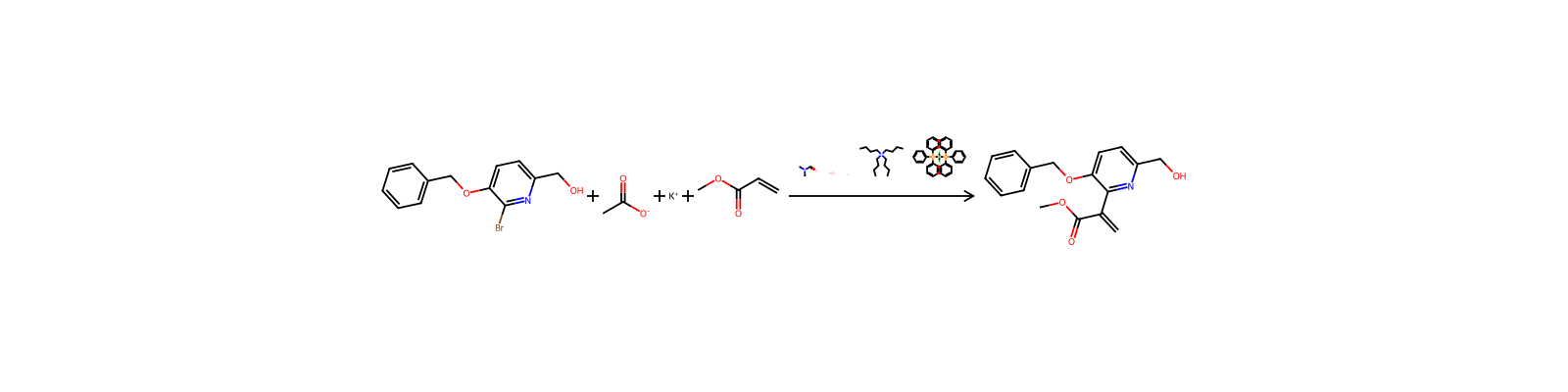




연결된 노트
불러오는 중…