

기본 정보
- 표준 SMILES
NCCc1ccc(O)c(O)c1- InChIKey
VYFYYTLLBUKUHU-UHFFFAOYSA-N- 분자식
- C8H11NO2
- 평균 분자량
- 153.18 g/mol
- 단동위원소 질량
- 153.07897859
이름 및 식별자
- 우선 이름
- Dopamine
- IUPAC
- 4-(2-aminoethyl)benzene-1,2-diol
- 현지명
- 도파민
- 영어명
- 3-Hydroxytyramine
- 분자식
- C8H11NO2
- 분자량
- 153.18
이름 및 동의어
dopamine4-(2-Aminoethyl)benzene-1,2-diol51-61-63-HydroxytyramineOxytyramineHydroxytyraminDopamin3,4-dihydroxyphenethylamine4-(2-Aminoethyl)catechol4-(2-Aminoethyl)pyrocatecholhydroxytyramine2-(3,4-dihydroxyphenyl)ethylamine
이름 더 보기
도파민opamineDopamine Control4-(2-Aminoethyl)51-61-6 3-HydroxytyramineNoradrenaline EP Impurity C3-Hydroxytyramine USP/EP/BP
DopaminaDopaminum3,4-Dihydroxyphenylethylamine4-(2-Aminoethyl)-1,2-benzenediolASL 2791,2-Benzenediol, 4-(2-aminoethyl)-Dobutamine aA-dopamine
데이터베이스 식별자
- CAS
50444-17-2、51-61-6、62-31-7- PubChem CID
- 681
- DTXSID
DTXSID6022420- ChEMBL
CHEMBL59- ChEBI
CHEBI:18243- UNII
- VTD58H1Z2X
- EC Number
- 200-110-0
- Nikkaji
- J4.120C
물성
구조 계산 물성
- XLogP
- -1
- 극성 표면적
- 66.5 Ų
- 수소 결합 공여자 수
- 3
- 수소 결합 수용자 수
- 3
- 회전 가능 결합 수
- 2
- 무거운 원자 수
- 11
- 형식 전하
- 0
- 복잡도
- 119
물리화학적 성질
- 녹는점
- 218 · 218-220 ºC
- 끓는 점
- 276.1 °C · 276.1°C (rough estimate)
- 밀도
- 1.1577 · 1.1577 (rough estimate)
- 굴절률
- 1.477 · 1.4770 (estimate)
- 저장 조건
- -20 °C · Hygroscopic, -20°C Freezer, Under inert atmosphere
- 용해도
- Aqueous Acid (Slightly), DMSO (Slightly, Heated), Methanol (Slightly)
- 산도 계수 (pKa)
- 8.9 · 8.9(at 25℃)
- 물리적 상태
- 고체
- 색상
- 밝은 갈색에서 갈색까지
- 안정성
- 흡습성
- InChI
- InChI=1S/C8H11NO2/c9-4-3-6-1-2-7(10)8(11)5-6/h1-2,5,10-11H,3-4,9H2
- InChIKey
- VYFYYTLLBUKUHU-UHFFFAOYSA-N
- SMILES
- C1(O)=CC=C(CCN)C=C1O
- NIST
- Dopamine(51-61-6)
- EPA
- Dopamine (51-61-6)
안전 및 규제
안전 데이터
- 유해 물질 데이터
- 51-61-6(Hazardous Substances Data)
화학 및 산업
응용 분야
개요Dopamine, abbreviated DA, is a biosynthetic compound and neurotransmitter produced in the body from the amino acid tyrosine by several pathways. It is synthesized in the adrenal gland where it is a precursor to other hormones (see Epinephrine) and in several portions of the brain, principally the substantia nigra and hypothalamus.
역사Dopamine is stored in vesicles in the brain’s presynaptic nerve terminals. It is closely associated with its immediate precursor, l-Dopa (levodopa). Casmir Funk (1884–1967) first synthesized Dopa in racemic form in 1911 and considered Dopa a vitamin. In 1913, Marcus Guggenheim, a biochemist from Hoff man-LaRoche, isolated l-Dopa from seedlings of Vicia faba, the Windsor bean plant native to northern Africa and southwest Asia. Guggenheim used beans from the garden of Felix Hoff man (1868–1946), the discoverer of aspirin. Guggenheim ingested a 2.5-gram dose of l-Dopa, resulting in nausea and vomiting; he also administered small dosages to animals and did not observe any signifi cant effects. This led him to believe that l-Dopa was biologically inactive. Studies commencing in 1927 reported that Dopa played a role in glucose metabolism and aff ected arterial blood pressure. Interest in dopamine accelerated in 1938 when the German physician and pharmacologist Peter Holtz (1902–1970) and co-workers discovered the enzyme l-Dopa decarboxylase and that it converted l-Dopa into dopamine in humans and animals. Research over the next two decades focused on l-Dopa’s role as a precursor to other catecholamine hormones, its vascular effects, and its role in brain chemistry.
용도Dopamine(3-Hydroxytyramine) is used as a drug to treat several conditions. It can be injected as a solution ofdopamine hydrochloride, such as in the drug Intropin. It is used as a stimulant to the heartmuscle to treat heart conditions; it also constricts the blood vessels, increasing systolic bloodpressure and improving blood flow through the body. Dopamine is used in renal medicationsto improve kidney function and urination. Dopamine dilates blood vessels in the kidneys,increasing the blood supply and promoting the fl ushing of wastes from the body. Dopamineis used to treat psychological disorders such as schizophrenia and paranoia.
일반 설명Dopamine (Intropin) acts primarily on 1-and 1-adrenergic receptors, increasing systemic vascularresistance and exerting a positive inotropic effect on theheart. It must be administered by an intravenous route, becauseoral administration results in rapid metabolism byMAO and/or catechol-O-methyltransferase (COMT).
상·하류 제품 정보
상류 원료
하류 제품
공급사50 곳
北京华美互利生物化工010-56205725 · [email protected]
湖北永阔科技有限公司027-59223108 15972152991 · [email protected]
上海阿拉丁生化科技股份有限公司400-6206333 13167063860 · [email protected]
湖北万得化工有限公司15377098680 15377098680 · [email protected]
艾吉析科技(上海)有限公司17717235263 · [email protected]
广州朗欧生物科技有限公司15876533741 · [email protected]
武汉布林科技有限公司3456065315 13260619011 · [email protected]
中梦研(湖北)科技有限公司0717-6300888 18062399888 · [email protected]
Hebei shuoxi biotechnology co. LTD+8613081092107
江苏星科元信息科技有限公司400-605-7200 15335295587
云南西力生物技术股份有限公司0871-65217109 · [email protected]
Baoji Guokang Healthchem co.,ltd+8615604608665 15604608665 · [email protected]
广州隽唐科技有限公司020-36607679 13502246435 · [email protected]
Hebei Yanxi Chemical Co., Ltd.+86-17531190177 · [email protected]
衢州明锋化工有限公司0570-3062502 13819002126;13819008176 · [email protected]
北京华威锐科化工有限公司0757-86329057 18934348241 · [email protected]
上海辅欣医药科技有限公司+86-021-021-50872116 · [email protected]
上海颖心实验室设备有限公司021-59178156 17002132182 · [email protected]
广东云星生物技术有限公司0751-18902340975/189023400307 18902340307 · [email protected]
希瓦生物科技(广州)有限公司13268215580 · [email protected]
上海柯维化学技术有限公司021-64609169 18901607656 · [email protected]
上海诗丹德标准技术服务有限公司021-021-57127007-6622-6622 17621252073 · [email protected]
山东沃德森生物科技有限公司0531-88723173 18596073690 · [email protected]
上海泰坦科技股份有限公司400-6009262 15618770481 · [email protected]
郑州研德生物科技有限公司0371-63682289 15538176268 · [email protected]
湖北广奥生物科技有限公司027-02702759223056 18162699093 · [email protected]
武汉丰泰威远科技有限公司+86-27-8746-5837 +86-18627785180 · [email protected]
烟台正信新材料科技有限公司13854547682 13854547682 · [email protected]
武汉丰泰威远科技有限公司027-87465837 19945049750 · [email protected]
河北茹麒科技有限公司176-03256889 17603256889 · [email protected]
湖北成海化工有限公司027-59220433 18327245847 · [email protected]
湖南汇百侍生物科技有限公司0731-85526065 13308475853 · [email protected]
艾科试剂4008-755-333 18080918076 · [email protected]
苏州键合化学试剂有限公司0512-69561983 13914027025 · [email protected]
Shenzhen Excellent Biotech Co., Ltd.13480692018 · [email protected]
南京生利德生物科技有限公司025-57798810 18652991625 · [email protected]
安徽科迪达化工有限公司0554-2106669 · [email protected]
北京奥秘佳得医药科技有限公司+86-13522808617 · [email protected]
成都零六生物科技有限公司400-1166-196 13458535857 · [email protected]
上海创赛科技有限公司400-6087598 15021221957 · [email protected]
上海麦克林生化科技股份有限公司15221275939 15221275939 · [email protected]
湖北巨胜科技有限公司027-59599241 18871490274 · [email protected]
深圳振强药物研发有限公司+86-0755-66853366 +86-13670046396 · [email protected]
珠海安哲生物科技有限公司13169972583 · [email protected]
安世达(山东)新材料科技有限公司18053179586
广东翁江化学试剂有限公司0751-2815987 13927875076 · [email protected]
西安美川生物科技有限公司029-89275612 +8618991951683 · [email protected]
武汉沃轩科技有限公司13322067656 · [email protected]
上海德欣致远生物技术有限公司58088081 18317173152 · [email protected]
河北方乾新材料科技有限公司86-180-3439-5858-5858 18034395858
추가 설명
정의dopamine: A catecholamine thatis a precursor in the synthesis of noradrenalineand adrenaline. It alsofunctions as a neurotransmitter inthe brain.
관련 반응
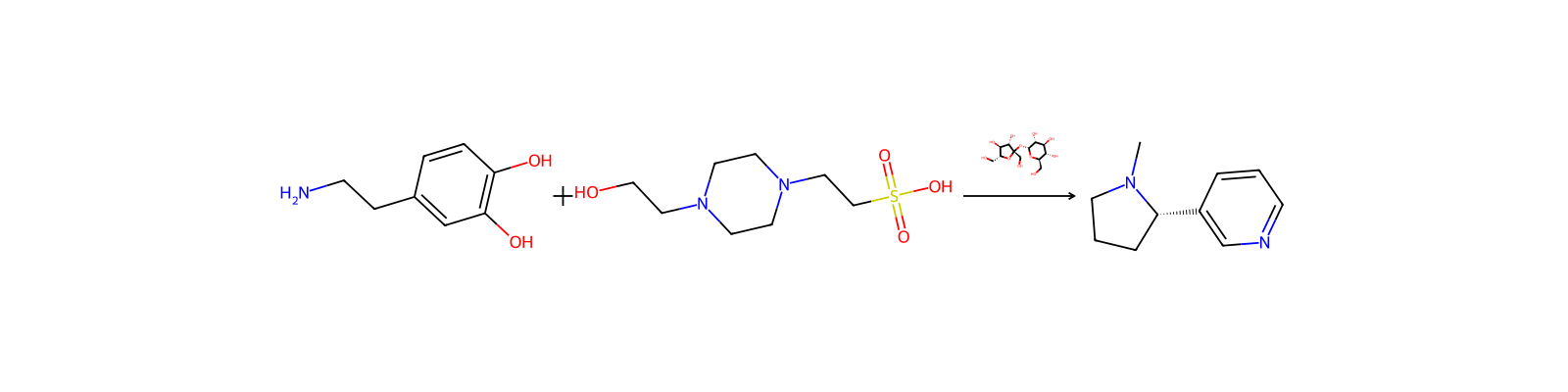
148건



연결된 노트
불러오는 중…