에틸 센트랄리트
Centralite
HCID 6828
데이터를 보충하는 중입니다. 잠시 후 페이지를 새로 고치면 최신 내용을 볼 수 있습니다
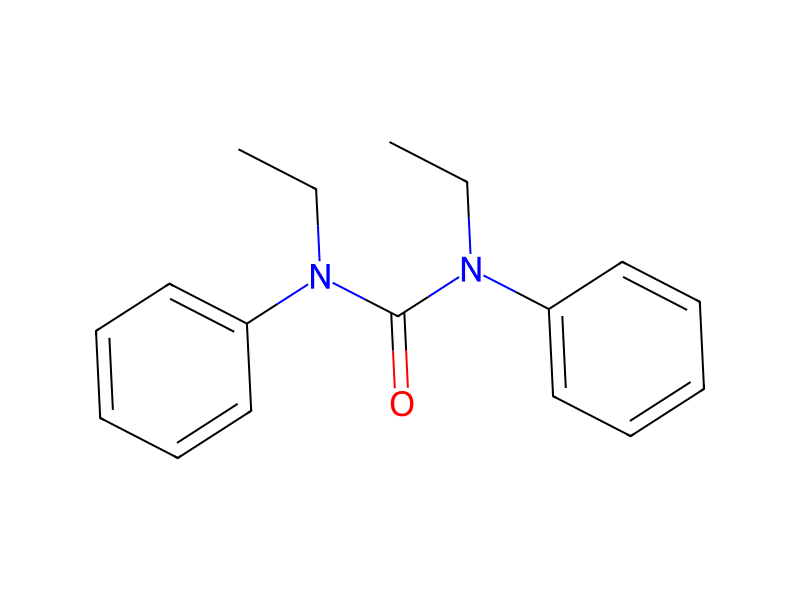
기본 정보
- CAS
85-98-3- 표준 SMILES
CCN(C(=O)N(CC)c1ccccc1)c1ccccc1- InChIKey
PZIMIYVOZBTARW-UHFFFAOYSA-N- 분자식
- C17H20N2O
- 평균 분자량
- 268.35 g/mol
- 단동위원소 질량
- 268.15756327
개요
N,n'-diethylcarbanilide appears as white flakes or white crystalline solid. Peppery odor. (NTP, 1992)
이름 및 식별자
- 우선 이름
- Centralite
- IUPAC
- 1,3-diethyl-1,3-diphenylurea
- 현지명
- 에틸 센트랄리트
- 영어명
- 1,3-Diethyl-1,3-diphenylurea
- 분자식
- C17H20N2O
- 분자량
- 268.35
이름 및 동의어
1,3-Diethyl-1,3-diphenylurea85-98-3N,N'-DiethylcarbanilideCentraliteEthyl centraliteCentralite ICarbamiteN,N'-Diethyl-N,N'-diphenylureasym-DiethyldiphenylureaCentralite-1Bis(N-ethyl-N-phenyl)ureaUrea, N,N'-diethyl-N,N'-diphenyl-
이름 더 보기
에틸센트랄리트에틸센트랄리트CENTRALITusafek-1047CENTRALIT 1DIETHYLDIPHENYLUREA
Centralite 1USAF EK-1047Carbanilide, N,N'-diethyl-DTXSID80250404169Z9SDJGNSC-28779NSC-44038DTXCID705040
데이터베이스 식별자
- CAS
85-98-3- PubChem CID
- 6828
- DTXSID
DTXSID8025040- ChEMBL
CHEMBL1566472- UNII
- 4169Z9SDJG
- EC Number
- 201-645-2
- Nikkaji
- J4.931J
물성
구조 계산 물성보충 중
- XLogP
- 3.6
- 극성 표면적
- 23.6 Ų
- 수소 결합 공여자 수
- 0
- 수소 결합 수용자 수
- 1
- 회전 가능 결합 수
- 4
- 무거운 원자 수
- 20
- 형식 전하
- 0
- 복잡도
- 265
실험 및 물리화학적 성질
SpringerMaterials PropertiesCrystal structure
Density1.12 at 68 °F (NTP, 1992) - Denser than water; will sink
Solubilityless than 1 mg/mL at 70.7 °F (NTP, 1992)
Flash Point302 °F (NTP, 1992)
Boiling Point617 to 626 °F at 760 mmHg (NTP, 1992)
Melting Point174 °F (NTP, 1992)
Vapor Density9.3 (NTP, 1992) - Heavier than air; will sink (Relative to Air)
Physical Description
N,n'-diethylcarbanilide appears as white flakes or white crystalline solid. Peppery odor. (NTP, 1992)
CBI
물리화학적 성질
- 녹는점
- 73 · 73-75 °C(lit.)
- 끓는 점
- 411.52 °C · 411.52°C (rough estimate)
안전 및 규제
안전 정보는 참고용이며, 공급업체의 물질안전보건자료(SDS), 관련 법규 및 전문가 평가를 대체하지 않습니다.
GHS 분류
GHS Classification
Warning
H302 (100%): Harmful if swallowed [Warning Acute toxicity, oral]
P264, P270, P273, P301+P317, P330, and P501 (click each P-code to see the statement)
Aggregated GHS information provided per 85 reports by companies from 3 notifications to the ECHA C&L Inventory. Each notification may be associated with multiple companies.
유해성 정보
Regulatory Information
Chemical: Urea, N,N'-diethyl-N,N'-diphenyl-
Urea, N,N'-diethyl-N,N'-diphenyl- is listed on the EPA's Chemical Data Reporting (CDR) system. Manufacturers and importers of Urea, N,N'-diethyl-N,N'-diphenyl- are required to report information about their production and use of this chemical to the EPA under the Toxic Substances Control Act (TSCA). (40 eCFR Part 711)
REACH registered substance: 1,3-diethyldiphenylurea (EC: 201-645-2)
Urea, N,N'-diethyl-N,N'-diphenyl-: Does not have an individual approval but may be used as a component in a product covered by a group standard. It is not approved for use as a chemical in its own right.
Fire HazardsThis chemical is combustible. (NTP, 1992)
Health HazardsACUTE/CHRONIC HAZARDS: This compound may react violently when severely shocked or heated to extreme temperatures. (NTP, 1992)
Reactive GroupAmides and Imides
Reactivity AlertsExplosive
Reactivity Profile
N,N'-DIETHYLCARBANILIDE is an amide. Amides/imides react with azo and diazo compounds to generate toxic gases. Flammable gases are formed by the reaction of organic amides/imides with strong reducing agents. Amides are very weak bases (weaker than water). Imides are less basic yet and in fact react with strong bases to form salts. That is, they can react as acids. Mixing amides with dehydrating agents such as P2O5 or SOCl2 generates the corresponding nitrile. The combustion of these compounds generates mixed oxides of nitrogen (NOx). This compound is incompatible with acids and oxidizing agents. This chemical reacts violently when severely shocked or exposed to extreme temperatures. (NTP, 1992)
화학 및 산업
용도 및 제조
U.S. Production2023: 250,000 - <550,000 lb
Industry UsesOxidizing agent
General Manufacturing Information
All Other Chemical Product and Preparation Manufacturing
Urea, N,N'-diethyl-N,N'-diphenyl-: ACTIVE
응용 분야
용도1,3-Diethyl-1,3-diphenylurea is a gunshot residue and a stabilizer for smokeless powder.
일반 설명White flakes or white crystalline solid. Peppery odor.
관련 반응
0건
아직 관련 반응이 없습니다