

기본 정보
- 표준 SMILES
O=[N+]([O-])c1ccccc1-c1ccccc1- InChIKey
YOJKKXRJMXIKSR-UHFFFAOYSA-N- 분자식
- C12H9NO2
- 평균 분자량
- 199.2 g/mol
- 단동위원소 질량
- 199.06332853
이름 및 식별자
- 우선 이름
- 2-Nitrobiphenyl
- IUPAC
- 1-nitro-2-phenylbenzene
- 영어명
- 2-Nitrobiphenyl
- 분자식
- C12H9NO2
- 분자량
- 199.21
이름 및 동의어
2-Nitrobiphenyl2-Nitrodiphenyl2-Nitro-1,1'-biphenylO-NITROBIPHENYL2'-NitrobiphenylCCRIS 962DTXSID9025746NSC 5532EINECS 201-646-8UNII-8R1N47E4DTCP 3688R1N47E4DT
이름 더 보기
Onbcp368Nitrodiphenyl2-NitrobiphneylO-NITRODIPHENYL2-nitro-bipheny
AI3-02563NSC-5532O-NITROBIPHENYL [MI]DTXCID505746oNitrobiphenyloNitrodiphenyl2NitrodiphenylBiphenyl, 2nitro
데이터베이스 식별자
- CAS
86-00-0- PubChem CID
- 6829
- DTXSID
DTXSID9025746- ChEMBL
CHEMBL1391678- UNII
- 8R1N47E4DT
- EC Number
- 201-646-8
- Nikkaji
- J3.892J
물성
구조 계산 물성
- XLogP
- 3.7
- 극성 표면적
- 45.8 Ų
- 수소 결합 공여자 수
- 0
- 수소 결합 수용자 수
- 2
- 회전 가능 결합 수
- 1
- 무거운 원자 수
- 15
- 형식 전하
- 0
- 복잡도
- 218
실험 및 물리화학적 성질
Density1.203 at 77 °F (NTP, 1992) - Denser than water; will sink
Solubilityless than 1 mg/mL at 72 °F (NTP, 1992)
Flash Point290 °F (NTP, 1992)
Boiling Point608 °F at 760 mmHg (NTP, 1992)
Melting Point97 to 100 °F (NTP, 1992)
Vapor Density5.9 (NTP, 1992) - Heavier than air; will sink (Relative to Air)
Vapor Pressure2 mmHg at 284 °F (NTP, 1992)
Physical Description
Gold to tan crystals or brown solid. (NTP, 1992)
Solid with a sweetish odor; mp = 36.7 deg C; [Merck Index] Gold to tan or brown solid; [CAMEO] Light yellow solid; mp = 36-38 deg C; [Sigma-Aldrich MSDS]
Kovats Retention Index
1669;1669;1670;1698;1686;1669;285.8
1700;1700;1691.22;1696.33;1689.8;290.25;284.73;287.61;288.54;288.56;288.7;290.25
Autoignition Temperature356 °F (NTP, 1992)
물리화학적 성질
- 녹는점
- 36 · 36-38 °C(lit.)
- 끓는 점
- 320 °C · 320 °C
- 밀도
- 1.44 · 1.44
- 증기 밀도
- 5.9 · 5.9 (vs air)
- 증기압
- 2 mm · 2 mm Hg ( 140 °C)
- 굴절률
- 1.613 · 1.613-1.615
- 인화점
- 230 °F · >230 °F
- 물리적 상태
- powder to lump
- 색상
- White to Yellow to Green
- 수용성
- 불용성
- Merck
- 14 · 14,6591
- Henry's Law Constant
- 1.6 · 1.6×101 mol/(m3Pa) at 25℃, Parnis et al. (2015)
- InChI
- InChI=1S/C12H9NO2/c14-13(15)12-9-5-4-8-11(12)10-6-2-1-3-7-10/h1-9H
- InChIKey
- YOJKKXRJMXIKSR-UHFFFAOYSA-N
- SMILES
- C1(C2=CC=CC=C2)=CC=CC=C1[N+]([O-])=O
- NIST
- 1 · 1,1'-Biphenyl, 2-nitro-(86-00-0)
- EPA
- o-Nitrobiphenyl (86-00-0)
화학적 성질
Clear yellow liquid after melting. Insoluble in water, soluble in methanol, ethanol, acetone, dimethylformamide, and tetrahydrofurfuryl alcohol.
안전 및 규제
GHS 분류
GHS Classification
Warning
H302 (100%): Harmful if swallowed [Warning Acute toxicity, oral];H312 (97.5%): Harmful in contact with skin [Warning Acute toxicity, dermal];H332 (97.5%): Harmful if inhaled [Warning Acute toxicity, inhalation];H351 (97.5%): Suspected of causing cancer [Warning Carcinogenicity]
P203, P261, P264, P270, P271, P280, P301+P317, P302+P352, P304+P340, P317, P318, P321, P330, P362+P364, P405, and P501 (click each P-code to see the statement)
Aggregated GHS information provided per 40 reports by companies from 3 notifications to the ECHA C&L Inventory. Each notification may be associated with multiple companies.;Information may vary between notifications depending on impurities, additives, and other factors. The percentage value in parenthesis indicates the notified classification ratio from companies that provide hazard codes. Only hazard codes with percentage values above 10% are shown. For more detailed information, please visit ECHA C&L website.
유해성 정보
Fire HazardsThis compound is combustible. (NTP, 1992)
Hazards SummaryCauses coma, dyspnea, and weight loss in oral lethal-dose studies of rats and rabbits; [RTECS] May cause irritation; Harmful by ingestion, inhalation, and skin absorption; Suspected carcinogen; [Sigma-Aldrich MSDS] See 4-Nitrobiphenyl.
Reactive GroupHydrocarbons, Aromatic;Nitro, Nitroso, Nitrate, and Nitrite Compounds, Organic
Reactivity Profile
Aromatic nitro compounds, such as 2-NITRO-1,1'-BIPHENYL, range from slight to strong oxidizing agents. If mixed with reducing agents, including hydrides, sulfides and nitrides, they may begin a vigorous reaction that culminates in a detonation. The aromatic nitro compounds may explode in the presence of a base such as sodium hydroxide or potassium hydroxide even in the presence of water or organic solvents. The explosive tendencies of aromatic nitro compounds are increased by the presence of multiple nitro groups.
Air and Water ReactionsInsoluble in water.
Hazard Classes and CategoriesAcute Tox. 4 (100%);Acute Tox. 4 (97.5%);Acute Tox. 4 (97.5%);Carc. 2 (97.5%)
안전 및 보호
Fire FightingFires involving this compound can be controlled using a dry chemical, carbon dioxide or Halon extinguisher. (NTP, 1992)
First Aid
EYES: First check the victim for contact lenses and remove if present. Flush victim's eyes with water or normal saline solution for 20 to 30 minutes while simultaneously calling a hospital or poison control center. Do not put any ointments, oils, or medication in the victim's eyes without specific instructions from a physician. IMMEDIATELY transport the victim after flushing eyes to a hospital even if no symptoms (such as redness or irritation) develop.;SKIN: IMMEDIATELY flood affected skin with water while removing and isolating all contaminated clothing. Gently wash all affected skin areas thoroughly with soap and water. If symptoms such as redness or irritation develop, IMMEDIATELY call a physician and be prepared to transport the victim to a hospital for treatment.;INHALATION: IMMEDIATELY leave the contaminated area; take deep breaths of fresh air. If symptoms (such as wheezing, coughing, shortness of breath, or burning in the mouth, throat, or chest) develop, call a physician and be prepared to transport the victim to a hospital. Provide proper respiratory protection to rescuers entering an unknown atmosphere. Whenever possible, Self-Contained Breathing Apparatus (SCBA) should be used; if not available, use a level of protection greater than or equal to that advised under Protective Clothing.;INGESTION: DO NOT INDUCE VOMITING. If the victim is conscious and not convulsing, give 1 or 2 glasses of water to dilute the chemical and IMMEDIATELY call a hospital or poison control center. Be prepared to transport the victim to a hospital if advised by a physician. If the victim is convulsing or unconscious, do not give anything by mouth, ensure that the victim's airway is open and lay the victim on his/her side with the head lower than the body. DO NOT INDUCE VOMITING. IMMEDIATELY transport the victim to a hospital. (NTP, 1992)
Nonfire Spill Response
SMALL SPILLS AND LEAKAGE: Should a spill occur while you are handling this chemical, FIRST REMOVE ALL SOURCES OF IGNITION, then you should dampen the solid spill material with 60-70% ethanol and transfer the dampened material to a suitable container. Use absorbent paper dampened with 60-70% ethanol to pick up any remaining material. Seal the absorbent paper, and any of your clothes, which may be contaminated, in a vapor-tight plastic bag for eventual disposal. Solvent wash all contaminated surfaces with 60-70% ethanol followed by washing with a soap and water solution. Do not reenter the contaminated area until the Safety Officer (or other responsible person) has verified that the area has been properly cleaned.;STORAGE PRECAUTIONS: You should store this material in a refrigerator. (NTP, 1992)
Personal Protective Equipment (PPE)
RECOMMENDED RESPIRATOR: Where the neat test chemical is weighed and diluted, wear a NIOSH-approved half face respirator equipped with an organic vapor/acid gas cartridge (specific for organic vapors, HCl, acid gas and SO2) with a dust/mist filter. (NTP, 1992)
안전 데이터
- wgk
- 3
- rtecs
- DV5530000
- HS 번호
- 2904.20.5000
- risk_code
- 20/21/22-40-68-22
- hazard_code
- Xn
- safety_code
- 2-7-36-45-36/37
화학 및 산업
용도 및 제조
Uses
Used as a plasticizer for resins, cellulose acetate and nitrate, and polystyrenes, as a fungicide for textiles, wood preservative, and dye intermediate; [Merck Index]
Applying Wood Preservatives [Category: Other];Textiles (Printing, Dyeing, or Finishing) [Category: Industry]
응용 분야
용도2-Nitrobiphenyl is used as a plasticizer for resins, cellulose acetate, cellulose nitrate, and polystyrenes; as a fungicide for textiles; as a wood preservative; and as a dye intermediate.
일반 설명Gold to tan crystals or brown solid.
상·하류 제품 정보
하류 제품
공급사50 곳
国药集团化学试剂有限公司86-21-63210123 · [email protected]
梯希爱(上海)化成工业发展有限公司021-67121386 · [email protected]
南京世洲生物科技有限公司025-85560043 15850508050 · [email protected]
上海阿拉丁生化科技股份有限公司400-6206333 13167063860 · [email protected]
陕西缔都新材料有限公司81124267 17392282731 · [email protected]
上海麦克林生化科技股份有限公司021-50706066 15221275939 · [email protected]
武汉欣扬瑞和化学科技有限公司153-07155313 15307155313 · [email protected]
Dayang Chem (Hangzhou) Co.,Ltd.+86-0571-88938639 17705817739 · [email protected]
安耐吉化学&3A(安徽泽升科技股份有限公司)400-0056266 · [email protected]
常州市华阳科技有限公司+8615250961469 · [email protected]
玛雅试剂+86 (573) 82222445 (0)18006601000 452520369 · [email protected]
天津希恩思生化科技有限公司400 638 7771 · [email protected]
江苏艾康生物医药研发有限公司025-66113011 13913916777 · [email protected]
TCI AMERICA800-4238616 · [email protected]
TOKYO CHEMICAL INDUSTRY CO., LTD.03-36680489 · [email protected]
TCI Europe320-37350700 · [email protected]
北京京土恒盛化工科技有限公司00-13911456598 13911456598 · [email protected]
上海丽康新材料有限公司+86-16631818819 +86-17736933208 · [email protected]
PT CHEM GROUP LIMITED+86-85511178; +86-85511178 · [email protected]
上海石洋化工有限公司021-56795766 · [email protected]
上海御略医药科技有限公司021-60345187 13671753212 · [email protected]
Xiamen Eagle Chemical Limited Corporation+86-18900207489 · [email protected]
LUYUNJIA CHEMISTRY XIAMEN LIMITED+86-592-5360779 +86-13055435203
池州凯隆进出口贸易有限公司[email protected]
成都瑞欧克科技有限公司028-64353063 · [email protected]
九鼎化学(上海)科技有限公司4009209199 · [email protected]
武汉峰耀同辉化学制品有限公司027-87466205 15377579727 · [email protected]
HANGZHOU LEAP CHEM CO., LTD.+86-571-87711850 +86-15355479329 · [email protected]
上海岚克医药科技发展有限公司0086-21-58956006
石家庄斯迪亚诺精细化工有限公司0311-89250318 031166536426 · [email protected]
上海前衍生物科技有限公司02781293128 · [email protected]
上海源叶生物科技有限公司13636370518 · [email protected]
山东西亚化学有限公司4009903999 13395398332 · [email protected]
成都华纯科技有限公司400-1166-196 15982826727 · [email protected]
深圳市森迪生物科技有限公司18126413629 0755-23311925 2355327053 · [email protected]
深圳市森迪生物科技有限公司18124570582 TEL:0755-23574479 2355327139 · [email protected]
广州卡芬生物科技有限公司18029243487 2355327168 · [email protected]
上海贤鼎生物科技有限公司021-021-52271985 17721149837 · [email protected]
Xuzhou B&C Chemical Technology Co., Ltd+86-400-0516-021 +86-15190678838 · [email protected]
Shaanxi Didu New Materials Co. Ltd+86-86-17392712779 +86-13289823923 · [email protected]
珠海嘉亿生物科技有限公司18578209868 2355327026 · [email protected]
苏州华诺医药有限公司0512-6956-1983 · [email protected]
河南天孚化工有限公司+86-0371-55170693 +86-19937530512 · [email protected]
佛山道麒生物科技有限公司18062666947 · [email protected]
厦门盈融达化工有限公司+86-0592-6210733 · [email protected]
常州市金坛区华邦化工有限公司0519-82610098 18605286750 · [email protected]
career henan chemical co+86-0371-86658258 · [email protected]
上海傲坤化工化学科技有限公司13482267656 · [email protected]
TCI Chemicals (India) Pvt. Ltd.[email protected]
Aladdin Scientific[email protected]
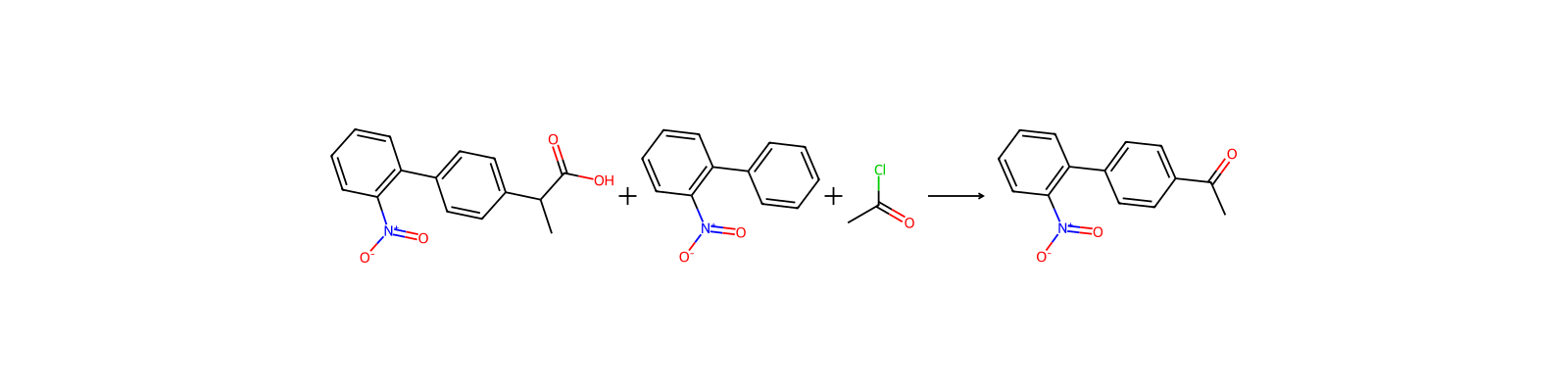
관련 반응
22건




연결된 노트
불러오는 중…