
이소프로필페닐케톤
Isobutyrophenone
데이터를 보충하는 중입니다. 잠시 후 페이지를 새로 고치면 최신 내용을 볼 수 있습니다
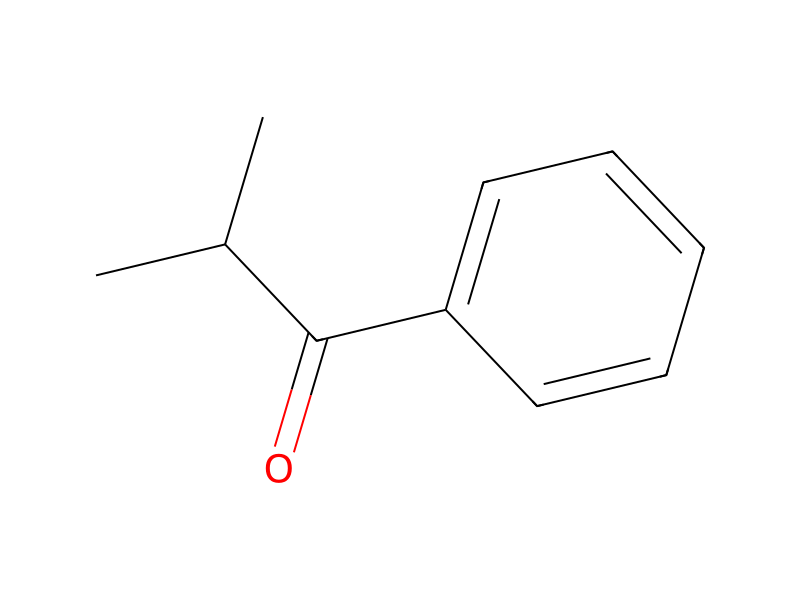
기본 정보
- CAS
611-70-1- 표준 SMILES
CC(C)C(=O)c1ccccc1- InChIKey
BSMGLVDZZMBWQB-UHFFFAOYSA-N- 분자식
- C10H12O
- 평균 분자량
- 148.2 g/mol
- 단동위원소 질량
- 148.088815
이름 및 식별자
- 우선 이름
- Isobutyrophenone
- IUPAC
- 2-methyl-1-phenylpropan-1-one
- 현지명
- 이소프로필페닐케톤
- 영어명
- Isobutyrophenone
- 분자식
- C10H12O
- 분자량
- 148.2
이름 및 동의어
Isobutyrophenone611-70-12-methyl-1-phenylpropan-1-oneIsopropyl phenyl ketone1-Propanone, 2-methyl-1-phenyl-Isopropyl phenyl ketonUNII-8L53972NTZDTXSID6048202iso-ButyrophenoneEINECS 210-275-01-PHENYL-2-METHYL-1-PROPANONEAI3-11204
이름 더 보기
아이소뷰티로페논이소프로필페닐케톤이소부틸로페논2-MethylpropiophenoneisobutyrophenonPHENYL ISOPROPYL KETONEISOBUTROPHENONEsobutyrophenonelsobutyrophenoneISOBUTYRYLBENZENE
8L53972NTZNSC 6552NSC-6552DTXCID4028177EC 210-275-02-METHYL-1-PHENYLPROPANONERefChem:1491242040-14-4
데이터베이스 식별자
- CAS
611-70-1- PubChem CID
- 69144
- DTXSID
DTXSID6048202- ChEMBL
CHEMBL3187314- UNII
- 8L53972NTZ
- EC Number
- 210-275-0
- Nikkaji
- J47.812A
물성
구조 계산 물성보충 중
- XLogP
- 2.7
- 극성 표면적
- 17.1 Ų
- 수소 결합 공여자 수
- 0
- 수소 결합 수용자 수
- 1
- 회전 가능 결합 수
- 2
- 무거운 원자 수
- 11
- 형식 전하
- 0
- 복잡도
- 132
실험 및 물리화학적 성질
SpringerMaterials Properties13C nuclear magnetic resonance spectrum
LogP2.59
물리화학적 성질
- 녹는점
- 1 °C · 1 °C
- 끓는 점
- 215 °C · 215 °C
- 밀도
- 0.98 · 0.98
- 증기압
- 1 mm · 1 mm Hg ( 50 °C)
- 굴절률
- 1.52 · 1.52
- 인화점
- 84 °C · 84 °C
- 저장 조건
- Sealed in dry,Room Temperature
- 용해도
- 클로로포름(소량으로 용해), 메탄올(약간 용해됨)
- 물리적 상태
- clear liquid
- 색상
- Colorless to Light yellow
- 수용성
- 섞일 수 없음
- BRN
- 774499 · 774499
- Henry's Law Constant
- 5.7 · 5.7×10-1 mol/(m3Pa) at 25℃, Zhang et al. (2010)
- InChI
- 1S/C10H12O/c1-8(2)10(11)9-6-4-3-5-7-9/h3-8H,1-2H3
- InChIKey
- BSMGLVDZZMBWQB-UHFFFAOYSA-N
안전 및 규제
안전 정보는 참고용이며, 공급업체의 물질안전보건자료(SDS), 관련 법규 및 전문가 평가를 대체하지 않습니다.
GHS 분류
GHS Classification
This chemical does not meet GHS hazard criteria for 70.4% (107 of 152) of all reports.
Warning
H315 (28.9%): Causes skin irritation [Warning Skin corrosion/irritation]
P261, P264, P264+P265, P271, P280, P302+P352, P304+P340, P305+P351+P338, P319, P321, P332+P317, P337+P317, P362+P364, P403+P233, P405, and P501 (click each P-code to see the statement)
Aggregated GHS information provided per 152 reports by companies from 6 notifications to the ECHA C&L Inventory. Each notification may be associated with multiple companies.
유해성 정보
Regulatory Information
Status: Active Update: 18-11-2019 https://echa.europa.eu/registration-dossier/-/registered-dossier/1890
1-Propanone, 2-methyl-1-phenyl-: Does not have an individual approval but may be used under an appropriate group standard
Hazard Classes and CategoriesSkin Irrit. 2 (28.9%)
안전 데이터
- wgk
- 3
- tsca
- TSCA listed
- HS 번호
- 2914399090
- risk_code
- 36/37/38
- hazard_code
- Xi
- safety_code
- 26-36
- Hazard Classifications
- Acute Tox. 4 Oral
- 스토리지 클래스
- 10 - Combustible liquids
화학 및 산업
용도 및 제조
General Manufacturing Information1-Propanone, 2-methyl-1-phenyl-: ACTIVE
응용 분야
용도Isobutyrophenone is used as an internal standard in the determination of hydroxyzine hydrochloride and benzyl alcohol in injection solutions. It is also used in the preparation of alpha-hydroxyisobutyrophenone. Isobutyrophenone is employed as photosensitizer intermediate. It can react with bromoacetic acid ethyl ester to get 3-hydroxy-4-methyl-3-phenyl-valeric acid ethyl ester.
제조 방법
Isobutyrophenone synthesis: Benzene underwent a Friedel–Crafts acylation with isobutyryl chloride to synthesize isobutyrophenone. The reaction was performed using excess benzene as a replacement for a typical solvent and heat to reflux (88 °C) for a period of 3 hours. Any unreacted benzene was recovered after the reaction during the distillation process. A 66 % yield of isobutyrophenone was obtained from the solar synthesis, compared to a 44 % yield from an in-lab, electrical heating analysis.
상·하류 제품 정보
상류 원료
하류 제품
관련 반응
41건



화합물 노트
불러오는 중…