

기본 정보
- 표준 SMILES
Nc1ccccc1S(=O)(=O)O- InChIKey
ZMCHBSMFKQYNKA-UHFFFAOYSA-N- 분자식
- C6H7NO3S
- 평균 분자량
- 173.19 g/mol
- 단동위원소 질량
- 173.01466426
이름 및 식별자
- 우선 이름
- 2-Aminobenzenesulfonic acid
- IUPAC
- 2-aminobenzenesulfonic acid
- 현지명
- 아닐린-2-설폰산
- 영어명
- Aniline-2-sulfonic acid
- 분자식
- C6H7NO3S
- 분자량
- 173.19
이름 및 동의어
2-Aminobenzenesulfonic acid88-21-1Orthanilic acido-Aminobenzenesulfonic acido-Sulfanilic acidAniline-o-sulfonic acid2-Sulfanilic acidAniline-o-sulphonic acid1-Aminobenzene-2-sulfonic acido-Aminophenylsulfonic acidBenzenesulfonic acid, o-amino-DTXSID1024463
이름 더 보기
아닐린-2-설폰산SULPHANILIC ACID2-aminobenzenesulfonateo-SulfanilicSulfoaniline2-SULFOANILINEAniline-2-sulfOrthoanilicacid2-sulfanilicacid
ZB9JSA4BH0NSC-147CHEBI:1015DTXCID2044632-Aminobenzene sulfonic acidortho-sulfanilic acidRefChem:856931201-810-9
데이터베이스 식별자
- CAS
88-21-1- PubChem CID
- 6926
- DTXSID
DTXSID1024463- ChEMBL
CHEMBL1372690- ChEBI
CHEBI:1015- UNII
- ZB9JSA4BH0
- EC Number
- 201-810-9
- Nikkaji
- J4.290K
물성
구조 계산 물성
- XLogP
- 0.4
- 극성 표면적
- 88.8 Ų
- 수소 결합 공여자 수
- 2
- 수소 결합 수용자 수
- 4
- 회전 가능 결합 수
- 1
- 무거운 원자 수
- 11
- 형식 전하
- 0
- 복잡도
- 218
실험 및 물리화학적 성질
Solubility10 to 50 mg/mL at 72 °F (NTP, 1992)
Melting Point617 °F (decomposes) (NTP, 1992)
Physical Description
2-aminobenzene sulfonic acid is a light brown powder. (NTP, 1992)
Solid; [Merck Index] Light brown solid; [CAMEO]
Collision Cross Section
153.23 Ų [M+Na]+ [CCS Type: DT; Method: stepped-field];133.9 Ų [M-H]- [CCS Type: DT; Method: stepped-field]
130.5 Ų [M-H]- [CCS Type: DT; Method: single field calibrated with ESI Low Concentration Tuning Mix (Agilent)]
152.3 Ų [M+Na]+;131.9 Ų [M-H]-
물리화학적 성질
- 녹는점
- 300 °C · 300 °C
- 끓는 점
- 363.26 ℃[at · 363.26℃[at 101 325 Pa]
- 밀도
- 1.342 · 1.342 (estimate)
- 증기압
- 0 Pa · 0Pa at 25℃
- 굴절률
- 1.55 · 1.5500 (estimate)
- 저장 조건
- Keep in dark place,Inert atmosphere,Room temperature
- 용해도
- 3.565 g/L · 3.565g/L in organic solvents at 20 ℃
- 물리적 상태
- 결정성 분말
- 산도 계수 (pKa)
- 2.48 · 2.48(at 25℃)
- 색상
- 흰색에서 베이지색
- 수용성
- 난용성
- Merck
- 14 · 14,6882
- BRN
- 1309204 · 1309204
- InChI
- 1S/C6H7NO3S/c7-5-3-1-2-4-6(5)11(8,9)10/h1-4H,7H2,(H,8,9,10)
- InChIKey
- ZMCHBSMFKQYNKA-UHFFFAOYSA-N
- SMILES
- Nc1ccccc1S(O)(=O)=O
- LogP
- 0 at · 0 at 23℃
- NIST
- Aniline-o-sulfonic acid(88-21-1)
- EPA
- o-Aminobenzenesulfonic acid (88-21-1)
화학적 성질
LIGHT BROWN FINE CRYSTALLINE POWDER
안전 및 규제
GHS 분류
GHS Classification
This chemical does not meet GHS hazard criteria for 2.4% (2 of 84) of reports.
Danger
H314 (78.6%): Causes severe skin burns and eye damage [Danger Skin corrosion/irritation];H319 (20.2%): Causes serious eye irritation [Warning Serious eye damage/eye irritation]
P260, P264, P264+P265, P280, P301+P330+P331, P302+P361+P354, P304+P340, P305+P351+P338, P305+P354+P338, P316, P321, P337+P317, P363, P405, and P501 (click each P-code to see the statement)
Aggregated GHS information provided per 84 reports by companies from 7 notifications to the ECHA C&L Inventory. Each notification may be associated with multiple companies.;Reported as not meeting GHS hazard criteria per 2 of 84 reports by companies.;There are 6 notifications provided by 82 of 84 reports by companies with hazard statement code(s).;Information may vary between notifications depending on impurities, additives, and other factors. The percentage value in parenthesis indicates the notified classification ratio from companies that provide hazard codes. Only hazard codes with percentage values above 10% are shown. For more detailed information, please visit ECHA C&L website.
유해성 정보
Regulatory InformationStatus: Cease Manufacture Update: 06-08-2018 https://echa.europa.eu/registration-dossier/-/registered-dossier/10511;Status: Active Update: 26-11-2019 https://echa.europa.eu/registration-dossier/-/registered-dossier/29603
DOT LabelCorrosive
Fire HazardsFlash point data for this chemical are not available, however it is probably combustible. (NTP, 1992)
Health Hazards
SYMPTOMS: Symptoms of exposure to this compound may include irritation of the skin and mucous membranes.;ACUTE/CHRONIC HAZARDS: This compound may evolve toxic fumes on contact with acids or when heated to decomposition. It may be corrosive to tissues. (NTP, 1992)
Hazards Summary
May cause skin and mucous membrane irritation; [NTP] Causes burns; May cause skin sensitization; [ECHA REACH Registrations] Causes burns; Inhalation may cause corrosive injuries to upper respiratory tract; [Sigma-Aldrich MSDS] See Aniline hemisulfate
Reactive GroupAcids, Weak;Amines, Aromatic
Reactivity Profile2-AMINOBENZENE SULFONIC ACID is an amino acid. Reacts weakly with both acids and bases.
Air and Water ReactionsSoluble in water.
Hazard Classes and CategoriesSkin Corr. 1B (78.6%);Eye Irrit. 2 (20.2%)
안전 및 보호
Fire FightingFires involving this compound can be extinguished using a dry chemical, carbon dioxide or Halon extinguisher. (NTP, 1992)
First Aid
EYES: First check the victim for contact lenses and remove if present. Flush victim's eyes with water or normal saline solution for 20 to 30 minutes while simultaneously calling a hospital or poison control center. Do not put any ointments, oils, or medication in the victim's eyes without specific instructions from a physician. IMMEDIATELY transport the victim after flushing eyes to a hospital even if no symptoms (such as redness or irritation) develop.;SKIN: IMMEDIATELY flood affected skin with water while removing and isolating all contaminated clothing. Gently wash all affected skin areas thoroughly with soap and water. If symptoms such as redness or irritation develop, IMMEDIATELY call a physician and be prepared to transport the victim to a hospital for treatment.;INHALATION: IMMEDIATELY leave the contaminated area; take deep breaths of fresh air. If symptoms (such as wheezing, coughing, shortness of breath, or burning in the mouth, throat, or chest) develop, call a physician and be prepared to transport the victim to a hospital. Provide proper respiratory protection to rescuers entering an unknown atmosphere. Whenever possible, Self-Contained Breathing Apparatus (SCBA) should be used; if not available, use a level of protection greater than or equal to that advised under Protective Clothing.;INGESTION: DO NOT INDUCE VOMITING. If the victim is conscious and not convulsing, give 1 or 2 glasses of water to dilute the chemical and IMMEDIATELY call a hospital or poison control center. Be prepared to transport the victim to a hospital if advised by a physician. If the victim is convulsing or unconscious, do not give anything by mouth, ensure that the victim's airway is open and lay the victim on his/her side with the head lower than the body. DO NOT INDUCE VOMITING. IMMEDIATELY transport the victim to a hospital. (NTP, 1992)
Nonfire Spill Response
SMALL SPILLS AND LEAKAGE: If you spill this chemical, you should dampen the solid spill material with water, then transfer the dampened material to a suitable container. Use absorbent paper dampened with water to pick up any remaining material. Seal your contaminated clothing and the absorbent paper in a vapor-tight plastic bag for eventual disposal. Wash all contaminated surfaces with a strong soap and water solution. Do not reenter the contaminated area until the Safety Officer (or other responsible person) has verified that the area has been properly cleaned.;STORAGE PRECAUTIONS: You should store this material in a refrigerator. (NTP, 1992)
Isolation and Evacuation
Excerpt from ERG Guide 153 [Substances - Toxic and/or Corrosive (Combustible)]:;IMMEDIATE PRECAUTIONARY MEASURE: Isolate spill or leak area in all directions for at least 50 meters (150 feet) for liquids and at least 25 meters (75 feet) for solids.;SPILL: Increase the immediate precautionary measure distance, in the downwind direction, as necessary.;FIRE: If tank, rail tank car or highway tank is involved in a fire, ISOLATE for 800 meters (1/2 mile) in all directions; also, consider initial evacuation for 800 meters (1/2 mile) in all directions. (ERG, 2024)
Personal Protective Equipment (PPE)
RECOMMENDED RESPIRATOR: Where the neat test chemical is weighed and diluted, wear a NIOSH-approved half face respirator equipped with an organic vapor/acid gas cartridge (specific for organic vapors, HCl, acid gas and SO2) with a dust/mist filter. (NTP, 1992)
독성 정보
Adverse EffectsDermatotoxin - Skin burns.;Skin Sensitizer - An agent that can induce an allergic reaction in the skin.
규제 정보
Regulatory InformationStatus: Cease Manufacture Update: 06-08-2018 https://echa.europa.eu/registration-dossier/-/registered-dossier/10511;Status: Active Update: 26-11-2019 https://echa.europa.eu/registration-dossier/-/registered-dossier/29603
안전 데이터
- wgk
- 3
- tsca
- TSCA listed
- rtecs
- DB4727700
- ridadr
- UN 2585 8/PG 3
- HS 번호
- 29214200
- risk_code
- 34
- hazard_code
- C
- safety_code
- 26-36/37/39-45-28A
- 포장분류
- III
- 위험 등급
- 8
- 기존화학 물질
- KE-01190
- Hazard Classifications
- Skin Corr. 1B
- 스토리지 클래스
- 8A - Combustible corrosive hazardous materials
화학 및 산업
용도 및 제조
UsesUsed in organic synthesis and to make dyes and pharmaceuticals; [NTP] Used to make dyes and fine chemicals; [ECHA REACH Registrations]
General Manufacturing InformationBenzenesulfonic acid, 2-amino-: ACTIVE
응용 분야
일반 설명Light brown powder.
상·하류 제품 정보
상류 원료
하류 제품
공급사50 곳
国药集团化学试剂有限公司86-21-63210123 · [email protected]
梯希爱(上海)化成工业发展有限公司021-67121386 · [email protected]
衢州润东化工有限公司0570-8789886 18892685668 · [email protected]
上海阿拉丁生化科技股份有限公司400-6206333 13167063860 · [email protected]
Career Henan Chemica Co+86-0371-86658258 +86-13203830695 · [email protected]
温州共赢化学有限公司+86-0086-577-64498589 +86-15355981851 · [email protected]
河北创海生物科技有限公司+86-86-13131129325 · [email protected]
爱斯特(成都)生物制药股份有限公司+86-28-85122536 85324413 · [email protected]
Dayang Chem (Hangzhou) Co.,Ltd.+86-0571-88938639 17705817739 · [email protected]
科瑞迪化学400-821-5857 021-64326257 · [email protected]
Syntechem Co.,Ltd[email protected]
武汉易泰科技有限公司上海分公司18930552037 · [email protected]
阿法埃莎(中国)化学有限公司400-6106006 · [email protected]
安耐吉化学&3A(安徽泽升科技股份有限公司)400-0056266 · [email protected]
上海瀚鸿科技股份有限公司021-54306202 13764082696 · [email protected]
上海钰康生物科技有限公司+86-18930848214 +86-021-56762820 · [email protected]
上海泰坦科技股份有限公司400-6009262 15618770481 · [email protected]
武汉丰泰威远科技有限公司027-87465837 19945049750 · [email protected]
孝感深远化工有限公司15527621225; 15527621225 · [email protected]
山东西亚化学有限公司13355009207 13355009207 · [email protected]
玛雅试剂+86 (573) 82222445 (0)18006601000 452520369 · [email protected]
四川库利南科技有限公司400-1166-196 18981987031 · [email protected]
上海耐士化工科技有限公司400-188-0725 +86 21 34310725 13611771617
天津希恩思生化科技有限公司400 638 7771 · [email protected]
河南多贝化工有限公司0370-2785118 17550508557 · [email protected]
艾科试剂4008-755-333 18080918076 · [email protected]
上海思域化工科技有限公司86-21-34053660 · [email protected]
赛默飞世尔科技(中国)有限公司800-810-5118 · [email protected]
江苏艾康生物医药研发有限公司025-66113011 13913916777 · [email protected]
TCI AMERICA800-4238616 · [email protected]
TOKYO CHEMICAL INDUSTRY CO., LTD.03-36680489 · [email protected]
TCI Europe320-37350700 · [email protected]
上海贤鼎生物科技有限公司4009209199 · [email protected]
南京杜莱生物技术有限公司025-84699383-8003;025-846993838003-8003 18013301590 · [email protected]
山东博洛达生物科技有限公司0531-68659041 · [email protected]
宁波台康化工有限公司0574-87365517 18074210286 · [email protected]
Xunteng International Trading Co.,Limited—
上海将来实业股份有限公司400-0066400 13621662912 · [email protected]
上海将来实业股份有限公司021-61552785 · [email protected]
HBCChem, Inc.+1-510-219-6317 · [email protected]
郑州鸿晟医药科技有限公司0371-0371-13526885213 15637198702 · [email protected]
上海鑫圭生物科技有限公司15121041756 · [email protected]
山东君泰药业有限公司15006412179 · [email protected]
上海麦克林生化科技股份有限公司15221275939 15221275939 · [email protected]
杭州杰恒化工有限公司0571-87396432 · [email protected]
上海嵩爰化工科技有限公司010-1234567 18521000990 · [email protected]
上海有朋化工有限公司021-69005955 13701776567 · [email protected]
北京海力扬化学科技有限公司13718199399 · [email protected]
四川海诺威科技有限公司13708085536 13708085536 · [email protected]
上海凯赛化工有限公司021-33516722 13701817765 · [email protected]
추가 설명
정의ChEBI: An aminobenzenesulfonic acid carrying an amino group at position 2.
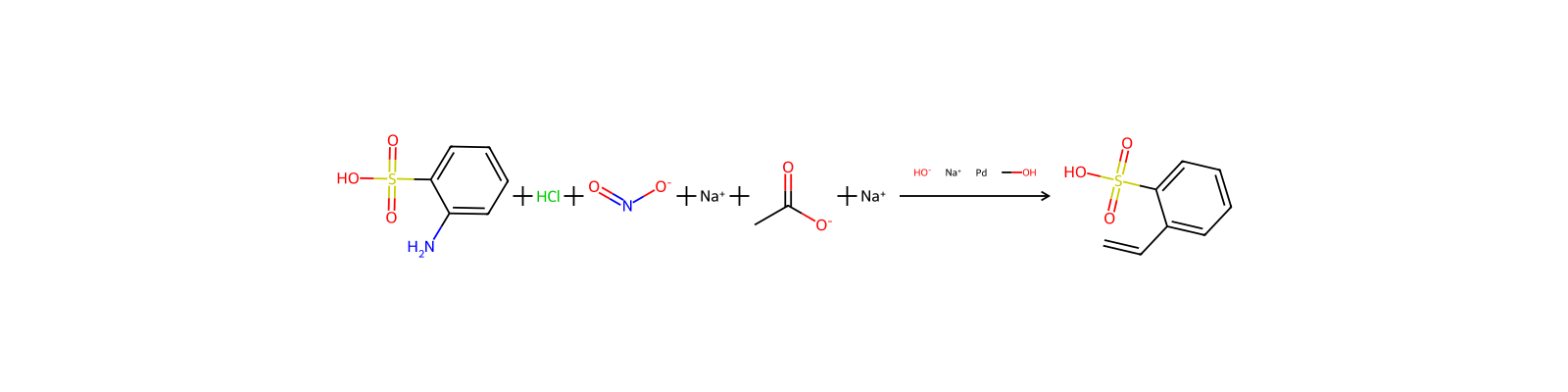
관련 반응
23건





연결된 노트
불러오는 중…