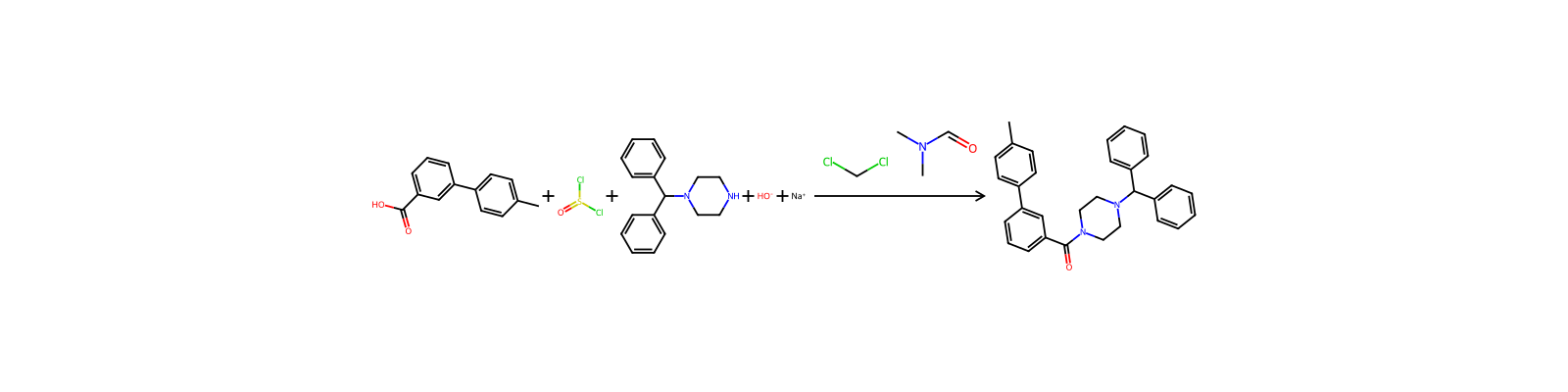
Benzhydrylpiperazine
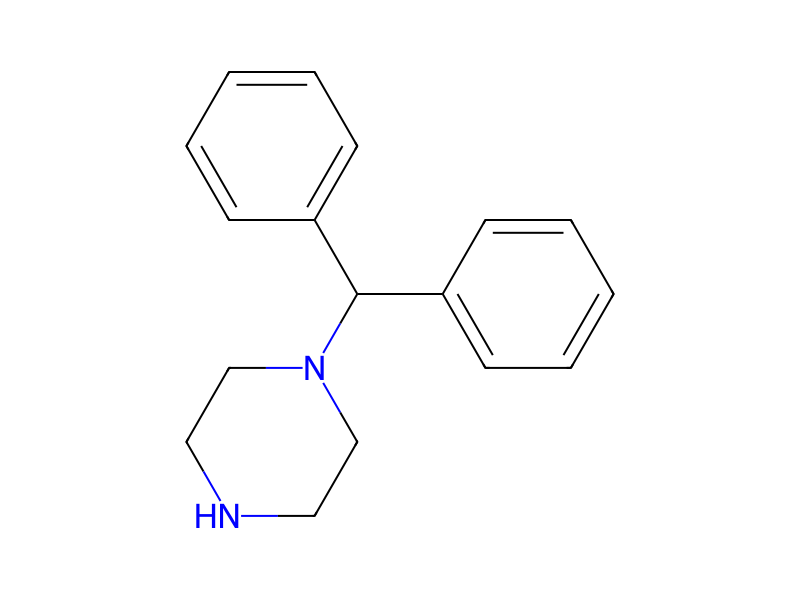
기본 정보
- CAS
841-77-0- 표준 SMILES
c1ccc(C(c2ccccc2)N2CCNCC2)cc1- InChIKey
NWVNXDKZIQLBNM-UHFFFAOYSA-N- 분자식
- C17H20N2
- 평균 분자량
- 252.35 g/mol
- 단동위원소 질량
- 252.16264865
개요
RN given refers to parent cpd; structure in first source
이름 및 식별자
- 우선 이름
- Benzhydrylpiperazine
- IUPAC
- 1-benzhydrylpiperazine
- 영어명
- 1-Benzhydrylpiperazine
- 분자식
- C17H20N2
- 분자량
- 252.35
이름 및 동의어
1-Benzhydrylpiperazine841-77-01-(Diphenylmethyl)piperazineBenzhydrylpiperazineNorcyclizine4-BenzhydrylpiperazineN-(Diphenylmethyl)piperazinePiperazine, 1-(diphenylmethyl)-NU6V5ZHD9PNSC-35536DTXSID80232968RefChem:166584
이름 더 보기
NSC 35536AKOS NCG1-0108AKOS BBS-00003601TIMTEC-BB SBB003136Benzhydrol piperzineLABOTEST-BB LT00454383
DTXCID10155459212-667-7Diphenylmethylpiperazine1-Benzhydryl-piperazineN-BenzhydrylpiperazineNormethylcyclizineCinnarizine EP Impurity AMFCD00038379
데이터베이스 식별자
- CAS
841-77-0- PubChem CID
- 70048
- DTXSID
DTXSID80232968- ChEMBL
CHEMBL1490469- UNII
- NU6V5ZHD9P
- EC Number
- 212-667-7
- Nikkaji
- J29.024F
물성
구조 계산 물성
- XLogP
- 2.8
- 극성 표면적
- 15.3 Ų
- 수소 결합 공여자 수
- 1
- 수소 결합 수용자 수
- 2
- 회전 가능 결합 수
- 3
- 무거운 원자 수
- 19
- 형식 전하
- 0
- 복잡도
- 230
실험 및 물리화학적 성질
DrugsPharmaceuticals -> Metabolite of Cinnarizine
Solubility25 [ug/mL] (The mean of the results at pH 7.4)
물리화학적 성질
- 녹는점
- 90 · 90-93 °C
- 끓는 점
- 185 °C/2mmHg · 185°C/2mmHg(lit.)
- 밀도
- 1.0546 · 1.0546 (rough estimate)
- 증기압
- 0.001 Pa · 0.001Pa at 20℃
- 굴절률
- 1.5794 · 1.5794 (estimate)
- 인화점
- 115 °C · 115 °C
- 저장 조건
- Keep in dark place,Sealed in dry,Room Temperature
- 용해도
- 메탄올(약간)에 용해됨
- 산도 계수 (pKa)
- 9.05 · 9.05±0.10(Predicted)
- 물리적 상태
- 결정성 분말
- 색상
- 흰색에서 밝은 노란색
- 수용성
- 0.45 g/L · 0.45g/L(20℃)
- BRN
- 222773 · 222773
- InChI
- 1S/C17H20N2/c1-3-7-15(8-4-1)17(16-9-5-2-6-10-16)19-13-11-18-12-14-19/h1-10,17-18H,11-14H2
안전 및 규제
안전 정보는 참고용이며, 공급업체의 물질안전보건자료(SDS), 관련 법규 및 전문가 평가를 대체하지 않습니다.
GHS 분류
GHS Classification
This chemical does not meet GHS hazard criteria for 1.9% (1 of 52) of reports.
Warning
H302 (92.3%): Harmful if swallowed [Warning Acute toxicity, oral]
P261, P264, P264+P265, P270, P271, P280, P301+P317, P302+P352, P304+P340, P305+P351+P338, P317, P319, P321, P330, P332+P317, P337+P317, P362+P364, P403+P233, P405, and P501 (click each P-code to see the statement)
Aggregated GHS information provided per 52 reports by companies from 10 notifications to the ECHA C&L Inventory. Each notification may be associated with multiple companies.
유해성 정보
Regulatory InformationREACH registered substance: 1-benzhydrylpiperazine (EC: 212-667-7)
Hazard Classes and CategoriesAcute Tox. 4 (92.3%)
안전 데이터
- wgk
- 3
- rtecs
- TL6465000
- HS 번호
- 29339900
- risk_code
- 22
- hazard_code
- Xn,Xi
- safety_code
- 22-24/25
- 위험 등급
- IRRITANT
- F 고인화성물질
- 34
- Hazard Classifications
- Acute Tox. 3 OralAquatic Chronic 2Eye Dam. 1Repr. 2Skin Sens. 1ASTOT RE 1STOT SE 1
- 스토리지 클래스
- 6.1C - Combustible acute toxic Cat.3toxic compounds or compounds which causing chronic effects
화학 및 산업
약리 정보
Metabolism/Metabolites1-Benzhydrylpiperazine is a known human metabolite of cinnarizine.
응용 분야
용도1-Benzhydrylpiperazine is an intermediate used in drug synthesis
일반 설명1-(Diphenylmethyl)piperazine is an intermediate during drug synthesis. It has been reported to be formed during the oxidative metabolism of cinnarizine (CZ) [1-(diphenylmethyl)-4-(3-phenyl-2-propenyl)-piperazine] in rat liver microsomes. It reacts with quinone in acetonitrile, followed by oxidation with an alkaline potassium ferricyanide, to afford 4-amino-3,6-di(tert-butyl)-o-benzoquinones.
상·하류 제품 정보
상류 원료
하류 제품
관련 반응
331건



화합물 노트
불러오는 중…