
티안트렌
Thianthrene

기본 정보
- CAS
92-85-3- 표준 SMILES
c1ccc2c(c1)Sc1ccccc1S2- InChIKey
GVIJJXMXTUZIOD-UHFFFAOYSA-N- 분자식
- C12H8S2
- 평균 분자량
- 216.3 g/mol
- 단동위원소 질량
- 216.00674226
개요
Thianthrene is the organosulfur heterocyclic compound that is the parent compound of the thianthrenes, a tricyclic structure comprising two benzene rings fused to the b and e sides of 1,4-dithin. It is a mancude organic heterotricyclic parent, an organosulfur heterocyclic compound and a member of thianthrenes.
이름 및 식별자
- 우선 이름
- Thianthrene
- IUPAC
- thianthrene
- 현지명
- 티안트렌
- 영어명
- Thianthrene
- 분자식
- C12H8S2
- 분자량
- 216.32
이름 및 동의어
THIANTHRENE92-85-3ThianthrenThiaanthrene9,10-DithiaanthraceneDTXSID6059071CHEBI:64511NSC-4394139V9M46HRefChem:897643DTXCID4048779202-197-0
이름 더 보기
티안트렌AKOS 90207hianthreneThianthrene,97%Thianthrene >Thianthrene ,98%THIANTHRENE, 99+%diphylene disulfide
DIPHENYLENE DISULFIDEC12H8S2diphenylene disulphidedibenzo-1,4-dithiinMFCD00005065DIBENZODITHIODIOXANEAI3-00638NSC439
데이터베이스 식별자
- CAS
92-85-3- PubChem CID
- 7109
- DTXSID
DTXSID6059071- ChEMBL
CHEMBL488176- ChEBI
CHEBI:64511- UNII
- 4139V9M46H
- EC Number
- 202-197-0
- Nikkaji
- J4.662K
물성
구조 계산 물성
- XLogP
- 4.6
- 극성 표면적
- 50.6 Ų
- 수소 결합 공여자 수
- 0
- 수소 결합 수용자 수
- 2
- 회전 가능 결합 수
- 0
- 무거운 원자 수
- 14
- 형식 전하
- 0
- 복잡도
- 162
실험 및 물리화학적 성질
Chemical ClassesOther Classes -> Sulfur Compounds
LogP4.47
Endocrine DisruptorsPotential endocrine disrupting compound
Vapor Pressure0.000031 [mmHg]
Physical DescriptionBeige crystalline solid; [Sigma-Aldrich MSDS]
물리화학적 성질
- 녹는점
- 151 · 151-155 °C (lit.)
- 끓는 점
- 364 · 364-366 °C (lit.)
- 밀도
- 1.442 · 1.4420
- 굴절률
- 1.621 · 1.6210 (estimate)
- 저장 조건
- Sealed in dry,Room Temperature
- 용해도
- 에 용해됨DMF
- 물리적 상태
- powder to crystal
- 색상
- 흰색에서 밝은 노란색
- BRN
- 83046 · 83046
- Henry's Law Constant
- 4 · 4.0×100 mol/(m3Pa) at 25℃, Abraham and Jr. (2019)
- InChI
- 1S/C12H8S2/c1-2-6-10-9(5-1)13-11-7-3-4-8-12(11)14-10/h1-8H
- InChIKey
- GVIJJXMXTUZIOD-UHFFFAOYSA-N
- SMILES
- S1c2ccccc2Sc3ccccc13
- NIST
- Thianthrene(92-85-3)
- EPA
- Thianthrene (92-85-3)
화학적 성질
White to off-white solid
안전 및 규제
안전 정보는 참고용이며, 공급업체의 물질안전보건자료(SDS), 관련 법규 및 전문가 평가를 대체하지 않습니다.
GHS 분류
GHS Classification
This chemical does not meet GHS hazard criteria for 97.4% (38 of 39) of all reports.
Not Classified
Aggregated GHS information provided per 39 reports by companies from 2 notifications to the ECHA C&L Inventory.
유해성 정보
Regulatory InformationThianthrene: Does not have an individual approval but may be used as a component in a product covered by a group standard. It is not approved for use as a chemical in its own right.
Hazards SummaryMay cause irritation; [Sigma-Aldrich MSDS]
Hazard Classes and CategoriesNot Classified
안전 데이터
- wgk
- 3
- tsca
- TSCA listed
- HS 번호
- 2934999090
- safety_code
- 24/25
- 스토리지 클래스
- 11 - Combustible Solids
화학 및 산업
용도 및 제조
UsesIn its electron deficient state, effects formation of high-energy phosphate bonds in process of oxidative phosphorylation. [ChemIDplus]
General Manufacturing InformationThianthrene: ACTIVE
응용 분야
용도Thianthrene has been used to study aqueous solubilities of several solid nitrogen-, sulfur- and oxygen-containing heterocyclic derivatives of anthracene, phenanthrene and fluorene. It has been used in determination of partition coefficients of several sulfur-containing aromatics in 1-hexyl-3-methylimidazolium bis(trifluoromethylsulfonyl)imide and supercritical carbon dioxide.
일반 설명Thianthrene undergoes liquid phase tert-butylation in the presence of large pore zeolites and mesoporous aluminosilicates catalyst to yield tert-butyl derivatives. Thianthrene on oxidation in the presence of hydrogen peroxide and ligninase as catalyst from Phanerochaete chrysosporium yields thianthrene monosulfoxide.
제조 방법
Thianthrene was first synthesized by John Stenhouse by dry distillation of sodium benzenesulfonate. Thianthrene can be prepared by treating benzene with disulfur dichloride in the presence of aluminium chloride.
상·하류 제품 정보
상류 원료
하류 제품
추가 설명
정의ChEBI: Thianthrene is the organosulfur heterocyclic compound that is the parent compound of the thianthrenes, a tricyclic structure comprising two benzene rings fused to the b and e sides of 1,4-dithin. It is a mancude organic heterotricyclic parent, an organosulfur heterocyclic compound and a member of thianthrenes.
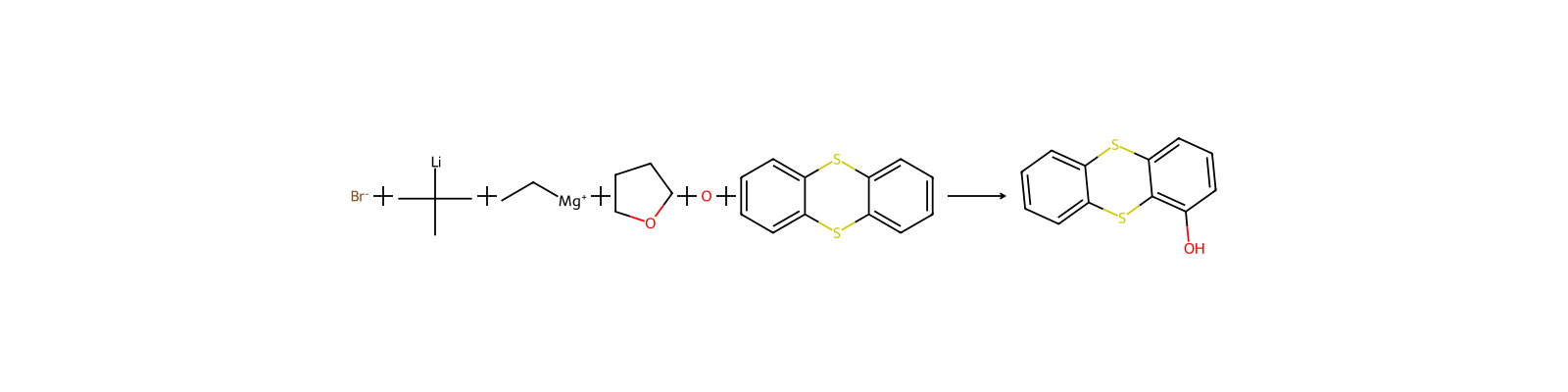
관련 반응
13건


화합물 노트
불러오는 중…