인딘
Indene
데이터를 보충하는 중입니다. 잠시 후 페이지를 새로 고치면 최신 내용을 볼 수 있습니다

기본 정보
- CAS
71551-80-9- 표준 SMILES
C1=Cc2ccccc2C1- InChIKey
YBYIRNPNPLQARY-UHFFFAOYSA-N- 분자식
- C9H8
- 평균 분자량
- 116.16 g/mol
- 단동위원소 질량
- 116.06260026
개요
Indene appears as a colorless liquid derived from coal tar. Fp: -2 °C; bp:182 °C. Density 0.997 g cm-3. Insoluble in water but soluble in organic solvents.
이름 및 식별자
- 우선 이름
- Indene
- IUPAC
- 1H-indene
- 현지명
- 인딘
- 영어명
- Indene
- 분자식
- C9H8
- 분자량
- 116.16
이름 및 동의어
INDENE1H-Indene95-13-6IndonaphtheneIndenDTXSID8042052NSC 927067H8Y6LB8ANSC-9270DTXCID6022052CHEBI:41921RefChem:790898
이름 더 보기
인덴인딘1H-인덴인도나프텐Technicalindenendene1-indeneIndene >Indene,90+%Indene techIndene Odor
CHEBI:37910202-393-6Indenyl radicalMFCD00003777indene, (1H-indene)INDENE, REAGWLN: L56 BHJCHEMBL192812
데이터베이스 식별자
- CAS
71551-80-9、9003-64-9、95-13-6- PubChem CID
- 7219
- DTXSID
DTXSID8042052- ChEMBL
CHEMBL192812、CHEMBL506735- ChEBI
CHEBI:41921- UNII
- 67H8Y6LB8A
- EC Number
- 202-393-6
- Nikkaji
- J4.708B
물성
구조 계산 물성보충 중
- XLogP
- 2.9
- 극성 표면적
- 0 Ų
- 수소 결합 공여자 수
- 0
- 수소 결합 수용자 수
- 0
- 회전 가능 결합 수
- 0
- 무거운 원자 수
- 9
- 형식 전하
- 0
- 복잡도
- 124
실험 및 물리화학적 성질
Chemical Classes
Other Classes -> Aromatic Hydrocarbons
Flammable agents - 2nd degree
SpringerMaterials Properties13C nuclear magnetic resonance spectrum
FragrancesFragrance Ingredient (1H-Indene) -> IFRA transparency List
LogP
Log Kow = 2.92
2.92
Density
0.997 (NIOSH, 2024) - Less dense than water; will float
0.9968 @ 20 °C/4 °C
0.997
0.996 @25 °C
0.997
Color/Form
LIQUID
Colorless liquid
Colorless liquid [Note: A solid below 29 degrees F].
Solubility
Insoluble (NIOSH, 2024)
INSOL IN WATER, MISCIBLE WITH MOST ORGANIC SOLVENTS
SOL IN ALL PROPORTIONS IN ALC, ETHER, N BENZENE, PYRIMIDENE, CARBON DISULFIDE
Soluble in ethanol; it is miscible with diethyl ether, naphtha, pyridine, carbon tetrachloride, chloroform, and carbon disulfide
Insoluble
Flash Point
안전 및 규제
안전 정보는 참고용이며, 공급업체의 물질안전보건자료(SDS), 관련 법규 및 전문가 평가를 대체하지 않습니다.
GHS 분류
GHS Classification
This chemical does not meet GHS hazard criteria for 0.5% (2 of 400) of reports.
Danger
H226 (99.2%): Flammable liquid and vapor [Warning Flammable liquids]
P210, P233, P240, P241, P242, P243, P264, P264+P265, P273, P280, P301+P316, P302+P352, P303+P361+P353, P305+P351+P338, P321, P331, P332+P317, P337+P317, P362+P364, P370+P378, P391, P403+P235, P405, and P501 (click each P-code to see the statement)
Aggregated GHS information provided per 400 reports by companies from 16 notifications to the ECHA C&L Inventory. Each notification may be associated with multiple companies.
Danger
유해성 정보
Regulatory Information
Chemical: 1H-Indene
1H-Indene is listed on the EPA's Chemical Data Reporting (CDR) system. Manufacturers and importers of 1H-Indene are required to report information about their production and use of this chemical to the EPA under the Toxic Substances Control Act (TSCA). (40 eCFR Part 711)
REACH registered substance: Indene (EC: 202-393-6)
Indene: Does not have an individual approval but may be used under an appropriate group standard
The New Jersey Worker and Community Right to Know Act requires public and private employers to provide information about hazardous substances at their workplaces. (N.J.S.A. 34:5A-1 et. seq.)
DOT LabelCombustible Liquid
Fire HazardsExcerpt from ERG Guide 128 [Flammable Liquids (Water-Immiscible)]:
Fire PotentialDEFLAGRATES ON HEATING. /INDENE PICRATE/
Health HazardsExcerpt from NIOSH Pocket Guide for Indene:
Hazards SummaryAnimals exposed to 800-900 ppm for six 7-hour periods show evidence of liver and kidney injury. [ACGIH]
화학 및 산업
약리 정보
Metabolism/Metabolites
YIELDS CIS-1,2-DIHYDROXYINDANE & TRANS-1,2-DIHYDROXYINDANE IN RABBITS. /FROM TABLE/
RAT-LIVER MICROSOMES SUPPLEMENTED WITH NADPH CONVERTED INDENE INTO TRANS-INDANE-1,2-DIOL ...
THE OXIDATION OF INDENE TO TRANS-1,2-DIHYDROXYINDANE IN LIVER PREPN IN VITRO WAS DEMONSTRATED. THE REACTION WAS MEDIATED BY LIVER MICROSOMES OF RATS & RABBITS IN THE PRESENCE OF NADPH-GENERATING SYSTEMS.
용도 및 제조
Uses
Used to prepare coumarone-indene resins; [ACGIH]
Plastic Composites Manufacturing [Category: Industry]
Used as a comonomer in coumarone and petroleum-derived aromatic hydrocarbon resins. Technical pure indene is used for the production of indan and its derivatives. Esters of indene-1-carboxylic acid, which are effective as acaricides, can be synthesized from indene for use in, eg, collars
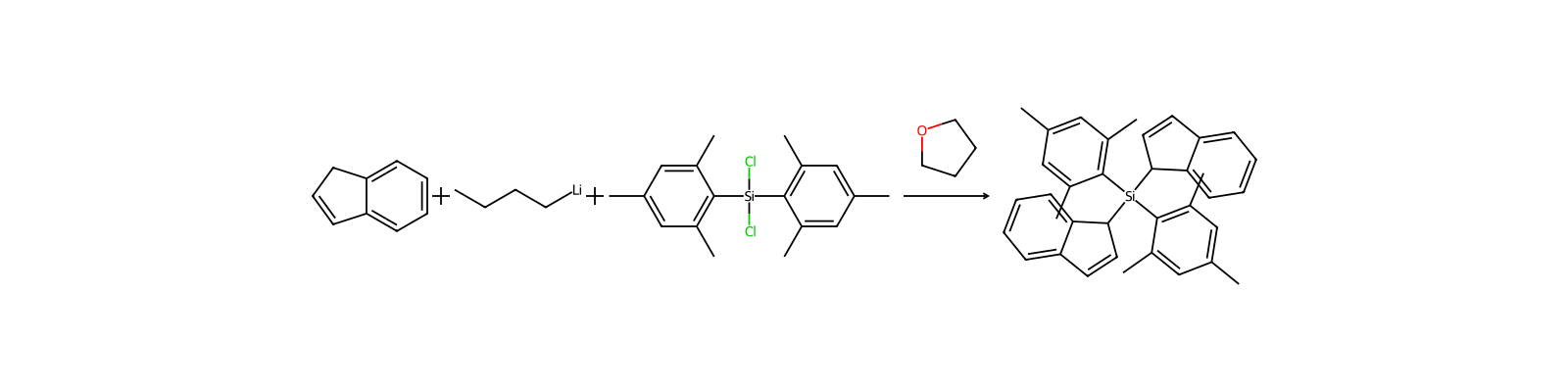
It is composed of a benzene ring fused with a cyclopentene ring.
U.S. Production2023: 500,000 - <1,000,000 lb
Industry UsesMonomers
Methods of Manufacturing
... FROM ACETYLENE OVER ACTIVATED CHARCOAL @ 625 °C ... MFR FROM TETRAHYDRONAPHTHALENE BY PASSING OVER SIO2-AL2O3 CATALYST @ 670 °C
Pyrolysis residual oils from olefin production contain varying amounts of indene, which can be separated by extractive distillation with N-methyl-2- pyrrolidone or by crystallization. Indene is recovered industrially from dephenolated and debased tar light oil by rectifying distillation followed by crystallization. When the phenol extraction is omitted a highly concentrated indene fraction can also be obtained by azeotropic distillation of an indene- phenol fraction with water, whereby the phenol is separated as a bottom product.
Use ClassificationFragrance Ingredients
General Manufacturing Information
관련 반응
215건


화합물 노트
불러오는 중…