

기본 정보
- 표준 SMILES
Cc1ccccc1Br- InChIKey
QSSXJPIWXQTSIX-UHFFFAOYSA-N- 분자식
- C7H7Br
- 평균 분자량
- 171.03 g/mol
- 단동위원소 질량
- 169.97311232
개요
O-bromotoluene is a clear colorless to pale beige liquid. (NTP, 1992)
이름 및 식별자
- 우선 이름
- 2-Bromotoluene
- IUPAC
- 1-bromo-2-methylbenzene
- 현지명
- o-브로모톨루엔
- 영어명
- 2-Bromotoluene
- 분자식
- C7H7Br
- 분자량
- 171.03
이름 및 동의어
2-BROMOTOLUENE95-46-51-Bromo-2-methylbenzeneo-BromotolueneBenzene, 1-bromo-2-methyl-1-Methyl-2-bromobenzeneToluene, 2-bromo-NSC 6532CCRIS 5982DTXSID2024660HSDB 6013UNII-TBG2F2VA19
이름 더 보기
2-브로모톨루엔o-브로모톨루엔2-브로모토루엔a13-266482-Bromtoluolo-bromo-toluen2-bromo-toluen2-tolylbromide2-Tolyl bromideO-TOLYL BROMIDE
EINECS 202-421-7TBG2F2VA19AI3-26648NSC-6532DTXCID404660Benzene,1-bromo-2-methyl-oBromotolueneoTolylbromide
데이터베이스 식별자
- CAS
95-46-5- PubChem CID
- 7236
- DTXSID
DTXSID2024660- ChEMBL
CHEMBL1339978- UNII
- TBG2F2VA19
- EC Number
- 202-421-7
- Nikkaji
- J47.008B
물성
구조 계산 물성
- XLogP
- 3.5
- 극성 표면적
- 0 Ų
- 수소 결합 공여자 수
- 0
- 수소 결합 수용자 수
- 0
- 회전 가능 결합 수
- 0
- 무거운 원자 수
- 8
- 형식 전하
- 0
- 복잡도
- 70.8
실험 및 물리화학적 성질
SolventsSolvents -> Brominated Solvents
SpringerMaterials Properties13C nuclear magnetic resonance spectrum
LogPlog Kow = 3.50
Density
1.431 at 59 °F (NTP, 1992) - Denser than water; will sink
1.432 @ 20 °C/4 °C
Color/FormCOLORLESS LIQ
Solubility
less than 1 mg/mL at 59 °F (NTP, 1992)
PRACTICALLY INSOL IN WATER
SOL IN ALL PROPORTIONS IN CARBON TETRACHLORIDE
Very soluble in ethanol, ether, and benzene
Flash Point
174 °F (NTP, 1992)
79 °C
79 °C (174 °F) CLOSED CUP
Boiling Point
358 °F at 760 mmHg (NTP, 1992)
181.7 °C
Melting Point
-15 °F (NTP, 1992)
-27.8 °C
Vapor Density5.9 (Air= 1)
Vapor Pressure
1 mmHg at 75.9 °F (NTP, 1992)
1.04 [mmHg]
Vapor pressure = 2.88 kPa (21.6 mm Hg) at 75 °C
1.00 mm Hg @ 25 °C /Calculated from experimentally-derived coefficients/
Refractive IndexINDEX OF REFRACTION: 1.5565 AT 20 °C/D
물리화학적 성질
- 녹는점
- -27 °C · -27 °C (lit.)
- 끓는 점
- 58 · 58-60 °C/10 mmHg (lit.)
- 밀도
- 1.422 g/mL · 1.422 g/mL at 25 °C (lit.)
- 굴절률
- 20 · n20/D 1.555(lit.)
- 인화점
- 174 °F · 174 °F
- 저장 조건
- 2 · 2-8°C
- 물리적 상태
- 액체
- Specific Gravity
- 1.422 · 1.422
- 색상
- 무색투명~연황색
- 수용성
- 15 °C에서 · 15°C에서 <0.1g/100mL
- Merck
- 14 · 14,1439
- BRN
- 1904176 · 1904176
- Henry's Law Constant
- 4.1 · 4.1×10-3 mol/(m3Pa) at 25℃, HSDB (2015)
- Dielectric constant
- 4.28 · 4.2800000000000002
- 안정성
- 안정적인. 강한 산화제와 호환되지 않습니다.
- InChI
- 1S/C7H7Br/c1-6-4-2-3-5-7(6)8/h2-5H,1H3
- InChIKey
- QSSXJPIWXQTSIX-UHFFFAOYSA-N
- SMILES
- Cc1ccccc1Br
- NIST
- 1 · Benzene, 1-bromo-2-methyl-(95-46-5)
- EPA
- o-Bromotoluene (95-46-5)
화학적 성질
liquid
안전 및 규제
GHS 분류
GHS Classification
Warning
H302 (100%): Harmful if swallowed [Warning Acute toxicity, oral]
P261, P264, P264+P265, P270, P271, P280, P301+P317, P302+P352, P304+P340, P305+P351+P338, P319, P321, P330, P332+P317, P337+P317, P362+P364, P403+P233, P405, and P501 (click each P-code to see the statement)
Aggregated GHS information provided per 50 reports by companies from 9 notifications to the ECHA C&L Inventory. Each notification may be associated with multiple companies.
Warning
H227: Combustible liquid [Warning Flammable liquids]
유해성 정보
Regulatory Information
Chemical: Benzene, 1-bromo-2-methyl-
2-Bromotoluene: Does not have an individual approval but may be used under an appropriate group standard
DOT LabelCorrosive
Fire HazardsThis chemical is combustible. (NTP, 1992)
Health HazardsSYMPTOMS: This compound causes skin and eye irritation.
Hazards Summary
May cause liver injury; [HSDB] A skin and eye irritant; [CAMEO] An irritant; [MSDSonline]
The major hazards encountered in the use and handling of 2-bromotoluene stem from its toxicologic properties. Exposure to this colorless liquid may occur through inhalation or dermal contact at sites where the substance is manufactured, used as a solvent, or used as a chemical intermediate. This substance is considered to be hazardous to health with the potential to cause respiratory irritation, CNS depression, and hepatotoxicity. Entry into contaminated areas warrants the wearing of a full-face mask, self-contained breathing apparatus which provides eye protection. This substance is normally stable, even under fire exposure conditions; requiring moderate heating before ignition will occur (flash point 79 °C, closed cup). Normal procedures may be used to fight a 2-bromotoluene fire; extinguishing with water spray that blankets the fire and cools the substance below its flash point. Before transporting 2-bromotoluene, the regulatory requirements of the DOT must be consulted. Prior to implementing land disposal of waste residue (including waste sludge), consult with environmental regulatory agencies for guidance.
Reactive GroupAryl Halides
Reactivity ProfileO-BROMOTOLUENE reacts with strong oxidizing agents. (NTP, 1992)
Air and Water ReactionsInsoluble in water.
NFPA Hazard Classification
0 - Materials that, under emergency conditions, would offer no hazard beyond that of ordinary combustible materials.
0 - Materials that will not burn under typical fire conditions, including intrinsically noncombustible materials such as concrete, stone, and sand.
0 - Materials that in themselves are normally stable, even under fire conditions.
Hazard Classes and Categories
Acute Tox. 4 (100%)
Flammable liquids - Category 4
Shipment Methods and Regulations
No person may /transport,/ offer or accept a hazardous material for transportation in commerce unless that person is registered in conformance ... and the hazardous material is properly classed, described, packaged, marked, labeled, and in condition for shipment as required or authorized by ... /the hazardous materials regulations (49 CFR 171-177)./
The International Maritime Dangerous Goods Code lays down basic principles for transporting hazardous chemicals. Detailed recommendations for individual substances and a number of recommendations for good practice are included in the classes dealing with such substances. A general index of technical names has also been compiled. This index should always be consulted when attempting to locate the appropriate procedures to be used when shipping any substance or article.
Skin, Eye, and Respiratory IrritationsIrritant
안전 및 보호
Fire FightingFires involving this material can be controlled with a dry chemical, carbon dioxide, or a Halon extinguisher. (NTP, 1992)
First Aid
EYES: First check the victim for contact lenses and remove if present. Flush victim's eyes with water or normal saline solution for 20 to 30 minutes while simultaneously calling a hospital or poison control center. Do not put any ointments, oils, or medication in the victim's eyes without specific instructions from a physician. IMMEDIATELY transport the victim after flushing eyes to a hospital even if no symptoms (such as redness or irritation) develop.
Nonfire Spill Response
SMALL SPILLS AND LEAKAGE: If you spill this chemical, FIRST REMOVE ALL SOURCES OF IGNITION. Then, use absorbent paper to pick up all liquid spill material. Your contaminated clothing and absorbent paper should be sealed in a vapor-tight plastic bag for eventual disposal. Solvent wash all contaminated surfaces with 60-70% ethanol followed by washing with a soap and water solution. Do not reenter the contaminated area until the Safety Officer (or other responsible person) has verified that the area has been properly cleaned.
Disposal Methods
SRP: At the time of review, criteria for land treatment or burial (sanitary landfill) disposal practices are subject to significant revision. Prior to implementing land disposal of waste residue (including waste sludge), consult with environmental regulatory agencies for guidance on acceptable disposal practices.
Preventive Measures
SRP: The scientific literature for the use of contact lenses in industry is conflicting. The benefit or detrimental effects of wearing contact lenses depend not only upon the substance, but also on factors including the form of the substance, characteristics and duration of the exposure, the uses of other eye protection equipment, and the hygiene of the lenses. However, there may be individual substances whose irritating or corrosive properties are such that the wearing of contact lenses would be harmful to the eye. In those specific cases, contact lenses should not be worn. In any event, the usual eye protection equipment should be worn even when contact lenses are in place.
Isolation and EvacuationExcerpt from ERG Guide 154 [Substances - Toxic and/or Corrosive (Non-Combustible)]:
Personal Protective Equipment (PPE)
RECOMMENDED RESPIRATOR: Where the neat test chemical is weighed and diluted, wear a NIOSH-approved half face respirator equipped with an organic vapor/acid gas cartridge (specific for organic vapors, HCl, acid gas and SO2) with a dust/mist filter. (NTP, 1992)
독성 정보
Environmental Fate
TERRESTRIAL FATE: Based on a recommended classification scheme(1), an estimated Koc value of 443(SRC), derived from a molecular structure estimation method(2), suggests that 2-bromotoluene will have moderate mobility in soil(SRC). Its high estimated Henry's Law constant, 2.4X10⁻³ atm-cu m/mole(3), high vapor pressure, 1.0 mm Hg at 25 °C(5), and moderate adsorptivity to soil indicates that volatilization may be an important fate process from both moist and dry soil surfaces(4,SRC). Experimental data suggest that 2-bromotoluene may be subject to direct photolysis on the soil surface(6). 2-Bromotoluene's potential for biodegradation in soil is unknown.
AQUATIC FATE: Based on a recommended classification scheme(1), an estimated Koc value of 443(SRC) determined from molecular structure(2), indicates that 2-bromotoluene may adsorb to sediment and particulate matter in the water column(SRC). It is expected to readily volatilize from water based on its estimated Henry's Law constant of 2.4X10⁻³ atm-cu m/mole(3). Estimated half-lives for a model river and model lake are 4.3 hours and 5.3 days, respectively(4,SRC). Using a model which takes adsorption into account(8), the volatilization half-life of 2-bromotoluene in an environmental pond is estimated to be 14.9 days. Experimental data suggests that 2-bromotoluene may be subject to direct photolysis in surface waters(7). Its potential for biodegradation is unknown. According to a recommended classification scheme(6), an estimated BCF value of 270(4,SRC), based on its log Kow(5,SRC), suggests that bioconcentration in aquatic organisms will be moderately high(SRC).
ATMOSPHERIC FATE: According to a theory of gas/particle partitioning of semivolatile organic compounds in the atmosphere(1), 2-bromotoluene has a vapor pressure of 1.0 mm Hg at 25 °C(1). Based on this vapor pressure, 2-bromotoluene should exist entirely in the vapor phase in the ambient atmosphere(2,SRC). Vapor phase 2-bromotoluene should degrade in the atmosphere by reaction with photochemically produced hydroxyl radicals; the half-life for this reaction is estimated to be 9.8 days(3,SRC).
Adverse EffectsNeurotoxin - Acute solvent syndrome
Soil Adsorption/Mobility
Using an estimation method based on molecular connectivity indices(1), the Koc for 2-bromotoluene is estimated to be 440(SRC). According to a suggested classification scheme(2), this Koc value suggests that 2-bromotoluene will have medium mobility in soil(SRC).
Artificial Pollution Sources
Bromotoluene may be released to the environment in waste streams and as emissions during its use as a solvent (for fats, waxes or resins, and as a medium for carrying out reactions) and as chemical intermediate(1,2). Use of 2-bromotoluene as a solvent may result in direct environmental release through evaporation. Environmental releases may also be possible from wastes generated at sites of production or use as a chemical intermediate(SRC).
Environmental Bioconcentration
A BCF of 270 was estimated for 2-bromotoluene(SRC), using its estimated log Kow of 3.43(1,SRC), and a recommended regression-derived equation(2). According to a recommended classification scheme(3), this BCF value suggests that bioconcentration in fish and aquatic organisms will be moderately high(SRC).
Volatilization from Water/Soil
Based upon a quantitative structure analysis relationship (QSAR) estimation method, the Henry's Law constant of 2-bromotoluene is estimated to be 2.4X10⁻³ atm-cu m/mole at 25 °C(1,SRC). This value of Henry's Law constant indicates that volatilization from environmental waters is probably significant, and may be rapid(2). The volatilization half-lives of 2-bromotoluene from a model river (1 meter deep flowing 1 m/sec with a wind speed of 3 m/sec) and model lake (1 meter deep flowing at 0.05 m/sec with a wind speed of 0.5 m/sec) are estimated to be 4.3 hr and 5.3 days, respectively(2,SRC); these estimates do not consider the effect of adsorption to sediment which may be important(SRC). The volatilization half-life of 2-bromotoluene in an experimental pond which considers adsorption has been estimated to be 14.9 days(3,SRC).
Non-Human Toxicity Excerpts
RELATIVE HEPATOTOXICITY OF O-BROMOBENZONITRILE, BROMOBENZENE, O-BROMOTOLUENE & O-BROMOBENZOTRIFLUORIDE IN RATS DECR IN ORDER GIVEN.
SERIES OF 7 O-SUBSTITUTED BROMOBENZENES INCLUDING 2-BROMOTOLUENE WERE EVALUATED FOR THEIR POTENTIAL TO PRODUCE LIVER INJURY IN RATS, AS REFLECTED IN HISTOLOGICAL OBSERVED CENTRILOBULAR NECROSIS & INCR IN SERUM GLUTAMATE-PYRUVATE TRANSAMINASE. EACH COMPOUND (INCLUDING 0.15 ML/KG 2-BROMOTOLUENE) WAS ADMIN IP. TWENTY-FOUR HR TOXICTY VALUES FOR THE COMPOUNDS WERE SIMILAR FOR BOTH INDEXES OF LIVER DAMAGE & INDICATED THAT BROMOBENZENES BEARING ELECTRON WITHDRAWING SUBSTITUENTS AT THE ORTHO POSITION ARE VERY POTENT LIVER TOXICANTS. BROMOBENZENES WITH ELECTRON-RELEASING SUBSTITUENTS ARE LESS TOXIC, & THOSE BEARING SUBSTITUENTS WITH LESS PRONOUNCED ELECTRONIC CHARACTER ELICITED INTERMEDIATE TOXIC EFFECTS.
o-Bromotoluene tested negative for mutagenicity in Salmonella assays.
Liver slices in an organ culture system were used to examine the relationships between relative metabolism, covalent binding and toxicity of a series of bromobenzene derivatives. Liver slices from male Sprague-Dawley rats were incubated with toxic concentrations of bromobenzene and bromobenzene derivatives dual labeled with tritium and (14)C. The bromobenzene derivatives used were o-bromoanisole, o-bromotoluene, o-bromobenzonitrile, and o-dibromobenzene. Incubations were conducted at various times (2 to 24 hr for measurement of total metabolism and total covalent binding. No correlation between metabolism and toxicity was observed among the compounds studied. Covalent binding varied 7 fold across the series, and those compounds which bound the most frequently were the most toxic. The relative binding index (RBI) for each compound and the average retention of tritium relative to (14)C in the covalent binding fraction were constant through the 24 hour incubation periods. This finding suggests that the metabolic profile of each compound was constant over time. The pool bound/nom metabolism values did not reflect relative toxicity as well as did the total covalent binding values.
For more Non-Human Toxicity Excerpts (Complete) data for 2-BROMOTOLUENE (7 total), please visit the HSDB record page.
Environmental Abiotic Degradation
The rate constant for the vapor-phase reaction of 2-bromotoluene with photochemically produced hydroxyl radicals has been estimated to be 1.64X10⁻¹² cu m/molecule-sec at 25 °C(1,SRC); assuming an average atmospheric hydroxyl radical concn of 5X10+5 molecules/cu cm, the half-life for this reaction can be estimated to be 9.8 days(1,SRC). 2-Bromotoluene does not contain any functional groups that are susceptible to aqueous environmental hydrolysis(2); therefore, hydrolysis is not expected to be significant in water(SRC). Irradiation of 2-bromotoluene (in hexane solution) with artificial UV light above 290 nm resulted in a dehalogenation of 1.03% over a two hour period(3).
Probable Routes of Human ExposureOccupational exposure may occur through inhalation or dermal contact at sites where 2-bromotoluene is manufactured, used as a solvent or used as a chemical intermediate. (SRC)
Environmental Fate/Exposure Summary
2-Bromotoluene may be released to the environment through evaporation from solvent uses or from wastes generated at sites of production and use. If released to the atmosphere, 2-bromotoluene is expected to degrade by reaction with photochemically produced hydroxyl radicals; the half-life for this reaction is estimated to be 9.8 days. If released to water, 2-bromotoluene may be removed from the water column by volatilization and adsorption. Using an estimated Henry's Law constant of 2.4X10⁻³ atm-cu m/mol, volatilization half-lives of 4.3 hr and 5.3 days can be estimated for a model river (1 m deep) and model lake, respectively. The potential effect of adsorption to sediment is considered in the half-life from an environmental pond which is estimated to be 14.9 days, but not from the model river or model lake. An estimated Koc of 440 suggests that if 2-bromotoluene is released to soil, moderate leaching may occur. Based on its estimated Henry's Law constant and measured vaopr pressure (1mm Hg at 25 °C), evaporation from dry and moist soil surfaces may also occur. Data are not available with which to assess the importance of biodegradation in the environment. Its estimated BCF of 270 suggests that there is a moderately high potential for bioaccumulation in aquatic organisms. Occupational exposure may occur through inhalation or dermal contact at sites where 2-bromotoluene is manufactured, used as a solvent or used as a chemical intermediate. (SRC)
안전 데이터
- wgk
- 3
- tsca
- TSCA listed
- rtecs
- XS7965500
- HS 번호
- 29036990
- risk_code
- 22-36/37/38
- hazard_code
- Xn,Xi
- safety_code
- 36/37/39-37/39-26
- 포장분류
- III
- 위험 참고 사항
- Harmful/Irritant
- Hazard Classifications
- Acute Tox. 4 OralAquatic Chronic 2
- 스토리지 클래스
- 10 - Combustible liquids
- 유해 물질 데이터
- 95-46-5(Hazardous Substances Data)
화학 및 산업
약리 정보
Metabolism/Metabolites
Effect of substituents on in vitro metabolism and covalent binding of substituted bromobenzenes was studied. Glutathione reduced covalent binding of enzyme-substrate in concn as low as 0.01 millimolar for all compounds except o-bromobenzotrifluoride which required 0.1 millimolar. Major rat urinary metabolites are phenols, and mercapturic acids, products of the arene oxide metabolic pathway.
용도 및 제조
Uses
Used as a solvent for fats, waxes, and resins; Also used as a chemical intermediate and research chemical; [HSDB]
RESEARCH CHEMICAL
2-Bromotoluene is used as a solvent (for fats, waxes or resins and as a medium for carrying out reactions) and as chemical intermediate.
Chemical synthesis
U.S. Production(1978) PROBABLY GREATER THAN 2.27X10+6 GRAMS
Methods of Manufacturing
... BY REDUCTION OF DIAZOTIZED O-TOLUIDINE. ISOMERIZATION OF P-BROMOTOLUENE YIELDS MIXT OF MONOBROMOTOLUENES CONTAINING 48.2% OF O-ISOMER. SEPARATION OF O- & P-BROMOTOLUENES BY CLATHRATION.
Replacement of hydrogen in parent compound by bromine: (a) in the presence of iron; ... Hydrogen bromide is allowed to escape, preferably being washed by incoming raw material. In some cases a method for separating isomeric compounds is necessary.
General Manufacturing InformationBenzene, 1-bromo-2-methyl-: ACTIVE
응용 분야
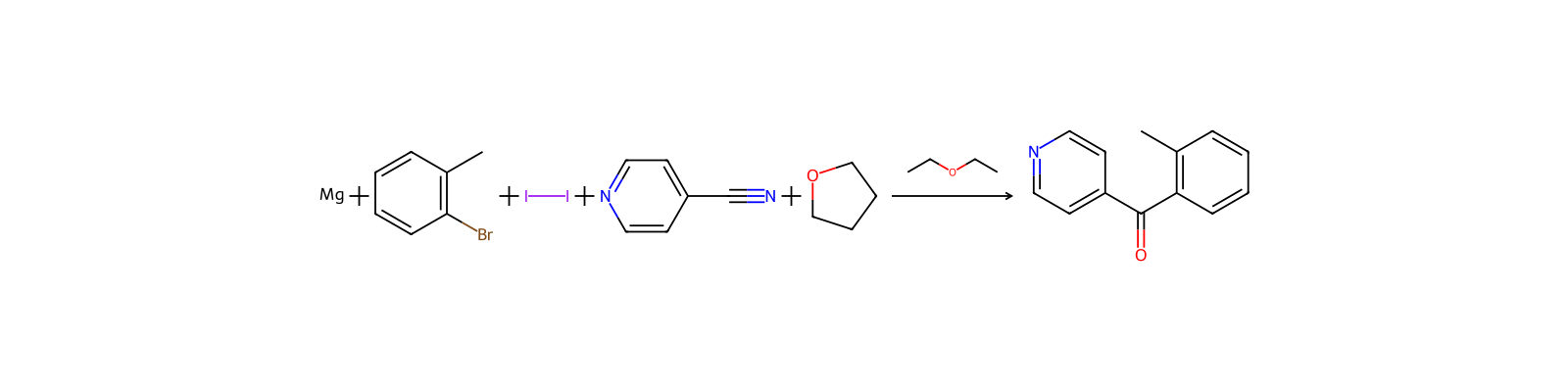
용도2-Bromotoluene was used in the synthesis of (±)-isocomene. Suzuki coupling of 2-bromotoluene with phenylboronic acid using palladium nanoparticles supported on alumina-based oxides as catalyst has been reported. 2-Bromotoluene is used in manufacturing pharmaceuticals (especially for nonsteroidal antiinflammatory drugs; Meclofenamic acid, Mefenamic acid) and other organic compounds
일반 설명Clear colorless to pale beige liquid.
상·하류 제품 정보
상류 원료
하류 제품
공급사50 곳
国药集团化学试剂有限公司86-21-63210123 · [email protected]
梯希爱(上海)化成工业发展有限公司021-67121386 · [email protected]
衢州润东化工有限公司0570-8789886 18892685668 · [email protected]
上海阿拉丁生化科技股份有限公司400-6206333 13167063860 · [email protected]
T&W GROUP021-61551611 13296011611 · [email protected]
爱斯特(成都)生物制药股份有限公司+86-28-85122536 85324413 · [email protected]
Dayang Chem (Hangzhou) Co.,Ltd.+86-0571-88938639 17705817739 · [email protected]
科瑞迪化学400-821-5857 021-64326257 · [email protected]
上海迈瑞尔生化科技有限公司4006356688 18621169109 · [email protected]
阿法埃莎(中国)化学有限公司400-6106006 · [email protected]
安耐吉化学&3A(安徽泽升科技股份有限公司)400-0056266 · [email protected]
石家庄斯迪亚诺精细化工有限公司0311-89250318 13582355795 · [email protected]
武汉凯威斯科技有限公司86-027-67849912 · [email protected]
上海瀚鸿科技股份有限公司021-54306202 13764082696 · [email protected]
上海景颜化工科技有限公司13817811078 · [email protected]
嘉兴市艾森化工有限公司0573-85285100 18627885956 · [email protected]
山东西亚化学有限公司13355009207 13355009207 · [email protected]
玛雅试剂+86 (573) 82222445 (0)18006601000 452520369 · [email protected]
四川库利南科技有限公司400-1166-196 18981987031 · [email protected]
天津希恩思生化科技有限公司400 638 7771 · [email protected]
艾科试剂4008-755-333 18080918076 · [email protected]
上海思域化工科技有限公司86-21-34053660 · [email protected]
苏州思变化学技术有限公司0512-65617459 18915409046 · [email protected]
赛默飞世尔科技(中国)有限公司800-810-5118 · [email protected]
北京伊诺凯科技有限公司400-810-7969 010-59572699 · [email protected]
上海特伯化学科技有限公司+86-21-60341587 · [email protected]
上海遐瑞医药科技有限公司+86 21 61551611
南京诺利斯医药科技有限公司13901585132 · [email protected]
TCI AMERICA800-4238616 · [email protected]
TOKYO CHEMICAL INDUSTRY CO., LTD.03-36680489 · [email protected]
TCI Europe320-37350700 · [email protected]
上海贤鼎生物科技有限公司4009209199 · [email protected]
深圳康特腾科技有限公司86-0755-86635001 · [email protected]
越林试剂021-62960152 · [email protected]
北京环宇世纪化学科技有限公司hysj_bj.com
上海将来实业股份有限公司400-0066400 13621662912 · [email protected]
上海将来实业股份有限公司021-61552785 · [email protected]
安徽科迪达化工有限公司0554-2106669 · [email protected]
日照力德士化工有限公司010-51268198 · [email protected]
美岚实业(上海)有限公司021-58958189 · [email protected]
上海石洋化工有限公司021-56795766 · [email protected]
上海爱蝶实业有限公司021-58957966 18930537195 · [email protected]
成都零六生物科技有限公司400-1166-196 13458535857 · [email protected]
广拓化学(上海)有限公司021-60899189-8001 18918189673 · [email protected]
雷丁试剂0510-85629785 18013409632 · [email protected]
上海御略医药科技有限公司021-60345187 13671753212 · [email protected]
上海麦克林生化科技股份有限公司15221275939 15221275939 · [email protected]
上海嵩爰化工科技有限公司010-1234567 18521000990 · [email protected]
上海有朋化工有限公司021-69005955 13701776567 · [email protected]
上海凯赛化工有限公司021-33516722 13701817765 · [email protected]
관련 반응
148건





연결된 노트
불러오는 중…