홈MCP워크벤치Skills
홈워크벤치알림마이페이지
llms.txt · MCP 가이드개인정보처리방침 · 이용약관 · 지원v1.8.0
  1. 홈
  2. /화합물

o-클로로톨루엔

2-Chlorotoluene

HCID 7238
새 노트새 반응견적 요청하기
인쇄 미리보기

데이터를 보충하는 중입니다. 잠시 후 페이지를 새로 고치면 최신 내용을 볼 수 있습니다

기본 정보개요이름 및 식별자물성안전 및 규제화학 및 산업관련 반응화합물 노트
부분 구조 검색유사 구조 찾기

기본 정보

CAS
95-49-8
표준 SMILES
Cc1ccccc1Cl
InChIKey
IBSQPLPBRSHTTG-UHFFFAOYSA-N
분자식
C7H7Cl
평균 분자량
126.58 g/mol
단동위원소 질량
126.0236279

개요

O-chlorotoluene is a colorless liquid with an aromatic odor. Denser than water and poorly soluble in water. Hence sinks in water. (USCG, 1999)

이름 및 식별자

우선 이름
2-Chlorotoluene
IUPAC
1-chloro-2-methylbenzene
현지명
o-클로로톨루엔
영어명
2-Chlorotoluene
분자식
C7H7Cl
분자량
126.58

이름 및 동의어

2-Chlorotoluene1-Chloro-2-methylbenzene95-49-8o-Chlorotolueneo-Tolyl chlorideBenzene, 1-chloro-2-methyl-ortho-ChlorotolueneToluene, o-chloro-2-Methylchlorobenzene2-Chloro-1-methylbenzeneHalso 991-METHYL-2-CHLOROBENZENE
이름 더 보기
2-클로로톨루엔0-클로로톨루엔o-클로로톨루엔오쏘-클로로톨루엔OTFOCT2-Chlortoluolo-Chlortoluol1-chloro-2-methyl-benzen2,4-Dicyano-3-methylpentanediamide
DTXSID8023977UN22382G7D0YDV9HNSC-8766O-METHYLCHLOROBENZENEDTXCID003977UN-2238RefChem:86544

데이터베이스 식별자

CAS
95-49-8
PubChem CID
7238
DTXSID
DTXSID8023977
ChEMBL
CHEMBL1797265
UNII
2G7D0YDV9H
EC Number
202-424-3
Nikkaji
J3.564E

물성

구조 계산 물성보충 중

XLogP
3.4
극성 표면적
0 Ų
수소 결합 공여자 수
0
수소 결합 수용자 수
0
회전 가능 결합 수
0
무거운 원자 수
8
형식 전하
0
복잡도
70.8

실험 및 물리화학적 성질

Chemical Classes · 3건

Flammable agents - 2nd degree

Industrial compound

Volatile Organic Compound (VOC)

SolventsSolvents -> Chlorinated Aromatics
SpringerMaterials Properties13C nuclear magnetic resonance spectrum
PesticidesPesticide -> EPA IRIS
LogP · 3건

Log Kow= 3.42

3.4

3.42

OdorAromatic odor.
Density · 6건

1.0825 at 68 °F (USCG, 1999) - Denser than water; will sink

1.0826 @ 20 °C/4 °C

Relative density (water = 1): 1.08

1.08

1.0825 @ 20°C

1.08

Viscosity1.022 mPa-s @ 20 °C
Color/FormColorless liquid.
Solubility · 6건

0.009 % at 77 °F (NIOSH, 2024)

FREELY SOL IN CHLOROFORM

Miscible with alcohol, acetone, ether, benzene, carbon tetrachloride, and n-heptane; slightly soluble in water.

안전 및 규제

안전 정보는 참고용이며, 공급업체의 물질안전보건자료(SDS), 관련 법규 및 전문가 평가를 대체하지 않습니다.

GHS 분류

GHS Classification · 6건

Warning

H332: Harmful if inhaled [Warning Acute toxicity, inhalation]

P261, P271, P273, P304+P340, P317, P391, and P501 (click each P-code to see the statement)

Warning

H226 (66.4%): Flammable liquid and vapor [Warning Flammable liquids]

P203, P210, P233, P240, P241, P242, P243, P261, P271, P273, P280, P303+P361+P353, P304+P340, P317, P318, P370+P378, P391, P403+P235, P405, and P501 (click each P-code to see the statement)

유해성 정보

Regulatory Information · 6건

Chemical: Benzene, 1-chloro-2-methyl-

Hazard Traits - Other Toxicological Hazard Traits

Benzene, 1-chloro-2-methyl- is listed on the EPA's Chemical Data Reporting (CDR) system. Manufacturers and importers of Benzene, 1-chloro-2-methyl- are required to report information about their production and use of this chemical to the EPA under the Toxic Substances Control Act (TSCA). (40 eCFR Part 711)

Status: Active Update: 08-07-2022 https://echa.europa.eu/registration-dossier/-/registered-dossier/13832

o-Chlorotoluene: Does not have an individual approval but may be used under an appropriate group standard

The New Jersey Worker and Community Right to Know Act requires public and private employers to provide information about hazardous substances at their workplaces. (N.J.S.A. 34:5A-1 et. seq.)

DOT LabelFlammable Liquid
Fire Hazards · 2건

Special Hazards of Combustion Products: May contain toxic chloride fumes.

Flammable. Gives off irritating or toxic fumes (or gases) in a fire. Above 43 °C explosive vapour/air mixtures may be formed.

Fire PotentialSLIGHT, WHEN EXPOSED TO HEAT OR FLAME. /4-CHLOROTOLUENE/
Health HazardsInhalation of vapor may cause respiratory irrtation. Prolonged and repeated vapor exposures may produce systemic toxic effects. (USCG, 1999)

화학 및 산업

약리 정보

Absorption, Distribution and Excretion... APPLIED UNDER OCCLUSIVE DRESSING TO 2 GUINEA PIGS ... THERE WAS ... EVIDENCE OF SKIN ABSORPTION ...

용도 및 제조

Uses · 6건

Used as a solvent and chemical intermediate; [ACGIH]

Painting (Solvents) [Category: Paint]

SOLVENT; DYESTUFF INTERMEDIATE; IN ORG SYNTHESES

INSECTICIDE & BACTERICIDE

DISINFECTANT FOR COCCIDIOSIS CONTROL

2-Chlorotoluene is a starting material in the production of 2-chlorobenzyl chloride, 2-chlorobenzaldehyde, 2-chlorobenzotrichloride, 2-chlorobenzoyl chloride and 2-chlorobenzoic acid, which are precursors for dyes, pharmaceuticals, optical brighteners, fungicides, and products of other types. 2-Chlorotoluene is also used in the production of dichlorotoluenes, 3-chlorotoluene, and o-chlorobenzonitrile.

ImpuritiesA typical analysis for 2-chlorotoluene gives >99% 2-chlorotoluene, <0.1% toluene, <0.9% 4-chlorotoluene, <0.01% 3-chlorotoluene.
U.S. Production2023: 400,000 - <550,000 lb
Industry UsesIntermediate
Methods of Manufacturing · 1건

The batch chlorination of toluene at 50 °C in the presence of ferric chloride (or of ferric chloride-sulfur monochloride at 40 °C the values for which are given in parentheses for comparison) gives at most 83%(98%) monochlorotoluene, with 52% (52%) of the product being o-chlorotoluene, 2%(0.3%) m-chlorotoluene, and 28%(46%) p-chlorotoluene, in addition to 7%(1%) unreacted toluene and 11%(1%) dichlorotoluene. 2-Chlorotoluene and 4-chlorotoluene are separated by fractional distillation.

General Manufacturing Information · 3건

All Other Basic Organic Chemical Manufacturing

Benzene, 1-chloro-2-methyl-: ACTIVE

MONOCHLOROTOLUENE, 60% ORTHO & 40% PARA ISOMERS, IS PRODUCED COMMERCIALLY. /MONOCHLOROTOLUENE/

관련 반응

66건
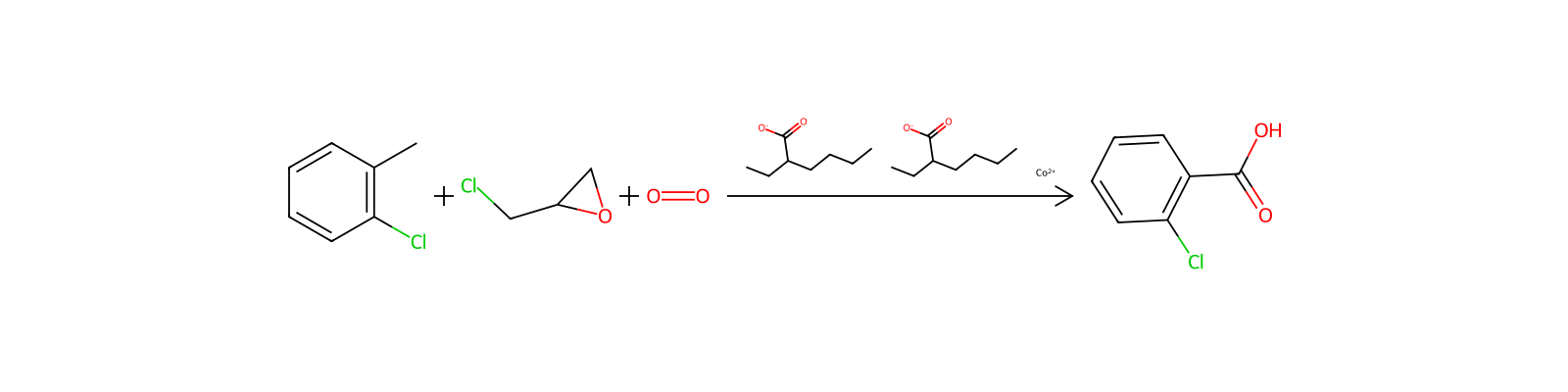
반응 기록 만들기
HRID 72814 반응식
HRID 72814반응물로uspto-grants-2014_09
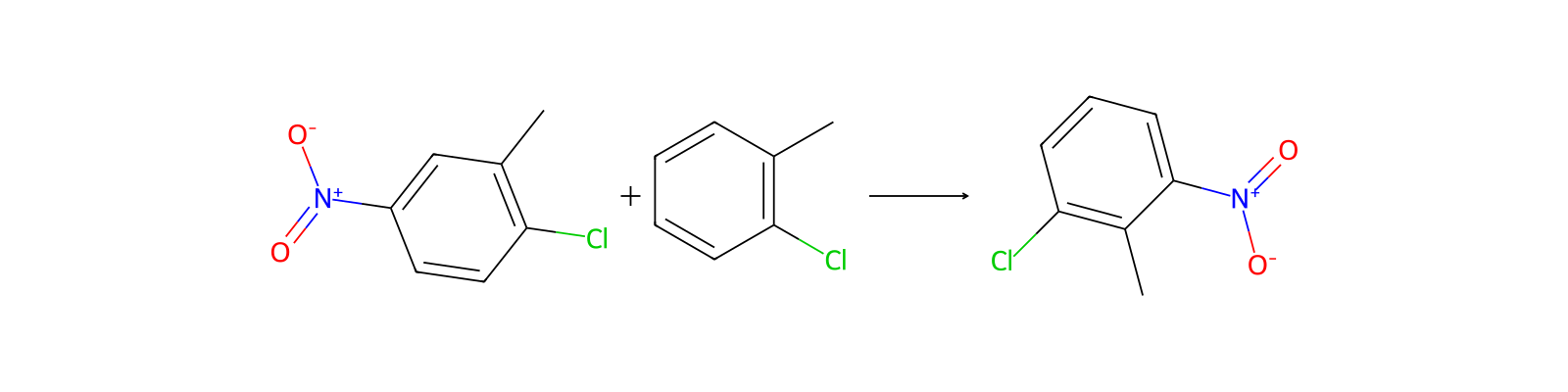
HRID 91293 반응식
HRID 91293반응물로Training data from https://doi.org/10.1039/C8SC04228D (2/10)
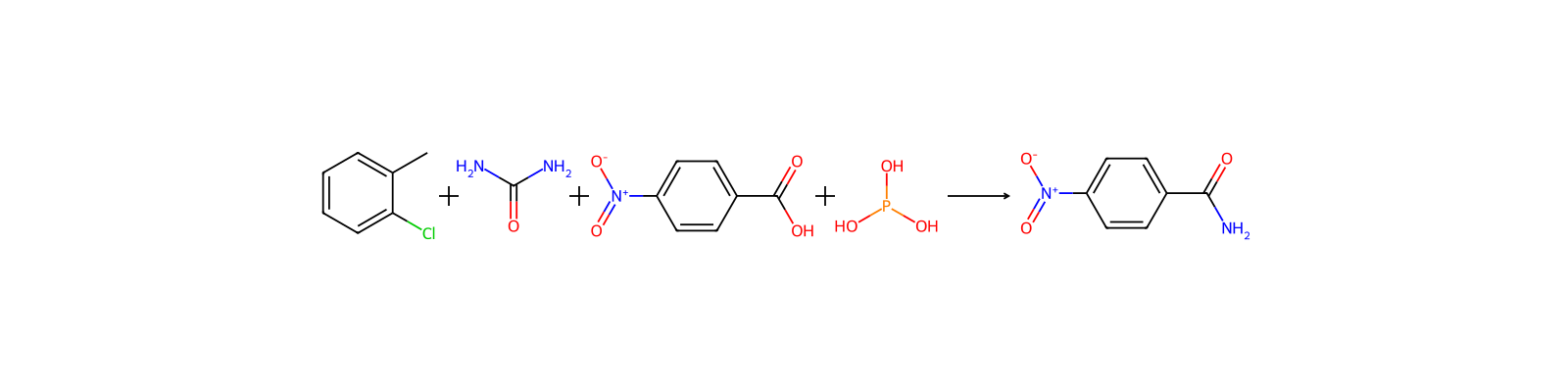
HRID 140980 반응식
HRID 140980반응물로Training data from https://doi.org/10.1039/C8SC04228D (9/10)
HRID 258594 반응식
HRID 258594반응물로uspto-grants-1977_07
HRID 258595 반응식
HRID 258595반응물로uspto-grants-1977_07
HRID 309213 반응식
HRID 309213반응물로Training data from https://doi.org/10.1039/C8SC04228D (8/10)
HRID 326010 반응식
HRID 326010반응물로uspto-grants-1984_04
HRID 362750 반응식
HRID 362750반응물로uspto-grants-1999_02
1 / 9 페이지

화합물 노트

불러오는 중…

이 페이지에서기본 정보개요이름 및 식별자물성안전 및 규제화학 및 산업관련 반응화합물 노트
더보기
새 노트새 반응견적 요청하기

Solubility less than 10% in acetone, benzene, ether, alcohol

Solubility in water = 374 mg/l at 25 °C

Solubility in water, g/100ml at 20 °C: 0.47

Flash Point · 5건

126 °F (NTP, 1992)

126 °F

43 °C c.c.

126 °F

96 °F

Boiling Point · 6건

318.15 °F at 760 mmHg (NTP, 1992)

158.97 °C

159.2 °C

318.2 °F

159 °C @760 [mm Hg]

320 °F

물리화학적 성질

녹는점
-36 °C · -36 °C (lit.)
끓는 점
157 · 157-159 °C (lit.)
밀도
1.083 g/mL · 1.083 g/mL at 25 °C (lit.)
증기 밀도
4.38 · 4.38 (vs air)
증기압
10 mm · 10 mm Hg ( 43 °C)
굴절률
20 · n20/D 1.525(lit.)
인화점
117 °F · 117 °F
저장 조건
0 · 0-6°C
용해도
2 O: · H2O: 20°C에서 난용성0.047g/L
물리적 상태
액체
색상
투명한
폭발한계
1 · 1.0-12.6%(V)
수용성
약간 용해됨
비열
1.32 J/ · Cp(liquid): 1.32 J/(g·K), at 25℃
Merck
14 · 14,2171
BRN
1904175 · 1904175
Henry's Law Constant
2.2 · 2.2×10-3 mol/(m3Pa) at 25℃, Brockbank (2013)
Dielectric constant
4.45 · 4.4500000000000002
InChI
1S/C7H7Cl/c1-6-4-2-3-5-7(6)8/h2-5H,1H3
InChIKey
IBSQPLPBRSHTTG-UHFFFAOYSA-N
SMILES
Cc1ccccc1Cl
LogP
3.42 at · 3.42 at 25℃
NIST
1 · Benzene, 1-chloro-2-methyl-(95-49-8)
EPA
o-Chlorotoluene (95-49-8)

화학적 성질

o-Chlorotoluene is a flammable, colorless liquid with an aromatic odor.

Hazards Summary · 2건

A respiratory irritant; Exposure to high concentrations may produce systemic toxic effects; [CAMEO] May cause skin irritation; [CHEMINFO]

The major hazards encountered in the use and handling of 2-chlorotoluene stem from its toxicologic properties and flammability. Exposure may occur at sites where 2-chlorotoluene is manufactured or used as a pesticide, solvent, or intermediate in the synthesis of dyes, pharmaceuticals, or synthetic rubber chemicals. This colorless liquid may exert its strong irritant properties upon dermal contact or inhalation. To assure protection against 2-chlorotoluene exposure a full-face mask self-contained breathing apparatus and protective clothing should be worn. The ACGIH recommends maintaining an 8-hr TLV of 50 ppm. While this substance must be moderately heated before ignition occurs, 2-chlorotoluene is nevertheless considered a combustion hazard. For fires involving 2-chlorotoluene, extinguish with "alcohol foam", CO2, dry chemical, or water in flooding quantities as fog (solid streams may be ineffective). Flooding quantities of water should be applied from as far a distance as possible, to cool affected containers. This substance should be stored away from heat or flames. Shipping regulations and other DOT regulatory requirements should be consulted before transport. For small spills of 2-chlorotoluene, take up with sand or other noncombustible absorbent and place into containers for later disposal. For large spills, dike to prevent 2-chlorotoluene from entering water sources and sewers. Prior to implementing land disposal of waste residue (including waste sludge) consult with environmental regulatory agencies for guidance.

DOT ID and Guide2238 129
Reactive GroupAryl Halides
EC ClassificationSymbol: Xn, N; R: 20-51/53; S: (2)-24/25-61; Note: C
UN ClassificationUN Hazard Class: 3; UN Pack Group: III
TSCA Requirements · 2건

Section 8(a) of TSCA requires manufacturers of this chemical substance to report preliminary assessment information concerned with production, use, and exposure to EPA.

Pursuant to section 8(d) of TSCA, EPA promulgated a model Health and Safety Data Reporting Rule (40 CFR Part 716). The section 8(d) model rule requires manufacturers, importers, and processors of listed chemical substances and mixtures to submit to EPA copies and lists of unpublished health and safety studies. o-Chlorotoluene is included on this list.

Reactivity ProfileO-CHLOROTOLUENE may be incompatible with strong oxidizing and reducing agents. Also may be incompatible with amines, nitrides, azo/diazo compounds, alkali metals, and epoxides. Reacts violently with dimethyl sulfoxide (NTP, 1992).

안전 및 보호

Fire Fighting · 2건

Fire Extinguishing Agents: Small fires: dry chemical, CO2, water spray or foam; large fires: water spray, fog or foam. (USCG, 1999)

Use water spray, carbon dioxide, foam, powder. In case of fire: keep drums, etc., cool by spraying with water.

First Aid Measures · 4건

Fresh air, rest. Refer for medical attention.

First rinse with plenty of water for at least 15 minutes, then remove contaminated clothes and rinse again.

First rinse with plenty of water for several minutes (remove contact lenses if easily possible), then refer for medical attention.

Do NOT induce vomiting. Give one or two glasses of water to drink. Refer for medical attention .

First Aid · 2건

EYES: First check the victim for contact lenses and remove if present. Flush victim's eyes with water or normal saline solution for 20 to 30 minutes while simultaneously calling a hospital or poison control center. Do not put any ointments, oils, or medication in the victim's eyes without specific instructions from a physician. IMMEDIATELY transport the victim after flushing eyes to a hospital even if no symptoms (such as redness or irritation) develop.

(General first aid procedures)

Safe StorageFireproof. Separated from strong oxidants.
Fire Fighting Procedures · 1건

If material on fire or involved in fire: Do not extinguish fire unless flow can be stopped or safely confined. Use water in flooding quantities as fog. Solid streams of water may spread fire. Cool all affected containers with flooding quantities of water. Apply water from as far a distance as possible. Use foam, dry chemical, or carbon dioxide. /Chlorotoluenes/

Nonfire Spill Response · 1건

SMALL SPILLS AND LEAKAGE: If you spill this chemical, use absorbent paper to pick up all liquid spill material. Your contaminated clothing and absorbent paper should be sealed in a vapor-tight plastic bag for eventual disposal. Solvent wash all contaminated surfaces with alcohol followed by washing with a strong soap and water solution. Do not reenter the contaminated area until the Safety Officer (or other responsible person) has verified that the area has been properly cleaned.

Disposal Methods · 1건

SRP: At the time of review, criteria for land treatment or burial (sanitary landfill) disposal practices are subject to significant revision. Prior to implementing land disposal of waste residue (including waste sludge), consult with environmental regulatory agencies for guidance on acceptable disposal practices.

Spillage Disposal · 1건

Personal protection: filter respirator for organic gases and vapours adapted to the airborne concentration of the substance. Ventilation. Remove all ignition sources. Collect leaking and spilled liquid in sealable containers as far as possible. Absorb remaining liquid in sand or inert absorbent. Then store and dispose of according to local regulations. Do NOT let this chemical enter the environment.

Preventive Measures · 5건

If material not on fire and not involved in fire: Keep sparks, flames, and other sources of ignition away. Keep material out of water sources and sewers. Build dikes to contain flow as necessary. Use water spray to knock-down vapors. /Chlorotoluenes/

Personnel protection: Avoid breathing vapors. Keep upwind. ... Do not handle broken packages unless wearing appropriate personal protective equipment. Wash away any material which may have contacted the body with copious amounts of water or soap and water. /Chlorotoluenes/

... HANDLING OF MATERIAL DOES NOT PRESENT ANY SPECIAL PROBLEMS & NORMAL PRECAUTIONS FOR HANDLING CHEMICALS SHOULD BE ADEQUATE.

The worker should immediately wash the skin when it becomes contaminated.

Work clothing that becomes wet should be immediately removed due to its flammability hazard.

Isolation and EvacuationExcerpt from ERG Guide 129 [Flammable Liquids (Water-Miscible / Noxious)]:
Eye PreventionWear safety spectacles.
Fire PreventionNO open flames, NO sparks and NO smoking. Above 43 °C use a closed system, ventilation and explosion-proof electrical equipment.

독성 정보

Target OrgansEyes, skin, respiratory system, central nervous system, liver, kidneys
Environmental Fate · 3건

TERRESTRIAL FATE: Based on a recommended classification scheme(1), measured Koc values from 170-880(2) indicate that 2-chlorotoluene will have low to moderate mobility in soil(SRC). Volatilization of 2-chlorotoluene may be important from moist soil surfaces(SRC) given a measured Henry's Law constant of 3.57X10⁻³ atm-cu m/mole(3) and from dry soil surfaces(SRC) based on an experimental vapor pressure of 3.43 mm Hg(SRC), determined from experimentally-derived coefficients(4). Based on limited data, 2-chlorotoluene may be resistant to biodegradation(SRC). At 100 ppm, 2-chlorotoluene showed only 0(5)-<30%(6) biodegradation in 14 days using an activated sludge inoculum. However, a microbial blend of 10 different bacteria and 2 fungi was able to degrade 2-chlorotoluene at a concentration of 200 mg/l; complete biodegradation occurred in 3 days(7).

AQUATIC FATE: Based on a recommended classification scheme(1), measured Koc values from 170-880(2) indicates that 2-chlorotoluene may adsorb to suspended solids and sediment in water(SRC). Based on limited data, 2-chlorotoluene may be resistant to aerobic biodegradation(SRC). A second order rate constant for the microbial degradation of 2-chlorotoluene in natural water was experimentally determined to be 2.7X10⁻¹¹ L/organism-hr(8). At 100 ppm, 2-chlorotoluene showed only 0(3)-<30%(4) biodegradation in 14 days using an activated sludge inoculum. However, a microbial blend of 10 different bacteria and 2 fungi was able to degrade 2-chlorotoluene at a concentration of 200 mg/l; complete biodegradation occurred in 3 days(5). 2-Chlorotoluene should volatilize from water surfaces based on a measured Henry's Law constant of 3.57X10⁻³ atm-cu m/mole(6). Estimated half-lives for a model river and model lake are 4 hours and 5 days, respectively(1,SRC). BCF values from 20-112(3), measured in carp, indicate that 2-chlorotoluene may moderately bioconcentrate in aquatic organisms(SRC), according to a recommended classification scheme(7).

ATMOSPHERIC FATE: According to a model of gas/particle partitioning of semivolatile organic compounds in the atmosphere(1), 2-chlorotoluene, which has a measured vapor pressure of 3.43 mm Hg at 25 °C(2), determined from experimentally-derived coefficients, will exist solely as a vapor in the ambient atmosphere. Vapor-phase 2-chlorotoluene is degraded in the atmosphere by reaction with photochemically produced hydroxyl radicals(SRC); the half-life for this reaction in air is estimated to be about 9 days(3,SRC).

Adverse EffectsNeurotoxin - Acute solvent syndrome
Exposure Routes · 2건

The substance can be absorbed into the body by inhalation.

inhalation, skin absorption, ingestion, skin and/or eye contact

Signs and Symptoms · 4건

Cough. Shortness of breath. Dizziness.

Dry skin. Redness. Pain.

Redness. Pain.

irritation eyes, skin, mucous membrane; dermatitis; drowsiness, incoordination, anesthesia; cough; liver, kidney injury

Effluent Concentrations · 1건

Advances waste treatment concentrates from publicly owned treatment works: Jan-Feb 1976, Orange County, CA - 0.2 ng/l; July 1975, Escondido, CA - 0.2 ng/l(1). Detected in the raw influent to a textile finishing plant waste treatment system, but not found in the final effluent(2). Identified in effluent from an organics and plastic industry and an organic chemical industry(3). Detected in chlorinated leachate from a simulated landfill lysimeter used to study codisposal of metal plating sludge with municipal solid waste(4). Identified as a principal organic hazardous constituent (POHC) in the emissions from an incinerator test burn(5).

ICSC Environmental DataThe substance is harmful to aquatic organisms. This substance may be hazardous to the environment. Special attention should be given to crustacea and fish.
EPA IRIS Information · 2건

o-Chlorotoluene

2 x 10 ^-2 mg/kg-day

Soil Adsorption/Mobility · 1건

Measured soil adsorption coefficients (Koc) for 2-chlorotoluene ranged between 170-880, the average value was 370(1). According to a recommended classification scheme(3), these Koc values suggest that 2-chlorotoluene will have low to moderate mobility in soil(2,SRC).

TSCA Test Submissions · 5건

The frequency of forward mutations was determined at the (TK) locus of the mouse lymphoma L5178Y cell line when exposed to orthochlorotoluene. No significant increases in the mutant frequency produced. Orthochlorotoluene was assayed at concentrations up to 40 nl/ml without activation and 60 nl/ml with metabolic activation by rat liver S9 fraction, and nondetectable to moderate toxicities were induced. Percent relative growth ranged from 58.3% to 19.3% in the absence of activation, and from 127.1% to 23.8% with activation.

The ability of ortho-chlorotoluene to induce specific locus mutations at the TK locus in cultured L5178Y mouse lymphoma cells (Mouse Lymphoma Mutagenicity Assay) was evaluated in the presence of Aroclor-induced rat liver S9 metabolic activation. Based on preliminary toxicity tests, 12 activated cultures exposed from 40 nl/ml to 90 nl/ml were cloned, producing a range of 69.7 - 6.1% relative growth. None of the activated cultures produced mutant frequencies significantly greater than the solvent control (DMSO).

The frequency of chromosome aberrations was determined in Chinese hamster ovary (CHO) cells, in an in vitro cytogenetic assay, with and without metabolic activation by rat liver S9 fraction. In nonactivated experiments, orthochlorotoluene was tested at 6 concentrations ranging from 0.83 nl/ml to 250.00 nl/ml. There was no significant increase in chromosome damage in the cultures tested up to the toxic dose of 83.3 nl/ml, (severe toxicity at 250.00 nl/ml). In the presence of metabolic activation there was again no increase in aberrations in the test cultures up to 83.3 nl/ml.

An inhalation teratology study was conducted with New Zealand white rabbits receiving whole body exposure to 2-chlorotoluene at nominal concentrations of 0, 1.5, 4 and 10 mg/l in an air exposure chamber. At each concentration 16 female rabbits were exposed for 6 hr/day on days 6-28 inclusive of gestation. At a nominal concentration of 10 mg/l, lachrymation, salivation and ptosis was observed during initial exposures. At 4 and 10 mg/l there was a significant dose-related reduction in food consumption during the treatment period, which resulted in retardation of mean weight gain between the onset of treatment and day 9 of gestation. Among litter parameters, there was no significant effect upon mean values for litter size, pre- and post implantation loss, or litter and mean fetal weight. Also, there was no significant effect upon incidence of skeletal anomalies and variants.

For more TSCA Test Submissions (Complete) data for 2-CHLOROTOLUENE (38 total), please visit the HSDB record page.

Atmospheric Concentrations · 1건

July-Aug 1981, New Jersey program on Airborne Toxic Elements and Organic Substances (ATEOS), detection limit 0.005 ppb: Newark, NJ, 38 samples, 76% pos, mean concn 0.02 ppb; Elizabeth, NJ, 37 samples, 49% pos, mean concn 0.02 ppb; Camden, NJ, 35 samples, 89% pos, mean concn 0.01 ppb(1). Jan-Feb 1982, NJ ATEOS program, detection limit 0.005 ppb, Newark, NJ, 28 samples, 89% pos, mean concn 0.03 ppb; Elizabeth, NJ, 38 samples, 76% pos, mean concn 0.02 ppb; Camden, NJ, 37 samples, 62% pos, mean concn 0.01 ppb(1). During 1983-84, detected in air samples collected at 6 hazardous waste sites in NJ, mean concn range not detected-0.40 ppb (detection limit 0.10 ppb), and one sanitary landfill in NJ, mean concn 0.02 ppb(2). Air in the vicinity of leachate pools at 2 abandoned hazardous waste sites in NJ, mean concn range 0.06-0.44 ppb(2). Chlorotoluene isomers (o-, m-, and p-): Love Canal in Niagara Falls, NY, 15 samples, 80% pos, concn range trace-12,274 ng/cu m(3); Love Canal, 10 samples, 50% pos, concn range <0.010-1.64 ng/cu m(4); Baton Rouge, LA, 11 samples, 9% pos, 35 ng/cu m(3).

Human Toxicity Excerpts · 2건

/Representative of chemical production plant stated/ ... production people in plant ... who have handled material for years, have never encountered cases in skin irritation or other forms of poisoning due to contact with, or inhalation of the product.

VAPOR HARMFUL.

규제 정보

TSCA Requirements · 2건

Section 8(a) of TSCA requires manufacturers of this chemical substance to report preliminary assessment information concerned with production, use, and exposure to EPA.

Pursuant to section 8(d) of TSCA, EPA promulgated a model Health and Safety Data Reporting Rule (40 CFR Part 716). The section 8(d) model rule requires manufacturers, importers, and processors of listed chemical substances and mixtures to submit to EPA copies and lists of unpublished health and safety studies. o-Chlorotoluene is included on this list.

State Drinking Water Guidelines · 2건

(ME) MAINE 140 ug/l

(CA) CALIFORNIA 140 ug/l

Federal Drinking Water GuidelinesEPA 100 ug/l

안전 데이터

OEB
A
OEL
TWA: 50 ppm (250 mg/m3), STEL: 75 ppm (375 mg/m3)
wgk
2
tsca
TSCA listed
rtecs
XS9000000
ridadr
UN 2238 (CHLOROTOLUENES)
HS 번호
29036990
risk_code
20-51/53-39/23/24/25-23/24/25-11
hazard_code
Xn,N,F,Xi,T
safety_code
24/25-61-45-36/37-16-7
포장분류
III
위험 등급
3
기존화학 물질
KE-05915
위험 참고 사항
Irritant/Flammable
자연 발화 온도
600°C
Hazard Classifications
Acute Tox. 4 InhalationAquatic Acute 1Aquatic Chronic 2Flam. Liq. 3Repr. 2
스토리지 클래스
3 - Flammable liquids
유해 물질 데이터
95-49-8(Hazardous Substances Data)
응용 분야 · 3건

개요2-Chlorotoluene can be mineralized completely by Rhodococcus, strain OCT 10 DSM 45596(T). It is used in the preparation of 3-chloro-4-methylcatechol and 4-chloro-3-methylcatechol. The oxidation of 2-chlorotoluene is very well catalyzed by the enzymes: toluene dioxygenase of P. putida F1 and chlorobenzene dioxygenase from Burkholderia, strain PS12.

용도Solvent and intermediate for organic chemicals and dyes.2-Chlorotoluene is used for permanganate oxidation to give o-chlorobenzoic acid. It is used in the preparation of 3-chloro-4-methylcatechol and 4-chloro-3-methylcatechol.2-Chlorotoluene can be used as a precursor to synthesize aryl coupling products via palladium-catalyzed Negishi cross-coupling. It can also be used in the Buchwald-Hartwig amination to synthesize arylamines.

일반 설명Colorless liquid with an aromatic odor. Denser than water and poorly soluble in water. Hence sinks in water .

제조 방법 · 1건

The solution of cuprous chloride is cooled in an ice bath 0-5° C temperature. In this cold solution, the 2-methylbenzenediazonium is poured with constant shaking and allowing the mixture to come to room temperature. After about 10 minutes, the mixture gradually warmed with a good shaking.As the temperature rises the brown addition product begins to decompose with the evolution of nitrogen and with the formation of an oily layer of 2-chlorotoluene. When the decomposition reaction is at an end, the mixture is steam distilled, continuing the process only as long as oily droplets are present in the distillate, for the product is not appreciably soluble in water. The layer of 2-chlorotoluene is carefully separated and washed twice with an equal volume of concentrated sulfuric acid, which removes both the 2-cresol and the azo compound. Then 2-chlorotoluene is washed with water in order to remove the inorganic acid. Finally, 2-chlorotoluene is dried over calcium chloride, distilled, using an air condenser and collecting the product boiling at 153-158° C. Pure 2-chlorotoluene boils at 157° C. The yield is 25-30 g.Experiments in Organic Chemistry, L. F. Fieser, 216, 1941Highly Selective Oxidative Monochlorination To Synthesize Organic Intermediates: 2-Chlorotoluene, 2-Chloroaniline, 2-Chlorophenol, and 2-Chloro-4-methylphenol

상·하류 제품 정보

상류 원료

톨루엔염소(기체)O-톨루이딘염화구리(Ⅰ)Potassium iodide statch paper

하류 제품

o-클로로벤조트리플루오라이드o-클로로벤조트리클로라이드2,4-디클로로톨루엔Chlorphoxim2-클로로페닐 초산디클로페낙 나트륨o-클로로벤질클로라이드2-클로로벤조익산클로트라이마졸2-Chlorobenzyl bromide3-클로로벤잘염화물o-클로로벤즈알데히드p-클로로톨루엔2-(Dicyclohexylphosphino)-2'-methylbiphenyl2,2'-DimethylbiphenylBenzeneethanamine, 2-chloro-α-phenyl-5-Bromo-2-chlorotoluene