
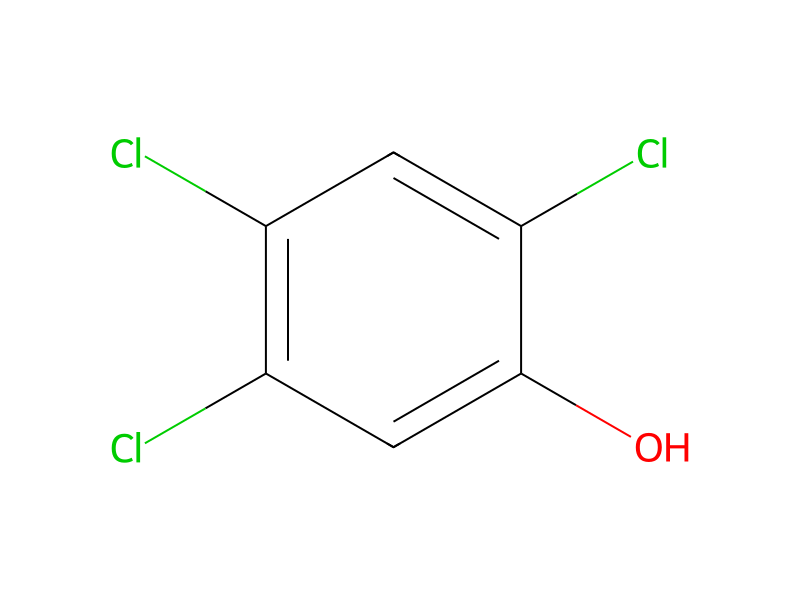
기본 정보
- 표준 SMILES
Oc1cc(Cl)c(Cl)cc1Cl- InChIKey
LHJGJYXLEPZJPM-UHFFFAOYSA-N- 분자식
- C6H3Cl3O
- 평균 분자량
- 197.4 g/mol
- 단동위원소 질량
- 195.92494776
개요
2,4,5-trichlorophenol appears as colorless needles, gray flakes or off-white lumpy solid. Phenolic odor. Formerly used as a fungicide and bactericide.
이름 및 식별자
- 우선 이름
- 2,4,5-Trichlorophenol
- IUPAC
- 2,4,5-trichlorophenol
- 현지명
- 2,4,5-트리클로로페놀
- 영어명
- 2,4,5-Trichlorophenol
- 분자식
- C6H3Cl3O
- 분자량
- 197.45
이름 및 동의어
2,4,5-TRICHLOROPHENOL95-95-4CollunosolDowicide 2Phenol, 2,4,5-trichloro-Preventol I2,4,5-TCPTRICLOFENOLNCI-C61187DTXSID4024359NSC-2266DTXCID104359
이름 더 보기
2,4,5-트라이클로로페놀2,4,5-트리클로로페놀NurelleDowcideDowcide 2preventoli
32526637PNCHEBI:28520RefChem:82014202-467-82,4,5-Trichloro phenolRCRA waste number U2302,4,5-Trichloro-phenolNSC 2266
데이터베이스 식별자
- CAS
95-95-4- PubChem CID
- 7271
- DTXSID
DTXSID4024359- ChEMBL
CHEMBL109095- ChEBI
CHEBI:28520- UNII
- 32526637PN
- EC Number
- 202-467-8
- Nikkaji
- J3.574B
물성
구조 계산 물성
- XLogP
- 3.7
- 극성 표면적
- 20.2 Ų
- 수소 결합 공여자 수
- 1
- 수소 결합 수용자 수
- 1
- 회전 가능 결합 수
- 0
- 무거운 원자 수
- 10
- 형식 전하
- 0
- 복잡도
- 120
실험 및 물리화학적 성질
Chemical Classes
Hazardous Air Pollutants (HAPs)
Other Classes -> Chlorophenols
Carcinogens
pHWeak monobasic acid
SpringerMaterials Properties13C nuclear magnetic resonance spectrum
PesticidesPesticide -> EPA IRIS
LogP
log Kow = 3.72
3.7
3.63
OdorStrong phenolic odor
TasteTaste threshold concentration in water is 1.0 ug/L
Density
1.678 at 77 °F (NTP, 1992) - Denser than water; will sink
Specific gravity: 1.678 at 25 °C/4 °C
1.68 g/cm³
1.678 @25 °C
Color/Form
Needles from alcohol, petroleum ether
Needles from alcohol or ligroin
Gray flakes in sublimed mass
Colorless needles
Solubility
less than 1 mg/mL at 70 °F (NTP, 1992)
In water, 1,200 mg/L at 25 °C
In water, 8.82X10+2 mg/kg at 25 °C
Solubility (g/100 g solvent, 25 °C): 615 acetone; 163 benzene; 51 carbon tetrachloride; 525 ether; 30, 525 denatured alc formula; 615 methanol; 56 liquid petrolatum at 50 °C; 79 soybean oil; 122 toluene
Very soluble in ethanol, ethyl ether, benzene; soluble in acetic acid
Solubility in water, g/l at 20 °C: 1.2 (poor)
Flash Point
133.0 °C (271.4 °F) (Closed cup)
133 °C c.c.
Endocrine DisruptorsPotential endocrine disrupting compound
물리화학적 성질
- 녹는점
- 64 · 64-67 °C 67-69 °C (lit.)
- 끓는 점
- 248 °C/740 · 248 °C/740 mmHg (lit.)
- 밀도
- 1 · 1,678 g/cm3
- 증기압
- 3.5 at · 3.5 at 8 °C, 22 at 25 °C (quoted, Leuenberger et al., 1985a)
- 굴절률
- 1.53 · 1.5300 (estimate)
- 인화점
- 253 °C · 253°C
- 저장 조건
- 2 · 2-8°C
- 용해도
- 에탄올과 리그로인에 용해됨(US EPA, 1985)
- 산도 계수 (pKa)
- 1 · pK1:7.37 (25°C)
- 물리적 상태
- 가루
- 색상
- 석유 에테르에서 무색 바늘 또는 회색 조각으로 나타납니다
- 냄새
- 강한 페놀 냄새
- 수용성
- 947.8 mg/L · 947.8mg/L(25℃)
- Merck
- 14 · 14,9643
- BRN
- 607569 · 607569
- Henry's Law Constant
- 1.76 at · 1.76 at 25 °C (estimated, Leuenberger et al., 1985a)
- 안정성
- 안정적인. 이 물질은 고온에서 알칼리성 매체에서 다이옥신을 생성한다는 점에 유의하십시오.
- 주요 응용
- 농업환경
- InChI
- 1S/C6H3Cl3O/c7-3-1-5(9)6(10)2-4(3)8/h1-2,10H
- InChIKey
- LHJGJYXLEPZJPM-UHFFFAOYSA-N
- SMILES
- Oc1cc(Cl)c(Cl)cc1Cl
- NIST
- 2 · Phenol, 2,4,5-trichloro-(95-95-4)
- EPA
- 2 · 2,4,5-Trichlorophenol (95-95-4)
화학적 성질
White to pale brown solid in appearance; 2,4,5-Trichlorophenol also looks like small needles. It has a really strong odor that smells like phenol (a poisonous crystal-looking compound). This man-made substance is not found naturally in the environment.
안전 및 규제
GHS 분류
GHS Classification
Warning
H302: Harmful if swallowed [Warning Acute toxicity, oral]
P264, P264+P265, P270, P273, P280, P301+P317, P302+P352, P305+P351+P338, P321, P330, P332+P317, P337+P317, P362+P364, P391, and P501 (click each P-code to see the statement)
Warning
H302 (100%): Harmful if swallowed [Warning Acute toxicity, oral]
P264, P264+P265, P270, P273, P280, P301+P317, P302+P352, P305+P351+P338, P321, P330, P332+P317, P337+P317, P362+P364, P391, and P501 (click each P-code to see the statement)
유해성 정보
Regulatory Information
Chemical: Phenol, 2,4,5-trichloro-
Hazard Traits - Bioaccumulation; Environmental Persistence; Hepatotoxicity and Digestive System Toxicity; Nephrotoxicity and Other Toxicity to the Urinary System
T - indicates a substance that is the subject of a final TSCA section 4 test rule.
2,4,5-Trichlorophenol: Does not have an individual approval but may be used under an appropriate group standard
The New Jersey Worker and Community Right to Know Act requires public and private employers to provide information about hazardous substances at their workplaces. (N.J.S.A. 34:5A-1 et. seq.)
DOT LabelPoison
Fire Hazards
Literature sources indicate that this chemical is nonflammable. (NTP, 1992)
Combustible under specific conditions. Gives off irritating or toxic fumes (or gases) in a fire.
Fire Potential
Non-combustible. /Trichlorophenol/
Nonflammable /Trichlorophenol/
Health Hazards
SYMPTOMS: Symptoms of exposure to large amounts of this compound may include irritation of the skin, eyes, nose and throat. The dust may cause swelling and injury to the eyes. Eye contact may also result in conjunctivitis and slight to moderate corneal injuries. Other toxic effects include decrease of activity, motor weakness and convulsive seizures. It also causes lung, kidney and liver damage; an increase and then a decrease in respiratory rate, decrease in urine output, fever, increased bowel action and collapse.
Hazards Summary
Exposure to 2,4,5-trichlorophenol may occur during its production or use as a pesticide. Acute (short- term) dermal exposure to 2,4,5-trichlorophenol may burn skin in humans. It also irritates the eyes, nose, pharynx, and lungs in humans. No information is available on the chronic (long-term), reproductive, developmental, or carcinogenic effects of 2,4,5-trichlorophenol in humans. In one study, slight degenerative changes were observed in the liver and kidneys of rats chronically exposed to 2,4,5- trichlorophenol in their diet. EPA has classified 2,4,5-trichlorophenol as a Group D, not classifiable as to human carcinogenicity.
A skin, eye, and respiratory tract irritant; May cause kidney and liver injury; [ICSC] May cause corneal injury, seizures, liver and kidney injury, and hyperthermia; [CAMEO] An irritant; Effects in high-dose animal studies include convulsions or effect on seizure threshold; [MSDSonline] See CHLOROPHENOLS.
Reactive GroupPhenols and Cresols
EC ClassificationSymbol: Xn, N; R: 22-36/38-50/53; S: (2)-26-28-60-61
UN ClassificationUN Hazard Class: 6.1; UN Pack Group: III
Special Reports
Scientific Criteria Document For Standard Development. Chlorinated Phenols In The Aquatic Environment No 2-84 (1984).
Environmental Protection Service. Chlorophenols and Their Impurities in the Canadian Environment Report EPS 3-EC-81-2 (1981).
Kozak VP et al; Reviews of the Environmental Effects of Pollutants: XI. Chlorophenols; US EPA Report: 519 pages (1979) EPA-600/1-79-012. This study reviews the health and environmental effects of chlorophenols incl 2,4,5-trichlorophenol.
Hall RL et al; Materials Balance for Chlorophenols. Level I-Preliminary Report: 123 pages (1980) EPA-560/13-80-004, 2-800-03-379-14. This report presents a Level I materials balance study on 2,4,5-trichlorophenol. Areas of major interest were prodn, quantities, producers, consumption amt and emissions to air, land, and water.
For more Special Reports (Complete) data for 2,4,5-TRICHLOROPHENOL (9 total), please visit the HSDB record page.
RCRA Requirements
D041; A solid waste containing 2,4,5-trichlorophenol may or may not become characterized as a hazardous waste when subjected to the Toxicity Characteristic Leaching Procedure listed in 40 CFR 261.24, and if so characterized, must be managed as a hazardous waste.
F027; Discarded unused formulations containing tri-, tetra-, or pentachlorophenol or discarded unused formulations containing compounds derived from these chlorophenols are classified as a hazardous waste from a nonspecific source and must be managed according to Federal and/or State hazardous waste regulations. Generators of small quantities of this waste may qualify for partial exclusion from hazardous waste regulations (see 40 CFR 261.5).
FIFRA Requirements
As the federal pesticide law FIFRA directs, EPA is conducting a comprehensive review of older pesticides to consider their health and environmental effects and make decisions about their continued use. Under this pesticide reregistration program, EPA examines newer health and safety data for pesticide active ingredients initially registered before November 1, 1984, and determines whether the use of the pesticide does not pose unreasonable risk in accordance to newer saftey standards, such as those described in the Food Quality Protection Act of 1996. Pesticides for which EPA had not issued Registration Standards prior to the effective date of FIFRA '88 were divided into three lists based upon their potential for human exposure and other factors, with List B containing pesticides of greater concern than those on List C, and with List C containing pesticides of greater concern than those on List D. 2,4,5-Trichlorophenol is found on List B. Case No: 2815; Pesticide type: fungicide, herbicide, antimicrobial; Case Status: No products containing the pesticide are actively registered. Therefore, we are characterizing the case as "cancelled." Under FIFRA, pesticide producers may voluntarily cancel their registered products. EPA also may cancel pesticide registrations if registrants fail to pay required fees or make/meet certain reregistration commitments, or if EPA reaches findings of unreasonable adverse effects.; Active ingredient (AI): 2,4,5-trichlorophenol; AI Status: The active ingredient is no longer contained in any registered products ... "cancelled."
Cancelled, all products. Criteria of Concern: Oncogenicity, fetotoxicity. Reference: 44 FR 15874 Mar 15, 1979; 44 FR 41531 Jul 17, 1979; 48 FR 48434 Oct 18, 1983; 52 FR 15549 Apr 29, 1987.
안전 및 보호
Fire Fighting
Fires involving this material can be controlled with a dry chemical, carbon dioxide or Halon extinguisher. (NTP, 1992)
Use foam, powder, carbon dioxide.
First Aid Measures
Fresh air, rest.
Remove contaminated clothes. To remove substance use polyethylene glycol 300 or vegetable oil. Rinse and then wash skin with water and soap.
First rinse with plenty of water for several minutes (remove contact lenses if easily possible), then refer for medical attention.
Rinse mouth. Refer for medical attention .
First Aid
EYES: First check the victim for contact lenses and remove if present. Flush victim's eyes with water or normal saline solution for 20 to 30 minutes while simultaneously calling a hospital or poison control center. Do not put any ointments, oils, or medication in the victim's eyes without specific instructions from a physician. IMMEDIATELY transport the victim after flushing eyes to a hospital even if no symptoms (such as redness or irritation) develop.
Safe StorageSeparated from strong oxidants and food and feedstuffs. Store in an area without drain or sewer access. Provision to contain effluent from fire extinguishing.
Firefighting HazardsSpecial hazards arising from the substance or mixture: Carbon oxides, hydrogen chloride gas.
Fire Fighting Procedures
If material /is/ involved in /a/ fire, extinguish fire using agent suitable for type of surrounding fire. Material itself does not burn or burns with difficulty. /Trichlorophenol/
Suitable extinguishing media: Use water spray, alcohol-resistant foam, dry chemical or carbon dioxide.
Advice for firefighters: Wear self contained breathing apparatus for fire fighting if necessary.
Storage Conditions
Storage temp: ambient
Conditions for safe storage, including any incompatibilities: Keep container tightly closed in a dry and well-ventilated place. Keep in a dry place.
Cleanup Methods
Land Spill Dig a pit, pond, lagoon, or holding area to contain liquid or solid material. /SRP: If time permits, pits, ponds, lagoons, soak holes, or holding areas should be sealed with an impermeable flexible membrane liner./ Cover solids with plastic sheet to prevent dissolving in rain or fire fighting water. /Trichlorophenol/
Water Spill: Use natural deep water pockets, excavated lagoons, or sand bag barriers to trap material at bottom. If dissolved, apply activated carbon at ten times the spilled amount in region of 10 ppm or greater concentration. Remove trapped material with suction hoses. Use mechanical dredges or lifts to remove immobilized masses of pollutants and precipitates. /Trichlorophenol/
ACTIVATED CARBON IS A GOOD METHOD FOR REMOVING CHLOROPHENOLS FROM WATER. COMPETITIVE ADSORPTION OCCURS BETWEEN CHLOROPHENOLS & HUMIC SUBSTANCES PRESENT IN NEARLY ALL MUNICIPAL WATER SUPPLIES. THIS COMPETITION DECR THE CAPACITY OF CARBON FOR CHLOROPHENOLS. /CHLOROPHENOLS/
Accidental Release Measures: Personal precautions, protective equipment and emergency procedures: Use personal protective equipment. Avoid dust formation. Avoid breathing vapours, mist or gas. Ensure adequate ventilation. Avoid breathing dust. Environmental precautions: Prevent further leakage or spillage if safe to do so. Do not let product enter drains. Discharge into the environment must be avoided. Methods and materials for containment and cleaning up: Pick up and arrange disposal without creating dust. Sweep up and shovel. Keep in suitable, closed containers for disposal.
Nonfire Spill Response
SMALL SPILLS AND LEAKAGE: Should a spill occur while you are handling this chemical, FIRST REMOVE ALL SOURCES OF IGNITION, then you should dampen the solid spill material with 60-70% ethanol and transfer the dampened material to a suitable container. Use absorbent paper dampened with 60-70% ethanol to pick up any remaining material. Seal the absorbent paper, and any of your clothes, which may be contaminated, in a vapor-tight plastic bag for eventual disposal. Solvent wash all contaminated surfaces with 60-70% ethanol followed by washing with a soap and water solution. Do not reenter the contaminated area until the Safety Officer (or other responsible person) has verified that the area has been properly cleaned.
Disposal Methods
Generators of waste (equal to or greater than 100 kg/mo) containing this contaminant, EPA hazardous waste numbers D041 and F027, must conform with USEPA regulations in storage, transportation, treatment and disposal of waste.
Incineration, preferably after mixing with another combustible fuel. Care must be exercised to assure complete combustion to prevent the formation of phosgene. An acid scrubber is necessary to remove the halo acids produced. /Trichlorophenols/
The following wastewater treatment technologies have been investigated for 2,4,5-trichlorophenol: biological treatment.
Waste treatment methods. Product: Offer surplus and non-recyclable solutions to a licensed disposal company. Contact a licensed professional waste disposal service to dispose of this material. Dissolve or mix the material with a combustible solvent and burn in a chemical incinerator equipped with an afterburner and scrubber. Contaminated packaging: Dispose of as unused product.
SRP: Wastewater from contaminant suppression, cleaning of protective clothing/equipment, or contaminated sites should be contained and evaluated for subject chemical or decomposition product concentrations. Concentrations shall be lower than applicable environmental discharge or disposal criteria. Alternatively, pretreatment and/or discharge to a permitted wastewater treatment facility is acceptable only after review by the governing authority and assurance that "pass through" violations will not occur. Due consideration shall be given to remediation worker exposure (inhalation, dermal and ingestion) as well as fate during treatment, transfer and disposal. If it is not practicable to manage the chemical in this fashion, it must be evaluated in accordance with EPA 40 CFR Part 261, specifically Subpart B, in order to determine the appropriate local, state and federal requirements for disposal.
Spillage Disposal
Personal protection: filter respirator for organic gases and particulates adapted to the airborne concentration of the substance. Do NOT let this chemical enter the environment. Sweep spilled substance into covered sealable containers. If appropriate, moisten first to prevent dusting. Carefully collect remainder. Then store and dispose of according to local regulations.
Preventive Measures
Keep material out of water sources and sewers; Build dikes to contain flow as necessary. Keep upwind; Avoid breathing vapors or dusts; Wash away any material which may have contacted the body with copious amounts of water or soap and water. /Trichlorophenol/
SRP: Contaminated protective clothing should be segregated in a manner such that there is no direct personal contact by personnel who handle, dispose, or clean the clothing. The completeness of the cleaning procedures should be considered before the decontaminated protective clothing is returned for reuse by the workers. Contaminated clothing should not be taken home at the end of shift, but should remain at employee's place of work for cleaning.
SRP: The scientific literature for the use of contact lenses by industrial workers is inconsistent. The benefits or detrimental effects of wearing contact lenses depend not only upon the substance, but also on factors including the form of the substance, characteristics and duration of the exposure, the uses of other eye protection equipment, and the hygiene of the lenses. However, there may be individual substances whose irritating or corrosive properties are such that the wearing of contact lenses would be harmful to the eye. In those specific cases, contact lenses should not be worn. In any event, the usual eye protection equipment should be worn even when contact lenses are in place.
Precautions for safe handling: Avoid contact with skin and eyes. Avoid formation of dust and aerosols. Provide appropriate exhaust ventilation at places where dust is formed.
For more Preventive Measures (Complete) data for 2,4,5-TRICHLOROPHENOL (7 total), please visit the HSDB record page.
독성 정보
Body Burden
2,4,5-Trichlorophenol was detected in 3.3% of the 6846-6936 human urine samples collected between Feb 1976 and Jun 1979, the maximum and average concentrations were 56 and <5 ppb, respectively(1). 2,4,5-Trichlorophenol was detected in urine samples from children residing in Arkansas at 1-32 ppb(2). 2,4,5-Trichlorophenol was not detected (detection limit 0.10 ug/L) in the amniotic fluid collected from 100 pregnant women from the San Joaquin Valley, CA(3). 2,4,5-Trichlorophenol was detected at 0.5, 0.2 and 0.3 ug/g creatinine in the urine of plant, laboratory and administration workers, respectively, of the only hazardous waste incineration plant in Spain in 1999, located in Constanti(4).
Urine samples were collected from sport fisherman from the Great Lakes region in 1993, participants age ranged from 36 to 76 (mean of 52) and number of years of consuming Great Lake sport fish ranged from 11 to 58 years (mean of 33). 2,4,5-Trichlorophenol concentrations in these urine samples were(1):[Table#4791]
Treatment
If the compound has been ingested, rapid gastric lavage should be performed using 5% sodium bicarbonate. For skin contact, the skin should be washed with soap and water. If the compound has entered the eyes, they should be washed with large quantities of isotonic saline or water. In serious cases, atropine and/or pralidoxime should be administered. Anti-cholinergic drugs work to counteract the effects of excess acetylcholine and reactivate AChE. Atropine can be used as an antidote in conjunction with pralidoxime or other pyridinium oximes (such as trimedoxime or obidoxime), though the use of '-oximes' has been found to be of no benefit, or possibly harmful, in at least two meta-analyses. Atropine is a muscarinic antagonist, and thus blocks the action of acetylcholine peripherally.
Interactions
When nonlethal levels of 2,4,5-trichlorophenol (0.2 mM) and the Cu(II)-bis(1,10-phenanthroline) complex [Cu(II)(OP)2] (0.1 microM) were combined, a remarkable synergistic cytotoxicity was observed as measured by the extent of bacterial inactivation. In contrast, no such synergism was observed for the combination of 2,4,5-trichlorophenol with the Cu(II)-bis(bathophenanthroline disulfonate) complex [Cu(II)(BPS)2] which has a chemical structure similar to Cu(II)(OP)2, except for the net charge. The synergism observed for 2,4,5-trichlorophenol and Cu(II)(OP)2 was found to be due to the neutralization of their opposite charge and formation of a lipophilic ternary complex which facilitated copper transport into the bacterial cells.
A 21% soln of 2,4,5-trichlorophenol in acetone increased the incidence of papillomas in mice pretreated with 7,12-dimethylbenz(a)anthracene. Carcinomas did not develop during the 16 week experiment.
Target OrgansHepatic
Health Effects
Acute exposure to cholinesterase inhibitors can cause a cholinergic crisis characterized by severe nausea/vomiting, salivation, sweating, bradycardia, hypotension, collapse, and convulsions. Increasing muscle weakness is a possibility and may result in death if respiratory muscles are involved. Accumulation of ACh at motor nerves causes overstimulation of nicotinic expression at the neuromuscular junction. When this occurs symptoms such as muscle weakness, fatigue, muscle cramps, fasciculation, and paralysis can be seen. When there is an accumulation of ACh at autonomic ganglia this causes overstimulation of nicotinic expression in the sympathetic system. Symptoms associated with this are hypertension, and hypoglycemia. Overstimulation of nicotinic acetylcholine receptors in the central nervous system, due to accumulation of ACh, results in anxiety, headache, convulsions, ataxia, depression of respiration and circulation, tremor, general weakness, and potentially coma. When there is expression of muscarinic overstimulation due to excess acetylcholine at muscarinic acetylcholine receptors symptoms of visual disturbances, tightness in chest, wheezing due to bronchoconstriction, increased bronchial secretions, increased salivation, lacrimation, sweating, peristalsis, and urination can occur. Certain reproductive effects in fertility, growth, and development for males and females have been linked specifically to organophosphate pesticide exposure. Most of the research on reproductive effects has been conducted on farmers working with pesticides and insecticdes in rural areas. In females menstrual cycle disturbances, longer pregnancies, spontaneous abortions, stillbirths, and some developmental effects in offspring have been linked to organophosphate pesticide exposure. Prenatal exposure has been linked to impaired fetal growth and development. Neurotoxic effects have also been linked to poisoning with OP pesticides causing four neurotoxic effects in humans: cholinergic syndrome, intermediate syndrome, organophosphate-induced delayed polyneuropathy (OPIDP), and chronic organophosphate-induced neuropsychiatric disorder (COPIND). These syndromes result after acute and chronic exposure to OP pesticides.
Ecotoxicity Values
LC50; Species: Carassius auratus (Goldfish); Concentration: 1,700 ug/L for 24 hr /Conditions of bioassay not specified/
EC50; Species: Selenastrum capricornutum (green algae); Concentration: 1,220 ug/L for 96 hr; Effect: decreased population abundance /Conditions of bioassay not specified/
EC50; Species: Skeletonema costatum (diatom); Concentration: 890 ug/L for 96 hr; Effect: decreased chlorophyll A concentration /Conditions of bioassay not specified/
EC50; Species: Skeletonema costatum (diatom); Concentration: 960 ug/L for 96 hr; Effect: cell count /Conditions of bioassay not specified/
For more Ecotoxicity Values (Complete) data for 2,4,5-TRICHLOROPHENOL (13 total), please visit the HSDB record page.
Environmental Fate
TERRESTRIAL FATE: Based on a classification scheme(1), Koc values of 89-2300(2-4), indicate that 2,4,5-trichlorophenol is expected to have high to slight mobility in soil(SRC). The pKa of 2,4,5-trichlorophenol is 7.43(5), indicating that this compound will exist partially in the anion form in the environment and anions generally do not adsorb more strongly to soils containing organic carbon and clay than their neutral counterparts(6). Volatilization of the anion form of 2,4,5-trichlorophenol from moist soil surfaces is not expected because anions do not volatilize(SRC). Volatilization of neutral 2,4,5-trichlorophenol from moist soil surfaces is expected to be an important fate process(SRC) given an estimated Henry's Law constant of 1.6X10⁻⁶ atm-cu m/mole(SRC), based upon its vapor pressure, 0.0075 mm Hg(7), and water solubility, 1200 mg/L(8). 2,4,5-Trichlorophenol is not expected to volatilize from dry soil surfaces(SRC) based upon its vapor pressure(7). This compound is expected to biodegrade in soils with a biodegradation half-life of about 15 days in a soil slurry under aerobic conditions(9).
AQUATIC FATE: Based on a classification scheme(1), Koc values of 89-2300(2-4), indicate that 2,4,5-trichlorophenol is expected to adsorb to suspended solids and sediment(SRC). A pKa of 7.43(5) indicates 2,4,5-trichlorophenol will exist partially in the anion form at pH values of 5 to 9 and, therefore, volatilization of the anion form from water surfaces is not expected to be an important fate process(SRC). Volatilization of the neutral form from water surfaces is expected(6) based upon an estimated Henry's Law constant of 1.6X10⁻⁶ atm-cu m/mole(SRC), derived from its vapor pressure, 0.0075 mm Hg(7), and water solubility, 1200 mg/L(8). Using this Henry's Law constant and an estimation method(6), volatilization half-lives for the neutral form from a model river and model lake are 32 and 240 days, respectively(SRC). 2,4,5-Trichlorophenol is not expected to undergo hydrolysis in the environment due to the lack of functional groups that hydrolyze under environmental conditions(6). 2,4,5-Trichlorophenol is expected to undergo photolysis in surface waters based on an aqueous photolysis half-life of 1 hour(9) when irradiated with light at environmentally relevant wavelengths. According to a classification scheme(10), BCFs of 121-825 in carp(11) and 1900 in fathead minnow(12), suggest bioconcentration in aquatic organisms is high to very high(SRC). 2,4,5-Trichlorophenol is expected to biodegrade in water based on biodegradation half-lives of 23 days in aerobic sediment(13), 130 days in anaerobic sediment(14) and 690 days in river water(13).
ATMOSPHERIC FATE: According to a model of gas/particle partitioning of semivolatile organic compounds in the atmosphere(1), 2,4,5-trichlorophenol, which has a vapor pressure of 0.0075 mm Hg at 25 °C(2), is expected to exist solely as a vapor in the ambient atmosphere. Vapor-phase 2,4,6-trichlorophenol is degraded in the atmosphere by reaction with photochemically-produced hydroxyl radicals(SRC); the half-life for this reaction in air is estimated to be 6.8 days(SRC), calculated from its rate constant of 2.1X10⁻¹² cu cm/molecule-sec at 25 °C(SRC) that was derived using a structure estimation method(3).
Adverse EffectsOccupational hepatotoxin - Secondary hepatotoxins: the potential for toxic effect in the occupational setting is based on cases of poisoning by human ingestion or animal experimentation.
Exposure Routes
The substance can be absorbed into the body by ingestion.
Oral (L159) ; inhalation (L159) ; dermal (L159) ; eye (L159)
Toxicity Summary
IDENTIFICATION AND USE: 2, 4, 5-Trichlorophenol (2, 4, 5-TCP) comes in the form of colorless needles from alcohols or in gray flakes. It was formerly used as a fungicide, bactericide, biocide; intermediate in production of herbicides, in adhesives as a preservative in polyvinyl acetate emulsions; in the automotive industry to preserve rubber gaskets; in textiles to preserve emulsions used in the rayon industry; in cooling towers; paper and pulp mill systems; hide and leather processing; on swimming pool related surfaces; sickroom equipment; and food processing plants and equipment. 2,4,5-TCP is not registered for current use in the U.S., but approved pesticide uses may change periodically and so federal, state and local authorities must be consulted for currently approved uses. HUMAN EXPOSURE AND TOXICITY: In the eye, trichlorophenols induce conjunctival irritation and sometimes corneal injury and iritis. dusts are irritating to nose and pharynx. Dermatoses, including photoallergic contact dermatitis, have been reported in man after exposure to 2,4,5-TCP, these include papulofollicular lesions, comedones, sebaceous cysts, and marked hyperkeratosis. During the clean-up following explosions during 2,4,5-TCP manufacture, chloracne was generally severe, and many cases had some signs or symptoms or lab abnormalities indicating systemic toxicity. Systemic effects of trichlorophenols presumably resemble phenol. Symptoms from upper airways and chest were more common among 7 subjects exposed to trichlorophenol than in control subjects (60% and 10%). The findings suggest an irritating effect on the lung of trichlorophenol, and it cannot be excluded that long-term exposure may produce pulmonary fibrosis. 2,4,5-TCP has not been shown to have a teratogenic effect. In a study of workers exposed to 2, 4, 5-TCP 10 years earlier, neither chromosomal aberrations nor sister chromatid exchanges were observed. Exposure to chlorophenols has been shown to cause an increased incidence of carcinomas including a significant trend observed for total gastrointestinal system cancer related to work in 2,4,5-TCP and 2-(2,4,5-trichlorophenoxy)-propionic-acid production areas. ANIMAL STUDIES: Restlessness and increased rate of respiration followed by rapidly developing motor weakness. tremors, clonic convulsions (induced by noise or touch), dyspnea, and coma continue until death. D-amino acid oxidase and heart muscle flavoproteins were inhibited by 2,4,5-TCP in vitro. In rat and rabbit hyperpyrexia from injections of trichlorophenols has been reported. In a 98-day feeding study in rats, 0.3 g and 1 g/kg body weight/day doses of 2,4,5-trichlorophenol retarded weight gain and caused diuresis, mild centrilobular changes in the liver, moderate degenerative changes in the convoluted tubules of the kidneys and early proliferative changes in the kidney interstitial tissue. Slight proliferation of bile ducts and early portal cirrhosis were also observed. The severity of effects was dose related. No significant effects were observed with doses of 100 mg/kg body weight/day (0.1% in diet) or less. 2,4,5-TCP given by gavage to pregnant mice in single doses of 800-900 mg/kg or multiple doses of 250-300 mg/kg caused no significant fetal effects and the results obtained in Hydra attenuata and whole embryo culture assays suggest that chlorinated phenols are not potent teratogens. Hydra attenuata and whole embryo culture studies demonstrated a linear relationship between toxicity and the degree of chlorine substitution with pentachlorophenol > 2,3,4,5-tetrachlorophenol > 2,3,5-TCP > 3,5-dichlorophenol > 4-chlorophenol > phenol. The developmental hazard index A/D ratios from the Hydra attenuata assay were approximately 1 for all of the chemicals tested. Findings from the whole embryo culture assay indicated similar results based on growth, gross morphology, and DNA and protein content of embryos. The results obtained in the Hydra attenuata and whole embryo culture assays suggest that the chlorinated phenols are not potent teratogens. 3-Chlorophenol, 4-chlorophenol, 2,3,6-, 2,4,5-, 2,4,6-TCP, 4-chloro-2-methylphenol, and 4-chloro-3-methylphenol produced mutagenic activity at least in one tester strain (TA97, TA98, TA100, or TA104) in the Ames test. The induction of forward mutation to 6-thioguanine resistance in V79 Chinese hamster cells by six different chlorophenols was examined. Each of the chlorophenols tested reduced the plating efficiency in a dose dependent manner including 2,4,5-TCP at doses of 6.25 to 50 ug/mL. This cytotoxic effect can be attributed to the ability of pentachlorophenol and other chlorophenols to inhibit oxidative phosphorylation. ECOTOXICITY STUDIES: Chlorinated phenols represent a major component of hazardous oily and wood-preserving wastes that are widely distributed in chemical dumpsites throughout the United States. The acute toxicity of some chlorinated phenols, catechols, and cresols, incl 2,4,5-trichlorophenol, to trout was determined. The lowest lethal concn of the cmpd studied was 0.20 ppm caused by pentachlorophenols, tetrachlorophenols, and trichlorophenols. The residue of chlorophenol in larval tissue was measured and the correlation to the concentration on larval mortality was highly significant in the growth test. In the emergence test, however, mortality was low (3-13%) at all concentrations. 2, 4, 5-TCP did not affect larval growth at the concentrations used. The concentration of 2, 4, 5-TCP in the whole larvae after the 10-day exposure was proportional to sediment concentration.
2,4,5-Trichlorophenol is a cholinesterase or acetylcholinesterase (AChE) inhibitor. A cholinesterase inhibitor (or 'anticholinesterase') suppresses the action of acetylcholinesterase. Because of its essential function, chemicals that interfere with the action of acetylcholinesterase are potent neurotoxins, causing excessive salivation and eye-watering in low doses, followed by muscle spasms and ultimately death. Nerve gases and many substances used in insecticides have been shown to act by binding a serine in the active site of acetylcholine esterase, inhibiting the enzyme completely. Acetylcholine esterase breaks down the neurotransmitter acetylcholine, which is released at nerve and muscle junctions, in order to allow the muscle or organ to relax. The result of acetylcholine esterase inhibition is that acetylcholine builds up and continues to act so that any nerve impulses are continually transmitted and muscle contractions do not stop. Among the most common acetylcholinesterase inhibitors are phosphorus-based compounds, which are designed to bind to the active site of the enzyme. The structural requirements are a phosphorus atom bearing two lipophilic groups, a leaving group (such as a halide or thiocyanate), and a terminal oxygen.
Ecotoxicity Excerpts
/AQUATIC SPECIES/ Several biotic and abiotic stress factors may affect aquatic organisms simultaneously. However, not much is known about the effects of, e.g., low temperatures and parasite infections on the toxicokinetics of organic hydrophobic chemicals. Here we studied the accumulation and depuration of [(14)C]2,4,5-trichlorophenol (TCP) and [(3)H]benzo(a)pyrene (BaP) in the sediment-dwelling freshwater clam Pisidium amnicum. Experiments were made in October (+15 °C), April (+4 °C), and July (+15 °C) both with uninfected clams and clams infected with Bunodera luciopercae (Trematoda). The accumulation rate for both chemicals was slower at 4 °C than at 15 °C. The depuration of TCP was biphasic, and the slowest depuration occurred at 4 °C. For BaP, the depuration was very slow and monophasic at all temperatures. The highest BCFs for both chemicals were found in July at 15 °C. Surprisingly, the BCFs for TCP were higher in April at 4 °C than in October at 15 °C. For BaP, no steady-state was reached in April. Differences in chemical toxicokinetics between the infected and uninfected clams were only minor. However, for both chemicals a trend of slightly lower BCFs in the infected clams was found. In conclusion, low temperatures modify the toxicokinetics of organic chemicals in P. amnicum and the effects depend on hydrophobicity of the chemical. The effects of parasites on toxicokinetics seem to be small.
/AQUATIC SPECIES/ The acute toxicity of some chlorinated phenols, catechols, and cresols, including 2,4,5-trichlorophenol, to trout was determined. The lowest lethal concentration of the compound studied was 0.20 ppm caused by pentachlorophenols, tetrachlorophenols, and trichlorophenols.
/AQUATIC SPECIES/ Complete destruction of chlorophyll in Chlorella pyrenoidosa 10,000 ug/L. /Conditions of bioassay not specified/
/AQUATIC SPECIES/ Subchronic and chronic toxicity of sediment-associated 2,4, 5-trichlorophenol to the midge Chironomus riparius was determined by conducting a 10-day growth and a 50-day emergence tests with spiked lake sediment (nominal initial TCP concentrations were 25, 51, 101, 203, 304 and 405 micromol/kg-1dry weight in the growth test and 25, 76, 152 and 304 micromol/kg dry weight the emergence test). In addition, we measured the residue of chlorophenol in larval tissue and made an attempt to relate it with the observed adverse biological responses. The larvae were exposed individually to avoid density-dependent effects of mortality on food ration and growth of the surviving larvae. In the growth test, mortality was low at sediment concentrations </=193 micromol TCP/kg, but it increased sharply at the higher concentrations being 37 and 94% at 334 and 441 micromol/kg DW, respectively. The effect of sediment TCP concentration on larval mortality was highly significant (10-day LC50 337 micromol TCP/kg dry sediment) in the growth test. In the emergence test, however, mortality was low (3-13%) at all concentrations. TCP did not affect larval growth at the concentrations used. The concentration of TCP in the whole larvae after the 10-day exposure was proportional to sediment concentration, being at highest 160 micromol/kg fresh weight. When the average body residues of TCP were below 80 micromol/kg, mortality was low, but it increased when the body residue approached 100 micromol/kg. After the 10-day exposure, the body residue, at which 50% of the larvae survived (CBR50) was 113 micromol/g. TCP exposure accelerated larval development and the midges exposed to 171 and 324 micromol TCP/kg emerged earlier than those in the other concentrations or in the control sediment. In natural environments, sediment-associated chlorophenolics are probably not a major environmental problem to benthic fauna because concentrations similar to that which we observed to cause adverse effects to C. riparius (>60 mg/kg dry sediment) are rare.
For more Ecotoxicity Excerpts (Complete) data for 2,4,5-TRICHLOROPHENOL (7 total), please visit the HSDB record page.
Plant Concentrations2,4,5-Trichlorophenol was detected in pine needle wax from 10-20 year old trees near pollution sources; samples were collected from three areas of Finland in 1991-1996(1):[Table#4792]
규제 정보
RCRA Requirements
D041; A solid waste containing 2,4,5-trichlorophenol may or may not become characterized as a hazardous waste when subjected to the Toxicity Characteristic Leaching Procedure listed in 40 CFR 261.24, and if so characterized, must be managed as a hazardous waste.
F027; Discarded unused formulations containing tri-, tetra-, or pentachlorophenol or discarded unused formulations containing compounds derived from these chlorophenols are classified as a hazardous waste from a nonspecific source and must be managed according to Federal and/or State hazardous waste regulations. Generators of small quantities of this waste may qualify for partial exclusion from hazardous waste regulations (see 40 CFR 261.5).
FIFRA Requirements
As the federal pesticide law FIFRA directs, EPA is conducting a comprehensive review of older pesticides to consider their health and environmental effects and make decisions about their continued use. Under this pesticide reregistration program, EPA examines newer health and safety data for pesticide active ingredients initially registered before November 1, 1984, and determines whether the use of the pesticide does not pose unreasonable risk in accordance to newer saftey standards, such as those described in the Food Quality Protection Act of 1996. Pesticides for which EPA had not issued Registration Standards prior to the effective date of FIFRA '88 were divided into three lists based upon their potential for human exposure and other factors, with List B containing pesticides of greater concern than those on List C, and with List C containing pesticides of greater concern than those on List D. 2,4,5-Trichlorophenol is found on List B. Case No: 2815; Pesticide type: fungicide, herbicide, antimicrobial; Case Status: No products containing the pesticide are actively registered. Therefore, we are characterizing the case as "cancelled." Under FIFRA, pesticide producers may voluntarily cancel their registered products. EPA also may cancel pesticide registrations if registrants fail to pay required fees or make/meet certain reregistration commitments, or if EPA reaches findings of unreasonable adverse effects.; Active ingredient (AI): 2,4,5-trichlorophenol; AI Status: The active ingredient is no longer contained in any registered products ... "cancelled."
Cancelled, all products. Criteria of Concern: Oncogenicity, fetotoxicity. Reference: 44 FR 15874 Mar 15, 1979; 44 FR 41531 Jul 17, 1979; 48 FR 48434 Oct 18, 1983; 52 FR 15549 Apr 29, 1987.
Atmospheric Standards
This action promulgates standards of performance for equipment leaks of Volatile Organic Compounds (VOC) in the Synthetic Organic Chemical Manufacturing Industry (SOCMI). The intended effect of these standards is to require all newly constructed, modified, and reconstructed SOCMI process units to use the best demonstrated system of continuous emission reduction for equipment leaks of VOC, considering costs, non air quality health and environmental impact and energy requirements. Chlorophenols are produced, as an intermediate or final product, by process units covered under this subpart. /Chlorophenols/
Listed as a hazardous air pollutant (HAP) generally known or suspected to cause serious health problems. The Clean Air Act, as amended in 1990, directs EPA to set standards requiring major sources to sharply reduce routine emissions of toxic pollutants. EPA is required to establish and phase in specific performance based standards for all air emission sources that emit one or more of the listed pollutants. 2,4,5-Trichlorophenol is included on this list.
CERCLA Reportable Quantities
Persons in charge of vessels or facilities are required to notify the National Response Center (NRC) immediately, when there is a release of this designated hazardous substance, in an amount equal to or greater than its reportable quantity of 10 lb or 4.54 kg. The toll free number of the NRC is (800) 424-8802. The rule for determining when notification is required is stated in 40 CFR 302.4 (section IV. D.3.b).
Clean Water Act Requirements
Toxic pollutant designated pursuant to section 307(a)(1) of the Federal Water Pollution Control Act and is subject to effluent limitations. /Chlorinated phenols/
2,4,5-Trichlorophenol is designated as a hazardous substance under section 311(b)(2)(A) of the Federal Water Pollution Control Act and further regulated by the Clean Water Act Amendments of 1977 and 1978. These regulations apply to discharges of this substance. This designation includes any isomers and hydrates, as well as any solutions and mixtures containing this substance.
Two approaches were used to derive criterion levels for 2,4,5-trichlorophenol. Based on available toxicity data, to protect public health the derived level is 2.6 mg/l. Using available organoleptic data to control undesirable taste and odor quality of ambient water the estimated level is 1.0 ug/l ... Organoleptic data have limitations as a basis for establishing a water quality criterion, and have no demonstrated relationship to potential adverse human health effects.
State Drinking Water Guidelines
(AZ) ARIZONA 700 ug/L
(FL) FLORIDA 4 ug/L
안전 데이터
- wgk
- 3
- tsca
- TSCA listed
- rtecs
- SN1400000
- ridadr
- UN 3077 9/PG 3
- 독성
- Acute oral LD50 for guinea pigs 1,000 mg/kg, mice 600 mg/kg, rats 820 mg/kg (quoted, RTECS, 1985).
- HS 번호
- 29081990
- risk_code
- 22-36/38-50/53-52/53-39/23/24/25-23/24/25-11-51/53
- hazard_code
- Xn,N,Xi,T,F
- safety_code
- 26-28-60-61-28A-45-36/37-16
- 포장분류
- III
- 위험 등급
- 6.1
- Hazard Classifications
- Acute Tox. 4 OralAquatic Acute 1Aquatic Chronic 1Eye Irrit. 2Skin Irrit. 2
- 스토리지 클래스
- 11 - Combustible Solids
- 유해 물질 데이터
- 95-95-4(Hazardous Substances Data)
화학 및 산업
약리 정보
Mechanism of Action
The molecular basis of the toxic properties of phenoxy herbicides in humans and animals has been insufficiently studied. In this study, damage parameters [levels of reduced glutathione (GSH) and total glutathione; activity of glutathione reductase (GR); activities of catalase (CAT) and superoxide dismutase (SOD); levels of adenine nucleotides and adenine energy charge (AEC)] were measured in human erythrocytes exposed in vitro to 2,4,5-trichlorophenoxyacetic acid (2,4,5-T) and its metabolite 2,4,5-trichlorophenol (2,4,5-TCP). Both 2,4,5-T and 2,4,5-TCP decreased the level of reduced glutathione (GSH) in erythrocytes in comparison to the control, but did not significantly change the total glutathione (2GSH + GSSG). This suggests that GSH concentration decreases concomitantly with an increase in oxidized glutathione (GSSG). 2,4,5-TCP at 100 ppm significantly decreased catalase and SOD activities. 2,4,5-T and 2,4,5-TCP did not significantly change the activity of glutathione reductase. 2,4,5-TCP decreased the level of ATP and increased the content of ADP and AMP, indicating a fall in AEC. 2,4,5-T and 2,4,5-TCP significantly changed the erythrocyte morphology. All these data are evidence of oxidative stress in erythrocytes incubated with 2,4,5-T and 2,4,5-TCP; the stress appears to be more intense in the case of 2,4,5-TCP.
Chlorinated phenols ... are very effective (... in vitro) as uncouplers of oxidative phosphorylation. They thus prevent incorporation of inorganic phosphate into ATP without affecting electron transport. As a result of this action, which is believed to occur at mitochondrial /membrane/, cells continue to respire but soon are depleted of ATP necessary for growth. /Chlorophenols/
Biological Half-Life
Uptake rates of total (14)C in fathead minnows (Pimephales promelas) exposed to sublethal concn of 2,4,5-trichlorophenol were measured. The mean whole body (14)C concn factor was 1850. After 28 days of exposure, 78.6% of the (14)C was parent cmpd. The observed mean (14)C depuration half-life for lower and higher exposures combined was 12 hr parent cmpd comprised 2.7% of total (14)C. The percentage of acetone unextractable (14)C incr from the end of uptake to the end of depuration. (14)C contribution from polar metabolites incr relative to total (14)C during the depuration phase.
Metabolism/Metabolites
2,4,5-Trichlorophenol yields 3,4,6-trichlorocatechol in rabbit.
Study shows that 2,4,5-trichlorophenol is a urinary metabolite of hexachlorobenzene. Isolated by TLC from urine of rats fed hexachlorobenzene.
(14)C labeled 1,2,4-trichlorobenzene was admin orally (10 mg/kg) and iv (10 mg/kg) to ... rhesus monkeys. Glucuronides of 2,4,5-trichlorophenol and 2,3,5-trichlorophenol accounted for 14-37% of the monkey's urinary metabolites.
In rats fed 600-3000 mg beta-hexachlorocyclohexane/kg, 2,4,5-trichlorophenol was identified in the urine, liver, and kidney.
For more Metabolism/Metabolites (Complete) data for 2,4,5-TRICHLOROPHENOL (8 total), please visit the HSDB record page.
2,4,5-trichlorophenol is a known human metabolite of 1,2,4-trichlorobenzene.
Absorption, Distribution and Excretion
Cattle fed this compound at 9, 30, or 60 mg/kg body weight had 2,4,5-T3CP tissue concentrations ranging from 0.06 to 0.48 mg/kg in the liver and from 0.05 to 0.10 mg/kg in kidney. No residues were detected in samples of muscle and fat from sheep or cattle fed Silvex. Sheep exposed to 2,4,5-T in the diet at 2000 mg/kg for 28 days exhibited 2,4,5-T3CP levels of 6.1 mg/kg, 0.90 mg/kg, 0.13 mg/kg, and 0.05 mg/kg tissue, in the liver, kidney, muscle, and fat, respectively.
The 2,4,5-trichlorophenol-derived herbicides 2,4,5-T and Silvex, were fed at dose levels of 0, 300, 1000 and 2000 mg/kg diet to adult cattle and sheep for 28 days. ... No residues of 2,4,5-trichlorophenol were found in the fat of sheep receiving 2000 mg/kg diet 2,4,5-T (0.05 mg/kg detection limit); average residue levels in liver were over 6 times the average in kidney: 6.1 versus 0.90 and 4.4 versus 0.81 mg/kg in tissues taken 1 day and 7 days after treatment, respectively. ... /In/ sheep and cattle fed Silvex, levels were 0.06-0.63 mg/kg in liver and less than 0.05-0.17 mg/kg in kidney.
/Trichlorophenols/ appear not to penetrate intact rabbit or guinea pig skin (percutaneous absorption) in significant amt ... .
2,4,5-Trichlorophenol was identified in urine samples as a major metabolite of gamma-hexachlorocyclohexane (gamma-BHC) in 21 workers.
The chlorophenols are absorbed from the gastroenteric tract and from parenteral sites of injection. /Chlorophenols/
용도 및 제조
Uses
2,4,5-Trichlorophenol is used as a fungicide in paper and pulp mills, as an herbicide, and as an intermediate in the manufacture of other pesticides (e.g., the herbicides 2,4,5-trichlorophenoxyacetic acid and Silvex and the insecticide Ronnel).
Used as a fungicide, bactericide, and disinfectant (in cooling towers, paper and pulp mills, hide and leather processing, and veterinary medicine); Also used as a preservative (adhesives, synthetic textiles, rubber, wood, and paints) and adsorbent in microbial production of vitamin B12; Commercial production in Japan ceased in 1971; Dow ceased production in 1979, Vertac in 1983; [HSDB]
Pulp and Paper Processing [Category: Industry]
For 2,4,5-trichlorophenol (USEPA/OPP Pesticide Code: 064210) there are 0 labels match. /SRP: Not registered for current use in the U.S., but approved pesticide uses may change periodically and so federal, state and local authorities must be consulted for currently approved uses./
Fungicide, bactericide, biocide /Former/; intermediate in production of herbicides.
Intermediate in the manufacture of the herbicide 2,4,5-trichlorophenoxyacetic acid. Also used in the manufacture of 3 other chemicals used as pesticides: silvex (2-(2,4,5-trichlorophenoxy)propionic acid), ronnel (o,o-dimethyl-o-2,4,5-trichlorophenyl phosphorothionate), and sodium 2,4,5-trichlorophenate.
Impurities
2,3,7,8-Tetrachlorodibenzo-p-dioxin may be formed as a byproduct during the synthesis of 2,4,5-trichlorophenol by the hydrolysis of 1,2,4,5-tetrachlorobenzene using methanol and sodium hydroxide at elevated pressure or ethylene glycol and sodium hydroxide at atmospheric pressure.
All technical and formulated 2,4,5-trichlorophenol products are contaminated in varying degrees by a byproduct of the manufacturing process, 2,3,7,8-tetrachlorodibenzo-p-dioxin.
... Tri-, tetra- and pentachlorodimethoxy-dibenzofurans were present in 3/6 samples of 2,4,5-trichlorophenol or its sodium salt; and tetra-, penta- and hexachlorodibenzofurans were found in one sample of 2,4,6-trichlorophenol.
U.S. Imports
(1979) 2.05X10+8 G (PRINCPL CUSTMS DISTS)
(1981) 2.16X10+8 G (PRINCPL CUSTMS DISTS)
(1976) 87.2X10+3 KG (Principal USA Customs District)
U.S. Production(1977) AT LEAST 4.58X10+9 G
Methods of ManufacturingPrepared by treating 1,2,4,5-tetrachlorobenzene with methanolic NaOH in autoclave at 160 °For several hr.
Formulations/Preparations
2,4,5-Trichlorophenol is available in the USA as a 95% technical grade product. Formulations available in the USA are concentrated aqueous and non-aqueous solutions, concentrated solids and emulsifiable concentrates. A liquid formulation contains 45.9% 2,4,5-trichlorophenol as the sodium salt.
General Manufacturing Information
Phenol, 2,4,5-trichloro-: ACTIVE
Most production of 2,4,5-T and fenoprop has been discontinued because of the high toxicity of the dioxin contaminant formed during manufacture of the 2,4,5-trichlorophenol intermediate used for making these herbicides.
Can be converted to sodium salt by reaction with sodium carbonate; the hydroxyl group forms ethers, esters, and salts with metals and amines; aromatic portion undergoes substitution reactions such as nitration, alkylation, acetylation, and halogenation; chlorine atoms can be hydrolyzed to produce polyhydroxyl benzenes, by reaction with bases at elevated temperatures and pressures; oxidative decomposition occurs with strong oxidizing agents.
Dow ceased production of 2,4,5-trichlorophenol in 1979, Vertac ceased production of 2,4,5-trichlorophenol in 1983.
2,4,5-Trichlorophenol was first prepared in 1920. Commercial production /of 2,4,5-trichlorophenol in the USA/ was first reported in 1950.
For more General Manufacturing Information (Complete) data for 2,4,5-TRICHLOROPHENOL (7 total), please visit the HSDB record page.
응용 분야
용도2,4,5-Trichlorophenol is used as a broad range pesticide against insects, fungi, vegetation and bacteria. It has become a common environmental contaminant and probable human carcinogen.
일반 설명Colorless needles, gray flakes or off-white lumpy solid. Phenolic odor. Formerly used as a fungicide and bactericide.
제조 방법
2,4,5-Trichlorophenol is prepared indirectly, by the alkaline hydrolysis of 1,2,4,5-tetrachlorobenzene,because the direct chlorination of 2,5-dichlorophenol, difficult to achieve, proceeds with poor yield.
상·하류 제품 정보
상류 원료
하류 제품
추가 설명
정의ChEBI: 2,4,5-trichlorophenol is a trichlorophenol carrying chloro groups at positions 2, 4 and 5.
관련 반응
1,622건


연결된 노트
불러오는 중…