뷰티로락톤
γ-부틸올락톤 · 뷰틸로락톤 · 뷰티로락톤 · 감마부티로락톤 · 감마-부티로락톤 · 부티로락톤 · GBL · BUTYROLACTONE
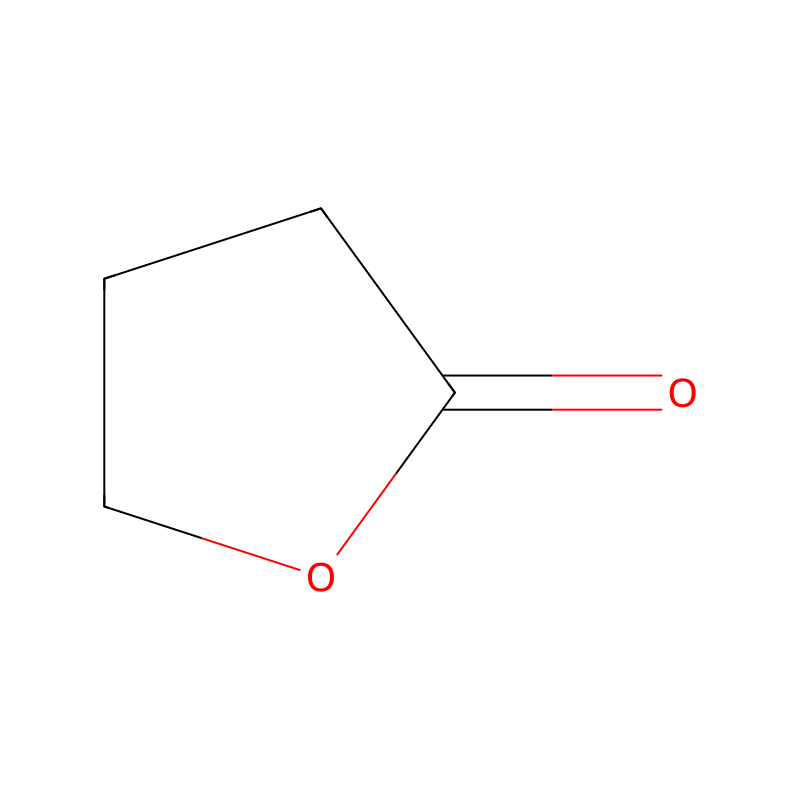
식별자 및 물리적 특성
| CAS No. | 96-48-0 |
|---|---|
| 분자식 | C4H6O2 |
| 평균 분자량 | 86.09 g/mol |
| 단동위원소 질량 | 86.03677943 g/mol |
| SMILES | O=C1CCCO1 |
| InChIKey | YEJRWHAVMIAJKC-UHFFFAOYSA-N |
| PubChem CID | 7302 |
| ChEMBL | CHEMBL95681 |
| ChEBI | CHEBI:42639 |
| EC No. | 202-509-5 |
| DTXSID | DTXSID6020224 |
| 현지명 | 뷰티로락톤 |
화학 및 물리적 성질
| XLogP | -0.6 |
|---|---|
| 극성 표면적 | 26.3 |
| 수소 결합 공여자 수 | 0 |
| 수소 결합 수용자 수 | 2 |
| 회전 가능 결합 수 | 0 |
| 무거운 원자 수 | 6 |
| 형식 전하 | 0 |
| 복잡도 | 67.9 |
| 물질 분류 | Other Classes -> Lactones |
| 의약품 | Pharmaceuticals -> Listed in ZINC15 |
| 지질 | Fatty Acyls [FA] -> Fatty esters [FA07] -> Lactones [FA0704] |
| 화장품 | Solvent |
| SpringerMaterials Properties | Boiling point |
| 향료 | Fragrance Ingredient (4-Hydroxybutanoic acid lactone) -> IFRA transparency List |
| LogP(분배 계수) | log Kow = -0.64 |
| 냄새 | Pleasant odorFaint odor100.00%에서. 크림 같은 기름진 지방 카라멜 |
| 식품 첨가물 | FLAVORING AGENT OR ADJUVANT -> FDA Substance added to food |
| 밀도 | 1.1286 at 59 °F (NTP, 1992) - Denser than waterwill sink1.1296 g/cu cm at 20 °CDensity: 1.1441 at 0 °C/0 °C1.1286 at 15 °C/0 °CRelative density (water = 1): 1.13 (20 °C)1.120-1.1301.41 @ 0°C1.12 g/mL at 25 °C (lit.) |
| 향미제 | EU Flavoring substances |
| Viscosity | 1.75 centipoise at 25 °C |
| 녹는점 | -45 °C (lit.) |
| 끓는 점 | 204-205 °C (lit.) |
| 증기 밀도 | 3 (vs air) |
| 증기압 | 1.5 mm Hg ( 20 °C) |
| 굴절률 | n20/D 1.436(lit.) |
| FEMA | 3291 | 4-HYDROXYBUTANOIC ACID LACTONE |
| 인화점 | 209 °F |
| 저장 조건 | 2-8°C |
| 용해도 | DMF: 10 mg/mlDMSO: 10 mg/mlEthanol: 10 mg/mlPBS (pH 7.2): 1 mg/ml |
| 물리적 상태 | liquid |
| 색상 | 무색의 |
| pH | 4-5 (20°C, 100g/L in H2O) |
| 향취 유형 | 크림 같은 |
| 생물학적 소스 | synthetic |
| 폭발한계 | 16% |
| 용해도 | 혼용 가능 |
| 비열 | Cp(liquid): 1.64 J/(g·K), at 25℃ |
| Merck | 13,1596 |
| JECFA Number | 219 |
| BRN | 105248 |
| 헨리 상수 | 1.9×10² mol/(m3Pa) at 25℃, Duchowicz et al. (2020) |
| 유전율 | 40.960000000000001 |
| 안정성 | 안정적인. 흡습성. 강산화제, 강산, 강염기, 강환원제와 호환되지 않습니다. |
| 주요 응용 | 청소용품화장품향료 및 향음식 및 음료개인 위생 관리 |
| 화장품 원료 기능 | 향기향수용제 |
| InChI | 1S/C4H6O2/c5-4-2-1-3-6-4/h1-3H2 |
| InChIKey | YEJRWHAVMIAJKC-UHFFFAOYSA-N |
| SMILES | O=C1CCCO1 |
| LogP(분배 계수) | -0.566 at 25℃ |
| NIST | «gamma»-Butyrolactone(96-48-0) |
| EPA | .gamma.-Butyrolactone (96-48-0) |
화학적 성질
γ-Butyrolactone is oily, colorless, clear liquid. It has a faint, sweet, aromatic, slightly buttery odor. γ-Butyrolactone is a lactone. It is hydrolyzed under basic conditions, for example in a sodium hydroxide solution into sodium gamma-hydroxybutyrate, the sodium salt of gamma-hydroxybutyric acid. Under acidic conditions it forms an equilibrium mixture of both compounds. These compounds then may go on to form a polymer.
안전 및 규제
| GHS 분류 | This chemical does not meet GHS hazard criteria for 0.4% (16 of 3692) of reports.DangerH302 (99.6%): Harmful if swallowed [Warning Acute toxicity, oral]P261, P264, P264+P265, P270, P271, P280, P301+P317, P302+P352, P304+P340, P305+P351+P338, P305+P354+P338, P316, P317, P319, P321, P330, P332+P317, P337+P317, P362+P364, P403+P233, P405, and P501 (click each P-code to see the statement)Aggregated GHS information provided per 3692 reports by companies from 55 notifications to the ECHA C&L Inventory. Each notification may be associated with multiple companies. |
|---|---|
| 규제 정보 | Chemical: 2(3H)-Furanone, dihydro-List I Chemical: A chemical specified by regulation that, in addition to legitimate uses, is used in manufacturing a controlled substance in violation of the Act and is important to the manufacture of a controlled substance. (21 eCFR 1310.02)Regulation (EC) No 1831/2003 (amended)2(3H)-Furanone, dihydro- is listed on the EPA's Chemical Data Reporting (CDR) system. Manufacturers and importers of 2(3H)-Furanone, dihydro- are required to report information about their production and use of this chemical to the EPA under the Toxic Substances Control Act (TSCA). (40 eCFR Part 711)Status: Active Update: 23-02-2023 https://echa.europa.eu/registration-dossier/-/registered-dossier/149902(3H)-Furanone, dihydro-: Does not have an individual approval but may be used under an appropriate group standard |
| 화재 위험 | This chemical is combustible. (NTP, 1992)Combustible. Gives off irritating or toxic fumes (or gases) in a fire. Risk of fire and explosion on contact with incompatible substances. See Chemical Dangers. |
| 화재 가능성 | Combustible when exposed to heat or flame ... |
| 건강 유해성 | SYMPTOMS: Symptoms of exposure to this compound may include irritation of the eyes, skin and mucous membranes. |
| 유해성 요약 | Inhalation of butyrolactone produces anesthesia in experimental animals[HSDB] An eye irritantInhalation of high concentrations can cause CNS depression[ICSC] |
| FDA 요건 | The following chemicals have been specifically designated by the Administrator of the Drug Enforcement Administration as the listed chemicals subject to the provisions of this part and parts 1309 and 1313 of this chapter. Each chemical has been assigned the DEA Chemical Code Number set forth opposite it. gamma-Butyrolactone (DEA Code Number: 2011) is included on List 1 chemicals. |
| 반응성 그룹 | Esters, Sulfate Esters, Phosphate Esters, Thiophosphate Esters, and Borate Esters |
| Special Reports | BG ChemieToxicological Evaluation No. 7: gamma-Butyrolactone (96-48-0) p.54 (11/2000). Avaliable from the query page: http://www.bgchemie.de/toxicologicalevaluations as of March 17, 2008DHHS/NTPToxicology & Carcinogenesis Studies of gamma-Butyrolactone in F344/N Rats and B6C3F1 Mice (Gavage Studies) Technical Report Series No. 406 (1992) NIH Publication No. 92-3137 |
| FIFRA 요건 | Residues of gamma-butyrolactone are exempted from the requirement of a tolerance when used as a solvent in accordance with good agricultural practice as inert (or occasionally active) ingredients in pesticide formulations applied to growing crops only. |
| Reactivity Profile | 4-BUTYROLACTONE can react with oxidizing materials, inorganic acids and bases, alcohols and amines. Rapidly hydrolyzed by bases and slowly hydrolyzed by acids. It is volatile with steam. (NTP, 1992). The combination of the lactone, butanol, 2,4-dichlorophenol, and sodium hydroxide in the attempted synthesis of 2,4-dichlorophenoxybutyric acid caused a thermal runaway reaction that eventually exploded, [CISHC Chem. Safety Summ., 1977, 48, 3]. |
| Chemical Dangers | Reacts with acids, bases, alcohols, amines and oxidants. This generates fire and explosion hazard. Decomposes on burning. This produces irritating fumes. |
| Air and Water Reactions | Hygroscopic. Soluble in water. |
| 소화 | Fires involving this material can be controlled with a dry chemical, carbon dioxide or Halon extinguisher. (NTP, 1992)Use water spray, powder, alcohol-resistant foam, carbon dioxide. In case of fire: keep drums, etc., cool by spraying with water. |
| 응급 조치 | Fresh air, rest. Seek medical attention if you feel unwell.Wear protective gloves when administering first aid. Rinse skin with plenty of water or shower.Rinse with plenty of water for several minutes (remove contact lenses if easily possible). Refer immediately for medical attention.Rinse mouth. Refer for medical attention . |
| 응급 처치 | EYES: First check the victim for contact lenses and remove if present. Flush victim's eyes with water or normal saline solution for 20 to 30 minutes while simultaneously calling a hospital or poison control center. Do not put any ointments, oils, or medication in the victim's eyes without specific instructions from a physician. IMMEDIATELY transport the victim after flushing eyes to a hospital even if no symptoms (such as redness or irritation) develop. |
| 안전 보관 | Store only in original container. Separated from acids, alcohols, amines, bases and oxidants. Dry. Well closed. Store in an area without drain or sewer access. |
| 소화 절차 | Alcohol foam.To fight fire, use foam, ... carbon dioxide, dry chemical. |
| 보관 조건 | Butyrolactone can be stored indefinitely. The pure product is noncorrosive and therefore can be stored and transported in carbon steel containers. Butyrolactone becomes slightly yellow on prolonged storage in carbon steel vessels without nitrogen padding. In this case stainless steel containers are recommended. The hygroscopicity of the product requires some precautions. Butyrolactone attacks concrete vigorously.Separated from acids, alcohols, amines and bases. Dry. |
| 정리 방법 | /Lab quantity/. Absorb on paper. Evaporate on a glass or an iron dish in hood. Burn the paper.Collect leaking liquid in sealable containers. Absorb remaining liquid in sand or inert absorbent and remove to safe place. (Extra personal protection: filter respirator for organic gases and vapors). |
| 비화재 누출 대응 | SMALL SPILLS AND LEAKAGE: If you spill this chemical, FIRST REMOVE ALL SOURCES OF IGNITION. Then, use absorbent paper to pick up all liquid spill material. Seal the absorbent paper, as well as any of your clothing which may be contaminated, in a vapor-tight plastic bag for eventual disposal. Wash any surfaces you may have contaminated with a soap and water solution. Do not reenter the contaminated area until the Safety Officer (or other responsible person) has verified that the area has been properly cleaned. |
| 처리 방법 | SRP: At the time of review, criteria for land treatment or burial (sanitary landfill) disposal practices are subject to significant revision. Prior to implementing land disposal of waste residue (including waste sludge), consult with environmental regulatory agencies for guidance on acceptable disposal practices. |
| 누출 처리 | Personal protection: filter respirator for organic gases and vapours adapted to the airborne concentration of the substance. Do NOT let this chemical enter the environment. Collect leaking liquid in sealable containers. Absorb remaining liquid in sand or inert absorbent. Then store and dispose of according to local regulations. |
| Preventive Measures | SRP: Contaminated protective clothing should be segregated in such a manner so that there is no direct personal contact by personnel who handle, dispose, or clean the clothing. Quality assurance to ascertain the completeness of the cleaning procedures should be implemented before the decontaminated protective clothing is returned for reuse by the workers. Contaminated clothing should not be taken home at end of shift, but should remain at employee's place of work for cleaning. |
| Eye Prevention | Wear safety goggles. |
| Treatment | In case of oral exposure, administer a benzodiazepine IV. There is no antidote. Treatment is symptomatic and supportive. (T36) |
| 건강 영향 | CNS depressionamnesia and hypotonia. Rarely, hypertension, orthostatic hypotension, apnea, dyskinesias, dystonias, and hypomania occur. |
| 환경 거동 | TERRESTRIAL FATE: Based on a classification scheme(1), an estimated Koc value of 11(SRC), determined from a log Kow of -0.64(2) and a regression-derived equation(3), indicates that butyrolactone is expected to have very high mobility in soil(SRC). Volatilization of butyrolactone from moist soil surfaces is not expected to be an important fate process(SRC) given an estimated Henry's Law constant of 5.3X10⁻⁸ atm-cu m/mole(SRC), derived from its vapor pressure, 0.45 mm Hg(4), and assigned value for water solubility of 1X10+6 mg/L (miscible)(5). Butyrolactone is not expected to volatilize from dry soil surfaces(SRC) based upon a vapor pressure of 0.45 mm Hg(4). Butyrolactone, present at 100 mg/L, reached 77% of its theoretical biological oxygen demand in 2 weeks using an activated sludge inoculum at 30 mg/L and the Japanese MITI test(6), suggesting that biodegradation in soil is an important environmental fate process(SRC).AQUATIC FATE: Based on a classification scheme(1), an estimated Koc value of 11(SRC), determined from a log Kow of -0.64(2) and a regression-derived equation(3), indicates that butyrolactone is not expected to adsorb to suspended solids and sediment(SRC). Volatilization from water surfaces is not expected(3) based upon an estimated Henry's Law constant of 5.3X10⁻⁸ atm-cu m/mol(SRC), derived from its vapor pressure, 0.45 mm Hg(4), and assigned value for water solubility of 1X10+6 mg/L (miscible)(5). Hydrolysis in neutral aqueous solutions proceeds slowly at room temperature and more rapidly at acidic conditions and elevated temperaturesunder alkaline conditions hydrolysis is rapid and irreversible(6). According to a classification scheme(7), an estimated BCF of 3.2(SRC), from its log Kow of -0.64(2) and a regression-derived equation(8), suggests the potential for bioconcentration in aquatic organisms is low(SRC). Butyrolactone reached 77% of its theoretical biological oxygen demand in 2 weeks using the Japanese MITI test(9), suggesting that biodegradation in water is an important environmental fate process(SRC).ATMOSPHERIC FATE: According to a model of gas/particle partitioning of semivolatile organic compounds in the atmosphere(1), butyrolactone, which has a vapor pressure of 0.45 mm Hg at 25 °C(2), is expected to exist solely as a vapor in the ambient atmosphere. Vapor-phase butyrolactone is degraded in the atmosphere by reaction with photochemically-produced hydroxyl radicals(SRC)the half-life for this reaction in air is estimated to be 6.9 days(SRC), calculated from its rate constant of 2.3X10⁻¹² cu cm/molecule-sec at 25 °C(SRC) that was derived using a structure estimation method(3). Butyrolactone does not contain chromophores that absorb at wavelengths >290 nm(4) and therefore is not expected to be susceptible to direct photolysis by sunlight(SRC). |
| 식품 조사 수치 | Using high-flow dynamic headspace isolation and capillary GC/MS analysis, butyrolactone was found in rice cakes at concns ranging from 750 to 1000 ppb(1). Butyrolactone has been identified as a constituent of coffee aroma(2), an odor compound in frankfurters(3), a volatile flavor component of roasted filberts(4), and a volatile component of chickpeas(5). Using a dry method, popcorn contained 22,000 ug/kg of butyrolactone(6). Butyrolactone was detected at a concn of 50 ppb in pureed mango(7) and was qualitatively detected in the tropical fruit rambutan(8). Raw earth almonds have been found to contain 0.4% butyrolactone(9). |
| 유해 작용 | Neurotoxin - Acute solvent syndrome |
| 노출 경로 | The substance can be absorbed into the body by inhalation of its vapour, by ingestion and through the skin.Inhalation (A626)oral (A626)injection (A626)dermal (A626). |
| 독성 요약 | Gamma-butyrolactone is rapidly converted to gamma-hydroxybutyrate. This may account for the subsequent central nervous system depressant. Gamma-butyrolactone is an anesthetic that causes a selective increase in brain dopamine by antagonizing transmitter release from nerve terminal. It is also an endogenous brain metabolite that may be derived from glutamate through gamma-aminobutyrate. GBL binds to the picrotoxin receptor (A566, A318). |
| Average Daily Intake | Annual consumption is 1866.67 lb. Individual consumption is 0.001581 mg/kg/day. |
| Signs and Symptoms | Cough. Sore throat. Drowsiness.MAY BE ABSORBED!Redness. Pain.Vomiting. Drowsiness. Laboured breathing. Unconsciousness.Headache, confusion, ataxia, urinary incontinence or urgency, difficulty breathing, bradycardia, uncontrollable shaking, hallucinations, seizure-like activity (uncontrollable or unusual movements), and acidosis. Hypothermia has been reported in adults and children following exposure (T36). |
| Ongoing Test Status | The following link will take the user to the National Toxicology Program (NTP) Test Agent Search Results page, which tabulates all of the "Standard Toxicology & Carcinogenesis Studies", "Developmental Studies", and "Genetic Toxicity Studies" performed with this chemical. Clicking on the "Testing Status" link will take the user to the status (i.e., in review, in progress, in preparation, on test, completed, etc.) and results of all the studies that the NTP has done on this chemical. [http://ntp-apps.niehs.nih.gov/ntp_tox/index.cfm?fuseaction=ntpsearch.searchresults&searchterm=96-48-0] |
| ICSC Environmental Data | The substance is harmful to aquatic organisms. |
| Soil Adsorption/Mobility | The Koc of butyrolactone is estimated as 11(SRC), using a log Kow of -0.64(1) and a regression-derived equation(2). According to a classification scheme(3), this estimated Koc value suggests that butyrolactone is expected to have very high mobility in soil. |
| 수질 위해 등급(WGK) | 1 |
| TSCA 등재 상태 | TSCA listed |
| RTECS 번호 | LU3500000 |
| 독성 | LD50 orally in rats: 17.2 ml/kg (Smyth) |
| 관세 코드 | 29322980 |
| 위험 문구(R) | 22-36-67-41-20/21/22-11 |
| 위험 표시 | Xn,F |
| 안전 문구(S) | 26-36-39-36/37-16 |
| 기존화학 물질 | KE-10674 |
| 자연 발화 온도 | 851 °F |
| 위험 등급 | Acute Tox. 4 OralEye Dam. 1STOT SE 3 |
| 저장 분류 | 10 - Combustible liquids |
| 유해 물질 데이터 | 96-48-0(Hazardous Substances Data) |
용도
용도
GBL는 일반적인 용매 그리고 시약 화학에 있는 뿐 아니라 사용되는 몇몇 젖은 알루미늄 전해질 축전기에 있는 flavouring, 세탁 용제, superglue 제거제, 및 용매로입니다. 인간에서는 그것은 GHB를 위한 프로드러그로 작동하고, 알콜과 유사한 효력을 가진 레크리에이션 취하게 하는 것으로 사용됩니다.
용도
물에 용해되는 GBL은 향료로, 세정 용제로, 초 접착제 제거제로, 일부 습식 알루미늄 전해 커패시터에서 용제로 사용되는 것과 마찬가지로 화학 분야의 일반적인 용제 및 시약입니다.
용도
(1) GBL을 사용하여 α- 피 롤리 돈, 1- 메틸 -2- 피 롤리 디논, 폴리 비닐 피 롤리 돈 및 α- 아세틸 -γ- 부티로 락톤 등을 제조 할 수있다. (2) GBL은 비타민과 롤리 프린의 중간체로서 시프 로플 록 사신 (ciprofloxacin)과 인터페론 (interferon) 생산에 사용되는 마취 및 진정제로 사용할 수 있습니다. (3) GBL은 식물 성장 자극제와 살충제의 중간체이다. (4) GBL은 좋은 산화 방지제, 가소제, 추출제, 흡착제, 분산제, 정착 제 및 경화제입니다. 또한 배터리, 커패시터 및 컬러 필름 개발에도 사용할 수 있습니다.
개요
Dihydro-2(3H)-furanone. An endogenous neuroregulator made from gamma-amino butyrate and the precursor of gamma hydroxybutyrate. It causes selective increase of brain dopamine by inhibiting its release from nerve terminals. The compound has sedative properties at low doses and produces surgical anesthesia at high doses. It is also used as an industrial solvent and precursor.
출처
Reported found as a constituent in coffee aroma; a volatile flavor component in roasted filberts as well. Also reported found in tomato, potato, soybeans, beans, vinegar, mushrooms, roasted chicken, beef, cider, beer, wine, scallops and clams.
용도
r-butyrolactone is one kind of important fine chemicalintermediate, simultaneously also is one kind of performance fine highboiling point solvent, ideal antioxidant, plasticizer,extracting agent, absorbent, dispersing agent, solid stain, Coagulation Reagent.
일반 설명
Clear colorless oily liquid with a pleasant odor.
제조 및 합성 방법
제조 방법
γ-Butyrolactone is produced by gas phase 1,4-butanediol under the action of Cu catalyst to produce product γ-butyrolactone and by-product hydrogen. Crude γ-Butyrolactone is purified to remove light and heavy components, with a purity of more than 99.5%, as an export product. At the same time, the by-product hydrogen is sent to other hydrogenation processes for recycling after removing CO and CO2 through the methanation process.