홈MCP워크벤치Skills
홈워크벤치알림마이페이지
llms.txt · MCP 가이드개인정보처리방침 · 이용약관 · 지원v1.8.0
  1. 홈
  2. /화합물

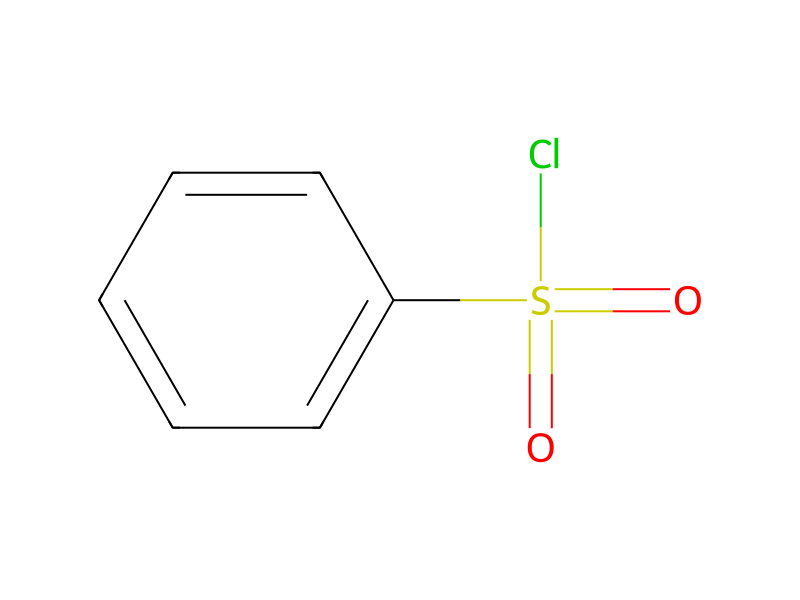
벤젠술포닐클로라이드

Benzenesulfonyl chloride
HCID 7369
새 노트새 반응견적 요청하기
인쇄 미리보기
기본 정보개요이름 및 식별자물성안전 및 규제화학 및 산업관련 반응화합물 노트
부분 구조 검색유사 구조 찾기

기본 정보

CAS
98-09-9
표준 SMILES
O=S(=O)(Cl)c1ccccc1
InChIKey
CSKNSYBAZOQPLR-UHFFFAOYSA-N
분자식
C6H5ClO2S
평균 분자량
176.62 g/mol
단동위원소 질량
175.9698783

개요

Benzenesulfonyl chloride appears as a colorless to slightly yellow solid that melts at approximately 40 °F. Very irritating to skin, eyes and mucous membranes. May emit toxic fumes when heated to high temperatures. Used to make dyes and other chemicals.

이름 및 식별자

우선 이름
Benzenesulfonyl chloride
IUPAC
benzenesulfonyl chloride
현지명
벤젠술포닐클로라이드
영어명
Benzenesulfonyl chloride
분자식
C6H5ClO2S
분자량
176.62

이름 및 동의어

BENZENESULFONYL CHLORIDE98-09-9Phenylsulfonyl chlorideBenzene sulfochlorideBenzenesulfonic chlorideBenzene sulfonechlorideBenzenosulfochlorideBenzenesulphonyl chlorideBenzenosulfochlorekBenzolsulfochlorideBenezenesulfochlorideBenzenosulphochloride
이름 더 보기
벤젠설폰일클로라이드벤젠설포닐염화물벤젠술포닐염화물벤젠술포닐클로라이드벤젠설포닐염화물벤젠설폰일 클로라이드benzenesulfonylBenzenesulphochlorideBenzolsulfonylchloridPhSO2Clbsc-refinedAKOS BBS-00004356
BENZENE SULFONYL CHLORIDEBenzenesulfon chlorideBenzenesulfonic(acid)chlorideBenzenesulfonic (acid) chlorideDTXSID1026619RCRA waste no. U020UN2225OI9V0QJV9N

데이터베이스 식별자

CAS
98-09-9
PubChem CID
7369
DTXSID
DTXSID1026619
ChEMBL
CHEMBL1479161
UNII
OI9V0QJV9N
EC Number
202-636-6
Nikkaji
J3.983G

물성

구조 계산 물성

XLogP
1.3
극성 표면적
42.5 Ų
수소 결합 공여자 수
0
수소 결합 수용자 수
2
회전 가능 결합 수
1
무거운 원자 수
10
형식 전하
0
복잡도
186

실험 및 물리화학적 성질

Chemical Classes · 2건

Toxic Gases & Vapors -> Acid Halides

Corrosives

SpringerMaterials PropertiesSchoenflies notation
Density · 3건

1.3842 at 59 °F (USCG, 1999) - Denser than water; will sink

SP GR: 1.3842 AT 15 °C/15 °C

1.384 @ 15°C

Color/FormCOLORLESS, OILY LIQUID
SolubilityINSOL IN WATER; SOL IN ETHER, ALCOHOL
Flash Point · 2건

greater than 233.6 °F (USCG, 1999)

Flash point > 233 °F

Boiling Point · 2건

484.7 °F at 760 mmHg (USCG, 1999)

177 °C AT 100 MM HG; 120 °C AT 10 MM HG; DECOMP 251-252 °C AT 760 MM HG

DecompositionDECOMP 251-252 °C AT 760 MM HG
Melting Point · 3건

58.1 °F (USCG, 1999)

14.5 °C

14.5 °C

Vapor Pressure · 2건

안전 및 규제

안전 정보는 참고용이며, 공급업체의 물질안전보건자료(SDS), 관련 법규 및 전문가 평가를 대체하지 않습니다.

GHS 분류

GHS Classification · 6건

Danger

H302 (98.7%): Harmful if swallowed [Warning Acute toxicity, oral]

P233, P260, P261, P264, P264+P265, P270, P271, P272, P280, P284, P301+P317, P301+P330+P331, P302+P352, P302+P361+P354, P304+P340, P305+P351+P338, P305+P354+P338, P316, P317, P321, P330, P333+P317, P337+P317, P342+P316, P362+P364, P363, P403, P405, and P501 (click each P-code to see the statement)

Aggregated GHS information provided per 159 reports by companies from 17 notifications to the ECHA C&L Inventory. Each notification may be associated with multiple companies.

Danger

H302: Harmful if swallowed [Warning Acute toxicity, oral]

유해성 정보

Regulatory Information · 5건

Chemical: Benzenesulfonyl chloride

Benzenesulfonyl chloride is listed on the EPA's Chemical Data Reporting (CDR) system. Manufacturers and importers of Benzenesulfonyl chloride are required to report information about their production and use of this chemical to the EPA under the Toxic Substances Control Act (TSCA). (40 eCFR Part 711)

REACH registered substance: Benzenesulphonyl chloride (EC: 202-636-6)

Benzenesulphonyl chloride: Does not have an individual approval but may be used under an appropriate group standard

The New Jersey Worker and Community Right to Know Act requires public and private employers to provide information about hazardous substances at their workplaces. (N.J.S.A. 34:5A-1 et. seq.)

DOT LabelCorrosive
Fire Hazards · 2건

Special Hazards of Combustion Products: May contain highly toxic and irritating hydrogen chloride and oxides of chlorine and sulfur.

· Combustible material: may burn but does not ignite readily.

Health Hazards · 2건

May be fatal if inhaled, swallowed or absorbed through skin. Contact may cause skin and eye burns. Irritating to eyes, skin and mucous membranes. INGESTION: May cause abdominal spasm and vomiting. (USCG, 1999)

화학 및 산업

용도 및 제조

Uses · 4건

Used as a chemical intermediate; [HSDB]

CHEM INT FOR BENZENE SULFONAMIDES, THIOPHENOL, GLYBUZOLE (HYPOGLYCEMIC AGENT), N-2-CHLOROETHYL AMIDES, BENZONITRILE; FOR ITS ESTERS-USEFUL AS INSECTICIDES, MITICIDES; FOR FENSON ACARICIDE (FORMER USE).

Benzenesulfonyl chloride is a reagent for Friedel-Crafts sulfonylation.

Benzenethiol is produced on a commercial scale by the red phosphorus reduction of benzenesulfonyl chloride.

U.S. Imports · 2건

(1979) 1.96X10+8 GRAMS (PRINCPL CUSTMS DISTS)

(1981) 2.12X10+8 GRAMS (PRINCPL CUSTMS DISTS)

U.S. Production · 3건

2023: 1,000,000 - <8,500,000 lb

(1979) PROBABLY GREATER THAN 4.54X10+6 GRAMS

(1981) PROBABLY GREATER THAN 4.54X10+6 GRAMS

Industry UsesCorrosion inhibitor
Methods of Manufacturing · 2건

... FROM BENZENE & CHLOROSULFONIC ACID OR FROM THE SODIUM SALT OF BENZENESULFONIC ACID & /PHOSPHORUS PENTACHLORIDE/ PCL5 OR /PHOSPHORUS OXYTRICHLORIDE/ POCL3.

REACTION OF BENZENESULFONIC ACID WITH PHOSPHORUS PENTACHLORIDE; REACTION OF SODIUM BENZENESULFONATE WITH PHOSPHORUS PENTACHLORIDE OR PHOSPHORUS OXYCHLORIDE; REACTION OF BENZENE WITH CHLOROSULFONIC ACID.

General Manufacturing Information · 2건

Plastics Product Manufacturing

Benzenesulfonyl chloride: ACTIVE

응용 분야 · 2건

용도Benzenesulfonyl chloride reacts with Grignard reagents to form oxindoles from N-unsubstituted indoles. It is widely used to check the assay of thiamine in different food products. It is involved in the synthesis of alpha-disulfones, sulfonamides and sulfoante esters as precursor. It is a derivatization reagent for the determination of various amines in waste water and surface water at the sub-ppb level by gas chromatography-mass spectrometry. It is common reagent used in Hinsberg test for detection and distinguishing the type of amines as primary, secondary and tertiary amines.

관련 반응

2,671건
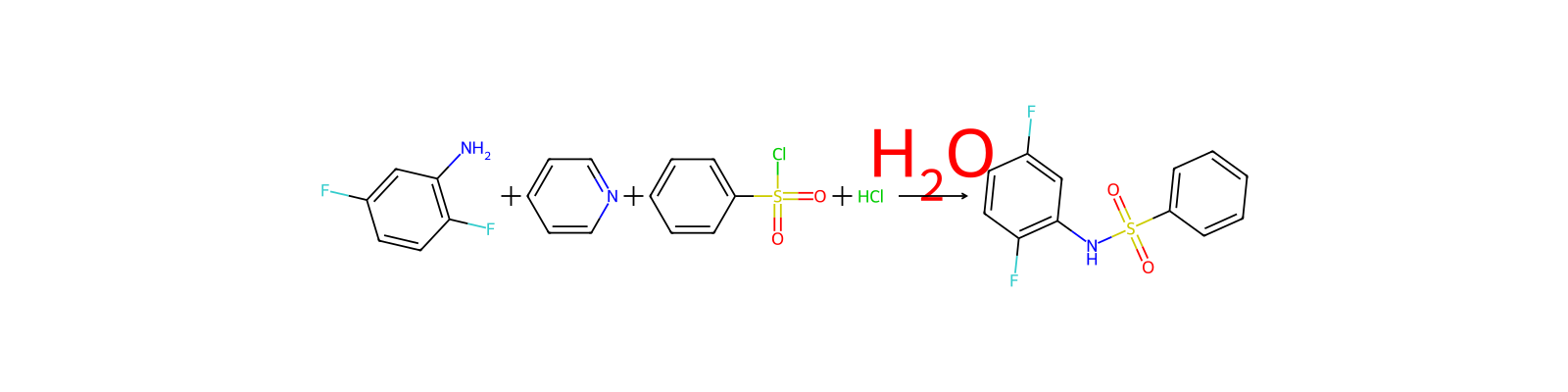
반응 기록 만들기
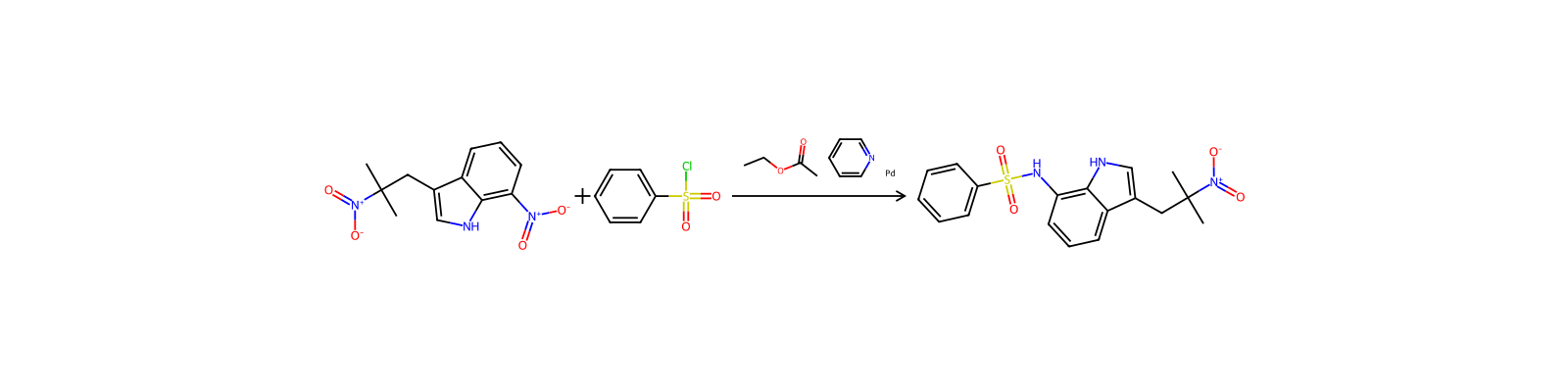
HRID 2838 반응식
HRID 2838반응물로uspto-grants-1998_03
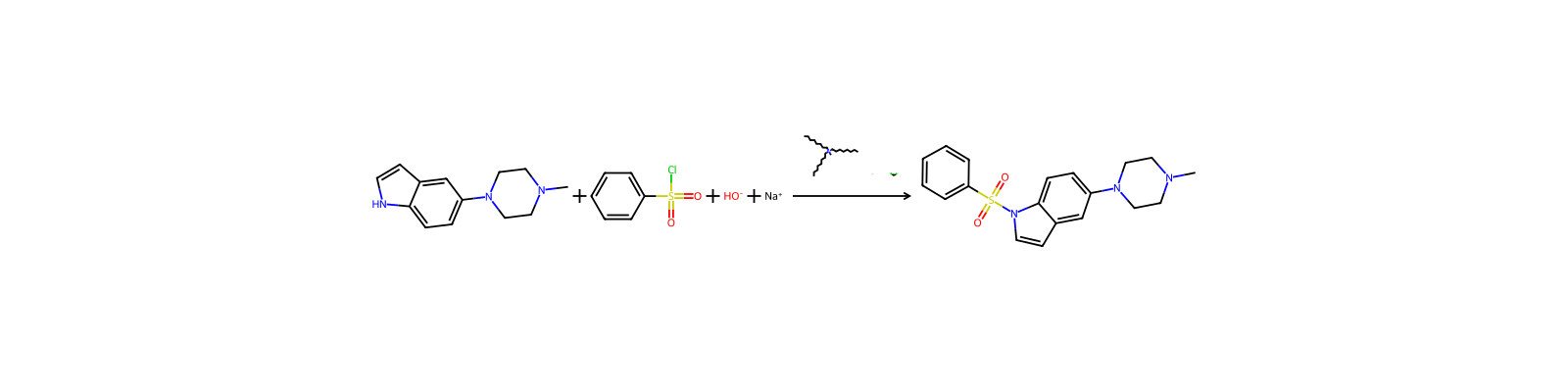
HRID 4234 반응식
HRID 4234반응물로uspto-grants-1988_02
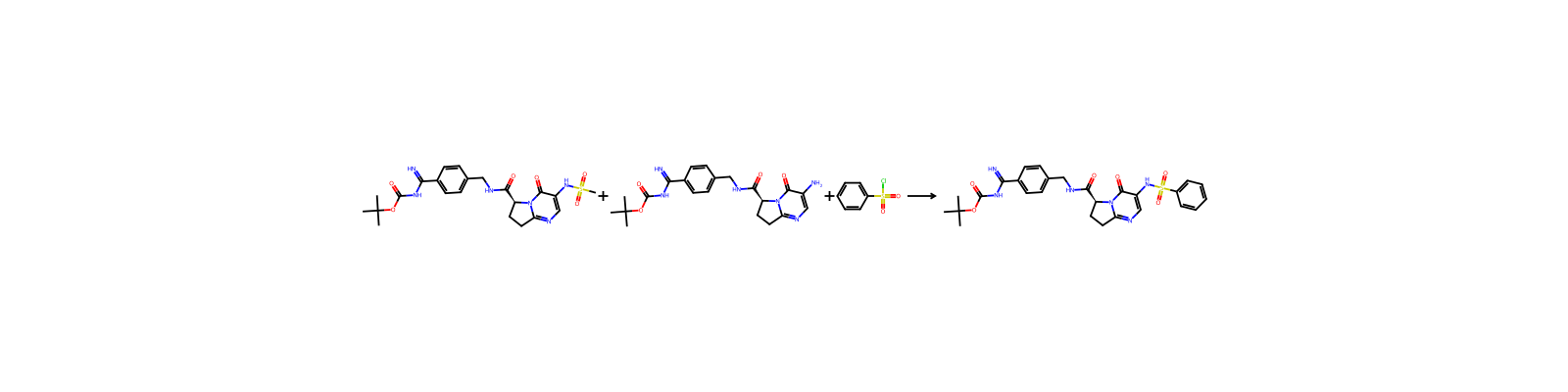
HRID 5460 반응식
HRID 5460반응물로uspto-grants-1993_09
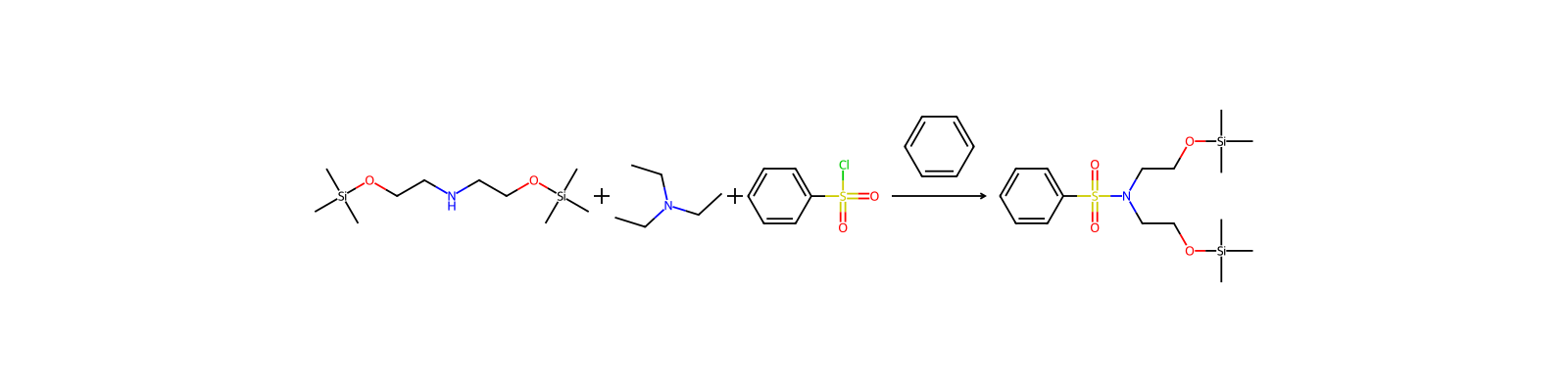
HRID 8114 반응식
HRID 8114반응물로uspto-grants-2006_08
HRID 8130 반응식
HRID 8130반응물로uspto-grants-2006_08
HRID 8330 반응식
HRID 8330반응물로uspto-grants-2006_08
HRID 8338 반응식
HRID 8338반응물로uspto-grants-2006_08
HRID 10967 반응식
HRID 10967반응물로uspto-grants-2006_08
1 / 334 페이지

화합물 노트

불러오는 중…

이 페이지에서기본 정보개요이름 및 식별자물성안전 및 규제화학 및 산업관련 반응화합물 노트
더보기
새 노트새 반응견적 요청하기

0.06 [mmHg]

0.068 [mm Hg] @25 °C

Physical Description · 3건

Benzenesulfonyl chloride appears as a colorless to slightly yellow solid that melts at approximately 40 °F. Very irritating to skin, eyes and mucous membranes. May emit toxic fumes when heated to high temperatures. Used to make dyes and other chemicals.

Liquid

Clear, oily liquid; [HSDB]

Stability/Shelf LifeSTABLE TOWARD COLD WATER

물리화학적 성질

녹는점
13 · 13-15 °C (lit.)
끓는 점
251 · 251-252 °C (lit.)
밀도
1.384 g/mL · 1.384 g/mL at 25 °C (lit.)
증기압
0.04 mm · 0.04 mm Hg ( 20 °C)
굴절률
20 · n20/D 1.551(lit.)
인화점
230 °F · >230 °F
저장 조건
30 °C · Store below +30°C.
용해도
알코올: 용해 가능
물리적 상태
액체
색상
투명한
수용성
분해될 수 있음
Merck
14 · 14,1072
BRN
606926 · 606926
Henry's Law Constant
1.1 · 1.1×100 mol/(m3Pa) at 25℃, Zhang et al. (2010)
안정성
안정적인. 물, 강산화제, 강염기, 메틸 포름아미드, 디메틸 설폭사이드와 혼합되지 않습니다.
InChI
1S/C6H5ClO2S/c7-10(8,9)6-4-2-1-3-5-6/h1-5H
InChIKey
CSKNSYBAZOQPLR-UHFFFAOYSA-N
SMILES
ClS(=O)(=O)c1ccccc1
LogP
3.39 at · 3.39 at 23℃
NIST
Benzenesulfonyl chloride(98-09-9)
EPA
Benzenesulfonyl chloride (98-09-9)
화학적 성질 · 1건

Benzenesulfonyl chloride is a colorless oily liquid with a pungent odor. Insoluble in water, soluble in ethanol and ether. Can react with ammonia, amine and alcohol to produce benzenesulfonamide and benzene sulfonate respectively. It is toxic, irritates skin, eyes and mucous membranes, corrosive, and can cause burns. Oral LD50 1960mg/kg in rats.

· TOXIC and/or CORROSIVE; inhalation, ingestion or contact (skin, eyes) with vapors, dusts or substance may cause severe injury, burns or death.

Hazards Summary · 2건

Corrosive to skin; [Quick CPC] Liver damage has been reported in workers after skin exposure; liver injury also occurs in high-dose animal studies; [HSDB] Can cause irritation of the respiratory tract and at higher concentrations pulmonary edema; [NJ-HSFS] Can cause burns to skin and eyes; A skin, eye, and mucous membrane irritant; [CAMEO]

The major hazards encountered in the use and handling of benzenesulfonyl chloride stems from its toxicologic properties. Toxic by all routes (ie, inhalation, ingestion, and dermal contact), exposure to this colorless, oily liquid may occur from its manufacture and use as a catalyst, an intermediate in the production of phenols,amides, insecticides, miticides, and acaricides, and as a reagent for Friedel-Crafts sulfonation. Effects from exposure may include contact burns to the skin and eyes, and liver damage. In activities and situations where over-exposure may occur, wear a positive pressure self-contained breathing apparatus, and chemical protective clothing which has been specifically recommended by the shipper or manufacturer. If contact should occur, immediately irrigate exposed eyes with copious amounts of tepid water for at least 15 minutes, and wash exposed skin thoroughly with soap and water. Remove contaminated clothing and shoes at the site. While benzenesulfonyl chloride does not ignite easily, it may burn with the production of poisonous gases. Runoff from fire control water may cause pollution. For fires involvin g benzenesulfonyl chloride, extinguish with dry chemical, CO2, water spray, fog, or regular foam. Small spills of this substance may be taken up with sand or other noncombustible absorbent and placed into containers for later disposal. Large spills should first be diked far ahead of the spill. Benzenesulfonyl chloride is a potential candidate for liquid injection or rotary kilnforms of incineration.

DOT ID and Guide2225 156
Reactive GroupAcyl Halides, Sulfonyl Halides, and Chloroformates
RCRA Requirements · 1건

U020; As stipulated in 40 CFR 261.33, when benzenesulfonyl chloride as a commercial chemical product or manufacturing chemical intermediate or an off-specification commercial chemical product or a manufacturing chemical intermediate, becomes a waste, it must be managed according to Federal and/or State hazardous waste regulations. Also defined as a hazardous waste is any residue, contaminated soil, water, or other debris resulting from the cleanup of a spill, into water or on dry land, of this waste. Generators of small quantities of this waste may qualify for partial exclusion from hazardous waste regulations (40 CFR 261.5).

TSCA Requirements · 1건

Pursuant to section 8(d) of TSCA, EPA promulgated a model Health and Safety Data Reporting Rule. The section 8(d) model rule requires manufacturers, importers, and processors of listed chemical substances and mixtures to submit to EPA copies and lists of unpublished health and safety studies. Benzenesulfonyl chloride is included on this list.

Reactivity AlertsWater-Reactive
Reactivity Profile · 1건

BENZENESULFONYL CHLORIDE is incompatible with strong oxidizing agents and bases, including amines. Corrodes metals in the presence of water due to slow formation of hydrochloric acid and benzenesulfonic acid (USCG, 1999). May react vigorously or explosively if mixed with diisopropyl ether or other ethers in the presence of trace amounts of metal salts [J. Haz. Mat., 1981, 4, 291].

DOT Emergency Guidelines · 5건

/GUIDE 156: SUBSTANCES - TOXIC and/or CORROSIVE (Combustible/Water-Sensitive)/ Fire or Explosion: Combustible material: may burn but does not ignite readily. Substance will react with water (some violently) releasing flammable, toxic or corrosive gases and runoff. When heated, vapors may form explosive mixtures with air: indoors, outdoors and sewers explosion hazards. Most vapors are heavier than air. They will spread along ground and collect in low or confined areas (sewers, basements, tanks). Vapors may travel to source of ignition and flash back. Contact with metals may evolve flammable hydrogen gas. Containers may explode when heated or if contaminated with water.

/GUIDE 156: SUBSTANCES - TOXIC and/or CORROSIVE (Combustible/Water-Sensitive)/ Health: TOXIC; inhalation, ingestion or contact (skin, eyes) with vapors, dusts or substance may cause severe injury, burns or death. Contact with molten substance may cause severe burns to skin and eyes. Reaction with water or moist air will release toxic, corrosive or flammable gases. Reaction with water may generate much heat that will increase the concentration of fumes in the air. Fire will produce irritating, corrosive and/or toxic gases. Runoff from fire control or dilution water may be corrosive and/or toxic and cause pollution.

/GUIDE 156: SUBSTANCES - TOXIC and/or CORROSIVE (Combustible/Water-Sensitive)/ Public Safety: CALL Emergency Response Telephone Number on Shipping Paper first. If Shipping Paper not available or no answer, refer to appropriate telephone number listed on the inside back cover. As an immediate precautionary measure, isolate spill or leak area in all directions for at least 50 meters (150 feet) for liquids and at least 25 meters (75 feet) for solids. Keep unauthorized personnel away. Stay upwind. Keep out of low areas. Ventilate enclosed areas.

/GUIDE 156: SUBSTANCES - TOXIC and/or CORROSIVE (Combustible/Water-Sensitive)/ Protective Clothing: Wear positive pressure self-contained breathing apparatus (SCBA). Wear chemical protective clothing that is specifically recommended by the manufacturer. It may provide little or no thermal protection. Structural firefighters' protective clothing provides limited protection in fire situations ONLY; it is not effective in spill situations where direct contact with the substance is possible.

For more DOT Emergency Guidelines (Complete) data for BENZENESULFONYL CHLORIDE (8 total), please visit the HSDB record page.

안전 및 보호

Fire FightingExcerpt from ERG Guide 156 [Substances - Toxic and/or Corrosive (Combustible / Water-Sensitive)]:
Accidental Release Measures · 2건

· CALL 911. Then call emergency response telephone number on shipping paper. If shipping paper not available or no answer, refer to appropriate telephone number listed on the inside back cover.

· ELIMINATE all ignition sources (no smoking, flares, sparks or flames) from immediate area.

First Aid · 2건

INHALATION: Move victim to fresh air. If not breathing, give artificial respiration. If breathing is difficult, give oxygen.

General First Aid:

Exposure Control and Personal Protection· Wear positive pressure self-contained breathing apparatus (SCBA).
Nonfire Spill ResponseExcerpt from ERG Guide 156 [Substances - Toxic and/or Corrosive (Combustible / Water-Sensitive)]:
Disposal Methods · 2건

Generators of waste (equal to or greater than 100 kg/mo) containing this contaminant, EPA hazardous waste number U020, must conform with USEPA regulations in storage, transportation, treatment and disposal of waste.

A potential candidate for liquid injection incineration at a temperature range of 650 to 1,600 °C and a residence time of 0.1 to 2 seconds. A potential candidate for rotary kiln incineration at a temperature range of 820 to 1,600 °C and residence times of seconds for liquids and gases, and hours for solids.

Isolation and Evacuation · 2건

Excerpt from ERG Guide 156 [Substances - Toxic and/or Corrosive (Combustible / Water-Sensitive)]:

Immediate precautionary measure

Protective Action Criteria (PAC) · 3건

0.77 [mg/m3]

8.4 [mg/m3]

51 [mg/m3]

Personal Protective Equipment (PPE)Wear positive pressure breathing apparatus and special protective clothing. (USCG, 1999)
Emergency Response Planning Guidelines· Note: Most foams will react with the material and release corrosive/toxic gases.
Other Standards Regulations and Guidelines/IN USSR/ MAX ALLOWABLE CONCN OF 0.3 MG/CU M AIR.

독성 정보

Ecotoxicity ValuesLC50 Brown trout yearlings 3 mg/l/48 hr /Static bioassay/
Environmental Fate · 3건

TERRESTRIAL FATE: If benzenesulfonyl chloride is released to soil, it will be expected to rapidly hydrolyze if the soil is moist, based upon a half-life of 5.1 min at 21 °C(SRC). Since it rapidly hydrolyzes, adsorption to and volatilization from moist soil are not expected to be significant processes, although no data specifically regarding the fate of benzenesulfonyl chloride in soil were located(SRC). Based upon an estimated vapor pressure of 0.068 mm Hg at 25 deg(2,SRC), volatilization from dry near-surface soil or other surfaces may be significant processes(SRC).

AQUATIC FATE: If benzenesulfonyl chloride is released to water, it will be expected to rapidly hydrolyze with a half-life of 5.1 min at 21 °C(1,SRC). Since it rapidly hydrolyzes, bioconcentration, volatilization, and adsorption to sediment and suspended solids are not expected to be significant processes(SRC). No data were located concerning biodegradation, but benzenesulfonyl chloride probably chemically hydrolyzes significantly faster than it biodegradates(SRC). Direct photolysis is not expected to be an important removal process in surface waters(2,SRC).

ATMOSPHERIC FATE: If benzenesulfonyl chloride is released to the atmosphere, it will be expected to exist almost entirely in the vapor phase(1) based upon an estimated vapor pressure of 0.068 mm Hg at 25 °C(2,SRC). It will be susceptible to photooxidation via vapor phase reaction with photochemically produced hydroxyl radicals. An atmospheric half-life of 7.9 days at an atmospheric concentration of 5X10+5 hydroxyl radicals per cu cm has been calculated for this process based upon an estimated rate constant(3,SRC). Hydrolysis of benzenesulfonyl chloride in moist air may be significant based upon its rapid hydrolysis in aqueous solution(4,SRC). Direct photolysis is not expected to be an important removal process in the atmosphere(5,SRC).

Adverse EffectsOccupational hepatotoxin - Secondary hepatotoxins: the potential for toxic effect in the occupational setting is based on cases of poisoning by human ingestion or animal experimentation.
Soil Adsorption/MobilitySince benzenesulfonyl chloride rapidly hydrolyzes in water(1) and presumably in moist soil(SRC), adsorption to soil is not expected to be a significant process(SRC).
Human Toxicity Excerpts · 1건

PERCUTANEOUS ABSORPTION WHICH CAN OCCUR ON MUCOUS MEMBRANES HAS BIOLOGICAL EFFECT ON SKIN & RESULTS IN REVERSIBLE TOXIC DAMAGE TO LIVER; 3 SUCH CASES ARE DESCRIBED. 2 PATIENTS EXPERIENCED VERY SEVERE SHOCK WHICH WAS BROUGHT UNDER CONTROL AFTER 1 TO 1.5 HR. POSSIBILITY THAT IMMEDIATE TYPE ALLERGIC REACTION OCCURS IS DISCUSSED.

Artificial Pollution Sources · 1건

Benzenesulfony chloride may be released to the environmet as a result of its manufacture and use as a catalyst and as an intermediate in the production of phenol and other organic chemicals(1). Benzenesulfonyl chloride has been used in the Friedel-Crafts sulfonylation of benzene(2).

Environmental Biodegradation · 1건

No data were located concerning the biodegradation of benzenesulfonyl chloride either in natural systems or in laboratory studies(SRC). Since benzenesulfonyl chloride rapidly hydrolyzes in water(1,SRC), biodegradation probably will not be an important process in the environment(SRC).

Environmental BioconcentrationSince benzenesulfonyl chloride rapidly hydrolyzes in water(1), bioconcentration in aquatic organisms is not expected to be a significant process(SRC).
Volatilization from Water/Soil · 1건

Due to a lack of data, it is not possible to estimate the half-life for volatilization from water or soil. Since benzenesulfonyl chloride rapidly hydrolyzes in water(1), however, volatilization from water and moist soil are not expected to be significant(SRC). Based upon an estimated vapor pressure of 0.068 mm Hg at 25 °C(2,SRC), volatilization of benzenesulfonyl chloride from surfaces and near-surface dry soil may be significant processes(SRC).

Non-Human Toxicity ExcerptsDAMAGE TO LIVER, LUNG, THYROID & CNS IS CHARACTERISTIC OF REPEATED ORAL OR INHALATION ADMIN TO RATS.
Environmental Abiotic Degradation · 1건

The measured overall rate constant for hydrolysis of benzenesulfonyl chloride in a 1% aqueous dioxane solution at 21 °C is 2.25X10⁻³ sec-1(1) which corresponds to a half-life of 5.1 min(1,SRC). The calculated half-life for hydrolysis at 10 °C is 12.9 min(1,SRC). The products of hydrolysis are benzenesulfonic acid and hydrogen chloride(SRC). The rate constant for the vapor phase reaction of benzenesulfonyl chloride with photochemically produced hydroxyl radicals has been estimated to be 2.04X10⁻¹² cu cm/molecule-sec at 25 °C which corresponds to an atmospheric half-life of 7.9 days at an atmospheric concentration of 5X10+5 hydroxyl radicals per cu cm (2,SRC). Direct photolysis is not expected to be a significant removal process since the compound absorbs very little light at wavelengths above 290 nm(3).

Probable Routes of Human Exposure · 2건

Exposure to benzenesulfonyl chloride will be primarily occupational via inhalation and possibly dermal contact. (SRC)

NIOSH (NOES Survey 1981-1983) has statistically estimated that 851 workers are potentially exposed to benzenesulfonyl chloride in the USA(1). NIOSH (NOHS Survey 1972-1974) has statistically estimated that 194 workers are potentially exposed to benzenesulfonyl chloride in the USA(2).

규제 정보

RCRA Requirements · 1건

U020; As stipulated in 40 CFR 261.33, when benzenesulfonyl chloride as a commercial chemical product or manufacturing chemical intermediate or an off-specification commercial chemical product or a manufacturing chemical intermediate, becomes a waste, it must be managed according to Federal and/or State hazardous waste regulations. Also defined as a hazardous waste is any residue, contaminated soil, water, or other debris resulting from the cleanup of a spill, into water or on dry land, of this waste. Generators of small quantities of this waste may qualify for partial exclusion from hazardous waste regulations (40 CFR 261.5).

TSCA Requirements · 1건

Pursuant to section 8(d) of TSCA, EPA promulgated a model Health and Safety Data Reporting Rule. The section 8(d) model rule requires manufacturers, importers, and processors of listed chemical substances and mixtures to submit to EPA copies and lists of unpublished health and safety studies. Benzenesulfonyl chloride is included on this list.

CERCLA Reportable Quantities · 1건

Persons in charge of vessels or facilities are required to notify the National Response Center (NRC) immediately, when there is a release of this designated hazardous substance, in an amount equal to or greater than its reportable quantity of 100 lb or 45.4 kg. The toll free number of the NRC is (800) 424-8802; In the Washington D.C. metropolitan area (202) 426-2675. The rule for determining when notification is required is stated in 40 CFR 302.4 (section IV. D.3.b).

안전 데이터

wgk
1
tsca
TSCA listed
rtecs
DB8750000
ridadr
UN 2225
독성
LD50 orl-rat: 1960 mg/kg MEPAAX 20,513,69
HS 번호
29049090
risk_code
20/22-34-42/43-29-22
hazard_code
C
safety_code
23-26-36/37/39-45
포장분류
III
위험 등급
8
기존화학 물질
KE-02638
F 고인화성물질
21
자연 발화 온도
450°C
Hazard Classifications
Acute Tox. 4 OralEye Dam. 1Skin Corr. 1B
스토리지 클래스
8A - Combustible corrosive hazardous materials
유해 물질 데이터
98-09-9(Hazardous Substances Data)

일반 설명A colorless to slightly yellow solid that melts at approximately 40°F. Very irritating to skin, eyes and mucous membranes. May emit toxic fumes when heated to high temperatures. Used to make dyes and other chemicals.

제조 방법 · 1건

생산 방법The most convenient method for the production of benzenesulfonyl chlorides is the chlorosulfonation reaction of benzene or substituted benzene with chlorosulfuric acid. Sulfonation and formation of the sulfonyl chlo- ride take place in one reaction sequence:Ar-H+Cl-SO3H→ArSO3H+HClArSO3H+Cl-SO3H=ArSO2Cl+H2SO4Sulfone is formed in a side reaction of the chlorosulfonation. The amount of sulfone formation can be reduced by diluting with a solvent, by using a large excess of chlorosulfuric acid, or by adding sulfone-inhibiting substances, e.g., alkali metal and ammonium salts, acetic acid, phosphoric acid, dimethylformamide, or amidosulfuric acid.For industrial chlorosulfonation the chlorosulfuric acid is introduced into a cast-steel or enameled steel vessel and 10 – 25 mol% of the aromatic compound is stirred in at 25 – 30 ℃, whereupon sulfonation of the aromatic compound and HCl formation occur. The formation of sulfonyl chloride is initiated by heating the reactants to 50 – 80 ℃. The reaction is exothermic. The sulfonyl chloride is isolated by draining the reaction mass onto water and simultaneous cooling. Excess chlorosulfuric acid is decomposed, and the sulfonyl chloride either precipitates or separates as an organic liquid phase. The quality of the chlorosulfuric acid affects the yield.Other chlorinating agents, such as phosgene, thionyl chloride, sulfuryl chloride, or phosphorus pentachloride, can be used instead of chlorosulfu- ricacid. When thionyl chloride is used the sulfonyl chloride is obtained from the sulfonic acid in high yield and without formation of sulfuric acid.

상·하류 제품 정보

상류 원료

클로로술폰산벤젠

하류 제품

2-(2,3-Dihydro-1benzenesulfonyl-pyrrolo[2,3-b]pyridin-3-yl)ethanamine설파살라진Azoic Diazo Component 34(트리 플루오로 메틸) 트리메틸 실란17-하이드록시프레그나-4,9(11)-디엔-3,20-디온2-(2-Chloroethoxy)-benzenesulfonamide다이벤젠설폰이미드설파퀴녹살린티오페놀16alpha,17-epoxypregna-4,9(11)-diene-3,20-dione벤젠설폰아미드2-Methyl-3-nitroaniline벤젠설포닉 산, 하이드라자이드Benzenethionosulfonic acid, sodium salt에디펜포스2,4-디클로로-5-설파모일벤조익 산dimethyl p-octadecyl phenylsulfonyl amino propyl ammoium propylsulfonate파라-톨루엔설폰일 염화물산성황색792-메틸-4-나이트로아닐린2-(2,3-Dihydro-1-benzenesulfonyl-pyrrolo[2,3-b]pyridin-3-yl)acetonitrile카르브아졸 디옥사진 바이올렛Leuprorelin벤젠술포닐아지드1-(페닐술포닐)-1H-인돌-2-카르발데하이드벤젠술폰산나트륨4-메틸-2-니트로아닐린2,5-Dichloropyridine