Huagongshe화공사 화학 정보 인쇄 보고서 · 연구 참고용
파라-톨루엔설폰일 염화물
4-메틸벤젠술폰일염화물 · 4-메틸페닐술폰일염화물 · 4-톨루엔술폰일염화물 · p-톨루엔술포닐클로라이드 · 벤젠술폰일염화물,4-메틸- · 톨루엔술폰일염화물 · 파라-메틸벤젠술폰일염화물 · 파라-메틸페닐술폰일염화물
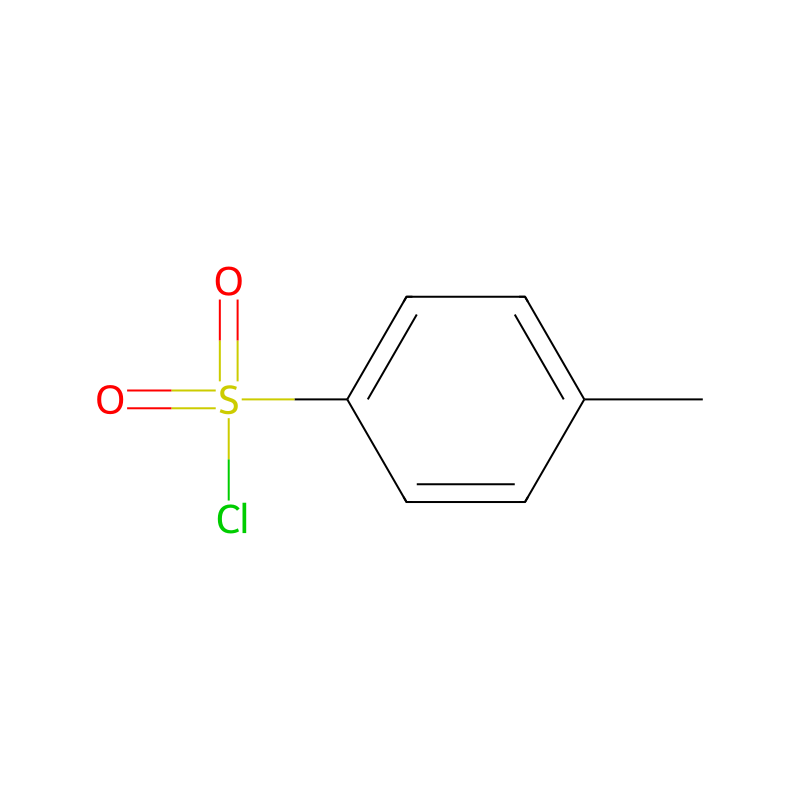
식별자 및 물리적 특성
| CAS No. | 98-59-9 |
|---|---|
| 분자식 | C7H7ClO2S |
| 평균 분자량 | 190.65 g/mol |
| 단동위원소 질량 | 189.98552814 g/mol |
| SMILES | Cc1ccc(S(=O)(=O)Cl)cc1 |
| InChIKey | YYROPELSRYBVMQ-UHFFFAOYSA-N |
| PubChem CID | 7397 |
| EC No. | 202-684-8 |
| DTXSID | DTXSID1052660 |
| 현지명 | 파라-톨루엔설폰일 염화물 |
화학 및 물리적 성질
| XLogP | 3 |
|---|---|
| 극성 표면적 | 42.5 |
| 수소 결합 공여자 수 | 0 |
| 수소 결합 수용자 수 | 2 |
| 회전 가능 결합 수 | 1 |
| 무거운 원자 수 | 11 |
| 형식 전하 | 0 |
| 복잡도 | 209 |
| 물질 분류 | Toxic Gases & Vapors -> Acid Halides |
| SpringerMaterials Properties | Schoenflies notation |
| LogP(분배 계수) | 3.49 |
| 밀도 | 1.3 g/cm³1.33 @25 °C1,006 g/cm3 |
| Color/Form | CRYSTALSTRICLINIC CRYSTALS FROM ETHER OR PETROLEUM ETHER |
| 용해도 | INSOL IN WATERFREELY SOL IN ALCOHOL, BENZENE, ETHERSolubility in water: reaction염화메틸렌: 0.2 g/mL, 투명 |
| 인화점 | 128 °C c.c. |
| 끓는 점 | 146 °C @ 15 MM HG134 °C10 mm Hg(lit.) |
| 녹는점 | 69-71 °C65-69 °C(lit.) |
| 증기 밀도 | Relative vapor density (air = 1): 6.6 |
| 증기압 | Vapor pressure, Pa at 25 °C: 0.161 [mm Hg] @88 °C1 mm Hg ( 88 °C) |
| Physical Description | P-toluene sulfonylchloride appears as a white to gray powdered solid with a distinctive odor. Insoluble in water and denser than water. Contact may irritate skin, eyes and mucous membranes. May be toxic by ingestion, inhalation and skin absorption. Used to make other chemicals.A white to gray solid[CAMEO] Hygroscopic[eChemPortal: SIDSUNEP] White or light yellow crystalline solid[MSDSonline]COLOURLESS-TO-YELLOW HYGROSCOPIC CRYSTALS WITH PUNGENT ODOUR. |
| 저장 조건 | Store below +30°C. |
| 물리적 상태 | 결정성 분말 |
| 색상 | 하얀색 |
| 용해도 | 가수분해 |
| Merck | 14,9534 |
| BRN | 607898 |
| 헨리 상수 | 1.0×100 mol/(m3Pa) at 25℃, Zhang et al. (2010) |
| 안정성 | 안정적인. 피해야 할 물질로는 강염기, 강산화제, 물 등이 있습니다. 수분에 민감합니다. |
| InChI | 1S/C7H7ClO2S/c1-6-2-4-7(5-3-6)11(8,9)10/h2-5H,1H3 |
| InChIKey | YYROPELSRYBVMQ-UHFFFAOYSA-N |
| SMILES | Cc1ccc(cc1)S(Cl)(=O)=O |
| NIST | Benzenesulfonyl chloride, 4-methyl-(98-59-9) |
| EPA | p-Toluenesulfonyl chloride (98-59-9) |
화학적 성질
White to yellow solid.
안전 및 규제
| GHS 분류 | This chemical does not meet GHS hazard criteria for 5.7% (53 of 926) of reports.DangerH290 (20%): May be corrosive to metals [Warning Corrosive to Metals]P234, P260, P261, P264, P264+P265, P271, P272, P280, P301+P330+P331, P302+P352, P302+P361+P354, P304+P340, P305+P354+P338, P316, P317, P319, P321, P332+P317, P333+P317, P362+P364, P363, P390, P403+P233, P405, P406, and P501 (click each P-code to see the statement)Aggregated GHS information provided per 926 reports by companies from 25 notifications to the ECHA C&L Inventory. Each notification may be associated with multiple companies. |
|---|---|
| 규제 정보 | Chemical: Benzenesulfonyl chloride, 4-methyl-Status: Active Update: 12-10-2020 https://echa.europa.eu/registration-dossier/-/registered-dossier/132424-Toluenesulphonyl chloride: Does not have an individual approval but may be used under an appropriate group standard |
| 운송 라벨(DOT) | Corrosive |
| 화재 위험 | Excerpt from ERG Guide 154 [Substances - Toxic and/or Corrosive (Non-Combustible)]:Combustible. Gives off irritating or toxic fumes (or gases) in a fire. |
| 건강 유해성 | Excerpt from ERG Guide 154 [Substances - Toxic and/or Corrosive (Non-Combustible)]: |
| 유해성 요약 | A skin, eye, and respiratory tract irritant[HSDB] Reacts violently with water evolving hydrochloric acidA corrosive substance that can cause injury to the skin, eyes, and respiratory tractInhalation may cause chemical pneumonitis[MSDSonline] Slowly hydrolyzes to strong acids (HCl and p-toluenesulfonic acid)Severely irritating to skin and eyes in animal testing[AIHA] Contact dermatitis documented in a chemist[Kanerva, p. 1841] |
| 반응성 그룹 | Acyl Halides, Sulfonyl Halides, and Chloroformates |
| UN 분류 | UN Hazard Class: 8UN Pack Group: II |
| Chemical Dangers | Decomposes on heating. This produces toxic and corrosive fumes including sulfur oxides and hydrogen chloride. Reacts with water and moist air. This produces hydrogen chloride (see ICSC 0163). |
| Packaging and Labelling | Unbreakable packaging. Put breakable packaging into closed unbreakable container. |
| Air and Water Reactions | Insoluble in water. |
| Hazard Classes and Categories | Met. Corr. 1 (20%) |
| 소화 | Excerpt from ERG Guide 154 [Substances - Toxic and/or Corrosive (Non-Combustible)]:Use dry powder, carbon dioxide. NO water. NO foam. |
| 응급 조치 | Fresh air, rest.Remove contaminated clothes. Rinse skin with plenty of water or shower.Rinse with plenty of water (remove contact lenses if easily possible). Refer immediately for medical attention.Rinse mouth. Give one or two glasses of water to drink. Refer for medical attention . |
| 응급 처치 | Excerpt from ERG Guide 154 [Substances - Toxic and/or Corrosive (Non-Combustible)]: |
| 안전 보관 | Dry. Well closed. Store in an area without drain or sewer access. |
| 비화재 누출 대응 | Excerpt from ERG Guide 154 [Substances - Toxic and/or Corrosive (Non-Combustible)]: |
| 누출 처리 | Personal protection: filter respirator for organic gases and particulates adapted to the airborne concentration of the substance. Do NOT let this chemical enter the environment. Sweep spilled substance into containers. Carefully collect remainder. Then store and dispose of according to local regulations. |
| Isolation and Evacuation | Excerpt from ERG Guide 154 [Substances - Toxic and/or Corrosive (Non-Combustible)]: |
| Eye Prevention | Wear safety goggles or eye protection in combination with breathing protection if powder. |
| Fire Prevention | NO open flames. |
| Inhalation Risk | A harmful concentration of airborne particles can be reached quickly when dispersed, especially if powdered. |
| Skin Prevention | Protective gloves. |
| Exposure Prevention | PREVENT DISPERSION OF DUST! |
| 유해 작용 | Dermatotoxin - Skin burns. |
| Signs and Symptoms | Cough.Redness. Pain.Sore throat. |
| ICSC Environmental Data | The substance is harmful to aquatic organisms. |
| Human Toxicity Excerpts | ...PRODUCE SEVERE PRIMARY IRRITATION OF EYES, SKIN, OR RESP TRACT. DELAYED VESICATION IS NOT UNCOMMON. SENSITIZATION MAY ALSO OCCUR... /ACID HALIDES/STRONG IRRITANT & VESICANT. /FROM TABLE/WHILE CUMULATIVE TOXIC EFFECTS ARE THEORETICALLY POSSIBLE IF ORIGINAL ORG ACID IS ALSO KNOWN TO BE CUMULATIVE IN ACTION...IRRITANT PROPERTIES OF THE HALIDE PREVENT VOLUNTARY EXPOSURE TO SIGNIFICANT AMOUNTS... /ACID HALIDES/ |
| Non-Human Toxicity Excerpts | REMSEN FAHLBERG SACCHARIN & ITS CONTAMINANTS (O-TOLUENE SULFONAMIDE (OTS), P-TOLUENE SULFONAMIDE (PTS), O-SULFAMOYL BENZOIC ACID, P-SULFAMOYL BENZOIC ACID) WERE TESTED FOR MUTAGENICITY. CONTAMINANTS OTS & ITS ISOMER PTS WERE MUTAGENIC IN AMES TEST & BASC TEST IN DROSOPHILA. |
| 수질 위해 등급(WGK) | 1 |
| TSCA 등재 상태 | TSCA listed |
| 운송 번호(UN) | UN 3261 8/PG 2 |
| 독성 | LD50 orally in Rabbit: 4680 mg/kg |
| 관세 코드 | 29049020 |
| 위험 문구(R) | 34-29-41-38 |
| 위험 표시 | C,Xi |
| 안전 문구(S) | 26-36/37/39-45-27-39 |
| 포장분류 | II |
| 위험 등급 | 8Eye Dam. 1Met. Corr. 1Skin Irrit. 2Skin Sens. 1 |
| 기존화학 물질 | KE-23481 |
| F 고인화성물질 | 9-21 |
| 위험 참고 사항 | Corrosive |
| 저장 분류 | 8A - Combustible corrosive hazardous materials |
| 유해 물질 데이터 | 98-59-9(Hazardous Substances Data) |
용도
일반 설명
Tosyl chloride is a white to gray powdered solid with a distinctive odor. It can be used in organic synthesis, to make nitriles, isocyanides and diimides.
제조 및 합성 방법
제조 방법
Tosyl chloride is a by-product from the production of ortho-toluenesulfonyl chloride (a precursor for the synthesis of the common food additive and catalyst saccharin), via the chlorosulfonation of toluene:CH3C6H5+ SO2Cl2→ CH3C6H4SO2Cl + HCl