
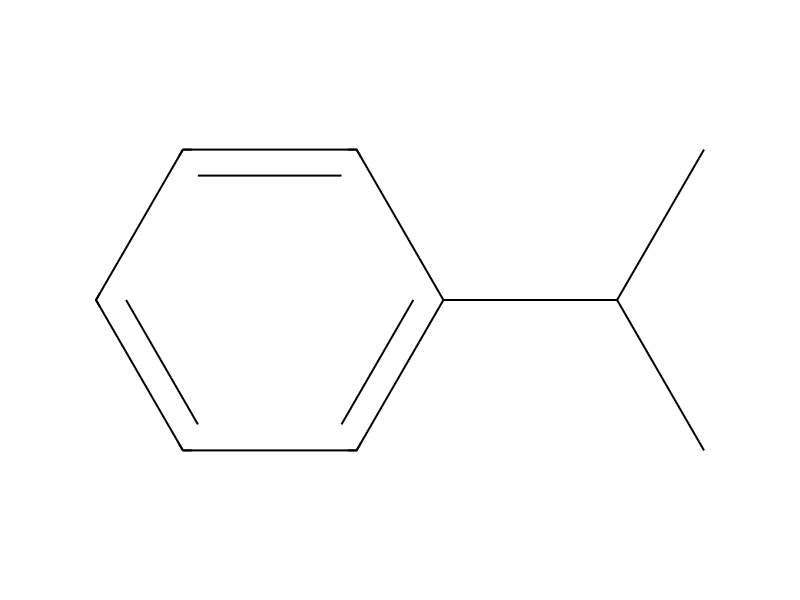
기본 정보
- 표준 SMILES
CC(C)c1ccccc1- InChIKey
RWGFKTVRMDUZSP-UHFFFAOYSA-N- 분자식
- C9H12
- 평균 분자량
- 120.19 g/mol
- 단동위원소 질량
- 120.09390038
개요
Cumene can cause cancer according to The National Toxicology Program.
이름 및 식별자
- 우선 이름
- Cumene
- IUPAC
- cumene
- 현지명
- 큐멘
- 영어명
- Cumene
- 분자식
- C9H12
- 분자량
- 120.19
이름 및 동의어
CUMENEIsopropylbenzene98-82-82-Phenylpropane(1-Methylethyl)benzeneCumolBenzene, (1-methylethyl)-IsopropylbenzolCumeenIsopropilbenzeneIsopropylbenzeen2-Fenilpropano
이름 더 보기
쿠멘큐멘(1-메틸에틸)벤젠메틸 에틸 벤젠아이소프로필벤젠큐몰프로판-2-일벤젠쿠메네i-propylbenzeneIsopropylbenzen(1-methylethyl)-benzenIsopropylbenzene:Cumene
2-Fenyl-propaan(propan-2-yl)benzeneIsopropyl-benzolBenzene, isopropylPropane, 2-phenylPropan-2-ylbenzeneRCRA waste number U055Phenol bottoms
데이터베이스 식별자
- CAS
101316-43-2、98-82-8- PubChem CID
- 7406
- DTXSID
DTXSID1021827- ChEMBL
CHEMBL1398949- ChEBI
CHEBI:34656- UNII
- 8Q54S3XE7K
- EC Number
- 202-704-5、309-848-9
- Nikkaji
- J3.581E
물성
구조 계산 물성
- XLogP
- 3.7
- 극성 표면적
- 0 Ų
- 수소 결합 공여자 수
- 0
- 수소 결합 수용자 수
- 0
- 회전 가능 결합 수
- 1
- 무거운 원자 수
- 9
- 형식 전하
- 0
- 복잡도
- 68.1
실험 및 물리화학적 성질
Chemical Classes
Hazardous Air Pollutants (HAPs)
Flammable agents - 3rd degree
Volatile Organic Compound (VOC) and(or) Waste-water effluent contaminant
SolventsSolvents -> Aromatic Solvents
CosmeticsCosmetics ingredient -> Other (Specify)
SpringerMaterials Properties13C nuclear magnetic resonance spectrum
PesticidesPesticide -> EPA IRIS
LogP
log Kow = 3.66
3.66
3.66
3.66
Odor
Gasoline-like odor
... Sharp, penetrating, aromatic odor
Density
0.866 at 59 °F (USCG, 1999) - Less dense than water; will float
Specific gravity: 0.862 at 20 °C/4 °C
% in saturated air at 38.3 °C and 760 mm Hg: 1.32; density of saturated vapor-air mixture at 38 °C and 760 mm Hg (Air = 1): 1.03
Relative density (water = 1): 0.90
0.86
0.864 @25 °C
Viscosity
0.737 mPa.sec at 25 °C
0.85 mm²/s at 25 °C
Color/FormColorless liquid
DispersionSpecific dispersion: 166.2
Solubility
Insoluble (NIOSH, 2024)
In water, 61.3 mg/L at 25 °C
In water, 50 mg/L at 20 °C
Miscible with ethanol, ethyl ether, acetone, benzene, petroleum ether, carbon tetrachloride
Soluble in many organic solvents
0.0613 mg/mL at 25 °C
물리화학적 성질
- 녹는점
- 96 °C · −96 °C(lit.)
- 끓는 점
- 152 · 152-154 °C(lit.)
- 밀도
- 0.864 g/mL · 0.864 g/mL at 25 °C(lit.)
- 증기 밀도
- 4.1 · 4.1 (vs air)
- 증기압
- 8 mm · 8 mm Hg ( 20 °C)
- 굴절률
- 20 · n20/D 1.491(lit.)
- 인화점
- 115 °F · 115 °F
- 저장 조건
- 2 · 2-8°C
- 용해도
- 0.05 g/L · 0.05g/L
- 물리적 상태
- 액체
- 산도 계수 (pKa)
- 14 · >14 (Schwarzenbach et al., 1993)
- 색상
- 무색의
- 냄새
- 강하고 약간 자극적입니다. 향기로운; 향긋한.
- Odor Threshold
- 0.0084 ppm · 0.0084ppm
- 폭발한계
- 0.8 · 0.8-6.0%(V)
- 수용성
- 알코올, 에테르, 아세톤, 벤젠, 사염화탄소에 용해됩니다. 물에 불용성.
- 비열
- 1.75 J/ · Cp(liquid): 1.75 J/(g·K), at 25℃
- Merck
- 14 · 14,2617
- BRN
- 1236613 · 1236613
- Henry's Law Constant
- 13 · 13.0, 15.3, and 23.9 at 28.0, 35.0, and 46.1 °C, respectively (headspace method, Hansen et al., 1993)
- Dielectric constant
- 2.4 · 2.4(20℃)
- 안정성
- 안정적이지만 보관 시 공기와 접촉하면 과산화물을 형성할 수 있습니다. 가열하거나 증류하기 전에 과산화물이 있는지 테스트하십시오. 타기 쉬운. 강한 산화제와 호환되지 않습니다.
- InChI
- 1S/C9H12/c1-8(2)9-6-4-3-5-7-9/h3-8H,1-2H3
- InChIKey
- RWGFKTVRMDUZSP-UHFFFAOYSA-N
- SMILES
- CC(C)c1ccccc1
- LogP
- 3.55 at · 3.55 at 20℃
- 표면장력
- 28.21 mN/m · 28.21mN/m at 20°C
- NIST
- Benzene, (1-methylethyl)-(98-82-8)
- EPA
- Cumene (98-82-8)
화학적 성질
cumene is oxidized to its hydroperoxide, which is used to produce propene oxide. The alcohol produced is subsequently converted back to cumene over a copper-chromium oxide catalyst to be reused in the process. The advantage of this process is that cumene is easier to hydroperoxidate (more stable).
안전 및 규제
GHS 분류
GHS Classification
Danger
H226: Flammable liquid and vapor [Warning Flammable liquids]
P203, P210, P233, P240, P241, P242, P243, P261, P271, P273, P280, P301+P316, P303+P361+P353, P304+P340, P318, P319, P331, P370+P378, P391, P403+P233, P403+P235, P405, and P501 (click each P-code to see the statement)
This chemical does not meet GHS hazard criteria for < 0.1% (1 of 3187) of reports.
Danger
H226 (> 99.9%): Flammable liquid and vapor [Warning Flammable liquids]
유해성 정보
Regulatory Information
Chemical: Benzene, (1-methylethyl)-
Hazard Traits - Carcinogenicity; Dermatotoxicity; Endocrine Toxicity; Hepatotoxicity and Digestive System Toxicity; Nephrotoxicity and Other Toxicity to the Urinary System; Neurotoxicity; Ocular Toxicity
Benzene, (1-methylethyl)- is listed on the EPA's Chemical Data Reporting (CDR) system. Manufacturers and importers of Benzene, (1-methylethyl)- are required to report information about their production and use of this chemical to the EPA under the Toxic Substances Control Act (TSCA). (40 eCFR Part 711)
Status: Active Update: 03-01-2023 https://echa.europa.eu/registration-dossier/-/registered-dossier/15387
Benzene, (1-methylethyl)-: HSNO Approval: HSR001184 Approved with controls
The New Jersey Worker and Community Right to Know Act requires public and private employers to provide information about hazardous substances at their workplaces. (N.J.S.A. 34:5A-1 et. seq.)
Other Safety InformationIMAP assessments - Benzene, (1-methylethyl)-: Environment tier I assessment
DOT LabelFlammable Liquid
Fire Hazards
Excerpt from ERG Guide 130 [Flammable Liquids (Water-Immiscible / Noxious)]:
· HIGHLY FLAMMABLE: Will be easily ignited by heat, sparks or flames.
· HIGHLY FLAMMABLE: Will be easily ignited by heat, sparks or flames.
Flammable. Above 31 °C explosive vapour/air mixtures may be formed.
Fire PotentialFlammable liquid.
Health Hazards
Narcotic action with long-lasting effects; depressant to central nervous system. (USCG, 1999)
· May cause toxic effects if inhaled or absorbed through skin.
· May cause toxic effects if inhaled or absorbed through skin.
Hazards Summary
Cumene is used in a variety of petroleum products. Acute (short-term) inhalation exposure to cumene may cause headaches, dizziness, drowsiness, slight incoordination, and unconsciousness in humans. Cumene has a potent central nervous system (CNS) depressant action characterized by a slow induction period and long duration of narcotic effects in animals. Cumene is a skin and eye irritant. No information is available on the chronic (long-term), reproductive, developmental, or carcinogenic effects of cumene in humans. Animal studies have reported increased liver, kidney, and adrenal weights from inhalation exposure to cumene. EPA has classified cumene as a Group D, not classifiable as to human carcinogenicity.
Liver toxicity occurs in mice inhaling 500-1000 ppm daily for 17 days. TLV Basis is upper respiratory tract adenoma and neurological effects. [ACGIH] Inhalation of high concentrations may cause CNS effects; A skin, eye, and respiratory tract irritant; [ICSC] Fatty liver changes are noted in animals exposed to lethal doses; [HSDB]
DOT ID and Guide
1918 130
1918 130
1918 130
Reactive GroupHydrocarbons, Aromatic
EC ClassificationSymbol: Xn, N; R: 10-37-51/53-65; S: (2)-24-37-61-62; Note: C
UN ClassificationUN Hazard Class: 3; UN Pack Group: III
Special Reports
ITC/USEPA; Information Review #464 (Draft) Cumene (1984)
National Research Council; The Alkyl Benzenes (1981)
U.S. Environmental Protection Agency's Integrated Risk Information System (IRIS) for Cumene (98-82-8) Toxicological Review in Adobe PDF.[Available from, as of August, 1997: http://www.epa.gov/iris/]
안전 및 보호
Fire Fighting
Excerpt from ERG Guide 130 [Flammable Liquids (Water-Immiscible / Noxious)]:
Use powder, AFFF, foam, carbon dioxide. In case of fire: keep drums, etc., cool by spraying with water.
First Aid Measures
Fresh air, rest. Refer for medical attention.
Remove contaminated clothes. Rinse and then wash skin with water and soap.
Rinse with plenty of water (remove contact lenses if easily possible).
Rinse mouth. Do NOT induce vomiting. Refer immediately for medical attention.
Accidental Release Measures
· CALL 911. Then call emergency response telephone number on shipping paper. If shipping paper not available or no answer, refer to appropriate telephone number listed on the inside back cover.
· ELIMINATE all ignition sources (no smoking, flares, sparks or flames) from immediate area.
· CALL 911. Then call emergency response telephone number on shipping paper. If shipping paper not available or no answer, refer to appropriate telephone number listed on the inside back cover.
· ELIMINATE all ignition sources (no smoking, flares, sparks or flames) from immediate area.
First Aid
Excerpt from NIOSH Pocket Guide for Cumene:
General First Aid:
General First Aid:
(General first aid procedures)
Safe StorageFireproof. Separated from strong oxidants and acids. Cool. Keep in the dark. Store only if stabilized. Store in an area without drain or sewer access. Provision to contain effluent from fire extinguishing.
Exposure Control and Personal Protection
· Wear positive pressure self-contained breathing apparatus (SCBA).
· Wear positive pressure self-contained breathing apparatus (SCBA).
10.0 [ppm]
Fire Fighting Procedures
To fight fire, use foam, carbon dioxide, dry chemical.
Use water spray, dry chemical, foam, or carbon dioxide. Use water spray to keep fire-exposed containers cool.
Storage Conditions
... Precautions ... such as mounds around storage tanks, sills at doorways or especially designed floors /are needed/ to limit spread of escaping liquid. Open flames & other sources of ignition should be excluded where cumene is stored.
Outside or detached storage is preferred. Inside storage should be in a standard flammable liquids storage warehouse, room, or cabinet. Separate from oxidizing materials, nitric acid, sulfuric acid.
Storage temperature: Ambient.
Cleanup Methods
Personal protection: filter respirator for organic gases and vapors adapted to the airborne concentration of the substance. Collect leaking and spilled liquid in sealable containers as far as possible. Absorb remaining liquid in sand or inert absorbent. Then store and dispose of according to local regulations. Do NOT let this chemical enter the environment.
Remove all ignition sources; ventilate /the/ area of spill or leak. For small quantities absorb on paper towels /and/ evaporate in a safe place (such as a fume hood). Allow sufficient time for evaporating vapors to completely clear the hood ductwork.
Nonfire Spill ResponseExcerpt from ERG Guide 130 [Flammable Liquids (Water-Immiscible / Noxious)]:
Disposal Methods
Generators of waste (equal to or greater than 100 kg/mo) containing this contaminant, EPA hazardous waste number U055, must conform with USEPA regulations in storage, transportation, treatment and disposal of waste.
Cumene is a waste chemical stream constituent which may be subjected to ultimate disposal by controlled incineration.
A good candidate for liquid injection incineration at a temperature range of 650 to 1,600 °C and a residence time of 0.1 to 2 seconds. A good candidate for rotary kiln incineration at a temperature range of 820 to 1,600 °C and residence times of seconds for liquids and gases, and hours for solids. A good candidate for fluidized bed incineration at a temperature range of 450 to 980 °C and residence times of seconds for liquids and gases, and longer for solids.
... Large quantities can be collected and atomized in a suitable combustion chamber. Combustion may be improved by mixing with a flammable liquid. Cumene liquid should not be allowed to enter a confined space, such as a sewer, because of the possibility of an explosion.
For more Disposal Methods (Complete) data for Isopropylbenzene (6 total), please visit the HSDB record page.
Spillage Disposal
Personal protection: chemical protection suit and filter respirator for organic gases and vapours adapted to the airborne concentration of the substance. Collect leaking and spilled liquid in sealable containers as far as possible. Absorb remaining liquid in sand or inert absorbent. Then store and dispose of according to local regulations. Do NOT let this chemical enter the environment.
독성 정보
Body Burden
Isopropylbenzene has been detected at 0.13 ug/hour(1) and detected but not quantified(2) in human expired air from non-smoking individuals.
Isopropylbenzene concentration in air samples from non-smoking married females residing in New Jersey and Pennsylvania, in both smoking and nonsmoking homes and nonsmoking workplaces(1).[Table#628]
TreatmentTreatment is mainly symptomatic and supportive. Gastric lavage, emesis, and the administration of activated charcoal should be avoided, as vomiting increases the risk of aspiration. (A600)
Target Organs
Endocrine
Eyes, skin, respiratory system, central nervous system
Health EffectsPetroleum distillates are aspiration hazards and may cause pulmonary damage, central nervous system depression, and cardiac effects such as cardiac arrhythmias. They may also affect the blood, immune system, liver, and kidney. (A600, L1297)
Ecotoxicity Values
LC50; Species: Daphnia magna (Water flea); Concentration: 0.6 ppm for 48 hr /Conditions of bioassay not specified/
LD50; Species: Agelaius phoeniceus (red-winged blackbird) oral 98 mg/kg
LC50; Species: Pimephales promelas (fathead minnow); Conditions: flow-through bioassay with measured concentrations, 25.4 °C, dissolved oxygen 6.6 mg/L, hardness 44.3 mg/L calcium carbonate, alkalinity 42.1 mg/L calcium carbonate, and pH 7.58; Concentration: 6.32 mg/L for 96 hr (confidence limit 6.04-6.61 mg/L)
EC50; Species: Pimephales promelas (fathead minnow); Condtions: flow-through bioassay with measured concentrations, 25.4 °C, dissolved oxygen 6.6 mg/L, hardness 44.3 mg/L calcium carbonate, alkalinity 42.1 mg/L calcium carbonate, and pH 7.58; Concentration: 6.32 mg/L for 96 hr (confidence limit 6.04-6.61 mg/L); Effect: loss of equilibrium. Affected fish lost schooling behavior and swam in a corkscrew/spiral pattern. They were hyperactive and darkly colored, had increased respiration, and lost equilibrium prior to death.
For more Ecotoxicity Values (Complete) data for Isopropylbenzene (14 total), please visit the HSDB record page.
Environmental Fate
TERRESTRIAL FATE: Based on a classification scheme(1), an estimated Koc value of 700(SRC), determined from a structure estimation method(2), indicates that isopropylbenzene is expected to have low mobility in soil(SRC). Volatilization of isopropylbenzene from moist soil surfaces is expected to be an important fate process(SRC) given a Henry's Law constant of 1.15X10⁻² atm-cu m/mole(3). Isopropylbenzene is expected to volatilize from dry soil surfaces(SRC) based upon a vapor pressure of 4.5 mm Hg at 25 °C(4). A biodegradation half-life of 2 days (rate constant = 0.322/day) was calculated for isopropylbenzene added to soil microcosms from a weathered petroleum spill site(5), indicating that biodegradation may be an important environmental fate process in soil(SRC).
AQUATIC FATE: Based on a classification scheme(1), an estimated Koc value of 700(SRC), determined from a structure estimation method(2), indicates that isopropylbenzene is expected to adsorb to suspended solids and sediment(SRC). Volatilization from water surfaces is expected(3) based upon a Henry's Law constant of 1.15X10⁻² atm-cu m/mole(4). Using this Henry's Law constant and an estimation method(3), volatilization half-lives for a model river and model lake are 3 hrs and 4 days, respectively(SRC). According to a classification scheme(5), a BCF of 35.5(6), suggests the potential for bioconcentration in aquatic organisms is moderate(SRC). Isopropylbenzene, incubated in a sediment/freshwater ecocore, exhibited a mineralization rate of 0.02/day, corresponding to a half-life of 34.6 days(7), indicating that biodegradation may be an important environmental fate process in water(SRC).
AQUATIC FATE: In an experiment to study the disappearance of organic compounds found in crude oil during an oil spill, isopropylbenzene was found to disappear (combination of evaporation and dissolution) within 90 minutes of being spilled into seawater(1). In a similar experiment, water samples taken from an oil spill in the Canadian Arctic waters in the Ragged Channel revealed that after 6 hours, isopropylbenzene could not be detected in the aromatic fraction(2). Isopropylbenzene has a reported volatilization half-life in water ranging from 3.2 to 5.8 hrs(3).
ATMOSPHERIC FATE: According to a model of gas/particle partitioning of semivolatile organic compounds in the atmosphere(1), isopropylbenzene, which has a vapor pressure of 4.5 mm Hg at 25 °C(2), is expected to exist solely as a vapor in the ambient atmosphere. Vapor-phase isopropylbenzene is degraded in the atmosphere by reaction with photochemically-produced hydroxyl radicals(SRC); the half-life for this reaction in air is estimated to be 1.5 days(SRC), calculated from its rate constant of 6.5X10⁻¹² cu cm/molecule-sec at 25 °C(3). Isopropylbenzene exhibits a UV absorption of 258 nm in cyclohexane(4) and, therefore, is not expected to be susceptible to direct photolysis by sunlight(SRC).
Food Survey Values
Trace quantities of isopropylbenzene have been detected in the total volatiles of Sapodilla fruit (Achras sapota)(1) and Australian honey(2). Isopropylbenzene was detected not quantified in fried chicken(3), Concord grapes (Vitis labrusca) and Zinfandel wine(4), cooked rice(5), oat groats (Avena sativa)(6), Idaho Russet Burbank baked potatoes(7), Beaufort cheese from the French Alps(8), and fried bacon(9). Isopropylbenzene has been identified as one of several volatile hydrocarbons found in chicken and pork(10).
Seventy foods were analyzed for volatiles from 1996-2000 as part of the US FDA Total Diet Program(1).
Adverse EffectsNeurotoxin - Acute solvent syndrome
Exposure Routes
The substance can be absorbed into the body by inhalation, through the skin and by ingestion.
inhalation, skin absorption, ingestion, skin and/or eye contact
Oral (L400) ; inhalation (L400) ; dermal (L400)
Milk ConcentrationsEXPERIMENTAL: Analysis was conducted of 35 cow's milk samples purchased from 8 grocery stores in Las Vegas, NV January 2002 through February 2002; method detection limit = 0.03 ng/mL(1).
Toxicity Summary
IDENTIFICATION: Cumene is a water insoluble petrochemical used in the manufacture of several chemicals, including phenol and acetone. HUMAN EXPOSURE: In humans, cumene is metabolized primarily to the secondary alcohol. 2-phenyl-2-propranol. This alcohol and its conjugates are readily excreted by humans. No data are available with which to quantify human exposure. It is not possible to assess its potential for carcinogenicity in humans, because long term carcinogenicity studies with the chemical have not been performed. ANIMAL/PLANT STUDIES: Cumene is metabolized primarily to the secondary alcohol, 2-phenyl-2-propanol in animals. This alcohol and its conjugates are readily excreted by rodents. Increases in organ weights, primarily the kidney weughts are the most prominent effects observed in rodents readily exposed to cumene by either the oral or inhalation route. No adverse effects were observed in rat or rabbit fetuses whose mothers had been exposed to cumene during fetal development. Although no multigenerational reproductive studies have been performed using cumene, the rapid metabolism and excretion, coupled with the lack of effects on sperm morphology in a subchronic study, suggest that it has a low potential for reproductive toxicity. Most genotoxicity test data with cumene are negative. Inadequate data, especially measured exposure information, exist to allow a quantitative evaluation of the risk to populations of aquatic ot terrestrial organisms from exposure to cumene. Values indicate a slight potential for bioconcentration in fish. There are no data on the bioaccumulation in fish.
Petroleum distillates are central nervous system depressants and cause pulmonary damage. (A600)
Ecotoxicity Excerpts
/AQUATIC SPECIES/ Mytilus edulis (mussel larvae) /blue mussel/: no significant alteration of growth rate at concentrations of 1 to 50 ppm.
/AQUATIC SPECIES/ Cumene at 0.5 mL/L within 24 hr caused 100% mortality of both crabs Asellus aquaticus L and Gammarus fossarum Koch (Isopoda, Amphipoda).
/AQUATIC SPECIES/ One-day exposure to cumene at 0.05 and 0.1% caused 100% death of Radix peregra /wandering pond snail/ and Lymnea stagnalis /great pond snail/, respectively. ... Water temperature, pH, and total hardness had no effect on the toxic effect of the compound. The only important factor was oxygen, so the water was aerated during the experiments.
규제 정보
RCRA Requirements
U055; As stipulated in 40 CFR 261.33, when cumene, as a commercial chemical product or manufacturing chemical intermediate or an off-specification commercial chemical product or a manufacturing chemical intermediate, becomes a waste, it must be managed according to Federal and/or State hazardous waste regulations. Also defined as a hazardous waste is any residue, contaminated soil, water, or other debris resulting from the cleanup of a spill, into water or on dry land, of this waste. Generators of small quantities of this waste may qualify for partial exclusion from hazardous waste regulations (40 CFR 261.5).
TSCA Requirements
Pursuant to section 8(d) of TSCA, EPA promulgated a model Health and Safety Data Reporting Rule. The section 8(d) model rule requires manufacturers, importers, and processors of listed chemical substances and mixtures to submit to EPA copies and lists of unpublished health and safety studies. Cumene is included on this list. Effective date: 12/28/84; Sunset date: 12/28/94.
Atmospheric Standards
This action promulgates standards of performance for equipment leaks of Volatile Organic Compounds (VOC) in the Synthetic Organic Chemical Manufacturing Industry (SOCMI). The intended effect of these standards is to require all newly constructed, modified, and reconstructed SOCMI process units to use the best demonstrated system of continuous emission reduction for equipment leaks of VOC, considering costs, non air quality health and environmental impact and energy requirements. Cumene is produced, as an intermediate or a final product, by process units covered under this subpart.
Listed as a hazardous air pollutant (HAP) generally known or suspected to cause serious health problems. The Clean Air Act, as amended in 1990, directs EPA to set standards requiring major sources to sharply reduce routine emissions of toxic pollutants. EPA is required to establish and phase in specific performance based standards for all air emission sources that emit one or more of the listed pollutants. Cumene is included on this list.
CERCLA Reportable Quantities
Persons in charge of vessels or facilities are required to notify the National Response Center (NRC) immediately, when there is a release of this designated hazardous substance, in an amount equal to or greater than its reportable quantity of 5000 lb or 2270 kg. The toll free number of the NRC is (800) 424-8802. The rule for determining when notification is required is stated in 40 CFR 302.4 (section IV. D.3.b).
State Drinking Water Guidelines
(CA) CALIFORNIA 770 ug/l
(FL) FLORIDA 700 ug/l
(MN) MINNESOTA 300 ug/l
(NH) NEW HAMPSHIRE 800 ug/l
안전 데이터
- OEB
- A
- OEL
- TWA: 50 ppm (245 mg/m3) [skin]
- wgk
- 1
- IDLA
- 900 ppm [10% LEL]
- tsca
- TSCA listed
- rtecs
- GR8575000
- ridadr
- UN 1918
- 독성
- LD50 orally in rats: 2.91 g/kg (Smyth)
- HS 번호
- 29027000
- risk_code
- 10-37-51/53-65-39/23/24/25-23/24/25-11
- hazard_code
- Xn,N,T,F
- safety_code
- 24-37-61-62-45-36/37-16
- 포장분류
- III
- 위험 등급
- 3
- 기존화학 물질
- KE-23957
- F 고인화성물질
- 10
- 자연 발화 온도
- 797 °F
- Hazard Classifications
- Aquatic Chronic 2Asp. Tox. 1Carc. 1BFlam. Liq. 3STOT SE 3
- 스토리지 클래스
- 3 - Flammable liquids
- 유해 물질 데이터
- 98-82-8(Hazardous Substances Data)
화학 및 산업
약리 정보
Mechanism of Action
The alkylbenzenes, incl isopropyl benzene, were investigated for their property as sensory irritants in mice. A model for the sensory irritating action of alkylbenzenes was proposed on the basis of their physical interaction with a receptor protein in a lipid layer.
Biological Half-Life
Groups of Fischer 344 rats (minimum 4/sex/group) were studied after being exposed to radiolabeled cumene (>98% purity) either by single intravenous dose (35 mg/kg); single oral gavage doses (33 or 1,350 mg/kg); single 6-hr nose-only inhalation (100, 500, or 1,500 ppm); or eight daily oral gavage doses (33 mg/kg), with the eighth dose being radiolabeled. ... Elimination of cumene from the blood appeared as monoexponential with a half-life calculated between 9 to 16 hr for the gavage doses. The pattern of cumene disappearance from the blood in the inhalation studies also appeared to be monoexponential with the half-lives increasing with dose, from 3.9 hr at 100 ppm, to 4.6 hr at 500 ppm, to 6.6 hr at 1,200 ppm.
Metabolism/Metabolites
Cumene is absorbed readily by the mammalian system and oxidized at the side chain, one of the metabolites being the dimethylphenylcarbinol glucuronide.
In rabbits, 90% of a 2 mL oral dose was accounted for as side-chain oxidation products of cumene, which were excreted as glucuronide conjugates. About 40% of the dose was excreted as the glucuronide of 2-phenyl-2-propanol, 25% as the glucuronide of 2-phenyl-1-propanol, and 25% as the ester-glucuronide of 2-phenyl-propionic acid.
In the rat, (14)C-labeled cumene was administered either orally or by inhalation and was rapidly absorbed by either route. About 90% of the radiolabeled compound was excreted within 72 hours, mostly as conjugated metabolites in urine. The major urinary metabolites were 2-phenylpropan-2-ol, 2-phenylpropane-1,2-diol, and 2-phenylpropionic acid. Small amounts were also excreted in the feces and breath. Cumene and metabolites were widely distributed in the body after administration, with the highest amounts in fat, followed by kidney, liver, and bone.
Human volunteers (five men and five women) were exposed head-only for 8-hr periods to cumene vapors. Every 10 days, each subject was exposed to one of three different concentrations of cumene, 240, 480, or 720 mg/cu m. Samples of exhaled air were collected (method not clear from text) during exposures for estimation of respiratory tract retention, and urine was collected from each subject during exposure and for 40 hr thereafter. The mean respiratory tract retention was reported to be 50% (range, 45 to 64%), even at the highest concentration, although no data is given to support derivation of these values. Excretion of cumene, estimated from urinary amounts of 2-phenyl-2-propanol, was maximal after 6 to 8 hr of exposure and approached zero at 40 hr postexposure. The plot of time against urinary excretion of this metabolite revealed a rapid early phase (half life 2 hr) and a slower later phase (half life 10 hr). Approximately 35% of the calculated absorbed dose was excreted as 2-phenyl-2-propanol during the 8 hr of exposure and 40 hr postexposure.
For more Metabolism/Metabolites (Complete) data for Isopropylbenzene (7 total), please visit the HSDB record page.
Volatile hydrocarbons are absorbed mainly through the lungs, and may also enter the body after ingestion via aspiration. (A600)
Absorption, Distribution and Excretion
Groups of Fischer 344 rats (minimum 4/sex/group) were studied after being exposed to radiolabeled cumene (>98% purity) either by single intravenous dose (35 mg/kg); single oral gavage doses (33 or 1,350 mg/kg); single 6-hr nose-only inhalation (100, 500, or 1,500 ppm); or eight daily oral gavage doses (33 mg/kg), with the eighth dose being radiolabeled. The inhalation studies indicated rapid absorption, with detectable levels of cumene appearing in the blood within 5 min of the beginning of exposure. The gavage studies showed that cumene was absorbed readily via this route, with maximum blood levels occurring at the earliest time point sampled (4 hr) for the lower dose and at 8 to 16 hr for the higher dose. Elimination of cumene from the blood appeared as monoexponential with a half-life calculated between 9 to 16 hr for the gavage doses. The pattern of cumene disappearance from the blood in the inhalation studies also appeared to be monoexponential with the half-lives increasing with dose, from 3.9 hr at 100 ppm, to 4.6 hr at 500 ppm, to 6.6 hr at 1,200 ppm. Analysis of tissues (presumably immediately after exposure) indicated that several tissues, including adipose, liver, and kidney, all had elevated tissue/blood ratios of cumene, regardless of the route of cumene administration, indicating thorough distribution of cumene throughout the body independent of administration route. In general, very similar rates of elimination were observed across routes and exposure concentrations, with urine being the major route of elimination (70%) at any dose administered by any route. Total body clearance was rapid and complete, less than 1% of the absorbed fraction being present in the body 72 hr after the highest exposure regime examined, 1,200 ppm for 6 hr.
In the rat, (14)C-labeled cumene was administered either orally or by inhalation and was rapidly absorbed by either route. About 90% of the radiolabeled compound was excreted within 72 hours, mostly as conjugated metabolites in urine. ... Small amounts were also excreted in the feces and breath. Cumene and metabolites were widely distributed in the body after administration, with the highest amounts in fat, followed by kidney, liver, and bone.
Human volunteers (five men and five women) /were exposed/ head only to one of three different concentrations of cumene vapors (240, 480, or 720 mg/cu m ([49, 98, or 147 ppm)) for 8 hr every 10 days. Exhaled breath samples (10 cu cm) were collected near the beginning and at the end of the exposure from a tube placed in the breathing zone. The total amount of cumene absorbed during exposure, calculated from retention, ventilation, and exposure duration, was nearly twice as high at all exposure levels in the males (466-1400 mg) as in the females (270-789 mg). The respiratory tract absorption ranged from 45% to 64% depending on the time of exposure, with the overall mean retention estimated at 50%.
90% of an oral dose of cumene /was recovered as metabolites/ from rabbit urine.
For more Absorption, Distribution and Excretion (Complete) data for Isopropylbenzene (8 total), please visit the HSDB record page.
Cellular LocationsMembrane
용도 및 제조
Uses
Cumene is used as a thinner for paints, lacquers, and enamels and as a component of high octane fuels. Cumene is also used in the manufacture of phenol, acetone, acetophenone, and methylstyrene.
In occupational settings, the main route of exposure to cumene is via inhalation during cumene manufacturing, processing, and use, primarily in the manufacture of phenol and acetone. [ACGIH]
Painting (Solvents) [Category: Paint]
Used primarily in the production of phenol and acetone
Used as a thinner for paints, enamels, and lacquers and as a solvent for fats and resins and as such has been suggested as a replacement for benzene.
Component of high octane aviation fuel used in WWII; in production of styrene /Former/
ImpuritiesSulfur compounds 2 ppm, Max; Olefinic materials 200-700 ppm
U.S. Exports
(1972) NEGLIGIBLE
(1975) 2.07X10+10 GRAMS
(1984) 2.24X10+9 g
Exports totaled 465 million lbs in 1998.
U.S. Imports
(1972) 2.02X10+11 GRAMS
(1975) 9.50X10+10 GRAMS
U.S. Production
2023: 4,000,000,000 - <5,500,000,000 lb
(1972) 1.04X10+12 GRAMS
(1975) 9.09X10+11 GRAMS
(1984) 1.70X10+12 g
(1988) 4.5X10+9 lb
For more U.S. Production (Complete) data for Isopropylbenzene (13 total), please visit the HSDB record page.
Consumption Patterns
For phenol; 34% for acetone; 1% for alpha-methylstyrene and misc applications (1972)
Oxidation for phenol/acetone production; 1.8% polymerization for alpha-methylstyrene; 0.2% exports (1985)
CHEMICAL PROFILE: Cumene. Demand: 1986: 3.7 billion lb; 1987: 4.0 billion lb; 1991 /projected/: 4.3 billion lb. (Includes exports; in addition, 328 billion lb were imported in 1986).
More than 95% of the cumene produced is used as feedstock for the production of phenol and acetone.
Demand: 1998, 6.7 billion lbs; 1999, 6.9 billion lbs; 2003, 8.0 billion lbs
Consumer UsesNot Known or Reasonably Ascertainable
Industry UsesSolvent
Methods of Manufacturing
In the UOP /Universal Oil Products/ process a fixed bed consisting of polyphosphoric acid on a silica support is used as the catalyst. The reaction takes place mainly in the gas phase at greater than or equal to 200 °C and greater than or equal to 2 MPa. Pure propene or propene with a propane content greater than or equal to 5% is used as raw material, together with benzene (minimum purity 99.5%) in up to 12-fold molar excess; this leads to high distillation costs in the product work-up. The yield of cumene is 97% based on benzene and 90% based on propene. The losses are caused by overalkylation and oligomerization of the propene. The high-boiling residue contains 50 - 60% diisopropylbenzenes (o- : m- : p- ratio 1 : 2 : 2 - 3) and numerous other byproducts. It is not possible to recycle these products to the alkylation reactor, because polyphosphoric acid has no transalkylation properties.
The second industrial process works in the liquid phase at 50 - 80 °C; aluminum chloride or the liquid double compound formed from aluminum chloride, (isopropyl-)benzene, and hydrogen chloride is employed as the catalyst. This complex is separated from the product stream, as a heavy phase and is returned to the alkylation reactor. Except for a small purge stream higher alkylated byproducts are recycled to the alkylation step, whereby essentially complete use of both benzene and propene bound in di- and triisopropylbenzenes is achieved by transalkylation. The yield of cumene, referred to benzene and propene, is 99% and 98 %, respectively.
(1) Alkylation of benzene with propylene (phosphoric acid catalyst), (2) distillation from coal tar naptha fractions or from petroleum.
Manufactured from propylene and benzene utilizing an acidic catalyst, eg, solid phosphoric acid.
High purity cumene can be easily produced from either refining or steam cracker-derived propylene.
Formulations/Preparations
Grades: Technical, research, pure.
0.16% wt in gasoline
99.9% MIN ASSAY
Household Products
Cosmetics product ingredient: Cumene
Information on 118 consumer products that contain Cumene in the following categories is provided:
General Manufacturing Information
Oil and Gas Drilling, Extraction, and Support activities
Benzene, (1-methylethyl)-: ACTIVE
Occurs in a variety of petroleum distillates and commercial solvents
Union Carbide's 640 million lb per yr Penuelas, PR and Marathon Oil's 210 million lb per yr Texas City, TX plant are on standby; Monsanto closed its Alvin, TX plant IN 1983
Isopropylbenzene forms a charge-transfer complex with ozone in a number of solvents. When this charge-transfer complex was photolyzed at -75 °C or warmed greater than -40 °C, reactions formed cumyl hydrotrioxide and ring-ozonated products (in a ratio of 70/30).
Thirty-second highest-volume chemical produced in U.S. (1991).
응용 분야
개요Cumene is a common name for isopropylbenzene, an organic compound. Cumene is a volatile colorless liquid at room temperature with a characteristic sharp, penetrating, aromatic odor. It is insoluble in water but is soluble in alcohol and many other organic solvents. Cumene is structurally a member of the alkyl aromatic family of hydrocarbons, which also includes toluene (methylbenzene) and ethylbenzene.Cumene can be found in crude oil, refined fuels, and is a part of processed highoctane gasoline. Cumene is manufactured by reacting benzene with propylene at elevated temperature and pressure in the presence of a catalyst. It is considered an environmental pollutant because it is a natural component of petroleum and is present in tobacco smoke. Cumene vapor can be absorbed by the respiratory tract. Sufficiently high levels of exposure to cumene causes central nervous system (CNS) depression leading to death, internal bleeding of numerous organs, as well as irritation of the eyes and respiratory system, skin, and mucous membranes. Cumene is a high production volume chemical.
용도Around 98% of cumene is used in the production of phenol and its coproduct, acetone, using cumene hydroperoxide as chemical intermediate. However, the demand for cumene is largely dependent on the performance of phenol’s derivatives, which have resulted in healthy growth rates in demand for cumene. It is also used as a starting material in the production of acetophenone, α-methylstyrene, diisopropylbenzene, and dicumylperoxide. Cumene is used as a thinner for paints, lacquers, and enamels. It is also used in the manufacture of acetophenone, methylstyrene, and other chemicals commonly found in home cleaning products. Minor uses of cumene include as a constituent of some petroleum-based solvents, such as naphtha; in gasoline blending diesel fuel and highoctane aviation fuel; and as a raw material for peroxides and oxidation catalysts such as polymerization catalysts for acrylic and polyester-type resins. It is also a good solvent for fats and resins and has been suggested as a replacement for benzene in many of its industrial applications.
일반 설명Pharmaceutical secondary standards for application in quality control, provide pharma laboratories and manufacturers with a convenient and cost-effective alternative to the preparation of in-house working standards.
상·하류 제품 정보
상류 원료
하류 제품
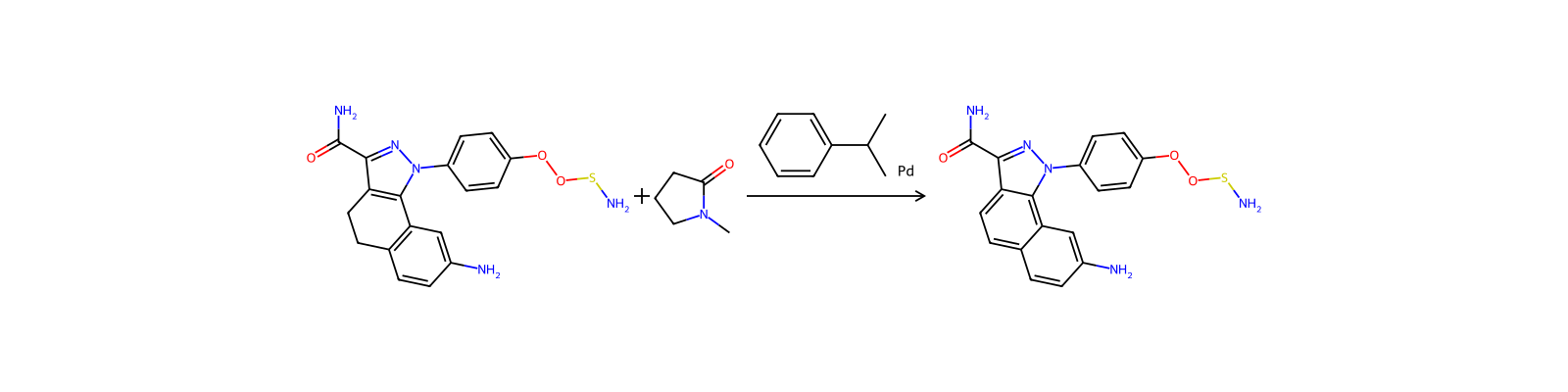
관련 반응
334건





연결된 노트
불러오는 중…