홈MCP워크벤치Skills
홈워크벤치알림마이페이지
llms.txt · MCP 가이드개인정보처리방침 · 이용약관 · 지원v1.8.0
  1. 홈
  2. /화합물

P-클로로아세트페논

P-Chloroacetophenone

HCID 7467
새 노트새 반응견적 요청하기
인쇄 미리보기

데이터를 보충하는 중입니다. 잠시 후 페이지를 새로 고치면 최신 내용을 볼 수 있습니다

기본 정보개요이름 및 식별자물성안전 및 규제화학 및 산업관련 반응화합물 노트
부분 구조 검색유사 구조 찾기

기본 정보

CAS
99-91-2
표준 SMILES
CC(=O)c1ccc(Cl)cc1
InChIKey
BUZYGTVTZYSBCU-UHFFFAOYSA-N
분자식
C8H7ClO
평균 분자량
154.59 g/mol
단동위원소 질량
154.01854252

개요

P-chloroacetophenone is an organic molecular entity.

이름 및 식별자

우선 이름
P-Chloroacetophenone
IUPAC
1-(4-chlorophenyl)ethanone
현지명
P-클로로아세트페논
영어명
4'-Chloroacetophenone
분자식
C8H7ClO
분자량
154.59

이름 및 동의어

4'-Chloroacetophenone99-91-21-(4-Chlorophenyl)ethanone4-ChloroacetophenoneP-CHLOROACETOPHENONEEthanone, 1-(4-chlorophenyl)-1-(4-Chlorophenyl)Ethan-1-OneUSAF DO-11-(4-Chlorophenyl)-ethanoneMethyl p-chlorophenyl ketonep-Chlorophenyl methyl ketoneZV4A71K303
이름 더 보기
P-클로로아세트페논p-클로로아세토페논4'-클로로아세토페논1-(4-chlorophenyl)-ethanonethanone,1-(4-chlorophenyl)-[qr]usafdo-1AKOS 90577usafdo-1[qr]p-chlorophenoneAKOS BBS-00003217
NSC-6115DTXSID1052668RefChem:169294DTXCID2031241202-800-74-AcetylchlorobenzeneAcetophenone, 4'-chloro-p-Chloracetophenone

데이터베이스 식별자

CAS
99-91-2
PubChem CID
7467
DTXSID
DTXSID1052668
ChEMBL
CHEMBL608419
ChEBI
CHEBI:230611
UNII
ZV4A71K303
EC Number
202-800-7
Nikkaji
J38.176D

물성

구조 계산 물성보충 중

XLogP
2.3
극성 표면적
17.1 Ų
수소 결합 공여자 수
0
수소 결합 수용자 수
1
회전 가능 결합 수
1
무거운 원자 수
10
형식 전하
0
복잡도
125

실험 및 물리화학적 성질

Chemical ClassesOther Classes -> Aromatic Ketones, Halogenated
SpringerMaterials Properties13C nuclear magnetic resonance spectrum
LogP · 2건

log Kow= 2.32 (experimental)

2.35

Density1.1922 @ 20 °C/4 °C
Color/FormLIQUID
SolubilityPRACTICALLY INSOL IN WATER; MISCIBLE WITH ALC, ETHER
Boiling Point237 °C
Melting Point20-21 °C
Vapor Pressure0.12 [mmHg]
Refractive IndexINDEX OF REFRACTION: 1.5550 @ 20 °C/D
Physical DescriptionLiquid; [Merck Index] Colorless liquid; [MSDSonline]

물리화학적 성질

안전 및 규제

안전 정보는 참고용이며, 공급업체의 물질안전보건자료(SDS), 관련 법규 및 전문가 평가를 대체하지 않습니다.

GHS 분류

GHS Classification · 6건

This chemical does not meet GHS hazard criteria for 0.5% (1 of 216) of reports.

Danger

H302 (86.1%): Harmful if swallowed [Warning Acute toxicity, oral]

P260, P261, P264, P264+P265, P270, P271, P273, P280, P284, P301+P317, P302+P352, P304+P340, P305+P351+P338, P305+P354+P338, P316, P317, P319, P320, P321, P330, P332+P317, P337+P317, P362+P364, P403+P233, P405, and P501 (click each P-code to see the statement)

Aggregated GHS information provided per 216 reports by companies from 14 notifications to the ECHA C&L Inventory. Each notification may be associated with multiple companies.

Warning

유해성 정보

Regulatory Information · 3건

Chemical: Ethanone, 1-(4-chlorophenyl)-

Status: Active Update: 17-04-2018 https://echa.europa.eu/registration-dossier/-/registered-dossier/21493

4'-Chloroacetophenone: Does not have an individual approval but may be used under an appropriate group standard

Hazards SummaryHighly irritating to eyes; [Merck Index] May cause allergic contact dermatitis; [HSDB] An irritant; Effects in high-dose animal studies include lacrimation and acute pulmonary edema; [MSDSonline] See alpha-Chloroacetophenone.
DOT Emergency Guidelines · 5건

/GUIDE 153: SUBSTANCES - TOXIC AND/OR CORROSIVE (COMBUSTIBLE)/ Health: TOXIC; inhalation, ingestion, or skin contact with material may cause severe injury or death. Contact with molten substance may cause severe burns to skin and eyes. Avoid any skin contact. Effects of contact or inhalation may be delayed. Fire may produce irritating, corrosive and/or toxic gases. Runoff from fire control or dilution water may be corrosive and/or toxic and cause pollution. /Chloroacetophenone; Chloroacetophenone, liquid; Chloroacetophenone, solid/

/GUIDE 153: SUBSTANCES - TOXIC AND/OR CORROSIVE (COMBUSTIBLE)/ Fire or Explosion: Combustible material: may burn but does not ignite readily. When heated, vapors may form explosive mixtures with air: indoors, outdoors, and sewers explosion hazards. Those substances designated with a "P" may polymerize explosively when heated or involved in a fire. Contact with metals may evolve flammable hydrogen gas. Containers may explode when heated. Runoff may pollute waterways. Substance may be transported in a molten form. /Chloroacetophenone; Chloroacetophenone, liquid; Chloroacetophenone, solid/

화학 및 산업

약리 정보

Metabolism/MetabolitesP-CHLOROACETOPHENONE YIELDS IN RABBITS 1-(P-CHLOROPHENYL)ETHANOL. /FROM TABLE/

용도 및 제조

Uses · 2건

Used as a chemical intermediate for pharmaceuticals; [HSDB]

CHEM INT FOR PHARMACEUTICALS

U.S. Production(1975) PROBABLY GREATER THAN 4.54X10+5 G
Methods of ManufacturingREACTION OF CHLOROBENZENE AND ACETIC ANHYDRIDE CATALYZED BY ALUMINUM CHLORIDE, AND SEPARATION OF ISOMERS.
General Manufacturing InformationEthanone, 1-(4-chlorophenyl)-: ACTIVE

응용 분야

용도Chloroacetophenone is used as a tear gas for riot control and as a kind of chemical mace against small groups or individuals

상·하류 제품 정보

상류 원료

염화알루미늄이황화탄소

하류 제품

4-(4-Chlorophenyl)pyrimidine-2-thiol3-(4-클로로페닐)-1H-피라졸-5-탄수화물whitener WG for wool4-클로로-2'-브로모아세토페논

관련 반응

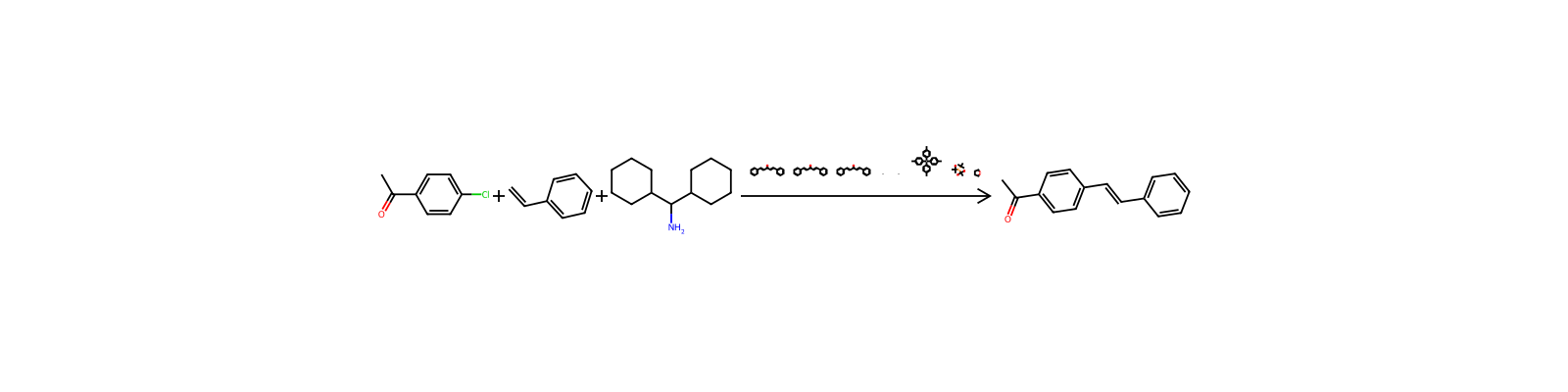
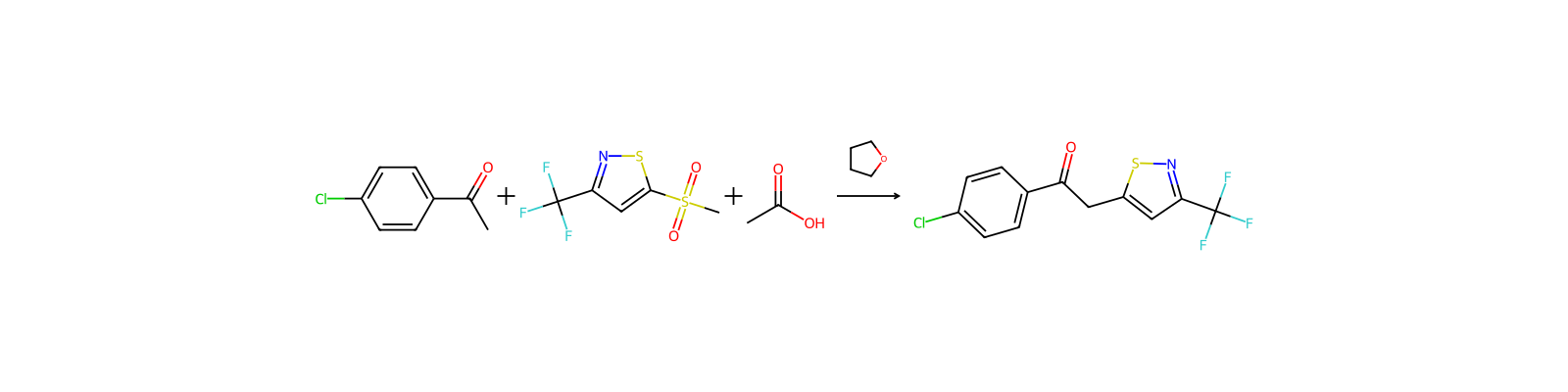
254건
반응 기록 만들기
HRID 12492 반응식
HRID 12492반응물로uspto-grants-2010_06
HRID 13878 반응식
HRID 13878반응물로uspto-grants-2010_06
HRID 13897 반응식
HRID 13897반응물로uspto-grants-2010_06
HRID 33441 반응식
HRID 33441반응물로uspto-grants-2008_09
HRID 33450 반응식
HRID 33450반응물로uspto-grants-2008_09
HRID 33458 반응식
HRID 33458반응물로uspto-grants-2008_09
HRID 36944 반응식
HRID 36944반응물로uspto-grants-1995_05
HRID 96121 반응식
HRID 96121반응물로Training data from https://doi.org/10.1039/C8SC04228D (2/10)
1 / 32 페이지

화합물 노트

불러오는 중…

이 페이지에서기본 정보개요이름 및 식별자물성안전 및 규제화학 및 산업관련 반응화합물 노트
더보기
새 노트새 반응견적 요청하기
녹는점
14 · 14-18 °C (lit.)
끓는 점
232 °C · 232 °C (lit.)
밀도
1.192 g/mL · 1.192 g/mL at 25 °C (lit.)
증기압
8 mm · 8 mm Hg ( 90 °C)
굴절률
20 · n20/D 1.554(lit.)
인화점
194 °F · 194 °F
저장 조건
Sealed in dry,Room Temperature
용해도
111 mg/l · 111mg/l(느린 분해)
물리적 상태
녹은 후에 액체
색상
무색~황색으로 투명함
냄새
100 %에서 · 100.00%에서. 달콤하고 순한 아세토페논 건초
냄새 유형
꽃향기
수용성
111 mg/L · 111mg/L(25℃)
Merck
14 · 14,2116
BRN
386014 · 386014
InChI
1S/C8H7ClO/c1-6(10)7-2-4-8(9)5-3-7/h2-5H,1H3
InChIKey
BUZYGTVTZYSBCU-UHFFFAOYSA-N
SMILES
CC(=O)c1ccc(Cl)cc1
LogP
2.32 at · 2.32 at 20℃
NIST
1 · Ethanone, 1-(4-chlorophenyl)-(99-91-2)
EPA
4 · 4'-Chloroacetophenone (99-91-2)

화학적 성질

clear colourless to yellowish liquid after melting

/GUIDE 153: SUBSTANCES - TOXIC AND/OR CORROSIVE (COMBUSTIBLE)/ Public Safety: CALL Emergency Response Telephone Number ... . As an immediate precautionary measure, isolate spill or leak area in all directions for at least 50 meters (150 feet) for liquids and at least 25 meters (75 feet) for solids. Keep unauthorized personnel away. Stay upwind. Keep out of low areas. Ventilate enclosed areas. /Chloroacetophenone; Chloroacetophenone, liquid; Chloroacetophenone, solid/

/GUIDE 153: SUBSTANCES - TOXIC AND/OR CORROSIVE (COMBUSTIBLE)/ Protective Clothing: Wear positive pressure self-contained breathing apparatus (SCBA). Wear chemical protective clothing that is specifically recommended by the manufacturer. It may provide little or no thermal protection. Structural firefighters' protective clothing provides limited protection in fire situations ONLY; it is not effective in spill situations where direct contact with the substance is possible. /Chloroacetophenone; Chloroacetophenone, liquid; Chloroacetophenone, solid/

For more DOT Emergency Guidelines (Complete) data for P-CHLOROACETOPHENONE (8 total), please visit the HSDB record page.

Hazard Classes and Categories · 3건

Acute Tox. 4 (86.1%)

Acute toxicity (Oral) - Category 4

Flammable liquids - Category 4

Shipment Methods and Regulations · 3건

No person may /transport,/ offer or accept a hazardous material for transportation in commerce unless that person is registered in conformance ... and the hazardous material is properly classed, described, packaged, marked, labeled, and in condition for shipment as required or authorized by ... /the hazardous materials regulations (49 CFR 171-177)./

The International Air Transport Association (IATA) Dangerous Goods Regulations are published by the IATA Dangerous Goods Board pursuant to IATA Resolutions 618 and 619 and constitute a manual of industry carrier regulations to be followed by all IATA Member airlines when transporting hazardous materials.

The International Maritime Dangerous Goods Code lays down basic principles for transporting hazardous chemicals. Detailed recommendations for individual substances and a number of recommendations for good practice are included in the classes dealing with such substances. A general index of technical names has also been compiled. This index should always be consulted when attempting to locate the appropriate procedures to be used when shipping any substance or article.

Shipping Name/ Number DOT/UN/NA/IMO · 2건

UN 1697; Chloroacetophenone

IMO 6.1; Chloroacetophenone

Skin, Eye, and Respiratory IrritationsHIGHLY IRRITATING TO EYES, MUCOUS MEMBRANES.

안전 및 보호

Disposal Methods · 2건

The following wastewater treatment technologies have been investigated for acetophenone: concentration process: activated carbon. /Acetophenone/

The following wastewater treatment technologies have been investigated for acetophenone: concentration process: resin adsorption. /Acetophenone/

Preventive Measures · 1건

SRP: The scientific literature for the use of contact lenses in industry is conflicting. The benefit or detrimental effects of wearing contact lenses depend not only upon the substance, but also on factors including the form of the substance, characteristics and duration of the exposure, the uses of other eye protection equipment, and the hygiene of the lenses. However, there may be individual substances whose irritating or corrosive properties are such that the wearing of contact lenses would be harmful to the eye. In those specific cases, contact lenses should not be worn. In any event, the usual eye protection equipment should be worn even when contact lenses are in place.

독성 정보

Environmental Fate · 3건

TERRESTRIAL FATE: If released to soil, an estimated soil adsorption coefficient for p-chloroacetophenone of 436 obtained from an experimental log octanol/water partition coefficient of 2.32(1) and an appropriate regression equation(2), indicates that it will display moderate mobility in soil(3). An estimated Henry's Law constant of 9.3X10⁻⁴ atm cu-m/mole at 25 °C(4,SRC) indicates that p-chloroacetophenone will rapidly volatilize from moist soil to the atmosphere(SRC). An estimated vapor pressure of 0.51 mm Hg at 25 °C(1-2,4,SRC) indicates that p-chloroacetophenone will only slowly volatilize from dry soil to the atmosphere(SRC).

AQUATIC FATE: If released to water, p-chloroacetophenone is expected to rapidly volatilize to the atmosphere. Based on an estimated Henry's Law constant of 9.3X10⁻⁴ atm cu-m/mole at 25 °C(1,SRC), the estimated half-life for volatilization of p-chloroacetophenone from a model river 1 m deep flowing at 1 m/sec with a wind speed of 3 m/sec is 4.8 hrs(2,SRC). A bioconcentration factor of 34 estimated from an experimental log octanol/water partition coefficient of 2.32(3) using an appropriate regression equation(2) indicates that p-chloroacetophenone will not bioconcentrate in fish and aquatic organisms(SRC). An estimated soil adsorption coefficient of 436(2-3,SRC) indicates that it may weakly adsorb to sediment and suspended organic matter(SRC).

ATMOSPHERIC FATE: If released to the atmosphere, an estimated rate constant for the gas-phase reaction of p-chloroacetophenone with photochemically produced hydroxyl radicals of 1.16X10⁻¹² cu-cm/ molec sec(1,SRC) translates to an atmospheric half-life of 13.8 days using an average atmospheric hydroxyl radical concn of 5X10+5 molec/cu-cm(1,SRC).

Adverse EffectsSkin Sensitizer - An agent that can induce an allergic reaction in the skin.
Effluent Concentrations · 1건

p-Chloroacetophenone was qualitatively detected in advanced wastewater treatment effluent samples obtained from Pomona, CA, 1974(1). It was detected in the emissions of a improperly regulated kerosene space heater, but not properly adjusted ones, at a rate of 40 ng/kJ(2).

Soil Adsorption/Mobility · 1건

Based on an experimental log octanol/water partition coefficient of 2.32(1) a soil adsorption coefficient of 436 can be calculated for p-chloroacetophenone using an appropriate regression equation(2,SRC). This value indicates that it will display moderate mobility in soil(3).

Natural Pollution Sourcesp-Chloroacetophenone is of anthropogenic origin and it is not known to be produced by natural sources. (SRC)
Human Toxicity Excerpts · 5건

EXPTL USE: 4'- CHLOROACETOPHENONE TESTED FOR ABILITY TO INHIBIT CYTOPATHOGENIC CHANGES IN CELL CULTURES OF HUMAN EMBRYONIC KIDNEYS INDUCED BY POLIOVIRUS TYPES 1 & 2. 4'-CHLOROACETOPHENONE WAS MOST EFFECTIVE @ REDUCING POLIOVIRUS TYPE 1.

A case of allergic contact sensitivity following a single exposure to the tear gas chloroacetophenone in a 24 year old police officer was presented. The officer accidentally discharged the tear gas from a container he kept in his right trouser pocket, and immediately washed the site of contact with water for 5 minutes. A localized erythema with a burning sensation occurred instantly on the right upper thigh and a blistering reaction developed within 2 days. After 2 weeks of treatment with a topical steroid, the center of the lesion was faint, but the borders had extended and persisted for 4 weeks. Testing with chloroacetophenone and orthochlorbenzylidine malonitrile one month after symptoms disappeared gave positive test results to chloroacetophenone but negative to orothochlorbenzylidine malonitrile. The normal exposure to this compound as a gas has not been reported to cause sensitivity reactions except in 1 in about 10,000 servicemen exposed in gas chamber drills. However, application of this compound in high concentration and in the presence of moisture indicates that it is a powerful skin irritant as evidenced not only by this report but by other earlier reports in literature. /Chloroacetophenone/

/A case of acute contact dermatitis caused by exposure to 2-chloroacetophenone tear gas in the face /is reported/. Within 3 days the contact dermatitis had dissappeared without medical treatment, but 7 days after exposure, a scaly pruritic eruption developed at the site of the original exposure although no new contact with 2-chloroacetophenone had taken place. /2-Chloroacetophenone/

Chloroacetophenone is used as a tear gas for riot control and as a kind of chemical mace against small groups or individuals. Among other side effects, choroacetophenone can evoke toxic and allergic contact dermatitis, and more rarely exanthematous or anaphylactic reactions. It is difficult to distinguish between toxic and allergic reactions both in the clinical picture of dermatitis as well as on the basis of skin test reactions. A /report of a/ patient with allergic contact dermatitis, which first appeared 5 days after exposure to choroacetophenone as a sign of primary sensitization, leading to an intense eczematous reaction in skin tests. Allergy to choroacetophenone does not appear to represent a handicap in normal daily life because it is solely used as tear gas and is of little significance with regards to "cross allergies" to substances in the environment. /Chloroacetophenone/

When the lacrimatory agent chloroacetophenone was released into 44 prisoner cells, 8 prisoners required hospitalization and 20 more received outpatient physician care for injuries. Contact with water contributed to the injuries caused by chloroacetophenone, but prolonged exposure in a confined space was probably the principal cause of morbidity. In a confined space the lacrimatory agent chloroacetophenone is relatively toxic. /Chloroacetophenone/

Artificial Pollution Sourcesp-Chloroacetophenone is a commercially important ketone prepared by the Friedel-Crafts chlorination of a acetophenone(1). It may be released to the environment as a fugitive emission during its production and use(SRC).
Carcinogen ClassificationNo indication of carcinogenicity to humans (not listed by IARC).
Environmental Bioconcentration · 1건

Based on an experimental log octanol/water partition coefficient of 2.32(1) a bioconcentration factor of 34 can be calculated for p-chloroacetophenone using an appropriate regression equation(2). This value indicates that p-chloroacetophenone will not bioconcentrate in fish and aquatic organisms(SRC).

Volatilization from Water/Soil · 1건

An estimated Henry's Law constant of 9.3X10⁻⁴ atm cu-m/mole at 25 °C(1,SRC) indicates that p-chloroacetophenone will rapidly volatilize from both moist soil and water to the atmosphere(SRC). The estimated half-life for volatilization from a model river 1 m deep flowing at 1 m/sec with a wind speed of 3 m/sec is 4.8 hrs(2,SRC). An estimated vapor pressure for p-chloroacetophenone of 0.51 mm Hg at 25 °C(2,SRC) obtained in turn from its estimated Henry's Law constant and estimated water solubility, 111 mg/L at 25 °C(SRC), which was obtained from its experimental log octanol/water partition coefficient and an appropriate regression equation(3), indicates that this compound will only slowly volatilize from dry soil to the atmosphere(SRC).

Non-Human Toxicity Excerpts · 5건

A DIRECT CORRELATION WAS OBSERVED BETWEEN HYPNOTIC STRENGTH & LIPOPHILICITY OF P-CHLOROACETOPHENONE IN RANA TEMPORARIA TADPOLES.

The biochemical changes in blood samples of rats at different intervals after o-chloroacetophenone and dibenz(b,f)-1,4-oxazepine were studied. After a single subacute (1/10 LC50) exposure, both the compounds induced hyperglycemia which was abolished within 24 hr. The level of plasma urea was unaltered. o-Chloroacetophenone exposed animals did not show any significant changes in plasma SGOT, acid and alkaline phosphatase activities at different intervals. However, in dibenz(b,f)-1,4-oxazepine exposed animals, a significant elevation of the activities of SGOT, GPT, acid and alkaline phosphatase was observed at different intervals. All the parameters became normal within seven days after the exposure. Inhalation of dibenz(b,f)-1,4-oxazepine aerosols can thus lead to tissue damaging effects in rats. /o-Chloroacetophenone/

Three ketones ie p-chloroacetophenone, p-bromo-acetophenone and 2-bromo-4-nitroacetophenone were evaluated by the olfacto-gustatory method to determine their repellent properties at nine concentrations ranging from 0.0625 to 5.0 g/l. The basis of this method was total and differential feeding by bees at 30% sugar water and chemical sugar solutions. This method provided an indication to the extent and manner of response of the olfacto-gustatory system to the repellent chemicals. The lower concentrations exercised less repellency while higher concentrations worked in the opposite direction. However, the increase in repellency was limited to a certain concentration, then the increase almost stabilized. Out of all the compounds, p-bromoacetophenone showed higher repellency.

Effects of 2-chloroacetophenone on the morphology of the mouse exorbital lacrimal gland were studied using light and electron microscopic techniques. Exposure to 2-chloroacetophenone vapor causes rapid exocytosis of acinar cell granules as well as vacuolation of the secretory and ductal epithelial cells. Concomitantly, intralobular ductal epithelial cells which are normally cuboidal in shape, enlarge in size and release electron dense granules into the duct lumen. Within 15 min after exposure, acinar cells show a preponderance of cells containing only pale granules and the ductal epithelium returns to a more cuboidal shape. By 60 min after exposure, the gland is not readily distinguishable from the unexposed, control gland. /2-Chloroacetophenone/

Solutions of various concentrations of chloroacetophenone (dissolved in 1,1,1-trichloroethane) were trickled on the corneas of rabbits. The substance was either applied to the center or to the limbus, or simultaneously to the center and limbus of the cornea. After surgical removal of the cornea on day 21, the alterations were examined by a light microscope. When chloracetophenone was applied to the middle of the cornea, signs of intensified epithelial regeneration were observed, even to the point of a severe granulating and necrotic infection with ulceration. The severity of these changes depended on the concentration used and showed that repair of a corneal defect had been attempted. The same changes were observed when the same concentrations of chloracetophenone were applied to the limbus, but with greater severity. Some of these alterations led to perforation of the cornea when the substance was applied to center and limbus. These results are discussed in reference to the correlation of the changes seen in animal tests to those in the human eye. /Chloroacetophenone/

Environmental Abiotic Degradation · 1건

An estimated rate constant for the gas-phase reaction of p-chloroacetophenone with photochemically produced hydroxyl radicals of 1.16X10⁻¹² cu-cm/molec sec(1,SRC) translates to an atmospheric half-life of 13.8 days(SRC) using an average atmospheric hydroxyl radical concn of 5X10+5 molec/cu-cm(1).

안전 데이터

wgk
3
tsca
TSCA listed
rtecs
KM5600000
ridadr
UN 3416 6.1/PG 2
HS 번호
29147090
risk_code
22-26-37/38-41-36/37/38-36/37
hazard_code
T+,Xn
safety_code
26-28-36/37/39-45-28A-36
포장분류
II
위험 등급
6.1
Hazard Classifications
Acute Tox. 4 OralEye Irrit. 2STOT SE 3
스토리지 클래스
6.1A - Combustible acute toxic Cat. 1 and 2very toxic hazardous materials
유해 물질 데이터
99-91-2(Hazardous Substances Data)
5-(4-클로로페닐)-1H-피라졸-3-카복실산
4-(4-Chlorophenyl)-1,2,3-thiadiazole
Fluorescent Brightener DCB
3-(4-Chlorophenyl)-1H-pyrazole-5-carboxamide ,97%
에틸3-(4-클로로페닐)-1H-피라졸-5-카르복실레이트
4-(4-클로로페닐)-1,2,3-티아디아졸-5-아민
2-아미노-4-(4-클로로-페닐)-티오펜-3-카르복실산에틸에스테르
4-Chloro-alpha-methylstyrene
4-Acetylbiphenyl
4-Chloromandelic acid
2-(4-클로로페닐)인돌
4'-tert-부틸아세토페논
3',4'-Dichloroacetophenone
4-Chlorobenzoylacetonitrile
메틸(4-클로로벤조일)아세테이트
4′-피퍼리디노아세토페논

추가 설명

정의ChEBI: P-chloroacetophenone is an organic molecular entity.