홈MCP워크벤치Skills
홈워크벤치알림마이페이지
llms.txt · MCP 가이드개인정보처리방침 · 이용약관 · 지원v1.8.0
  1. 홈
  2. /화합물

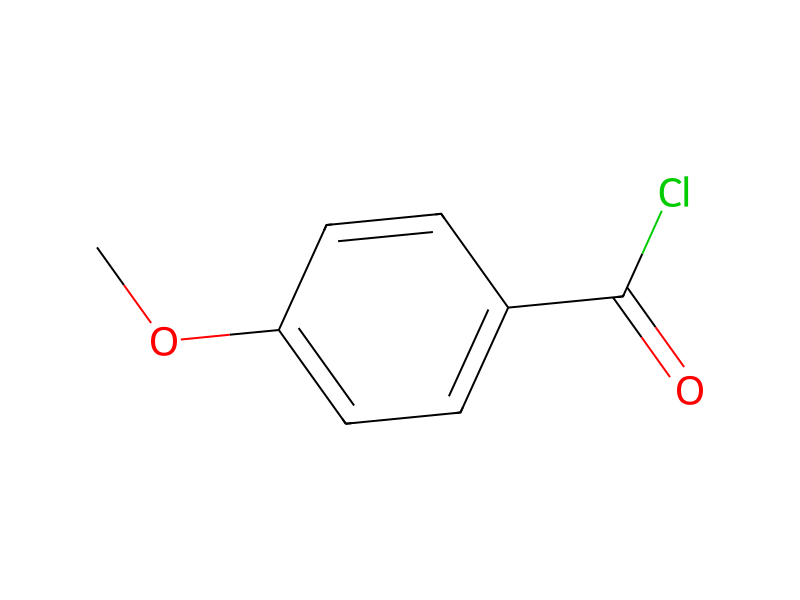
4-메톡시벤조일 클로라이드

p-Anisoyl chloride

HCID 7477
새 노트새 반응견적 요청하기
인쇄 미리보기

데이터를 보충하는 중입니다. 잠시 후 페이지를 새로 고치면 최신 내용을 볼 수 있습니다
기본 정보개요이름 및 식별자물성안전 및 규제화학 및 산업관련 반응화합물 노트
부분 구조 검색유사 구조 찾기

기본 정보

CAS
100-07-2
표준 SMILES
COc1ccc(C(=O)Cl)cc1
InChIKey
MXMOTZIXVICDSD-UHFFFAOYSA-N
분자식
C8H7ClO2
평균 분자량
170.59 g/mol
단동위원소 질량
170.01345714

개요

4-methoxybenzoyl chloride appears as an amber-colored crystalline solid. Melting point 72 °F. Corrosive to metals and skin. Vapors may cause serious burns to the eyes.

이름 및 식별자

우선 이름
p-Anisoyl chloride
IUPAC
4-methoxybenzoyl chloride
현지명
4-메톡시벤조일 클로라이드
영어명
4-Methoxybenzoyl chloride
분자식
C8H7ClO2
분자량
170.59

이름 및 동의어

4-Methoxybenzoyl chloride100-07-2P-ANISOYL CHLORIDEp-Methoxybenzoyl chlorideBenzoyl chloride, 4-methoxy-Anisoyl chloride4-Anisoyl chloride4-Methoxybenzoic acid chlorideBenzoyl chloride, p-methoxy-p-Methoxybenzoic acid chloridepara-anisoyl chlorideNSC 86125
이름 더 보기
4-메톡시벤조일클로라이드4-methoxybenzoylAnisoylchloridP-ANSIOYHLORIDEP-anisoylclorideAKOS BBS-000039074-Anisoylchloride99%
UN1729HSDB 447TV6DMQ94514methoxybenzoyl chlorideBenzoic acid, 4-methoxy-, chlorideEINECS 202-816-4NSC-86125DTXSID9059204

데이터베이스 식별자

CAS
100-07-2、1300-64-7
PubChem CID
7477
DTXSID
DTXSID9059204
UNII
TV6DMQ9451
EC Number
202-816-4
Nikkaji
J28.748B

물성

구조 계산 물성보충 중

XLogP
2.9
극성 표면적
26.3 Ų
수소 결합 공여자 수
0
수소 결합 수용자 수
2
회전 가능 결합 수
2
무거운 원자 수
11
형식 전하
0
복잡도
139

실험 및 물리화학적 성질

Chemical Classes · 2건

Toxic Gases & Vapors -> Acid Halides

Corrosives

SpringerMaterials PropertiesChemical shift
Density · 2건

1.26 at 68 °F (USCG, 1999) - Denser than water; will sink

1.261 g/cu cm at 20 °C

Color/FormClear crystals or amber liquid
SolubilitySoluble in ether and acetone. Very soluble in benzene. Slightly soluble in carbon tetrachloride.
Boiling Point · 2건

504 °F at 760 mmHg (USCG, 1999)

262-263 °C

DecompositionWhen heated to decomposition it emits toxic fumes of /hydrogen chloride/ and may explode.
Melting Point · 2건

72 °F (USCG, 1999)

22 °C

Vapor Pressure0.01 [mmHg]
Refractive IndexIndex of refraction = 1.580 at 20 °C

안전 및 규제

안전 정보는 참고용이며, 공급업체의 물질안전보건자료(SDS), 관련 법규 및 전문가 평가를 대체하지 않습니다.

GHS 분류

GHS Classification · 4건

Danger

H314 (100%): Causes severe skin burns and eye damage [Danger Skin corrosion/irritation]

P260, P264, P280, P301+P330+P331, P302+P361+P354, P304+P340, P305+P354+P338, P316, P321, P363, P405, and P501 (click each P-code to see the statement)

Aggregated GHS information provided per 79 reports by companies from 9 notifications to the ECHA C&L Inventory.

유해성 정보

Regulatory Information · 4건

Chemical: Benzoyl chloride, 4-methoxy-

Status: Active Update: 08-06-2022 https://echa.europa.eu/registration-dossier/-/registered-dossier/19721

4-Methoxybenzoyl chloride: Does not have an individual approval but may be used under an appropriate group standard

The New Jersey Worker and Community Right to Know Act requires public and private employers to provide information about hazardous substances at their workplaces. (N.J.S.A. 34:5A-1 et. seq.)

DOT LabelCorrosive
Fire Hazards · 2건

Special Hazards of Combustion Products: Irritating hydrogen chloride fumes may be formed. (USCG, 1999)

· Combustible material: may burn but does not ignite readily.

Health Hazards · 2건

Vapor irritates mucous membranes. Contact of liquid with eyes or skin causes severe irritation. Ingestion causes severe irritation of mouth and stomach. (USCG, 1999)

· TOXIC and/or CORROSIVE; inhalation, ingestion or contact (skin, eyes) with vapors, dusts or substance may cause severe injury, burns or death.

Hazards Summary · 1건

Decomposed by water; Corrosive to tissue; Explosion risk from Sealed containers due to pressure from decomposition at room temperature; [Hawley] May cause serious burns to eyes; Releases hydrochloric acid by hydrolysis; Emergency treatment: acids; [HSDB] Reacts with moisture forming hydrochloric acid; [CAMEO] A corrosive substance that can cause injury to the skin, eyes, and respiratory tract; Inhalation may cause edema and chemical pneumonitis; [MSDSonline]

화학 및 산업

용도 및 제조

Uses · 2건

Used as intermediate for dyes and medicines; [Hawley]

Intermediate for dyes and medicines

Methods of ManufacturingPrepared from p-anisic acid and thionyl chloride: Vanderhaeghe et al, J Pharm Pharmacol 6, 119 (1954).
General Manufacturing InformationBenzoyl chloride, 4-methoxy-: ACTIVE
응용 분야 · 1건

일반 설명4-Methoxybenzoyl chloride is one of the reactive acylating agents that can react with carboxylic acids, alcohols and amines to yield respective carboxylic anhydrides, esters and amides. 4-methoxybenzoyl chloride reacts with potassium thiocyanate to yield isothiocyanate derivative via nucleophilic addition-elimination mechanism.

상·하류 제품 정보

상류 원료

p-아니식애씨드염화 티오닐

하류 제품

NOCODAZOLEAmiodarone(4-Amino-3-nitrophenyl)-(2-thienyl)methanoneAniracetamBenzamide, 4-methoxy-N-[2-[2-(1-methyl-2-piperidinyl)ethyl]phenyl]-N,N'-(9,10-dihydro-4,8-dihydroxy-9,10-dioxoanthracene-1,5-diyl)bis[4-methoxybenzamide]

관련 반응

970건
반응 기록 만들기
HRID 6105 반응식
HRID 6105반응물로uspto-grants-1993_09
HRID 10116 반응식
HRID 10116반응물로uspto-grants-2006_08
HRID 10117 반응식
HRID 10117반응물로uspto-grants-2006_08
HRID 16754 반응식
HRID 16754반응물로uspto-grants-2010_06
HRID 17863 반응식
HRID 17863반응물로uspto-grants-2010_06
HRID 28687 반응식
HRID 28687반응물로uspto-grants-2008_09
HRID 29923 반응식
HRID 29923반응물로uspto-grants-2008_09
HRID 29955 반응식
HRID 29955반응물로uspto-grants-2008_09
1 / 122 페이지

화합물 노트

불러오는 중…

이 페이지에서기본 정보개요이름 및 식별자물성안전 및 규제화학 및 산업관련 반응화합물 노트
더보기
새 노트새 반응견적 요청하기
Henry's Law ConstantHenry's Law constant = 7.8X10⁻⁶ atm-cu m/mol at 25 °C
Physical Description · 2건

4-methoxybenzoyl chloride appears as an amber-colored crystalline solid. Melting point 72 °F. Corrosive to metals and skin. Vapors may cause serious burns to the eyes.

Clear solid or amber liquid; [Hawley] Liquid or low melting solid; [MSDSonline]

물리화학적 성질

녹는점
22 °C · 22 °C(lit.)
끓는 점
262 · 262-263 °C(lit.)
밀도
1.26 g/mL · 1.260 g/mL at 20 °C(lit.)
증기압
1.853 Pa · 1.853Pa at 25℃
굴절률
20 · n20/D 1.581(lit.)
인화점
190 °F · 190 °F
저장 조건
2 · 2-8°C
물리적 상태
녹은 후에 액체
색상
무색투명~갈색
냄새
날카롭고 관통력이 있습니다.
수용성
물에서 반응합니다.
Merck
14 · 14,673
BRN
471918 · 471918
Henry's Law Constant
1.3 · 1.3×100 mol/(m3Pa) at 25℃, HSDB (2015)
안정성
안정적이지만 물과 격렬하게 반응합니다. 압력 상승을 방지하기 위해 이 물질이 저장된 용기에 습기가 들어가지 않도록 하십시오. 물, 습기, 강염기, 강산화제와 혼합되지 않습니다.
InChI
1S/C8H7ClO2/c1-11-7-4-2-6(3-5-7)8(9)10/h2-5H,1H3
InChIKey
MXMOTZIXVICDSD-UHFFFAOYSA-N
SMILES
COc1ccc(cc1)C(Cl)=O
LogP
1.52 · 1.52
NIST
4 · 4-Methoxybenzoic acid chloride(100-07-2)
EPA
4 · Benzoyl chloride, 4-methoxy- (100-07-2)
화학적 성질 · 1건

p-Anisoyl chloride, also known as 4-methoxybenzoyl chloride, is an amber-colored crystalline solid with a melting point of 72 °F. It is corrosive to metals and skin. Its vapors may cause serious burns to the eyes. It decomposes upon contact with water or alcohols but is soluble in acetone and benzene. Storage in sealed containers may cause explosion due to pressure build-up from decomposition; it must be stored at low temperatures (5°C).

DOT ID and Guide1729 156
Reactive GroupAcyl Halides, Sulfonyl Halides, and Chloroformates
Reactivity AlertsWater-Reactive
Reactivity Profile · 1건

4-METHOXYBENZOYL CHLORIDE reacts exothermically with bases, including amines. Incompatible with water, strong oxidizing agents, alcohols. Sealed containers held at room temperature may explode, due to slow decomposition that builds up pressure. This situation is more dangerous with heat. May react vigorously or explosively with diisopropyl ether or other ethers in the presence of trace amounts of metal salts [J. Haz. Mat., 1981, 4, 291].

DOT Emergency Guidelines · 5건

/GUIDE 156: SUBSTANCES - TOXIC and/or CORROSIVE (Combustible/Water-Sensitive)/ Fire or Explosion: Combustible material: may burn but does not ignite readily. Substance will react with water (some violently) releasing flammable, toxic or corrosive gases and runoff. When heated, vapors may form explosive mixtures with air: indoors, outdoors and sewers explosion hazards. Most vapors are heavier than air. They will spread along ground and collect in low or confined areas (sewers, basements, tanks). Vapors may travel to source of ignition and flash back. Contact with metals may evolve flammable hydrogen gas. Containers may explode when heated or if contaminated with water.

/GUIDE 156: SUBSTANCES - TOXIC and/or CORROSIVE (Combustible/Water-Sensitive)/ Health: TOXIC; inhalation, ingestion or contact (skin, eyes) with vapors, dusts or substance may cause severe injury, burns or death. Contact with molten substance may cause severe burns to skin and eyes. Reaction with water or moist air will release toxic, corrosive or flammable gases. Reaction with water may generate much heat that will increase the concentration of fumes in the air. Fire will produce irritating, corrosive and/or toxic gases. Runoff from fire control or dilution water may be corrosive and/or toxic and cause pollution.

/GUIDE 156: SUBSTANCES - TOXIC and/or CORROSIVE (Combustible/Water-Sensitive)/ Public Safety: CALL Emergency Response Telephone Number on Shipping Paper first. If Shipping Paper not available or no answer, refer to appropriate telephone number listed on the inside back cover. As an immediate precautionary measure, isolate spill or leak area in all directions for at least 50 meters (150 feet) for liquids and at least 25 meters (75 feet) for solids. Keep unauthorized personnel away. Stay upwind. Keep out of low areas. Ventilate enclosed areas.

/GUIDE 156: SUBSTANCES - TOXIC and/or CORROSIVE (Combustible/Water-Sensitive)/ Protective Clothing: Wear positive pressure self-contained breathing apparatus (SCBA). Wear chemical protective clothing that is specifically recommended by the manufacturer. It may provide little or no thermal protection. Structural firefighters' protective clothing provides limited protection in fire situations ONLY; it is not effective in spill situations where direct contact with the substance is possible.

For more DOT Emergency Guidelines (Complete) data for P-ANISOYL CHLORIDE (8 total), please visit the HSDB record page.

DOT Hazard Classification · 4건

Anisoyl chloride

UN1729

Class 8 Corrosive material (49 eCFR § 173.136)

PG II: the degree of danger presented by the material is medium

Air and Water ReactionsFumes in air. Reacts exothermically with water (including moisture in air or soil) to form hydrochloric acid and insoluble anisic acid [Merck 11th ed. 1989].

안전 및 보호

Fire FightingExcerpt from ERG Guide 156 [Substances - Toxic and/or Corrosive (Combustible / Water-Sensitive)]:
Accidental Release Measures · 2건

· CALL 911. Then call emergency response telephone number on shipping paper. If shipping paper not available or no answer, refer to appropriate telephone number listed on the inside back cover.

· ELIMINATE all ignition sources (no smoking, flares, sparks or flames) from immediate area.

First Aid · 2건

INHALATION: remove to fresh air.

General First Aid:

Exposure Control and Personal Protection· Wear positive pressure self-contained breathing apparatus (SCBA).
Fire Fighting Procedures · 1건

If material on fire or involved in fire: Use dry chemical or carbon dioxide. Do not use water on material itself. If large quantities of combustibles are involved, use water in flooding quantities as spray and fog. Use water spray to knock-down vapors. Cool all affected containers with flooding quantities of water. Apply water from as far a distance as possible.

Storage ConditionsExplosion risk when in closed containers due to pressure caused by decomposition at room temperature.
Nonfire Spill ResponseExcerpt from ERG Guide 156 [Substances - Toxic and/or Corrosive (Combustible / Water-Sensitive)]:
Disposal Methods · 1건

SRP: The most favorable course of action is to use an alternative chemical product with less inherent propensity for occupational exposure or environmental contamination. Recycle any unused portion of the material for its approved use or return it to the manufacturer or supplier. Ultimate disposal of the chemical must consider: the material's impact on air quality; potential migration in soil or water; effects on animal, aquatic, and plant life; and conformance with environmental and public health regulations.

Preventive Measures · 4건

If material not on fire and not involved in fire: Keep sparks, flames, and other sources of ignition away. Keep material out of water sources and sewers. Build dikes to contain flow as necessary. Use water spray to knock-down vapors. Do not use water on material itself. Neutralize spilled material with crushed limestone, soda ash, or lime.

Personnel protection: Avoid breathing vapors. Keep upwind. ... Avoid bodily contact with the material. ... Do not handle broken packages unless wearing appropriate personal protective equipment. Wash away any material which may have contacted the body with copious amounts of water or soap and water. If contacted with the material anticipated, wear appropriate chemical protective clothing.

SRP: Contaminated protective clothing should be segregated in such a manner so that there is no direct personal contact by personnel who handle, dispose, or clean the clothing. Quality assurance to ascertain the completeness of the cleaning procedures should be implemented before the decontaminated protective clothing is returned for reuse by the workers. Contaminated clothing should not be taken home at end of shift, but should remain at employee's place of work for cleaning.

SRP: The scientific literature for the use of contact lenses in industry is conflicting. The benefit or detrimental effects of wearing contact lenses depend not only upon the substance, but also on factors including the form of the substance, characteristics and duration of the exposure, the uses of other eye protection equipment, and the hygiene of the lenses. However, there may be individual substances whose irritating or corrosive properties are such that the wearing of contact lenses would be harmful to the eye. In those specific cases, contact lenses should not be worn. In any event, the usual eye protection equipment should be worn even when contact lenses are in place.

Isolation and Evacuation · 2건

Excerpt from ERG Guide 156 [Substances - Toxic and/or Corrosive (Combustible / Water-Sensitive)]:

Immediate precautionary measure

Personal Protective Equipment (PPE) · 3건

Goggles and face shield; plastic gloves; protective clothing. (USCG, 1999)

Goggles and face shield; plastic gloves; protective clothing.

Personnel protection: ... Wear positive pressure self-contained breathing apparatus. ... Wear appropriate chemical protective gloves, boots and goggles.

Emergency Response Planning Guidelines· Note: Most foams will react with the material and release corrosive/toxic gases.

독성 정보

Environmental Fate · 3건

TERRESTRIAL FATE: Based on a classification scheme(1), an estimated Koc value of 37(SRC), determined from a structure estimation method(2), indicates that p-anisoyl chloride is expected to have very high mobility in soil(SRC). Volatilization of p-anisoyl chloride from moist soil surfaces is expected to be an important fate process(SRC) given an estimated Henry's Law constant of 7.8X10⁻⁶ atm-cu m/mole(SRC), using a fragment constant estimation method(3). p-Anisoyl chloride is not expected to volatilize from dry soil surfaces(SRC) based upon an estimated vapor pressure of 0.014 mm Hg(SRC), determined from a fragment constant method(4). Biodegradation data were not available(SRC, 2005).

AQUATIC FATE: Based on a classification scheme(1), an estimated Koc value of 37(SRC), determined from a structure estimation method(2), indicates that p-anisoyl chloride is not expected to adsorb to suspended solids and sediment(SRC). Volatilization from water surfaces is expected(3) based upon an estimated Henry's Law constant of 7.8X10⁻⁶ atm-cu m/mole(SRC), developed using a fragment constant estimation method(4). Using this Henry's Law constant and an estimation method(3), volatilization half-lives for a model river and model lake are 4 and 50 days, respectively (SRC). According to a classification scheme(5), an estimated BCF of 3(SRC), from an estimated log Kow of 1.52(6) and a regression-derived equation(7), suggests the potential for bioconcentration in aquatic organisms is low(SRC). p-anisoyl chloride is decomposed in water(8), but the rate of this reaction is not known(SRC). However, the hydrolysis half-life of benzoyl chloride, a structural analog, is on the order of several minutes(9), suggesting that p-anisoyl chloride will undergo rapid hydrolysis in the environment(SRC). Biodegradation data were not available(SRC, 2005).

ATMOSPHERIC FATE: According to a model of gas/particle partitioning of semivolatile organic compounds in the atmosphere(1), p-anisoyl chloride, which has an estimated vapor pressure of 0.014 mm Hg at 25 °C(SRC), determined from a fragment constant method(2), is expected to exist solely as a vapor in the ambient atmosphere. Vapor-phase p-anisoyl chloride is degraded in the atmosphere by reaction with photochemically-produced hydroxyl radicals(SRC); the half-life for this reaction in air is estimated to be 19 hours(SRC), calculated from its rate constant of 2X10-11 cu cm/molecule-sec at 25 °C(SRC) that was derived using a structure estimation method(3). p-Anisoyl chloride absorbs light greater than 290 nm and may be subject to direct photolysis in the environment; however, the rate of this potential reaction is unknown(SRC).

Adverse EffectsDermatotoxin - Skin burns.
Soil Adsorption/Mobility · 1건

Using a structure estimation method based on molecular connectivity indices(1), the Koc for p-anisoyl chloride can be estimated to be 37(SRC). According to a classification scheme(2), this estimated Koc value suggests that p-anisoyl chloride is expected to have very high mobility in soil(SRC).

Human Toxicity Excerpts · 5건

/SIGNS AND SYMPTOMS/ Symptomatology (...ingestion or skin contact): 1) corrosion of mucous membranes of mouth, throat...esophagus, with...pain and dysphagia. Necrotic areas...grayish white but soon...blackish discoloration...and sometimes shrunken or wrinkled texture. /Acid/

/SIGNS AND SYMPTOMS/ Symptomatology.../ingestion/: 2. Epigastric pain...may be associated with nausea & vomiting...intense thirst. 3. Circulatory collapse...clammy skin, weak & rapid pulse, shallow resp...scanty urine. ...shock is often...cause of death. 4. Asphyxial death due to glottic edema. /Acid/

/SIGNS AND SYMPTOMS/ Symptomatology.../ingestion/: 5. Ulceration of all membranes and tissues with which acid comes in contact. Ulcerated areas often perforate, leading to mediastinitis and peritonitis. 6. Late esophageal, gastric and pyloric strictures and stenosis...may require...surgical repair, should be anticipated. /Acid/

/SIGNS AND SYMPTOMS/ Symptomatology: 6. ...permanent scars may...appear in cornea, skin and oropharynx. 7. Uncorrected circulatory collapse of several hr...may lead to renal failure and ischemic lesions in liver and heart. /Acid/

For more Human Toxicity Excerpts (Complete) data for P-ANISOYL CHLORIDE (7 total), please visit the HSDB record page.

Artificial Pollution Sourcesp-Anisoyl chloride's production and use as an intermediate for dyes and medications(1) may result in its release to the environment through various waste streams(SRC).
Environmental Bioconcentration · 1건

An estimated BCF of 3 was calculated for p-anisoyl chloride(SRC), using an estimated log Kow of 1.52(1) and a regression-derived equation(2). According to a classification scheme(3), this BCF suggests the potential for bioconcentration in aquatic organisms is low(SRC).

Volatilization from Water/Soil · 1건

The Henry's Law constant for p-anisoyl chloride is estimated as 7.8X10⁻⁶ atm-cu m/mole(SRC) using a fragment constant estimation method(1). This Henry's Law constant indicates that p-anisoyl chloride is expected to volatilize from water surfaces(2). However, the hydrolysis half-life of benzoyl chloride, a structural analog, is on the order of several minutes(3), suggesting that p-anisoyl chloride will undergo rapid hydrolysis in the environment. Based on this Henry's Law constant, the volatilization half-life from a model river (1 m deep, flowing 1 m/sec, wind velocity of 3 m/sec)(2) is estimated as 4 days(SRC). The volatilization half-life from a model lake (1 m deep, flowing 0.05 m/sec, wind velocity of 0.5 m/sec)(2) is estimated as 50 days(SRC). p-Anisoyl chloride's Henry's Law constant indicates that volatilization from moist soil surfaces may occur(SRC). p-Anisoyl chloride is not expected to volatilize from dry soil surfaces(SRC) based upon an estimated vapor pressure of 0.014 mm Hg(SRC), determined from a fragment constant method(3).

Environmental Abiotic Degradation · 1건

The rate constant for the vapor-phase reaction of p-anisoyl chloride with photochemically-produced hydroxyl radicals has been estimated as 2X10-11 cu cm/molecule-sec at 25 °C(SRC) using a structure estimation method(1). This corresponds to an atmospheric half-life of about 19 hours at an atmospheric concentration of 5X10+5 hydroxyl radicals per cu cm(1). p-Anisoyl chloride absorbs light greater than 290 nm and may be subject to direct photolysis in the environment; however, the rate of this potential reaction is unknown(SRC). p-Anisoyl chloride is decomposed in water(2), but the rate of this reaction is not known(SRC). However, the hydrolysis half-life of benzoyl chloride, a structural analog, is on the order of several minutes(3), suggesting that p-anisoyl chloride will undergo rapid hydrolysis in the environment(SRC).

Probable Routes of Human Exposure · 1건

NIOSH (NOES Survey 1981-1983) has statistically estimated that 4,354 workers (276 of these are female) are potentially exposed to p-anisoyl chloride in the US(1). Occupational exposure to p-anisoyl chloride may occur through inhalation and dermal contact with this compound at workplaces where p-anisoyl chloride is produced or used(SRC).

Environmental Fate/Exposure Summary · 1건

p-Anisoyl chloride's production and use as an intermediate for dyes and medications may result in its release to the environment through various waste streams. If released to air, an estimated vapor pressure of 0.014 mm Hg at 25 °C indicates p-anisoyl chloride will exist solely as a vapor in the ambient atmosphere. Vapor-phase p-anisoyl chloride will be degraded in the atmosphere by reaction with photochemically-produced hydroxyl radicals; the half-life for this reaction in air is estimated to be 19 hours. p-Anisoyl chloride absorbs light greater than 290 nm and may be susceptible to direct photolysis; however, the rate of this reaction is not known. If released to soil, p-anisoyl chloride is expected to have very high mobility based upon an estimated Koc of 37. Volatilization from moist soil surfaces is expected to be an important fate process based upon an estimated Henry's Law constant of 7.8X10⁻⁶ atm-cu m/mole. p-Anisoyl chloride is not expected to volatilize from dry soil surfaces based on its estimated vapor pressure. No biodegradation data were located for anisoyl chloride. If released into water, p-anisoyl chloride is not expected to adsorb to suspended solids and sediment based upon the estimated Koc. Volatilization from water surfaces is expected to be an important fate process based upon this compound's estimated Henry's Law constant. Estimated volatilization half-lives for a model river and model lake are 4 and 50 days, respectively. p-Anisoyl chloride is decomposed in water, but the rate of this reaction is unpublished. However, the hydrolysis half-life of benzoyl chloride, a structural analog, is on the order of several minutes, suggesting that p-anisoyl chloride will undergo rapid hydrolysis in the environment. An estimated BCF of 3 suggests the potential for bioconcentration in aquatic organisms is low. Occupational exposure to p-anisoyl chloride may occur through inhalation and dermal contact with this compound at workplaces where p-anisoyl chloride is produced or used. (SRC)

안전 데이터

wgk
1
tsca
TSCA listed
rtecs
CA0270000
ridadr
UN 1729
HS 번호
29163990
risk_code
14-34-67-65-63-48/20-11
hazard_code
C,F
safety_code
26-36/37/39-45-62-16
포장분류
II
위험 등급
8
기존화학 물질
2012-3-5353
F 고인화성물질
10-21
Hazard Classifications
Eye Dam. 1Skin Corr. 1B
스토리지 클래스
8A - Combustible corrosive hazardous materials
유해 물질 데이터
100-07-2(Hazardous Substances Data)
(4-메톡시-3-니트로페닐)-(티오펜-2-일)메탄온
2-(4-메톡시벤졸일)티오펜
로부스타플라본
메틸(2-)3-헵타논
5-Iodoisobenzofuran-1,3-dione
(2-Butyl-5-nitro-3-benzofuranyl)[4-[3-(dibutylamino)propoxy]phenyl]methanone
에틸4-메톡시벤조일아세테이트
4-하이드록시-4'-메틸벤조페논
4-플루오로-4'-메톡시벤조페논
N,N'-(9,10-dihydro-4,8-dihydroxy-9,10-dioxoanthracene-1,5-diyl)bis[4-methoxybenzamide]
(αE)-β-클로로-4'-메톡시아크릴로페논
3-Formylphenyl 4-methoxybenzoate