
Hexanoic anhydride
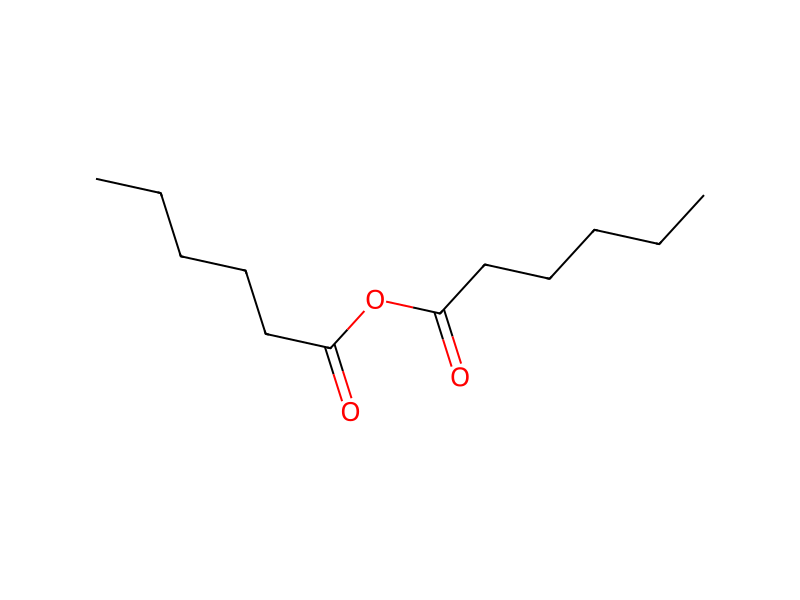
기본 정보
- CAS
2051-49-2- 표준 SMILES
CCCCCC(=O)OC(=O)CCCCC- InChIKey
PKHMTIRCAFTBDS-UHFFFAOYSA-N- 분자식
- C12H22O3
- 평균 분자량
- 214.3 g/mol
- 단동위원소 질량
- 214.15689456
개요
hexanoic anhydride has been reported in Nicotiana tabacum with data available.
이름 및 식별자
- 우선 이름
- Hexanoic anhydride
- IUPAC
- hexanoyl hexanoate
- 영어명
- HEXANOIC ANHYDRIDE
- 분자식
- C12H22O3
- 분자량
- 214.3
이름 및 동의어
Hexanoic anhydride2051-49-2hexanoyl hexanoateCaproic anhydrideHexanoic acid, anhydrideHexanoic acid, 1,1'-anhydriden-Hexanoic anhydrideCaproic acid anhydrideCapronic acid anhydrideCapronic anhydrideHexanoyl anhydriden-Hexanoic acid anhydride
이름 더 보기
hexanoylhexanoateN-HEXOIC ANHYDRIDEn-CapriocanhydrideN-CAPROIC ANHYDRIDEN-CAPRONIC ANHYDRIDE
GG70Y8LTBYEINECS 218-121-4AI3-06132DTXSID20870929EC 218-121-4RefChem:787419Hexanoic acid, 1,1'anhydrideDTXCID30818610
데이터베이스 식별자
- CAS
2051-49-2- PubChem CID
- 74918
- DTXSID
DTXSID20870929- UNII
- GG70Y8LTBY
- EC Number
- 218-121-4
- Nikkaji
- J95.911A
물성
구조 계산 물성
- XLogP
- 3.7
- 극성 표면적
- 43.4 Ų
- 수소 결합 공여자 수
- 0
- 수소 결합 수용자 수
- 3
- 회전 가능 결합 수
- 10
- 무거운 원자 수
- 15
- 형식 전하
- 0
- 복잡도
- 167
실험 및 물리화학적 성질
Chemical Classes
Other Classes -> Acid Anhydrides, Other
Industrial compound
SpringerMaterials PropertiesOptical coefficient
Physical DescriptionClear slightly yellow liquid; [Acros Organics MSDS]
물리화학적 성질
- 녹는점
- -40 °C · -40 °C
- 끓는 점
- 246 · 246-248 °C (lit.)
- 밀도
- 0.928 g/mL · 0.928 g/mL at 20 °C (lit.)
- 증기압
- 2.9 Pa · 2.9Pa at 25℃
- 굴절률
- 20 · n20/D 1.428(lit.)
- 인화점
- 230 °F · >230 °F
- 저장 조건
- 30 °C · Store below +30°C.
- 용해도
- 1 g/10mL, · 에탄올: 용해성1g/10mL, 투명, 무색
- 물리적 상태
- 액체
- 색상
- 무색투명~연황색
- 폭발한계
- 0.7 % · 0.7%(V)
- 수용성
- 물에서 가수분해됩니다.
- BRN
- 1776561 · 1776561
안전 및 규제
안전 정보는 참고용이며, 공급업체의 물질안전보건자료(SDS), 관련 법규 및 전문가 평가를 대체하지 않습니다.
GHS 분류
GHS Classification
Danger
H314 (96.7%): Causes severe skin burns and eye damage [Danger Skin corrosion/irritation]
P260, P264, P280, P301+P330+P331, P302+P361+P354, P304+P340, P305+P354+P338, P316, P321, P363, P405, and P501 (click each P-code to see the statement)
Aggregated GHS information provided per 61 reports by companies from 5 notifications to the ECHA C&L Inventory.
유해성 정보
Regulatory Information
Chemical: Hexanoic acid, anhydride
Status: Active Update: 02-05-2018 https://echa.europa.eu/registration-dossier/-/registered-dossier/23159
Hexanoic anhydride: Does not have an individual approval but may be used under an appropriate group standard
Other Safety InformationIMAP assessments - Hexanoic acid, anhydride: Environment tier I assessment
Hazards SummaryCauses burns; Inhalation may cause corrosive injuries to upper respiratory tract and lungs; [Acros Organics MSDS] See Butyric anhydride.
Hazard Classes and CategoriesSkin Corr. 1B (96.7%)
독성 정보
Adverse EffectsDermatotoxin - Skin burns.
안전 데이터
- wgk
- 3
- tsca
- TSCA listed
- ridadr
- UN 3265 8/PG 2
- HS 번호
- 29159000
- risk_code
- 34
화학 및 산업
용도 및 제조
General Manufacturing InformationHexanoic acid, 1,1'-anhydride: ACTIVE
응용 분야
용도Hexanoic anhydride has been used in:green synthesis of esters of acyclovir (acyclovir prodrugs)preparation of hexanoyl-modified chitosan nanoparticles and chitosan-based polymeric surfactants via N-acylation of chitosans
제조 방법
To an ice-cooled flask containing 116 gm (1.0 mole) of n-caproic acid is added 21.0-23.10 gm (0.5-0.55 mole) of ketene at a rate of 0.45 mole/hr. The reaction mixture is fractionally distilled at atmospheric pressure to afford a forecut of acetone, acetic acid, and acetic anhydride. The oil bath is raised to 220°C over a 1-hr period, kept there for 3 hr to ensure complete removal of acetic acid, and then cooled. The distillation is continued under reduced pressure to afford 86-95 gm (80-87%), b.p. 109- 112°C (3 mm Hg) and b.p. 118-121°C (6 mm Hg).
상·하류 제품 정보
상류 원료
하류 제품
관련 반응
13건


화합물 노트
불러오는 중…