홈MCP워크벤치Skills
홈워크벤치알림마이페이지
llms.txt · MCP 가이드개인정보처리방침 · 이용약관 · 지원v1.8.0
  1. 홈
  2. /화합물

2-시아노피린딘

Pyridine-2-carbonitrile

HCID 7522
새 노트새 반응견적 요청하기
인쇄 미리보기
기본 정보개요이름 및 식별자물성안전 및 규제화학 및 산업관련 반응화합물 노트
부분 구조 검색유사 구조 찾기

기본 정보

CAS
100-70-9
표준 SMILES
N#Cc1ccccn1
InChIKey
FFNVQNRYTPFDDP-UHFFFAOYSA-N
분자식
C6H4N2
평균 분자량
104.11 g/mol
단동위원소 질량
104.03744814

개요

2-cyanopyridine is a cyanopyridine carrying the cyano group at position 2.

이름 및 식별자

우선 이름
Pyridine-2-carbonitrile
IUPAC
pyridine-2-carbonitrile
현지명
2-시아노피린딘
영어명
2-Cyanopyridine
분자식
C6H4N2
분자량
104.11

이름 및 동의어

Pyridine-2-carbonitrileRefChem:4833572-CyanopyridinePicolinonitrile100-70-92-PYRIDINECARBONITRILEPyridinecarbonitrilePicolinic acid nitrile2-Pyridyl nitrilecyanopyridine29386-66-12-Pyridinecarboxylic acid, nitrile
이름 더 보기
2-시아노피린딘NSC 59697picolylnitrile2 cyanopyrimideα-Cyanopyridine
MFCD00006218DTXSID9021843WHR1DPG7YSCHEMBL3185861CHEBI:27837NSC-59697DTXCID1018432-pyridylnitrile

데이터베이스 식별자

CAS
100-70-9、29386-66-1
PubChem CID
7522
DTXSID
DTXSID9021843
ChEMBL
CHEMBL3185861
ChEBI
CHEBI:27837
UNII
WHR1DPG7YS
EC Number
202-880-3
Nikkaji
J58.011B

물성

구조 계산 물성

XLogP
0.4
극성 표면적
36.7 Ų
수소 결합 공여자 수
0
수소 결합 수용자 수
2
회전 가능 결합 수
0
무거운 원자 수
8
형식 전하
0
복잡도
111

실험 및 물리화학적 성질

Chemical ClassesNitrogen Compounds -> Nitriles
SpringerMaterials Properties15N nuclear magnetic resonance spectrum
LogP · 2건

log Kow= 0.45

0.5

Density1.0810 @ 25 °C
Color/FormNEEDLES OR PRISMS FROM ETHER
Solubility · 2건

Soluble in water, alcohol, ether, and benzene.

Soluble in chloroform; slightly soluble in petroleum ether.

Boiling Point224.5 °C
Melting Point29 °C
Vapor Pressure0.09 [mmHg]
Refractive IndexIndex of refraction: 1.5242 @ 25 °C/D
Physical DescriptionSolid; [HSDB] Low melting solid; mp = 26-28 deg C; [MSDSonline]
Dissociation Constants

안전 및 규제

안전 정보는 참고용이며, 공급업체의 물질안전보건자료(SDS), 관련 법규 및 전문가 평가를 대체하지 않습니다.

GHS 분류

GHS Classification · 6건

Warning

H302 (96.5%): Harmful if swallowed [Warning Acute toxicity, oral]

P261, P264, P264+P265, P270, P271, P280, P301+P317, P302+P352, P304+P340, P305+P351+P338, P319, P321, P330, P332+P317, P337+P317, P362+P364, P403+P233, P405, and P501 (click each P-code to see the statement)

Aggregated GHS information provided per 115 reports by companies from 11 notifications to the ECHA C&L Inventory. Each notification may be associated with multiple companies.

Warning

H302: Harmful if swallowed [Warning Acute toxicity, oral]

유해성 정보

Regulatory Information · 3건

Chemical: 2-Pyridinecarbonitrile

REACH registered substance: Pyridine-2-carbonitrile (EC: 202-880-3)

2-Pyridinecarbonitrile: Does not have an individual approval but may be used under an appropriate group standard

Hazards SummaryEmergency treatment: Pyridine; Pyridine is an irritant that causes CNS depression after ingestion of 1/2 cup or inhalation of 6-12 ppm; It can cause liver and kidney injury; [HSDB] An irritant; [MSDSonline] See NITRILES.
TSCA Requirements · 1건

Pursuant to section 8(d) of TSCA, EPA promulgated a model Health and Safety Data Reporting Rule. The section 8(d) model rule requires manufacturers, importers, and processors of listed chemical substances and mixtures to submit to EPA copies and lists of unpublished health and safety studies. 2-Pyridinecarbonitrile is included on this list.

Hazard Classes and Categories · 2건

Acute Tox. 4 (96.5%)

Acute toxicity (Oral) - Category 4

Skin, Eye, and Respiratory IrritationsPyridine and its derivatives cause local irritation on contact with the skin, mucous membranes and cornea. /Pyridine and its derivatives/

화학 및 산업

용도 및 제조

Uses · 3건

Used as a chemical intermediate for rimiterol hydrobromide (bronchodilator) and other chemicals; [HSDB]

CHEM INT FOR RIMITEROL HYDROBROMIDE, A BRONCHODILATOR

An important chemical intermediate.

Methods of ManufacturingVAPOR PHASE AMMOXIDATION OF 2-METHYLPYRIDINE WITH AMMONIA IN THE PRESENCE OF AIR
General Manufacturing Information2-Pyridinecarbonitrile: ACTIVE

응용 분야

용도2-Cyanopyridine is a cyano substituted pyridine. 2-Cyanopyridine is a related compound of nicotine and is a component of tobacco smoke condensate.

상·하류 제품 정보

상류 원료

2-(2-피리디닐)-1,3,4-옥사디아졸2-Iodopyridine4-Chloro-pyridine-2-carbonitrile2-Pyridinecarbaldehyde oximePropanedinitrile, 2-(dimethylamino)-2-피리딘 메탄올아연 시아니드트리메틸아세토니트릴사이안화 칼륨2-브로모피리딘

관련 반응

230건
반응 기록 만들기
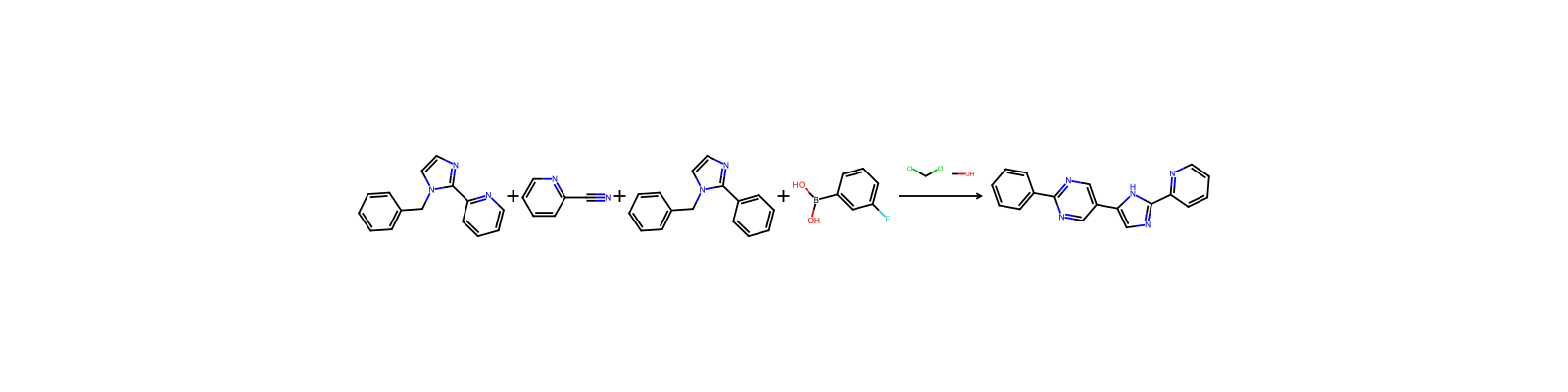
HRID 17112 반응식
HRID 17112반응물로uspto-grants-2010_06
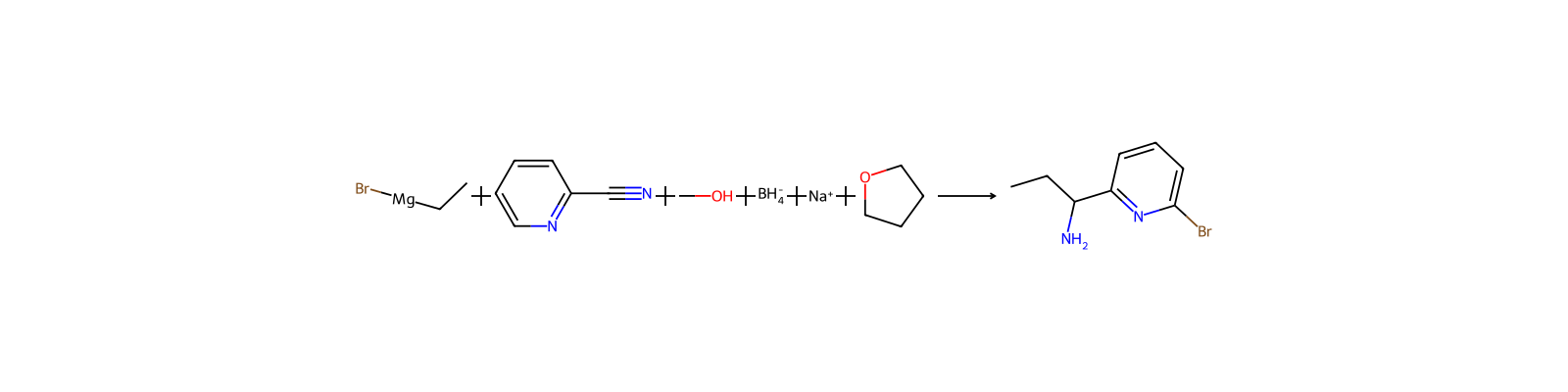
HRID 19711 반응식
HRID 19711반응물로uspto-grants-2010_06
HRID 35895 반응식
HRID 35895반응물로uspto-grants-1995_05
HRID 42280 반응식
HRID 42280반응물로uspto-grants-2013_09
HRID 52339 반응식
HRID 52339반응물로uspto-grants-1997_04
HRID 52568 반응식
HRID 52568반응물로uspto-grants-1997_04
HRID 125715 반응식
HRID 125715반응물로Training data from https://doi.org/10.1039/C8SC04228D (2/10)
HRID 138948 반응식
HRID 138948반응물로Training data from https://doi.org/10.1039/C8SC04228D (9/10)
1 / 29 페이지

화합물 노트

불러오는 중…

이 페이지에서기본 정보개요이름 및 식별자물성안전 및 규제화학 및 산업관련 반응화합물 노트
더보기
새 노트새 반응견적 요청하기
pKa = 0.26 (conjugate acid)

물리화학적 성질

녹는점
24 · 24-27 °C(lit.)
끓는 점
212 · 212-215 °C(lit.)
밀도
1.081 g/mL · 1.081 g/mL at 25 °C(lit.)
증기압
11.96 Pa · 11.96Pa at 25℃
굴절률
20 · n20/D 1.529(lit.)
인화점
193 °F · 193 °F
저장 조건
Inert atmosphere,Room Temperature
용해도
67 g/L · 67g/L
물리적 상태
저융점 결정성 고체
산도 계수 (pKa)
1 · pK1:-0.26(+1) (25°C)
색상
흰색에서 갈색으로
수소이온지수(pH)
8.4 · 8.4 (100g/l, H2O)
수용성
섞일 수 없음
BRN
107710 · 107710
Henry's Law Constant
1.4 · 1.4×102 mol/(m3Pa) at 25℃, HSDB (2015)
Dielectric constant
93.77 · 93.769999999999996
InChI
1S/C6H4N2/c7-5-6-3-1-2-4-8-6/h1-4H
InChIKey
FFNVQNRYTPFDDP-UHFFFAOYSA-N
SMILES
N#Cc1ccccn1
LogP
0.45 at · 0.45 at 25℃
NIST
2 · 2-Pyridinecarbonitrile(100-70-9)
EPA
2 · 2-Pyridinecarbonitrile (100-70-9)

화학적 성질

white to brown low melting crystalline solid

안전 및 보호

Disposal Methods · 1건

SRP: At the time of review, criteria for land treatment or burial (sanitary landfill) disposal practices are subject to significant revision. Prior to implementing land disposal of waste residue (including waste sludge), consult with environmental regulatory agencies for guidance on acceptable disposal practices.

Preventive Measures · 1건

SRP: The scientific literature for the use of contact lenses in industry is conflicting. The benefit or detrimental effects of wearing contact lenses depend not only upon the substance, but also on factors including the form of the substance, characteristics and duration of the exposure, the uses of other eye protection equipment, and the hygiene of the lenses. However, there may be individual substances whose irritating or corrosive properties are such that the wearing of contact lenses would be harmful to the eye. In those specific cases, contact lenses should not be worn. In any event, the usual eye protection equipment should be worn even when contact lenses are in place.

Personal Protective Equipment (PPE) · 1건

Depending on the extent of possible contact, workers should be provided with personal protective equipment. A charcoal gas mask canister respirator has been found to be effective against a 2% pyridine concentration at 30 l/min for 1 hr. Rubber and plastic gloves should not be relied upon to prevent skin contact because pyridine and many of its derivatives penetrate these materials ... . /Pyridine, homologs, and derivatives/

독성 정보

Ecotoxicity Values · 2건

LC50 Pimephales promelas (fathead minnow) 726 mg/l/96 hr (confidence limit 673 - 783 mg/l), flow-through bioassay with measured concentrations, 25.0 °C, dissolved oxygen 5.7 mg/l, hardness 45.0 mg/l CaCO3, alkalinity 51.3 mg/l CaCO3, and pH 7.58.

EC50 Pimephales promelas (fathead minnow) 726 mg/l/96 hr (confidence limit 673 - 783 mg/l), flow-through bioassay with measured concentrations, 25.0 °C, dissolved oxygen 5.7 mg/l, hardness 45.0 mg/l CaCO3, alkalinity 51.3 mg/l CaCO3, and pH 7.58. Effect: loss of equilibrium.

Environmental Fate · 3건

TERRESTRIAL FATE: Based on a classification scheme(1), an estimated Koc value of 42(SRC), determined from a log Kow of 0.45(2) and a regression-derived equation(3), indicates that 2-pyridinecarbonitrile is expected to have very high mobility in soil(SRC). Volatilization of 2-pyridinecarbonitrile from moist soil surfaces is not expected to be an important fate process(SRC) given an estimated Henry's Law constant of 6.89X10⁻⁸ atm-cu m/mole(SRC), using a fragment constant estimation method(4). 2-Pyridinecarbonitrile is not expected to volatilize from dry soil surfaces(SRC) based upon an estimated vapor pressure of 0.5 mm Hg(SRC), determined from its estimated water solubility, 25,500 mg/l(5), and estimated Henry's law constant(4). In water, the half-life for 2-pyridinecarbonitrile in an anoxic sediment from the Tansui River (Taiwan) was 16.5 hrs based in a pseudo-first-order rate constant of 1.01 per day(6); this suggests that 2-pyridinecarbonitrile may biodegrade in soil under anaerobic conditions(SRC).

AQUATIC FATE: Based on a classification scheme(1), an estimated Koc value of 42(SRC), determined from a log Kow of 0.45(2) and a regression-derived equation(3), indicates that 2-pyridinecarbonitrile is not expected to adsorb to suspended solids and sediment(SRC). Volatilization from water surfaces is not expected(3) based upon an estimated Henry's Law constant of 6.89X10⁻⁸ atm-cu m/mole(SRC), developed using a fragment constant estimation method(4). According to a classification scheme(5), an estimated BCF of 3(SRC), from its log Kow(2) and a regression-derived equation(6), suggests the potential for bioconcentration in aquatic organisms is low(SRC). The half-life for 2-pyridinecarbonitrile in an anoxic sediment from the Tansui River (Taiwan) was 16.5 hrs based in a pseudo-first-order rate constant of 1.01 per day(7), which suggests that 2-pyridinecarbonitrile may biodegrade in the environment under anaerobic conditions(SRC).

ATMOSPHERIC FATE: According to a model of gas/particle partitioning of semivolatile organic compounds in the atmosphere(1), 2-pyridinecarbonitrile, which has an estimated vapor pressure of 0.5 mm Hg at 25 °C(SRC), determined from its estimated water solubility, 25,500 mg/l(2), and its estimated Henry's law constant, 6.89X10⁻⁸ atm/cu m/mole(3), is expected to exist solely as a vapor in the ambient atmosphere(SRC). Vapor-phase 2-pyridinecarbonitrile is degraded in the atmosphere by reaction with photochemically-produced hydroxyl radicals(SRC); the half-life for this reaction in air is estimated to be 246 days(SRC), calculated from its rate constant of 6.53X10⁻¹⁴ cu cm/molecule-sec at 25 °C(SRC) determined using a structure estimation method(4).

Food Survey Values2-Pyridinecarbonitrile was qualitatively detected in the volatile components of meat(1).
Adverse EffectsNeurotoxin - Other CNS neurotoxin
Effluent ConcentrationsPyridinecarbonitrile (isomer not specified) was detected in 1 of 21 industrial wastewater effluents at a concn between 10 and 100 ug/l(1).
Soil Adsorption/Mobility · 1건

The Koc of 2-pyridinecarbonitrile is estimated as 42(SRC), using a measured log Kow of 0.45(1) and a regression-derived equation(2). According to a classification scheme(3), this estimated Koc value suggests that 2-pyridinecarbonitrile is expected to have very high mobility in soil(SRC).

Atmospheric Concentrations2-Pyridinecarbonitrile was qualitatively listed as a contaminant of the ambient air at Houston, TX(1).
Artificial Pollution Sources2-Pyridinecarbonitrile's production and use as a chemical intermediate(1) may result in its release to the environment through various waste streams(SRC).
Environmental Biodegradation · 1건

ANAEROBIC: The maximum pseudo-first-order rate constant and half-life for 2-pyridinecarbonitrile in an anoxic sediment slurry from the estuary of the Tansui River (Guandu, Taipei) were 1.01 per day and 16.5 hrs, respectively(1). 2-Pyridinecarbonitrile was not transformed in the sterile control sediment slurry(1) which suggests that 2-pyridinecarbonitrile may degrade in the environment, at least under anaerobic conditions(SRC).

Environmental Bioconcentration · 1건

An estimated BCF of 3 was calculated for 2-pyridinecarbonitrile(SRC), using a log Kow of 0.45(1) and a regression-derived equation(2). According to a classification scheme(3), this BCF suggests the potential for bioconcentration in aquatic organisms is low(SRC).

Volatilization from Water/Soil · 1건

The Henry's Law constant for 2-pyridinecarbonitrile is estimated as 6.89X10⁻⁸ atm-cu m/mole(SRC) using a fragment constant estimation method(1). This Henry's Law constant indicates that 2-pyridinecarbonitrile is expected to be essentially nonvolatile from water surfaces(2). 2-Pyridinecarbonitrile is not expected to volatilize from dry soil surfaces(SRC) based upon an estimated vapor pressure of 0.5 mm Hg(SRC), determined from its estimated water solubility, 25,500 mg/l(3), and its estimated Henry's law constant(1).

Environmental Abiotic Degradation · 1건

The rate constant for the vapor-phase reaction of 2-pyridinecarbonitrile with photochemically-produced hydroxyl radicals has been estimated as 6.53X10⁻¹⁴ cu cm/molecule-sec at 25 °C(SRC) using a structure estimation method(1). This corresponds to an atmospheric half-life of about 246 days at an atmospheric concentration of 5X10+5 hydroxyl radicals per cu cm(1). 2-Pyridinecarbonitrile is expected to undergo slow hydrolysis in the environment based upon the slow hydrolysis of other aromatic nitriles, eg benzonitrile(2). 2-Pyridinecarbonitrile will not directly photolyze due to the lack of absorption in the environmental UV spectrum (>290 nm)(SRC).

규제 정보

TSCA Requirements · 1건

Pursuant to section 8(d) of TSCA, EPA promulgated a model Health and Safety Data Reporting Rule. The section 8(d) model rule requires manufacturers, importers, and processors of listed chemical substances and mixtures to submit to EPA copies and lists of unpublished health and safety studies. 2-Pyridinecarbonitrile is included on this list.

안전 데이터

wgk
3
tsca
TSCA listed
ridadr
3276
HS 번호
29333999
risk_code
22-36/37/38-20/21/22
hazard_code
Xn
safety_code
26-24/25
포장분류
III
위험 등급
6.1
Hazard Classifications
Acute Tox. 3 DermalAcute Tox. 4 Oral
스토리지 클래스
6.1C - Combustible acute toxic Cat.3toxic compounds or compounds which causing chronic effects
유해 물질 데이터
100-70-9(Hazardous Substances Data)
2-클로로피리딘

하류 제품

2-피리딜아미독심Di-2-pyridyl ketone디-(2-피코릴)아민2-CYANOPYRIDIN-3-일보론산피콜린아미드Pyridine-2-carboximidamide hydrochloride피콜리아민

추가 설명

정의ChEBI: A cyanopyridine carrying the cyano group at position 2.