
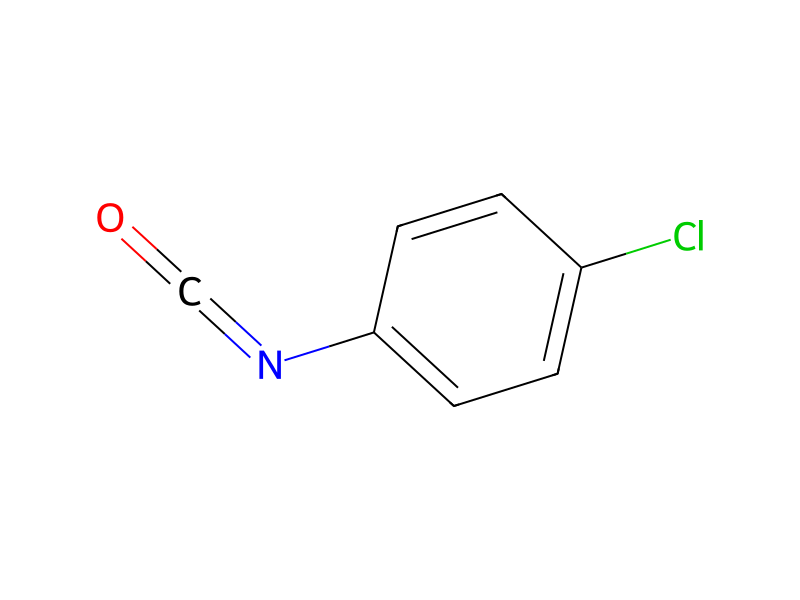
기본 정보
- 표준 SMILES
O=C=Nc1ccc(Cl)cc1- InChIKey
ADAKRBAJFHTIEW-UHFFFAOYSA-N- 분자식
- C7H4ClNO
- 평균 분자량
- 153.56 g/mol
- 단동위원소 질량
- 152.99814143
개요
P-chlorophenyl isocyanate appears as colorless to yellow liquid or crystals. Used as an intermediate in pesticide and pharmaceutical manufacture.
이름 및 식별자
- 우선 이름
- 4-Chlorophenyl Isocyanate
- IUPAC
- 1-chloro-4-isocyanatobenzene
- 현지명
- 4-클로로페닐 이소시안산
- 영어명
- 4-Chlorophenyl isocyanate
- 분자식
- C7H4ClNO
- 분자량
- 153.57
이름 및 동의어
4-Chlorophenyl isocyanate104-12-11-Chloro-4-isocyanatobenzenep-Chlorophenyl isocyanateBenzene, 1-chloro-4-isocyanato-4-Chloroisocyanatobenzenepara-Chlorophenyl isocyanate4-Chlorophenylisocyanatep-ChlorfenylisokyanatISOCYANIC ACID, P-CHLOROPHENYL ESTERp-Chlorfenylisokyanat [Czech]NSC 76589
이름 더 보기
4-클로로페닐아이소시안산4-클로로페닐이소시안산4-클로로페닐아이소시안산1-클로로-4-아이소사이아나토벤젠4-클로로페닐 아이소사이네이트PCPI4-Chlorphenylisocyanate4-ISOCYANATO CHLOROBENZENEPARA CHLOROPHENYL ISOCYANATEpcic4-Chlorophenyl isocy4-Chlorphenylisocyanat
DTXSID7040732HSDB 1331EINECS 203-176-9W46XL60WI8NSC-76589DTXCID5020732EC 203-176-9P-CHLORFENYLISOKYANAT (CZECH)
데이터베이스 식별자
- CAS
104-12-1- PubChem CID
- 7693
- DTXSID
DTXSID7040732- ChEMBL
CHEMBL1865294- UNII
- W46XL60WI8
- EC Number
- 203-176-9
- Nikkaji
- J30.180I
물성
구조 계산 물성
- XLogP
- 3.3
- 극성 표면적
- 29.4 Ų
- 수소 결합 공여자 수
- 0
- 수소 결합 수용자 수
- 2
- 회전 가능 결합 수
- 1
- 무거운 원자 수
- 10
- 형식 전하
- 0
- 복잡도
- 146
실험 및 물리화학적 성질
Chemical ClassesToxic Gases & Vapors -> Monoisocyanates
SpringerMaterials Properties15N nuclear magnetic resonance spectrum
DensityDensity: 1.25 g/cu cm at 40 °C
Color/Form
Colorless to slightly yellow liquid or crystals
White solid or crystals
SolubilitySoluble in organic solvents
Flash Point
110 °C
230 °F
Boiling Point
204 °C
BP: 116 °C at 45 mm Hg
DecompositionWhen heated to decomposition it emits toxic fumes of /hydrogen chloride, hydrogen cyanide and nitrogen oxides/.
Melting Point31.3 °C
Vapor Pressure
95.4 [mmHg]
VP: 95.4 mm Hg at 20 °C
19.4 mm Hg at 25 °C (extrapolated)
Refractive IndexIndex of refraction: 1.5543 at 40 °C/D
Physical Description
P-chlorophenyl isocyanate appears as colorless to yellow liquid or crystals. Used as an intermediate in pesticide and pharmaceutical manufacture.
Colorless to yellow liquid or white solid; [Hawley] White crystalline solid; mp = 29-31 deg C; [MSDSonline]
물리화학적 성질
- 녹는점
- 26 · 26-29 °C (lit.)
- 끓는 점
- 203 · 203-204 °C (lit.)
- 밀도
- 1.2 g/mL · 1.2 g/mL at 25 °C (lit.)
- 증기압
- 30 Pa · 30Pa at 20℃
- 굴절률
- 20 · n20/D 1.5618(lit.)
- 인화점
- 230 °F · >230 °F
- 저장 조건
- 2 · 2-8°C
- 용해도
- 클로로포름(약간 용해됨)
- 물리적 상태
- 결정질 고체
- 색상
- 흰색에서 노란색으로
- 냄새
- 날카로운 자극적인 냄새
- 수용성
- 물에서 분해되다
- BRN
- 386235 · 386235
- Henry's Law Constant
- 5.7 · 5.7×10-2 mol/(m3Pa) at 25℃, Zhang et al. (2010)
- InChI
- 1S/C7H4ClNO/c8-6-1-3-7(4-2-6)9-5-10/h1-4H
- InChIKey
- ADAKRBAJFHTIEW-UHFFFAOYSA-N
- SMILES
- Clc1ccc(cc1)N=C=O
- LogP
- 3.12 at · 3.12 at 22℃
- NIST
- 1 · Benzene, 1-chloro-4-isocyanato-(104-12-1)
- EPA
- p-Chlorophenyl isocyanate (104-12-1)
화학적 성질
white to yellow crystalline solid
안전 및 규제
GHS 분류
GHS Classification
Danger
H302: Harmful if swallowed [Warning Acute toxicity, oral]
P233, P260, P261, P264, P264+P265, P270, P271, P273, P280, P284, P301+P317, P302+P352, P304+P340, P305+P354+P338, P316, P317, P319, P320, P321, P330, P332+P317, P342+P316, P362+P364, P391, P403, P403+P233, P405, and P501 (click each P-code to see the statement)
Danger
H301 (32.6%): Toxic if swallowed [Danger Acute toxicity, oral]
P233, P260, P261, P264, P264+P265, P270, P271, P273, P280, P284, P301+P316, P301+P317, P302+P352, P304+P340, P305+P354+P338, P316, P317, P319, P320, P321, P330, P332+P317, P342+P316, P362+P364, P391, P403, P403+P233, P405, and P501 (click each P-code to see the statement)
유해성 정보
Regulatory Information
Hazard Traits - Respiratory Toxicity
Status: Active Update: 03-12-2015 https://echa.europa.eu/registration-dossier/-/registered-dossier/1148
4-Chlorophenyl isocyanate: Does not have an individual approval but may be used under an appropriate group standard
DOT LabelPoison
Fire HazardsExcerpt from ERG Guide 156 [Substances - Toxic and/or Corrosive (Combustible / Water-Sensitive)]:
Fire PotentialA flammable liquid when exposed to heat or flame.
Health HazardsExcerpt from ERG Guide 156 [Substances - Toxic and/or Corrosive (Combustible / Water-Sensitive)]:
Hazards Summary
A strong irritant of the skin and eyes; [Hawley] An irritant; May cause lacrimation and serious injury to eyes; May cause respiratory sensitization after prolonged contact; [MSDSonline] Could be carcinogenic for man but not conclusive because of insufficient data (3B); [MAK] See MONOISOCYANATES.
Reactive GroupIsocyanates and Isothiocyanates
TSCA Requirements
Section 8(a) of TSCA requires manufacturers of this chemical substance to report preliminary assessment information concerned with production, exposure, and use to EPA as cited in the preamble in 51 FR 41329. Effective date: 10/29/90; Reporting date: 12/27/90.
Pursuant to section 8(d) of TSCA, EPA promulgated a model Health and Safety Data Reporting Rule. The section 8(d) model rule requires manufacturers, importers, and processors of listed chemical substances and mixtures to submit to EPA copies and lists of unpublished health and safety studies. Benzene, 1-chloro-4-isocyanato- is included on this list. Effective date: 10/29/90; Sunset date: 6/30/98.
Reactivity Profile
Isocyanates and thioisocyanates are incompatible with many classes of compounds, reacting exothermically to release toxic gases. Reactions with amines, aldehydes, alcohols, alkali metals, ketones, mercaptans, strong oxidizers, hydrides, phenols, and peroxides can cause vigorous releases of heat. Acids and bases initiate polymerization reactions in these materials. Some isocyanates react with water to form amines and liberate carbon dioxide. Base-catalysed reactions of isocyanates with alcohols should be carried out in inert solvents. Such reactions in the absence of solvents often occur with explosive violence, [Wischmeyer(1969)].
Air and Water ReactionsNo rapid reaction with air. No rapid reaction with water.
Hazard Classes and Categories
Acute Tox. 3 (32.6%)
Specific target organ toxicity (single exposure) - category 3
Acute Tox. 2 *
Explosive Limits and PotentialCan explode on distillation.
안전 및 보호
Fire FightingExcerpt from ERG Guide 156 [Substances - Toxic and/or Corrosive (Combustible / Water-Sensitive)]:
First AidExcerpt from ERG Guide 156 [Substances - Toxic and/or Corrosive (Combustible / Water-Sensitive)]:
Fire Fighting ProceduresWhere there is a fire involving isocyanates, carbon dioxide or powder extinguishers must be employed. Firemen must be equipped with self-contained breathing apparatus. /Isocyanates/
Storage Conditions
Isocyanates are transported in railroad tank cars, tank trucks, tanks in ships, containers, and drums. They are stored in steel tanks and processed in steel equipment. For long-term storage stainless steel is recommended. To avoid contamination by atmospheric moisture, a dry air or inert gas blanket is essential. /Isocyanates/
Cleanup Methods
Decontamination of spilled isocyanates and disposal of isocyanate waste are best conducted by using aqueous ammonia (3-8% concentrated ammonia solution in 90-95% water with 0.2-5% liquid detergent) or aqueous sodium carbonate (5-10% sodium carbonate in 90-95% water and 0.2-5% liquid detergent). An alcoholic solution (50% ethanol, isopropyl alcohol, or butanol; 45% water; and 5% concentrated ammonia) may be preferred because of the low miscibility of isocyanates with water. /Isocyanates/
Nonfire Spill ResponseExcerpt from ERG Guide 156 [Substances - Toxic and/or Corrosive (Combustible / Water-Sensitive)]:
Disposal Methods
SRP: The most favorable course of action is to use an alternative chemical product with less inherent propensity for occupational harm/injury/toxicity or environmental contamination. Recycle any unused portion of the material for its approved use or return it to the manufacturer or supplier. Ultimate disposal of the chemical must consider: the material's impact on air quality; potential migration in soil or water; effects on animal and plant life; and conformance with environmental and public health regulations.
SRP: Wastewater from contaminant suppression, cleaning of protective clothing/equipment, or contaminated sites should be contained and evaluated for subject chemical or decomposition product concentrations. Concentrations shall be lower than applicable environmental discharge or disposal criteria. Alternatively, pretreatment and/or discharge to a permitted wastewater treatment facility is acceptable only after review by the governing authority and assurance that "pass through" violations will not occur. Due consideration shall be given to remediation worker exposure (inhalation, dermal and ingestion) as well as fate during treatment, transfer and disposal. If it is not practicable to manage the chemical in this fashion, it must be evaluated in accordance with EPA 40 CFR Part 261, specifically Subpart B, in order to determine the appropriate local, state and federal requirements for disposal.
Preventive Measures
SRP: Contaminated protective clothing should be segregated in such a manner so that there is no direct personal contact by personnel who handle, dispose, or clean the clothing. The completeness of the cleaning procedures should be considered before the decontaminated protective clothing is returned for reuse by the workers. Contaminated clothing should not be taken home at the end of shift, but should remain at employee's place of work for cleaning.
SRP: The scientific literature for the use of contact lenses by industrial workers is inconsistent. The benefits or detrimental effects of wearing contact lenses depend not only upon the substance, but also on factors including the form of the substance, characteristics and duration of the exposure, the uses of other eye protection equipment, and the hygiene of the lenses. However, there may be individual substances whose irritating or corrosive properties are such that the wearing of contact lenses would be harmful to the eye. In those specific cases, contact lenses should not be worn. In any event, the usual eye protection equipment should be worn even when contact lenses are in place.
The open points at the interface between different forms of protective clothing, e.g., the opening that forms between the sleeve of a protective suit and a glove, should be sealed to prevent exposure through the interface. A common and effective method for sealing these interfaces is to use duct tape to join the two different forms of protective clothing. /Isocyanate-containing substances/
NIOSH recommends that employers provide workers with appropriate training on the inhalation and dermal exposure hazards associated with isocyanate-containing materials and on the proper use of personal protective equipment (PPE) associated with protection from these exposures. /Isocyanate-containing substances/
NIOSH recommends that empoloyers conduct industrial hygiene (IH) surveys on all workers potentially exposed to isocyanates. /Isocyanates/
Isolation and EvacuationExcerpt from ERG Guide 156 [Substances - Toxic and/or Corrosive (Combustible / Water-Sensitive)]:
Personal Protective Equipment (PPE)
Excerpt from ERG Guide 156 [Substances - Toxic and/or Corrosive (Combustible / Water-Sensitive)]:
NIOSH investigators recommend that dermal exposures to isocyanate-containing substances be prevented. Employers should provide protective clothing, gloves, and footwear that is impervious to isocyanate--containing compounds. The protective clothing should either be disposed or laundered after each use (e.g., at the end of the work shift). The gloves should be elbow-length and made of an isocyanate-resistant material. /Isocyanate-containing substances/
Face-shields and aprons should be used whenever there is a possibility of a splash or a spill of liquids containing isocyanate-containing materials. /Isocyanate-containing substances/
독성 정보
Environmental Fate
TERRESTRIAL FATE: Isocyanates hydrolyze readily(1), suggesting that adsorption of 4-chlorophenyl isocyanate is not expected to be an important fate process in moist soil(SRC). 4-Chlorophenyl isocyanate is expected to volatilize from dry soil surfaces(SRC) based upon a vapor pressure of 0.194 mm Hg at 25 °C(4). Biodegradation data in soil were not available(SRC, 2012).
AQUATIC FATE: Isocyanates hydrolyze rapidly(1), indicating that adsorption to sediments, volatilization from water and moist soil and bioconcentration of 4-chlorophenyl isocyanate are not expected to be important environmental fate processes(SRC). Biodegradation data in water were not available(SRC, 2012).
ATMOSPHERIC FATE: According to a model of gas/particle partitioning of semivolatile organic compounds in the atmosphere(1), 4-chlorophenyl isocyanate, which has a vapor pressure of 0.194 mm Hg at 25 °C(2), is expected to exist solely as a vapor in the ambient atmosphere. Vapor-phase 4-chlorophenyl isocyanate is degraded in the atmosphere by reaction with photochemically-produced hydroxyl radicals(SRC); the half-life for this reaction in air is estimated to be 7 days(SRC), calculated from its rate constant of 1.5X10⁻¹² cu cm/molecule-sec at 25 °C(SRC) that was derived using a structure estimation method(3). 4-Chlorophenyl isocyanate does not contain chromophores that absorb at wavelengths >290 nm(4), and therefore is not expected to be susceptible to direct photolysis by sunlight(SRC).
Adverse EffectsLacrimator (Lachrymator) - A substance that irritates the eyes and induces the flow of tears.
Toxicity Summary
IDENTIFICATION AND USE: 4-Chlorophenyl isocyanate is colorless to slightly yellow liquid or crystals. It can also exist as a white solid or crystalline material. It is soluble in water and organic solvents. It is used as a chemical intermediate for pharmaceuticals, herbicides and pesticides. HUMAN EXPOSURE AND TOXICITY: Acute effects include airway irritation, cough, dyspnea, asthma, sensitization, and reduced pulmonary function. Occupational asthma was detected in workers exposed to isocyanates. Isocyanates may cause dermatitis when contacting the skin and vapors are highly irritating to the mucous membranes of the eyes nose and throat. Exposure to isocyanates may produce gastrointestinal symptoms. Occupational exposure may occur through inhalation of dust and dermal contact.
Soil Adsorption/MobilityIsocyanates hydrolyze readily in water(1). Therefore, adsorption of 4-chlorophenyl isocyanate is not expected to be an important environmental fate process(SRC).
Human Toxicity Excerpts
/HUMAN EXPOSURE STUDIES/ Sera of six workers with conclusive evidence for IgE-mediated sensitization to isocyanates were used for evaluation of immunologic cross-reactivities among eight different isocyanate-protein conjugates. In all cases RAST and/or skin-test investigations revealed the presence of IgE antibodies reacting specifically with HSA conjugated with those isocyanates to which workers were exposed as well as with other isocyanates with which they had not been in contact. By the RAST inhibition technique, moderate to strong mutual cross-reactivities between all tested isocyanate-HSA conjugates--even between aromatic and aliphatic ones--could be demonstrated in tests with five sera. The magnitudes of cross-reactivities differed, however, from one patient to another. One serum contained IgE antibodies that were almost completely specific to TDI-HSA; with this serum only weak cross-reactivities with other isocyanate conjugates could be demonstrated. These results indicate the predominance of closely related antigenic determinants in HSA conjugated with different isocyanates. The common antibody-binding regions are obviously recognized to different extents by antibodies of clinically sensitized workers, indicating individual differences in specificities and avidities of antibody populations. Nearly complete lack of IgE binding of ovalbumin-bound TDI in RAST and RAST inhibition indicates carrier-specific antigenicity of isocyanate-protein conjugates. In addition, since unmodified HSA did not bind IgE, antigenic determinants of the conjugates studied should be predominantly formed by the isocyanate-protein bond regions and concurrently by neighboring amino acid residues of the HSA molecule. /Isocyanates/
/SIGNS AND SYMPTOMS/ ISOCYANATES MAY CAUSE DERMATITIS WHEN CONTACTING SKIN & VAPORS ARE HIGHLY IRRITATING TO MUCOUS MEMBRANES OF EYES, NOSE, & THROAT, & TO LUNGS. /ISOCYANATES/
/SIGNS AND SYMPTOMS/ Strong mucous membrane irritation causes eye, pulmonary, and gastrointestinal tract symptoms. These compounds are potent pulmonary sensitizers which cause bronchospasm, even in patients without prior airway hyperreactivity. Diisocyanate compounds act either as inducers of nonspecific bronchial hyperreactivity or as direct pharmacologic agonists. Isocyanates apparently have the potential to sensitize certain segments of the population. Elevated humoral antibodies (ie, specific IgE antibodies to the p-tolyl determinant but not the diisocyanate conjugate) were detected in sensitized workers, but cell-mediated immunity also may produce hypersensitivity reactions. In the absence of renewed exposure, radioallergosorbent titers may not distinguish sensitive from nonsensitized workers. At high doses, toluene diisocyanate may act directly on bronchial mucosa by interfering with cholinergic and adrenergic mechanisms. /Isocyanates/
/SIGNS AND SYMPTOMS/ Exposure to isocyanates is irritating to the skin, mucous membranes, eyes, and respiratory tract. The most common adverse health outcome associated with isocyanate exposure is asthma due to sensitization; less prevalent are contact dermatitis (both irritant and allergic forms) and hypersensitivity pneumonitis (HP). Contact dermatitis can result in symptoms such as rash, itching, hives, and swelling of the extremities. /Isocyanates/
For more Human Toxicity Excerpts (Complete) data for 4-Chlorophenyl Isocyanate (9 total), please visit the HSDB record page.
Artificial Pollution Sources
4-Chlorophenyl isocyanate's production and use as a chemical intermediate for pharmaceuticals, herbicides, and pesticides(1) may result in its release to the environment through various waste streams(SRC). The compound is a photodecomposition product of the herbicide, monuron(2).
Environmental BioconcentrationIsocyanates hydrolyze readily in water(1). Therefore, bioconcentration of 4-chlorophenyl isocyanate is not expected to be an important environmental fate process(SRC).
Volatilization from Water/Soil
Isocyanates hydrolyze readily in water(1). Therefore, adsorption to sediments and volatilization of 4-chlorophenyl isocyanate from water and moist soil are not expected to be an important environmental fate process(SRC). 4-Chlorophenyl isocyanate is expected to volatilize from dry soil surfaces(SRC) based upon a vapor pressure of 0.194 mm Hg(2).
Environmental Abiotic Degradation
The rate constant for the vapor-phase reaction of 4-chlorophenyl isocyanate with photochemically-produced hydroxyl radicals has been estimated as 1/5X10-12 cu cm/molecule-sec at 25 °C(SRC) using a structure estimation method(1). This corresponds to an atmospheric half-life of about 7 days at an atmospheric concentration of 5X10+5 hydroxyl radicals per cu cm(1). 4-Chlorophenyl isocyanate does not contain chromophores that absorb at wavelengths >290 nm(2), and therefore is not expected to be susceptible to direct photolysis by sunlight(SRC).
Isocyanates hydrolyze readily in water to yield a carbamic acid, which decarboxylates to produce CO2 and an amine; the latter immediately reacts with more isocyanate to yield a disubstituted urea(1). /Isocyanates/
Probable Routes of Human ExposureOccupational exposure to 4-chlorophenyl isocyanate may occur through inhalation of dust and dermal contact with this compound at workplaces where 4-chlorophenyl isocyanate is produced or used. (SRC)
Environmental Fate/Exposure Summary
4-Chlorophenyl isocyanate's production and use as a chemical intermediate may result in its release to the environment through various waste streams. The compound is a photodecomposition product of the herbicide, monuron. If released to air, a vapor pressure of 0.194 mm Hg at 25 °C indicates 4-chlorophenyl isocyanate will exist solely as a vapor in the atmosphere. Vapor-phase 4-chlorophenyl isocyanate will be degraded in the atmosphere by reaction with photochemically-produced hydroxyl radicals; the half-life for this reaction in air is estimated to be 7 days. 4-Chlorophenyl isocyanate does not contain chromophores that absorb at wavelengths >290 nm, and therefore is not expected to be susceptible to direct photolysis by sunlight. If released to moist soil, 4-chlorophenyl isocyanate is not expected to leach or adsorb to solids nor volatilize due to its rapid degradation reaction with water. 4-Chlorophenyl isocyanate may volatilize from dry soil surfaces based upon its vapor pressure. Biodegradation data in soil or water were not available. If released into water, 4-chlorophenyl isocyanate is not expected to adsorb to suspended solids and sediment based upon its rapid reaction with water. Volatilization from water surfaces and bioconcentration are not expected to be an important fate process based upon the rapid hydrolysis. Hydrolysis is an important environmental fate process since iocyanates hydrolyze readily in water to yield a carbamic acid. Occupational exposure to 4-chlorophenyl isocyanate may occur through inhalation of dust and dermal contact with this compound at workplaces where 4-chlorophenyl isocyanate is produced or used. (SRC)
Antidote and Emergency Treatment
/SRP:/ Immediate first aid: Ensure that adequate decontamination has been carried out. If patient is not breathing, start artificial respiration, preferably with a demand valve resuscitator, bag-valve-mask device, or pocket mask, as trained. Perform CPR if necessary. Immediately flush contaminated eyes with gently flowing water. Do not induce vomiting. If vomiting occurs, lean patient forward or place on the left side (head-down position, if possible) to maintain an open airway and prevent aspiration. Keep patient quiet and maintain normal body temperature. Obtain medical attention. /Poisons A and B/
/SRP:/ Basic treatment: Establish a patent airway (oropharyngeal or nasopharyngeal airway, if needed). Suction if necessary. Watch for signs of respiratory insufficiency and assist ventilations if needed. Administer oxygen by nonrebreather mask at 10 to 15 L/min. Monitor for pulmonary edema and treat if necessary ... . Monitor for shock and treat if necessary ... . Anticipate seizures and treat if necessary ... . For eye contamination, flush eyes immediately with water. Irrigate each eye continuously with 0.9% saline (NS) during transport ... . Do not use emetics. For ingestion, rinse mouth and administer 5 mL/kg up to 200 mL of water for dilution if the patient can swallow, has a strong gag reflex, and does not drool ... . Cover skin burns with dry sterile dressings after decontamination ... . /Poisons A and B/
/SRP:/ Advanced treatment: Consider orotracheal or nasotracheal intubation for airway control in the patient who is unconscious, has severe pulmonary edema, or is in severe respiratory distress. Positive-pressure ventilation techniques with a bag valve mask device may be beneficial. Consider drug therapy for pulmonary edema ... . Consider administering a beta agonist such as albuterol for severe bronchospasm ... . Monitor cardiac rhythm and treat arrhythmias as necessary ... . Start IV administration of D5W /SRP: "To keep open", minimal flow rate/. Use 0.9% saline (NS) or lactated Ringer's if signs of hypovolemia are present. For hypotension with signs of hypovolemia, administer fluid cautiously. Watch for signs of fluid overload ... . Treat seizures with diazepam or lorazepam ... . Use proparacaine hydrochloride to assist eye irrigation ... . /Poisons A and B/
규제 정보
TSCA Requirements
Section 8(a) of TSCA requires manufacturers of this chemical substance to report preliminary assessment information concerned with production, exposure, and use to EPA as cited in the preamble in 51 FR 41329. Effective date: 10/29/90; Reporting date: 12/27/90.
Pursuant to section 8(d) of TSCA, EPA promulgated a model Health and Safety Data Reporting Rule. The section 8(d) model rule requires manufacturers, importers, and processors of listed chemical substances and mixtures to submit to EPA copies and lists of unpublished health and safety studies. Benzene, 1-chloro-4-isocyanato- is included on this list. Effective date: 10/29/90; Sunset date: 6/30/98.
안전 데이터
- wgk
- 3
- tsca
- TSCA listed
- rtecs
- NQ8575000
- ridadr
- UN 2811 6.1/PG 2
- 독성
- mammal (species unspecified),LC50,inhalation,53mg/m3 (53mg/m3),Gigiena Truda i Professional'nye Zabolevaniya. Labor Hygiene and Occupational Diseases. Vol. 11(4), Pg. 23, 1967.
- HS 번호
- 29291090
- risk_code
- 25-26-37/38-41-42-52/53
- hazard_code
- T+,T,C
- safety_code
- 23-26-28-36/37/39-45-61-38-37/39-28A-22
- 포장분류
- II
- 위험 등급
- 6.1
- 기존화학 물질
- KE-05718
- F 고인화성물질
- 10-19-21
- 위험 참고 사항
- Toxic/Corrosive/Lachrymatory/Moisture Sensitive
- Hazard Classifications
- Acute Tox. 2 InhalationAcute Tox. 3 OralAquatic Acute 1Aquatic Chronic 1Eye Dam. 1Resp. Sens. 1Skin Irrit. 2STOT SE 3
- 스토리지 클래스
- 6.1A - Combustible acute toxic Cat. 1 and 2very toxic hazardous materials
- 유해 물질 데이터
- 104-12-1(Hazardous Substances Data)
화학 및 산업
용도 및 제조
Uses
Used to produce pharmaceuticals and pesticides; [Hawley]
Chemical intermediate for pharmaceuticals, herbicides, and pesticides.
U.S. Imports(1972) 5.7X10+7 GRAMS (PRINCPL CUSTMS DISTS)
U.S. Production
(1972) PROBABLY GREATER THAN 4.54X10+5 GRAMS
(1975) PROBABLY GREATER THAN 4.54X10+5 GRAMS
Production volumes for non-confidential chemicals reported under the Inventory Update Rule. [Table#3106]
Consumption Patterns100% AS CHEM INT FOR UREA HERBICIDES (1976)
Methods of ManufacturingREACTION OF PARA-CHLOROANILINE WITH ANHYDROUS HYDROGEN CHLORIDE AND PHOSGENE
General Manufacturing Information
Benzene, 1-chloro-4-isocyanato-: ACTIVE
PHOTOPRODUCTS OBTAINED FROM IRRIDATION OF 1-(4-CHLOROPHENYL)-3-2,6-DICHLOROBENZOYL)UREA & 1-(4-CHLOROPHENYL)-3-(2,6-DIFLUOROBENZYL)UREA IN METHANOL WAS IDENTIFIED AS PARA-CHLOROPHENYL ISOCYANATE.
응용 분야
용도4-Chlorophenyl isocyanate is used in the preparation of isothiocyanates. Aryl isocyanates undergo [2+2] cycloaddition reactions with dihydrofuran to give bicyclic -lactams in high yield.
일반 설명Colorless to yellow liquid or crystals. Used as an intermediate in pesticide and pharmaceutical manufacture.
상·하류 제품 정보
상류 원료
하류 제품
공급사50 곳
梯希爱(上海)化成工业发展有限公司021-67121386 · [email protected]
上海阿拉丁生化科技股份有限公司400-6206333 13167063860 · [email protected]
武汉欣扬瑞和化学科技有限公司13720274133 · [email protected]
武汉欣扬瑞和化学科技有限公司153-07155313 15307155313 · [email protected]
河北创海生物科技有限公司+86-86-13131129325 · [email protected]
爱斯特(成都)生物制药股份有限公司+86-28-85122536 85324413 · [email protected]
Baoji Guokang Healthchem co.,ltd+8615604608665 15604608665 · [email protected]
Dayang Chem (Hangzhou) Co.,Ltd.+86-0571-88938639 17705817739 · [email protected]
韶远科技(上海)有限公司021-50795510 4000665055 · [email protected]
科瑞迪化学400-821-5857 021-64326257 · [email protected]
Syntechem Co.,Ltd[email protected]
上海迈瑞尔生化科技有限公司4006356688 18621169109 · [email protected]
阿法埃莎(中国)化学有限公司400-6106006 · [email protected]
安耐吉化学&3A(安徽泽升科技股份有限公司)400-0056266 · [email protected]
上海瀚鸿科技股份有限公司021-54306202 13764082696 · [email protected]
山东洛克化工有限公司17653113209 13065062079 · [email protected]
上海景颜化工科技有限公司13817811078 · [email protected]
Pure Chemistry Scientific Inc.001-857-928-2050 or 1-888-588-9418 · [email protected]
武汉威顺达科技发展有限公司86-027-88774375 · [email protected]
孝感深远化工有限公司15527621225; 15527621225 · [email protected]
山东西亚化学有限公司13355009207 13355009207 · [email protected]
玛雅试剂+86 (573) 82222445 (0)18006601000 452520369 · [email protected]
四川库利南科技有限公司400-1166-196 18981987031 · [email protected]
天津希恩思生化科技有限公司400 638 7771 · [email protected]
Xiamen AmoyChem Co., Ltd+86-86-5926051114 · [email protected]
北京泰亚杰科技有限公司021-33690831-8001 13552411790;18616022633 · [email protected]
艾科试剂4008-755-333 18080918076 · [email protected]
武汉欣扬瑞和化学科技有限公司027-83855316 18171155316
上海思域化工科技有限公司86-21-34053660 · [email protected]
赛默飞世尔科技(中国)有限公司800-810-5118 · [email protected]
北京伊诺凯科技有限公司400-810-7969 010-59572699 · [email protected]
TOKYO CHEMICAL INDUSTRY CO., LTD.03-36680489 · [email protected]
TCI Europe320-37350700 · [email protected]
上海贤鼎生物科技有限公司4009209199 · [email protected]
武汉普洛夫生物科技有限公司17612776928 · [email protected]
Xunteng International Trading Co.,Limited—
上海将来实业股份有限公司400-0066400 13621662912 · [email protected]
HBCChem, Inc.+1-510-219-6317 · [email protected]
日照力德士化工有限公司010-51268198 · [email protected]
美岚实业(上海)有限公司021-58958189 · [email protected]
上海爱蝶实业有限公司021-58957966 18930537195 · [email protected]
广拓化学(上海)有限公司021-60899189-8001 18918189673 · [email protected]
上海御略医药科技有限公司021-60345187 13671753212 · [email protected]
杭州杰恒化工有限公司0571-87396432 · [email protected]
江苏艾康生物医药研发有限公司025-66028182 17714375163 · [email protected]
凯试(上海)科技有限公司021-50135380 · [email protected]
Sigma-Aldrich西格玛奥德里奇(上海)贸易有限公司021-61415566 800-8193336 · [email protected]
桦特昇生物科技(武汉)有限公司027-59207879 1972026995 18140587686 · [email protected]
上海博熠生物医药科技有限公司021-021-54331997 18321536537 · [email protected]
厦门志信化学有限公司+86-5922680277 +86-13806087780 · [email protected]
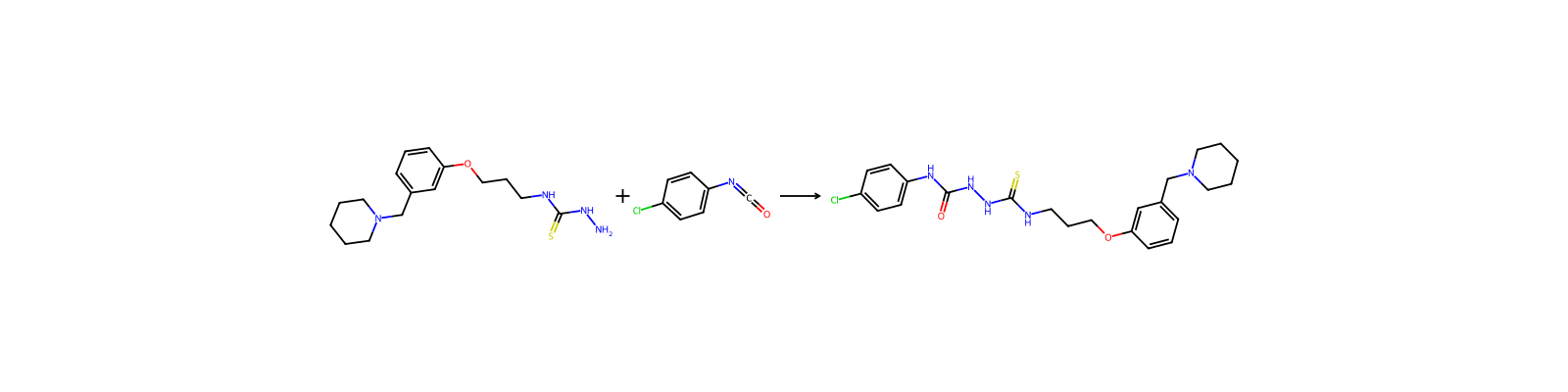
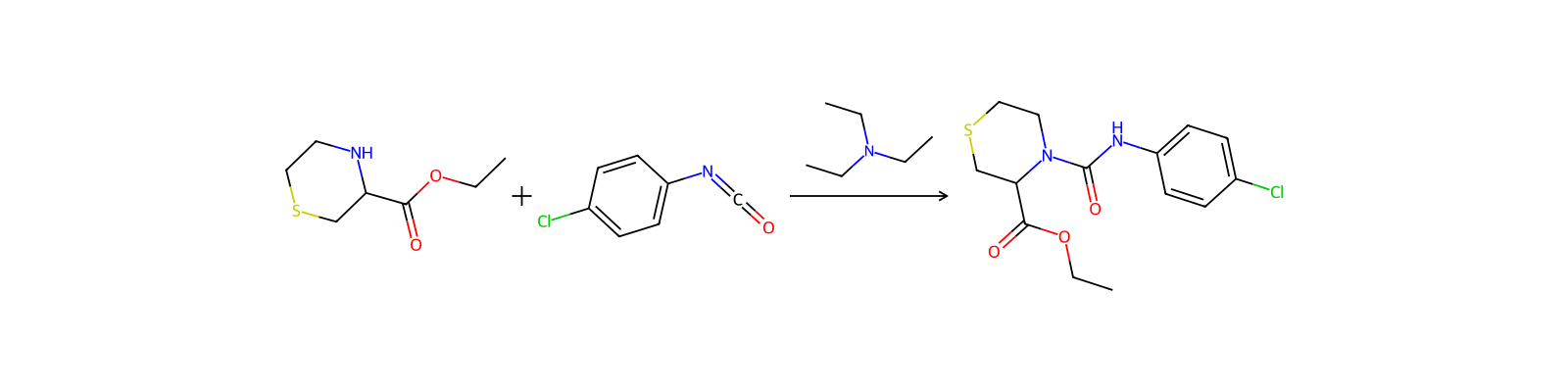
관련 반응
584건



연결된 노트
불러오는 중…