홈MCP워크벤치Skills
홈워크벤치알림마이페이지
llms.txt · MCP 가이드개인정보처리방침 · 이용약관 · 지원v1.8.0
  1. 홈
  2. /화합물

p-자일릴 브로마이드

p-Xylyl bromide

HCID 7721
새 노트새 반응견적 요청하기
인쇄 미리보기
기본 정보개요이름 및 식별자물성안전 및 규제화학 및 산업관련 반응화합물 노트
부분 구조 검색유사 구조 찾기

기본 정보

CAS
104-81-4
표준 SMILES
Cc1ccc(CBr)cc1
InChIKey
WZRKSPFYXUXINF-UHFFFAOYSA-N
분자식
C8H9Br
평균 분자량
185.06 g/mol
단동위원소 질량
183.98876239

개요

p-Xylyl bromide, also known as methylbenzyl bromide or T-stoff, is a poisonous organic chemical compound, formerly used as a tear gas. Physically it is a colourless liquid (melting point 21 °C) with a pleasant aromatic odour. p-Xylyl bromide is highly toxic, irritant and lachrymatory, and has been incorporated in chemical weapons since the early months of World War I. The first extensive use of xylyl bromide was the firing by German forces of 18,000 "T-shells" at Russian positions in the Battle of Bolimów in January 1915. In the absence of clarification, the name "xylyl bromide" may refer to any one of 3 xylyl isomers (o-Xylyl, p-Xylyl, m-Xylyl) or a mixture of all three.

이름 및 식별자

우선 이름
p-Xylyl bromide
IUPAC
1-(bromomethyl)-4-methylbenzene
현지명
p-자일릴 브로마이드
영어명
4-Methylbenzyl bromide
분자식
C8H9Br
분자량
185.06

이름 및 동의어

4-Methylbenzyl bromide1-(Bromomethyl)-4-methylbenzeneP-XYLYL BROMIDEalpha-Bromo-p-xyleneBenzene, 1-(bromomethyl)-4-methyl-p-Xylyl alpha-bromide.alpha.-Bromo-p-xyleneHSDB 2193UNII-V2DIK2AP5IV2DIK2AP5IEINECS 203-240-64methylbenzyl bromide
이름 더 보기
p-자일릴브로마이드p-자일릴 브로마이드1-bromomethyl-4-methylbenzene-Bromo-p-xyleneA-BROMO-P-XYLENEà-bromo-p-xyleneα-Bromo-p-xylenealpha-bromo-p-xylenalpha-Bromo-p-xylol4-BROMOMETHYLTOLUENE
NSC-8050P-XYLYL BROMIDE [MI]DTXSID7059305P-XYLYL .ALPHA.-BROMIDEomega-Bromo-p-xylenealphaBromopxylolalphaBromopxylenepXylylalphabromide

데이터베이스 식별자

CAS
104-81-4

물성

구조 계산 물성

XLogP
3
극성 표면적
0 Ų
수소 결합 공여자 수
0
수소 결합 수용자 수
0
회전 가능 결합 수
1
무거운 원자 수
9
형식 전하
0
복잡도
72.6

실험 및 물리화학적 성질

Chemical ClassesOther Classes -> Halogenated Monoaromatics
SpringerMaterials PropertiesNuclear quadrupole resonance spectroscopy
Density1.324 g/cu cm at 25 °C
Color/FormNeedles from alcohol
Solubility · 3건

Insoluble in water

Very soluble in chloroform, hot ether

Soluble in ethanol; very soluble in ethyl ether, chloroform

Flash Point98 °C (208 °F) - closed cup
Boiling Point · 2건

220 °C

BP: 218-220 °C at 740 mm Hg; 120 °C at 15 mm Hg

Decomposition · 2건

When heated to decomposition it emits toxic fumes of Br-. /Xylyl Bromide/

Hazardous decomposition products formed under fire conditions: Carbon oxides, Hydrogen bromide gas

Melting Point34 °C
Vapor Pressure0.09 [mmHg]

안전 및 규제

안전 정보는 참고용이며, 공급업체의 물질안전보건자료(SDS), 관련 법규 및 전문가 평가를 대체하지 않습니다.

GHS 분류

GHS Classification · 4건

Danger

H314 (100%): Causes severe skin burns and eye damage [Danger Skin corrosion/irritation]

P260, P264, P280, P301+P330+P331, P302+P361+P354, P304+P340, P305+P354+P338, P316, P321, P363, P405, and P501 (click each P-code to see the statement)

Aggregated GHS information provided per 46 reports by companies from 4 notifications to the ECHA C&L Inventory.

유해성 정보

Hazards Summary · 1건

Powerful lachrymator; [Merck Index] Toxic by ingestion and inhalation; Strong irritant to eyes and skin; [Hawley] Causes burns; Toxic by ingestion; May cause pneumonitis and pulmonary edema after inhalation of high concentrations; [MSDSonline]

Toxic Combustion ProductsHazardous decomposition products formed under fire conditions. - Carbon oxides, Hydrogen bromide gas
Hazard Classes and CategoriesSkin Corr. 1B (100%)
Shipment Methods and Regulations · 3건

No person may /transport,/ offer or accept a hazardous material for transportation in commerce unless that person is registered in conformance ... and the hazardous material is properly classed, described, packaged, marked, labeled, and in condition for shipment as required or authorized by ... /the hazardous materials regulations (49 CFR 171-177)./

The International Air Transport Association (IATA) Dangerous Goods Regulations are published by the IATA Dangerous Goods Board pursuant to IATA Resolutions 618 and 619 and constitute a manual of industry carrier regulations to be followed by all IATA Member airlines when transporting hazardous materials.

The International Maritime Dangerous Goods Code lays down basic principles for transporting hazardous chemicals. Detailed recommendations for individual substances and a number of recommendations for good practice are included in the classes dealing with such substances. A general index of technical names has also been compiled. This index should always be consulted when attempting to locate the appropriate procedures to be used when shipping any substance or article.

화학 및 산업

약리 정보

Metabolism/Metabolites · 1건

Bromine is mainly absorbed via inhalation, but may also enter the body through dermal contact. Bromine salts can be ingested. Due to its reactivity, bromine quickly forms bromide and may be deposited in the tissues, displacing other halogens. (L626)

용도 및 제조

Uses · 5건

Used in organic synthesis and as a military tear gas; [Merck Index]

Organic synthesis, tear gas. /Mixture of ortho-, meta-, and para-isomers/

In war gas formulations

A poison. /Xylyl Bromide/

Occupational exposure to xylyl bromide may occur through inhalation and dermal contact with this compound at workplaces where xylyl bromide is produced or used.

Methods of ManufacturingBromination of xylene. /Mixture of ortho-, meta-, and para-isomers/
Formulations/PreparationsGrade: technical. /Mixture of ortho-, meta-, and para-isomers/
General Manufacturing InformationBenzene, 1-(bromomethyl)-4-methyl-: INACTIVE

응용 분야

용도4-Methylbenzyl bromide is used as a pharmaceutical intermediate.

상·하류 제품 정보

상류 원료

p-자일렌브롬화수소p-(디메톡시메틸)톨루엔4-Methylphenylacetic acid

관련 반응

133건
반응 기록 만들기
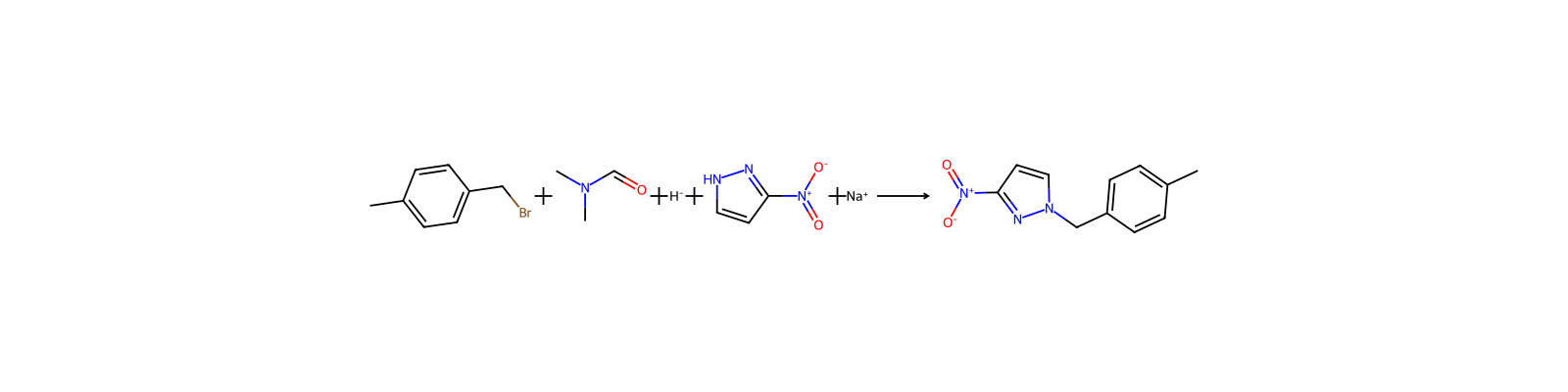
HRID 36181 반응식
HRID 36181반응물로uspto-grants-1995_05
HRID 45939 반응식
HRID 45939반응물로uspto-grants-2013_09
HRID 45957 반응식
HRID 45957반응물로uspto-grants-2013_09
HRID 51860 반응식
HRID 51860반응물로uspto-grants-2004_03
HRID 70250 반응식
HRID 70250반응물로uspto-grants-2014_09
HRID 88294 반응식
HRID 88294반응물로Training data from https://doi.org/10.1039/C8SC04228D (2/10)
HRID 108805 반응식
HRID 108805반응물로Training data from https://doi.org/10.1039/C8SC04228D (2/10)
HRID 132770 반응식
HRID 132770반응물로uspto-grants-2008_06
1 / 17 페이지

화합물 노트

불러오는 중…

이 페이지에서기본 정보개요이름 및 식별자물성안전 및 규제화학 및 산업관련 반응화합물 노트
더보기
새 노트새 반응견적 요청하기
PubChem CID
7721
DTXSID
DTXSID7059305
UNII
V2DIK2AP5I
EC Number
203-240-6
Nikkaji
J5.034B
Physical Description
Needles from alcohol; [Merck Index] White crystals, insoluble in water; [MSDSonline]
Stability/Shelf LifeStable under recommended storage conditions.

물리화학적 성질

녹는점
34 · 34-36 °C(lit.)
끓는 점
218 · 218-220 °C(lit.)
밀도
1 · 1,324 g/cm3
굴절률
1.554 · 1.5540 (estimate)
인화점
208 °F · 208 °F
저장 조건
2 · 2-8°C
용해도
클로로포름(소량으로 용해), DMSO(약간 용해됨)
물리적 상태
결정질 덩어리
색상
흰색에서 밝은 노란색
수용성
실질적으로 불용성
Merck
14 · 14,10090
BRN
507389 · 507389
Henry's Law Constant
1.3 · 1.3×10-2 mol/(m3Pa) at 25℃, HSDB (2015)
InChI
1S/C8H9Br/c1-7-2-4-8(6-9)5-3-7/h2-5H,6H2,1H3
InChIKey
WZRKSPFYXUXINF-UHFFFAOYSA-N
SMILES
Cc1ccc(CBr)cc1
NIST
1 · 1-Bromomethyl-4-methylbenzene(104-81-4)
EPA
1 · Benzene, 1-(bromomethyl)-4-methyl- (104-81-4)

화학적 성질

White to pale yellow solid or melt

Shipping Name/ Number DOT/UN/NA/IMO · 3건

UN 1701; Xylyl bromide, liquid

UN 3417; Xylyl bromide, solid

IMO 6.1; Xylyl bromide, liquid; Xylyl bromide, solid

Skin, Eye, and Respiratory IrritationsPowerful lacrimator.
Hazardous Reactivities and IncompatibilitiesAvoid moisture. Materials to avoid: Alcohols, Bases, Amines, Oxidizing agents

안전 및 보호

Fire Fighting Procedures · 4건

Wear self contained breathing apparatus for fire fighting if necessary.

Use water spray, alcohol-resistant foam, dry chemical or carbon dioxide.

If material on fire or involved in fire: Use water in flooding quantities as fog. Use "alcohol" foam, dry chemical or carbon dioxide. Cool all affected containers with flooding quantities of water. Use water spray to knock-down vapors. /Xylyl bromide, liquid; Xylyl bromide, solid/

Personnel protection: ... Wear positive pressure self-contained breathing apparatus when fighting fires involving this material. /Xylyl bromide, liquid; Xylyl bromide, solid/

Storage ConditionsKeep container tightly closed in a dry and well-ventilated place. Recommended storage temperature: 2 - 8 °C
Cleanup Methods · 2건

Do not let product enter drains.

Pick up and arrange disposal without creating dust. Sweep up and shovel. Keep in suitable, closed containers for disposal.

Disposal Methods · 3건

SRP: The most favorable course of action is to use an alternative chemical product with less inherent propensity for occupational harm/injury/toxicity or environmental contamination. Recycle any unused portion of the material for its approved use or return it to the manufacturer or supplier. Ultimate disposal of the chemical must consider: the material's impact on air quality; potential migration in soil or water; effects on animal and plant life; and conformance with environmental and public health regulations.

Contaminated packaging: Dispose of as unused product.

Offer surplus and non-recyclable solutions to a licensed disposal company. Contact a licensed professional waste disposal service to dispose of this material. Dissolve or mix the material with a combustible solvent and burn in a chemical incinerator equipped with an afterburner and scrubber.

Preventive Measures · 5건

Avoid formation of dust and aerosols. Provide appropriate exhaust ventilation at places where dust is formed. Normal measures for preventive fire protection.

SRP: The scientific literature for the use of contact lenses by industrial workers is inconsistent. The benefits or detrimental effects of wearing contact lenses depend not only upon the substance, but also on factors including the form of the substance, characteristics and duration of the exposure, the uses of other eye protection equipment, and the hygiene of the lenses. However, there may be individual substances whose irritating or corrosive properties are such that the wearing of contact lenses would be harmful to the eye. In those specific cases, contact lenses should not be worn. In any event, the usual eye protection equipment should be worn even when contact lenses are in place.

If material not on fire and not involved in fire: Keep sparks, flames, and other sources of ignition away. Keep material out of water sources and sewers. Use water spray to knock-down vapors. /Xylyl bromide, liquid; Xylyl bromide, solid/

Personnel protection: Avoid breathing vapors. Keep upwind. ... Avoid bodily contact with the material. ... Do not handle broken packages unless wearing appropriate personal protective equipment. Wash away any material which may have contacted the body with copious amounts of water or soap and water. ... If contact with the material anticipated, wear appropriate chemical protective clothing. /Xylyl bromide, liquid; Xylyl bromide, solid/

Handle in accordance with good industrial hygiene and safety practice. Wash hands before breaks and at the end of workday.

Personal Protective Equipment (PPE) · 5건

Skin and body protection: Complete suit protecting against chemicals.

Eye protection: Face shield and safety glasses Use equipment for eye protection tested and approved under appropriate government standards such as NIOSH (US) or EN 166(EU).

Handle with gloves. Gloves must be inspected prior to use. Use proper glove removal technique (without touching glove's outer surface) to avoid skin contact with this product. Dispose of contaminated gloves after use in accordance with applicable laws and good laboratory practices. Wash and dry hands.

Where risk assessment shows air-purifying respirators are appropriate use a full-face particle respirator type N100 (US) or type P3 (EN 143) respirator cartridges as a backup to engineering controls. If the respirator is the sole means of protection, use a full-face supplied air respirator. Use respirators and components tested and approved under appropriate government standards such as NIOSH (US) or CEN (EU).

Personnel protection: ... Wear positive pressure self-contained breathing apparatus. ... Wear appropriate chemical protective gloves, boots, and googles. /Xylyl bromide, liquid; Xylyl bromide, solid/

독성 정보

Treatment · 1건

EYES: irrigate opened eyes for several minutes under running water. INGESTION: do not induce vomiting. Rinse mouth with water (never give anything by mouth to an unconscious person). Seek immediate medical advice. SKIN: should be treated immediately by rinsing the affected parts in cold running water for at least 15 minutes, followed by thorough washing with soap and water. If necessary, the person should shower and change contaminated clothing and shoes, and then must seek medical attention. INHALATION: supply fresh air. If required provide artificial respiration.

Health EffectsStrong lachrymator. Strong irritant to eyes, skin and soft tissues. Highly toxic if inhaled, swallowed or absorbed through skin.
Environmental Fate · 3건

TERRESTRIAL FATE: Based on a classification scheme(1), an estimated Koc value of 710(SRC), determined from a structure estimation method(2), indicates that p-xylyl bromide is expected to have moderate mobility in soil(SRC). Volatilization of p-xylyl bromide from moist soil surfaces is expected to be an important fate process(SRC) given an estimated Henry's Law constant of 7.6X10⁻⁵ atm-cu m/mole(SRC), using a fragment constant estimation method(3). p-Xylyl bromide is expected to volatilize from dry soil surfaces(SRC) based upon an estimated vapor pressure of 0.10 mm Hg at 25 °C(SRC), determined from a fragment constant method(2). However, due to a reported hydrolysis half-life of 4.3 minutes at 25 °C for p-xylyl bromide(4) adsorption, volatilization, and biodegradation are not expected to be important environmental fate processes in moist soil(SRC).

AQUATIC FATE: Based on a classification scheme(1), an estimated Koc value of 710(SRC), determined from a structure estimation method(2), indicates that p-xylyl bromide is expected to adsorb to suspended solids and sediment(SRC). Volatilization from water surfaces is expected(3) based upon an estimated Henry's Law constant of 7.6X10⁻⁴ atm-cu m/mole(SRC), developed using a fragment constant estimation method(4). Using this Henry's Law constant and an estimation method(3), volatilization half-lives for a model river and model lake are 6 hrs and 6 days, respectively(SRC). According to a classification scheme(5), an estimated BCF of 85(SRC), from an estimated log Kow of 3.43(2) and a regression-derived equation(2), suggests the potential for bioconcentration in aquatic organisms is moderate(SRC). However, due to a reported hydrolysis half-life of 4.3 minutes at 25 °C for p-xylyl bromide(6) adsorption, volatilization, bioconcentration, and biodegradation are not expected to be important environmental fate processes in water(SRC).

ATMOSPHERIC FATE: According to a model of gas/particle partitioning of semivolatile organic compounds in the atmosphere(1), p-xylyl bromide, which has an estimated vapor pressure of 0.10 mm Hg at 25 °C(SRC), determined from a fragment constant method(2), is expected to exist solely as a vapor in the ambient atmosphere. Vapor-phase p-xylyl bromide is degraded in the atmosphere by reaction with photochemically-produced hydroxyl radicals(SRC); the half-life for this reaction in air is estimated to be 4.3 days(SRC), calculated from its rate constant of 3.7X10⁻¹² cu cm/molecule-sec at 25 °C(SRC) that was derived using a structure estimation method(2). p-Xylyl bromide does not contain chromophores that absorb at wavelengths >290 nm(4) and, therefore, is not expected to be susceptible to direct photolysis by sunlight(SRC).

Adverse EffectsDermatotoxin - Skin burns.
Exposure RoutesOral (L626) ; inhalation (L626) ; dermal (L626)
Toxicity Summary · 1건

Organobromide compounds such as p-Xylyl bromide are strong alkylating agents. Consequently they can readily modify free thiols (cysteines) and methionine residues of the surfaces of proteins leading to the disruption of enzyme, transporter or membrane functions. One of the most probable protein targets is the TRPA1 ion channel that is expressed in sensory nerves (trigeminal nerve) of the eyes, nose, mouth and lungs.

Signs and SymptomsCauses severe eye and skin burns. Irritating to eyes, skin, and respiratory system. Acute exposure (ingestion or inhalation) can lead to coma, nausea, vomiting, and metabolic acidosis may occur.
Soil Adsorption/Mobility · 1건

Using a structure estimation method based on molecular connectivity indices(1), the Koc of p-xylyl bromide can be estimated to be 710(SRC). According to a classification scheme(2), this estimated Koc value suggests that p-xylyl bromide is expected to have moderate mobility in soil. However, a hydrolysis half-life of 4.3 minutes at 25 °C(3) will pre-empt soil adsorption(SRC).

Human Toxicity Excerpts · 2건

/OTHER TOXICITY INFORMATION/ Powerful lacrimator.

/OTHER TOXICITY INFORMATION/ ... Strongly lacrimatory. /Xylyl bromides/

Artificial Pollution Sources · 1건

p-Xylyl bromide's production and presense in a in mixture with the o- and m-isomers in organic synthesis(1) may result in its release to the environment through various waste streams. Its use in mixture with o- and m-isomers as a tear gas will result in its direct release to the environment(SRC).

Carcinogen ClassificationNo indication of carcinogenicity (not listed by IARC). (L135)
Environmental Bioconcentration · 1건

An estimated BCF of 85 was calculated in fish for p-xylyl bromide(SRC), using an estimated log Kow of 3.43(1) and a regression-derived equation(1). According to a classification scheme(2), this BCF suggests the potential for bioconcentration in aquatic organisms is moderate(SRC). However, a hydrolysis half-life of 4.3 minutes at 25 °C(3) will pre-empt bioconcentration(SRC).

안전 데이터

wgk
3
tsca
TSCA listed
rtecs
CY9039300
ridadr
UN 3417 6.1/PG 2
HS 번호
29039990
risk_code
34-20/21/22
hazard_code
C
safety_code
26-36/37/39-45
포장분류
II
위험 등급
6.1
F 고인화성물질
8-19
Hazard Classifications
Skin Corr. 1B
스토리지 클래스
6.1A - Combustible acute toxic Cat. 1 and 2very toxic hazardous materials
유해 물질 데이터
104-81-4(Hazardous Substances Data)
브로모오르소크실렌

하류 제품

Trimethylgermanium bromideDI-P-톨릴메탄4-MethylbenzhydrolCHEMBRDG-BB 40248421,4-비스(이미다졸-XNUMX-일메틸)벤젠4-Methylbenzylsulfonyl chlorideBoc-S-(4-methylbenzyl)-L-cysteine2-[(4-메틸벤질)술파닐]벤젠카르복실산2-[(2-Hydroxyethyl)(4-methylbenzyl)amino]-1-ethanol