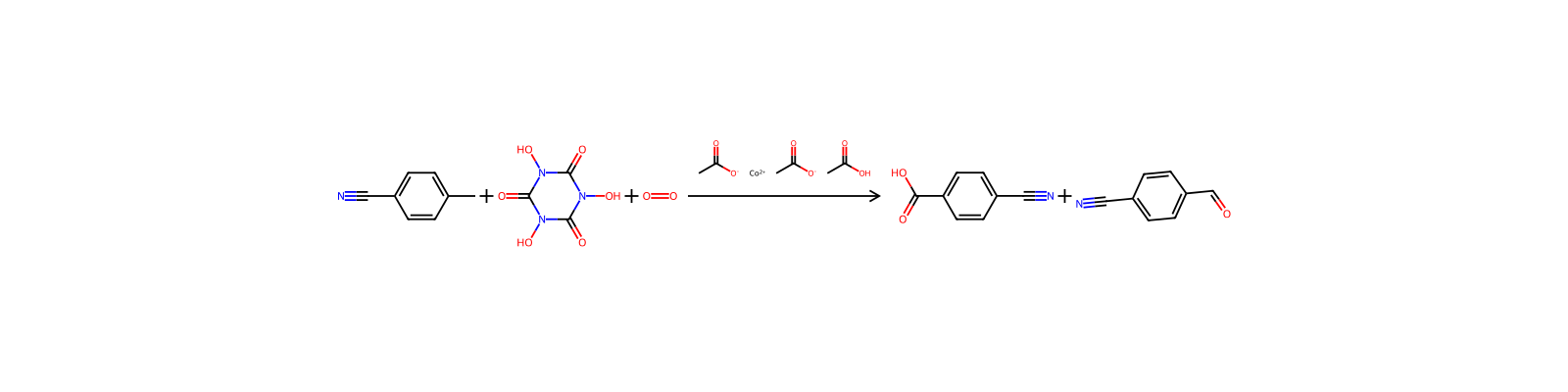
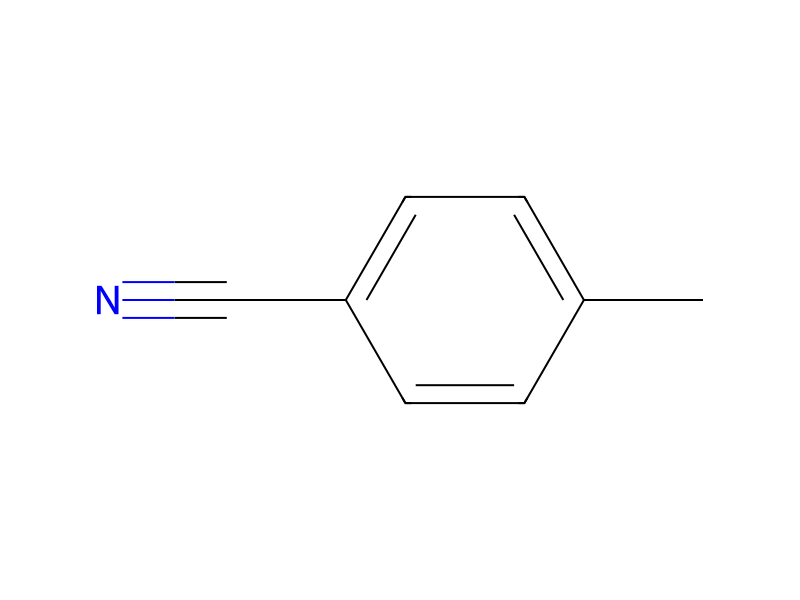
기본 정보
- 표준 SMILES
Cc1ccc(C#N)cc1- InChIKey
VCZNNAKNUVJVGX-UHFFFAOYSA-N- 분자식
- C8H7N
- 평균 분자량
- 117.15 g/mol
- 단동위원소 질량
- 117.05784922
개요
P-tolunitrile is a beige solid at 62.6 °F. (NTP, 1992)
이름 및 식별자
- 우선 이름
- p-Tolunitrile
- IUPAC
- 4-methylbenzonitrile
- 영어명
- p-Tolunitrile
- 분자식
- C8H7N
- 분자량
- 117.15
이름 및 동의어
p-Tolunitrile4-METHYLBENZONITRILE104-85-84-Cyanotoluene4-Tolunitrilep-MethylbenzonitrileBenzonitrile, 4-methyl-p-Cyanotoluenep-Toluonitrilep-Tolylnitrilep-Tolunitrilp-Toluenenitrile
이름 더 보기
CNTP-CYANO TOLUENEP-Tounitrilep-Tolumitrile
p-Toluic nitrile1-Methyl-4-cyanobenzene4-Methylcyanobenzene4-ToluenkarbonitrilNitril kyseliny p-toluylovep-Tolunitril [Czech]4-Toluenkarbonitril [Czech]Nitril kyseliny p-toluylove [Czech]
데이터베이스 식별자
- CAS
104-85-8- PubChem CID
- 7724
- DTXSID
DTXSID6026169- ChEMBL
CHEMBL1386404- UNII
- H20555V8NO
- EC Number
- 203-244-8
- Nikkaji
- J10.115J
물성
구조 계산 물성
- XLogP
- 2.4
- 극성 표면적
- 23.8 Ų
- 수소 결합 공여자 수
- 0
- 수소 결합 수용자 수
- 1
- 회전 가능 결합 수
- 0
- 무거운 원자 수
- 9
- 형식 전하
- 0
- 복잡도
- 123
실험 및 물리화학적 성질
SpringerMaterials Properties13C nuclear magnetic resonance spectrum
Density0.9805 at 86 °F (NTP, 1992) - Less dense than water; will float
Solubilityless than 1 mg/mL at 63 °F (NTP, 1992)
Flash Point185 °F (NTP, 1992)
Boiling Point423.7 °F at 760 mmHg (NTP, 1992)
Melting Point85.1 °F (NTP, 1992)
Physical Description
P-tolunitrile is a beige solid at 62.6 °F. (NTP, 1992)
Liquid
물리화학적 성질
- 녹는점
- 26 · 26-28 °C(lit.)
- 끓는 점
- 103 · 103-106 °C20 mm Hg(lit.)
- 밀도
- 0.981 g/mL · 0.981 g/mL at 25 °C(lit.)
- 굴절률
- 1.5285 · 1.5285-1.5305
- 인화점
- 185 °F · 185 °F
- 저장 조건
- 30 °C · Store below +30°C.
- 용해도
- 알코올: 매우 용해됨
- 물리적 상태
- 점성 액체
- Specific Gravity
- 0.981 · 0.981
- 색상
- 투명한
- 수용성
- 17 · 17&C에서 <0.1g/100mL
- Merck
- 14 · 14,9538
- BRN
- 507386 · 507386
- 안정성
- 안정적인. 강한 산화제, 강한 염기와 호환되지 않습니다.
- InChI
- 1S/C8H7N/c1-7-2-4-8(6-9)5-3-7/h2-5H,1H3
- InChIKey
- VCZNNAKNUVJVGX-UHFFFAOYSA-N
- SMILES
- Cc1ccc(cc1)C#N
- NIST
- 4 · Benzonitrile, 4-methyl-(104-85-8)
- EPA
- p-Tolunitrile (104-85-8)
화학적 성질
This substance is a clear colorless liquid or beige solid that exhibits toxicity and flammability. It should avoid contact with the skin.
안전 및 규제
GHS 분류
GHS Classification
This chemical does not meet GHS hazard criteria for 0.5% (1 of 207) of reports.
Danger
H315 (99%): Causes skin irritation [Warning Skin corrosion/irritation]
P233, P260, P261, P264, P264+P265, P271, P273, P280, P284, P302+P352, P304+P340, P305+P351+P338, P319, P321, P332+P317, P337+P317, P342+P316, P362+P364, P403, P403+P233, P405, and P501 (click each P-code to see the statement)
Aggregated GHS information provided per 207 reports by companies from 10 notifications to the ECHA C&L Inventory. Each notification may be associated with multiple companies.
유해성 정보
Regulatory Information
Benzonitrile, 4-methyl- is listed on the EPA's Chemical Data Reporting (CDR) system. Manufacturers and importers of Benzonitrile, 4-methyl- are required to report information about their production and use of this chemical to the EPA under the Toxic Substances Control Act (TSCA). (40 eCFR Part 711)
Status: Active Update: 23-03-2022 https://echa.europa.eu/registration-dossier/-/registered-dossier/16371
4-Tolunitrile: Does not have an individual approval but may be used under an appropriate group standard
DOT LabelFlammable Liquid Poison
Fire HazardsThis chemical is combustible. (NTP, 1992)
Health HazardsExcerpt from ERG Guide 131 [Flammable Liquids - Toxic]:
Reactive GroupNitriles
Reactivity Profile
Nitriles, such as P-TOLUNITRILE, may polymerize in the presence of metals and some metal compounds. They are incompatible with acids; mixing nitriles with strong oxidizing acids can lead to extremely violent reactions. Nitriles are generally incompatible with other oxidizing agents such as peroxides and epoxides. The combination of bases and nitriles can produce hydrogen cyanide. Nitriles are hydrolyzed in both aqueous acid and base to give carboxylic acids (or salts of carboxylic acids). These reactions generate heat. Peroxides convert nitriles to amides. Nitriles can react vigorously with reducing agents. Acetonitrile and propionitrile are soluble in water, but nitriles higher than propionitrile have low aqueous solubility. They are also insoluble in aqueous acids.
Air and Water ReactionsInsoluble in water.
Hazard Classes and CategoriesSkin Irrit. 2 (99%)
안전 및 보호
Fire FightingFires involving this compound can be controlled using a dry chemical, carbon dioxide or Halon extinguisher. (NTP, 1992)
First Aid
EYES: First check the victim for contact lenses and remove if present. Flush victim's eyes with water or normal saline solution for 20 to 30 minutes while simultaneously calling a hospital or poison control center. Do not put any ointments, oils, or medication in the victim's eyes without specific instructions from a physician. IMMEDIATELY transport the victim after flushing eyes to a hospital even if no symptoms (such as redness or irritation) develop.
Nonfire Spill Response
SMALL SPILLS AND LEAKAGE: Should a spill occur while you are handling this chemical, you should dampen the solid spill material with alcohol, then transfer the dampened material to a suitable container. Use absorbent paper dampened with alcohol to pick up any remaining material. Seal the absorbent paper, and any of your clothes, which may be contaminated, in a vapor-tight plastic bag for eventual disposal. Solvent wash all contaminated surfaces with alcohol followed by washing with a strong soap and water solution. Do not reenter the contaminate area until the Safety Officer (or other responsible person) has verified that the area has been properly cleaned.
Isolation and EvacuationExcerpt from ERG Guide 131 [Flammable Liquids - Toxic]:
Personal Protective Equipment (PPE)
RECOMMENDED RESPIRATOR: Where the neat test chemical is weighed and diluted, wear a NIOSH-approved half face respirator equipped with an organic vapor/acid gas cartridge (specific for organic vapors, HCl, acid gas and SO2) with a dust/mist filter. (NTP, 1992)
안전 데이터
- wgk
- 2
- tsca
- TSCA listed
- rtecs
- XV0700000
- HS 번호
- 29269095
- risk_code
- 36/37/38-43-36/38
- hazard_code
- Xi
- safety_code
- 26-36/37-37-36
- 기존화학 물질
- 2014-3-5918
- 위험 참고 사항
- Irritant
- Hazard Classifications
- Eye Irrit. 2Resp. Sens. 1Skin Irrit. 2STOT SE 3
- 스토리지 클래스
- 11 - Combustible Solids
화학 및 산업
용도 및 제조
U.S. Production2021: 88,184 lb
Industry UsesIntermediate
General Manufacturing Information
Pesticide, Fertilizer, and Other Agricultural Chemical Manufacturing
Benzonitrile, 4-methyl-: ACTIVE
응용 분야
용도p-Tolunitrile is a reagent used in the preparation of 1H-Indazoles from imidates and nitrosobenzenes.
일반 설명Beige solid at 62.6° F.
상·하류 제품 정보
상류 원료
하류 제품
공급사50 곳
国药集团化学试剂有限公司86-21-63210123 · [email protected]
梯希爱(上海)化成工业发展有限公司021-67121386 · [email protected]
上海阿拉丁生化科技股份有限公司400-6206333 13167063860 · [email protected]
温州共赢化学有限公司+86-0086-577-64498589 +86-15355981851 · [email protected]
爱斯特(成都)生物制药股份有限公司+86-28-85122536 85324413 · [email protected]
Baoji Guokang Healthchem co.,ltd+8615604608665 15604608665 · [email protected]
Dayang Chem (Hangzhou) Co.,Ltd.+86-0571-88938639 17705817739 · [email protected]
Hebei Yanxi Chemical Co., Ltd.+86-17531190177 · [email protected]
科瑞迪化学400-821-5857 021-64326257 · [email protected]
Syntechem Co.,Ltd[email protected]
上海迈瑞尔生化科技有限公司4006356688 18621169109 · [email protected]
河南英田生物科技有限公司0370-4053511; 18339993703 · [email protected]
阿法埃莎(中国)化学有限公司400-6106006 · [email protected]
太原市瑞和丰科贸有限公司+86 351 7031519 · [email protected]
上海德默医药科技有限公司400-021-7337 2355568890 · [email protected]
安耐吉化学&3A(安徽泽升科技股份有限公司)400-0056266 · [email protected]
武汉凯威斯科技有限公司86-027-67849912 · [email protected]
上海瀚鸿科技股份有限公司021-54306202 13764082696 · [email protected]
上海景颜化工科技有限公司13817811078 · [email protected]
嘉兴市艾森化工有限公司0573-85285100 18627885956 · [email protected]
Pure Chemistry Scientific Inc.001-857-928-2050 or 1-888-588-9418 · [email protected]
Beckmann-Kenko GmbH+49 4241 9308 88 · [email protected]
山东西亚化学有限公司13355009207 13355009207 · [email protected]
玛雅试剂+86 (573) 82222445 (0)18006601000 452520369 · [email protected]
四川库利南科技有限公司400-1166-196 18981987031 · [email protected]
天津希恩思生化科技有限公司400 638 7771 · [email protected]
南京维奥化工有限公司Please Send Email 18652950785 · [email protected]
艾科试剂4008-755-333 18080918076 · [email protected]
上海思域化工科技有限公司86-21-34053660 · [email protected]
赛默飞世尔科技(中国)有限公司800-810-5118 · [email protected]
北京伊诺凯科技有限公司400-810-7969 010-59572699 · [email protected]
TOKYO CHEMICAL INDUSTRY CO., LTD.03-36680489 · [email protected]
上海贤鼎生物科技有限公司4009209199 · [email protected]
深圳康特腾科技有限公司86-0755-86635001 · [email protected]
上海睿升化工科技有限公司+86-021-50935922
北京环宇世纪化学科技有限公司hysj_bj.com
上海将来实业股份有限公司021-61552785 · [email protected]
HBCChem, Inc.+1-510-219-6317 · [email protected]
日照力德士化工有限公司010-51268198 · [email protected]
美岚实业(上海)有限公司021-58958189 · [email protected]
上海爱蝶实业有限公司021-58957966 18930537195 · [email protected]
广拓化学(上海)有限公司021-60899189-8001 18918189673 · [email protected]
雷丁试剂0510-85629785 18013409632 · [email protected]
上海御略医药科技有限公司021-60345187 13671753212 · [email protected]
上海麦克林生化科技股份有限公司15221275939 15221275939 · [email protected]
杭州杰恒化工有限公司0571-87396432 · [email protected]
上海洽凡生化科技有限公司+86-021-61654350 · [email protected]
上海嵩爰化工科技有限公司010-1234567 18521000990 · [email protected]
上海有朋化工有限公司021-69005955 13701776567 · [email protected]
上海凯赛化工有限公司021-33516722 13701817765 · [email protected]
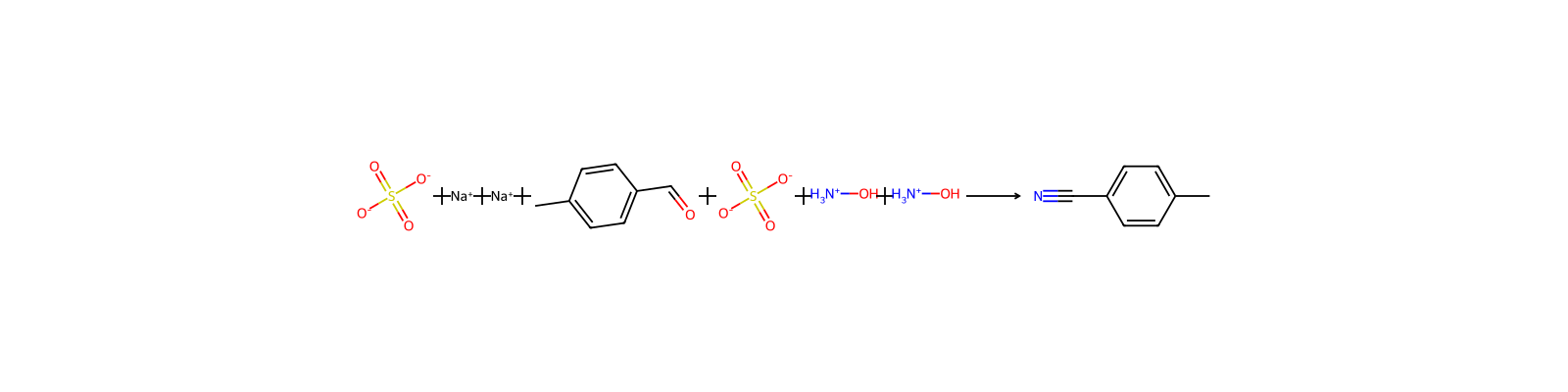
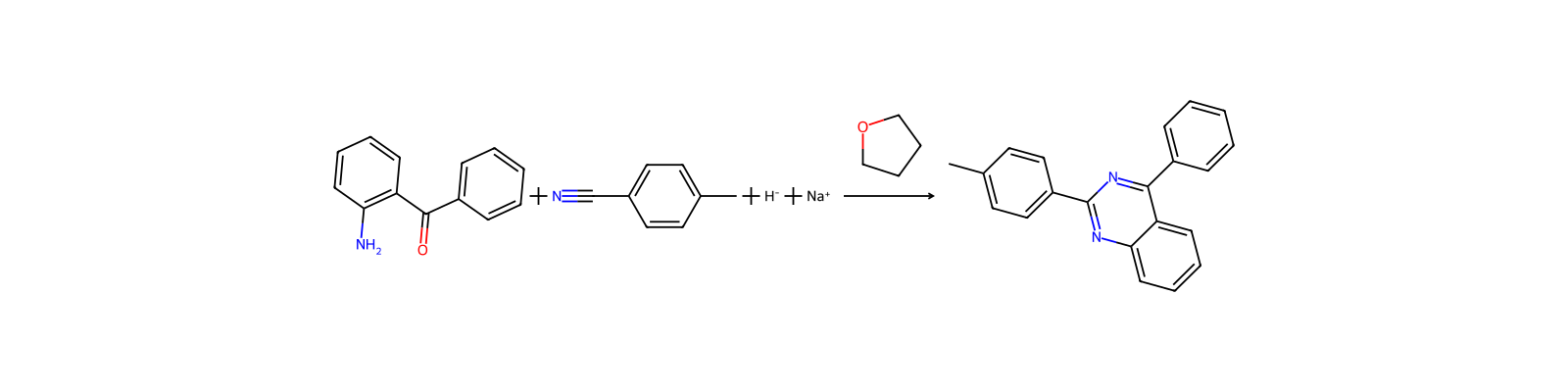
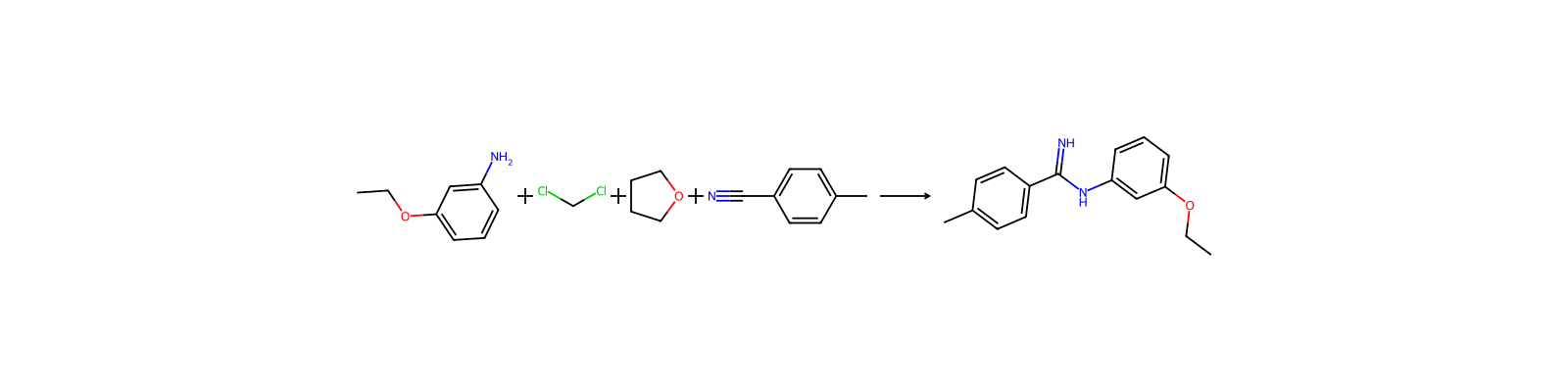
관련 반응
91건




연결된 노트
불러오는 중…