
기본 정보
- 표준 SMILES
COC(C)(C)CC(C)=O- InChIKey
KOKPBCHLPVDQTK-UHFFFAOYSA-N- 분자식
- C7H14O2
- 평균 분자량
- 130.18 g/mol
- 단동위원소 질량
- 130.09937969
이름 및 식별자
- 우선 이름
- 4-Methoxy-4-methyl-2-pentanone
- IUPAC
- 4-methoxy-4-methylpentan-2-one
- 현지명
- 4-메톡시-4-메틸-2-펜탄온
- 영어명
- 4-METHOXY-4-METHYL-2-PENTANONE
- 분자식
- C7H14O2
- 분자량
- 130.18
이름 및 동의어
4-METHOXY-4-METHYL-2-PENTANONE4-Methoxy-4-methylpentan-2-onePentoxone2-Pentanone, 4-methoxy-4-methyl-ME 6 KNSC 48083CCRIS 4840DTXSID2025557HSDB 1153EINECS 203-512-4UN2293BRN 1747866
이름 더 보기
4-메톡시-4-메틸-2-펜타논4-메톡시-4-메틸펜타논-24-메톡시-4-메틸-2-펜탄온me6kpent-oxonesolventPent-Oxone Solventmethoxy-4methyl-4pentanone-24-Methoxy-4-methylpentan-2-on4-methoxy-4-methylpentanone-24-methoxy-4-methyl-2-pentanon
UNII-02RA332R13NSC-4808302RA332R13DTXCID8055572-Pentanone, 4-methyl-4-methoxy4-01-00-04024 (Beilstein Handbook Reference)UN 22934-METHOXY-4-METHYL-2-PENTANONE [HSDB]
데이터베이스 식별자
- CAS
107-70-0- PubChem CID
- 7884
- DTXSID
DTXSID2025557- ChEMBL
CHEMBL3185318- UNII
- 02RA332R13
- EC Number
- 203-512-4
- Nikkaji
- J22.144I
물성
구조 계산 물성
- XLogP
- 0.4
- 극성 표면적
- 26.3 Ų
- 수소 결합 공여자 수
- 0
- 수소 결합 수용자 수
- 2
- 회전 가능 결합 수
- 3
- 무거운 원자 수
- 9
- 형식 전하
- 0
- 복잡도
- 105
실험 및 물리화학적 성질
LogP0.36
DensityRelative density (water = 1): 0.89
Color/FormWATER-WHITE LIQUID
Solubility
greater than or equal to 100 mg/mL at 66 °F (NTP, 1992)
Water solubility of 280,000 mg/l at 25 °C.
Solubility in water, g/100ml at 25 °C: 28
Flash Point
141 °F (NTP, 1992)
61 °C
60 °C c.c.
Boiling Point
297 to 325 °F at 760 mmHg (NTP, 1992)
147-163 °C
160 °C
Melting Point-30 °C
Vapor DensityRelative vapor density (air = 1): 4.49
Odor ThresholdOdor Threshold Low: 25.0 [ppm];[CAMEO] Odor threshold form CHEMINFO
Vapor Pressure
2.2 [mmHg]
3.16 mm Hg at 25 °C.
Vapor pressure, kPa at 25 °C: 0.42
Physical Description
4-methoxy-4-methylpentan-2-one appears as a clear colorless liquid. Insoluble in water and less dense than water. Vapors heavier than air. Used as a solvent.
Liquid
Colorless to white liquid; [CHEMINFO] Oily liquid; [MSDSonline]
COLOURLESS LIQUID.
Kovats Retention Index
877;877
910
물리화학적 성질
- 끓는 점
- 156 °C · 156°C
- 밀도
- 0 · 0,91 g/cm3
- 굴절률
- 1.418 · 1.4180
- 인화점
- 48 °C · 48°C
- 수용성
- 물에 용해됨
- 물리적 상태
- 투명한 액체
- 색상
- 무색 내지 거의 무색
- Henry's Law Constant
- 5.1 · 5.1×100 mol/(m3Pa) at 25℃, Duchowicz et al. (2020)
- 안정성
- 안정적인. 타기 쉬운. 강한 산화제와 호환되지 않습니다.
- InChI
- 1S/C7H14O2/c1-6(8)5-7(2,3)9-4/h5H2,1-4H3
- InChIKey
- KOKPBCHLPVDQTK-UHFFFAOYSA-N
- SMILES
- COC(C)(C)CC(C)=O
- EPA
- 4 · 4-Methoxy-4-methyl-2-pentanone (107-70-0)
화학적 성질
colourless liquid
안전 및 규제
GHS 분류
GHS Classification
Warning
H226: Flammable liquid and vapor [Warning Flammable liquids];H332: Harmful if inhaled [Warning Acute toxicity, inhalation]
P210, P233, P240, P241, P242, P243, P261, P271, P280, P303+P361+P353, P304+P340, P317, P370+P378, P403+P235, and P501 (click each P-code to see the statement)
Warning
유해성 정보
Regulatory Information
Chemical: 2-Pentanone, 4-methoxy-4-methyl-
2-Pentanone, 4-methoxy-4-methyl- is listed on the EPA's Chemical Data Reporting (CDR) system. Manufacturers and importers of 2-Pentanone, 4-methoxy-4-methyl- are required to report information about their production and use of this chemical to the EPA under the Toxic Substances Control Act (TSCA). (40 eCFR Part 711)
4-Methoxy-4-methylpentan-2-one: Does not have an individual approval but may be used under an appropriate group standard
The New Jersey Worker and Community Right to Know Act requires public and private employers to provide information about hazardous substances at their workplaces. (N.J.S.A. 34:5A-1 et. seq.)
DOT LabelFlammable Liquid
Fire Hazards
Excerpt from ERG Guide 128 [Flammable Liquids (Water-Immiscible)]:;HIGHLY FLAMMABLE: Will be easily ignited by heat, sparks or flames. Vapors may form explosive mixtures with air. Vapors may travel to source of ignition and flash back. Most vapors are heavier than air. They will spread along the ground and collect in low or confined areas (sewers, basements, tanks, etc.). Vapor explosion hazard indoors, outdoors or in sewers. Those substances designated with a (P) may polymerize explosively when heated or involved in a fire. Runoff to sewer may create fire or explosion hazard. Containers may explode when heated. Many liquids will float on water. Substance may be transported hot. For hybrid vehicles, ERG Guide 147 (lithium ion or sodium ion batteries) or ERG Guide 138 (sodium batteries) should also be consulted. If molten aluminum is involved, refer to ERG Guide 169. (ERG, 2024)
· HIGHLY FLAMMABLE: Will be easily ignited by heat, sparks or flames.;· Vapors may form explosive mixtures with air.;· Vapors may travel to source of ignition and flash back.;· Most vapors are heavier than air. They will spread along the ground and collect in low or confined areas (sewers, basements, tanks, etc.).;· Vapor explosion hazard indoors, outdoors or in sewers.;· Those substances designated with a (P) may polymerize explosively when heated or involved in a fire.;· Runoff to sewer may create fire or explosion hazard.;· Containers may explode when heated.;· Many liquids will float on water.;· Substance may be transported hot.;· For hybrid vehicles, GUIDE 147 (lithium ion or sodium ion batteries) or GUIDE 138 (sodium batteries) should also be consulted.;· If molten aluminum is involved, refer to GUIDE 169.
Flammable. Above 60 °C explosive vapour/air mixtures may be formed.
Fire PotentialMODERATE FIRE RISK.
Health Hazards
Excerpt from ERG Guide 128 [Flammable Liquids (Water-Immiscible)]:;CAUTION: Petroleum crude oil (UN1267) may contain TOXIC hydrogen sulphide gas. Inhalation or contact with material may irritate or burn skin and eyes. Fire may produce irritating, corrosive and/or toxic gases. Vapors may cause dizziness or asphyxiation, especially when in closed or confined areas. Runoff from fire control or dilution water may cause environmental contamination. (ERG, 2024)
CAUTION: Petroleum crude oil (UN1267) may contain TOXIC hydrogen sulphide gas.;· Inhalation or contact with material may irritate or burn skin and eyes.;· Fire may produce irritating, corrosive and/or toxic gases.;· Vapors may cause dizziness or asphyxiation, especially when in closed or confined areas.;· Runoff from fire control or dilution water may cause environmental contamination.
Hazards SummaryA skin and eye irritant; [HSDB] A skin, eye, and respiratory tract irritant; Can cause aspiration pneumonitis after ingestion; [ICSC]
DOT ID and Guide2293 128
Reactive GroupEthers;Ketones
EC ClassificationSymbol: Xn; R: 10-20; S: (2)-23-24/25
UN ClassificationUN Hazard Class: 3; UN Pack Group: III
Chemical DangersReacts with oxidants. Decomposes on burning. This produces toxic fumes and irritating fumes.
DOT Emergency Guidelines
/GUIDE 128: FLAMMABLE LIQUIDS (NON-POLAR/WATER-IMMISCIBLE)/ Fire or Explosion: HIGHLY FLAMMABLE: Will be easily ignited by heat, sparks or flames. Vapors may form explosive mixtures with air. Vapors may travel to source of ignition and flash back. Most vapors are heavier than air. They will spread along ground and collect in low or confined areas (sewers, basements, tanks). Vapor explosion hazard indoors, outdoors or in sewers. Those substances designated with a "P" may polymerize explosively when heated or involved in a fire. Runoff to sewer may create fire or explosion hazard. Containers may explode when heated. Many liquids are lighter than water. Substances may be transported hot.
/GUIDE 128: FLAMMABLE LIQUIDS (NON-POLAR/WATER-IMMISCIBLE)/ Health: Inhalation or contact with material may irritate or burn skin and eyes. Fire may produce irritating, corrosive and/or toxic gases. Vapors may cause dizziness or suffocation. Runoff from fire control or dilution water may cause pollution.
/GUIDE 128: FLAMMABLE LIQUIDS (NON-POLAR/WATER-IMMISCIBLE)/ Public Safety: CALL Emergency Response Telephone Number ... . As an immediate precautionary measure, isolate spill or leak area for at least 50 meters (150 feet) in all directions. Keep unauthorized personnel away. Stay upwind. Keep out of low areas. Ventilate closed spaces before entering.
/GUIDE 128: FLAMMABLE LIQUIDS (NON-POLAR/WATER-IMMISCIBLE)/ Protective Clothing: Wear positive pressure self-contained breathing apparatus (SCBA). Structural firefighters' protective clothing will only provide limited protection.
For more DOT Emergency Guidelines (Complete) data for 4-METHOXY-4-METHYL-2-PENTANONE (8 total), please visit the HSDB record page.
안전 및 보호
Fire Fighting
Excerpt from ERG Guide 128 [Flammable Liquids (Water-Immiscible)]:;CAUTION: The majority of these products have a very low flash point. Use of water spray when fighting fire may be inefficient. CAUTION: For mixtures containing alcohol or polar solvent, alcohol-resistant foam may be more effective.;SMALL FIRE: Dry chemical, CO2, water spray or regular foam. If regular foam is ineffective or unavailable, use alcohol-resistant foam.;LARGE FIRE: Water spray, fog or regular foam. If regular foam is ineffective or unavailable, use alcohol-resistant foam. Avoid aiming straight or solid streams directly onto the product. If it can be done safely, move undamaged containers away from the area around the fire.;FIRE INVOLVING TANKS, RAIL TANK CARS OR HIGHWAY TANKS: Fight fire from maximum distance or use unmanned master stream devices or monitor nozzles. Cool containers with flooding quantities of water until well after fire is out. For petroleum crude oil, do not spray water directly into a breached tank car. This can lead to a dangerous boil over. Withdraw immediately in case of rising sound from venting safety devices or discoloration of tank. ALWAYS stay away from tanks in direct contact with flames. For massive fire, use unmanned master stream devices or monitor nozzles; if this is impossible, withdraw from area and let fire burn. (ERG, 2024)
Use water spray, powder, alcohol-resistant foam, carbon dioxide. In case of fire: keep cylinder cool by spraying with water.
First Aid Measures
Fresh air, rest.
Remove contaminated clothes. Rinse skin with plenty of water or shower.
First rinse with plenty of water for several minutes (remove contact lenses if easily possible), then refer for medical attention.
Rinse mouth. Do NOT induce vomiting. Give one or two glasses of water to drink. Refer for medical attention .
Accidental Release Measures
· CALL 911. Then call emergency response telephone number on shipping paper. If shipping paper not available or no answer, refer to appropriate telephone number listed on the inside back cover.;· Keep unauthorized personnel away.;· Stay upwind, uphill and/or upstream.;· Ventilate closed spaces before entering, but only if properly trained and equipped.
· ELIMINATE all ignition sources (no smoking, flares, sparks or flames) from immediate area.;· All equipment used when handling the product must be grounded.;· Do not touch or walk through spilled material.;· Stop leak if you can do it without risk.;· Prevent entry into waterways, sewers, basements or confined areas.;· A vapor-suppressing foam may be used to reduce vapors.;· Absorb or cover with dry earth, sand or other non-combustible material and transfer to containers.;· Use clean, non-sparking tools to collect absorbed material.;Large Spill;· Dike far ahead of liquid spill for later disposal.;· Water spray may reduce vapor, but may not prevent ignition in closed spaces.
First Aid
EYES: First check the victim for contact lenses and remove if present. Flush victim's eyes with water or normal saline solution for 20 to 30 minutes while simultaneously calling a hospital or poison control center. Do not put any ointments, oils, or medication in the victim's eyes without specific instructions from a physician. IMMEDIATELY transport the victim after flushing eyes to a hospital even if no symptoms (such as redness or irritation) develop.;SKIN: IMMEDIATELY flood affected skin with water while removing and isolating all contaminated clothing. Gently wash all affected skin areas thoroughly with soap and water. If symptoms such as redness or irritation develop, IMMEDIATELY call a physician and be prepared to transport the victim to a hospital for treatment.;INHALATION: IMMEDIATELY leave the contaminated area; take deep breaths of fresh air. If symptoms (such as wheezing, coughing, shortness of breath, or burning in the mouth, throat, or chest) develop, call a physician and be prepared to transport the victim to a hospital. Provide proper respiratory protection to rescuers entering an unknown atmosphere. Whenever possible, Self-Contained Breathing Apparatus (SCBA) should be used; if not available, use a level of protection greater than or equal to that advised under Protective Clothing.;INGESTION: DO NOT INDUCE VOMITING. If the victim is conscious and not convulsing, give 1 or 2 glasses of water to dilute the chemical and IMMEDIATELY call a hospital or poison control center. Be prepared to transport the victim to a hospital if advised by a physician. If the victim is convulsing or unconscious, do not give anything by mouth, ensure that the victim's airway is open and lay the victim on his/her side with the head lower than the body. DO NOT INDUCE VOMITING. IMMEDIATELY transport the victim to a hospital. (NTP, 1992)
General First Aid:;· Call 911 or emergency medical service.;· Ensure that medical personnel are aware of the material(s) involved, take precautions to protect themselves and avoid contamination.;· Move victim to fresh air if it can be done safely.;· Administer oxygen if breathing is difficult.;· If victim is not breathing:;-- DO NOT perform mouth-to-mouth resuscitation; the victim may have ingested or inhaled the substance.;-- If equipped and pulse detected, wash face and mouth, then give artificial respiration using a proper respiratory medical device (bag-valve mask, pocket mask equipped with a one-way valve or other device).;-- If no pulse detected or no respiratory medical device available, provide continuous compressions. Conduct a pulse check every two minutes or monitor for any signs of spontaneous respirations.;· Remove and isolate contaminated clothing and shoes.;· For minor skin contact, avoid spreading material on unaffected skin.;· In case of contact with substance, remove immediately by flushing skin or eyes with running water for at least 20 minutes.;· For severe burns, immediate medical attention is required.;· Effects of exposure (inhalation, ingestion, or skin contact) to substance may be delayed.;· Keep victim calm and warm.;· Keep victim under observation.;· For further assistance, contact your local Poison Control Center.;· Note: Basic Life Support (BLS) and Advanced Life Support (ALS) should be done by trained professionals.;Specific First Aid:;· Wash skin with soap and water.
Safe StorageFireproof. Separated from strong oxidants.
Exposure Control and Personal Protection· Wear positive pressure self-contained breathing apparatus (SCBA).;· Structural firefighters' protective clothing provides thermal protection but only limited chemical protection.
Nonfire Spill Response
Excerpt from ERG Guide 128 [Flammable Liquids (Water-Immiscible)]:;ELIMINATE all ignition sources (no smoking, flares, sparks or flames) from immediate area. All equipment used when handling the product must be grounded. Do not touch or walk through spilled material. Stop leak if you can do it without risk. Prevent entry into waterways, sewers, basements or confined areas. A vapor-suppressing foam may be used to reduce vapors. Absorb or cover with dry earth, sand or other non-combustible material and transfer to containers. Use clean, non-sparking tools to collect absorbed material.;LARGE SPILL: Dike far ahead of liquid spill for later disposal. Water spray may reduce vapor, but may not prevent ignition in closed spaces. (ERG, 2024)
Spillage DisposalRemove all ignition sources. Personal protection: filter respirator for organic gases and vapours adapted to the airborne concentration of the substance. Collect leaking and spilled liquid in sealable containers as far as possible.
Preventive Measures
SRP: The scientific literature for the use of contact lenses in industry is conflicting. The benefit or detrimental effects of wearing contact lenses depend not only upon the substance, but also on factors including the form of the substance, characteristics and duration of the exposure, the uses of other eye protection equipment, and the hygiene of the lenses. However, there may be individual substances whose irritating or corrosive properties are such that the wearing of contact lenses would be harmful to the eye. In those specific cases, contact lenses should not be worn. In any event, the usual eye protection equipment should be worn even when contact lenses are in place.
Isolation and Evacuation
Excerpt from ERG Guide 128 [Flammable Liquids (Water-Immiscible)]:;IMMEDIATE PRECAUTIONARY MEASURE: Isolate spill or leak area for at least 50 meters (150 feet) in all directions.;LARGE SPILL: Consider initial downwind evacuation for at least 300 meters (1000 feet).;FIRE: If tank, rail tank car or highway tank is involved in a fire, ISOLATE for 800 meters (1/2 mile) in all directions; also, consider initial evacuation for 800 meters (1/2 mile) in all directions. (ERG, 2024)
Immediate precautionary measure;· Isolate spill or leak area for at least 50 meters (150 feet) in all directions.;Large Spill;· Consider initial downwind evacuation for at least 300 meters (1000 feet).;Fire;· If tank, rail tank car or highway tank is involved in a fire, ISOLATE for 800 meters (1/2 mile) in all directions; also, consider initial evacuation for 800 meters (1/2 mile) in all directions.
Eye PreventionWear safety goggles.
Fire PreventionNO open flames, NO sparks and NO smoking. Above 60 °C use a closed system, ventilation and explosion-proof electrical equipment.
독성 정보
Environmental Fate
TERRESTRIAL FATE: Evaporation from surfaces is an important environmental transport process for 4-methoxy-4-methyl-2-pentanone. The time required to evaporate about 50% of applied 4-methoxy-4-methyl-2-pentanone from a typical solvent application in lacquers, thinners, and paints is about 20 minutes(1). When released to moist soil, 4-methoxy-4-methyl-2-pentanone may leach readily based upon an estimated Koc value of 4,4(2,SRC). Since 4-methoxy-4-methyl-2-pentanone can be degraded by direct photolysis at environmental wavelengths(3), photodegradaton may occur on sunlit surfaces. Insufficient data are available to predict the importance of biodegradation(SRC).
AQUATIC FATE: 4-Methoxy-4-methyl-2-pentanone can be degraded by direct photolysis at environmentally relevant wavelenghts(1); although the photolysis rate in the environment is not certain. This process may contribute to its removal from sunlit water. Volatilization from water is slow. The volatilization half-lives from a model environmental river (1 meter deep) and model pond have been estimated to be 22 days and 236 days, respectively(2-3,SRC). Insufficient data are available to predict the importance of biodegradation. Aquatic hydrolysis bioconcentration, and adsorption to sediment are not expected to be important(SRC).
ATMOSPHERIC FATE: Based upon an extrapolated vapor pressure of 3.16 mm Hg at 25 °C(1), 4-methoxy-4-methyl-2-pentanone is expected to exist almost entirely in the vapor-phase in the ambient atmosphere(2,SRC). It is expected to degrade in an average ambient atmosphere by reaction with photochemicall produced hydroxyl radicals with an estimated half-life of about 3.1 days(3,SRC). 4-Methoxy-4-methyl-2-pentanone can be degraded by direct photolysis at environmentally relevant wavelengths(4); although the photolysis rate in the environment is not certain, this process may contribute to atmospheric removal. Physical removal via wet deposition is likely since 4-methoxy-4-methyl-2-pentanone is very soluble in water. (SRC)
Adverse EffectsNeurotoxin - Acute solvent syndrome
Exposure RoutesThe substance can be absorbed into the body by inhalation and by ingestion.
Signs and Symptoms
Cough. Sore throat.
Redness.
Redness. Pain.
Soil Adsorption/Mobility
Based upon a water solubility of 280,000 mg/l at 25 °C(1), the Koc for 4-methoxy-4-methyl-2-pentanone can be estimated to be 4.4 from a regression-derived equation(2,SRC). This Koc value suggests that 4-methoxy-4-methyl-2-pentanone has very high soil mobility(3).
Artificial Pollution Sources4-Methoxy-4-methyl-2-pentanone's use as a solvent in variety of resin coating(1) will release the compound directly to air through evaporation(SRC).
Environmental Bioconcentration
Based upon a water solubility of 280,000 mg/l at 25 °C(1), the BCF for 4-methoxy-4-methyl-2-pentanone can be estimated to be 0.5 from a regression-derived equation(2,SRC). This BCF value suggests that 4-methoxy-4-methyl-2-pentanone will not bioconcentrate significantly in aquatic organisms(SRC).
Volatilization from Water/Soil
Based upon a water solubility of 280,000 mg/L(1) and an extrapolated vapor pressure of 3.16 mm Hg at 25 °C(2), the Henry's Law constant for 4-methoxy-4-methyl-2-pentanone can be estimated to be 1.93X10⁻⁶ atm-cu m/mole(SRC). From this value of Henry's Law constant, the volatilization from environmental waters is slow with the possible exception of very shallow rivers(3). Based on the Henry's Law constant, the volatilization half-life from a model river (1 m deep flowing 1 m/sec with a wind velocity of 3 m/sec) can be estimated to be about 22 days(3,SRC). Volatilization half-life from an model environmental pond can be estimated to be about 236 days(4,SRC). 4-Methoxy-4-methyl-2-pentanone has a relative evaporation rate of 0.2 (relative to n-butyl acetate = 1) from non-adsorbing surfaces(5); the time required for 50% of applied 4-methoxy-4-methyl-2-pentanone to evaporate from a standard use as lacquer-paint solvent is about 20 minutes(1).
Non-Human Toxicity Excerpts
4-Methoxy-4-methyl-2-pentanone was tested for mutagenicity in the Salmonella/microsome preincubation assay using a protocol approved by the National Toxicology Program. A wide range of doses (0, 100, 333, 1000, 3333, and 10,000 ug/plate) was tested in four Salmonella typhimurium strains (TA98, TA100, TA1535, and TA1537) in the presence and absence of Aroclor-induced rat or hamster liver S9. These tests were negative and the highest ineffective dose level tested in any Salmonella tester strain was 10,000 ug/plate.
Two hydrocarbon solvents (heptane and Special Boiling Point Spirit 100/140) and eight oxygenated solvents (methyl ethyl ketone, methyl isobutyl ketone, diacetone alcohol, di-isobutyl ketone, isopropyl ether, hexylene glycol, secondary butyl alcohol and ME 6K (pentoxone) have been tested for genotoxic activity. The solvents were tested in bacterial mutation assays, a yeast assay for mitotic gene conversion and in cultured mammalian cells (either rat liver or Chinese hamster ovary) for structural chromosome damage. All of the solvents gave a negative response in the bacterial mutation assays and the yeast mitotic gene conversion assay. In the rat liver chromosome assay, diacetone alcohol evoked a weak positive response, the remaining solvents gave a negative response.
Environmental Abiotic Degradation
The rate constant for the vapor phase reaction of 4-methoxy-4-methyl-2-pentanone with photochemically produced hydroxyl radicals has been estimated to be 5.15X10⁻¹² cu cm/molecule-sec at room temperature which corresponds to an atmospheric half-life of about 3.1 days at an atmospheric concn of 5X10+5 hydroxyl radicals per cu cm(1,SRC). Ketone, ether, and alkane functional groups are generally not susceptible to significant aqueous hydrolysis in the environment(2); therefore, 4-methoxy-4-methyl-2-pentanone is not expected to hydrolyze in environmental waters(SRC). Laboratory experiments demonstrated that 4-methoxy-4-methyl-2-pentanone is decomposed by direct photolysis(3); irradiation in hexane solution at 313 nm resulted in a quantum yield measurement of 0.46 and a projected degradation half-life of about 6 hr(3); irradiation in ethanol and allyl alcohol solution yielded similar results(3); the photolysis products included mesityl oxide, methanol, an hydroxyfuran derivative, and small amounts of acetone and methyl isopropenyl ether(3).
Probable Routes of Human Exposure
Occupational exposure to 4-methoxy-4-methyl-2-pentanone can occur through inhalation of vapor and dermal contact. The general population may be exposed through the same routes when handling consumer products (such as paints, thinners, lacquers, etc) that contain 4-methoxy-4-methyl-2-pentanone. (SRC)
NIOSH (NOES Survey 1981-1983) has statistically estimated that 4,101 workers are potentially exposed to 4-methoxy-4-methyl-2-pentanone in the USA(1). NIOSH (NOHS Survey 1972-1974) has statistically estimated that 63,836 workers are potentially exposed to 4-methoxy-4-methyl-2-pentanone in the USA(2).
Environmental Fate/Exposure Summary
4-Methoxy-4-methyl-2-pentanone is released to the atmosphere by evaporation from its use as a solvent in a variety of resin coatings. If released to the atmosphere, it will degrade by reaction with photochemically produced hydroxyl radicals (estimated half-life of 3.1 days). Direct photolysis may also contribute to its atmospheric degradation. Physical removal from air via wet deposition is possible since 4-methoxy-4-methyl-2-pentanone is very water soluble. If released to soil surfaces or water, 4-methoxy-4-methyl-2-pentanone can degrade through direct photolysis (exact environmental photolysis rates are not available). Insufficient data are available to predict the importance of biodegradation. Evaporation from surfaces is an important environmental transport process. The time required to evaporate about 50% of applied 4-methoxy-4-methyl-2-pentanone from a typical solvent application in lacquers, thinners, and paints is about 20 minutes. When released to moist soil, 4-methoxy-4-methyl-2-pentanone may leach readily based upon an estimated Koc value of 4.4. Occupational exposure to 4-methoxy-4-methyl-2-pentanone can occur through inhalation of vapor and dermal contact. The general population may be exposed through the same routes when handling consumer products (such as paints, thinners, lacquers, etc) that contain 4-methoxy-4-methyl-2-pentanone. (SRC)
규제 정보
Regulatory Information
Chemical: 2-Pentanone, 4-methoxy-4-methyl-
2-Pentanone, 4-methoxy-4-methyl- is listed on the EPA's Chemical Data Reporting (CDR) system. Manufacturers and importers of 2-Pentanone, 4-methoxy-4-methyl- are required to report information about their production and use of this chemical to the EPA under the Toxic Substances Control Act (TSCA). (40 eCFR Part 711)
4-Methoxy-4-methylpentan-2-one: Does not have an individual approval but may be used under an appropriate group standard
The New Jersey Worker and Community Right to Know Act requires public and private employers to provide information about hazardous substances at their workplaces. (N.J.S.A. 34:5A-1 et. seq.)
안전 데이터
- wgk
- WGK 1
- tsca
- TSCA listed
- rtecs
- SA7000000
- ridadr
- UN 2293
- HS 번호
- 2914.50.5000
- risk_code
- 10-20
- hazard_code
- Xn
- safety_code
- 23-24/25
- 포장분류
- III
- 위험 등급
- 3
- 기존화학 물질
- KE-23319
- Hazard Classifications
- Acute Tox. 4 InhalationEye Irrit. 2Flam. Liq. 3Skin Irrit. 2
- 스토리지 클래스
- 3 - Flammable liquids
- 유해 물질 데이터
- 107-70-0(Hazardous Substances Data)
화학 및 산업
용도 및 제조
Uses
Used as a solvent for various resin coatings; [HSDB]
SOLVENT FOR VARIOUS RESIN COATINGS.
U.S. Production
2023: 50,000 - <250,000 lb;2022: 50,000 - <250,000 lb;2021: <50,000 lb;2020: <50,000 lb
(1972) PROBABLY GREATER THAN 4.54X10+5 GRAMS
(1975) PROBABLY GREATER THAN 4.54X10+5 GRAMS
Industry UsesCatalyst
Methods of ManufacturingDEHYDRATION OF DIACETONE ALCOHOL TO MESITYL OXIDE FOLLOWED BY REACTION WITH METHANOL IN THE PRESENCE OF AN ACID.
General Manufacturing Information
Plastics Product Manufacturing
2-Pentanone, 4-methoxy-4-methyl-: ACTIVE
THE FORMATION OF CMPD WHICH ARE PRECURSORS TO MESITYL OXIDE, SUCH AS PENTOXONE, SHOULD BE PREVENTED TO AVOID CATTY ODOR DEVELOPING IN INDUSTRIAL WASTE WATERS & SEWAGE.
응용 분야
용도Solvent for a variety of resin coatings.
일반 설명A clear colorless liquid. Insoluble in water and less dense than water. Vapors heavier than air. Flash point near 140°F. Used as a solvent.
상·하류 제품 정보
상류 원료
하류 제품
공급사35 곳
梯希爱(上海)化成工业发展有限公司021-67121386 · [email protected]
上海麦克林生化科技股份有限公司021-50706066 15221275939 · [email protected]
Syntechem Co.,Ltd[email protected]
武汉易泰科技有限公司上海分公司18930552037 · [email protected]
阿法埃莎(中国)化学有限公司400-6106006 · [email protected]
安耐吉化学&3A(安徽泽升科技股份有限公司)400-0056266 · [email protected]
玛雅试剂+86 (573) 82222445 (0)18006601000 452520369 · [email protected]
TCI AMERICA800-4238616 · [email protected]
TOKYO CHEMICAL INDUSTRY CO., LTD.03-36680489 · [email protected]
TCI Europe320-37350700 · [email protected]
北京京土恒盛化工科技有限公司00-13911456598 13911456598 · [email protected]
陕西缔都医药化工有限公司029-81024372 17792795018 · [email protected]
Sigma-Aldrich西格玛奥德里奇(上海)贸易有限公司021-61415566 800-8193336 · [email protected]
九鼎化学(上海)科技有限公司4009209199 · [email protected]
上海阿拉丁生化科技股份有限公司6206333 13167063860 · [email protected]
上海源叶生物科技有限公司13636370518 · [email protected]
广州市金华大化学试剂有限公司020-84383047 · [email protected]
山东小野化学股份有限公司0539-6362799 20)
上海贤鼎生物科技有限公司021-021-52271985 17721149837 · [email protected]
盼得(上海)国际贸易有限公司80159919 18662931292 · [email protected]
Shaanxi Didu New Materials Co. Ltd+86-86-17392712779 +86-13289823923 · [email protected]
上海易恩化学技术有限公司400-400-1332688 18019345275 · [email protected]
常州汉腾化工有限公司0519-86626038 · [email protected]
常州沃腾化工科技有限公司0519-86627600
厦门盈融达化工有限公司+86-0592-6210733 · [email protected]
深圳聚合生化科技有限公司+86-400-002-6226 · [email protected]
TCI Chemicals (India) Pvt. Ltd.[email protected]
Aladdin Scientific[email protected]
XIAMEN AMITY INDUSTRY AND TRADE CO., LTD.+8618950047208 · [email protected]
上海迈瑞尔生化科技有限公司18621169109 · [email protected]
上海宝杨宝欣生物科技有限公司021-56698539 19921169802 · [email protected]
重庆卡兰医药有限公司[email protected]
DAYANG CHEM (HANGZHOU) CO.,LTD+86-88938639 +86-17705817739 · [email protected]
江苏雷恩环保科技有限公司66814573 16651336298 · [email protected]
上海易恩化学技术有限公司400-1332688 18019345275 · [email protected]
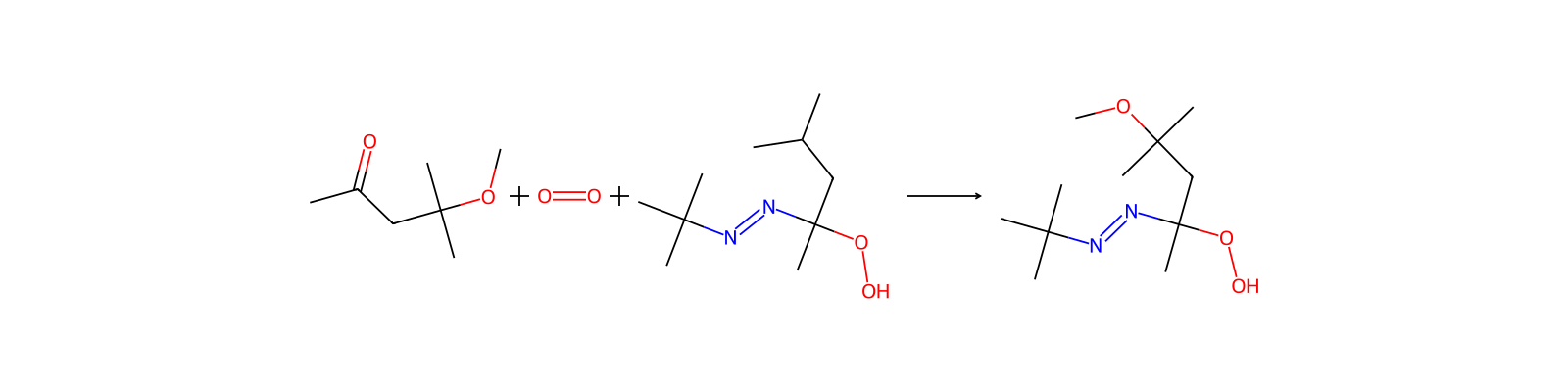
관련 반응
1건
연결된 노트
불러오는 중…