

기본 정보
- 표준 SMILES
CNCCO- InChIKey
OPKOKAMJFNKNAS-UHFFFAOYSA-N- 분자식
- C3H9NO
- 평균 분자량
- 75.11 g/mol
- 단동위원소 질량
- 75.06841391
개요
Methylethanolamine appears as a clear colorless liquid. Flash point 165 °F. Less dense than water and soluble in water. Vapors are heavier than air. Produces toxic oxides of nitrogen during combustion. Used to make other chemicals.
이름 및 식별자
- 우선 이름
- 2-(Methylamino)ethanol
- IUPAC
- 2-(methylamino)ethanol
- 현지명
- N-메틸에탄올아민
- 영어명
- 2-Methylaminoethanol
- 분자식
- C3H9NO
- 분자량
- 75.11
이름 및 동의어
2-(Methylamino)ethanol109-83-1N-Methylethanolamine2-METHYLAMINOETHANOLMethylethanolamineMethylethylolamineEthanol, 2-(methylamino)-N-Methyl-2-aminoethanol2-(N-Methylamino)ethanolN-MethylmonoethanolamineMonomethylaminoethanolMonomethylethanolamine
이름 더 보기
2-메틸아미노에탄올N-메틸에탄올아민2-(메틸아미노)에탄올메틸에탄올아민(2-하이드록시에틸)메틸아민(하이드록시에틸)메틸아민2-(N-메틸아미노)에탄올2-하이드록시-N-메틸에틸아민메틸(베타-하이드록시에틸)아민베타-(메틸아미노)에탄올에탄올, 2-(메틸아미노)-N-MethylaminoethanolMethylaminoethanolN-METHYL(B-HYDROXYETHYL)AMINE
(2-Hydroxyethyl)methylamineN-MonomethylaminoethanolMethyl(2-hydroxyethyl)amineMonomethylmonoethanolamineN-Methyl-2-ethanolamine2-Hydroxy-N-methylethylamineN-Methyl-2-hydroxyethylamineUsaf do-50
데이터베이스 식별자
- CAS
109-83-1- PubChem CID
- 8016
- DTXSID
DTXSID5025603- ChEMBL
CHEMBL104083- ChEBI
CHEBI:21763- UNII
- ZMQ4G4V497
- EC Number
- 203-710-0
- Nikkaji
- J1.187H
물성
구조 계산 물성
- XLogP
- -0.9
- 극성 표면적
- 32.3 Ų
- 수소 결합 공여자 수
- 2
- 수소 결합 수용자 수
- 2
- 회전 가능 결합 수
- 2
- 무거운 원자 수
- 5
- 형식 전하
- 0
- 복잡도
- 16.4
실험 및 물리화학적 성질
Chemical Classes
Nitrogen Compounds -> Ethanolamines
Corrosives
CosmeticsBuffering
pHA strong base
SpringerMaterials PropertiesBoiling point
LogP
log Kow = -0.94
-0.94
OdorFishy
Density
0.9414 (USCG, 1999) - Less dense than water; will float
0.937 g/cu cm at 20 °C
Relative density (water = 1): 0.93
0.937 @ 20°C
Viscosity13.0 mPa s at 20 °C
Color/Form
Viscous liquid
Clear colorless liquid
Colorless to light yellow liquid
Solubility
Very soluble (NTP, 1992)
Miscible with alcohol, ether
In water, 1X10+6 mg/L (miscible)
Solubility in water: miscible
CorrosivityCorrosive to cork, metals
Flash Point
165 °F (NTP, 1992)
73.9 °C
76 °C (169 °F) - closed cup
165 °F (74 °C) (Open cup)
74 °C o.c.
물리화학적 성질
- 녹는점
- -3 °C · -3 °C
- 끓는 점
- 159 °C · 159 °C(lit.)
- 밀도
- 0.935 g/mL · 0.935 g/mL at 25 °C(lit.)
- 증기 밀도
- 2.6 · 2.6 (vs air)
- 증기압
- 0.5 mm · 0.5 mm Hg ( 20 °C)
- 굴절률
- 20 · n20/D 1.439(lit.)
- 인화점
- 163 °F · 163 °F
- 저장 조건
- 30 °C · Store below +30°C.
- 용해도
- 클로로포름, 메탄올(약간)에 용해됨
- 산도 계수 (pKa)
- 1 · pK1:9.88(+1) (25°C)
- 물리적 상태
- 액체
- 색상
- 무색투명~미황색
- 수소이온지수(pH)
- 13.6 · 13.6 (100g/l, H2O, 20℃)
- 폭발한계
- 1.6 · 1.6-17.7%(V)
- 수용성
- 혼용 가능
- Merck
- 14 · 14,6015
- BRN
- 1071196 · 1071196
- Henry's Law Constant
- 9 · 9.0×101 mol/(m3Pa) at 25℃, HSDB (2015)
- 안정성
- 안정적인. 타기 쉬운. 산화제와 호환되지 않습니다.
- 화장품 원료 기능
- 버퍼링
- InChI
- 1S/C3H9NO/c1-4-2-3-5/h4-5H,2-3H2,1H3
- InChIKey
- OPKOKAMJFNKNAS-UHFFFAOYSA-N
- SMILES
- CNCCO
- LogP
- -0.91 at · -0.91 at 25℃
- 표면장력
- 35.68 mN/m · 35.68mN/m at 293.15K
- NIST
- 2 · Ethanol, 2-(methylamino)-(109-83-1)
- EPA
- N-Methylethanolamine (109-83-1)
화학적 성질
viscous colourless or light yellow liquid
안전 및 규제
GHS 분류
GHS Classification
Danger
H302: Harmful if swallowed [Warning Acute toxicity, oral]
P260, P264, P270, P280, P301+P317, P301+P330+P331, P302+P352, P302+P361+P354, P304+P340, P305+P354+P338, P316, P317, P321, P330, P362+P364, P363, P405, and P501 (click each P-code to see the statement)
Danger
H302 (> 99.9%): Harmful if swallowed [Warning Acute toxicity, oral]
P260, P261, P264, P264+P265, P270, P271, P280, P301+P317, P301+P330+P331, P302+P352, P302+P361+P354, P304+P340, P305+P354+P338, P316, P317, P319, P321, P330, P362+P364, P363, P403+P233, P405, and P501 (click each P-code to see the statement)
유해성 정보
Regulatory Information
Chemical: Ethanol, 2-(methylamino)-
Ethanol, 2-(methylamino)- is listed on the EPA's Chemical Data Reporting (CDR) system. Manufacturers and importers of Ethanol, 2-(methylamino)- are required to report information about their production and use of this chemical to the EPA under the Toxic Substances Control Act (TSCA). (40 eCFR Part 711)
Status: Active Update: 24-05-2022 https://echa.europa.eu/registration-dossier/-/registered-dossier/13912
2-(Methylamino) ethanol: Does not have an individual approval but may be used under an appropriate group standard
The New Jersey Worker and Community Right to Know Act requires public and private employers to provide information about hazardous substances at their workplaces. (N.J.S.A. 34:5A-1 et. seq.)
Other Safety InformationEvaluation - Chemicals that are unlikely to require further regulation to manage risks to environment
DOT LabelCorrosive
Fire Hazards
Special Hazards of Combustion Products: Irritating vapors and toxic gases, such as nitrogen oxides and carbon monoxide, may be formed when involved in fire. (USCG, 1999)
Combustible. Above 74 °C explosive vapour/air mixtures may be formed.
Fire PotentialFlammable when exposed to heat, flame, or oxidizers.
Health HazardsExposure can cause irritation of eyes, nose and throat. (USCG, 1999)
Hazards Summary
A corrosive substance that can cause injury to the skin, eyes, and respiratory tract; [ICSC] Not teratogenic in one study of rats receiving a vaporized dose of 150 ppm 7 hours/day during gestation days 7-15. [REPROTOX] May be absorbed through skin; Effects in high-dose animal studies include seizures and coma; [MSDSonline]
Reactive GroupAlcohols and Polyols
EC ClassificationSymbol: C; R: 21/22-34; S: (1/2)-26-36/37/39-45
Reactivity Profile
METHYLETHANOLAMINE is an aminoalcohol. Amines are chemical bases. They neutralize acids to form salts plus water. These acid-base reactions are exothermic. The amount of heat that is evolved per mole of amine in a neutralization is largely independent of the strength of the amine as a base. Amines may be incompatible with isocyanates, halogenated organics, peroxides, phenols (acidic), epoxides, anhydrides, and acid halides. Flammable gaseous hydrogen is generated by amines in combination with strong reducing agents, such as hydrides. This compound may react with oxidizing materials. (NTP, 1992)
Chemical DangersDecomposes on burning. This produces toxic fumes including nitrogen oxides. The substance is a strong base. It reacts violently with acid and is corrosive. Reacts with strong oxidants. Attacks many metals.
Air and Water ReactionsSoluble in water.
안전 및 보호
Fire Fighting
Excerpt from ERG Guide 153 [Substances - Toxic and/or Corrosive (Combustible)]:
Use water spray, powder, alcohol-resistant foam, carbon dioxide.
First Aid Measures
Fresh air, rest. Artificial respiration may be needed. Refer for medical attention.
Remove contaminated clothes. Rinse skin with plenty of water or shower. Refer for medical attention .
First rinse with plenty of water for several minutes (remove contact lenses if easily possible), then refer for medical attention.
Rinse mouth. Do NOT induce vomiting. Refer for medical attention .
First Aid
EYES: First check the victim for contact lenses and remove if present. Flush victim's eyes with water or normal saline solution for 20 to 30 minutes while simultaneously calling a hospital or poison control center. Do not put any ointments, oils, or medication in the victim's eyes without specific instructions from a physician. IMMEDIATELY transport the victim after flushing eyes to a hospital even if no symptoms (such as redness or irritation) develop.
Safe StorageSeparated from strong oxidants and acids.
Fire Fighting Procedures
Suitable extinguishing media: Use water spray, alcohol-resistant foam, dry chemical or carbon dioxide.
Advice for firefighters: Wear self-contained breathing apparatus for firefighting if necessary.
Use water spray to cool unopened containers.
To fight fire, used alcohol foam.
Storage Conditions
Keep container tightly closed in a dry and well-ventilated place. Containers which are opened must be carefully resealed and kept upright to prevent leakage. Storage class (TRGS 510): Combustible, corrosive hazardous materials.
Separated from strong oxidants and acids.
Cleanup Methods
ACCIDENTAL RELEASE MEASURES: Personal precautions, protective equipment and emergency procedures: Use personal protective equipment. Avoid breathing vapors, mist or gas. Ensure adequate ventilation. Remove all sources of ignition. Evacuate personnel to safe areas. Beware of vapors accumulating to form explosive concentrations. Vapors can accumulate in low areas. Environmental precautions: Prevent further leakage or spillage if safe to do so. Do not let product enter drains. Discharge into the environment must be avoided. Methods and materials for containment and cleaning up: Contain spillage, and then collect with an electrically protected vacuum cleaner or by wet-brushing and place in container for disposal according to local regulations. Keep in suitable, closed containers for disposal.
Collect leaking and spilled liquid in sealable containers as far as possible. Cautiously neutralize remainder. Then wash away with plenty of water.
Nonfire Spill ResponseExcerpt from ERG Guide 153 [Substances - Toxic and/or Corrosive (Combustible)]:
Disposal Methods
SRP: Recycle any unused portion of the material for its approved use or return it to the manufacturer or supplier. Ultimate disposal of the chemical must consider: the material's impact on air quality; potential migration in air, soil or water; effects on animal, aquatic and plant life; and conformance with environmental and public health regulations. If it is possible or reasonable use an alternative chemical product with less inherent propensity for occupational harm/injury/toxicity or environmental contamination.
Product: This combustible material may be burned in a chemical incinerator equipped with an afterburner and scrubber. Offer surplus and non-recyclable solutions to a licensed disposal company; Contaminated packaging: Dispose of as unused product.
Spillage Disposal
Personal protection: complete protective clothing including self-contained breathing apparatus. Collect leaking and spilled liquid in sealable containers as far as possible. Cautiously neutralize remainder. Then wash away with plenty of water.
Preventive Measures
ACCIDENTAL RELEASE MEASURES: Personal precautions, protective equipment and emergency procedures: Use personal protective equipment. Avoid breathing vapors, mist or gas. Ensure adequate ventilation. Remove all sources of ignition. Evacuate personnel to safe areas. Beware of vapors accumulating to form explosive concentrations. Vapors can accumulate in low areas. Environmental precautions: Prevent further leakage or spillage if safe to do so. Do not let product enter drains. Discharge into the environment must be avoided.
Precautions for safe handling: Avoid contact with skin and eyes. Avoid inhalation of vapor or mist. Keep away from sources of ignition - No smoking. Take measures to prevent the build up of electrostatic charge.
Appropriate engineering controls: Handle in accordance with good industrial hygiene and safety practice. Wash hands before breaks and at the end of workday.
Gloves must be inspected prior to use. Use proper glove removal technique (without touching glove's outer surface) to avoid skin contact with this product. Dispose of contaminated gloves after use in accordance with applicable laws and good laboratory practices. Wash and dry hands.
SRP: The scientific literature for the use of contact lenses by industrial workers is inconsistent. The benefits or detrimental effects of wearing contact lenses depend not only upon the substance, but also on factors including the form of the substance, characteristics and duration of the exposure, the uses of other eye protection equipment, and the hygiene of the lenses. However, there may be individual substances whose irritating or corrosive properties are such that the wearing of contact lenses would be harmful to the eye. In those specific cases, contact lenses should not be worn. In any event, the usual eye protection equipment should be worn even when contact lenses are in place.
Isolation and EvacuationExcerpt from ERG Guide 153 [Substances - Toxic and/or Corrosive (Combustible)]:
독성 정보
Environmental Fate
TERRESTRIAL FATE: Based on a classification scheme(1), an estimated Koc value of 1(SRC), determined from a structure estimation method(2), indicates that 2-methylaminoethanol is expected to have very high mobility in soil(SRC). The pKa of 2-methylaminoethanol is 9.95(3), indicating that this compound will exist almost entirely in the cation form in the environment and cations generally adsorb more strongly to soils containing organic carbon and clay than their neutral counterparts(4). Volatilization of the neutral species of 2-methylaminoethanol from moist soil surfaces is not expected to be an important fate process(SRC) given an estimated Henry's Law constant of 8.1X10⁻¹⁰ atm-cu m/mole(SRC), using a fragment constant estimation method(2). 2-Methylaminoethanol is expected to volatilize from dry soil surfaces(SRC) based upon a vapor pressure of 1.08 mm Hg at 25 °C(5). A 68% of theoretical BOD using activated sludge in the Japanese MITI test classifies 2-methylaminoethanol as readily biodegradable(6) and suggests that biodegradation is an important environmental fate process in soil(SRC).
AQUATIC FATE: Based on a classification scheme(1), an estimated Koc value of 1(SRC), determined from a structure estimation method(2), indicates that 2-methylaminoethanol is not expected to adsorb to suspended solids and sediment(SRC). Volatilization from water surfaces is not expected(3) based upon an estimated Henry's Law constant of 8.1X10⁻¹⁰ atm-cu m/mole(SRC), developed using a fragment constant estimation method(2). The pKa of 2-methylaminoethanol is 9.95(4), indicating that this compound will exist almost entirely in cation form in the environment, and volatilization from water is unlikely since cations do not volatilize(SRC). According to a classification scheme(5), an estimated BCF of 3(SRC), from its log Kow of -0.94(6) and a regression-derived equation(2), suggests the potential for bioconcentration in aquatic organisms is low(SRC). A 68% of theoretical BOD using activated sludge in the Japanese MITI test classifies 2-methylaminoethanol as readily biodegradable(7) and suggests that biodegradation is an important environmental fate process in water(SRC). Hydrolysis is not expected to be an important environmental fate process(SRC) since this compound lacks functional groups that hydrolyze under environmental conditions(3).
ATMOSPHERIC FATE: According to a model of gas/particle partitioning of semivolatile organic compounds in the atmosphere(1), 2-methylaminoethanol, which has a vapor pressure of 1.08 mm Hg at 25 °C (2), is expected to exist solely as a vapor in the ambient atmosphere. Vapor-phase 2-methylaminoethanol is degraded in the atmosphere by reaction with photochemically-produced hydroxyl radicals(SRC); the half-life for this reaction in air is estimated to be 4.9 hours(SRC), calculated from its rate constant of 7.9X10⁻¹¹ cu cm/molecule-sec at 25 °C(SRC) that was derived using a structure estimation method(3). 2-Methylaminoethanol does not contain chromophores that absorb at wavelengths >290 nm and, therefore, is not expected to be susceptible to direct photolysis by sunlight(4).
Adverse EffectsDermatotoxin - Skin burns.
Exposure RoutesThe substance can be absorbed into the body by inhalation of its vapour, through the skin and by ingestion.
Toxicity Summary
IDENTIFICATION AND USE: 2-Methylaminoethanol is a viscous liquid. It is used in the manufacture of textile chemicals, pharmaceuticals. HUMAN EXPOSURE AND TOXICITY: Prolonged hematuria, pathologic liver function tests, and multiple skin warts described in a patient after 2-methylaminoethanol exposure. ANIMAL STUDIES: In rats it was irritating to the skin, eyes, and mucous membranes. 2-Methylaminoethanol (150 ppm) was not maternally toxic or embryotoxic in rats. It was not mutagenic in S. typhimurium TA 1535, TA 1537, TA 98 and TA 100 with and without metabolic activation.
Signs and Symptoms
Sore throat. Cough. Burning sensation. Shortness of breath. Laboured breathing. Symptoms may be delayed.
Pain. Redness. Blisters. Skin burns.
Pain. Redness. Severe deep burns. Loss of vision.
Burning sensation. Abdominal pain. Shock or collapse.
Ongoing Test Status
EPA has released the Interactive Chemical Safety for Sustainability (iCSS) Dashboard. The iCSS Dashboard provides an interactive tool to explore rapid, automated (or in vitro high-throughput) chemical screening data generated by the Toxicity Forecaster (ToxCast) project and the federal Toxicity Testing in the 21st century (Tox21) collaboration. /The title compound was tested by ToxCast and/or Tox21 assays/[USEPA; ICSS Dashboard Application; Available from, as of December 8, 2016: http://actor.epa.gov/dashboard/]
The following link will take the user to the National Toxicology Program (NTP) Test Status of Agents Search page, which tabulates the results and current status of tests such as "Short-Term Toxicity Studies", "Long-term Carcinogenicity Studies", "Developmental Studies", "Genetic Toxicology Studies", etc., performed with this chemical. Testing status for N-methylethanolamine is available.[Available from, as of March 24, 2017: https://ntpsearch.niehs.nih.gov/?e=True&ContentType=Testing+Status]
Soil Adsorption/Mobility
Using a structure estimation method based on molecular connectivity indices(1), the Koc of 2-methylaminoethanol can be estimated to be 1(SRC). According to a classification scheme(2), this estimated Koc value suggests that 2-methylaminoethanol is expected to have very high mobility in soil. The pKa of 2-methylaminoethanol is 9.95(3), indicating that this compound will exist almost entirely in cation form in the environment and cations generally adsorb more strongly to soils containing organic carbon and clay than their neutral counterparts(4).
Human Toxicity Excerpts
/SIGNS AND SYMPTOMS/ /Inhalation causes:/ sore throat, cough, burning sensation, shortness of breath, labored breathing, symptoms may be delayed.
/SIGNS AND SYMPTOMS/ /Skin exposure causes/ pain, redness, blisters, skin burns.
/SIGNS AND SYMPTOMS/ /Eye exposure causes/ pain, redness, severe deep burns, loss of vision.
/SIGNS AND SYMPTOMS/ /Ingestion causes/ burning sensation, abdominal pain, shock or collapse.
/CASE REPORTS/ ... This report presents a patient who during exposure to 2-methylaminoethanol developed prolonged hematuria, pathologic liver function tests, and multiple skin warts.
Artificial Pollution Sources
2-Methylaminoethanol's production and use as an intermediate in the synthesis of numerous products that include coatings, textile lubricants, polishes, detergents, pesticides, personal care products, and pharmaceuticals(1) may result in its release to the environment through various waste streams(SRC). 2-Methylaminoethanol is reportedly used in hydraulic fracturing fluids which releases the compound directly to the environment(2).
Environmental BiodegradationAEROBIC: 2-Methylaminoethanol, present at 100 mg/L, reached 68% of its theoretical BOD in 4 weeks using an activated sludge inoculum at 30 mg/L in the Japanese MITI test, which classified the compound as readily biodegradable(1).
Environmental Bioconcentration
An estimated BCF of 3 was calculated in fish for 2-methylaminoethanol(SRC), using a log Kow of -0.94(1) and a regression-derived equation(2). According to a classification scheme(3), this BCF suggests the potential for bioconcentration in aquatic organisms is low(SRC).
Volatilization from Water/Soil
The Henry's Law constant for 2-methylaminoethanol is estimated as 8.1X10⁻¹⁰ atm-cu m/mole(SRC) using a fragment constant estimation method(1). This Henry's Law constant indicates that 2-methylaminoethanol is expected to be essentially nonvolatile from water surfaces(2). The pKa of 2-methylaminoethanol is 9.95(3), indicating that this compound will exist almost entirely in cation form in the environment, and volatilization from water applies to the neutral species since cations do not volatilize(SRC). 2-Methylaminoethanol's Henry's Law constant indicates that volatilization from moist soil surfaces is not expected to occur for the neutral species(SRC). 2-Methylaminoethanol is expected to volatilize from dry soil surfaces(SRC) based upon a vapor pressure of 1.08 mm Hg at 25 °C(4).
안전 데이터
- wgk
- 1
- tsca
- TSCA listed
- rtecs
- KL6650000
- ridadr
- UN 2735 8/PG 2
- 독성
- LD50 orally in Rabbit: 1391 mg/kg LD50 dermal Rabbit 1006 mg/kg
- HS 번호
- 29221980
- risk_code
- 21/22-34-48/22
- hazard_code
- C
- safety_code
- 26-36/37/39-45
- 포장분류
- III
- 위험 등급
- 8
- 기존화학 물질
- KE-23428
- 자연 발화 온도
- 662 °F
- Hazard Classifications
- Acute Tox. 4 DermalAcute Tox. 4 OralEye Dam. 1Repr. 2Skin Corr. 1BSTOT RE 2 OralSTOT SE 3
- 스토리지 클래스
- 8A - Combustible corrosive hazardous materials
- 유해 물질 데이터
- 109-83-1(Hazardous Substances Data)
화학 및 산업
약리 정보
Metabolism/Metabolites
In vivo precursor of choline.
The incorporation of the phosphate ester of 2-methylaminoethanol into phospholipids of brain and liver suspensions was observed.
용도 및 제조
Uses
Used in electrostatic automotive coatings, for acid gas scrubbing, and in textile chemicals and pharmaceuticals; [HSDB]
Painting (Pigments, Binders, and Biocides) [Category: Paint]
For 2-methylaminoethanol (USEPA/OPP Pesticide Code: 489200) there are 0 labels match. /SRP: Not registered for current use in the U.S., but approved pesticide uses may change periodically and so federal, state and local authorities must be consulted for currently approved uses./
Acid gas scrubbing, electrostatic automotive coatings. /From table/
Textile chemicals, pharmaceuticals.
U.S. Exports
(1972) No Data
(1975) No Data
U.S. Imports
(1972) No Data
(1975) No Data
U.S. Production
2023: 10,000,000 - <25,000,000 lb
This chemical is listed as a High Production Volume (HPV) (65FR81686). Chemicals listed as HPV were produced in or imported into the U.S. in >1 million pounds in 1990 and/or 1994. The HPV list is based on the 1990 Inventory Update Rule. (IUR) (40 CFR part 710 subpart B; 51FR21438).
(1972) PROBABLY GREATER THAN 4.54X10+5 GRAMS
(1975) PROBABLY GREATER THAN 9.0X10+5 GRAMS
(1986) >1 million-10 million pounds
For more U.S. Production (Complete) data for 2-Methylaminoethanol (9 total), please visit the HSDB record page.
Consumer UsesNot Known or Reasonably Ascertainable
Industry UsesSolvent
Methods of Manufacturing
Reaction of MMA /momomethylamine/ or dimethylamine (DMA) with ethylene oxide to produce N-methylethanolamine.
Preparation by mixing ethylene oxide with concentrated methylamine solution with external cooling ... .
Household ProductsInformation on 1 consumer products that contain 2-methylaminoethanol; N-methylethanolamine; N-methyl-2-ethanolamine; N-methyl-2-amino ethanol; 2-(methylamino)ethanol in the following categories is provided:
Use ClassificationCosmetics -> Buffering
General Manufacturing Information
Oil and Gas Drilling, Extraction, and Support activities
Ethanol, 2-(methylamino)-: ACTIVE
응용 분야
용도Textile chemicals, pharmaceuticals.
용도2-Methylaminoethanol is used as an intermediate in synthetic chemistry. It finds application in various fields such as textile lubricants, polishes, detergents and in personal care products. It is also involved in electrostatic automotive coatings and in acid gas scrubbing. Further, it serves as an intermediate in polymers and pharmaceuticals. In addition to this, it is used as a solvent in the natural gas-processing industry.
일반 설명2-Methylaminoethanol is a clear colorless liquid. Flash point 165°F. Less dense than water and soluble in water. Vapors are heavier than air. Produces toxic oxides of nitrogen during combustion. Used to make other chemicals.
제조 방법
생산 방법Monomethylethanolamine is manufactured by reacting ethylene oxide and methylamine with external cooling.
상·하류 제품 정보
하류 제품
공급사50 곳
国药集团化学试剂有限公司86-21-63210123 · [email protected]
梯希爱(上海)化成工业发展有限公司021-67121386 · [email protected]
衢州润东化工有限公司0570-8789886 18892685668 · [email protected]
上海阿拉丁生化科技股份有限公司400-6206333 13167063860 · [email protected]
爱斯特(成都)生物制药股份有限公司+86-28-85122536 85324413 · [email protected]
山东前元高分子材料有限公司18678041314 18765609661 · [email protected]
韶远科技(上海)有限公司021-50795510 4000665055 · [email protected]
科瑞迪化学400-821-5857 021-64326257 · [email protected]
上海将来实业股份有限公司400-0066400 13621662912 · [email protected]
Syntechem Co.,Ltd[email protected]
上海迈瑞尔生化科技有限公司4006356688 18621169109 · [email protected]
阿法埃莎(中国)化学有限公司400-6106006 · [email protected]
安耐吉化学&3A(安徽泽升科技股份有限公司)400-0056266 · [email protected]
山东鑫恒诚化工有限公司18660169893 · [email protected]
济南和信化工有限公司18764033565 18764033565 · [email protected]
上海景颜化工科技有限公司13817811078 · [email protected]
嘉兴市艾森化工有限公司0573-85285100 18627885956 · [email protected]
武汉丰泰威远科技有限公司027-87465837 19945049750 · [email protected]
孝感深远化工有限公司15527621225; 15527621225 · [email protected]
济南世纪通达化工有限公司15153132128 15153132128 · [email protected]
山东西亚化学有限公司13355009207 13355009207 · [email protected]
玛雅试剂+86 (573) 82222445 (0)18006601000 452520369 · [email protected]
四川库利南科技有限公司400-1166-196 18981987031 · [email protected]
天津希恩思生化科技有限公司400 638 7771 · [email protected]
南京维奥化工有限公司Please Send Email 18652950785 · [email protected]
河南多贝化工有限公司0370-2785118 17550508557 · [email protected]
艾科试剂4008-755-333 18080918076 · [email protected]
上海思域化工科技有限公司86-21-34053660 · [email protected]
赛默飞世尔科技(中国)有限公司800-810-5118 · [email protected]
北京伊诺凯科技有限公司400-810-7969 010-59572699 · [email protected]
江苏艾康生物医药研发有限公司025-66113011 13913916777 · [email protected]
TCI AMERICA800-4238616 · [email protected]
TOKYO CHEMICAL INDUSTRY CO., LTD.03-36680489 · [email protected]
TCI Europe320-37350700 · [email protected]
上海贤鼎生物科技有限公司4009209199 · [email protected]
深圳康特腾科技有限公司86-0755-86635001 · [email protected]
越林试剂021-62960152 · [email protected]
上海睿升化工科技有限公司+86-021-50935922
上海倍卓生物科技有限公司021-61119791,13386096464 · [email protected]
北京环宇世纪化学科技有限公司hysj_bj.com
上海将来实业股份有限公司400-0066400 13621662912 · [email protected]
上海将来实业股份有限公司021-61552785 · [email protected]
HBCChem, Inc.+1-510-219-6317 · [email protected]
日照力德士化工有限公司010-51268198 · [email protected]
美岚实业(上海)有限公司021-58958189 · [email protected]
上海爱蝶实业有限公司021-58957966 18930537195 · [email protected]
成都零六生物科技有限公司400-1166-196 13458535857 · [email protected]
广拓化学(上海)有限公司021-60899189-8001 18918189673 · [email protected]
雷丁试剂0510-85629785 18013409632 · [email protected]
上海麦克林生化科技股份有限公司15221275939 15221275939 · [email protected]
추가 설명
정의ChEBI: An ethanolamine compound having an N-methyl substituent.
관련 반응
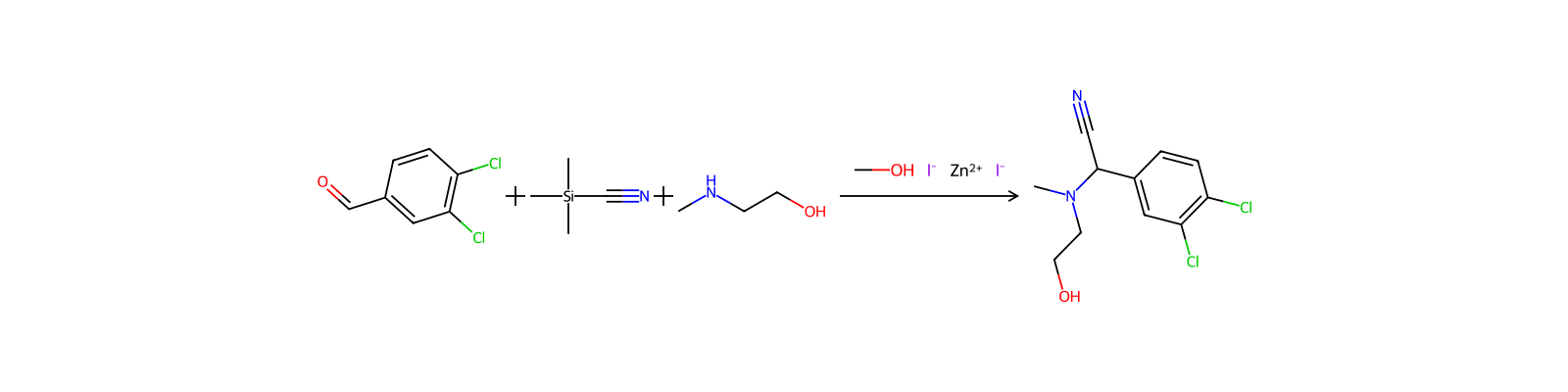
751건




연결된 노트
불러오는 중…