홈MCP워크벤치Skills
홈워크벤치알림마이페이지
llms.txt · MCP 가이드개인정보처리방침 · 이용약관 · 지원v1.8.0
  1. 홈
  2. /화합물

메틸이소아밀케톤

5-Methyl-2-hexanone

HCID 8034
새 노트새 반응견적 요청하기
인쇄 미리보기

데이터를 보충하는 중입니다. 잠시 후 페이지를 새로 고치면 최신 내용을 볼 수 있습니다

기본 정보개요이름 및 식별자물성안전 및 규제화학 및 산업관련 반응화합물 노트
부분 구조 검색유사 구조 찾기

기본 정보

CAS
110-12-3
표준 SMILES
CC(=O)CCC(C)C
InChIKey
FFWSICBKRCICMR-UHFFFAOYSA-N
분자식
C7H14O
평균 분자량
114.19 g/mol
단동위원소 질량
114.10446507

개요

5-methylhexan-2-one appears as a colorless liquid with a pleasant fruity odor. Less dense than water. Vapors heavier than air. Used as a solvent and for making other chemicals.

이름 및 식별자

우선 이름
5-Methyl-2-hexanone
IUPAC
5-methylhexan-2-one
현지명
메틸이소아밀케톤
영어명
5-Methyl-2-hexanone
분자식
C7H14O
분자량
114.19

이름 및 동의어

5-METHYL-2-HEXANONE110-12-35-Methylhexan-2-one2-Hexanone, 5-methyl-Isoamyl methyl ketoneMethyl isoamyl ketoneIsopentyl methyl ketoneMIAKMethyl isopentyl ketone2-Methyl-5-hexanoneKetone, methyl isoamylDTXSID5021914
이름 더 보기
5-메틸-2-헥사논메틸이소아밀케톤5-메틸헥산-2-온메틸이소아밀케톤2-메틸-5-헥산온3-메틸뷰틸 메틸 케톤5-메틸-2-헥산온5-메틸-헥산-2-온메틸 아이소아밀 케톤메틸헥산온아이소아밀 메틸 케톤5-methyl-hexan-2-one5-Methylhexan-2-on5-methyl-2-hexanon2-Hexanone,5-methyl--2-hexanoneIsobutylaceton
3-Methylbutyl methyl ketone6O4A4A5F28DTXCID801914RefChem:103121203-737-8Isobutylacetone(CH3)2CHCH2CH2COCH3MFCD00008950

데이터베이스 식별자

CAS
110-12-3
PubChem CID
8034
DTXSID
DTXSID5021914
ChEMBL
CHEMBL45354
ChEBI
CHEBI:88432
UNII
6O4A4A5F28
EC Number
203-737-8
Nikkaji
J36.968C

물성

구조 계산 물성보충 중

XLogP
1.9
극성 표면적
17.1 Ų
수소 결합 공여자 수
0
수소 결합 수용자 수
1
회전 가능 결합 수
3
무거운 원자 수
8
형식 전하
0
복잡도
74.5

실험 및 물리화학적 성질

Chemical Classes · 2건

Flammable agents - 3rd degree

Volatile Organic Compound (VOC)

LipidsFatty Acyls [FA] -> Oxygenated hydrocarbons [FA12]
SolventsSolvents -> Ketones (<C12)
SpringerMaterials PropertiesBoiling point
LogP · 4건

log Kow = 1.88

1.88

1.72 (estimated)

1.88

OdorPleasant, fruity odor
Density · 6건

0.81 (NIOSH, 2024) - Less dense than water; will float

0.888 g/cu cm at 20 °C/20 °C

Relative density (water = 1): 0.89

0.81

0.89 @ 20°C

0.81

Viscosity0.77 cP at 20 °C
Color/FormColorless, clear liquid
Solubility · 6건

0.5 % (NIOSH, 2024)

In water, 5400 mg/L at 25 °C

Miscible with ethanol and ether; very soluble in acetone, benzene; soluble in carbon tetrachloride

안전 및 규제

안전 정보는 참고용이며, 공급업체의 물질안전보건자료(SDS), 관련 법규 및 전문가 평가를 대체하지 않습니다.

GHS 분류

GHS Classification · 6건

Warning

H226: Flammable liquid and vapor [Warning Flammable liquids]

P210, P233, P240, P241, P242, P243, P261, P271, P280, P303+P361+P353, P304+P340, P317, P370+P378, P403+P235, and P501 (click each P-code to see the statement)

This chemical does not meet GHS hazard criteria for 0.1% (1 of 771) of reports.

Warning

H226 (99.9%): Flammable liquid and vapor [Warning Flammable liquids]

유해성 정보

Regulatory Information · 5건

Chemical: 2-Hexanone, 5-methyl-

2-Hexanone, 5-methyl- is listed on the EPA's Chemical Data Reporting (CDR) system. Manufacturers and importers of 2-Hexanone, 5-methyl- are required to report information about their production and use of this chemical to the EPA under the Toxic Substances Control Act (TSCA). (40 eCFR Part 711)

Status: Active Update: 08-02-2023 https://echa.europa.eu/registration-dossier/-/registered-dossier/10538

2-Hexanone, 5-methyl-: HSNO Approval: HSR001200 Approved with controls

The New Jersey Worker and Community Right to Know Act requires public and private employers to provide information about hazardous substances at their workplaces. (N.J.S.A. 34:5A-1 et. seq.)

DOT LabelFlammable Liquid
Fire Hazards · 3건

Excerpt from ERG Guide 127 [Flammable Liquids (Water-Miscible)]:

· HIGHLY FLAMMABLE: Will be easily ignited by heat, sparks or flames.

Flammable. Above 36 °C explosive vapour/air mixtures may be formed.

Fire Potential · 2건

Flammable

A flammable liquid when exposed to heat, flame, or oxidizers.

Health Hazards · 2건

Excerpt from ERG Guide 127 [Flammable Liquids (Water-Miscible)]:

· Inhalation or contact with material may irritate or burn skin and eyes.

화학 및 산업

약리 정보

Cellular LocationsCytoplasm

용도 및 제조

Uses · 5건

Used as a solvent for nitrocellulose, cellulose acetate, butyrate, acrylics, high-solid coatings, and vinyl copolymers; [HSDB]

Painting (Solvents) [Category: Paint]

Industrial intermediate; used in manufacture of rubber antioxidants, in paints, lacquers and varnishes

Solvent for nitrocellulose, cellulose acetate, butyrate, acrylics, and vinyl copolymers.

5-Methyl-2-hexanone is used as a solvent for the production of high-solids coatings.

U.S. Production · 5건

2023: 10,000,000 - <25,000,000 lb

(1972) PROBABLY GREATER THAN 9.08X10+5 G

(1975) PROBABLY GREATER THAN 4.54X10+5 G

Production volumes for non-confidential chemicals reported under the Inventory Update Rule. [Table#4258]

2-Hexanone, 5-methyl- is listed as a High Production Volume (HPV) chemical (65FR81686). Chemicals listed as HPV were produced in or imported into the U.S. in >1 million pounds in 1990 and/or 1994. The HPV list is based on the 1990 Inventory Update Rule. (IUR) (40 CFR part 710 subpart B; 51FR21438).

Consumption Patterns · 2건

Paints, lacquers and varnishes; manufacture of rubber antioxidants; closed system synthesis

ESSENTIALLY 100% AS SOLVENT

Consumer UsesNot Known or Reasonably Ascertainable
Industry UsesSolvent
Methods of Manufacturing · 2건

OXIDATION OF 5-METHYL-2-HEXANOL

5-Methyl-2-hexanone is produced by condensation of acetone with isobutyraldehyde. This reaction may be carried out in one or two steps, in the liquid or in the gas phase.

Formulations/Preparations

관련 반응

31건
반응 기록 만들기
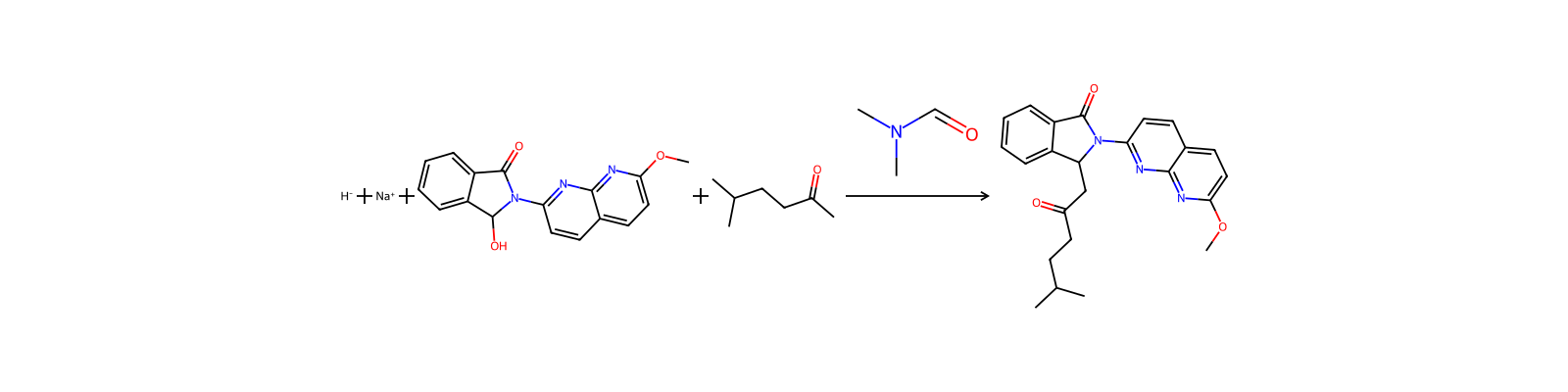
HRID 38311 반응식
HRID 38311반응물로uspto-grants-2013_09
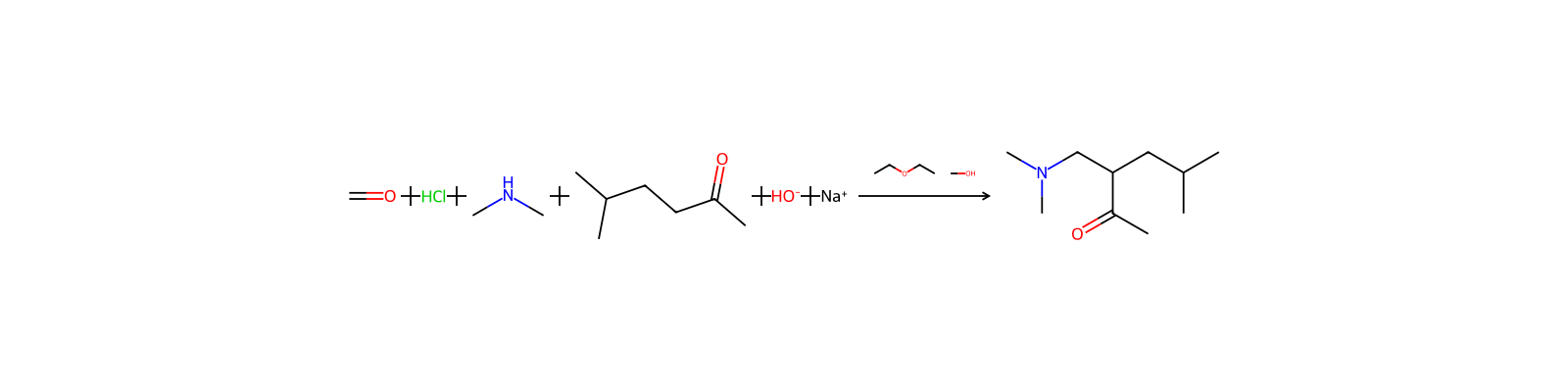
HRID 201255 반응식
HRID 201255반응물로Training data from https://doi.org/10.1039/C8SC04228D (6/10)
HRID 267656 반응식
HRID 267656반응물로uspto-grants-1976_03
HRID 823148 반응식
HRID 823148반응물로Test data from https://doi.org/10.1039/C8SC04228D
HRID 1087775 반응식
HRID 1087775반응물로uspto-grants-1990_10
HRID 1087783 반응식
HRID 1087783반응물로uspto-grants-1990_10
HRID 1140327 반응식
HRID 1140327반응물로Training data from https://doi.org/10.1039/C8SC04228D (7/10)
HRID 1153235 반응식
HRID 1153235반응물로Training data from https://doi.org/10.1039/C8SC04228D (7/10)
1 / 4 페이지

화합물 노트

불러오는 중…

이 페이지에서기본 정보개요이름 및 식별자물성안전 및 규제화학 및 산업관련 반응화합물 노트
더보기
새 노트새 반응견적 요청하기

Miscible with most org solvents

5.4 mg/mL at 25 °C

Solubility in water, g/100ml at 20 °C: 0.5 (poor)

Flash Point · 6건

97 °F (NIOSH, 2024)

36 °C

96 °F (36 °C) (Closed cup)

110 °F (open cup)

36 °C c.c.

97 °F

Boiling Point · 6건

291 °F at 760 mmHg (NIOSH, 2024)

144 °C

144 °C

291 °F

144 °C @760 [mm Hg]

291 °F

물리화학적 성질

녹는점
-74 °C · -74 °C
끓는 점
145 °C · 145 °C (lit.)
밀도
0.814 g/mL · 0.814 g/mL at 25 °C (lit.)
증기 밀도
3.94 · 3.94 (vs air)
증기압
4.5 mm · 4.5 mm Hg ( 20 °C)
굴절률
20 · n20/D 1.406(lit.)
인화점
106 °F · 106 °F
저장 조건
30 °C · Store below +30°C.
용해도
25 °C에서 · 물: 25°C에서 용해성5.4g/L
물리적 상태
액체
색상
무색의
냄새
기분 좋은 냄새
Odor Threshold
0.0021 ppm · 0.0021ppm
폭발한계
1.35 · 1.35-8.2%, 93°F
수용성
5.4 g/L · 5.4g/L(20℃)
BRN
506163 · 506163
Henry's Law Constant
6.4 · 6.4×10-2 mol/(m3Pa) at 25℃, Brockbank (2013)
InChI
1S/C7H14O/c1-6(2)4-5-7(3)8/h6H,4-5H2,1-3H3
InChIKey
FFWSICBKRCICMR-UHFFFAOYSA-N
SMILES
CC(C)CCC(C)=O
LogP
1.88 at · 1.88 at 25℃
NIST
2 · 2-Hexanone, 5-methyl-(110-12-3)
EPA
Methyl isoamyl ketone (110-12-3)
Hazards SummaryA skin and eye irritant; [CAMEO] Inhalation of high concentrations may cause kidney injury and unconsciousness; [ICSC] Causes liver injury after repeated high-dose inhalation exposures of rats; [HSDB]
DOT ID and Guide · 2건

2302 127

2302 127

Reactive GroupKetones
EC ClassificationSymbol: Xn; R: 10-20; S: (2)-23-24/25
UN ClassificationUN Hazard Class: 3; UN Pack Group: III
Special Reports · 1건

European Chemicals Bureau; IUCLID Dataset, 5-Methyl-hexan-2-one (110-12-3) 15 p. Summarized information provided to the EU by the European chemicals industry as of 2000. Available from the Database Query page at: http://ecb.jrc.it/esis/esis.php as of November 2, 2007

TSCA Requirements · 2건

Section 8(a) of TSCA requires manufacturers of this chemical substance to report preliminary assessment information concerned with production, exposure, and use to EPA as cited in the preamble in 51 FR 41329. Effective date 8/4/1995, Reporting date 10/3/1995.

Pursuant to section 8(d) of TSCA, EPA promulgated a model Health and Safety Data Reporting Rule. The section 8(d) model rule requires manufacturers, importers, and processors of listed chemical substances and mixtures to submit to EPA copies and lists of unpublished health and safety studies. Methyl isoamyl ketone is included on this list. Effective date 8/4/1995, Sunset date 6/30/1998.

안전 및 보호

Fire Fighting · 2건

Excerpt from ERG Guide 127 [Flammable Liquids (Water-Miscible)]:

Use AFFF, alcohol-resistant foam, powder, carbon dioxide. In case of fire: keep drums, etc., cool by spraying with water.

First Aid Measures · 4건

Fresh air, rest. Refer for medical attention.

First rinse with plenty of water for at least 15 minutes, then remove contaminated clothes and rinse again. Refer for medical attention .

First rinse with plenty of water for several minutes (remove contact lenses if easily possible), then refer for medical attention.

Rinse mouth. Do NOT induce vomiting. Refer for medical attention .

Accidental Release Measures · 2건

· CALL 911. Then call emergency response telephone number on shipping paper. If shipping paper not available or no answer, refer to appropriate telephone number listed on the inside back cover.

· ELIMINATE all ignition sources (no smoking, flares, sparks or flames) from immediate area.

First Aid · 3건

Excerpt from NIOSH Pocket Guide for Methyl isoamyl ketone:

General First Aid:

(General first aid procedures)

Safe StorageFireproof.
Exposure Control and Personal Protection · 2건

· Wear positive pressure self-contained breathing apparatus (SCBA).

10.0 [ppm]

Fire Fighting Procedures · 1건

If material on fire or involved in fire: Do not extinguish fire unless flow can be stopped or safely confined. Use water in flooding quantities as fog. Solid streams of water may be ineffective. Cool all affected containers with flooding quantities of water. Apply water from as far a distance as possible. Use alcohol foam, dry chemical or carbon dioxide. Keep run-off water out of sewers and water sources.

Storage Conditions · 1건

... Store in tightly closed containers in a cool, well ventilated area away from sources of oxidizers (such as perchlorates, peroxides, permanganates, chlorates, and nitrates), strong oxidizers (such as chlorine, bromine, and fluorine), reducing agents, and aldehydes. Sources of ignition such as smoking and open flames are prohibited where methyl isoamyl ketone is handled, used or stored. Metal containers involving the transfer of 5 gallons or more of methyl isoamyl ketone should be grounded and bonded. Drums must be equipped with self-closing valves, pressure vacuum bungs, and flame arresters.

Cleanup Methods · 4건

Evacuate and restrict persons not wearing protective equipment from area of spill or leak until cleanup is complete. Remove all ignition sources. Establish forced ventilation to keep levels below explosive limit. Absorb liquids in vermiculite, dry sand, earth, peat, carbon, or similar material and deposit in sealed containers. Keep this chemical out of a confined space ... because of the possibility of an explosion ... It may be necessary to contain and dispose of this chemical as a hazardous waste. If material or contaminated runoff enters waterways, notify downstream users of potentially contaminated waters. Contact your Department of Environmental Protection or your regional office of the federal EPA for specific recommendations. If employees are required to clean up spills, they must be properly trained and equipped. OSHA 1910.120(q) may be applicable.

Environmental considerations -- land spill: Dig a pit, pond, lagoon, holding area to contain liquid or solid material. /SRP: If time permits, pits, ponds, lagoons, soak holes, or holding areas should be sealed with an impermeable flexible membrane liner./ Dike surface flow using soil, sand bags, foamed polyurethane, or foamed concrete. Absorb bulk liquid with fly ash, cement powder, or commercial sorbents.

Environmental considerations -- water spill: Use natural barriers or oil spill control booms to limit spill travel. Remove trapped material with suction hoses.

Environmental considerations -- air spill: Apply water spray or mist to knock down vapors.

Nonfire Spill ResponseExcerpt from ERG Guide 127 [Flammable Liquids (Water-Miscible)]:
Disposal Methods · 3건

SRP: The most favorable course of action is to use an alternative chemical product with less inherent propensity for occupational exposure or environmental contamination. Recycle any unused portion of the material for its approved use or return it to the manufacturer or supplier. Ultimate disposal of the chemical must consider: the material's impact on air quality; potential migration in soil or water; effects on animal, aquatic, and plant life; and conformance with environmental and public health regulations.

Incineration

The following wastewater treatment technologies have been investigated for methyl isoamyl ketone: Activated carbon.

Spillage Disposal · 1건

Personal protection: filter respirator for organic gases and vapours adapted to the airborne concentration of the substance. Ventilation. Collect leaking liquid in sealable containers. Absorb remaining liquid in sand or inert absorbent. Then store and dispose of according to local regulations. Do NOT wash away into sewer.

독성 정보

Target OrgansEyes, skin, respiratory system, central nervous system, liver, kidneys
Ecotoxicity Values · 3건

EC50 Pimephales promelas (fathead minnow) 30 days old 159 mg/L/96 hr; flow through, 25 °C, pH 7.6, hardness 43.0 mg/L CaCO3, alkalinity 42.5 mg/L CaCO3, dissolved oxygen 6.5 mg/L; Effect: Affected fish did not school and lost equilibrium prior to death. /97+% purity/

EC50; Species: Chlorococcales (Green algae); Conditions: freshwater, static; Concentration: 920 mg/L for 24 hr; Effect: physiology, assimilation efficiency

LC50; Species: Daphnia magna (Water flea, age < or =24 hr); Conditions: freshwater, static, 20-22 °C, pH 7.6-7.7, hardness 16 dH; Concentration: 1700 mg/L for 24 hr

Environmental Fate · 3건

TERRESTRIAL FATE: Based on a classification scheme(1), an estimated Koc value of 250(SRC), determined from a log Kow of 1.88(2) and a regression-derived equation(3), indicates that 5-methyl-2-hexanone is expected to have moderate mobility in soil(SRC). Volatilization of 5-methyl-2-hexanone from moist soil surfaces is expected to be an important fate process(SRC) given an estimated Henry's Law constant of 1.6X10⁻⁴ atm-cu m/mole(SRC) derived from its vapor pressure, 5.77 mm Hg(4), and water solubility, 5400 mg/L(5). 5-Methyl-2-hexanone is expected to volatilize from dry soil surfaces(SRC) based upon its vapor pressure(4). Biodegradation data were not available(SRC, 2007).

AQUATIC FATE: Based on a classification scheme(1), an estimated Koc value of 250(SRC), determined from a log Kow of 1.88(2) and a regression-derived equation(3), indicates that 5-methyl-2-hexanone is expected to adsorb to suspended solids and sediment(SRC). Volatilization from water surfaces is expected(3) based upon an estimated Henry's Law constant of 1.6X10⁻⁴ atm-cu m/mole(SRC), derived from its vapor pressure, 5.77 mm Hg(4), and water solubility, 5400 mg/L(5). Using this Henry's Law constant and an estimation method(3), volatilization half-lives for a model river and model lake are 10 hours and 6.2 days, respectively(SRC). According to a classification scheme(6), an estimated BCF of 6(SRC), from its log Kow(2) and a regression-derived equation(7), suggests the potential for bioconcentration in aquatic organisms is low(SRC). Biodegradation data were not available(SRC, 2007).

ATMOSPHERIC FATE: According to a model of gas/particle partitioning of semivolatile organic compounds in the atmosphere(1), 5-methyl-2-hexanone, which has a vapor pressure of 5.77 mm Hg at 25 °C(2), is expected to exist solely as a vapor in the ambient atmosphere. Vapor-phase 5-methyl-2-hexanone is degraded in the atmosphere by reaction with photochemically-produced hydroxyl radicals(SRC); the half-life for this reaction in air is estimated to be 37 hours(SRC), calculated from its rate constant of 1.0X10⁻¹¹ cu cm/molecule-sec at 25 °C(3). 5-Methyl-2-hexanone contains chromophores that absorb at wavelengths >290 nm(4) and therefore may be susceptible to direct photolysis by sunlight(SRC).

Food Survey Values5-Methyl-2-hexanone was detected not quantified as a volatile component of roasted filberts(1), fried bacon(2), cooked beef(3) and cooked pork(3).
Adverse EffectsNeurotoxin - Acute solvent syndrome
Exposure Routes · 2건

The substance can be absorbed into the body by inhalation of its vapour.

inhalation, ingestion, skin and/or eye contact

Signs and Symptoms · 5건

Cough. Headache. Dizziness. Drowsiness. Laboured breathing. Sore throat.

Dry skin. Redness.

Redness.

Nausea. See Inhalation.

irritation eyes, skin, mucous membrane; headache, narcosis, coma; dermatitis; In Animals: liver, kidney damage

Effluent Concentrations · 1건

5-Methyl-2-hexanone has been identified, not quantified in wastewater effluent concentrates collected from an advanced wastewater treatment facility in Lake Tahoe, CA(1). 5-Methyl-2-hexanone was identified in the emissions of semiconductor manufacturing plants in Hsin-chu, Taiwan over the period from October 2000 to September 2001(2).

Soil Adsorption/Mobility · 1건

The Koc of 5-methyl-2-hexanone is estimated as 250(SRC), using a log Kow of 1.88(1) and a regression-derived equation(2). According to a classification scheme(3), this estimated Koc value suggests that 5-methyl-2-hexanone is expected to have moderate mobility in soil.

Human Toxicity Excerpts/SIGNS AND SYMPTOMS/ Repeated skin exposure may result in contact dermatitis of both the allergic and nonallergic types.
Artificial Pollution Sources5-Methyl-2-hexanone's production and use as a solvent for high-solids coatings(1), nitrocellulose, cellulose acetate, acrylics and vinyl copolymers(2) will result in its release to the environment through various waste streams(SRC).
Carcinogen ClassificationNo indication of carcinogenicity to humans (not listed by IARC).

규제 정보

TSCA Requirements · 2건

Section 8(a) of TSCA requires manufacturers of this chemical substance to report preliminary assessment information concerned with production, exposure, and use to EPA as cited in the preamble in 51 FR 41329. Effective date 8/4/1995, Reporting date 10/3/1995.

Pursuant to section 8(d) of TSCA, EPA promulgated a model Health and Safety Data Reporting Rule. The section 8(d) model rule requires manufacturers, importers, and processors of listed chemical substances and mixtures to submit to EPA copies and lists of unpublished health and safety studies. Methyl isoamyl ketone is included on this list. Effective date 8/4/1995, Sunset date 6/30/1998.

FIFRA Requirements · 1건

Methyl isoamyl ketone is exempted from the requirement of a tolerance when used as a solvent, cosolvent in accordance with good agricultural practice as inert (or occasionally active) ingredients in pesticide formulations applied to growing crops only.

안전 데이터

OEB
A
OEL
TWA: 50 ppm (240 mg/m3)
wgk
1
tsca
TSCA listed
rtecs
MP3850000
ridadr
UN 2302
독성
LD50 orally in Rabbit: 3200 mg/kg LD50 dermal Rabbit 8100 mg/kg
HS 번호
29141910
risk_code
10-20
hazard_code
Xn
safety_code
23-24/25
포장분류
III
위험 등급
3
기존화학 물질
KE-24242
자연 발화 온도
797 °F
Hazard Classifications
Acute Tox. 4 InhalationFlam. Liq. 3
스토리지 클래스
3 - Flammable liquids
유해 물질 데이터
110-12-3(Hazardous Substances Data)
Grade: 97.5%
Household ProductsInformation on 1 consumer products that contain Methyl isoamyl ketone in the following categories is provided:
General Manufacturing Information · 4건

Transportation Equipment Manufacturing

2-Hexanone, 5-methyl-: ACTIVE

Distillation range: 141-148 °C; Status under Rule 66: PCR-20% (photochemically reactive, volume percent without requiring emission control). According to /Rule 66/ the amounts of olefinic and branched ketones used in coating solvent system are restricted to 5 and 20 vol% max, respectively. In addition, all photochemically reactive solvents cannot exceed 20 vol % if the total solvent system is to be classified as photochemically unreactive or exempt. All ketones not falling under the above classifications, ie, straight-chain derivatives and cyclohexanone are considered photochemically unreactive.

Rule 66 = Rule 102 of the South Coast Air Quality Management District ... Regulation adopted by the Los Angeles /CA/ Air Pollution Control District in 1966 and took effect in 1967. Since been referred to as Rule 102 of the South Coast Air Quality Management District. Smog chamber testing established that some solvent types are more reactive than others and thus contribute more to ozone pollution ... restricts the concentration of the more reactive solvent types used in solvent operations according to a three-class designation. ... Class III, comprised of branched ketones ... is limited to 20% by volume ... Numerous /branched ketone/ solvent systems had to be reformulated to comply with Rule 66.

응용 분야 · 2건

용도5-Methyl-2-hexanone is used as a solvent for the production of high-solids coatings, because it possesses a high solubility for alkyd resins, acrylic resins, cellulose esters, cellulose nitrate, and vinylic copolymers. 5-Methyl-2-hexanone may be used to synthesize N,N′-bis(1,4-dimethylpentyl)-p-phenylenediamine (BMPPD) via reductive alkylation of p-nitroaniline in the presence of copper-based catalysts.

일반 설명5-methylhexan-2-one appears as a colorless liquid with a pleasant fruity odor. Less dense than water. Vapors heavier than air. Used as a solvent and for making other chemicals.

제조 방법

5-Methyl-2-hexanone is produced by condensation of acetone with isobutyraldehyde. This reaction may be carried out in one or two steps, in the liquid or in the gas phase.

상·하류 제품 정보

상류 원료

Silane, trimethyl[(4-methyl-1-methylenepentyl)oxy]-5-메틸-2-헥사논옥심메틸(5-)-3-헥센-2-온에틸2-이소부틸아세토아세테이트Isopentylmagnesium bromide solution 2 in diethyl ether메틸(5-)-1-헥센

하류 제품

5-메탄올-2-헥사놀2,5-DIMETHYL-2-헥사놀2-아미노-5-메틸헥산7-메틸-2,4-옥탄디온

추가 설명

정의ChEBI: 5-methyl-2-hexanone is a ketone.