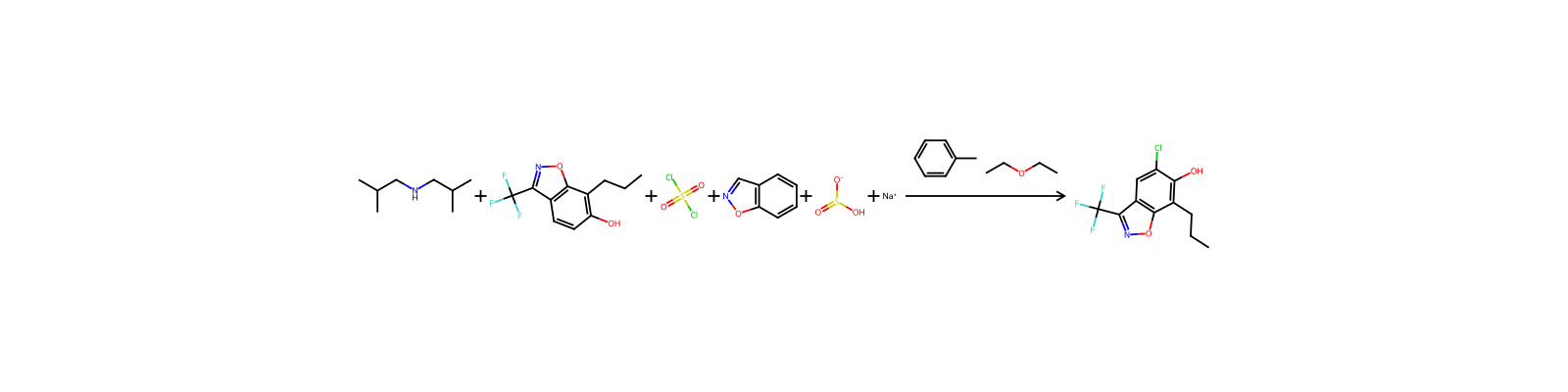
HRID 9246반응물로
Diisobutylamine

110-96-3CC(C)CNCC(C)CNJBCRXCAPCODGX-UHFFFAOYSA-NDiisobutylamine appears as a clear colorless liquid with an ammonia-like odor. Insoluble in water and less dense than water. Hence floats on water. Vapors heavier than air. Toxic oxides of nitrogen produced during combustion.
110-96-3DTXSID5025079CHEMBL3187581Nitrogen Compounds -> Amines, Aliphatic
Corrosives
2.63
2.67
0.745 at 68 °F (USCG, 1999) - Less dense than water; will float
0.745 @ 20 °C
Relative density (water = 1): 0.75 (20 °C)
0.745 @ 20°C
Slightly soluble (NTP, 1992)
Sol in ethanol, ether, acetone, benzene
In water, 2,200 mg/l @ 25 °C.
Solubility in water, g/100ml at 25 °C: 0.22 (slightly soluble)
85 °F (NTP, 1992)
29 °C (85 °F) (CLOSED CUP)
29 °C c.c.
282 to 284 °F at 760 mmHg (NTP, 1992)
139.6 °C
안전 정보는 참고용이며, 공급업체의 물질안전보건자료(SDS), 관련 법규 및 전문가 평가를 대체하지 않습니다.
Danger
H226 (100%): Flammable liquid and vapor [Warning Flammable liquids]
P210, P233, P240, P241, P242, P243, P260, P261, P264, P264+P265, P270, P271, P273, P280, P301+P316, P301+P330+P331, P302+P352, P302+P361+P354, P303+P361+P353, P304+P340, P305+P354+P338, P316, P317, P321, P330, P362+P364, P363, P370+P378, P403+P233, P403+P235, P405, and P501 (click each P-code to see the statement)
Aggregated GHS information provided per 166 reports by companies from 10 notifications to the ECHA C&L Inventory. Each notification may be associated with multiple companies.
Danger
H226: Flammable liquid and vapor [Warning Flammable liquids]
Chemical: 1-Propanamine, 2-methyl-N-(2-methylpropyl)-
Status: Active Update: 25-08-2020 https://echa.europa.eu/registration-dossier/-/registered-dossier/26625
1-Propanamine, 2-methyl-N-(2-methylpropyl)-: HSNO Approval: HSR001251 Approved with controls
The New Jersey Worker and Community Right to Know Act requires public and private employers to provide information about hazardous substances at their workplaces. (N.J.S.A. 34:5A-1 et. seq.)
Special Hazards of Combustion Products: May contain toxic NOx fumes.
· Flammable/combustible material.
Flammable. Gives off irritating or toxic fumes (or gases) in a fire. Above 29 °C explosive vapour/air mixtures may be formed. Risk of fire and explosion on contact with strong oxidizing agents.
FLAMMABLE, MODERATE FIRE RISK
A dangerous fire hazard when exposed to heat or flame ...
Used as an intermediate; [Hawley] Used to make agrochemicals and other organic chemicals; [CHEMINFO]
As an intermediate
용도Diisobutylamine was used to study the effect of achiral amine on hydrogenation of ethyl pyruvate over cinchonidine-Pt/Al2O3 catalyst system. Diisobutylamine is the principal starting material for the herbicide Butylate (Zeneca).
일반 설명Diisobutylamine appears as a clear colorless liquid with an ammonia-like odor. Insoluble in water and less dense than water. Hence floats on water. Vapors heavier than air. Toxic oxides of nitrogen produced during combustion.
생산 방법Diisobutylamine can be produced by the reaction of ammonia and butanol over a dehydration catalyst at high temperature and pressure (Hawley 1977). Alternatively, ammonia, butanol, and hydrogen can be passed over a dehydrogenation catalyst. In 1976, 18,000 tons of diisobutylamine were produced (Schweizer et al 1978). Diisobutylamine is also naturally present in foods and soil. As with other secondary amines, diisobutylamine can be nitrosated to form the highly toxic (Olah 1975) N-nitrosodiisobutylamine (Guttenplan 1987; Vlasenko et al 1981; Spiegeholder et al 1978). Thus, nitrosation of commercial preparations of diisobutylamine occurs on standing, presumably by reaction with nitrogen oxides in the air (Spiegelhalder et al 1978) and N-nitrosodiisobutylamine has been found in various fishery products (Kawabata et al 1974) and other foods (Osborne 1972; Telling 1972).


139 °C
139 °C @760 [mm Hg]
-100.3 °F (NTP, 1992)
-73.5 °C
-74 °C
-70 °C
4.46 (NTP, 1992) - Heavier than air; will sink (Relative to Air)
Relative vapor density (air = 1): 4.5
The chemical reactivity of diisobutylamine is similar to other aliphatic amines and is governed by the unshared electron pair on the nitrogen atom. It is a strong base tending to form salts with acids. As with other secondary amines, diisobutylamine can be nitrosated, especially under acidic conditions, by nitrite ion or by nitrogen oxides from the air to form the carcinogenic and mutagenic N-nitrosodiisobutylamine (Olah et al 1975).
Inhalation of high concentrations of vapor will cause irritation of the respiratory tract and the lungs. Contact with liquid may result in severe skin and eye irritation. Exposure to concentrated vapors may result in corneal edema. Poisonous if swallowed. (USCG, 1999)
· May cause toxic effects if inhaled or ingested.
A corrosive substance that can cause injury to the skin, eyes, and respiratory tract; Inhalation may cause pulmonary edema; Can be absorbed through skin; [ICSC] Not mutagenic in five strains of Salmonella typhimurium; Emergency treatment: Corrosives-alkaline; [HSDB] Sensitive to heat and air; A severe skin and eye irritant; A respiratory tract irritant; [CAMEO] A corrosive substance that can cause injury to the skin, eyes, and respiratory tract; Inhalation of high concentrations may cause pulmonary edema; May be absorbed through skin; [CHEMINFO]
DIISOBUTYLAMINE can react vigorously with oxidizing materials (NTP, 1992). Neutralizes acids in exothermic reactions to form salts plus water. May be incompatible with isocyanates, halogenated organics, peroxides, phenols (acidic), epoxides, anhydrides, and acid halides. Flammable gaseous hydrogen may be generated in combination with strong reducing agents, such as hydrides.
Decomposes on burning. This produces toxic fumes including nitrogen oxides. The substance is a medium strong base. Reacts violently with strong oxidants. This generates fire and explosion hazard. Attacks many metals and some plastics. Solutions in water slowly etch glass.
Excerpt from ERG Guide 132 [Flammable Liquids - Corrosive]:
Use alcohol-resistant foam, water, powder, carbon dioxide. In case of fire: keep drums, etc., cool by spraying with water.
Fresh air, rest. Half-upright position. Artificial respiration may be needed. Refer immediately for medical attention.
Wear protective gloves when administering first aid. Remove contaminated clothes. Rinse skin with plenty of water or shower for at least 15 minutes. Refer immediately for medical attention .
Rinse with plenty of water for several minutes (remove contact lenses if easily possible). Refer immediately for medical attention.
Rinse mouth. Give nothing to drink. Do NOT induce vomiting. Refer immediately for medical attention.
· CALL 911. Then call emergency response telephone number on shipping paper. If shipping paper not available or no answer, refer to appropriate telephone number listed on the inside back cover.
· ELIMINATE all ignition sources (no smoking, flares, sparks or flames) from immediate area.
EYES: First check the victim for contact lenses and remove if present. Flush victim's eyes with water or normal saline solution for 20 to 30 minutes while simultaneously calling a hospital or poison control center. Do not put any ointments, oils, or medication in the victim's eyes without specific instructions from a physician. IMMEDIATELY transport the victim after flushing eyes to a hospital even if no symptoms (such as redness or irritation) develop.
General First Aid:
Alcohol foam. Water may be ineffective.
To fight fire, use alcohol foam, carbon dioxide, dry chemical.
SRP: At the time of review, criteria for land treatment or burial (sanitary landfill) disposal practices are subject to significant revision. Prior to implementing land disposal of waste residue (including waste sludge), consult with environmental regulatory agencies for guidance on acceptable disposal practices.
Remove all ignition sources. Personal protection: chemical protection suit including self-contained breathing apparatus. Do NOT let this chemical enter the environment. Collect leaking and spilled liquid in sealable containers as far as possible. Absorb remaining liquid in sand or inert absorbent. Then store and dispose of according to local regulations. Wash away remainder with plenty of water.
Excerpt from ERG Guide 132 [Flammable Liquids - Corrosive]:
Immediate precautionary measure
TERRESTRIAL FATE: Based on a classification scheme(1), an estimated Koc value of 640(SRC) from an estimated log Kow of 2.63(2) and a regression derived equation(3) indicates that diisobutylamine is expected to have low mobility in soil(SRC). A pKa value of 10.91(4) indicates that the protonated form of diisobutylamine will be the dominant species in moist soil surfaces and cations generally adsorb strongly to soils. Volatilization of diisobutylamine from moist soil surfaces is not expected to be an important fate process since the cation will not volatilize. Diisobutylamine may volatilize from dry soil surfaces(SRC) based upon a vapor pressure of 7.27 mm Hg at 25 °C(5). 63 to 87% of the theoretical BOD was achieved for diisobutylamine using activated sludges over a 4 week incubation period(6), which suggests that biodegradation in soil is expected to be important(SRC).
AQUATIC FATE: Based on a classification scheme(1), an estimated Koc value of 640(SRC) from an estimated log Kow of 2.63(2) and a regression derived equation(3) indicates that diisobutylamine is expected to adsorb to suspended solids and sediment in water(SRC). A pKa value of 10.91(4) indicates that the protonated form of diisobutylamine will be the predominant species in water. Volatilization from water surfaces is not expected to be an important fate process(SRC) since the protonated form will not volatilize. According to a classification scheme(5), an estimated BCF of 21(SRC), from its log Kow(2) and a regression-derived equation(6), suggests the potential for bioconcentration in aquatic organisms is low(SRC). 63 to 87% of the theoretical BOD was achieved for diisobutylamine using activated sludges over a 4 week incubation period(7), which suggests that biodegradation in water is expected to be important(SRC).
ATMOSPHERIC FATE: According to a model of gas/particle partitioning of semivolatile organic compounds in the atmosphere(1), diisobutylamine, which has a vapor pressure of 7.27 mm Hg at 25 °C(2), is expected to exist solely as a vapor in the ambient atmosphere. Vapor-phase diisobutylamine is degraded in the atmosphere by reaction with photochemically-produced hydroxyl radicals(SRC); the half-life for this reaction in air is estimated to be 4 hours(SRC), from its rate constant of 9X10-11 cu cm/molecule-sec at 25 °C(3). Diisobutylamine is not expected to directly photolyze due to the lack of absorption in the environmental UV spectrum(SRC).
Cough. Sore throat. Burning sensation behind the breastbone. Shortness of breath. Laboured breathing.
Redness. Pain. Serious skin burns.
Redness. Pain. Severe burns. Blurred vision.
Burns in mouth and throat. Burning sensation. Abdominal pain. Vomiting. Shock or collapse.
The Koc of diisobutylamine was estimated as 640(SRC), using an estimated log Kow of 2.63(1) and a regression-derived equation(2). According to a classification scheme(3), this estimated Koc value suggests that diisobutylamine is expected to have low mobility in soil(SRC). The pKa of diisobutylamine is 10.91(4), indicating that the protonated form will be the predominant species in moist soils and cations are expected to adsorb strongly to soil surfaces.
An estimated BCF of 21 was calculated for diisobutylamine(SRC), using an estimated log Kow of 2.63(1) and a regression-derived equation(2). According to a classification scheme(3), this BCF suggests the potential for bioconcentration in aquatic organisms is low(SRC).
With a pKa of 10.91(1), diisobutylamine will exist predominantly in its protonated form in the environment and the protonated form of diisobutylamine will not volatilize from water or moist soil surfaces(2). Diisobutylamine may volatilize from dry soil surfaces(SRC) based on its vapor pressure of 7.27 mm Hg at 25 °C(3).
MORTALITY RATE OF 75 PPM INHALED BY RATS FOR 4 HR WAS 4/6; NO DEATHS OCCURRED WHEN INHALING SATURATED VAPOR FOR 50 MIN. /FROM TABLE/
Diisobutylamine was found to be negative when tested for mutagenicity using the Salmonella/ microsome preincubation assay, using the standard protocol approved by the National Toxicology Program (NTP). Diisobutylamine was tested in as many as 5 Salmonella typhimurium strains (TA1535, TA1537, TA97, TA98, and TA100) in the presence and absence of rat and hamster liver S-9, at doses of 0.100, 0.333, 1.000, 3.333, and 10.000 mg/plate. The highest ineffective dose tested in any S. typhimurium strain was 10.000 mg/plate.