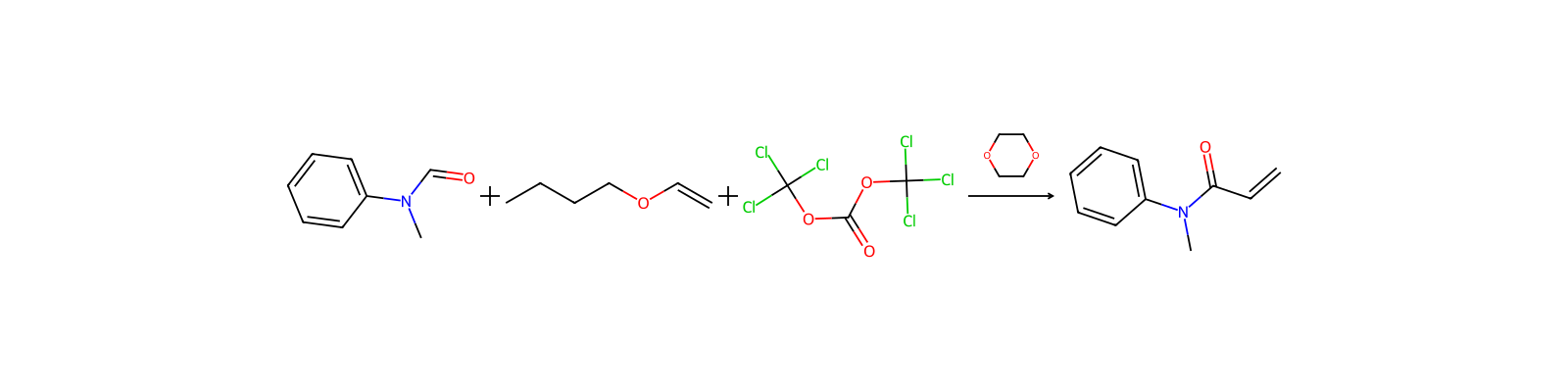
뷰틸 비닐 에테르
Butyl vinyl ether
데이터를 보충하는 중입니다. 잠시 후 페이지를 새로 고치면 최신 내용을 볼 수 있습니다

기본 정보
- CAS
111-34-2- 표준 SMILES
C=COCCCC- InChIKey
UZKWTJUDCOPSNM-UHFFFAOYSA-N- 분자식
- C6H12O
- 평균 분자량
- 100.16 g/mol
- 단동위원소 질량
- 100.088815
이름 및 식별자
- 우선 이름
- Butyl vinyl ether
- IUPAC
- 1-ethenoxybutane
- 현지명
- 뷰틸 비닐 에테르
- 영어명
- n-Butyl vinyl ether
- 분자식
- C6H12O
- 분자량
- 100.16
이름 및 동의어
BUTYL VINYL ETHER111-34-2Vinyl butyl etherButoxyetheneButane, 1-(ethenyloxy)-ButoxyethyleneEther, butyl vinylVinyl n-butyl etherAgrisynth BVEButil vinil eterEther butylvinylique1-BUTOXYETHENE
이름 더 보기
부틸비닐에테르뷰틸비닐에테르부틸비닐에테르뷰틸 비닐 에테르1-(에테닐옥시)-부탄Bve1-(ETHENYLOXY)BUTANEPolyvinoxbutoxy-etheneether,butylvinyl(BUTYLOXY)ETHYLENENSC 8264
VinipolDTXSID5051575Shostakovski balsamVinipol vb 2Butyl vinyl ether, inhibitedAI3-24225NSC-8264321YRT7173
데이터베이스 식별자
- CAS
111-34-2- PubChem CID
- 8108
- DTXSID
DTXSID5051575- ChEMBL
CHEMBL3561125- UNII
- 321YRT7173
- EC Number
- 203-860-7
- Nikkaji
- J75.043C
물성
구조 계산 물성보충 중
- XLogP
- 2.1
- 극성 표면적
- 9.2 Ų
- 수소 결합 공여자 수
- 0
- 수소 결합 수용자 수
- 1
- 회전 가능 결합 수
- 4
- 무거운 원자 수
- 7
- 형식 전하
- 0
- 복잡도
- 41
실험 및 물리화학적 성질
Density
0.7888 at 20 °C/20 °C
Bulk density: 7.45 lb/gal at 20 °C
Color/FormLiquid
Solubility
Sol in alc and ether
Sol in acetone, benzene
Water solubility of 3,000 mg/l
Very sol in ethyl alcohol, acetone; miscible in ethyl ether
Flash Point
15 °F (NFPA, 2010)
-9 °C (Open cup)
Boiling Point94 °C
DecompositionWhen heated to decomposition it emits acrid smoke and irritating fumes.
Melting Point-92 °C
Vapor Density3.45 (Air = 1)
Vapor Pressure
49.1 [mmHg]
49 mm Hg at 25 °C /from experimentally derived coefficients/
Refractive IndexIndex of refraction: 1.4026 at 20 °C
Physical Description
Butyl vinyl ether, stabilized appears as a liquid. Less dense than water. Vapors heavier than air. May irritate skin and eyes. Used to make other chemicals.
Liquid; Slightly soluble in water; [Hawley]
Kovats Retention Index
695;687
671;679;695
858
물리화학적 성질
- 녹는점
- 92 °C · −92 °C(lit.)
- 끓는 점
- 94 °C · 94 °C(lit.)
- 밀도
- 0.774 g/mL · 0.774 g/mL at 25 °C(lit.)
- 증기 밀도
- 3.5 · 3.5 (vs air)
- 증기압
- 42 mm · 42 mm Hg ( 20 °C)
- 굴절률
- 20 · n20/D 1.400(lit.)
- 인화점
- 15 °F · 15 °F
- 저장 조건
- 2 · 2-8°C
- 용해도
- 3 g/L · 3g/L
- 물리적 상태
- 액체
- 색상
- 투명한
- 폭발한계
- 1.2 · 1.2-8.6%(V)
- 수용성
- 3 g/L · 3g/L(20℃)
- 비열
- 2.32 J/ · Cp(liquid): 2.32 J/(g·K), at 25℃
- BRN
- 1560217 · 1560217
- Henry's Law Constant
- 4.6 · 4.6×10-3 mol/(m3Pa) at 25℃, Duchowicz et al. (2020)
- InChI
- 1S/C6H12O/c1-3-5-6-7-4-2/h4H,2-3,5-6H2,1H3
- InChIKey
- UZKWTJUDCOPSNM-UHFFFAOYSA-N
- SMILES
- CCCCOC=C
- LogP
- 3.15 at · 3.15 at 20℃
- NIST
- 1 · Butane, 1-(ethenyloxy)-(111-34-2)
- EPA
- Butyl vinyl ether (111-34-2)
화학적 성질
clear liquid
안전 및 규제
안전 정보는 참고용이며, 공급업체의 물질안전보건자료(SDS), 관련 법규 및 전문가 평가를 대체하지 않습니다.
GHS 분류
GHS Classification
Danger
H225 (100%): Highly Flammable liquid and vapor [Danger Flammable liquids];H315 (74%): Causes skin irritation [Warning Skin corrosion/irritation];H317 (70.7%): May cause an allergic skin reaction [Warning Sensitization, Skin]
P210, P233, P240, P241, P242, P243, P261, P264, P272, P280, P302+P352, P303+P361+P353, P321, P332+P317, P333+P317, P362+P364, P370+P378, P403+P235, and P501 (click each P-code to see the statement)
Aggregated GHS information provided per 150 reports by companies from 11 notifications to the ECHA C&L Inventory. Each notification may be associated with multiple companies.;Information may vary between notifications depending on impurities, additives, and other factors. The percentage value in parenthesis indicates the notified classification ratio from companies that provide hazard codes. Only hazard codes with percentage values above 10% are shown. For more detailed information, please visit ECHA C&L website.
유해성 정보
Regulatory Information
Chemical: Butane, 1-(ethenyloxy)-
Status: Active Update: 07-01-2022 https://echa.europa.eu/registration-dossier/-/registered-dossier/33141;Status: Active Update: 21-09-2022 https://echa.europa.eu/registration-dossier/-/registered-dossier/16525
Butane, 1-(ethenyloxy)-: HSNO Approval: HSR001104 Approved with controls
The New Jersey Worker and Community Right to Know Act requires public and private employers to provide information about hazardous substances at their workplaces. (N.J.S.A. 34:5A-1 et. seq.)
DOT LabelFlammable Liquid
Fire Hazards
Excerpt from ERG Guide 127 [Flammable Liquids (Water-Miscible); polymerization hazard]:;HIGHLY FLAMMABLE: Will be easily ignited by heat, sparks or flames. CAUTION: Ethanol (UN1170) can burn with an invisible flame. Use an alternate method of detection (thermal camera, broom handle, etc.) Vapors may form explosive mixtures with air. Vapors may travel to source of ignition and flash back. Most vapors are heavier than air. They will spread along the ground and collect in low or confined areas (sewers, basements, tanks, etc.). Vapor explosion hazard indoors, outdoors or in sewers. Those substances designated with a (P) may polymerize explosively when heated or involved in a fire. Runoff to sewer may create fire or explosion hazard. Containers may explode when heated. Many liquids will float on water. (ERG, 2024)
· HIGHLY FLAMMABLE: Will be easily ignited by heat, sparks or flames.;CAUTION: Ethanol (UN1170) can burn with an invisible flame. Use an alternate method of detection (thermal camera, broom handle, etc.);· Vapors may form explosive mixtures with air.;· Vapors may travel to source of ignition and flash back.;· Most vapors are heavier than air. They will spread along the ground and collect in low or confined areas (sewers, basements, tanks, etc.).;· Vapor explosion hazard indoors, outdoors or in sewers.;· Those substances designated with a (P) may polymerize explosively when heated or involved in a fire.;· Runoff to sewer may create fire or explosion hazard.;· Containers may explode when heated.;· Many liquids will float on water.
Fire Potential
Flammable, dangerous fire risk.
Fire hazard: Dangerous, when exposed to heat or flame.
Health Hazards
Excerpt from ERG Guide 127 [Flammable Liquids (Water-Miscible); polymerization hazard]:;Inhalation or contact with material may irritate or burn skin and eyes. Fire may produce irritating, corrosive and/or toxic gases. Vapors may cause dizziness or asphyxiation, especially when in closed or confined areas. Runoff from fire control or dilution water may cause environmental contamination. (ERG, 2024)
· Inhalation or contact with material may irritate or burn skin and eyes.;· Fire may produce irritating, corrosive and/or toxic gases.;· Vapors may cause dizziness or asphyxiation, especially when in closed or confined areas.;· Runoff from fire control or dilution water may cause environmental contamination.
Hazards Summary
Flammable liquid; [Hawley] A skin and eye irritant; [Sax] Probably causes CNS depression; [HSDB] May cause skin burns; [CAMEO] An irritant; Chronic effects in high-dose animal studies include degenerative changes to brain; [MSDSonline] Butyl vinyl ether, stabilized (UN2352) has warning of explosive polymerization; [ERG 2016] See Vinyl methyl ether.
DOT ID and Guide2352 127P
Reactive GroupEthers;Hydrocarbons, Aliphatic Unsaturated;Polymerizable Compounds
Reactivity AlertsHighly Flammable;Polymerizable;Peroxidizable Compound
Reactivity Profile
Ethers, such as BUTYL VINYL ETHER can act as bases. They form salts with strong acids and addition complexes with Lewis acids. The complex between diethyl ether and boron trifluoride is an example. Ethers may react violently with strong oxidizing agents. In other reactions, which typically involve the breaking of the carbon-oxygen bond, ethers are relatively inert.
DOT Emergency Guidelines
/GUIDE 127P: FLAMMABLE LIQUIDS (POLAR/WATER-MISCIBLE)/ Fire or Explosion: HIGHLY FLAMMABLE: Will be easily ignited by heat, sparks or flames. Vapors may form explosive mixtures with air. Vapors may travel to source of ignition and flash back. Most vapors are heavier than air. They will spread along ground and collect in low or confined areas (sewers, basements, tanks). Vapor explosion hazard indoors, outdoors or in sewers. Those substances designated with a "P" may polymerize explosively when heated or involved in a fire. Runoff to sewer may create fire or explosion hazard. Containers may explode when heated. Many liquids are lighter than water. /Butyl vinyl ether, inhibited; Butyl vinyl ether, stabilized/
/GUIDE 127P: FLAMMABLE LIQUIDS (POLAR/WATER-MISCIBLE)/ Health: Inhalation or contact with material may irritate or burn skin and eyes. Fire may produce irritating, corrosive and/or toxic gases. Vapors may cause dizziness or suffocation. Runoff from fire control may cause pollution. /Butyl vinyl ether, inhibited; Butyl vinyl ether, stabilized/
/GUIDE 127P: FLAMMABLE LIQUIDS (POLAR/WATER-MISCIBLE)/ Public Safety: CALL Emergency Response Telephone Number ... . As an immediate precautionary measure, isolate spill or leak area for at least 50 meters (150 feet) in all directions. Keep unauthorized personnel away. Stay upwind. Keep out of low areas. Ventilate closed spaces before entering. /Butyl vinyl ether, inhibited; Butyl vinyl ether, stabilized/
/GUIDE 127P: FLAMMABLE LIQUIDS (POLAR/WATER-MISCIBLE)/ Protective Clothing: Wear positive pressure self-contained breathing apparatus (SCBA). Structural firefighters' protective clothing will only provide limited protection. /Butyl vinyl ether, inhibited; Butyl vinyl ether, stabilized/
For more DOT Emergency Guidelines (Complete) data for BUTYL VINYL ETHER (8 total), please visit the HSDB record page.
DOT Hazard Classification
Butyl vinyl ether, stabilized
UN2352
Class 3 Flammable and combustible liquid (49 eCFR § 173.120)
PG II: the degree of danger presented by the material is medium;For more information about the packing group assignment, please visit 49 eCFR § 173
안전 및 보호
Fire Fighting
Excerpt from ERG Guide 127 [Flammable Liquids (Water-Miscible); polymerization hazard]:;CAUTION: The majority of these products have a very low flash point. Use of water spray when fighting fire may be inefficient. CAUTION: For fire involving UN1170, UN1987 or UN3475, alcohol-resistant foam should be used. CAUTION: Ethanol (UN1170) can burn with an invisible flame. Use an alternate method of detection (thermal camera, broom handle, etc.).;SMALL FIRE: Dry chemical, CO2, water spray or alcohol-resistant foam.;LARGE FIRE: Water spray, fog or alcohol-resistant foam. Avoid aiming straight or solid streams directly onto the product. If it can be done safely, move undamaged containers away from the area around the fire.;FIRE INVOLVING TANKS, RAIL TANK CARS OR HIGHWAY TANKS: Fight fire from maximum distance or use unmanned master stream devices or monitor nozzles. Cool containers with flooding quantities of water until well after fire is out. Withdraw immediately in case of rising sound from venting safety devices or discoloration of tank. ALWAYS stay away from tanks in direct contact with flames. For massive fire, use unmanned master stream devices or monitor nozzles; if this is impossible, withdraw from area and let fire burn. (ERG, 2024)
Accidental Release Measures
· CALL 911. Then call emergency response telephone number on shipping paper. If shipping paper not available or no answer, refer to appropriate telephone number listed on the inside back cover.;· Keep unauthorized personnel away.;· Stay upwind, uphill and/or upstream.;· Ventilate closed spaces before entering, but only if properly trained and equipped.
· ELIMINATE all ignition sources (no smoking, flares, sparks or flames) from immediate area.;· All equipment used when handling the product must be grounded.;· Do not touch or walk through spilled material.;· Stop leak if you can do it without risk.;· Prevent entry into waterways, sewers, basements or confined areas.;· A vapor-suppressing foam may be used to reduce vapors.;· Absorb or cover with dry earth, sand or other non-combustible material and transfer to containers.;· Use clean, non-sparking tools to collect absorbed material.;Large Spill;· Dike far ahead of liquid spill for later disposal.;· Water spray may reduce vapor, but may not prevent ignition in closed spaces.
First Aid
Excerpt from ERG Guide 127 [Flammable Liquids (Water-Miscible); polymerization hazard]:;Refer to the "General First Aid" section. Specific First Aid: Wash skin with soap and water. In case of burns, immediately cool affected skin for as long as possible with cold water. Do not remove clothing if adhering to skin. (ERG, 2024)
독성 정보
Environmental Fate
TERRESTRIAL FATE: Based on a classification scheme(1), an estimated Koc value of 53(SRC), determined from a water solubility of 3,000 mg/l(2) and a regression-derived equation(3), indicates that butyl vinyl ether is expected to have very high mobility in soil(SRC). Volatilization of butyl vinyl ether from moist soil surfaces is expected to be important(3,SRC) given an estimated Henry's Law constant of 2.2X10⁻³ atm-cu m/mole(SRC), calculated from its water solubility(2) and vapor pressure(4). The potential for volatilization of butyl vinyl ether from dry soil surfaces may exist(SRC) based on a vapor pressure of 49 mm Hg(4). Limited data are present in the scientific literature regarding the biodegradation of butyl vinyl ether(SRC).
AQUATIC FATE: Based on a classification scheme(1), an estimated Koc value of 53(SRC), determined from a water solubility of 3,000 mg/l(2) and a regression-derived equation(3), indicates that butyl vinyl ether is not expected to adsorb to suspended solids and sediment in water(SRC). Butyl vinyl ether is expected to volatilize rapidly from water surfaces(3,SRC) based on an estimated Henry's Law constant of 2.2X10⁻³ atm-cu m/mole(SRC), calculated from its water solubility(2) and vapor pressure(4). Estimated volatilization half-lives for a model river and model lake are 3 hours and 4 days, respectively(3,SRC). Butyl vinyl ether may be susceptible to appreciable hydrolysis in certain environmental waters(5,SRC). The calculated half-lives for hydrolysis of butyl vinyl ether are 9.5 hours, 40 days, and 10.9 years at pH 5, 7, and 9, respectively(5,SRC). According to a classification scheme(6), an estimated BCF of 7(3,SRC), from butyl vinyl ether's water solubility(2), suggests the potential for bioconcentration in aquatic organisms is low(SRC). Limited data are present in the scientific literature regarding the biodegradation of butyl vinyl ether(SRC).
ATMOSPHERIC FATE: According to a model of gas/particle partitioning of semivolatile organic compounds in the atmosphere(1), butyl vinyl ether, which has a vapor pressure of 49 mm Hg at 25 °C(2,SRC), is expected to exist solely as a vapor in the ambient atmosphere. Vapor-phase butyl vinyl ether is degraded in the atmosphere by reaction with photochemically-produced hydroxyl radicals(SRC); the half-life for this reaction in air is estimated to be 9 hours(3,SRC). Butyl vinyl ether may be susceptible to photooxidation via vapor phase reaction with ozone; the half-life for this reaction in air is estimated to be 6.5 days(4,SRC). Direct photolysis will not be an important removal process since butyl vinyl ether does not absorb light at wavelengths >290 nm(5).
Adverse EffectsNeurotoxin - Other CNS neurotoxin;Dermatotoxin - Skin burns.
규제 정보
Regulatory Information
Chemical: Butane, 1-(ethenyloxy)-
Status: Active Update: 07-01-2022 https://echa.europa.eu/registration-dossier/-/registered-dossier/33141;Status: Active Update: 21-09-2022 https://echa.europa.eu/registration-dossier/-/registered-dossier/16525
Butane, 1-(ethenyloxy)-: HSNO Approval: HSR001104 Approved with controls
The New Jersey Worker and Community Right to Know Act requires public and private employers to provide information about hazardous substances at their workplaces. (N.J.S.A. 34:5A-1 et. seq.)
안전 데이터
- wgk
- 2
- tsca
- TSCA listed
- rtecs
- KN5950000
- ridadr
- UN 2352
- 독성
- LD50 orally in Rabbit: 10000 mg/kg LD50 dermal Rabbit 3300 mg/kg
- HS 번호
- 2909 19 90
- risk_code
- 11-19-2017/11/19
- hazard_code
- F
- safety_code
- 9-14-16-33
- 포장분류
- II
- 위험 등급
- 3
- 기존화학 물질
- KE-13300
- 자연 발화 온도
- 437 °F
- Hazard Classifications
- Flam. Liq. 2Skin Irrit. 2Skin Sens. 1
- 스토리지 클래스
- 3 - Flammable liquids
- 유해 물질 데이터
- 111-34-2(Hazardous Substances Data)
화학 및 산업
용도 및 제조
Uses
Used in the synthesis of copolymers and as an acrylic/vinyl acetate resin comonomer; [HSDB]
Butyl vinyl ether /is/ ... used in the synthesis of copolymers.
Acrylic/vinyl acetate resin comonomer
Methods of Manufacturing
Reaction of acetylene with n-butyl alcohol.
Acetylene + n-butanol (ethynylation)
Formulations/PreparationsGrade: Technical (98%)
General Manufacturing InformationButane, 1-(ethenyloxy)-: ACTIVE
응용 분야
용도Synthesis, copolymerization.
일반 설명A liquid. Flash point 0°F. Less dense than water. Vapors heavier than air. May irritate skin and eyes. Used to make other chemicals.
상·하류 제품 정보
상류 원료
하류 제품
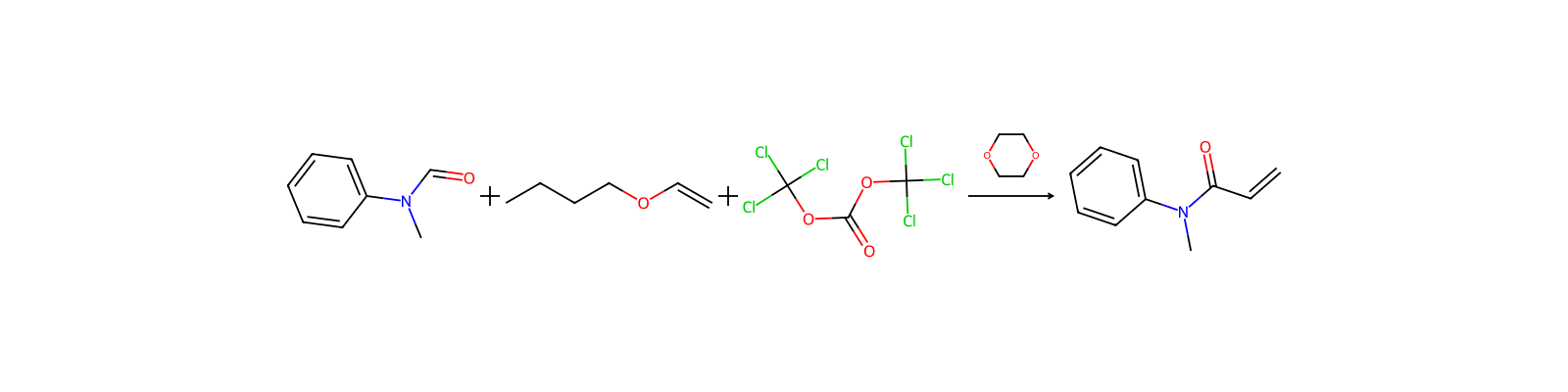
관련 반응
287건



화합물 노트
불러오는 중…