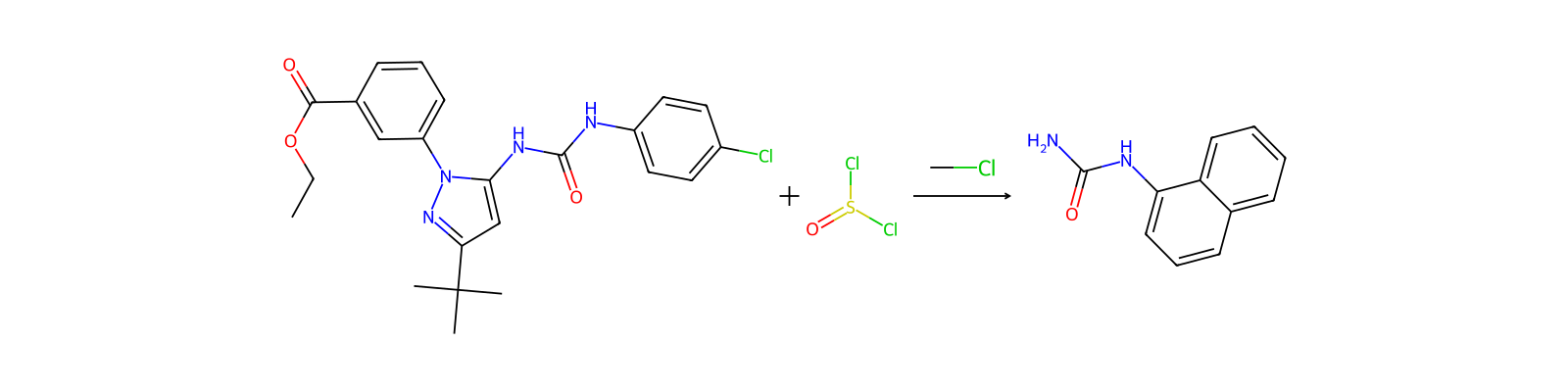

기본 정보
- 표준 SMILES
NC(=O)Nc1cccc2ccccc12- InChIKey
FVSUYFWWFUVGRG-UHFFFAOYSA-N- 분자식
- C11H10N2O
- 평균 분자량
- 186.21 g/mol
- 단동위원소 질량
- 186.07931294
개요
Naphthylurea appears as a gray solid. Insoluble in water and denser than water. Contact may irritate skin, eyes and mucous membranes. May be toxic by ingestion. Used to make other chemicals.
이름 및 식별자
- 우선 이름
- 1-Naphthylurea
- IUPAC
- naphthalen-1-ylurea
- 현지명
- 1-나프틸우레아
- 영어명
- 1-NAPHTHYLUREA
- 분자식
- C11H10N2O
- 분자량
- 186.21
이름 및 동의어
6950-84-11-Naphthylurea1-(1-naphthyl)ureaUrea, 1-naphthalenyl-alpha-NAPHTHYLUREAPJB18S9UREUrea, N-1-naphthalenyl-EINECS 230-121-6NSC 65627AI3-61345UNII-PJB18S9URENSC-65627
이름 더 보기
1-나프틸우레아Naphthylureaα-Naphthyl urea1-(1-Naphtyl)urea
.ALPHA.-NAPHTHYLUREAN-1-NAPHTHALENYLUREAN-.ALPHA.-NAPHTHYLUREAUREA, (1-NAPHTHYL)-DTXSID1075303.ALPHA.-NAPHTHYLCARBAMIDERefChem:76550N-ALPHA-NAPHTHYLUREA
데이터베이스 식별자
- CAS
6950-84-1- PubChem CID
- 81387
- DTXSID
DTXSID1075303- ChEMBL
CHEMBL1550615- UNII
- PJB18S9URE
- EC Number
- 230-121-6
- Nikkaji
- J265.985I
물성
구조 계산 물성
- XLogP
- 1.1
- 극성 표면적
- 55.1 Ų
- 수소 결합 공여자 수
- 2
- 수소 결합 수용자 수
- 1
- 회전 가능 결합 수
- 1
- 무거운 원자 수
- 14
- 형식 전하
- 0
- 복잡도
- 217
실험 및 물리화학적 성질
Physical DescriptionNaphthylurea appears as a gray solid. Insoluble in water and denser than water. Contact may irritate skin, eyes and mucous membranes. May be toxic by ingestion. Used to make other chemicals.
물리화학적 성질
- 녹는점
- 219.5 °C · 219.5°C
- 끓는 점
- 320.7 °C · 320.7°C (rough estimate)
- 밀도
- 1.1458 · 1.1458 (rough estimate)
- 굴절률
- 1.53 · 1.5300 (estimate)
- 저장 조건
- 2 · 2-8°C
- 산도 계수 (pKa)
- 14.45 · 14.45±0.50(Predicted)
- EPA
- 1 · Urea, 1-naphthalenyl- (6950-84-1)
안전 및 규제
GHS 분류
GHS Classification
Danger
H301 (100%): Toxic if swallowed [Danger Acute toxicity, oral]
P261, P264, P264+P265, P270, P271, P280, P301+P316, P302+P352, P304+P340, P305+P351+P338, P319, P321, P330, P332+P317, P337+P317, P362+P364, P403+P233, P405, and P501 (click each P-code to see the statement)
The GHS information provided by 1 company from 1 notification to the ECHA C&L Inventory.
유해성 정보
DOT LabelPoison
Fire Hazards
Excerpt from ERG Guide 153 [Substances - Toxic and/or Corrosive (Combustible)]:
· Combustible material: may burn but does not ignite readily.
Health Hazards
Excerpt from ERG Guide 153 [Substances - Toxic and/or Corrosive (Combustible)]:
· TOXIC and/or CORROSIVE; inhalation, ingestion or skin contact with material may cause severe injury or death.
DOT ID and Guide1652 153
Reactive GroupAmides and Imides
Reactivity Profile
NAPHTHYLUREA is an amide. Amides/imides react with azo and diazo compounds to generate toxic gases. Flammable gases are formed by the reaction of organic amides/imides with strong reducing agents. Amides are very weak bases (weaker than water). Imides are less basic yet and in fact react with strong bases to form salts. That is, they can react as acids. Mixing amides with dehydrating agents such as P2O5 or SOCl2 generates the corresponding nitrile. The combustion of these compounds generates mixed oxides of nitrogen (NOx).
DOT Hazard Classification
Naphthylurea
UN1652
Div 6.1 Poisonous materials (49 eCFR § 173.132)
PG II: the degree of danger presented by the material is medium
Air and Water ReactionsInsoluble in water.
Hazard Classes and CategoriesAcute Tox. 3 (100%)
안전 및 보호
Fire FightingExcerpt from ERG Guide 153 [Substances - Toxic and/or Corrosive (Combustible)]:
Accidental Release Measures
· CALL 911. Then call emergency response telephone number on shipping paper. If shipping paper not available or no answer, refer to appropriate telephone number listed on the inside back cover.
· ELIMINATE all ignition sources (no smoking, flares, sparks or flames) from immediate area.
First Aid
Excerpt from ERG Guide 153 [Substances - Toxic and/or Corrosive (Combustible)]:
General First Aid:
Exposure Control and Personal Protection· Wear positive pressure self-contained breathing apparatus (SCBA).
Nonfire Spill ResponseExcerpt from ERG Guide 153 [Substances - Toxic and/or Corrosive (Combustible)]:
Isolation and Evacuation
Excerpt from ERG Guide 153 [Substances - Toxic and/or Corrosive (Combustible)]:
Immediate precautionary measure
Personal Protective Equipment (PPE)Excerpt from ERG Guide 153 [Substances - Toxic and/or Corrosive (Combustible)]:
Emergency Response Planning GuidelinesSmall Fire
안전 데이터
- ridadr
- UN 1652
- 포장분류
- II
- 위험 등급
- 6.1
화학 및 산업
응용 분야
일반 설명A gray solid. Insoluble in water and denser than water. Contact may irritate skin, eyes and mucous membranes. May be toxic by ingestion. Used to make other chemicals.
상·하류 제품 정보
하류 제품
공급사13 곳
上海毕得医药科技股份有限公司400-1647117 13681763483 · [email protected]
陕西缔都新材料有限公司029-63373950 17392216152 · [email protected]
Dayang Chem (Hangzhou) Co.,Ltd.+86-0571-88938639 17705817739 · [email protected]
武汉易泰科技有限公司上海分公司18930552037 · [email protected]
江苏艾康生物医药研发有限公司025-5885952 15955137747 · [email protected]
砌块化学科技(上海)有限公司021-20432219 13918097649 · [email protected]
上海皓鸿生物医药科技有限公司400-8210725 4008210725 · [email protected]
上海睿升化工科技有限公司15026594951 · [email protected]
安徽宏瀚研新药业有限公司0551-62626652 19334025048
杭州洁汉化工有限公司+86-571-86217390; +8618058761490 · [email protected]
常州千艾生物科技有限公司051915240519135 13961152745 · [email protected]
北京新研汇医药研发有限公司13969155946 · [email protected]
北京海特乐思克科技有限公司15210893940; 15116916250 · [email protected]
관련 반응
6건


연결된 노트
불러오는 중…