
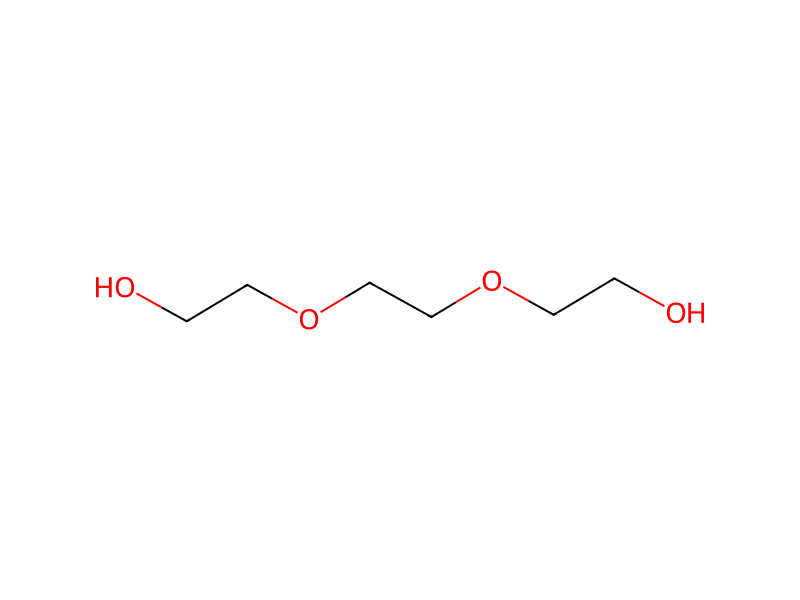
기본 정보
- 표준 SMILES
OCCOCCOCCO- InChIKey
ZIBGPFATKBEMQZ-UHFFFAOYSA-N- 분자식
- C6H14O4
- 평균 분자량
- 150.17 g/mol
- 단동위원소 질량
- 150.08920893
개요
Triethylene glycol is a colorless liquid with a mild odor. Dense than water. (USCG, 1999)
이름 및 식별자
- 우선 이름
- Triethylene Glycol
- IUPAC
- 2-[2-(2-hydroxyethoxy)ethoxy]ethanol
- 영어명
- 2,2'-Ethylenedioxydiethanol
- 분자식
- C6H14O4
- 분자량
- 150.17296
이름 및 동의어
TRIETHYLENE GLYCOL112-27-6Triglycol2,2'-(Ethane-1,2-diylbis(oxy))diethanol2,2'-Ethylenedioxydiethanol2-[2-(2-Hydroxyethoxy)ethoxy]ethanolTrigenTriethylenglykolTriethyleneglycol1,2-Bis(2-hydroxyethoxy)ethane2,2'-Ethylenedioxybis(ethanol)3,6-Dioxaoctane-1,8-diol
이름 더 보기
2,2'-(Ethylenedioxy)diethanol2,2'-EthylenedioxyethanolDi-beta-hydroxyethoxyethaneGlycol bis(hydroxyethyl) etherTrigolEthanol, 2,2'-[1,2-ethanediylbis(oxy)]bis-Ethylene glycol dihydroxydiethyl ether2,2'-[ethane-1,2-diylbis(oxy)]diethanol
데이터베이스 식별자
- CAS
112-27-6- PubChem CID
- 8172
- DTXSID
DTXSID4021393- ChEMBL
CHEMBL1235259- ChEBI
CHEBI:44926- UNII
- 3P5SU53360
- EC Number
- 203-953-2
- Nikkaji
- J5.122E
물성
구조 계산 물성
- XLogP
- -1.6
- 극성 표면적
- 58.9 Ų
- 수소 결합 공여자 수
- 2
- 수소 결합 수용자 수
- 4
- 회전 가능 결합 수
- 7
- 무거운 원자 수
- 10
- 형식 전하
- 0
- 복잡도
- 49.7
실험 및 물리화학적 성질
Chemical ClassesOther Classes -> Ethylene Glycols
DrugsPharmaceuticals -> Listed in ZINC15
Polymers
Plastics -> N.a.
Plastics -> Pigments agents
Cosmetics
Cosmetic ingredients (Triethylene Glycol) -> CIR (Cosmetic Ingredient Review)
Solvent
SpringerMaterials PropertiesBoiling point
FragrancesFragrance Ingredient (Triethyleneglycol) -> IFRA transparency List
SurfactantsSurfactant
LogP
log Kow = -1.98
-1.24/-1.9 (calculated)
-1.2
OdorPractically odorless
Density
1.125 at 68 °F (USCG, 1999) - Denser than water; will sink
1.1274 at 15 °C/4 °C
Bulk density: 9.4 lb/gal at 20 °C
Relative density (water = 1): 1.1
1.122 @25 °C
Viscosity47.8 cP at 20 °C
Color/FormColorless liquid
물리화학적 성질
- 녹는점
- -7 °C · -7 °C
- 끓는 점
- 285 °C · 285°C
- 밀도
- 1.122 · 1.122
- 증기 밀도
- 5.17 · 5.17
- 인화점
- 350 °F · 350°F
- 산도 계수 (pKa)
- 14.06 · 14.06±0.10(Predicted)
- 색상
- 무색 액체
- 냄새
- 냄새 없는
안전 및 규제
GHS 분류
GHS Classification
This chemical does not meet GHS hazard criteria for 97.2% (2397 of 2467) of all reports.
Not Classified
Aggregated GHS information provided per 2467 reports by companies from 14 notifications to the ECHA C&L Inventory.
Warning
H335: May cause respiratory irritation [Warning Specific target organ toxicity, single exposure; Respiratory tract irritation]
P261, P271, P304+P340, P319, P403+P233, P405, and P501 (click each P-code to see the statement)
유해성 정보
Regulatory Information
Chemical: Ethanol, 2,2'-[1,2-ethanediylbis(oxy)]bis-
Ethanol, 2,2'-[1,2-ethanediylbis(oxy)]bis- is listed on the EPA's Chemical Data Reporting (CDR) system. Manufacturers and importers of Ethanol, 2,2'-[1,2-ethanediylbis(oxy)]bis- are required to report information about their production and use of this chemical to the EPA under the Toxic Substances Control Act (TSCA). (40 eCFR Part 711)
Status: Active Update: 15-05-2023 https://echa.europa.eu/registration-dossier/-/registered-dossier/15468
Ethanol, 2,2'-[1,2-ethanediylbis(oxy)]bis-: Does not have an individual approval but may be used under an appropriate group standard
Other Safety InformationIMAP assessments - Ethanol, 2,2'-[1,2-ethanediylbis(oxy)]bis-: Human health tier I assessment
Fire Hazards
This chemical is combustible. (NTP, 1992)
Combustible.
Fire Potential
Combustible when exposed to heat or flame.
... It is stable chemically, does not present hazard due to flammability, except possibly at high temperatures or where fogs or mists are involved.
Health HazardsVapor and liquid are unlikely to cause harm. (USCG, 1999)
Hazards SummaryNo listed effects of short-term or long-term exposure; [ICSC] A mild skin and eye irritant based on animal studies; [MSDSonline] See Ethylene glycols.
FDA RequirementsTriethylene glycol is an indirect food additive for use only as a component of adhesives.
Reactive GroupAlcohols and Polyols
Special Reports
Cosmetic Ingredient Review Expert Panel; Final Report on the Safety Assessment of Triethylene Glycol and PEG-4. Int J Toxicol 25 (Supp 2): 121-38 (2006).
Ballantyne B and Snellings WM; Toxicology Update. Triethylene glycol HO(CH2CH3O)3H. J Appl Toxicol 27 (3): 291-9 (2007) reviews existing information on toxicity and related information on triethylene glycol.
USEPA/Office of Pesticide Programs; Reregistration Eligibility Decision Document - Triethylene Glycol, EPA 739-R-05-002 (September 2005). The RED summarizes the risk assessment conclusions and outlines any risk reduction measures necessary for the pesticide to continue to be registered in the U.S.[Available from, as of March 8, 2007: http://www.epa.gov/pesticides/reregistration/status.htm]
European Chemicals Bureau; IUCLID Dataset, Triethylene Glycol (112-27-6) p. 56/99 (2000 CD-ROM edition). Available from the Database Query page at: http://ecb.jrc.it/esis/esis.php as of February 16, 2007.
EPA Safer ChemicalChemical: Triethylene glycol
FIFRA Requirements
Residues of triethylene glycol are exempted from the requirement of a tolerance when used as a deactivator in accordance with good agricultural practice as inert (or occasionally active) ingredients in pesticide formulations applied to growing crops only.
The Agency has determined triethylene glycol is eligible for reregistration. Based on the available data, the Agency has concluded that triethylene glycol exhibits low toxicity and exposures to triethylene glycol used as both an active or inert ingredient do not present risks of concern to the Agency. Therefore, no mitigation measures are necessary at this time.
As the federal pesticide law FIFRA directs, EPA is conducting a comprehensive review of older pesticides to consider their health and environmental effects and make decisions about their future use. Under this pesticide reregistration program, EPA examines health and safety data for pesticide active ingredients initially registered before November 1, 1984, and determines whether they are eligible for reregistration. In addition, all pesticides must meet the new safety standard of the Food Quality Protection Act of 1996. Pesticides for which EPA had not issued Registration Standards prior to the effective date of FIFRA '88 were divided into three lists based upon their potential for human exposure and other factors, with List B containing pesticides of greater concern and List D pesticides of less concern. Triethylene glycol is found on List C. Case No: 3146; Pesticide type: insecticide, fungicide, antimicrobial; Case Status: OPP is reviewing data from the pesticide's producers regarding its human health and/or environmental effects, or OPP is determining the pesticide's eligibility for reregistration and developing the RED document.; Active ingredient (AI): triethylene glycol; Data Call-in (DCI) Date(s): 9/30/92; AI Status: The producers of the pesticide have made commitments to conduct the studies and pay the fees required for reregistration, and are meeting those commitments in a timely manner.
Reactivity Profile
TRIETHYLENE GLYCOL is a ether-alcohol derivative. The ether being relatively unreactive. Flammable and/or toxic gases are generated by the combination of alcohols with alkali metals, nitrides, and strong reducing agents. They react with oxoacids and carboxylic acids to form esters plus water. Oxidizing agents convert alcohols to aldehydes or ketones. Alcohols exhibit both weak acid and weak base behavior. They may initiate the polymerization of isocyanates and epoxides. Reacts with strong oxidants. [Handling Chemicals Safely 1980. p. 932].
안전 및 보호
Fire Fighting
Fire Extinguishing Agents Not to Be Used: Water or foam may cause frothing.
Use water spray, powder, alcohol-resistant foam, carbon dioxide.
First Aid Measures
Remove contaminated clothes. Rinse skin with plenty of water or shower.
First rinse with plenty of water for several minutes (remove contact lenses if easily possible), then refer for medical attention.
Rinse mouth.
First Aid
EYES: First check the victim for contact lenses and remove if present. Flush victim's eyes with water or normal saline solution for 20 to 30 minutes while simultaneously calling a hospital or poison control center. Do not put any ointments, oils, or medication in the victim's eyes without specific instructions from a physician. IMMEDIATELY transport the victim after flushing eyes to a hospital even if no symptoms (such as redness or irritation) develop.
Exposure Control and Personal Protection1000.0 [mg/m3], inhalable fraction[German Research Foundation (DFG)]
Fire Fighting ProceduresAlcohol foam, dry chemical
Nonfire Spill Response
SMALL SPILLS AND LEAKAGE: If you spill this chemical, use absorbent paper to pick up all liquid spill material. Seal the absorbent paper, as well as any of your clothing which may be contaminated, in a vapor-tight plastic bag for eventual disposal. Wash any surfaces you may have contaminated with a soap and water solution. Do not reenter the contaminated area until the Safety Officer (or other responsible person) has verified that the area has been properly cleaned.
Disposal Methods
SRP: The most favorable course of action is to use an alternative chemical product with less inherent propensity for occupational exposure or environmental contamination. Recycle any unused portion of the material for its approved use or return it to the manufacturer or supplier. Ultimate disposal of the chemical must consider: the material's impact on air quality; potential migration in soil or water; effects on animal, aquatic, and plant life; and conformance with environmental and public health regulations.
Spillage DisposalCollect leaking and spilled liquid in sealable containers as far as possible. Absorb remaining liquid in sand or inert absorbent. Then store and dispose of according to local regulations.
Preventive Measures
Air Treatment: Do not use in nurseries or rooms where infants, ill or aged patients are confined; food, food contact surfaces and utensils should be protected from exposure to the spray or rinsed with ptable water before use. Spray away from drapes, walls, plastic, vinyl, painted or varnished surfaces.
SRP: The scientific literature for the use of contact lenses in industry is conflicting. The benefit or detrimental effects of wearing contact lenses depend not only upon the substance, but also on factors including the form of the substance, characteristics and duration of the exposure, the uses of other eye protection equipment, and the hygiene of the lenses. However, there may be individual substances whose irritating or corrosive properties are such that the wearing of contact lenses would be harmful to the eye. In those specific cases, contact lenses should not be worn. In any event, the usual eye protection equipment should be worn even when contact lenses are in place.
Eye PreventionWear safety spectacles.
Fire PreventionNO open flames.
Inhalation RiskA harmful contamination of the air will not or will only very slowly be reached on evaporation of this substance at 20 °C.
독성 정보
Ecotoxicity Values
LC50 Menidia beryllina /(Inland silverside)/ >10,000 ppm/96 hr (static bioassay in synthetic seawater at 23 °C, mild aeration applied after 24 hr).
LC50 Pimephales promelas (Fathead minnow) 59.9 g/L/96 hr (confidence limit 56.2 - 63.7 g/L), flow-through bioassay with measured concentrations, dissolved oxygen 7.2 mg/L, hardness 44.2 mg/L calcium carbonate, alkalinity 38.5 mg/L calcium carbonate, and pH 7.3
LC50 Pimephales promelas (Fathead minnow) 70.2 g/L/96 hr (confidence limit 68.6 - 71.9 g/L), flow-through bioassay with measured concentrations, 22.2 °C, dissolved oxygen 6.4 mg/L, hardness 45.0 mg/L calcium carbonate, alkalinity 37.7 mg/L calcium carbonate, and pH 7.3
LC50 Pimephales promelas (Fathead minnow, mean weight 0.15 g) 77.4 g/L/96 hr (confidence limit 70.7 - 84.8 g/L), flow-through bioassay with measured concentrations, 21.7 °C, dissolved oxygen 4.6 mg/L
For more Ecotoxicity Values (Complete) data for TRIETHYLENE GLYCOL (13 total), please visit the HSDB record page.
Environmental Fate
TERRESTRIAL FATE: Based on a classification scheme(1), an estimated Koc value of 10(SRC), determined from a structure estimation method(2), indicates that triethylene glycol is expected to have very high mobility in soil(SRC). Volatilization of triethylene glycol from moist soil surfaces is not expected to be an important fate process(SRC) given an estimated Henry's Law constant of 3.2X10⁻¹¹ atm-cu m/mole(SRC), using a fragment constant estimation method(3). Triethylene glycol is not expected to volatilize from dry soil surfaces(SRC) based upon a vapor pressure of 1.32X10⁻³ mm Hg(4). A series of aerobic river die-away tests which utilized several different sources of freshwater, suggest that rapid biodegradation is likely to be the most important removal mechanism of triethylene glycol from aerobic soil(SRC); degradation was complete within 7-11 days(5).
AQUATIC FATE: Based on a classification scheme(1), an estimated Koc value of 10(SRC), determined from a structure estimation method(2), indicates that triethylene glycol is not expected to adsorb to suspended solids and sediment(SRC). Volatilization from water surfaces is not expected(3) based upon an estimated Henry's Law constant of 3.2X10⁻¹¹ atm-cu m/mole(SRC), developed using a fragment constant estimation method(4). According to a classification scheme(5), an estimated BCF of 3(SRC), from an estimated log Kow of -1.75(6) and a regression-derived equation(7), suggests the potential for bioconcentration in aquatic organisms is low(SRC). A series of aerobic river die-away tests, which utilized several differing sources of freshwater, suggest that rapid aerobic biodegradation is likely to be the most important removal mechanism of triethylene glycol from aquatic systems(SRC); degradation was complete within 7-11 days(8).
ATMOSPHERIC FATE: According to a model of gas/particle partitioning of semivolatile organic compounds in the atmosphere(1), triethylene glycol, which has a vapor pressure of 1.32X10⁻³ mm Hg at 25 °C(2), is expected to exist solely as a vapor in the ambient atmosphere. Vapor-phase triethylene glycol is degraded in the atmosphere by reaction with photochemically-produced hydroxyl radicals(SRC); the half-life for this reaction in air is estimated to be 11 hours(SRC), calculated from its rate constant of 3.6X10⁻¹¹ cu cm/molecule-sec at 25 °C(SRC) that was derived using a structure estimation method(3). Alcohols and ethers do not absorb light at wavelengths >290 nm and therefore triethylene glycol is not expected to be susceptible to direct photolysis by sunlight(4).
Exposure RoutesThe substance can be absorbed into the body by inhalation of its vapour.
Toxicity Summary
Safe in the present practices of use and concentration. Ingredient, concentration, and use information are available in documents discoverable at https://cir-reports.cir-safety.org
Triethylene glycol (TEG) is a liquid higher glycol of very low vapor pressure with uses that are primarily industrial. It has a very low order of acute toxicity by iv, ip, peroral, percutaneous and inhalation (vapor and aerosol) routes of exposure. It does not produce primary skin iritation. Acute eye contact with the liquid causes mild local transient irritation (conjunctival hyperemia and slight chemosis) but does not induce corneal injury. Animal maximization and human volunteer repeated insult patch tests studies have shown that TEG does not cause skin sensitization. A study with Swiss-Webster mice demonstrated that TEG aerosol has properties of a peripheral chemosensory irritant material and caused a depression of breathing rate with an RD(50) of 5140 mg/ cu m. Continuous subchronic peroral dosing of TEG in the diet of rats did not produce any systemic cumulative or long-term toxicity. The effects seen were dose-related increased relative kidney weight, increased urine volume and decreased urine pH, probably a result of the renal excretion of TEG and metabolites following the absorption of large doses of TEG. There was also decreased hemoglobin concentration, decreased hematocrit and increased mean corpuscular volume, probably due to hemodilution following absorption of TEG. The NOAEL was 20,000 ppm TEG in diet. Short-term repeated aerosol exposure studies in the rat demonstrated that, by nose-only exposure, the threshold for effects by respiratory tract exposure was 1036 mg/cu m. Neither high dosage acute nor repeated exposures to TEG produce hepatorenal injury characteristic of that caused by the lower glycol homologues. Elimination studies with acute peroral doses of TEG given to rats and rabbits showed high recoveries (91-98% over 5 days), with the major fraction appearing in urine (84-94%) and only 1% as carbon dioxide. TEG in urine is present in unchanged and oxidized forms, but only negligible amounts as oxalic acid. Developmental toxicity studies with undiluted TEG given by gavage produced maternal toxicity in rats (body weight, food consumption, water consumption, and relative kidney weight) with a NOEL of 1126 mg/kg/day, and mice (relative kidney weight) with a NOEL of 5630 mg/kg/day. Developmental toxicity, expressed as fetotoxicity, had a NOEL of 5630 mg/kg/day with the rat and 563 mg/kg/day with mice. Neither species showed any evidence of embryotoxicity or teratogenicity. There was no evidence for reproductive toxicity with mice given up to 3% TEG in drinking water in a continuous breeding study. TEG did not produce mutagenic or clastogenic effects in the following in vitro genetic toxicology studies: Salmonella typhimurium reverse mutation test, SOS-chromotest in E. coli, CHO forward gene mutation test (HGPRT locus), CHO sister chromatid exchange test, and a chromosome aberration test with CHO cells. The use patterns suggest that exposure to TEG is mainly occupational, with limited exposures by consumers. Exposure is normally by skin and eye contact. Local and systemic adverse health effects by cutaneous exposure are likely not to occur, and eye contact will produce transient irritation without corneal injury. The very low vapor pressure of TEG makes it unlikely that significant vapor exposure will occur. Aerosol exposure is not a usual exposure mode, and acute aerosol exposures are unlikely to be harmful, although a peripheral sensory irritant effect may develop. However, repeated exposures to a TEG aerosol may result in respiratory tract irritation, with cough, shortness of breath and tightness of the chest. Recommended protective and precautionary measures include protective gloves, goggles or safety glasses and mechanical room ventilation. LC(50) data to various fish, aquatic invertebrates and algae, indicate that TEG is essentially nontoxic to aquatic organisms. Also, sustained exposure studies have demonstrated that TEG is of a low order of chronic aquatic toxicity. The bioconcentration potential, environmental hydrolysis, and photolysis rates are low, and soil mobility high. In the atmosphere TEG is degraded by reacting with photochemically produced hydroxyl radicals. These considerations indicate that the potential for ecotoxicological effects with TEG is low.
Soil Adsorption/Mobility
Using a structure estimation method based on molecular connectivity indices(1), the Koc of triethylene glycol can be estimated to be 10(SRC). According to a classification scheme(2), this estimated Koc value suggests that triethylene glycol is expected to have very high mobility in soil(SRC).
TSCA Test Submissions
Acute dermal toxicity was evaluated in groups of female Hilltop-Wistar albino rats administered unreported doses of triethylene glycol. The dermal LD50 is reported to be >16.0 mL/kg. Specific mortalities, clinical signs of toxicity, and gross pathology are not reported. The document provides only a brief summary of this acute toxicity study, so no further methods or observations are reported.
Triethylene glycol (112-27-6) was evaluated for acute inhalation toxicity in one group of 5 male and 5 female Sprague-Dawley albino rats exposed to the test material for four hours at at concentration of 5.2 mg/L. The use of controls was not specified. The animals were observed for 14-days post-exposure. No animals died during the study. Clinical signs on the day of exposure included periocular wetness, blepharospasm, wet (oily) fur, and an absence of toe and tail pinch reflexes. Unkempt fur was the only clinical sign observed during the post-exposure period. Necropsy revealed no macroscopic lesions in animals sacrificed at the end of the 14-day observation period. Histopathological examination was not specified. The 4-hour LC50 for triethylene glycol in Sprague-Dawley rats was greater than 5.2 mg/L.
The metabolism of triethylene glycol was evaluated in groups of rats (number and sex not reported) orally administered (gavage or diet not specified) 1.2 g/kg. The proportion of the dose that was excreted in the urine unchanged was 59% and 3.8% at days 1 and 2 post-dosing, respectively. The procedure for recovery of triethylene glycol from the urine was not reported. No metabolites of the test compound were identified.
A perinatal/postnatal teratology study was conducted with 50 pregnant Specific Pathogen Free CD-1 albino mice administered triethylene glycol by oral gavage at a dose level of 11270 mg/kg/day (the maximum tolerated dose calculated from a previous study) on gestation days 7-14. Mortality was not observed and no pharmacotoxic signs were observed except for a roughened haircoat in 1 animal. Statistical analysis were determined by the Student's t-test (p<0.05). The mean maternal body weights and the mean weight change (Day 18-7) were significantly lower than control values. Mean pup counts and offspring viability were similiar to controls. Although mean pup weights were significantly lower than the control weights at birth, mean pup weights at day 3 were comparable to controls. No apparent adverse effects on reproductive or neonatal outcome were observed. Gross necropsy observations were not reported.
For more TSCA Test Submissions (Complete) data for TRIETHYLENE GLYCOL (6 total), please visit the HSDB record page.
Atmospheric ConcentrationsRURAL/REMOTE: Triethylene glycol was found in 5 of 25 aerosol samples taken from a light house site in northeastern Puerto Rico, and was identified in a sample taken 30 miles off the south coast(1).
Human Toxicity Excerpts
/SIGNS AND SYMPTOMS/ Splash contamination in man ... causes acute smarting, & this may be followed by transitory disturbance of corneal epithelium with gradually diminishing sensation & signs of irritation, but no persistent injury is to be expected.
/HUMAN EXPOSURE STUDIES/ ...Evaluated 20% triethylene glycol in petrolatum in human volunteers; and the chemical was not a sensitizer.
/HUMAN EXPOSURE STUDIES/ 20% triethylene glycol in petrolatum was described as not irritating in a patch test evaluated at 48 hr.
/CASE REPORTS/ A 23-yr-old woman was brought to an emergency room after intentionally ingesting one gulp (volume unspecified) of ... brake fluid. ...The patient was given milk to drink by her family and subsequently vomited. Upon arrival to the emergency room, she was unconscious and had metabolic acidoses (pH 7.03, PCO2 44 mmHg, bicarbonate 11 mmol/L, anion gap 30 mmol/L, serum creatinine 90 umol/L). She was intubated and given 100 mmol of iv sodium bicarbonate. Triethylene glycol is thought to be metabolized by alcohol dehydrogenase to acidic products resulting in metabolic acidosis. To act as a competitor of the alcohol dehydrogenase enzyme, ethanol was administered to maintain a serum ethanol level of 100 mg/dL. The blood pH returned to normal over the next 8 hrs, and ethanol infusion was continued for 22 hr. At 36 hr post ingestion, the patient was discharged to a psychiatric ward. Analysis of blood drawn upon admission did not detect the presence of ethanol, ethylene glycol, methanol... . The above case study described the... brake fluid as 99.9% triethylene glycol. The material safety data sheet for /this brand of/ brake fluid, however, lists its ingredients as 30-60% polyglycol ethers; 30-60% borate of triethylene glycol monomethyl ether; 30-60% polyglycol; 0-10% corrosion inhibitor; and 0-10% dye.
For more Human Toxicity Excerpts (Complete) data for TRIETHYLENE GLYCOL (6 total), please visit the HSDB record page.
Artificial Pollution Sources
Triethylene glycol's production and use as a solvent, plasticizer in vinyl, polyester and polyurethane resins, as a humectant in printing inks, in the dehydration of natural gas(1) and as a fragrance ingredient in cosmetics(2) may result in its release to the environment through various waste streams; it's use as a bacteriostat and as an inert ingredient to facilitate delivery of formulated pesticide products(3) will result in its direct release to the environment(SRC).
Environmental Biodegradation
AEROBIC: Aerobic river die-away tests, utilizing several different sources of freshwater, have demonstrated that triethylene glycol should biodegrade rapidly in the environment(1). At 20 °C, the degradation of 10 mg/L triethylene glycol was complete within 7-11 days(1). 25 to 92% of the theoretical BOD was reached within 4 weeks incubation during the MITI test using a sludge inoculum; these results were on an upward trend by the end of the test(2) indicating that acclimation may be important for this compound(SRC). Triethylene glycol degraded 85% of theoretical BOD (1.6 gm/gm) after 20 days at 20 °C(3).
Environmental Bioconcentration
An estimated BCF of 3 was calculated in fish for triethylene glycol(SRC), using an estimated log Kow of -1.75(1) and a regression-derived equation(2). According to a classification scheme(3), this BCF suggests the potential for bioconcentration in aquatic organisms is low(SRC).
Volatilization from Water/Soil
The Henry's Law constant for triethylene glycol is estimated as 3.2X10⁻¹¹ atm-cu m/mole(SRC) using a fragment constant estimation method(1). This Henry's Law constant indicates that triethylene glycol is expected to be essentially nonvolatile from water surfaces(2). Triethylene glycol is not expected to volatilize from dry soil surfaces(SRC) based upon a vapor pressure of 1.32X10⁻³ mm Hg(3).
규제 정보
FDA RequirementsTriethylene glycol is an indirect food additive for use only as a component of adhesives.
FIFRA Requirements
Residues of triethylene glycol are exempted from the requirement of a tolerance when used as a deactivator in accordance with good agricultural practice as inert (or occasionally active) ingredients in pesticide formulations applied to growing crops only.
The Agency has determined triethylene glycol is eligible for reregistration. Based on the available data, the Agency has concluded that triethylene glycol exhibits low toxicity and exposures to triethylene glycol used as both an active or inert ingredient do not present risks of concern to the Agency. Therefore, no mitigation measures are necessary at this time.
As the federal pesticide law FIFRA directs, EPA is conducting a comprehensive review of older pesticides to consider their health and environmental effects and make decisions about their future use. Under this pesticide reregistration program, EPA examines health and safety data for pesticide active ingredients initially registered before November 1, 1984, and determines whether they are eligible for reregistration. In addition, all pesticides must meet the new safety standard of the Food Quality Protection Act of 1996. Pesticides for which EPA had not issued Registration Standards prior to the effective date of FIFRA '88 were divided into three lists based upon their potential for human exposure and other factors, with List B containing pesticides of greater concern and List D pesticides of less concern. Triethylene glycol is found on List C. Case No: 3146; Pesticide type: insecticide, fungicide, antimicrobial; Case Status: OPP is reviewing data from the pesticide's producers regarding its human health and/or environmental effects, or OPP is determining the pesticide's eligibility for reregistration and developing the RED document.; Active ingredient (AI): triethylene glycol; Data Call-in (DCI) Date(s): 9/30/92; AI Status: The producers of the pesticide have made commitments to conduct the studies and pay the fees required for reregistration, and are meeting those commitments in a timely manner.
Atmospheric Standards
This action promulgates standards of performance for equipment leaks of Volatile Organic Compounds (VOC) in the Synthetic Organic Chemical Manufacturing Industry (SOCMI). The intended effect of these standards is to require all newly constructed, modified, and reconstructed SOCMI process units to use the best demonstrated system of continuous emission reduction for equipment leaks of VOC, considering costs, non air quality health and environmental impact and energy requirements. Triethylene glycol is produced, as an intermediate or final product, by process units covered under this subpart.
안전 데이터
- 독성
- LD50 orl-rat: 17 g/kg JIHTAB 28,40,46
화학 및 산업
약리 정보
Metabolism/Metabolites
Two female New Zealand white rabbits triethylene glycol by stomach tube. Urine from the dosed animals was subsequently collected for 24 hrs. Rabbits dosed with 200 or 2,000 mg/kg respectively excreted 34.3% or 28% of the dose amount as unchanged triethylene glycol. The urine of one rabbit contained 35.2% of the administered dose as a hydroxyacid form of triethylene glycol.
Triethylene glycol is believed to be metabolized in mammals by alcohol dehydrogenase to acidic products causing metabolic acidosis. Triethylene glycol metabolism by alcohol dehydrogenase can be inhibited by 4-methyl pyrazole or ethanol.
... Eliminated ... possibly as mono- and dicarboxylic acid derivatives or triethylene glycol. In studies with rats, little if any 14-C-oxalate or 14-C-triethylene glycol in conjugated form was found in urine.
Absorption, Distribution and Excretion
Four male albino rats weighing 112 to 145 g were given a single oral dose of 22.5 mg randomly radiolabeled 14-C-triethylene glycol. The rats were then placed in a metabolic chamber in which urine, feces, and expired air were collected over a period of 5 days. The radioactivity recovered (in percent of the administered dose) amounted to 0.8 to 1.2% in expired air, 2.0 to 5.3% in feces, and 86.1 to 94.0% in urine. The total recovery of radioactivity was 90.6% to 98.3% of the administered dose.
Following oral dosing, the rat and rabbit excreted most of the triethylene glycol in both unchanged and/or oxidized forms (mono- and dicarboxylic acid derivatives of triethylene glycol). In rabbits dosed with 200 or 2000 mg/kg triethylene glycol respectively excreted 34.3% or 28%, of the administered dose in the urine as unchanged triethylene glycol and 35.2% as a hydroxyacid form of this chemical. In the studies with rats, little if any 14-C-oxalate or 14-C-triethylene glycol in conjugated form was found in the urine. Trace amounts of orally administered 14-C triethylene glycol were excreted in expired air as carbon dioxide (<1%) and in detectable amounts in feces (2 to 5 %). The total elimination of radioactivity (urine, feces and CO2) during the five day period following an oral dose of labeled compound (22.5 mg) ranged from 91 to 98%. The majority of the radioactivity appeared in the urine.
No studies have been reported dealing with the skin absorption of triethylene glycol. Although it is possible that under conditions of very severe prolonged exposures to this chemical, absorption through the skin can occur, it is doubtful any appreciable systemic/dermal injury would occur because triethylene glycol has (1) a low order of dermal irritancy, (2) is not a dermal sensitizer, and (3) showed no evidence of dermal or systemic toxicity following repeated dermal applications of 2 mL (approximately 600 mg/kg) triethylene glycol applied to the skin of rabbits in a 21-day dermal toxicity study.
용도 및 제조
Uses
CIR ingredient: Triethylene Glycol
Used as a fragrance (cosmetics), solvent (resins, pesticides, textile dyeing), humectant (printing inks and tobacco), plasticizer, and disinfectant; [HSDB]
Using Disinfectants or Biocides [Category: Clean]
For triethylene glycol (USEPA/OPP Pesticide Code: 083501) ACTIVE products with label matches. /SRP: Registered for use in the U.S. but approved pesticide uses may change periodically and so federal, state and local authorities must be consulted for currently approved uses./
Bacteriostat (against odor-causing bacteria) for air sanitization and deodorization. In combination with other active ingredients, ... a fungicide, virucide and miticide for disinfection of hard, non-porous surfaces and as an insecticide (against lice) by direct application to caged birds and to the cage. .... As an inert ingredient, triethylene glycol facilitates delivery of formulated pesticide chemical products that are used as herbicides, fungicides, insecticides, growth regulators and attractants on a wide variety of agricultural commodities.
EPA Pesticide Inert Group 3 (Inerts of unknown toxicity)
ImpuritiesCommercial grade triethylene glycol has been found to contain <1 ppm dioxane. Twenty-six samples of 99.9% pure triethylene glycol were found to contain 0.02 to 0.13% diethylene glycol.
U.S. Exports
(1973) 3.08X10+9 GRAMS
(1975) 1.22X10+10 G (DI- & TRIETHYLENE GLYCOL)
(1984) 8.95X10+9 g
U.S. Imports(1984) 7.11X10+9 g /Triol & Tetrol Alcohols/
U.S. Production
2023: 400,000,000 - <550,000,000 lb
(1975) 4.02X10+10 G
(1984) 4.93X10+10 g
Demand: 1995: 110 million pounds; 1996: 112 million pounds; 2000; 120 million pounds (Figures are for the US. Foreign trade is negligible.)
(2006) 172 million pounds annual capacity
For more U.S. Production (Complete) data for TRIETHYLENE GLYCOL (6 total), please visit the HSDB record page.
Consumption Patterns
Natural gas dehydration, 60%; vinyl plasticizer, 12%; polyester resins and polyols, 9%; solvents, 11%; humectants, 5%; miscellaneous, 3%
CHEMICAL PROFILE: Triethylene glycol. Demand: 1986: 110 million lb; 1987: 110 million lb; 1991 /projected/: 115 million lb.
CHEMICAL PROFILE: Triethylene glycol. Demand: 1989: 115 million lb; 1990 /projected/: 117 million lb; 1994 /projected/: 127 million lb. (Includes exports; imports are negligible.)
Consumer UsesHumectant
Industry UsesHumectant
Methods of Manufacturing
Prepared from ethylene oxide and ethylene glycol in presence of sulfuric acid ... manufactured by forming ether-ester of hydroxyacetic acid with glycol and then hydrogenating. Gresham, US 2654786 (1953 to du Pont)
... Produced commercially as by-product of ethylene glycol production. Its formation is favored by a high ethylene oxide to water ratio.
Diethylene glycol + ethylene oxide (epoxidation)
Ethylene glycol monoethers are usually produced by reaction of ethylene oxide with the appropriate alcohol. A mixture of homologues is obtained ... The glycol monoethers can be converted to diethers by alkylation with common alkylating agents, such as dimethyl sulfate or alkyl halides ( Williamson synthesis). Glycol dimethyl ethers are formed by treatment of dimethyl ether with ethylene oxide. /Ethers/
Formulations/Preparations
Udex grades /Dow Chemical/
Clear liquid grades 99% /Eastman Chemical/
Grade: Technical, CP.
Household ProductsInformation on 67 consumer products that contain Triethylene glycol in the following categories is provided:
Use Classification
EPA Safer Chemical Functional Use Classes -> Solvents
Safer Chemical Classes -> Green circle - The chemical has been verified to be of low concern
Fragrance Ingredients
Cosmetics -> Solvent
Plastics -> Polymer Type -> N.a.
Plastics -> Pigments agents
공급사50 곳
国药集团化学试剂有限公司86-21-63210123 · [email protected]
北京华美互利生物化工010-56205725 · [email protected]
梯希爱(上海)化成工业发展有限公司021-67121386 · [email protected]
衢州润东化工有限公司0570-8789886 18892685668 · [email protected]
上海阿拉丁生化科技股份有限公司400-6206333 13167063860 · [email protected]
爱斯特(成都)生物制药股份有限公司+86-28-85122536 85324413 · [email protected]
韶远科技(上海)有限公司021-50795510 4000665055 · [email protected]
山东信恒化工有限公司15269160602 15269160602
Syntechem Co.,Ltd[email protected]
上海迈瑞尔生化科技有限公司4006356688 18621169109 · [email protected]
阿法埃莎(中国)化学有限公司400-6106006 · [email protected]
上海德默医药科技有限公司400-021-7337 2355568890 · [email protected]
安耐吉化学&3A(安徽泽升科技股份有限公司)400-0056266 · [email protected]
北京绿百草科技发展有限公司010-61136123 · [email protected]
上海瀚鸿科技股份有限公司021-54306202 13764082696 · [email protected]
上海景颜化工科技有限公司13817811078 · [email protected]
上海泰坦科技股份有限公司400-6009262 15618770481 · [email protected]
合肥天健化工有限公司551-65418679 15856988503;15837135945 · [email protected]
上海比阳实业有限公司+86-15021878111 · [email protected]
山东信恒化工有限公司152-15269160605-0605 15269160605 · [email protected]
武汉丰泰威远科技有限公司027-87465837 19945049750 · [email protected]
山东西亚化学有限公司13355009207 13355009207 · [email protected]
玛雅试剂+86 (573) 82222445 (0)18006601000 452520369 · [email protected]
四川库利南科技有限公司400-1166-196 18981987031 · [email protected]
天津希恩思生化科技有限公司400 638 7771 · [email protected]
斯百全化学(上海)有限公司021-021-021-67601398-809-809-809 15221380277 · [email protected]
艾科试剂4008-755-333 18080918076 · [email protected]
上海思域化工科技有限公司86-21-34053660 · [email protected]
赛默飞世尔科技(中国)有限公司800-810-5118 · [email protected]
北京伊诺凯科技有限公司400-810-7969 010-59572699 · [email protected]
江苏艾康生物医药研发有限公司025-66113011 13913916777 · [email protected]
TOKYO CHEMICAL INDUSTRY CO., LTD.03-36680489 · [email protected]
深圳振强药物研发有限公司0755-66853366 13670046396 · [email protected]
南京杜莱生物技术有限公司025-84699383-8003;025-846993838003-8003 18013301590 · [email protected]
北京环宇世纪化学科技有限公司hysj_bj.com
上海将来实业股份有限公司400-0066400 13621662912 · [email protected]
上海将来实业股份有限公司021-61552785 · [email protected]
安徽科迪达化工有限公司0554-2106669 · [email protected]
HBCChem, Inc.+1-510-219-6317 · [email protected]
日照力德士化工有限公司010-51268198 · [email protected]
郑州鸿晟医药科技有限公司0371-0371-13526885213 15637198702 · [email protected]
美岚实业(上海)有限公司021-58958189 · [email protected]
上海爱蝶实业有限公司021-58957966 18930537195 · [email protected]
成都零六生物科技有限公司400-1166-196 13458535857 · [email protected]
湖南华腾制药有限公司400-8592883 · [email protected]
上海德榜化工有限公司021-61531158 · [email protected]
上海麦克林生化科技股份有限公司15221275939 15221275939 · [email protected]
上海永叶生物科技有限公司86-021-61559134 15921386130 · [email protected]
上海有朋化工有限公司021-69005955 13701776567 · [email protected]
北京海力扬化学科技有限公司13718199399 · [email protected]
관련 반응
206건





연결된 노트
불러오는 중…