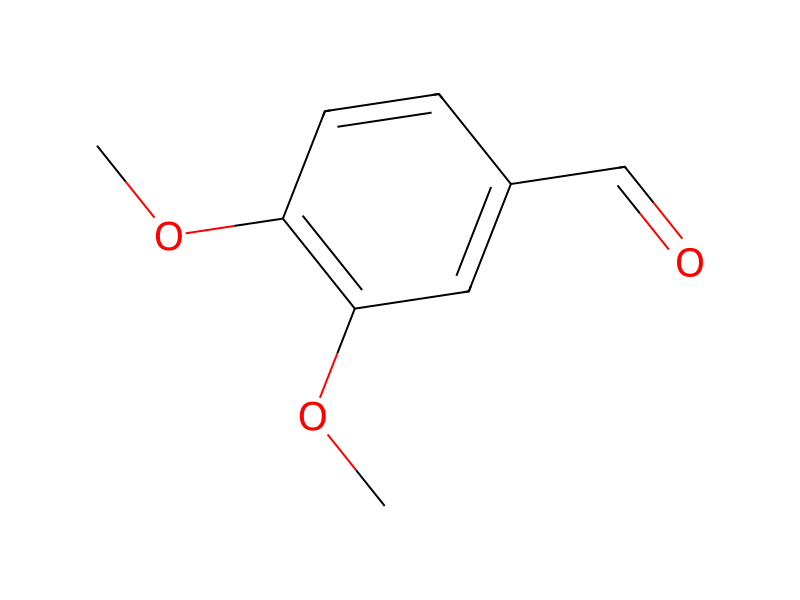
기본 정보
- 표준 SMILES
COc1ccc(C=O)cc1OC- InChIKey
WJUFSDZVCOTFON-UHFFFAOYSA-N- 분자식
- C9H10O3
- 평균 분자량
- 166.17 g/mol
- 단동위원소 질량
- 166.06299418
개요
Veratraldehyde appears as needles or chunky light peach powder. Has an odor of vanilla beans. (NTP, 1992)
이름 및 식별자
- 우선 이름
- Veratraldehyde
- IUPAC
- 3,4-dimethoxybenzaldehyde
- 현지명
- 3,4-디메톡시벤즈알데히드
- 영어명
- Veratraldehyde
- 분자식
- C9H10O3
- 분자량
- 166.17
이름 및 동의어
3,4-DimethoxybenzaldehydeVERATRALDEHYDE120-14-9Veratric aldehydeBenzaldehyde, 3,4-dimethoxy-Vanillin methyl etherVeratrum aldehydeVeratryl aldehydeVeratralp-Veratric aldehyde4-O-Methylvanillin3,4-Dimethoxybenzenecarbonal
이름 더 보기
3,4-다이메톡시벤즈알데하이드3,4-디메톡시벤즈알데히드베라트르알데하이드베라트르알데히드3,4-DIMETHOXYANILINE204-373-2FEMA 3109METHYL VANILLINMethyl vanilline
Protocatechualdehyde dimethyl etherProtocatechuic aldehyde dimethyl etherFEMA No. 3109DTXSID7026285UI88P68JZDNSC-8500NSC-24521DTXCID406285
데이터베이스 식별자
- CAS
120-14-9- PubChem CID
- 8419
- DTXSID
DTXSID7026285- ChEMBL
CHEMBL1088937- ChEBI
CHEBI:17098- UNII
- UI88P68JZD
- EC Number
- 204-373-2
- Nikkaji
- J9.907D
물성
구조 계산 물성
- XLogP
- 1.5
- 극성 표면적
- 35.5 Ų
- 수소 결합 공여자 수
- 0
- 수소 결합 수용자 수
- 3
- 회전 가능 결합 수
- 3
- 무거운 원자 수
- 12
- 형식 전하
- 0
- 복잡도
- 147
실험 및 물리화학적 성질
FragrancesFragrance Ingredient (Veratraldehyde) -> IFRA transparency List
LogP
1.22
1.22
Food AdditivesFLAVORING AGENT OR ADJUVANT -> FDA Substance added to food
Flavoring AgentsEU Flavoring substances
Solubility
less than 1 mg/mL at 72 °F (NTP, 1992)
6.32 mg/mL at 25 °C
insoluble in cold water; soluble in hot water oils
soluble (in ethanol)
Flash Pointgreater than 230 °F (NTP, 1992)
Endocrine DisruptorsPotential endocrine disrupting compound
Boiling Point
538 °F at 760 mmHg (NTP, 1992)
281.00 °C. @ 760.00 mm Hg
281 °C
281 °C @760 [mm Hg]
Melting Point
108 to 109 °F (NTP, 1992)
58 °C
Physical Description
Veratraldehyde appears as needles or chunky light peach powder. Has an odor of vanilla beans. (NTP, 1992)
Solid
white crystalline solid
물리화학적 성질
- 녹는점
- 40 · 40-43 °C (lit.)
- 끓는 점
- 281 °C · 281 °C (lit.)
- 밀도
- 1.1708 · 1.1708 (rough estimate)
- 증기압
- 0.09 Pa · 0.09Pa at 24℃
- 굴절률
- 1.526 · 1.5260 (estimate)
- FEMA
- 3109 · 3109 | VERATRALDEHYDE
- 인화점
- 230 °F · >230 °F
- 저장 조건
- 2 · 2-8°C
- 용해도
- 알코올: 자유롭게 용해됨
- 물리적 상태
- 덩어리 또는 융합된 고체
- 색상
- 흰색에서 노란색으로
- Specific Gravity
- 1.15 · 1.15 (liquid)
- 냄새
- 10 % · 디프로필렌 글리콜 중 10.00%. 달콤한 우디 바닐라
- 냄새 유형
- 크림 같은
- 생물학적 소스
- synthetic
- 수용성
- 22 · 22&C에서 <0.1g/100mL
- Merck
- 14 · 14,9951
- JECFA Number
- 877 · 877
- BRN
- 473899 · 473899
- 안정성
- 안정적인. 강염기, 강산화제와 호환되지 않습니다.
- 주요 응용
- 향료 및 향
- 화장품 원료 기능
- 향수
- InChI
- 1S/C9H10O3/c1-11-8-4-3-7(6-10)5-9(8)12-2/h3-6H,1-2H3
- InChIKey
- WJUFSDZVCOTFON-UHFFFAOYSA-N
- SMILES
- [H]C(=O)c1ccc(OC)c(OC)c1
- LogP
- 0.8 at · 0.8 at 25℃
- NIST
- 3 · Benzaldehyde, 3,4-dimethoxy-(120-14-9)
- EPA
- Veratraldehyde (120-14-9)
화학적 성질
Veratraldehyde is a crystalline solid (mp 44.5–45°C) with a woody, vanillalike odor. Veratraldehyde can be prepared by methylation of vanillin. It is used in oriental and warm, woody fragrances, as well as in flavor compositions for vanilla notes. It is an intermediate in, for example, the synthesis of pharmaceuticals.
안전 및 규제
GHS 분류
GHS Classification
Warning
H302 (100%): Harmful if swallowed [Warning Acute toxicity, oral]
P264, P270, P301+P317, P330, and P501 (click each P-code to see the statement)
Aggregated GHS information provided per 1759 reports by companies from 13 notifications to the ECHA C&L Inventory.
Warning
H302: Harmful if swallowed [Warning Acute toxicity, oral]
유해성 정보
Regulatory Information
Chemical: Benzaldehyde, 3,4-dimethoxy-
Commission Regulation (EC) No 1565/2000 (Repealed by Com. Implementing Reg. (EU) No 872/2012)
Status: Active Update: 15-04-2020 https://echa.europa.eu/registration-dossier/-/registered-dossier/20394
3,4-Dimethoxybenzaldehyde: Does not have an individual approval but may be used under an appropriate group standard
Fire HazardsThis compound is probably combustible. (NTP, 1992)
Health HazardsSYMPTOMS: Exposure to this compound may cause skin, eye, mucous membrane or upper respiratory tract irritation.
Reactive GroupAldehydes
Reactivity Profile
VERATRALDEHYDE is incompatible with strong oxidizing agents and strong bases. (NTP, 1992). VERATRALDEHYDE is an aldehyde. Aldehydes are readily oxidized to give carboxylic acids. Flammable and/or toxic gases are generated by the combination of aldehydes with azo, diazo compounds, dithiocarbamates, nitrides, and strong reducing agents. Aldehydes can react with air to give first peroxo acids, and ultimately carboxylic acids. These autoxidation reactions are activated by light, catalyzed by salts of transition metals, and are autocatalytic (catalyzed by the products of the reaction).
Air and Water ReactionsInsoluble in water.
Hazard Classes and Categories
Acute Tox. 4 (100%)
Acute toxicity (Oral) - Category 4
안전 및 보호
Fire FightingFires involving this compound may be controlled using a dry chemical, carbon dioxide or Halon extinguisher. (NTP, 1992)
First Aid
EYES: First check the victim for contact lenses and remove if present. Flush victim's eyes with water or normal saline solution for 20 to 30 minutes while simultaneously calling a hospital or poison control center. Do not put any ointments, oils, or medication in the victim's eyes without specific instructions from a physician. IMMEDIATELY transport the victim after flushing eyes to a hospital even if no symptoms (such as redness or irritation) develop.
Nonfire Spill Response
SMALL SPILLS AND LEAKAGE: Should a spill occur while you are handling this chemical, FIRST REMOVE ALL SOURCES OF IGNITION, then you should dampen the solid spill material with 60-70% ethanol and transfer the dampened material to a suitable container. Use absorbent paper dampened with 60-70% ethanol to pick up any remaining material. Seal the absorbent paper, and any of your clothes, which may be contaminated, in a vapor-tight plastic bag for eventual disposal. Solvent wash all contaminated surfaces with 60-70% ethanol followed by washing with a soap and water solution. Do not reenter the contaminated area until the Safety Officer (or other responsible person) has verified that the area has been properly cleaned.
Protective Action Criteria (PAC)
6.0 [mg/m3]
66 [mg/m3]
400 [mg/m3]
Personal Protective Equipment (PPE)
RECOMMENDED RESPIRATOR: Where the neat test chemical is weighed and diluted, wear a NIOSH-approved half face respirator equipped with an organic vapor/acid gas cartridge (specific for organic vapors, HCl, acid gas and SO2) with a dust/mist filter. (NTP, 1992)
안전 데이터
- wgk
- 3
- tsca
- TSCA listed
- rtecs
- YX5088000
- 독성
- LD50 orally in Rabbit: 2000 mg/kg LD50 dermal Rabbit > 5000 mg/kg
- HS 번호
- 29124900
- risk_code
- 22-38-36/37/38-36/38
- hazard_code
- Xn,Xi
- safety_code
- 26-22-24/25-36
- 기존화학 물질
- KE-11032
- F 고인화성물질
- 9-23
- Hazard Classifications
- Acute Tox. 4 OralSkin Irrit. 2
- 스토리지 클래스
- 11 - Combustible Solids
화학 및 산업
약리 정보
Cellular LocationsCytoplasm
용도 및 제조
Use Classification
Fragrance Ingredients
Flavouring Agent -> FLAVOURING_AGENT -> JECFA Functional Classes
Flavoring Agents -> JECFA Flavorings Index
Flavouring Agent -> FLAVOURING_AGENT -> JECFA Functional Classes
Flavouring Agent -> FLAVOURING_AGENT -> JECFA Functional Classes
Flavouring Agent -> FLAVOURING_AGENT -> JECFA Functional Classes
General Manufacturing InformationBenzaldehyde, 3,4-dimethoxy-: ACTIVE
응용 분야
출처Reported among the constituents of the essential oils of Cymbopogon javanensis and Eryngium poterium. Also reported found in raspberry, ginger, peppermint oil, Bourbon vanilla and mastic gum oil.
용도Veratraldehyde was used in the preparation of 4-chloromethyl-2-(dimethoxyphenyl)-1,3-dioxolane. It was used in the synthesis of (+)-lithospermic acid, having anti-HIV activity. It forms 1:1 inclusion complexes with cyclodextrins. It reacts with 3-acetyl-2,5-dimethythiophene to yield chalcone dye, (2E)-3-(3,4-Dimethoxyphenyl)-1-(2,5-dimethylthiophen-3-yl)prop-2-en-1-one.
일반 설명Needles or chunky light peach powder. Has an odor of vanilla beans.
제조 방법
Prepared from vanillin by methylation of vanillin with dimethylsulfate under mildly alkaline conditions.
상·하류 제품 정보
상류 원료
하류 제품
공급사50 곳
国药集团化学试剂有限公司86-21-63210123 · [email protected]
梯希爱(上海)化成工业发展有限公司021-67121386 · [email protected]
上海阿拉丁生化科技股份有限公司400-6206333 13167063860 · [email protected]
南京一化生物科技有限公司13429882898; 13429882898
爱斯特(成都)生物制药股份有限公司+86-28-85122536 85324413 · [email protected]
上海如吉生物科技发展有限公司+86-21-65211385-8001 36031160 · [email protected]
济南盛邦生物科技有限公司13685312009 · [email protected]
北京安司莫森技术有限公司010-82954736 13391601435 · [email protected]
韶远科技(上海)有限公司021-50795510 4000665055 · [email protected]
科瑞迪化学400-821-5857 021-64326257 · [email protected]
Syntechem Co.,Ltd[email protected]
上海迈瑞尔生化科技有限公司4006356688 18621169109 · [email protected]
Wuhan EnTai Technology Development Co,.Ltd86-27-82330560 · [email protected]
天津中信凯泰化工有限公司022-66880623 · [email protected]
大连美仑生物技术有限公司0411-62910999 13889544652 · [email protected]
阿法埃莎(中国)化学有限公司400-6106006 · [email protected]
太原市瑞和丰科贸有限公司+86 351 7031519 · [email protected]
安耐吉化学&3A(安徽泽升科技股份有限公司)400-0056266 · [email protected]
上海瀚鸿科技股份有限公司021-54306202 13764082696 · [email protected]
吉良化学21-62165282 · [email protected]
上海景颜化工科技有限公司13817811078 · [email protected]
嘉兴市艾森化工有限公司0573-85285100 18627885956 · [email protected]
Pure Chemistry Scientific Inc.001-857-928-2050 or 1-888-588-9418 · [email protected]
上海隆盛化工有限公司58099637 13585536065 · [email protected]
上海攀鸿化工科技有限公司021-56491756 13512199871 · [email protected]
武汉丰泰威远科技有限公司027-87465837 19945049750 · [email protected]
上海忆嵘生物科技有限公司18049974220 · [email protected]
孝感深远化工有限公司15527621225; 15527621225 · [email protected]
云南西力生物技术股份有限公司0871-65217109 · [email protected]
Beckmann-Kenko GmbH+49 4241 9308 88 · [email protected]
山东西亚化学有限公司13355009207 13355009207 · [email protected]
大赛璐药物手性技术(上海)有限公司021-50460086-9 15921403865 · [email protected]
唐山默内德贸易有限公司0315-8309571 15633399667 · [email protected]
玛雅试剂+86 (573) 82222445 (0)18006601000 452520369 · [email protected]
四川库利南科技有限公司400-1166-196 18981987031 · [email protected]
上海耐士化工科技有限公司400-188-0725 +86 21 34310725 13611771617
武汉科美沃化工有限公司027-85736489 · [email protected]
南京维奥化工有限公司Please Send Email 18652950785 · [email protected]
斯百全化学(上海)有限公司021-021-021-67601398-809-809-809 15221380277 · [email protected]
泰州志诚化工科技有限公司0523-82837785 13914525028 · [email protected]
艾科试剂4008-755-333 18080918076 · [email protected]
深圳菲斯生物科技有限公司0755-83725681-603
上海思域化工科技有限公司86-21-34053660 · [email protected]
赛默飞世尔科技(中国)有限公司800-810-5118 · [email protected]
北京伊诺凯科技有限公司400-810-7969 010-59572699 · [email protected]
上海特伯化学科技有限公司+86-21-60341587 · [email protected]
上海遐瑞医药科技有限公司+86 21 61551611
上海健超生物科技有限公司150-2103-5486 18017383231 · [email protected]
TCI AMERICA800-4238616 · [email protected]
TOKYO CHEMICAL INDUSTRY CO., LTD.03-36680489 · [email protected]
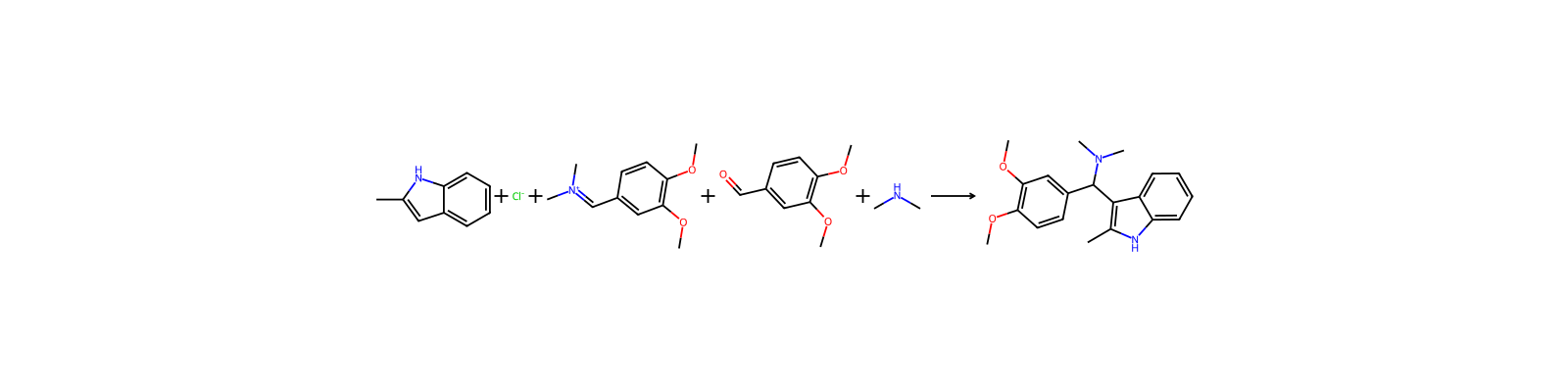
관련 반응
389건





연결된 노트
불러오는 중…