Trimethyl borate
데이터를 보충하는 중입니다. 잠시 후 페이지를 새로 고치면 최신 내용을 볼 수 있습니다

121-43-7COB(OC)OCWRECIMRULFAWHA-UHFFFAOYSA-NTrimethyl borate appears as a water-white liquid. Denser than water. Vapors heavier than air. Used as a solvent and fungicide for fruit.
121-43-7、3349-42-6DTXSID0037738CHEBI:38913Metals -> Metalloid Compounds (Boron)
Flammable agents - 3rd degree
0.915 g/cu cm
Relative density (water = 1): 0.915
0.92 @ 20°C
Miscible with tetrahydrofuran, ether, isoporpylamine, hexane, methanol, nujol, and other organic liquids
Miscible with alcohol, ether; soluble in polar nonhydroxylic solvents
Solubility in water: reaction
less than 80 °F (NFPA, 2010)
< 80 °F (< 27 °C) (closed cup)
- 7 °C
67.5 °C
68 °C
68 °C @760 [mm Hg]
The substance decomposes on heating or on burning producing toxic fumes including boron oxide.
When heated to decomposition it emit acrid smoke and irritating fumes.
안전 정보는 참고용이며, 공급업체의 물질안전보건자료(SDS), 관련 법규 및 전문가 평가를 대체하지 않습니다.
Danger
H226: Flammable liquid and vapor [Warning Flammable liquids]
P203, P210, P233, P240, P241, P242, P243, P280, P302+P352, P303+P361+P353, P317, P318, P321, P362+P364, P370+P378, P403+P235, P405, and P501 (click each P-code to see the statement)
Danger
H225 (40.5%): Highly Flammable liquid and vapor [Danger Flammable liquids]
P203, P210, P233, P240, P241, P242, P243, P260, P261, P262, P264, P264+P265, P270, P271, P280, P301+P316, P302+P352, P303+P361+P353, P304+P340, P305+P351+P338, P308+P316, P316, P317, P318, P321, P330, P337+P317, P361+P364, P362+P364, P370+P378, P403+P233, P403+P235, P405, and P501 (click each P-code to see the statement)
Chemical: Boric acid (H3BO3), trimethyl ester
Hazard Traits - Reproductive Toxicity
Boric acid (H3BO3), trimethyl ester is listed on the EPA's Chemical Data Reporting (CDR) system. Manufacturers and importers of Boric acid (H3BO3), trimethyl ester are required to report information about their production and use of this chemical to the EPA under the Toxic Substances Control Act (TSCA). (40 eCFR Part 711)
REACH registered substance: Trimethyl borate (EC: 204-468-9)
Boric acid, trimethyl ester: HSNO Approval: HSR001230 Approved with controls
The New Jersey Worker and Community Right to Know Act requires public and private employers to provide information about hazardous substances at their workplaces. (N.J.S.A. 34:5A-1 et. seq.)
Excerpt from ERG Guide 129 [Flammable Liquids (Water-Miscible / Noxious)]:
· HIGHLY FLAMMABLE: Will be easily ignited by heat, sparks or flames.
Highly flammable. Gives off irritating or toxic fumes (or gases) in a fire. Vapour/air mixtures are explosive.
Used as a flame retardant, welding and brazing flux, chemical intermediate, fungicide, and a solvent for waxes, resins, and oils; [HSDB]
Welding [Category: Weld]
As solvent for waxes, resins, oils; catalyst in manufacture of ketones; analysis of paint and varnish ingredients; as neutron detector gas in presence of a scintillation counter; as promoter of diborane reactions
Dehydrating agent; fungicide for citrus fruit
Intermediate in preparation of metal borohydrides
Azeotropic gaseous flux for welding and brazing
2023: 1,000,000 - <8,500,000 lb
(1979) PROBABLY GREATER THAN 4.54X10+6 G
Production figures for trimethyl borate were given as 21.1 million pound in 1977(1), most of which is used captively in the production of sodium borohydride(2).
Pharmaceutical and Medicine Manufacturing
Boric acid (H3BO3), trimethyl ester: ACTIVE
US 2689259; US 2884439; US 2937195 (to Callery Chem)
US 2881227 and US 2884440 (to Olin Mathieson)
US 2855427 (to Am. Potash & Chem.)
US 2739979 ( to USAEC)
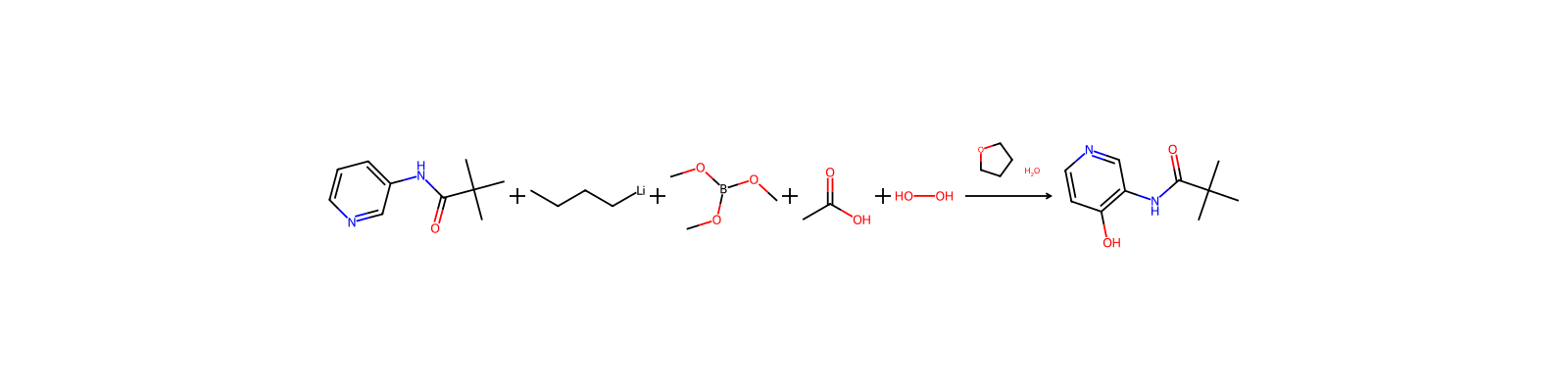
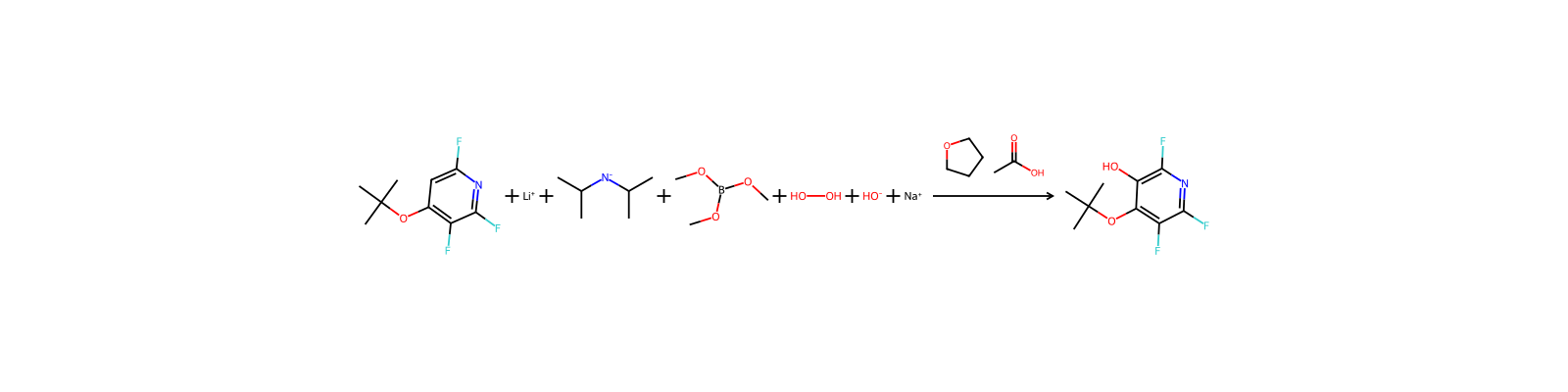
용도Trimethyl borate is a useful reagent in organic synthesis. It is involved in the production of resins, waxes and paints and acts as a methylation agent. As a boron source, Trimethyl borate is used to prepare flame retardants, anti-oxidants and corrosion inhibitors. It reacts with Grignard reagents followed by hydrolysis to prepare boronic acid. It is also used as a precursor of borate esters, which finds application in the Suzuki coupling reaction. It is used as neutron detector gas in the presence of a scintillation counter; as a promoter of diborane reactions.
불러오는 중…
-29.3 °C
-29 °C
-29 °C
3.59 (Air = 1)
Relative vapor density (air = 1): 3.6
137.0 [mmHg]
137 mm Hg at 25 °C
Vapor pressure, kPa at 25 °C: 18
137 [mm Hg] @25 °C
Water-white moisture-sensitive liquid, fumes in the air. It forms an azeotrope with methanol with an azeotrope of 55°C. Miscible with ether, methanol, hexane, tetrahydrofuran; It is stable in anhydrous state and decomposes into methanol and boric acid in presence of water.
Flammable, fire risk ...
A very dangerous fire hazard when exposed to heat, flame, or oxidizers.
Excerpt from ERG Guide 129 [Flammable Liquids (Water-Miscible / Noxious)]:
· May cause toxic effects if inhaled or absorbed through skin.
A skin and eye irritant; Inhalation may cause cough and sore throat; [ICSC] Chronic poisoning in grazing animals where soil is high in boric acid results in vomiting, diarrhea, shock, convulsions, and paralysis; Post-mortem findings include inflammation of the GI tract, liver and kidney damage, and cerebral edema; [HSDB]
Excerpt from ERG Guide 129 [Flammable Liquids (Water-Miscible / Noxious)]:
Use foam, powder, carbon dioxide. In case of fire: keep drums, etc., cool by spraying with water. NO direct contact with water.
Fresh air, rest.
Rinse skin with plenty of water or shower.
First rinse with plenty of water for several minutes (remove contact lenses if easily possible), then refer for medical attention.
Rinse mouth. Refer for medical attention .
· CALL 911. Then call emergency response telephone number on shipping paper. If shipping paper not available or no answer, refer to appropriate telephone number listed on the inside back cover.
· ELIMINATE all ignition sources (no smoking, flares, sparks or flames) from immediate area.
Excerpt from ERG Guide 129 [Flammable Liquids (Water-Miscible / Noxious)]:
General First Aid:
To fight fire use dry chemical, CO2, spray, foam.
If material on fire or involved in fire: Do not extinguish fire unless flow can be stopped. Use water in flooding quantities as fog. Solid stream of water may be ineffective. Cool all affected containers with flooding quantities of water. Use "alcohol" foam, dry chemical or carbon dioxide. Keep run-off water out of sewers and water sources.
Collect leaking and spilled liquid in sealable containers as far as possible. Absorb remaining liquid in dry sand or inert absorbent and remove to safe place. Do NOT wash away into sewer (extra personal protection: self-contained breathing apparatus). /table/
SRP: The most favorable course of action is to use an alternative chemical product with less inherent propensity for occupational exposure or environmental contamination. Recycle any unused portion of the material for its approved use or return it to the manufacturer or supplier. Ultimate disposal of the chemical must consider: the material's impact on air quality; potential migration in soil or water; effects on animal, aquatic, and plant life; and conformance with environmental and public health regulations.
Personal protection: filter respirator for organic vapours of low boiling point adapted to the airborne concentration of the substance. Collect leaking liquid in sealable containers. Do NOT wash away into sewer. Absorb remaining liquid in dry sand or inert absorbent. Then store and dispose of according to local regulations.
Do not breathe gas, fumes, vapor, or spray. Avoid contact with eyes.
SRP: The scientific literature for the use of contact lenses in industry is conflicting. The benefit or detrimental effects of wearing contact lenses depend not only upon the substance, but also on factors including the form of the substance, characteristics and duration of the exposure, the uses of other eye protection equipment, and the hygiene of the lenses. However, there may be individual substances whose irritating or corrosive properties are such that the wearing of contact lenses would be harmful to the eye. In those specific cases, contact lenses should not be worn. In any event, the usual eye protection equipment should be worn even when contact lenses are in place.
SRP: Local exhaust ventilation should be applied wherever there is an incidence of point source emissions or dispersion of regulated contaminants in the work area. Ventilation control of the contaminant as close to its point of generation is both the most economical and safest method to minimize personnel exposure to airborne contaminants.
SRP: Contaminated protective clothing should be segregated in such a manner so that there is no direct personal contact by personnel who handle, dispose, or clean the clothing. Quality assurance to ascertain the completeness of the cleaning procedures should be implemented before the decontaminated protective clothing is returned for reuse by the workers. Contaminated clothing should not be taken home at end of shift, but should remain at employee's place of work for cleaning.
For more Preventive Measures (Complete) data for TRIMETHYL BORATE (6 total), please visit the HSDB record page.
TERRESTRIAL FATE: Trimethyl borate is rapidly hydrolyzed to boric acid and methanol in the presence of water(1,2). Hydrolysis would be expected to be the dominate fate process for trimethyl borate in the environment(SRC).
AQUATIC FATE: Trimethyl borate is rapidly hydrolyzed to boric acid and methanol in the presence of water(1,2). Hydrolysis would be expected to be the dominate fate process for trimethyl borate in the environment(SRC).
ATMOSPHERIC FATE: According to a model of gas/particle partitioning of semivolatile organic compounds in the atmosphere(1), trimethyl borate, which has a vapor pressure of 136 mm Hg at 25 °C(2), is expected to exist solely as a vapor in the ambient atmosphere. Trimethyl borate is rapidly hydrolyzed to boric acid and methanol in the presence of water(3,4). Hydrolysis would be expected to be the dominate fate process for trimethyl borate in the environment(SRC).
Cough. Sore throat.
Redness. Burning sensation.
Redness. Pain.
Burning sensation. Abdominal pain.
Trimethyl borate is rapidly hydrolyzed to boric acid and methanol in the presence of water(1,2). Hydrolysis would be expected to be the dominate fate process for trimethyl borate in the environment(SRC). Adsorption to soil or suspended particles in water is not considered an important environmental fate for trimethyl borate(SRC).
/SIGNS AND SYMPTOMS/ Inhalation: Cough, sore throat. Eyes: Redness, pain. Skin: Redness, burning sensation. /table/
/OTHER TOXICITY INFORMATION/ Harmful in contact with skin
Trimethyl borate's production and use as a solvent, flame retardant for textiles, dehydrating agent, brazing flux, wood preservative, catalyst, as well as it use as an intermediate for the synthesis of boron compounds and in scintillation counters(1-3) may result in its release to the environment through various waste streams(SRC). Trimethyl borate is used to treat wood where it is decomposed to boric acid upon contact with the moisture in the wood; the boric acid formed acts as a wood preservative preventing damage from wood-destroying fungi and insects(2).
Trimethyl borate is rapidly hydrolyzed to boric acid and methanol in the presence of water(1,2). Hydrolysis would be expected to be the dominate fate process for trimethyl borate in the environment(SRC). Bioconcentration is not considered an important environmental fate for trimethyl borate(SRC).
Trimethyl borate is rapidly hydrolyzed to boric acid and methanol in the presence of water(1,2). Hydrolysis would be expected to be the dominate fate process for trimethyl borate in the environment(SRC). Volatilization from water or soil is not considered an important environmental fate for trimethyl borate(SRC).
(CA) CALIFORNIA 1000 ug/L /Boron/
(NH) NEW HAMPSHIRE 630 ug/L /Boron/
(ME) MAINE 1,400 ug/L /Boron/
(MN) MINNESOTA 1,000 ug/L /Boron/
(WI) WISCONSIN 960 ug/L /Boron/
일반 설명Trimethyl borate appears as a water-white liquid. Denser than water. Vapors heavier than air. Used as a solvent and fungicide for fruit.
The preparation method of trimethyl borate1. The direct reaction between boric acid and methanol is as follows:3CH30H+H3B03→B (OCH3) 3+3H20Usually the trimethyl borate formed in the reaction forms an azeotrope with excess methanol and is distilled out together, and then the trimethyl borate is obtained by separating the azeotrope.2. The direct reaction between boron oxide and methanol is as follows:B203+6CH30H→2B (OCH3) 3+3H203. Borax, methanol and sulfuric acid are directly reacted, and the reaction formula is :Na2B4O7.1OH2O+12CH30H+2H2S04→4B (OCH3)3+2NaHS04+17H20
정의ChEBI: Trimethyl borate is a member of the class of borate esters obtained by the formal condensation of three equivalents of methanol with boric acid.