Phenethyl anthranilate
HCID 8615
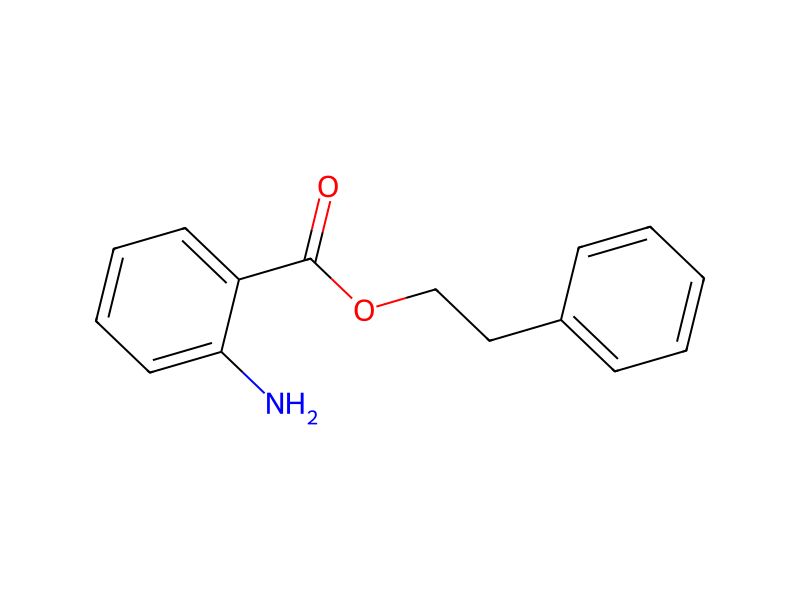
기본 정보
- CAS
133-18-6- 표준 SMILES
Nc1ccccc1C(=O)OCCc1ccccc1- InChIKey
PXWNBAGCFUDYBE-UHFFFAOYSA-N- 분자식
- C15H15NO2
- 평균 분자량
- 241.28 g/mol
- 단동위원소 질량
- 241.11027872
개요
Phenethyl anthranilate is a colorless solid with an odor of grape and orange. Insoluble in water. (NTP, 1992)
이름 및 식별자
- 우선 이름
- Phenethyl anthranilate
- IUPAC
- 2-phenylethyl 2-aminobenzoate
- 영어명
- Phenylethyl Anthranilate
- 분자식
- C15H15NO2
- 분자량
- 241.29
이름 및 동의어
PHENETHYL ANTHRANILATE2-Phenylethyl 2-aminobenzoatePhenylethyl anthranilateBenzylcarbinyl anthranilateBenzoic acid, 2-amino-, 2-phenylethyl esterAnthranilic acid, phenethyl ester2-Phenylethyl o-aminobenzoate2-Phenylethyl-o-aminobenzoatebeta-Phenethyl-o-aminobenzoateFEMA No. 2859NSC 66441CCRIS 4695
이름 더 보기
FEMA 2859Phenethylanthranilat2-Phenethyl anthranilatePHENYL ETHYL ANTHRANILATEbenzylcarbinylanthranilateB-PHENYLETHYL ANTHRANILATE2-PHENYLETHYL ANTHRANILATE
DTXSID5025861EINECS 205-098-0beta-Phenylethyl anthranilateUNII-8HBK71OD818HBK71OD81.beta.-Phenethyl-o-aminobenzoateAI3-36132Anthranilic acid, phenylethyl ester
데이터베이스 식별자
- CAS
133-18-6- PubChem CID
- 8615
- DTXSID
DTXSID5025861- ChEMBL
CHEMBL1488668- ChEBI
CHEBI:191913- UNII
- 8HBK71OD81
- EC Number
- 205-098-0
- Nikkaji
- J10.045E
물성
구조 계산 물성
- XLogP
- 4.2
- 극성 표면적
- 52.3 Ų
- 수소 결합 공여자 수
- 1
- 수소 결합 수용자 수
- 3
- 회전 가능 결합 수
- 5
- 무거운 원자 수
- 18
- 형식 전하
- 0
- 복잡도
- 261
실험 및 물리화학적 성질
FragrancesFragrance Ingredient (Phenylethyl anthranilate) -> IFRA transparency List
Food AdditivesFLAVORING AGENT OR ADJUVANT -> FDA Substance added to food
Density1.14 at 77 °F (NTP, 1992) - Denser than water; will sink
Flavoring AgentsEU Flavoring substances
Solubility
Insoluble (<1 mg/ml at 68.0 °F) (NTP, 1992)
Insoluble in water
Soluble (in ethanol)
Melting Point42 °C
Physical Description
Phenethyl anthranilate is a colorless solid with an odor of grape and orange. Insoluble in water. (NTP, 1992)
Solid
Fused, colourless to pale yellow-amber crystaline mass; Neroli, grape undertone
물리화학적 성질
- 녹는점
- 39 · 39-44 °C(lit.)
- 끓는 점
- 226 °C · 226 °C(lit.)
- 밀도
안전 및 규제
안전 정보는 참고용이며, 공급업체의 물질안전보건자료(SDS), 관련 법규 및 전문가 평가를 대체하지 않습니다.
GHS 분류
GHS Classification
This chemical does not meet GHS hazard criteria for 69.8% (90 of 129) of all reports.
Warning
H315 (30.2%): Causes skin irritation [Warning Skin corrosion/irritation]
P261, P264, P264+P265, P271, P273, P280, P302+P352, P304+P340, P305+P351+P338, P319, P321, P332+P317, P337+P317, P362+P364, P391, P403+P233, P405, and P501 (click each P-code to see the statement)
Aggregated GHS information provided per 129 reports by companies from 3 notifications to the ECHA C&L Inventory. Each notification may be associated with multiple companies.
유해성 정보
Regulatory Information
Chemical: Benzoic acid, 2-amino-, 2-phenylethyl ester
Commission Regulation (EC) No 1565/2000 (Repealed by Com. Implementing Reg. (EU) No 872/2012)
Benzoic acid, 2-amino-, 2-phenylethyl ester: Does not have an individual approval but may be used under an appropriate group standard
Other Safety InformationIMAP assessments - Benzoic acid, 2-amino-, 2-phenylethyl ester: Human health tier I assessment
DOT LabelClass 9
Fire HazardsFlash point data are not available for this chemical, but it is probably combustible. (NTP, 1992)
Health HazardsSYMPTOMS: May cause skin irritation.
Reactive GroupEsters, Sulfate Esters, Phosphate Esters, Thiophosphate Esters, and Borate Esters
Reactivity ProfilePHENETHYL ANTHRANILATE forms salts readily with acids. Hydrolyzes under alkaline pH conditions. (NTP, 1992).
화학 및 산업
약리 정보
Cellular LocationsMembrane
용도 및 제조
Use Classification
Fragrance Ingredients
Flavouring Agent -> FLAVOURING_AGENT -> JECFA Functional Classes
Flavoring Agents -> JECFA Flavorings Index
Flavouring Agent -> FLAVOURING_AGENT -> JECFA Functional Classes
General Manufacturing InformationBenzoic acid, 2-amino-, 2-phenylethyl ester: ACTIVE
응용 분야
출처Has apparently not been reported to occur in nature.
용도Phenylethyl Anthranilate is a synthetic flavoring agent that is a stable, white to yellow crystal of grape and orange blossom odor. It should be stored in glass or polyethylene-lined containers. It is used for flavors such as grape and cherry in applications such as beverages, ice cream, candy, and baked goods at 2–6 ppm.
일반 설명Colorless solid with an odor of grape and orange. Insoluble in water.
제조 방법
By direct esterification of anthranilic acid with phenylethyl alcohol; pure material from phenylethyl alcohol plus isatoic anhydride; also from phenylethyl alcohol and methylanthranilate.
상·하류 제품 정보
상류 원료
관련 반응
0건
아직 관련 반응이 없습니다