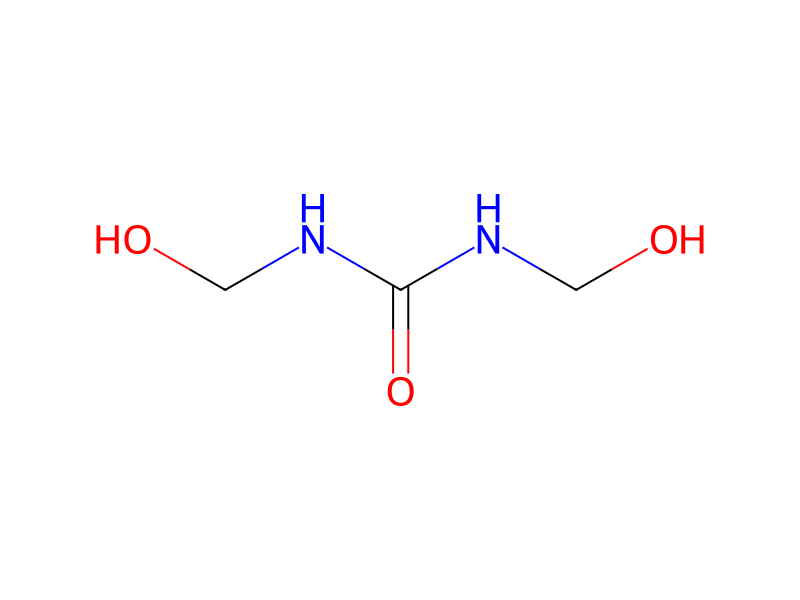
기본 정보
- 표준 SMILES
O=C(NCO)NCO- InChIKey
QUBQYFYWUJJAAK-UHFFFAOYSA-N- 분자식
- C3H8N2O3
- 평균 분자량
- 120.11 g/mol
- 단동위원소 질량
- 120.05349212
개요
Oxymethurea is a member of ureas.
이름 및 식별자
- 우선 이름
- Carbamol
- IUPAC
- 1,3-bis(hydroxymethyl)urea
- 현지명
- 디메틸올우레아
- 영어명
- Dimethylolurea
- 분자식
- C3H8N2O3
- 분자량
- 120.11
이름 및 동의어
이름 더 보기
데이터베이스 식별자
- CAS
140-95-4- PubChem CID
- 8827
- DTXSID
DTXSID6025141- ChEMBL
CHEMBL3185052- ChEBI
CHEBI:134755- UNII
- N68H97CAWG
- EC Number
- 205-444-0
- Nikkaji
- J10.647J
물성
구조 계산 물성
- XLogP
- -1.8
- 극성 표면적
- 81.6 Ų
- 수소 결합 공여자 수
- 4
- 수소 결합 수용자 수
- 3
- 회전 가능 결합 수
- 2
- 무거운 원자 수
- 8
- 형식 전하
- 0
- 복잡도
- 66.9
실험 및 물리화학적 성질
물리화학적 성질
- 녹는점
- 125 °C · 125 °C (dec.)(lit.)
- 끓는 점
- 224.08 °C · 224.08°C (rough estimate)
- 밀도
- 1.34 · 1.34
- 굴절률
- 1.461 · 1.4610 (estimate)
- 인화점
- 100 °C · 100 °C
- 저장 조건
- 2 · 2-8°C
- 산도 계수 (pKa)
- 12.14 · 12.14±0.46(Predicted)
- 물리적 상태
- powder to crystal
- 색상
- 흰색에서 거의 흰색
- 수용성
- 150 g/L · 150g/L
- Merck
- 14 · 14,6968
- BRN
- 1811870 · 1811870
- 화장품 원료 기능
- 항균
- InChI
- 1S/C3H8N2O3/c6-1-4-3(8)5-2-7/h6-7H,1-2H2,(H2,4,5,8)
- InChIKey
- QUBQYFYWUJJAAK-UHFFFAOYSA-N
- SMILES
- OCNC(=O)NCO
- LogP
- -2.61 · -2.610 (est)
- NIST
- Dimethanolurea(140-95-4)
- EPA
- Dimethylolurea (140-95-4)
화학적 성질
white powder
안전 및 규제
GHS 분류
GHS Classification
This chemical does not meet GHS hazard criteria for 48.4% (104 of 215) of reports.
Warning
H319 (51.2%): Causes serious eye irritation [Warning Serious eye damage/eye irritation]
P264+P265, P280, P305+P351+P338, and P337+P317 (click each P-code to see the statement)
Aggregated GHS information provided per 215 reports by companies from 7 notifications to the ECHA C&L Inventory.
유해성 정보
Regulatory Information
Chemical: Urea, N,N'-bis(hydroxymethyl)-
Urea, N,N'-bis(hydroxymethyl)- is listed on the EPA's Chemical Data Reporting (CDR) system. Manufacturers and importers of Urea, N,N'-bis(hydroxymethyl)- are required to report information about their production and use of this chemical to the EPA under the Toxic Substances Control Act (TSCA). (40 eCFR Part 711)
REACH registered substance: 1,3-bis(hydroxymethyl)urea (EC: 205-444-0)
Carbamol: Does not have an individual approval but may be used under an appropriate group standard
Hazards Summary
A formaldehyde releaser, dimethylol urea can cause allergic contact dermatitis in workers handling durable press chemical finishes used on fabrics for wrinkle resistance; Cases were reported in the 1950s before the textile industry started using finishes releasing less formaldehyde; [Kanerva, p. 397-408]
독성 정보
안전 데이터
- wgk
- 3
- tsca
- TSCA listed
- rtecs
- YS2716350
- HS 번호
- 29241990
- risk_code
- 45
- hazard_code
- T
- safety_code
- 24/25-45-53
- 기존화학 물질
- KE-03227
- Hazard Classifications
- Eye Irrit. 2
- 스토리지 클래스
- 13 - Non Combustible Solids
화학 및 산업
용도 및 제조
Uses
Used in the production of urea-formaldehyde resins and as a textile finish; [Kanerva, p. 405]
Using Disinfectants or Biocides [Category: Clean]
General Manufacturing Information
Wood Product Manufacturing
Urea, N,N'-bis(hydroxymethyl)-: ACTIVE
응용 분야
용도In the textile industry in cotton crease- and shrink-proofing, finishing, drying, sizing; in tanning; pesticides; in photographic developers.
제조 방법
생산 방법Dimethylolurea is produced industrially by the addition of 2 mol of formaldehyde per mole of urea in a stirred vessel. The solution is neutralized with triethanolamine. Urea is added with cooling, and the temperature must not exceed 40 ℃ in this slightly exothermic reaction. After a few hours, the reaction mixture is cooled to room temperature and dihydroxymethylurea crystals form upon cooling. The product is dried in a spray-drying tower.
상·하류 제품 정보
상류 원료
하류 제품
공급사50 곳
관련 반응
현재 필터 조건에 해당하는 반응 기록이 없습니다.
연결된 노트
불러오는 중…