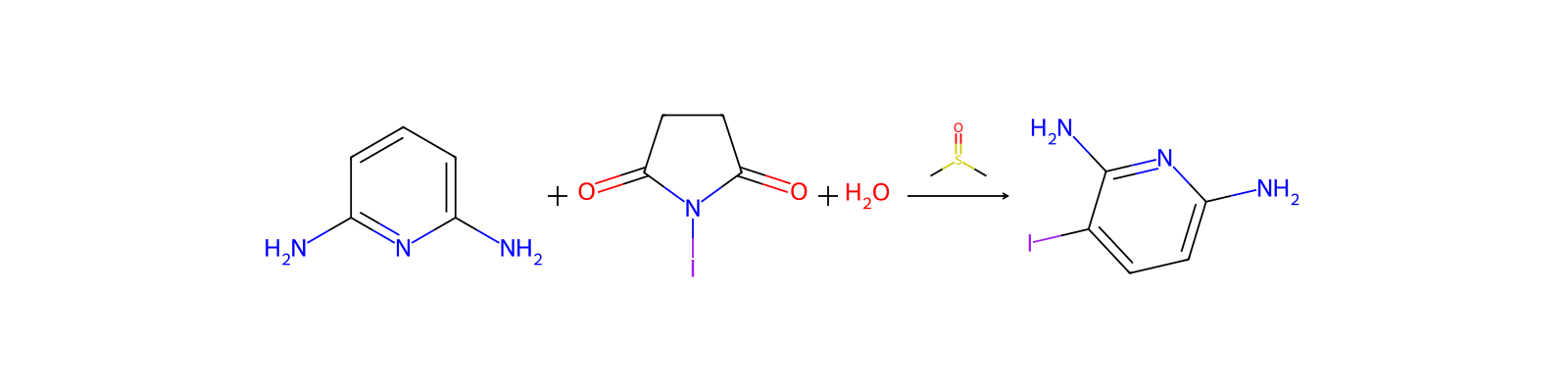

기본 정보
- 표준 SMILES
Nc1cccc(N)n1- InChIKey
VHNQIURBCCNWDN-UHFFFAOYSA-N- 분자식
- C5H7N3
- 평균 분자량
- 109.13 g/mol
- 단동위원소 질량
- 109.06399722
개요
structure in first source
이름 및 식별자
- 우선 이름
- 2,6-Diaminopyridine
- IUPAC
- pyridine-2,6-diamine
- 현지명
- 2,6-디아미노피리딘
- 영어명
- 2,6-Diaminopyridine
- 분자식
- C5H7N3
- 분자량
- 109.13
이름 및 동의어
2,6-Diaminopyridine141-86-6pyridine-2,6-diamine2,6-pyridinediaminepyridine, 2,6-diamino-DAP (amine)DTXSID0040127NSC-1921K89AB8CKG6RODOL 26PYRDTXCID8020127RefChem:83122
이름 더 보기
2,6-디아미노피리딘2,6-다이아미노피리딘2,6-DAP6-DiaMinopyridine26BDNSC 4033462.6-DiaMinopyr
CHEBI:51598205-507-2Diaminopyridinepyridine-2,6-diyldiamineMFCD00006329NSC 19212,6-Diamino pyridine118352-40-2
데이터베이스 식별자
- CAS
141-86-6- PubChem CID
- 8861
- DTXSID
DTXSID0040127- ChEMBL
CHEMBL339234- UNII
- K89AB8CKG6
- EC Number
- 205-507-2
- Nikkaji
- J38.340F
물성
구조 계산 물성
- XLogP
- 0.2
- 극성 표면적
- 64.9 Ų
- 수소 결합 공여자 수
- 2
- 수소 결합 수용자 수
- 3
- 회전 가능 결합 수
- 0
- 무거운 원자 수
- 8
- 형식 전하
- 0
- 복잡도
- 66.1
실험 및 물리화학적 성질
Chemical ClassesNitrogen Compounds -> Pyridines
CosmeticsHair dyeing
Boiling Point285 °C @760 [mm Hg]
Physical DescriptionSlightly brown solid; [EC: SCCS - Opinion] Light brown, yellow, or off-white powder or flakes; [Alfa Aesar MSDS]
Ionization Efficiency
Positive
3.05
1.9
Agilent XCT
Electrospray ionization
trifluoroacetic acid (10.4nM)
Collision Cross Section119.8 Ų [M+H]+ [CCS Type: DT; Buffer gas: N2; Ionization: ESI+; Dataset: TOXCAST; Source Identifier: DTXSID0040127]
물리화학적 성질
- 녹는점
- 117 · 117-122 °C (lit.)
- 끓는 점
- 285 °C · 285 °C (lit.)
- 밀도
- 1.711 · 1.7110 (rough estimate)
- 굴절률
- 1.534 · 1.5340 (estimate)
- 인화점
- 155 °C · 155°C
- 저장 조건
- 30 °C · Store below +30°C.
- 용해도
- 180 g/L · 180g/L
- 산도 계수 (pKa)
- 6.13 · 6.13±0.24(Predicted)
- 물리적 상태
- 플레이크 또는 결정성 분말
- 색상
- 베이지부터 짙은 갈색 회색까지
- 수소이온지수(pH)
- 7 · >7 (H2O)
- 수용성
- 9.9 g/100mL · 9.9g/100mL(20℃)
- BRN
- 108513 · 108513
- 화장품 원료 기능
- 머리 염색
- InChI
- 1S/C5H7N3/c6-4-2-1-3-5(7)8-4/h1-3H,(H4,6,7,8)
- InChIKey
- VHNQIURBCCNWDN-UHFFFAOYSA-N
- SMILES
- Nc1cccc(N)n1
- LogP
- 0.55 · 0.550 (est)
- NIST
- 2 · 2,6-Pyridinediamine(141-86-6)
- EPA
- 2 · 2,6-Pyridinediamine (141-86-6)
화학적 성질
Off-white crystal powder/granuale
안전 및 규제
GHS 분류
GHS Classification
Danger
H301 (99%): Toxic if swallowed [Danger Acute toxicity, oral]
P261, P264, P264+P265, P270, P271, P272, P273, P280, P301+P316, P302+P352, P304+P340, P305+P351+P338, P319, P321, P330, P332+P317, P333+P317, P337+P317, P362+P364, P391, P403+P233, P405, and P501 (click each P-code to see the statement)
Aggregated GHS information provided per 103 reports by companies from 19 notifications to the ECHA C&L Inventory. Each notification may be associated with multiple companies.
유해성 정보
Regulatory Information
Chemical: 2,6-Pyridinediamine
2,6-Diaminopyridine: Does not have an individual approval but may be used under an appropriate group standard
Hazards Summary
One report of occupational contact dermatitis in the pharmaceutical industry; [NTP] A strong sensitizer based on the mouse local lymph node assay (LLNA); Oral LD50 (rat) = 50-300 mg/kg; A 90-day oral study of rats demonstrated the erythrocytes, spleen, kidney, and liver as target organs of toxicity (most changes recovering after 4-week recovery period); Developmental toxicity (decreased fetal and placental weights and incomplete thoracic vertebrae ossification) but no teratogenicity observed in oral study of rats in the presence of maternal toxicity; [EC: SCCS - Opinion] An irritant; Toxic by ingestion; [Alfa Aesar MSDS]
Hazard Classes and CategoriesAcute Tox. 3 (99%)
안전 및 보호
Protective Action Criteria (PAC)
0.33 [mg/m3]
3.6 [mg/m3]
22 [mg/m3]
독성 정보
Adverse EffectsOccupational hepatotoxin - Secondary hepatotoxins: the potential for toxic effect in the occupational setting is based on cases of poisoning by human ingestion or animal experimentation.
안전 데이터
- wgk
- 3
- tsca
- TSCA listed
- rtecs
- US7570000
- ridadr
- 2811
- HS 번호
- 29333999
- risk_code
- 22-36/37/38-25-20/21
- hazard_code
- Xn,T,Xi
- safety_code
- 26-45-37/39-28A-36
- 포장분류
- II
- 위험 등급
- 6.1
- F 고인화성물질
- 9
- Hazard Classifications
- Acute Tox. 3 OralEye Irrit. 2Skin Irrit. 2STOT SE 3
- 스토리지 클래스
- 6.1C - Combustible acute toxic Cat.3toxic compounds or compounds which causing chronic effects
화학 및 산업
용도 및 제조
Uses
Used in oxidative hair dyes; [EC: SCCS - Opinion] Used as an intermediate for pharmaceuticals and polyamides, epoxy curing agent, and coupler in hair dyes; [NTP]
Plastic Composites Manufacturing [Category: Industry]
Use ClassificationCosmetics -> Hair dyeing
General Manufacturing Information2,6-Pyridinediamine: ACTIVE
응용 분야
개요2,6-Diaminopyridine is an important organic reagent with a wide range of uses. It can be used for fluorescence detection, 2,6-Diaminopyridine fluorescence method for the determination of certain aromatic primary amines. It can also be used to prepare 2,6-Diaminopyridine imprinted core-shell nanoparticles. A new method for the detection of diaminopyridine derivatives using molecularly imprinted electrochemical sensors has been established, which has been applied to the detection of 2,6-Diaminopyridine in hair dyes with good sensitivity and selectivity.
용도2,6-Diaminopyridine, used as a pharmaceutical intermediate and a hair dye coupler in oxidation/permanent formulations.
제조 방법
In a 600 mL autoclave equipped with a gas entrapment stirrer, a solution of 5 g CuI in 120 g aqueous ammonia (30% NH3 by weight) was added and mixed with 77 g ammonium acetate and 60 g of 2, 6-dichloropyridine. After purging with nitrogen, 24 g of liquid ammonia was added resulting in a pressure of about 150 psi (1.03 MPa). Subsequently, the reaction mixture was heated to 150°C for 8 h under stirring. Throughout the reaction, the pressure decreased from an initial pressure of 680 psi (4.69 MPa) to 450 psi (3.10 MPa). The reaction mixture was allowed to cool to room temperature, and the pressure was brought back to atmospheric pressure. Finally, 2,6-Diaminopyridine was obtained after purification.
상·하류 제품 정보
상류 원료
하류 제품
공급사50 곳
国药集团化学试剂有限公司86-21-63210123 · [email protected]
梯希爱(上海)化成工业发展有限公司021-67121386 · [email protected]
衢州润东化工有限公司0570-8789886 18892685668 · [email protected]
上海阿拉丁生化科技股份有限公司400-6206333 13167063860 · [email protected]
上海泰矶林实业有限公司02150630626 17717886015 · [email protected]
韶远科技(上海)有限公司021-50795510 4000665055 · [email protected]
科瑞迪化学400-821-5857 021-64326257 · [email protected]
Syntechem Co.,Ltd[email protected]
上海迈瑞尔生化科技有限公司4006356688 18621169109 · [email protected]
阿法埃莎(中国)化学有限公司400-6106006 · [email protected]
太原市瑞和丰科贸有限公司+86 351 7031519 · [email protected]
安耐吉化学&3A(安徽泽升科技股份有限公司)400-0056266 · [email protected]
石家庄斯迪亚诺精细化工有限公司0311-89250318 13582355795 · [email protected]
上海瀚鸿科技股份有限公司021-54306202 13764082696 · [email protected]
济南德信佳生物科技有限公司0531-82375886 13001715031 · [email protected]
上海景颜化工科技有限公司13817811078 · [email protected]
嘉兴市艾森化工有限公司0573-85285100 18627885956 · [email protected]
Pure Chemistry Scientific Inc.001-857-928-2050 or 1-888-588-9418 · [email protected]
超彩实业有限公司0574-83851061 · [email protected]
上海隆盛化工有限公司58099637 13585536065 · [email protected]
苏州施亚生物科技有限公司86(512)5235 8471 17715136450 · [email protected]
山东西亚化学有限公司13355009207 13355009207 · [email protected]
玛雅试剂+86 (573) 82222445 (0)18006601000 452520369 · [email protected]
四川库利南科技有限公司400-1166-196 18981987031 · [email protected]
上海耐士化工科技有限公司400-188-0725 +86 21 34310725 13611771617
天津希恩思生化科技有限公司400 638 7771 · [email protected]
南京维奥化工有限公司Please Send Email 18652950785 · [email protected]
河南多贝化工有限公司0370-2785118 17550508557 · [email protected]
斯百全化学(上海)有限公司021-021-021-67601398-809-809-809 15221380277 · [email protected]
泰州志诚化工科技有限公司0523-82837785 13914525028 · [email protected]
艾科试剂4008-755-333 18080918076 · [email protected]
上海思域化工科技有限公司86-21-34053660 · [email protected]
赛默飞世尔科技(中国)有限公司800-810-5118 · [email protected]
北京伊诺凯科技有限公司400-810-7969 010-59572699 · [email protected]
上海健超生物科技有限公司150-2103-5486 18017383231 · [email protected]
TCI AMERICA800-4238616 · [email protected]
TOKYO CHEMICAL INDUSTRY CO., LTD.03-36680489 · [email protected]
TCI Europe320-37350700 · [email protected]
深圳振强药物研发有限公司0755-66853366 13670046396 · [email protected]
深圳康特腾科技有限公司86-0755-86635001 · [email protected]
越林试剂021-62960152 · [email protected]
山东博洛达生物科技有限公司0531-68659041 · [email protected]
上海汇凯化学科技有限公司021-61995394 18916691159 · [email protected]
北京环宇世纪化学科技有限公司hysj_bj.com
湖北鑫源顺医药化工有限公司13971561712, 13995564702, 027-50664929 · [email protected]
上海贺康生物技术有限公司17721021104 18939837085 · [email protected]
上海湄水化工科技有限公司021-60549325 18616193163
上海将来实业股份有限公司400-0066400 13621662912 · [email protected]
上海将来实业股份有限公司021-61552785 · [email protected]
安徽科迪达化工有限公司0554-2106669 · [email protected]
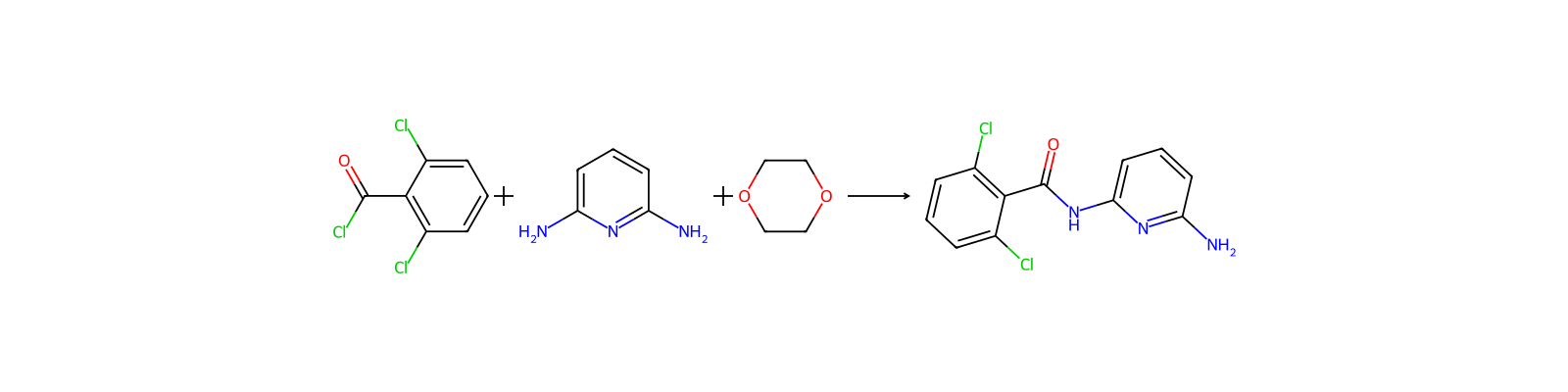
관련 반응
132건



연결된 노트
불러오는 중…