
기본 정보
- 표준 SMILES
CN(C)c1cccc2cccc(N(C)C)c12- InChIKey
GJFNRSDCSTVPCJ-UHFFFAOYSA-N- 분자식
- C14H18N2
- 평균 분자량
- 214.31 g/mol
- 단동위원소 질량
- 214.14699858
개요
N1,N1,N8,N8-tetramethylnaphthalene-1,8-diamine is a member of naphthalenes.
이름 및 식별자
- 우선 이름
- Proton sponge
- IUPAC
- 1-N,1-N,8-N,8-N-tetramethylnaphthalene-1,8-diamine
- 영어명
- 1,8-Bis(dimethylamino)naphthalene
- 분자식
- C14H18N2
- 분자량
- 214.31
이름 및 동의어
20734-58-11,8-Bis(dimethylamino)naphthaleneProton spongeDMAN cpd6S79D2P9H8DTXSID10174807RefChem:73727DTXCID5097298244-001-6N1,N1,N8,N8-tetramethylnaphthalene-1,8-diamine1,8-Bis(dimethylamino)naphtaleneN,N,N',N'-Tetramethyl-1,8-naphthalenediamine
이름 더 보기
N,N,N',N'-tetramethyl-1,8-diaminonaphthalenePROTON-SPONGE(R)proton-sponge tmLABOTEST-BB LT004539821, 8-dimethylaminonaphthalene
1-N,1-N,8-N,8-N-tetramethylnaphthalene-1,8-diamine1,8-Naphthalenediamine, N,N,N',N'-tetramethyl-Proton-spongeMFCD00003920N,N,N',N'-Tetramethylnaphthalene-1,8-diamine1,8-Naphthalenediamine, N1,N1,N8,N8-tetramethyl-Maybridge1_002116N,N,N',N'-Tetramethyl-1,8-naphthalene diamine
데이터베이스 식별자
- CAS
20734-58-1- PubChem CID
- 88675
- DTXSID
DTXSID10174807- ChEMBL
CHEMBL1574733- ChEBI
CHEBI:194986- UNII
- 6S79D2P9H8
- EC Number
- 244-001-6
- Nikkaji
- J83.008I
물성
구조 계산 물성
- XLogP
- 3.4
- 극성 표면적
- 6.5 Ų
- 수소 결합 공여자 수
- 0
- 수소 결합 수용자 수
- 2
- 회전 가능 결합 수
- 2
- 무거운 원자 수
- 16
- 형식 전하
- 0
- 복잡도
- 203
실험 및 물리화학적 성질
PolymersNitrogen Compounds -> Amines, Polyaromatic
SpringerMaterials Properties13C nuclear magnetic resonance spectrum
Solubility31.2 [ug/mL] (The mean of the results at pH 7.4)
Physical DescriptionPale cream crystalline powder; [Alfa Aesar MSDS]
물리화학적 성질
- 녹는점
- 49 · 49-51 °C(lit.)
- 끓는 점
- 144 · 144-145°C (3.7505 mmHg)
- 밀도
- 1.12 · 1.12
- 인화점
- 230 °F · >230 °F
- 저장 조건
- Keep in dark place,Inert atmosphere,Room temperature
- 용해도
- 유기 용매에 용해됩니다.
- 물리적 상태
- 결정성 분말
- 산도 계수 (pKa)
- 12.1 · 12.1(at 25℃)
- 색상
- 옅은 갈색빛이 도는 핑크색
- 수용성
- 불용성
- Merck
- 14 · 14,3388
- BRN
- 396782 · 396782
- InChI
- 1S/C14H18N2/c1-15(2)12-9-5-7-11-8-6-10-13(14(11)12)16(3)4/h5-10H,1-4H3
- InChIKey
- GJFNRSDCSTVPCJ-UHFFFAOYSA-N
- SMILES
- CN(C)c1cccc2cccc(N(C)C)c12
- NIST
- 1 · 1,8-Naphthalenediamine, N,N,N',N'-tetramethyl-(20734-58-1)
화학적 성질
1,8-Bis(dimethylamino)naphtalene is pale brownish-pink crystalline powder
안전 및 규제
GHS 분류
GHS Classification
Warning
H302 (100%): Harmful if swallowed [Warning Acute toxicity, oral]
P261, P264, P264+P265, P270, P271, P280, P301+P317, P302+P352, P304+P340, P305+P351+P338, P319, P321, P330, P332+P317, P337+P317, P362+P364, P403+P233, P405, and P501 (click each P-code to see the statement)
Aggregated GHS information provided per 95 reports by companies from 8 notifications to the ECHA C&L Inventory. Each notification may be associated with multiple companies.
유해성 정보
Regulatory Information
Chemical: 1,8-Naphthalenediamine, N,N,N',N'-tetramethyl-
1,8-Bis(dimethylamino)-naphthalene: Does not have an individual approval but may be used under an appropriate group standard
Hazards SummaryCauses burns; [Alfa Aesar MSDS]
Hazard Classes and CategoriesAcute Tox. 4 (100%)
독성 정보
Adverse EffectsDermatotoxin - Skin burns.
안전 데이터
- wgk
- 3
- ridadr
- 3259
- HS 번호
- 29215900
- risk_code
- 22-36/37/38-34
- hazard_code
- Xn,C
- safety_code
- 26-45-36/37/39
- 위험 등급
- 8
- F 고인화성물질
- 8-10-23
- Hazard Classifications
- Acute Tox. 4 OralEye Irrit. 2Skin Irrit. 2STOT SE 3
- 스토리지 클래스
- 11 - Combustible Solids
화학 및 산업
용도 및 제조
UsesPrototype of a group of very high alkalinity aromatic diamines known as proton sponges; Used in organic synthesis and catalysis; [Merck Index]
응용 분야
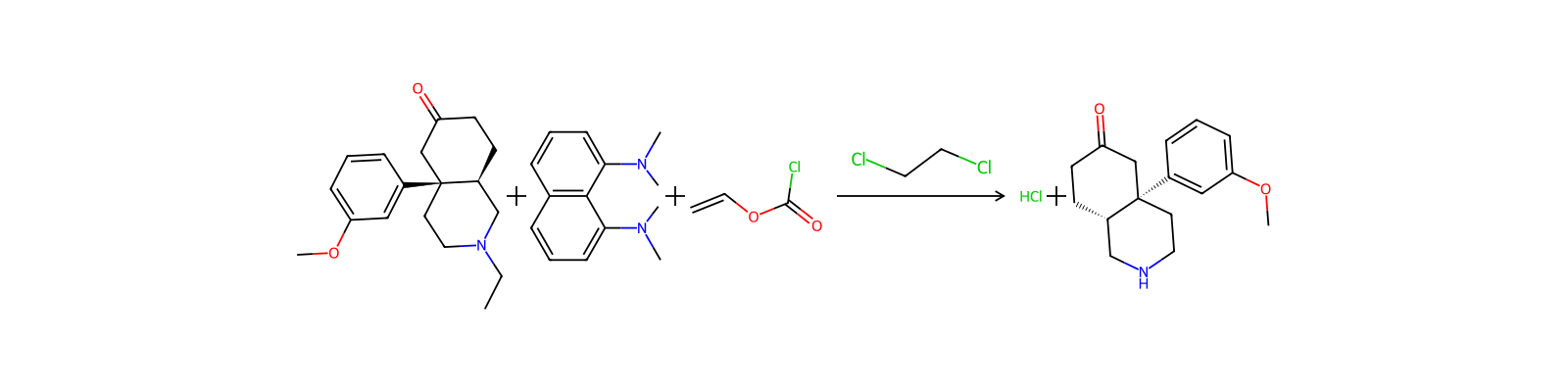
개요Significant attention in organic chemistry has been given to the so-called proton sponges, which are bi-center nitrogen bases that show spectacularly high basicity and very low nucleophilic character. The first member of this class of compounds 1,8-bis(dimethylamino)naphthalene or DMAN dragged attention due to its unexpectedly high basicity (pKa: DMAN 12.1; 1,8-diaminonaphthalene: 4.6) after its discovery in 1941[1]. It is prepared with an 82% yield from 1,8-diaminonaphthalene, dimethyl sulfate, and sodium hydride.
용도1,8-Bis(dimethylamino)naphthalene, also referred to as protone sponge, is a lipophilic proton trapping agent. 1,8-Bis(dimethylamino)naphthalene is used in the matrix for mass spectroscopy analysis of lipids and fatty acids.
일반 설명Proton-sponge is also referred as 1,8-dimethylamino naphthalene. It is very strong base with weak nucleophilic character due to steric effects. It also participates in the reactions between arachno-6,9-C2B8H14 and selected acyl chlorides. It has been tested as an effective H+ scavenger.
상·하류 제품 정보
하류 제품
공급사50 곳
梯希爱(上海)化成工业发展有限公司021-67121386 · [email protected]
衢州润东化工有限公司0570-8789886 18892685668 · [email protected]
上海阿拉丁生化科技股份有限公司400-6206333 13167063860 · [email protected]
温州共赢化学有限公司+86-0086-577-64498589 +86-15355981851 · [email protected]
Baoji Guokang Healthchem co.,ltd+8615604608665 15604608665 · [email protected]
Dayang Chem (Hangzhou) Co.,Ltd.+86-0571-88938639 17705817739 · [email protected]
上海弘顺生物科技有限公司15901914505 · [email protected]
韶远科技(上海)有限公司021-50795510 4000665055 · [email protected]
科瑞迪化学400-821-5857 021-64326257 · [email protected]
Ark Pharm, Inc.847-367-3680 · [email protected]
上海迈瑞尔生化科技有限公司4006356688 18621169109 · [email protected]
阿法埃莎(中国)化学有限公司400-6106006 · [email protected]
安耐吉化学&3A(安徽泽升科技股份有限公司)400-0056266 · [email protected]
石家庄斯迪亚诺精细化工有限公司0311-89250318 13582355795 · [email protected]
上海瀚鸿科技股份有限公司021-54306202 13764082696 · [email protected]
上海景颜化工科技有限公司13817811078 · [email protected]
常州环灵化工有限公司89803005 18206112582 · [email protected]
嘉兴市艾森化工有限公司0573-85285100 18627885956 · [email protected]
云南西力生物技术股份有限公司0871-65217109 · [email protected]
山东西亚化学有限公司13355009207 13355009207 · [email protected]
玛雅试剂+86 (573) 82222445 (0)18006601000 452520369 · [email protected]
天津希恩思生化科技有限公司400 638 7771 · [email protected]
河南多贝化工有限公司0370-2785118 17550508557 · [email protected]
上海思域化工科技有限公司86-21-34053660 · [email protected]
苏州思变化学技术有限公司0512-65617459 18915409046 · [email protected]
赛默飞世尔科技(中国)有限公司800-810-5118 · [email protected]
北京伊诺凯科技有限公司400-810-7969 010-59572699 · [email protected]
南京诺利斯医药科技有限公司13901585132 · [email protected]
江苏艾康生物医药研发有限公司025-66113011 13913916777 · [email protected]
TCI AMERICA800-4238616 · [email protected]
TOKYO CHEMICAL INDUSTRY CO., LTD.03-36680489 · [email protected]
TCI Europe320-37350700 · [email protected]
上海贤鼎生物科技有限公司4009209199 · [email protected]
贵州易妥化学科技有限公司18628235590 · [email protected]
广州爱纯医药科技有限公司020-39119399 18927568969 · [email protected]
上海倍卓生物科技有限公司021-61119791,13386096464 · [email protected]
安徽科迪达化工有限公司0554-2106669 · [email protected]
郑州鸿晟医药科技有限公司0371-0371-13526885213 15637198702 · [email protected]
重庆星灿医药科技有限公司13594048950 19923294409 · [email protected]
四川省维克奇生物科技有限公司028-81700200 18116577057 · [email protected]
成都零六生物科技有限公司400-1166-196 13458535857 · [email protected]
雷丁试剂0510-85629785 18013409632 · [email protected]
上海御略医药科技有限公司021-60345187 13671753212 · [email protected]
上海马氏化学科技有限公司19916721580 · [email protected]
上海麦克林生化科技股份有限公司15221275939 15221275939 · [email protected]
杭州杰恒化工有限公司0571-87396432 · [email protected]
上海嵩爰化工科技有限公司010-1234567 18521000990 · [email protected]
成都润泽本土化工有限公司13096311329 028-88469284 616445927 · [email protected]
凯试(上海)科技有限公司021-50135380 · [email protected]
泰州福德科技有限公司025-0523-86200082 15380713688 · [email protected]
관련 반응
365건


연결된 노트
불러오는 중…