Sodium Cyanide
청산소다 · 청조 · 나트륨시안화물,고체 · 사이안화나트륨 · 시안화나트륨 · 청화소다 · 화이트시안화물 · 시안화소다
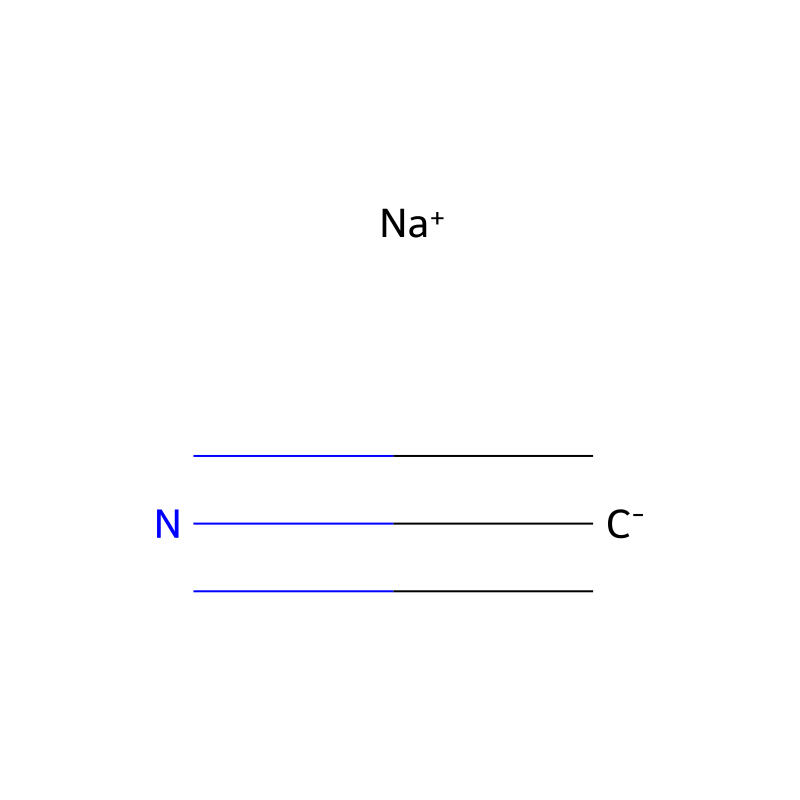
식별자 및 물리적 특성
| CAS No. | 143-33-9 |
|---|---|
| 분자식 | CNNa |
| 평균 분자량 | 49.007 g/mol |
| 단동위원소 질량 | 48.99284328 g/mol |
| SMILES | [C-]#N.[Na+] |
| InChIKey | MNWBNISUBARLIT-UHFFFAOYSA-N |
| PubChem CID | 8929 |
| ChEMBL | CHEMBL1644697 |
| ChEBI | CHEBI:33192 |
| EC No. | 205-599-4 |
| DTXSID | DTXSID4024309 |
| 현지명 | 사이안화 나트륨 |
화학 및 물리적 성질
| 극성 표면적 | 23.8 |
|---|---|
| 수소 결합 공여자 수 | 0 |
| 수소 결합 수용자 수 | 2 |
| 회전 가능 결합 수 | 0 |
| 무거운 원자 수 | 3 |
| 형식 전하 | 0 |
| 복잡도 | 12.8 |
| 물질 분류 | Toxic Gases & Vapors -> Cyanides-> NIOSH Emergency Response Categories |
| pH | Aq soln strongly alkaline11.7 (100g/l, H2O, 20°C) |
| SpringerMaterials Properties | nuclear quadrupole coupling |
| 농약 | Pesticide -> EPA IRIS |
| 냄새 | Odorless when perfectly dry, emits odor of hydrogen cyanide when dampFaint odor of bitter almondsFaint almond-like odor.The dry salts are odorless, but reaction with atmospheric moisture produces HCN, whose bitter almond odor is detectable at 1 to 5 ppmhowever, 20 to 60% of the population are reported to be unable to detect the odor of HCN. |
| 밀도 | 1.6 at 77 °F (USCG, 1999) - Denser than waterwill sink1.595 g/cu cm @ 20 °C1.6 g/cm³1.6 @25 °C1.60 |
| Viscosity | 4 cP @ 30 °C (26% aqueous soln) |
| Color/Form | White cubic crystalsWHITE SOLID IN FORM OF GRANULES, FLAKES, OR EGGS (RESEMBLING CHICKEN EGGS)White, granular or crystalline solid. |
| 용해도 | greater than or equal to 100 mg/mL at 68 °F (NTP, 1992)48 G/100 CC WATER @ 10 °C82 G/100 CC WATER @ 35 °CSlightly sol in alcoholSolubility in water, g/l at 20 °C: 480-520 (freely soluble)(77 °F): 58%H2O: 1 M at 20 °C, 투명, 무색 |
| Corrosivity | Corrosive to aluminum. |
| 인화점 | Not combustible (EPA, 1998)1500°C |
| 끓는 점 | 2725 °F at 760 mmHg (EPA, 1998)1496 °C1496 °C @760 [mm Hg]1497°C |
| 녹는점 | 563.7 °C(lit.) |
| 증기 밀도 | 1.7 (vs air) |
| 증기압 | 1 mm Hg ( 817 °C) |
| 저장 조건 | Poison room |
| 물리적 상태 | 고체 |
| pKa(산도 계수) | 9.36[at 20 ℃] |
| 색상 | 하얀색 |
| 용해도 | 37g/100mL(20℃) |
| 비열 | Cp(crystal): 1.44 J/(g·K), at 25℃ |
| Merck | 14,8605 |
| BRN | 3587243 |
| 유전율 | 7.6(Ambient) |
| 안정성 | 흡습성 |
| InChI | 1S/CN.Na/c1-2/q-1+1 |
| InChIKey | MNWBNISUBARLIT-UHFFFAOYSA-N |
| SMILES | [Na+].N#[C-] |
| LogP(분배 계수) | -0.25 at 20℃ |
| NIST | Sodium cyanide(143-33-9) |
| EPA | Sodium cyanide (143-33-9) |
| ECETOC JACC REPORT | Sodium cyanide (143-33-9) |
화학적 성질
Sodium cyanide is found as white granules, flakes or lumps. Sodium cyanide is shipped as pellets or briquettes. Odorless when dry. It absorbs water from air (is hygroscopic or deliquescent). Hydrogen cyanide gas released by sodium cyanide has a distinctive mild, bitter almond odor, but a large proportion of people cannot detect it; the odor does not provide adequate warning of hazardous concentrations.
안전 및 규제
| GHS 분류 | DangerH290 (45.3%): May be corrosive to metals [Warning Corrosive to Metals]P234, P260, P262, P264, P264+P265, P270, P271, P273, P280, P284, P301+P316, P302+P352, P304+P340, P305+P351+P338, P305+P354+P338, P316, P317, P319, P320, P321, P330, P332+P317, P337+P317, P361+P364, P362+P364, P390, P391, P403+P233, P405, P406, and P501 (click each P-code to see the statement)Aggregated GHS information provided per 433 reports by companies from 29 notifications to the ECHA C&L Inventory. Each notification may be associated with multiple companies.H300: Fatal if swallowed [Danger Acute toxicity, oral] |
|---|---|
| Hazards Identification | Water-reactive material (WR) |
| 규제 정보 | Chemical: Sodium cyanide (Na(CN))Hazard Traits - Reproductive ToxicitySodium cyanide (Na(CN)) is listed on the EPA's Chemical Data Reporting (CDR) system. Manufacturers and importers of Sodium cyanide (Na(CN)) are required to report information about their production and use of this chemical to the EPA under the Toxic Substances Control Act (TSCA). (40 eCFR Part 711)Sodium cyanide is listed in the dataset of EPA Human Health Benchmarks for Pesticides under the Safe Drinking Water Act (40 eCFR 141)Status: Active Update: 29-06-2022 https://echa.europa.eu/registration-dossier/-/registered-dossier/15159Sodium cyanide: HSNO Approval: HSR002740 Approved with controls |
| 기타 안전 정보 | PEC / SN / Other assessments - Sodium cyanide: Environment- Indoor Air: Sodium cyanide can be released into indoor air as fine droplets, liquid spray (aerosol), or fine particles. |
| 운송 라벨(DOT) | Poison |
| 화재 위험 | Sodium cyanide is not combustible itself, but contact with acids releases highly flammable hydrogen cyanide gas. Fire may produce irritating or poisonous gases. Runoff from fire control water may give off poisonous gases. Container may explode in the heat of fire. Avoid strong oxidizers such as nitrates and chloratesacids and acid salts. Avoid contact with acids. Aqueous solutions rapidly decompose. (EPA, 1998)Excerpt from ERG Guide 157 [Substances - Toxic and/or Corrosive (Non-Combustible / Water-Sensitive)]:· Non-combustible, substance itself does not burn but may decompose upon heating to produce corrosive and/or toxic fumes.Not combustible but forms flammable gas on contact with water or damp air. Gives off irritating or toxic fumes (or gases) in a fire. |
| 건강 유해성 | Super toxicprobable oral lethal dose in humans is less than 5 mg/kg or a taste (less than 7 drops) for a 70 kg (150 lb.) person. Sodium cyanide is poisonous and may be fatal if inhaled, swallowed or absorbed through the skin. Contact with sodium cyanide may cause burns to skin and eyes. Individuals with chronic diseases of the kidneys, respiratory tract, skin, or thyroid are at greater risk of developing toxic cyanide effects. (EPA, 1998)Excerpt from ERG Guide 157 [Substances - Toxic and/or Corrosive (Non-Combustible / Water-Sensitive)]:· TOXIC and/or CORROSIVEinhalation, ingestion or contact (skin, eyes) with vapors, dusts or substance may cause severe injury, burns or death. |
| 유해성 요약 | There are two common scenarios for cyanide poisoning in the industrial setting: 1) mixing acid and cyanide solutions, and 2) pouring cyanide wastes into non-alkaline solutions. Mixing cyanide salts with water, e.g., showering in clothes contaminated with cyanides, will generate hydrogen cyanide gas. Dermal absorption of cyanide salts deposited on large areas of skin can result in fatal poisoning. [Sullivan, p. 705-6] Liquid causes second degree burns after contact for a few minutes[CHRIS] Corrosive to skin[Quick CPC] A severe skin, eye, and respiratory tract irritant[ICSC] |
| 운송 번호 및 가이드(DOT) | 1689 1573414 1571689 157(solid)3414 157(solution) |
| 반응성 그룹 | Cyanides, Inorganic |
| UN 분류 | UN Hazard Class: 6.1UN Pack Group: I |
| Explosion Hazards | - Sodium cyanide reacts violently with strong oxidants such as nitrates, chlorates, nitric acid, and peroxides, causing an explosion hazard. |
| Special Reports | NIOSHCriteria Document: Hydrogen Cyanide and Cyanide Salts (1976) DHEW Pub. NIOSH 77-108Nat'l Research Council CanadaEffects of Cyanides on Aquatic Organisms with Emphasis Upon Fresh Water Fishes (1982) NRCC No.19246Health Effects Assessment for Sodium Cyanide ReportIss EPA/540/1-86/012potassium cyanide: Cahiers de notes documentaries 118: 133-138 (1985)For more Special Reports (Complete) data for SODIUM CYANIDE (8 total), please visit the HSDB record page. |
| 소화 | Full protective clothing including self-contained breathing apparatus, rubber gloves, boots, and bands around legs, arms, and waist should be provided. No skin surface should be exposed. Normal fire fighting procedures may be used.Excerpt from ERG Guide 157 [Substances - Toxic and/or Corrosive (Non-Combustible / Water-Sensitive)]:NO hydrous agents. NO water. NO carbon dioxide. In case of fire in the surroundings, use appropriate extinguishing media. In case of fire: keep drums, etc., cool by spraying with water.- Sodium cyanide is non-combustible. |
| 응급 조치 | Administration of oxygen may be needed. Fresh air, rest. No mouth-to-mouth artificial respiration. Refer immediately for medical attention.Wear protective gloves when administering first aid. Remove contaminated clothes. Rinse skin with plenty of water or shower. Refer immediately for medical attention .First rinse with plenty of water for several minutes (remove contact lenses if easily possible), then refer for medical attention.Rinse mouth. Administration of oxygen may be needed. NO mouth-to-mouth artificial respiration. Do NOT induce vomiting. Refer immediately for medical attention. |
| 누출 비상 조치 | · CALL 911. Then call emergency response telephone number on shipping paper. If shipping paper not available or no answer, refer to appropriate telephone number listed on the inside back cover.· ELIMINATE all ignition sources (no smoking, flares, sparks or flames) from immediate area. |
| 응급 처치 | Warning: Heart palpitations may occur within minutes after exposure. Caution is advised. Effects may be delayed.Excerpt from ERG Guide 157 [Substances - Toxic and/or Corrosive (Non-Combustible / Water-Sensitive)]:General First Aid:(General first aid procedures) |
| 안전 보관 | Separated from strong oxidants, acids, food and feedstuffs, carbon dioxide and products containing water. Dry. Well closed. Keep in a well-ventilated room. Store in an area without drain or sewer access. |
| Firefighting Hazards | Not combustible, but if involved in a fire decomposes to produce hydrogen cyanide & oxides of nitrogen. |
| 노출 관리 및 개인 보호 | · Wear positive pressure self-contained breathing apparatus (SCBA).TIH (Toxic Inhalation Hazard) - Term used to describe gases and volatile liquids that are toxic when inhaled. Some are TIH materials themselves, e.g., chlorine, and some release TIH gases when spilled in water, e.g., chlorosilanes. [ERG 2016].3.8 [mg/m3], as CN, inhalable fraction[German Research Foundation (DFG)] |
| 소화 절차 | Carbon dioxide fire extinguishers must not be used where cyanide salts are present. /Cyanide salts/Wear chemical protective suit with self-contained breathing apparatus.Avoid carbon dioxide extinguishers. Extinguish fire using agent suitable for surrounding fire. Use water spray to keep fire-exposed containers cool.If material involved in fire: Extinguish fire using agent suitable for type of surrounding fire. (Material itself does not burn or burns with difficulty.) Use water in flooding quantities as fog. Cool all affected containers with flooding quantities of water. Use foam, dry chemical, or carbon dioxide. Use water spray to knock-down vapors. /Sodium cyanide solution/If material involved in fire: Extinguish fire using agent suitable for type of surrounding fire. (Material itself does not burn or burns with difficulty.) Use foam, dry chemical, or carbon dioxide. Do not use water on material itself. If large quantities of combustibles are involved, use water in flooding quantities as spray and fog. Use water spray to knock-down vapors. /Sodium cyandie, solid/ |
| 보관 조건 | Store in a cool, dry, well-ventilated location. Separate from water, acids, carbon dioxide.Cyanide salts as solids must be stored in sealed or tightly closed containers. No hooks should be used in handling cyanide containers. ... Storage areas must be adequately ventilated to ensure that cyanide concentrations do not exceed the recommended workplace environmental limits. /Cyanide salts/ALL CONTAINERS OF CYANIDE SALTS SHOULD BE KEPT COVERED OR IN EXHAUST HOOD WHEN NOT IN USE. /CYANIDES/Cyanide salts as solids or solutions must be ... protected from corrosion or damage. They should be stored so there is no contact with nitrate-nitrite mixtures or peroxides. /Cyanide salts/ |
| 정리 방법 | WASTE CYANIDE SALTS FROM CASE HARDENING OF STEEL ARE DESTROYED BY REACTING THE SALTS AT 650-700 °C WITH WASTE FERRIC HYDROXIDE SLUDGES FROM VARIOUS SOURCES. /CYANIDE SALTS/Environmental considerations - Land spill: Dig a pit, pond, lagoon, or holding area to contain liquid or solid material. /SRP: If time permits, pits, ponds, lagoons, soak holes, or holding areas should be sealed with an impermeable flexible membrane liner./ Cover solids with a plastic sheet to prevent dissolving in rain or fire fighting water. /Sodium cyanide, solid/Environmental considerations - Land spill: Dig a pit, pond, lagoon, or holding area to contain liquid or solid material. /SRP: If time permits, pits, ponds, lagoons, soak holes, or holding areas should be sealed with an impermeable flexible membrane liner./ Dike surface flow using soil, sand bags, foamed polyurethane, or foamed concrete. Absorb bulk liquid with fly ash or cement powder. Cover solids with a plastic sheet to prevent dissolving in rain or fire fighting water. /Sodium cyanide solution/Environmental considerations - Air spill: Apply water spray or mist to knock down vapors. Vapor knock down water is corrosive or toxic and should be diked for containment. /Sodium cyanide solutionsodium cyanide, solid/For more Cleanup Methods (Complete) data for SODIUM CYANIDE (10 total), please visit the HSDB record page. |
| 비화재 누출 대응 | Excerpt from ERG Guide 157 [Substances - Toxic and/or Corrosive (Non-Combustible / Water-Sensitive)]: |
| 처리 방법 | Generators of waste (equal to or greater than 100 kg/mo) containing this contaminant, EPA hazardous waste number D003P106, must conform with USEPA regulations in storage, transportation, treatment and disposal of waste.Cyanide salts should not be flushed into any drain which may contain or subsequently receive acid waste. ... Cyanide process waste solutions and flushings from spills should be passed through a cyanide waste disposal system. /Cyanide salts/Sodium cyanide is a poor candidate for incineration.SMALL AMOUNTS OF AMMONIUM CHLORIDE-BUFFERED, AQUEOUS SODIUM CYANIDE WERE DECONTAMINATED WITH CALCIUM HYPOCHLORITE AT LESS THAN OR EQUAL TO 12 DEGREES, WHILE LARGER AMOUNTS OF CYANIDE WASTE WERE TREATED WITH HYPOCHLORITE FROM ANY SOURCE AT PH 10 TO CONVERT CYANIDE ION TO CYANATE ION. |
| 체내 부담 | Cyanide is present in normal healthy human organs at concentrations ranging up to 0.5 mg/kg. /Cyanide/ |
| Treatment | Antidotes to cyanide poisoning include hydroxocobalamin and sodium nitrite, which release the cyanide from the cytochrome system, and rhodanase, which is an enzyme occurring naturally in mammals that combines serum cyanide with thiosulfate, producing comparatively harmless thiocyanate. Oxygen therapy can also be administered. (L97) |
| 상호 작용 | FASTED MONGREL DOGS WERE SUBJECTED TO SODIUM THIOSULFATE INFUSION FOLLOWED BY SODIUM CYANIDE ADMIN (1 MG/KG) 30 MIN LATER. A PHARMACOKINETIC MODEL SHOWED THAT SODIUM THIOSULFATE INCREASED THE RATE OF CONVERSION OF CYANIDE TO THIOCYANATE BY A FACTOR OF 36.5ALSO, IT REDUCED THE APPARENT VOLUME OF DISTRIBUTION OF CYANIDE.ATTEMPTS WERE MADE TO EVALUATE THE EFFECTS OF PRETREATMENT WITH AIR AND OXYGEN EITHER ALONE OR IN VARIOUS COMBINATIONS WITH SODIUM NITRITE AND/OR SODIUM THIOSULFATE ON THE PHYSIOLOGIC DISPOSITION OF SODIUM (14)C-CYANIDE IN MICE. OXYGEN EITHER ALONE OR IN COMBINATION WITH SODIUM THIOSULFATE ... ENHANCED THE RESPIRATORY EXCRETION WHEN COMPARED WITH AIR. SODIUM THIOSULFATE ACCELERATED THE INITIAL RATE, BUT NOT THE TOTAL AMOUNT OF RADIOACTIVITY EXCRETED. THE CUMULATIVE RECOVERY OF RADIOACTIVE GASES WAS ... GREATER WITH GROUPS RECEIVING OXYGEN EITHER ALONE OR WITH SODIUM THIOSULFATE. NO SIGNIFICANT DIFFERENCES BETWEEN VARIOUS EXPERIMENTAL GROUPS WERE NOTED IN THE TOTAL AMOUNT OF URINARY RADIOACTIVITY EXCRETED OR THE TOTAL BODY RETENTION OF RADIOACTIVITY.Previous reports indicated that prophylactic protection against cyanide intoxication in mice can be enhanced by administration of chlorpromazine when it is given with sodium thiosulfate. The mechanism of potentiation of sodium thiosulfate by chlorpromazine was studied alone and in combination with sodium nitrite. Although chlorpromazine was found to induce a hypothermic response, the mechanism of enhancement of the antagonism of cyanide by chlorpromazine does not correlate with the hypothermia produced. Various other possible mechanisms were investigated, such as rate of methemoglobin formation, enzymatic activity of rhodanese and cytochrome oxidase, and alpha-adrenergic blockade. The alpha-adrenergic blocking properties of chlorpromazine may provide a basis for its antidotal effect, since this protective effect can be reversed with an alpha-antagonist, methoxamine. /Cyanide/The effects of tribuyltin and sodium cyanide on hemolysis in human erythrocytes are described. Tributyltin has a sharp cut take off concentration for induction of hemolysis. A 5 uM concentration of tributyltin induces hemolysis and 1 uM or less does not in erythrocyte suspensions with lysis are sigmoidal indicating a complex molecular mechanism leading to lysis. Ten mM sodium cyanide plus 1 uM tributyltin does not stimulate hemolysis rates above levels observed with 10 mM sodium cyanide alone. Five nM sodium cyanide plus hemolytic concentrations of tributyltin stimulates hemolysis rates synergistically compared with either cyanide or tributyltin alone. Ultrastructurally, hemolytic concentrations of tribuyltin can be visualized in the electron microscope by osmium staining during fixation as electron dense spheres penetrating the lipid bilayer of the erythrocyte plasma membrane. Ten mM sodium cyanide plus 25 uM tributyltin increases slightly the size of osmiophilic structures in erythrocyte membranes compared with those spheres seen in cells exposed to 25 uM tribuyltin alone. Sodium cyanide is the only compound tested that stimulates tributyltin induced hemolysis. |
| 표적 장기 | ReproductiveEyes, skin, cardiovascular system, central nervous system, thyroid, blood |
| 건강 영향 | Exposure to high levels of cyanide for a short time harms the brain and heart and can even cause coma, seizures, apnea, cardiac arrest and death. Chronic inhalation of cyanide causes breathing difficulties, chest pain, vomiting, blood changes, headaches, and enlargement of the thyroid gland. Skin contact with cyanide salts can irritate and produce sores. (L96, L97) |
| 환경 거동 | Aquatic Fate: The alkali metal salts are very soluble in water, and as a result, they readily dissociate into their respective anions and cations upon release to water. The resulting cyanide ion may then form hydrogen cyanide or react with various metals present in natural water. If the cyanide ion is present in excess, complex metallocyanides may formhowever, if metals are prevalent, simple metal cyanides may form. |
| 유해 작용 | Other Poison - Chemical Asphyxiant |
| 노출 경로 | The substance can be absorbed into the body by inhalation, through the skin and by ingestion.inhalation, skin absorption, ingestion, skin and/or eye contactSodium cyanide can affect the body through ingestion, inhalation, skin contact, or eye contact.Inhalation (L96)oral (L96)dermal (L96) |
| 독성 요약 | IDENTIFICATION: Other cyanides, such as sodium and potassium cyanide, are solid or crystalline hygroscopic salts widely used in ore extracting processes for the recovery of gold and silver, electroplating, case-hardening of steel, base metal flotation, metal degreasing, dyeing, printing, and photography. They are also widely used in the synthesis of organic and inorganic chemicals (e.g., nitriles, carboxylic acids, amides, esters, and aminesheavy metal cyanides) and in the production of chelating agents. HUMAN EXPOSURE: Cyanides are well absorbed via the gastrointestinal tract or skin and rapidly absorbed via the respiratory tract. Once absorbed, cyanide is rapidly and ubiquitously distributed throughout the body, although the highest levels are typically found in the liver, lungs, blood, and brain. There is no accumulation of cyanide in the blood or tissues following chronic or repeated exposure. Approximately 80% of absorbed cyanide is metabolized to thiocyanate in the liver by the mitochondrial sulfur transferase enzyme rhodanese and other sulfur transferases. Thiocyanate is excreted in the urine. Minor pathways for cyanide detoxification involve reaction with cystine to produce aminothiazoline- and iminothiazolidinecarboxylic acids and combination with hydroxycobalamin (vitamin B12a) to form cyanocobalamin (vitamin B12)these end-products are also excreted in the urine. The principal features of the toxicity profile for cyanide are its high acute toxicity by all routes of administration, with a very steep and rate-dependent dose-effect curve, and chronic toxicity, probably mediated through the main metabolite and detoxification product, thiocyanate. The toxic effects of cyanide ion in humans and animals are generally similar and are believed to result from inactivation of cytochrome oxidase and inhibition of cellular respiration and consequent histotoxic anoxia. The primary targets of cyanide toxicity in humans are the cardiovascular, respiratory, and central nervous systems. The endocrine system is also a potential target for long-term toxicity, as a function of continued exposure to thiocyanate, which prevents the uptake of iodine in the thyroid and acts as a goitrogenic agent. Sequele after severe acute intoxications may include neuropsychiatric manifestations and Parkinson-type disease. Cyanide from tobacco smoke has been implicated as a contributing factor in tobacco-alcohol amblyopia. Long-term exposure to lower concentrations of cyanide in occupational settings can result in a variety of symptoms related to central nervous system effects. Cyanides are weakly irritating to the skin and eyealkali salts have not been identified. ANIMAL/PLANT STUDIES: The principal features of the toxicity profile for cyanide are its high acute toxicity by all routes of administration, with a very steep and rate-dependent dose-effect curve, and chronic toxicity, probably mediated through the main metabolite and detoxification product, thiocyanate. The toxic effects of cyanide ion in humans and animals are generally similar and are believed to result from inactivation of cytochrome oxidase and inhibition of cellular respiration and consequent histotoxic anoxia. The primary targets of cyanide toxicity in animals are the cardiovascular, respiratory, and central nervous systems. The endocrine system is also a potential target for long-term toxicity, as a function of continued exposure to thiocyanate, which prevents the uptake of iodine in the thyroid and acts as a goitrogenic agent. In a 13-week repeated-dose toxicity study in which cyanide was administered in drinking-water, there were no clinical signs associated with central nervous system effects or histopathological effects in the brain or thyroid of rats or mice. There were slight changes in the reproductive tract in male rats, which, although they apparently would not affect fertility in rats. The examination of neurotoxicity in this study was limited to clinical observation and optical microscopy in autopsy. The few available studies specifically intended to investigate neurotoxicity, while reporting adverse effects at exposure levels of 1.2 mg cyanide/kg body weight per day in rats and 0.48 mg cyanide/kg body weight per day in goats, suffer from weaknesses that preclude their quantitative assessment. In relation to characterization of concentration-response for repeated-dose toxicity for inhalation (relevant principally to the occupational environment), in three separate studies in rats, there were no adverse systemic effects in rats exposed to acetone cyanohydrin, which is rapidly hydrolysed to hydrogen cyanide at physiological pH, at concentrations up to 211 mg/m3 (corresponding to a concentration of 67 mg hydrogen cyanide/m3). The steepness of the dose-effect curve is illustrated by the observation of 30% mortality among rats exposed part of the day to 225 mg acetone cyanohydrin/m3 (71 mg hydrogen cyanide/m3). Adverse effects of exposure to the low concentrations of cyanide that are generally present in the general environment (<1 ug/m3 in ambient air<10 ug/litre in water) are unlikely. /Cyanide/Organic nitriles decompose into cyanide ions both in vivo and in vitro. Consequently the primary mechanism of toxicity for organic nitriles is their production of toxic cyanide ions or hydrogen cyanide. Cyanide is an inhibitor of cytochrome c oxidase in the fourth complex of the electron transport chain (found in the membrane of the mitochondria of eukaryotic cells). It complexes with the ferric iron atom in this enzyme. The binding of cyanide to this cytochrome prevents transport of electrons from cytochrome c oxidase to oxygen. As a result, the electron transport chain is disrupted and the cell can no longer aerobically produce ATP for energy. Tissues that mainly depend on aerobic respiration, such as the central nervous system and the heart, are particularly affected. Cyanide is also known produce some of its toxic effects by binding to catalase, glutathione peroxidase, methemoglobin, hydroxocobalamin, phosphatase, tyrosinase, ascorbic acid oxidase, xanthine oxidase, succinic dehydrogenase, and Cu/Zn superoxide dismutase. Cyanide binds to the ferric ion of methemoglobin to form inactive cyanmethemoglobin. (L97) |
| Signs and Symptoms | Nausea. Dizziness. Drowsiness. Sore throat. Headache. Confusion. Weakness. Shortness of breath. Convulsions. Unconsciousness.MAY BE ABSORBED! Redness. Pain. Further see Inhalation.Redness. Pain. Further see Inhalation.Burning sensation. Nausea. Vomiting. Diarrhoea. See Inhalation.irritation eyes, skinasphyxialassitude (weakness, exhaustion), headache, confusionnausea, vomitingincreased resp rateslow gasping respirationthyroid, blood changes- Redness, pain, and severe deep burns. |
| Ongoing Test Status | The following link will take the user to the National Toxicology Program (NTP) Test Agent Search Results page, which tabulates all of the "Standard Toxicology & Carcinogenesis Studies", "Developmental Studies", and "Genetic Toxicity Studies" performed with this chemical. Clicking on the "Testing Status" link will take the user to the status (i.e., in review, in progress, in preparation, on test, completed, etc.) and results of all the studies that the NTP has done on this chemical. [http://ntp-apps.niehs.nih.gov/ntp_tox/index.cfm?fuseaction=ntpsearch.searchresults&searchterm=143-33-9] |
| ICSC Environmental Data | The substance is very toxic to aquatic organisms. |
| RCRA 요건 | P106As stipulated in 40 CFR 261.33, when sodium cyanide, as a commercial chemical product or manufacturing chemical intermediate or an off-specification commercial chemical product or a manufacturing chemical intermediate, becomes a waste, it must be managed according to federal and/or state hazardous waste regulations. Also defined as a hazardous waste is any container or inner liner used to hold this waste or any residue, contaminated soil, water, or other debris resulting from the cleanup of a spill, into water or on dry land, of this waste. Generators of small quantities of this waste may qualify for partial exclusion from hazardous waste regulations (40 CFR 261.5(e))./SRP:/ D003A solid waste containing sodium cyanide may become characterized as a hazardous waste when subjected to testing for reactivity as stipulated in 40 CFR 261.23, and if so characterized, must be managed as a hazardous waste. |
| TSCA 요건 | Section 8(a) of TSCA requires manufacturers of this chemical substance to report preliminary assessment information concerned with production, use, and exposure to EPA as cited in the preamble in 51 FR 41329.Pursuant to section 8(d) of TSCA, EPA promulgated a model Health and Safety Data Reporting Rule. The section 8(d) model rule requires manufacturers, importers, and processors of listed chemical substances and mixtures to submit to EPA copies and lists of unpublished health and safety studies. Sodium cyanide is included on this list.Manufacturers and processors of sodium cyanide are required to conduct chemical fate and terrestrial effects tests under TSCA section 4. |
| FIFRA 요건 | As the federal pesticide law FIFRA directs, EPA is conducting a comprehensive review of older pesticides to consider their health and environmental effects and make decisions about their future use. Under this pesticide reregistration program, EPA examines health and safety data for pesticide active ingredients initially registered before November 1, 1984, and determines whether they are eligible for reregistration. In addition, all pesticides must meet the new safety standard of the Food Quality Protection Act of 1996. Pesticides for which EPA had not issued Registration Standards prior to the effective date of FIFRA 1988 were divided into three lists based upon their potential for human exposure and other factors, with List B containing pesticides of greater concern and List D pesticides of less concern. Sodium cyanide is found on List C. Case No: 3086Pesticide type: rodenticideCase Status: Reregistration Eligibility Decision Approved 9/94, PB95-173514 - OPP has made a decision that some/all uses of the pesticide are eligible for reregistration, as reflected in a Reregistration Eligibility Decision (RED) document.Active ingredient (AI): sodium cyanideData Call-in (DCI) Date(s): 9/30/92AI Status: Reregistration Eligibility Decision Completed - OPP has completed a Reregistration Eligibility document for the case/AI. |
| CERCLA 보고 수량 | Persons in charge of vessels or facilities are required to notify the National Response Center (NRC) immediately, when there is a release of this designated hazardous substance, in an amount equal to or greater than its reportable quantity of 10 lb or 4.54 kg. The toll free number of the NRC is (800) 424-8802In the Washington D.C. metropolitan area (202) 426-2675. The rule for determining when notification is required is stated in 40 CFR 302.4 (section IV. D.3.b).Releases of CERCLA hazardous substances are subject to the release reporting requirement of CERCLA section 103, codified at 40 CFR part 302, in addition to the requirements of 40 CFR part 355. Sodium cyanide is an extremely hazardous substance (EHS) subject to reporting requirements when stored in amounts in excess of its threshold planning quantity (TPQ) of 100 lbs. |
| 청정수법 요건 | Sodium cyanide is designated as a hazardous substance under section 311(b)(2)(A) of the Federal Water Pollution Control Act and further regulated by the Clean Water Act Amendments of 1977 and 1978. These regulations apply to discharges of this substance. This designation includes any isomers and hydrates, as well as any solutions and mixtures containing this substance. |
| State Drinking Water Standards | (CA) CALIFORNIA 150 ug/L /Cyanide ion/ |
| DHS Chemicals of Interest (COI) | Sodium cyanideA Commercial GradeA Placarded AmountChemical or material that can be mixed with readily available materials. |
| 주 식수 지침 | (AZ) ARIZONA 220 ug/l /Cyanide ion/(ME) MAINE 140 ug/l /Cyanide ion/(MN) MINNESOTA 100 ug/l /Cyanide ion/ |
| Federal Drinking Water Standards | EPA 200 ug/l /Cyanide ion/ |
| 연방 식수 지침 | EPA 200 ug/l /Cyanide ion/ |
| 직업 노출 한계(OEL) | Ceiling: 5 mg/m3 (4.7 ppm) [10-minute] [*Note: The REL also applies to other cyanides (as CN) except Hydrogen cyanide.] |
| 수질 위해 등급(WGK) | 3 |
| TSCA 등재 상태 | TSCA listed |
| RTECS 번호 | VZ7525000 |
| 운송 번호(UN) | UN 3414 6.1/PG I/II/III (SODIUM CYANIDE SOLUTION) |
| 독성 | LD50 orally in rats: 15 mg/kg (Smyth) |
| 관세 코드 | 28371110 |
| 위험 문구(R) | 26/27/28-32-50/53-48/25 |
| 위험 표시 | T+,N |
| 안전 문구(S) | 7-28-29-45-60-61-28A |
| 포장분류 | I |
| 위험 등급 | 6.1Acute Tox. 1 DermalAcute Tox. 1 InhalationAcute Tox. 1 OralAquatic Acute 1Aquatic Chronic 1Eye Dam. 1Met. Corr. 1Skin Corr. 1STOT RE 1 |
| 기존화학 물질 | KE-31401 |
| 저장 분류 | 6.1B - Non-combustible, acute toxic Cat. 1 and 2very toxic hazardous materials |
| 유해 물질 데이터 | 143-33-9(Hazardous Substances Data) |
| 함량 및 규제정보 | 물질구분: 사고대비물질혼합물(제품)함량정보: 시안화 나트륨 및 이를 1% 이상 함유한 혼합물. 다만, 베를린청(Ferric ferrocyanide)ㆍ황혈염(Potassium ferrocyanide)ㆍ적혈염(Potassium ferri-cyanide) 및 그 중 하나를 함유한 혼합물질은 제외한다. |
| 유해화학물질 필터링 | 97-1-90 |
| 사고대비 물질 필터링 | 33 |
용도
개요
Sodium cyanide, NaCN, is a cyanide salt that is a white, deliquescent, crystalline powder and is soluble in water. The specific gravity is 1.6, which is heavier than water. Sodium cyanide is toxic by inhalation and ingestion, with a TLV of 4.7 ppm and 5 mg/m3 of air. The target organs are the cardiovascular system, central nervous system, kidneys, liver, and skin. Reactions with acids can release flammable and toxic hydrogen cyanide gas. Cyanides are incompatible with all acids. The four-digit UN identification number is 1689. The NFPA 704 designation is health 3, flammability 0, and reactivity 0. The primary uses are in gold and silver extraction from ores, electroplating, fumigation, and insecticides.
용도
Sodium cyanide is used for electroplating metals such as zinc, copper, cadmium, silver, and gold, and their alloys; for extracting gold and silver from ores; and as a fumigant and a chelating agent. It occurs in many varieties of maniocs (cassava), especially in bitter manioc.
일반 설명
A clear colorless aqueous solution.
제조 및 합성 방법
제조 방법
Sodium cyanide can be prepared by several methods (See Potassium Cyanide).It is prepared by passing hydrogen cyanide through a 50% aqueous solution of sodium hydroxide followed by evaporation of the solution in vacuum: NaOH + HCN → NaCN + H2OAnother method is to reduce sodamide with carbon at red heat: NaNH2 + C → NaCN + H2↑Also, sodium cyanide can be made by heating a mixture of sodium carbonate and carbon with ammonia at high temperatures: Na2CO3 + 4C + 2NH3 → 2NaCN + 3CO↑ + 3H2↑.
생산 방법
Sodium cyanide was first prepared in 1834 by heating Prussian Blue, a mixture of cyanogen compounds of iron, and sodium carbonate and extracting sodium cyanide from the cooled mixture using alcohol. Sodium cyanide remained a laboratory curiosity until 1887, when a process was patented for the extraction of gold and silver ores by means of a dilute solution of cyanide.