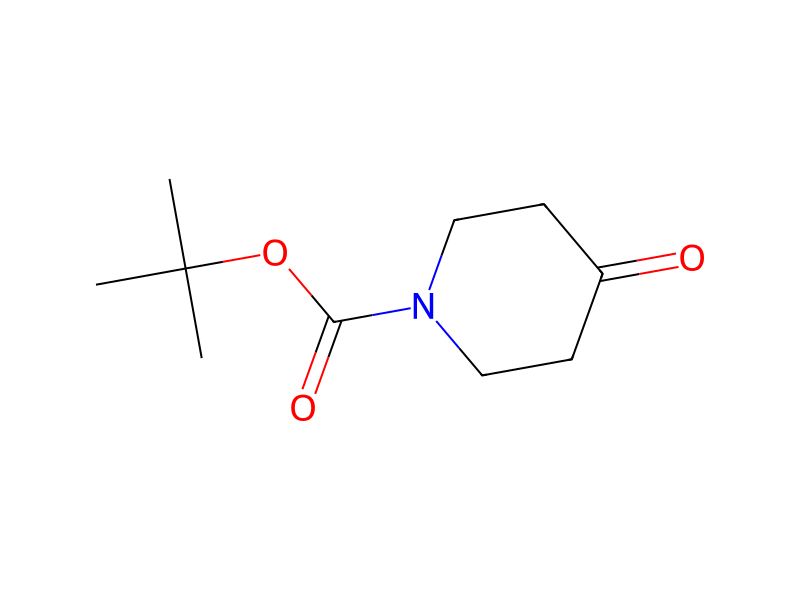
A flask containing 4-(4-aminobenzyl)morpholine from Preparation No. 22 (0.48 g) is treated with tetrahydrofuran (10 mL) and tert-butyl 4-oxo-1-piperidinecarboxylate (0.60 gm) under an argon atmosphere. The solution is treated with acetic acid (0.20 mL) followed by sodium triacetoxyborohydride (0.80 g). After stirring 3 days, the mixture is concentrated under reduced pressure. The residue is partitioned between dichloromethane and dilute aqueous sodium hydroxide. The aqueous is back-extracted with additional portions of dichloromethane. The combined organic layer is washed with brine, dried over sodium sulfate, and concentrated under reduced pressure. The residue is flash column chromatographed on silica gel eluting with 2% to 6% methanol in dichloromethane to afford 0.96 g of tert-butyl 4-[4-(4-morpholinylmethyl)anilino]-1-piperidinecarboxylate as a tan solid.