4-Oxo-2-thioxothiazolidine-3-propionic acid → HCID 86752508, 화합물
반응식
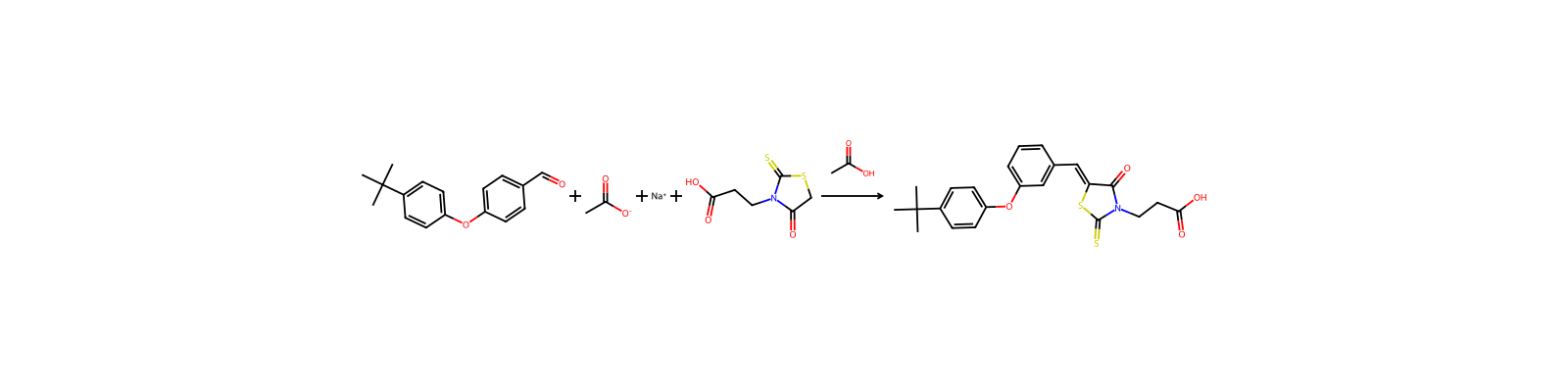
[C:1]([C:5]1[CH:19]=[CH:18][C:8]([O:9][C:10]2[CH:17]=[CH:16][C:13](C=O)=[CH:12][CH:11]=2)=[CH:7][CH:6]=1)([CH3:4])([CH3:3])[CH3:2].[C:20]([O-])(=O)C.[Na+].[C:25]([CH2:28][CH2:29][N:30]1[C:34](=[O:35])[CH2:33][S:32][C:31]1=[S:36])([OH:27])=[O:26]>C(O)(=O)C>[C:1]([C:5]1[CH:6]=[CH:7][C:8]([O:9][C:10]2[CH:17]=[C:16]([CH:20]=[C:33]3[S:32][C:31](=[S:36])[N:30]([CH2:29][CH2:28][C:25]([OH:27])=[O:26])[C:34]3=[O:35])[CH:13]=[CH:12][CH:11]=2)=[CH:18][CH:19]=1)([CH3:2])([CH3:4])[CH3:3]참가 물질
5



실험 절차
Under nitrogen atmosphere in a round bottom flask 4-[4-(t-butyl)phenoxy]benzaldehyde (2.0 g, 7.8 mmol) was dissolved in 40 ml of acetic acid with stirring. To this solution was added sodium acetate (2.56 g, 31.2 mmol) followed by the addition of N-(2-carboxyethyl)rhodanine (1.79 g, 8.7 mmol). The reaction mixture was heated to reflux. The progress of the reaction was monitored by thin layer chromatography. The reaction was allowed to reflux overnight.