반응식

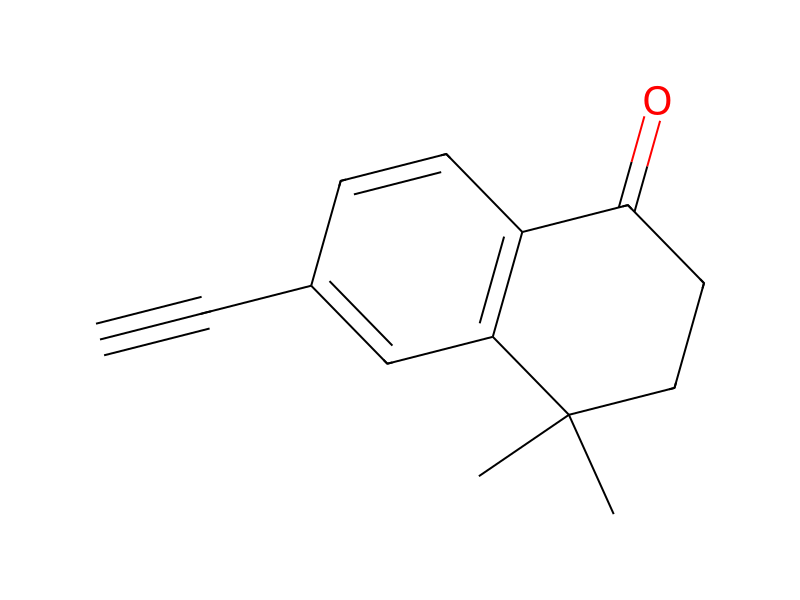
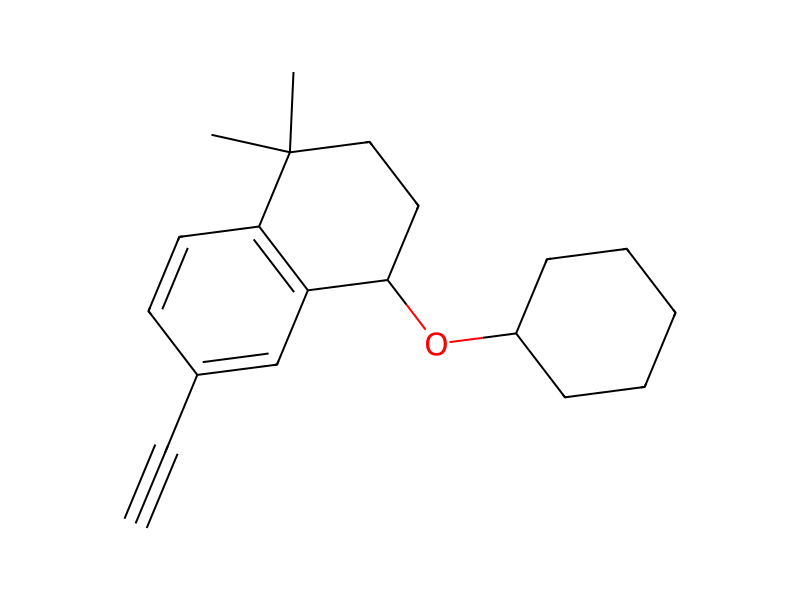
[C:1](C1C=C2C(=CC=1)C(=O)CCC2(C)C)#[CH:2].Br[C:17]1[CH:18]=[C:19]2[C:24](=[CH:25][CH:26]=1)[C:23]([CH3:28])([CH3:27])[CH2:22][CH2:21][CH:20]2[O:29][CH:30]1[CH2:35][CH2:34][CH2:33][CH2:32][CH2:31]1>>[CH:30]1([O:29][CH:20]2[C:19]3[C:24](=[CH:25][CH:26]=[C:17]([C:1]#[CH:2])[CH:18]=3)[C:23]([CH3:28])([CH3:27])[CH2:22][CH2:21]2)[CH2:35][CH2:34][CH2:33][CH2:32][CH2:31]1참가 물질
3

실험 절차
Employing the same general procedure as for the preparation of 6-ethynyl-3,4-dihydro-4,4-dimethyl-naphthalen-1(2H)-one (Compound K), 2.1 g (8.8 mmol) of 6-bromo-4-cyclohexyloxy-1,1-dimethyl-1,2,3,4-tetrahydronaphthalene (Compound J) was converted into the title compound using 1 g (10.2 mmol) of trimethylsilyl acetylene, 0.14 g (0.20 mmol) of bis(triphenylphosphine)palladium(II) chloride, 19 mg (0.1 mmol) of cuprous iodide and 80 mg (0.6 mmol) of K2CO3.
출처 및 근거
- ORD 기록
- ord-c7a15a2a67ef4391b3a681a58f52a018
- 출처 데이터셋
- uspto-grants-1996_08
- 특허 번호
- US05543534
연결된 노트
불러오는 중…