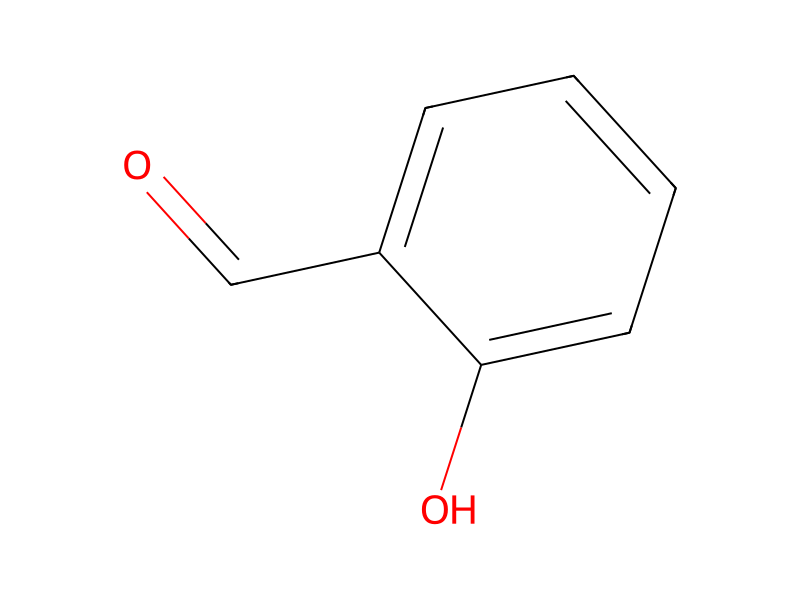
The solution of O-ethyl S-propyl chlorothiophosphate prepared in Example 1 was cooled to 10° C. and triethylamine (1.629 grams; 0.016 mole) was added. A solution of 2-hydroxybenzaldehyde (1.95 grams; 0.016 mole) in methylene chloride (5 ml) was slowly added to the mixture while maintaining the temperature at about 0° C. After this addition was completed the temperature of the reaction mixture was allowed to rise to room temperature and stirring was continued for a period of one hour. After this time the reaction mixture was transferred into a separatory funnel and methylene chloride (100 ml) was added. The resulting solution was washed twice with water (100 ml), twice with aqueous sodium hydroxide (0.1 N; 50 ml) and again twice with water (100 ml). The washed solution was then dried over anhydrous magnesium sulfate, filtered and stripped of solvent under vacuum in a rotary evaporator leaving a light orange oil as the residue. This oil was placed under high vacuum for a period of one hour to yield the desired product as a yellow oil.