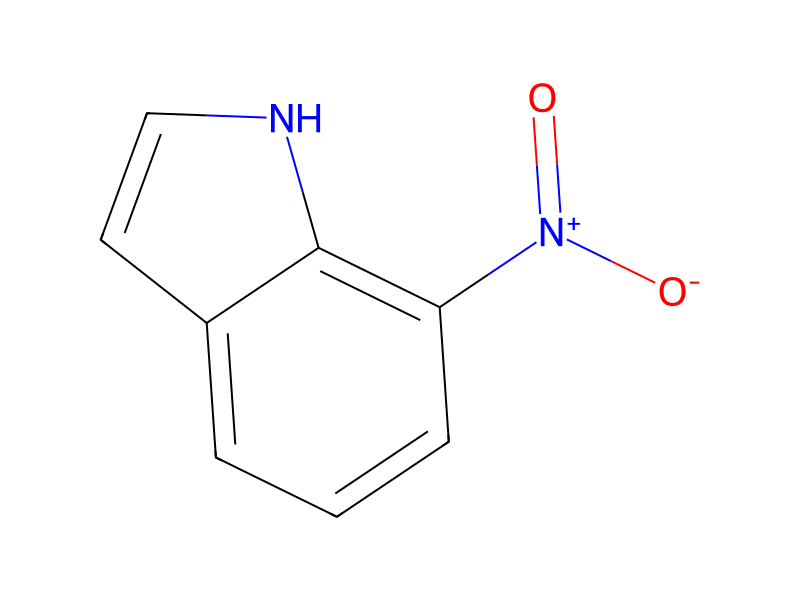
11 ml (11 mmol) of a hexane solution containing 1.0 M dimethylaluminum chloride was added to a dichloromethane solution (50 ml) containing 1.2 g (7.5 mmol) of 7-nitro-1H-indole at 0° C. in nitrogen atmosphere. Then, 2.1 ml (29.5 mmol) of acetyl chloride was added thereto at 0° C., followed by stirring at room temperature for 4 hours. An aqueous saturated ammonium chloride was added to the reaction system and the resulting precipitates were collected by filtration. These precipitates were washed sufficiently with hot ethanol. The washing solution was combined with the filtrate and the combined solution was concentrated. Water was added to the residue, and the mixture was extracted with ethyl acetate. The extract was washed with brine, and dried over magnesium sulfate. The solvent was evaporated, and the residue was purified by silica gel column chromatography, to give 3-acetyl-7-nitro-1H-indole. The product was dissolved in 100 ml of methanol and hydrogenated at normal temperature under normal pressure in the presence of palladium-carbon. After filtering off the catalyst, the filtrate was concentrated to dryness, to give 790 mg of the title compound.