Diethyl Ether → 2-Ethylhexylbenzene
HRID 1175086
반응식

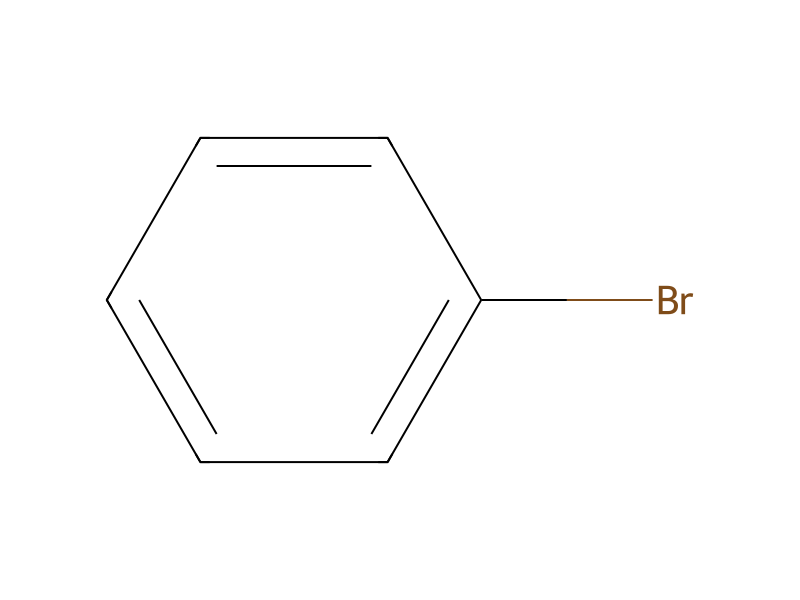
Br[C:2]1[CH:7]=[CH:6][CH:5]=[CH:4][CH:3]=1.[CH2:8]([CH:10]([Mg]Br)[CH2:11][CH2:12][CH2:13][CH2:14][CH3:15])C.[CH2:18](OCC)C>Cl[Ni]1(Cl)[P](C2C=CC=CC=2)(C2C=CC=CC=2)CCC[P]1(C1C=CC=CC=1)C1C=CC=CC=1>[CH2:14]([CH:13]([CH2:12][CH2:11][CH2:10][CH3:8])[CH2:18][C:2]1[CH:7]=[CH:6][CH:5]=[CH:4][CH:3]=1)[CH3:15]참가 물질
5



실험 절차
A dry 250-mL three-neck round bottom flask, equipped with a condenser and an addition funnel, was purged with N2 and charged with bromobenzene (15 g, 0.10 mol), [1,3-bis(diphenylphosphino)propane]dichloronickel(II) (Ni(dppp)Cl2) (0.27 g, 0.50 mol %). The reaction flask was cooled down to 0° C., whereupon (ethylhexyl)magnesium bromide 1 M solution in diethyl ether (100 mL) was added dropwise from the addition funnel over a 30-minute time period. The reaction was slightly exothermic, and a dark-brown color developed within minutes. The ice bath was replaced with an oil bath, and the solution was heated up to gentle reflux and maintained at that temperature for 12 hours, then cooled in an ice bath, and quenched with cold HCl (100 mL, 1.0 N). The aqueous layer was separated and extracted with diethyl ether (3×100 mL). The combined organic phase was collected and dried over anhydrous magnesium sulfate (MgSO4). After the product was filtered, the solvent was removed by rotary evaporation. The crude product was distilled under vacuum to yield 3.3 g (70%) of colorless oil.